WASHINGTON (AP) — South Dakota’s governor, the speaker of the state House, the state’s lone representative in Congress and a businessman will face off in a competitive Republican primary for governor on Tuesday. Primary voters will also choose nominees for other state and federal offices, while Sioux Falls residents will elect a new mayor.
Gov. Larry Rhoden seeks a full term as the state’s chief executive. He was previously lieutenant governor under then-Gov. Kristi Noem but assumed the top job when Noem stepped down in early 2025 to join President Donald Trump’s Cabinet.
Serving less than half a term as governor was not enough for Rhoden to clear the Republican field. He faces strong challenges from U.S. Rep. Dusty Johnson, state House Speaker Jon Hansen and businessman Toby Doeden.
The winner will face former state Sen. Dan Ahlers in the general election. Ahlers is unopposed for the Democratic nomination.
At the top of the ballot is the race for the U.S. Senate, in which Republican Mike Rounds seeks a third term. His opponent in the primary is Justin McNeal, a U.S. Navy veteran who ran as an independent in 2024 against Johnson for his U.S. House seat but was kept off the ballot over invalid signatures on his nominating petition.
Nonprofit executive and former state trooper Julian Beaudion is unopposed for the Democratic nomination. Attorney and military veteran Brian Bengs is running in the general election as an independent. Bengs previously ran for the U.S. Senate in 2022 and received 26% of the vote against Republican Senate Majority Leader John Thune.
State Attorney General Marty Jackley is running to replace Johnson in the U.S. House. He faces Republican James Bialota in the primary.
Trump has endorsed Rounds for U.S. Senate and Jackley for U.S. House. He did not endorse a candidate for governor.
In South Dakota primaries for governor, U.S. Senate and U.S. House, candidates must receive at least 35% of the vote to win the nomination. If no candidate reaches that threshold, the top two vote-getters advance to a June 23 runoff.
In Sioux Falls, the state’s most populous city, five candidates are competing to replace term-limited Mayor Paul TenHaken. If no candidate receives a vote majority, the top two finishers will advance to the runoff.
The key counties to watch on primary night are on opposite ends of the state. Minnehaha County on the eastern border is home to Sioux Falls. Pennington County on the western border is home to Rapid City.
South Dakota is one of the most reliably Republican-voting states in general elections, so the winners in Tuesday’s GOP primaries should enter the general election campaign with a considerable advantage.
Here are some of the key facts about the election and data points the AP Decision Team will monitor as the votes are tallied:
Polls close at 7 p.m. local time, which is 8 p.m. and 9 p.m. ET. Polls in most of the state are in Central time and close at 8 p.m. ET, but some polls are in Mountain time and close at 9 p.m. ET.
The Associated Press will provide vote results and declare winners in contested primaries for U.S. Senate, U.S. House, governor, state Senate, state House and mayor of Sioux Falls.
Registered party members may vote only in their own party’s primary. In other words, Democrats can’t vote in the Republican primary or vice versa. Independent voters or those with no party affiliation may participate in the Democratic primary but not the Republican primary.
As of April 1, there were about 674,000 registered voters in South Dakota, including about 318,000 registered Republicans, about 138,000 registered Democrats and about 157,000 independents or voters with no political affiliation.
Nearly 119,000 votes were cast in the Republican U.S. Senate primary in 2022.
About 19% of the 2024 primary vote and about 20% of the 2022 primary vote was cast before primary day.
As of May 26, about 17,000 ballots had already been cast in Tuesday’s election, roughly 79% in the Republican primary and roughly 15% in the Democratic primary.
In South Dakota, results from mail and in-person early voting are usually released together with results from in-person Election Day voting. More than a third of the state's 66 counties tend to release most or all of their results, including in-person Election Day results, in the first vote update.
Although South Dakota spans two time zones, state law requires that no results are released until the final polls have closed at 9 p.m. ET.
In the state’s most recent U.S. Senate primary in 2022, the AP first reported results at 9:02 p.m. ET, or two minutes after the last polls closed. The final vote update of the night was at 3:22 a.m. ET, with more than 99% of total votes counted.
The AP does not make projections and will declare a winner only when it’s determined there is no scenario that would allow a trailing candidate to close the gap. If a race has not been called, the AP will continue to cover any newsworthy developments, such as candidate concessions or declarations of victory. In doing so, the AP will make clear that it has not yet declared a winner and explain why.
Recounts in South Dakota are automatic only in cases of tie votes. Losing candidates for statewide office may request a recount if the vote margin is 0.25% or less of the total votes cast. Candidates for state legislative and local offices have a higher threshold: 2% of the total votes cast. The AP may declare a winner in a race that is subject to a recount if it can determine the lead is too large for a recount or legal challenge to change the outcome.
As of Tuesday, there will be 154 days until the 2026 midterm elections.
Follow the AP’s coverage of the 2026 election at https://apnews.com/projects/elections-2026/.
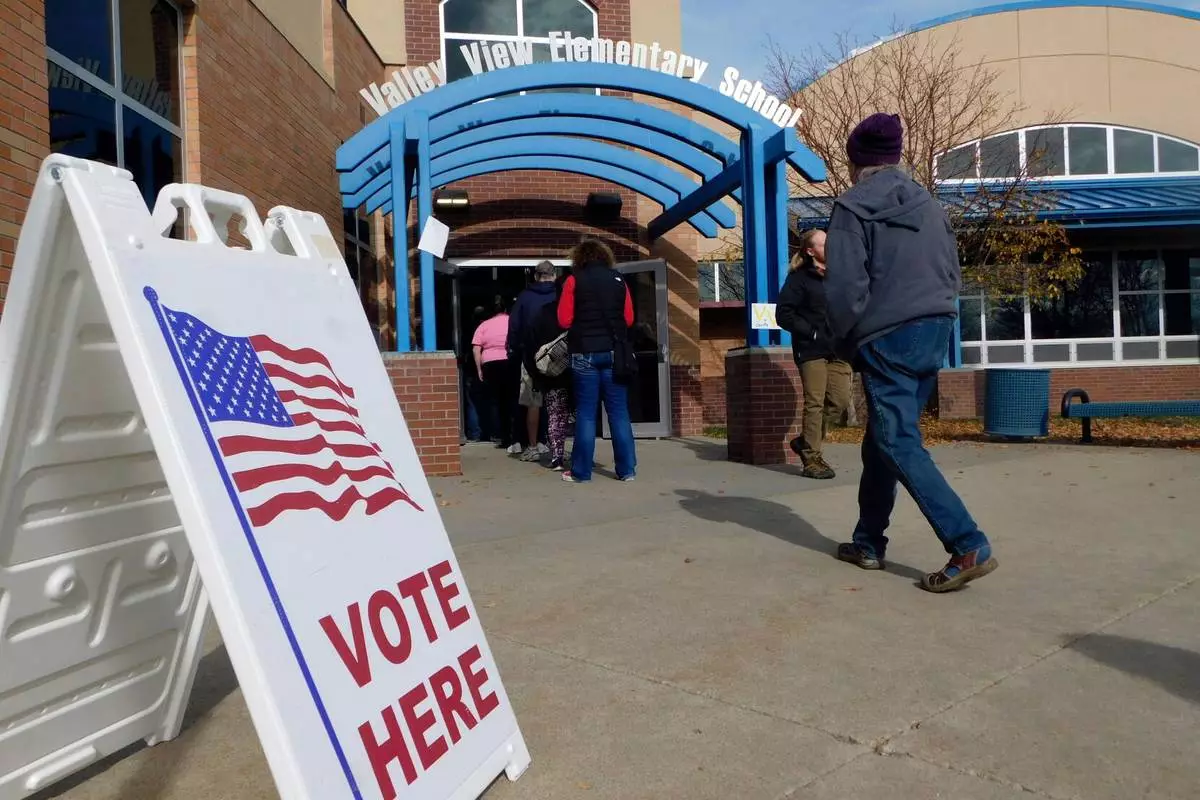
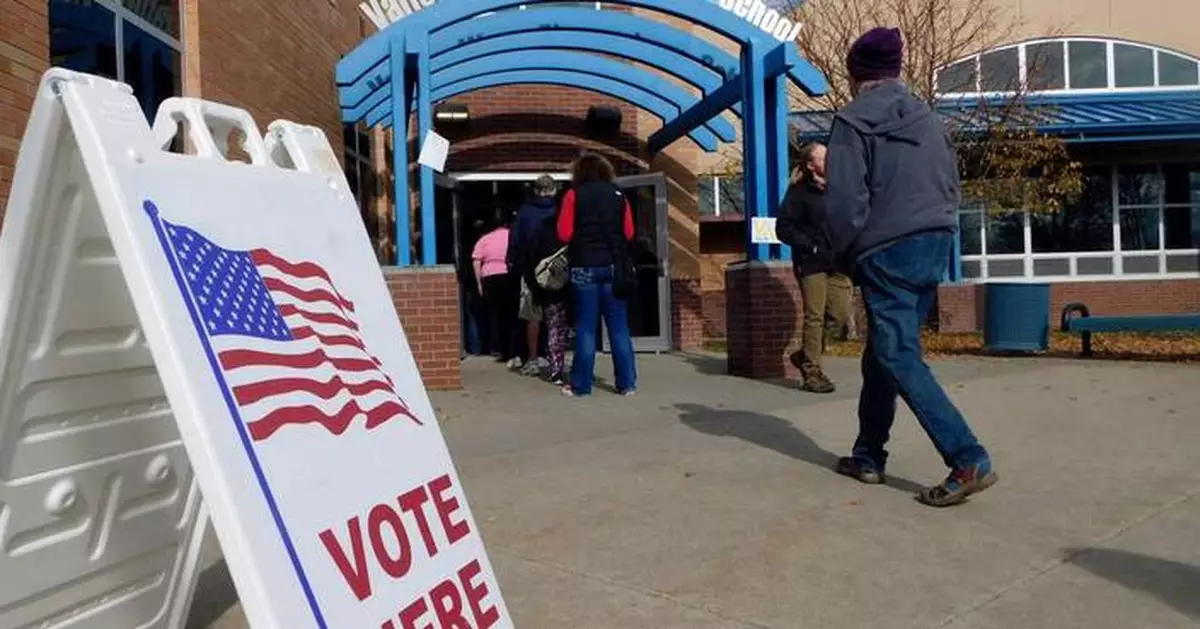
FILE - Pennigton County voters head to the polls at Valley View Elementary School Gym on Election Day, Nov. 5, 2024, in Rapid City, S.D. (Madison Willis/Rapid City Journal via AP, File)