JERUSALEM (AP) — Tens of thousands of ultra-Orthodox demonstrated across Israel on Monday, blocking roads and trains and setting cars on fire to protest mandatory enlistment in Israel’s military.
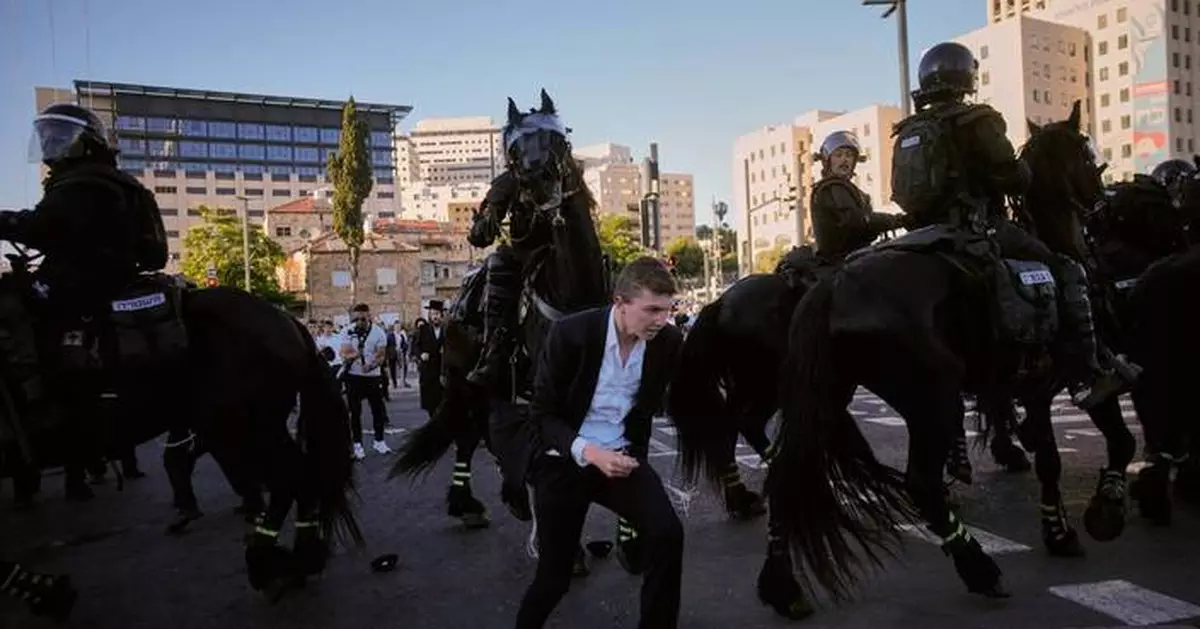
Israel’s police said demonstrators blocked major intersections and attacked a soldier who disembarked from a bus near a protest. Police struggled to control the crowds with water cannons and horses.
The protest largely crippled the country’s center, with highways closed and public transportation halted by the massive crowds in both Jerusalem and the Tel Aviv metro area.
Military service is compulsory for most Jewish men and women in Israel. The politically powerful ultra-Orthodox parties have won exemptions for their followers to forgo military service and instead study in religious seminaries, but those exemptions are under threat.
Many Israelis are tired of the longstanding system that has allowed ultra-Orthodox men to skip military service at a time when the military is stretched to its breaking point and many have served multiple tours of reserve duty. The issue is tearing apart Prime Minister Benjamin Netanyahu’s governing coalition, possibly moving elections up by several weeks this fall after the ultra-Orthodox parties withdrew their support for Netanyahu.
Each year, roughly 13,000 ultra-Orthodox men reach the conscription age of 18, but less than 10% enlist, according to a parliamentary committee.
Faced with severe shortages of soldiers, the military is looking to extend the period of mandatory service. Most Jewish men are required to serve nearly three years of military service, followed by years of reserve duty. Jewish women serve two mandatory years.
“This public is determined, they see this as a war for their lives," said Israel Tropper, a demonstrator in Jerusalem. “From their perspective, going into the Israeli army means giving up religion ... we don’t want to give up our religion, so from our perspective it’s a war for our lives.” He added that there is no way to force tens of thousands of people vehemently opposed to the idea to serve in the military.
Some protesters held signs condemning Israel saying “We would rather die as Jews than live as Zionists” and “We refuse to serve an army for the sake of the Zionist religion.”
The ultra-Orthodox, who make up roughly 13% of Israeli society and are the fastest growing sector, have traditionally received exemptions if they are studying full-time in religious seminaries. The exemptions date back to the birth of the state in 1948, when a small number of students sought to revive the Jewish scholarship system after it was decimated by the Holocaust.
Those exemptions — and the government stipends many seminary students receive up to the age of 26 — have infuriated many Israelis. Israel is currently maintaining a simultaneous military presence in Gaza, Lebanon and Syria, in addition to fighting a war with Iran, which has stretched its robust military to the breaking point.
The Supreme Court said the exemptions were illegal in 2017, but repeated extensions and government delay tactics have left them in place.
Among Israel’s Jewish majority, mandatory military service is largely seen as a melting pot and rite of passage. Many in the insular ultra-Orthodox community fear that military service would expose young people to secular influences.
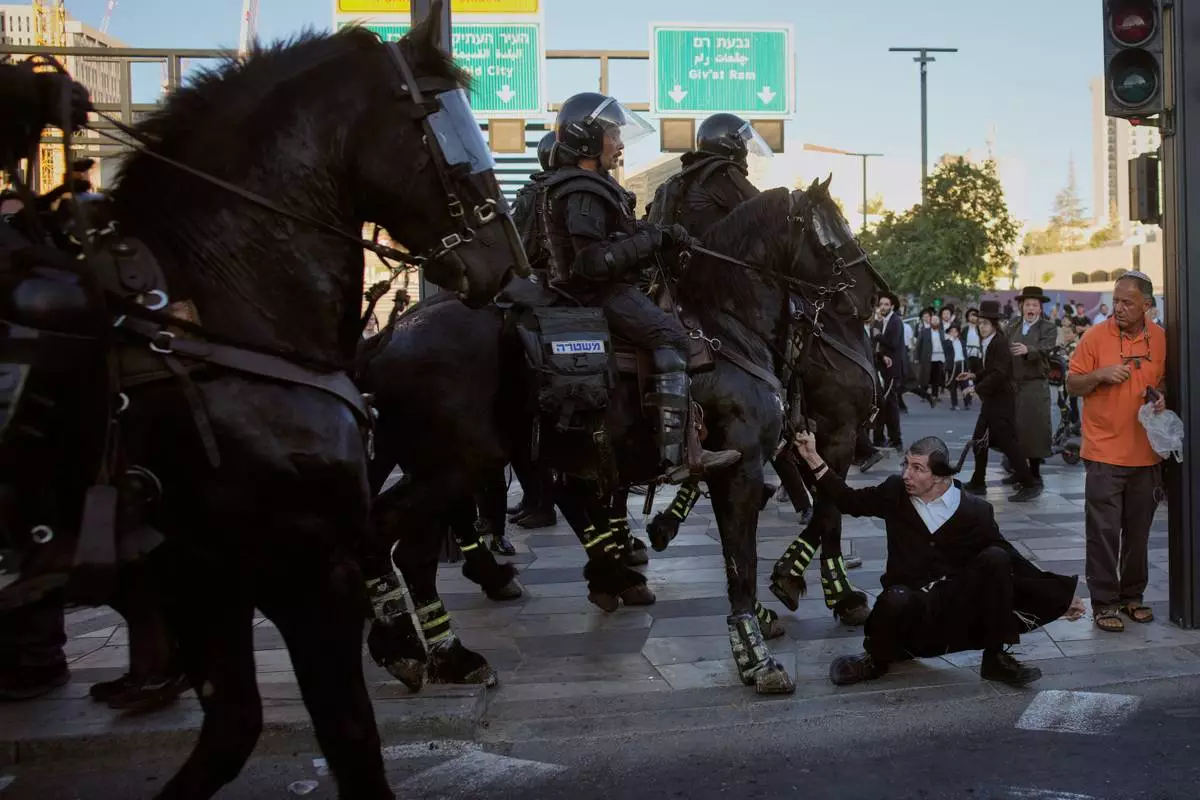
Israeli mounted police disperse Ultra-Orthodox Jews blocking a road during a protest against army draft in Jerusalem, Monday, June 1, 2026. (AP Photo/Ohad Zwigenberg)
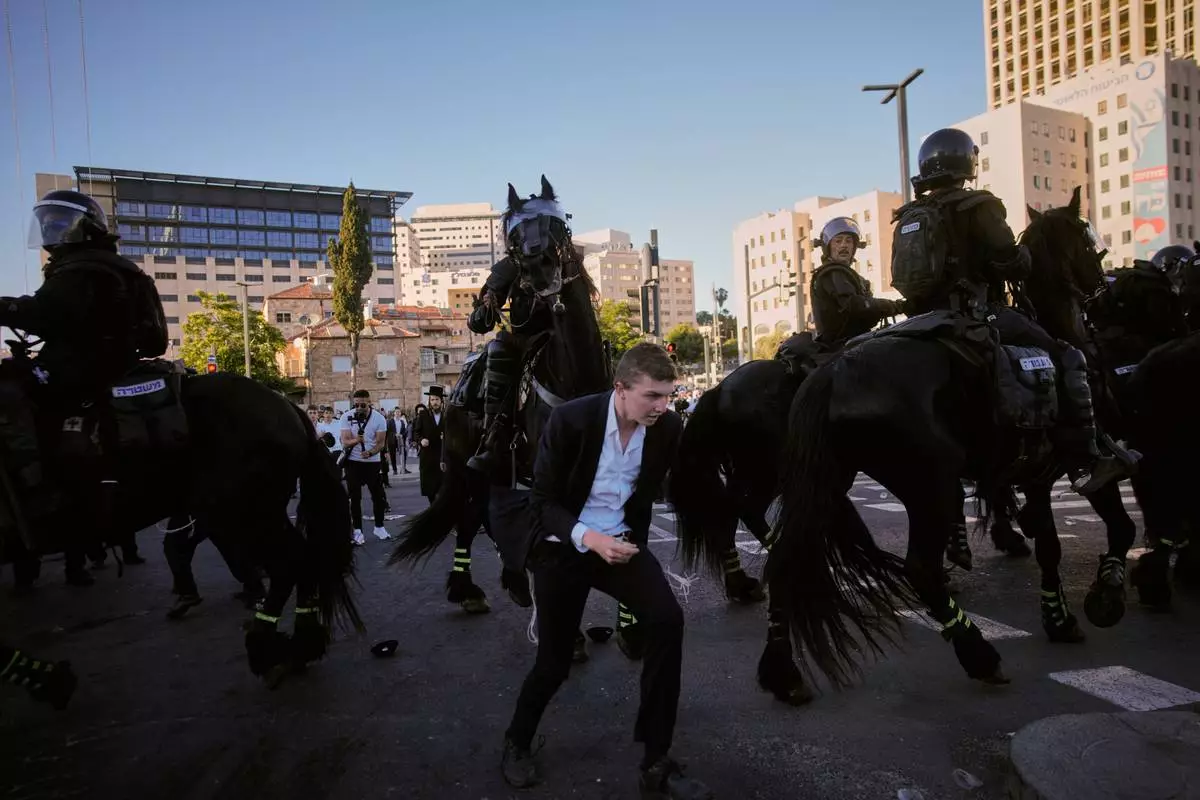
Israeli mounted police disperse Ultra-Orthodox Jews blocking a road during a protest against army draft in Jerusalem, Monday, June 1, 2026. (AP Photo/Ohad Zwigenberg)
BOGOTA, Colombia (AP) — Bombastic pro-Trump lawyer Abelardo de la Espriella pulled ahead in Colombia’s presidential race in the first round of elections over the weekend, capitalizing on a growing appetite for crackdowns on criminal groups across Latin America.
Second-place finisher, progressive Sen. Iván Cepeda, and his ally, President Gustavo Petro, have questioned the election results, without providing evidence.
Cepeda on Monday called on de la Espriella to debate him ahead of their June 21 runoff. De la Espriella replied on X: “Are you ready, coward? … First, acknowledge the election results and let’s debate right now.”
De la Espriella rapidly gained traction ahead of Sunday’s election and won nearly 44% of the vote. Cepeda, who had consistently led polling, won less than 41%.
In the runoff, De la Espriella is expected to scoop up additional votes from Colombians who supported other conservative candidates in the first round.
Cepeda will face an uphill battle, said Sergio Guzmán, a political analyst. De la Espriella's win is "a shift in public opinion that is very difficult to overcome. So now Abelardo is emerging as the likely favorite to win.”
Markets in Colombia and the Colombian peso jumped on Monday, likely a product of de la Espriella’s proposal to roll back regulations on businesses and willingness to open the country to fracking — a sharp turn from Petro’s environmental agenda.
Miroslav Jenca, head of the United Nations verification mission in Colombia, said Monday that his team observed firsthand the commitment of Colombian security and electoral authorities to ensure an orderly vote.
“I call for a peaceful election campaign, without resorting to any violence,” Jenca said. “I encourage all parties to address their differences through institutional mechanisms.”
The 47-year-old De la Espriella, known as “El Tigre” or “The Tiger,” has never held office in Colombia and prided himself on living a luxurious life in Italy before deciding to run for president.
He pitched himself as an outsider who would cozy up to U.S. President Donald Trump and follow El Salvador President Nayib Bukele's war on gangs, which has driven down homicide rates but fueled accusations of human rights abuses.
“I will wipe out narcoterrorism and those who I've declared a military target like cockroaches, like rats. I will unleash upon them the wrath of God never seen before,” de la Espriella said in an interview with The Associated Press in the final stretch of the campaign, where he promised to open 10 mega-prisons to fight crime.
He joins a growing number of leaders across Latin America, from Chile to Honduras, seeking to latch onto the “Bukele model” as voters across Latin America are ditching leaders who pitched progressive policies aimed at addressing the root issues of conflict such as lack of opportunities for young people and corruption.
De la Espriella's supporters come from a wide range of backgrounds. Yolanda Peréz, a 64-year-old woman serving coffee in Colombia's capital, Bogotá, said with a wink the day before the election: “I'm thinking of voting for El Tigre.”
Miguel Maheca, a 20-year-old first-time voter, flashed his ballot to his mother as he strolled out of the polling station on Sunday, saying with a grin, “Love isn't what's going to make us safe in Colombia."
But experts say El Salvador's security successes will be nearly impossible to replicate in a country like Colombia, which is more than 50 times larger than the Central American nation and has many more armed groups fighting for territory.
The Trump administration is playing a more aggressive role in Latin America than any U.S. government in decades, putting mounting pressure on countries like Colombia, Mexico and Ecuador to crack down on crime.
De la Espriella made a name for himself as a lawyer defending high-profile clients such as former President Álvaro Uribe as well as controversial figures like Alex Saab, a close ally of Venezuela’s ousted president Nicolás Maduro who faces legal issues in the U.S.
The progressive Cepeda has promised to carry on his ally Petro's fraught plan to achieve “total peace” by negotiating peace pacts with guerrillas and criminal gangs.
Their political movement was born from a rejection by many Colombians of a militarized offensive by Uribe in decades past to beat back guerrillas of the Revolutionary Armed Forces of Colombia, or FARC. Thousands of civilians were killed by Colombian forces in a scandal known as “false positives.”
De la Espriella “represents a return to the paramilitary politics and drug-trafficking — a mafia-run, plutocratic and corrupt past that the country experienced during Álvaro Uribe’s two administrations,” Cepeda said on Sunday.
Petro, a former rebel, won Colombia's presidency in 2022, ending decades of domination by leaders from Uribe's political movement. He gained massive support from rural-dwelling, Indigenous and poorer Colombians who felt they had never been directly spoken to by the country's leaders.
Now that movement is backed into a corner.
“This is de la Espriella’s election to lose,” wrote Renata Segura, director of International Crisis Group's Latin America and the Caribbean Program. “Cepeda thought he could win appealing squarely to the left, and that proved to be a massive mistake. How he pivots in the next month will determine if he has any chance to win.”
Follow AP’s coverage of Latin America and the Caribbean at https://apnews.com/hub/latin-america
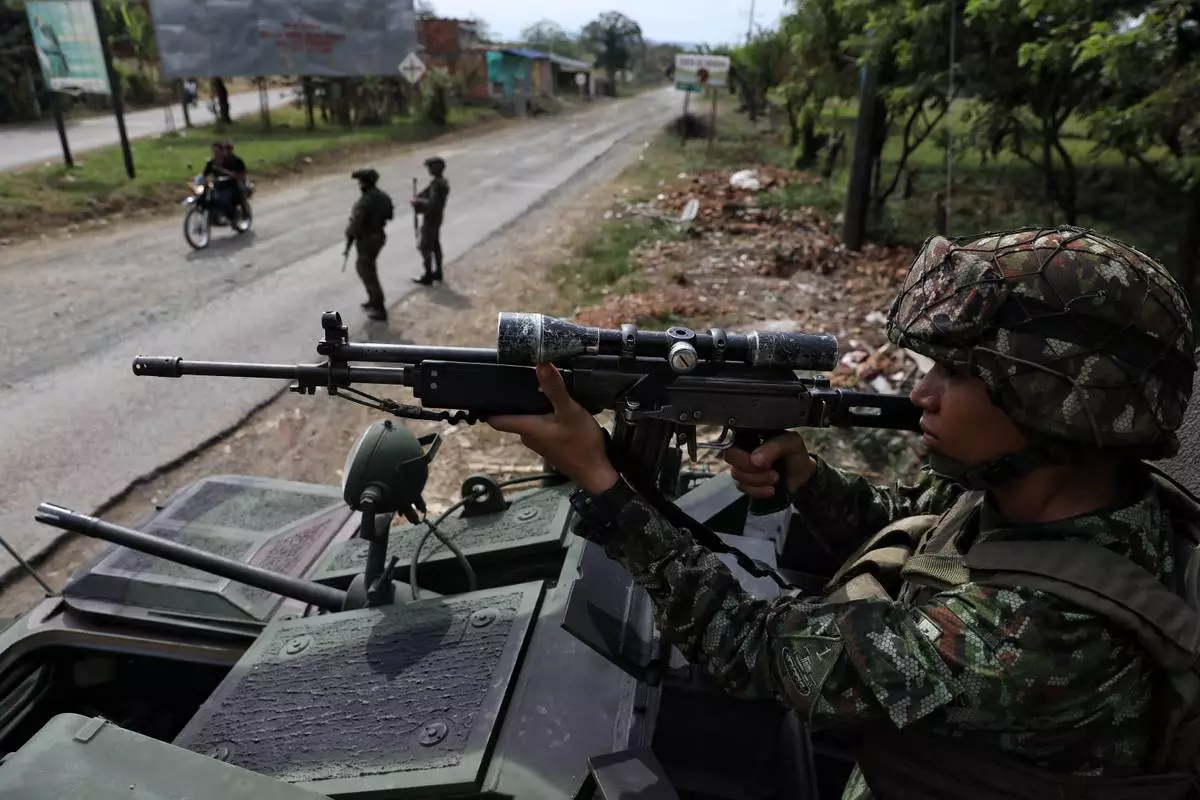
Soldiers guard during the presidential election in Santander de Quilichao, Colombia, Sunday, May 31, 2026. (AP Photo/Santiago Saldarriaga)
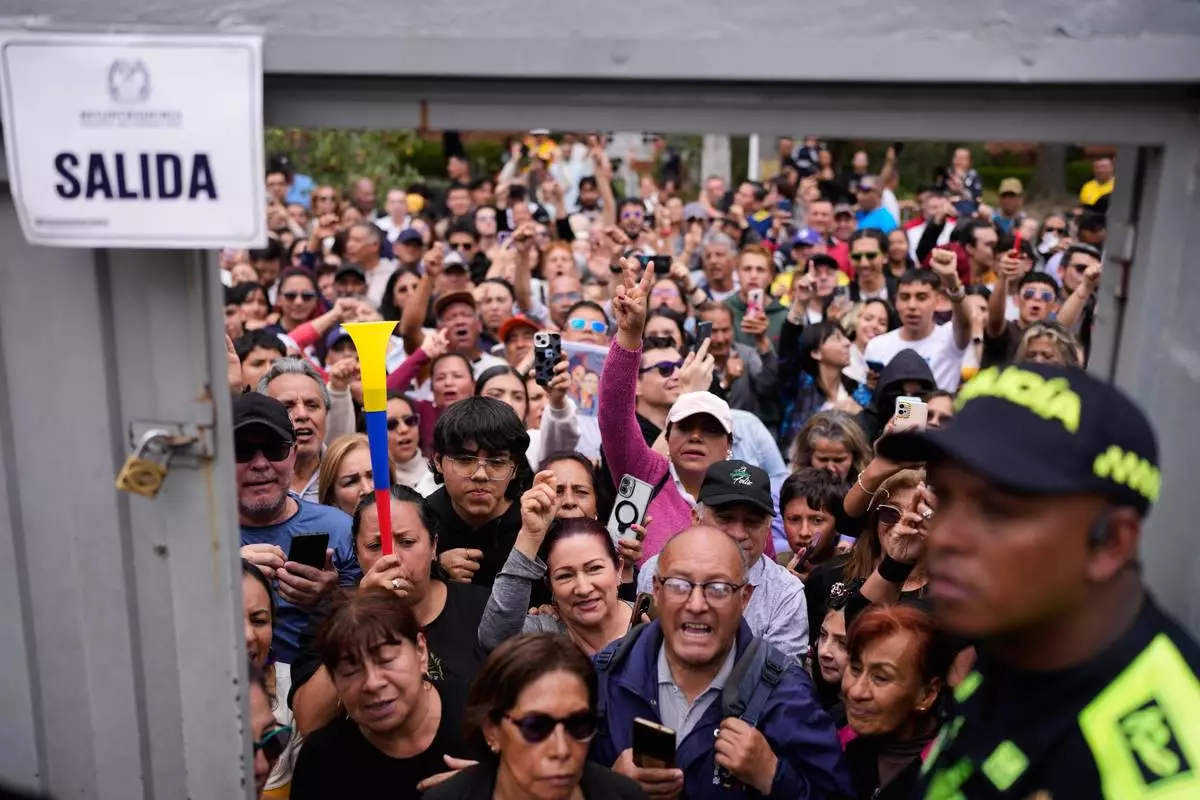
Supporters of presidential candidate Ivan Cepeda of the ruling Historic Pact coalition gather outside the polling station where he voted during the presidential election in Bogota, Colombia, Sunday, May 31, 2026. (AP Photo/Matias Delacroix)
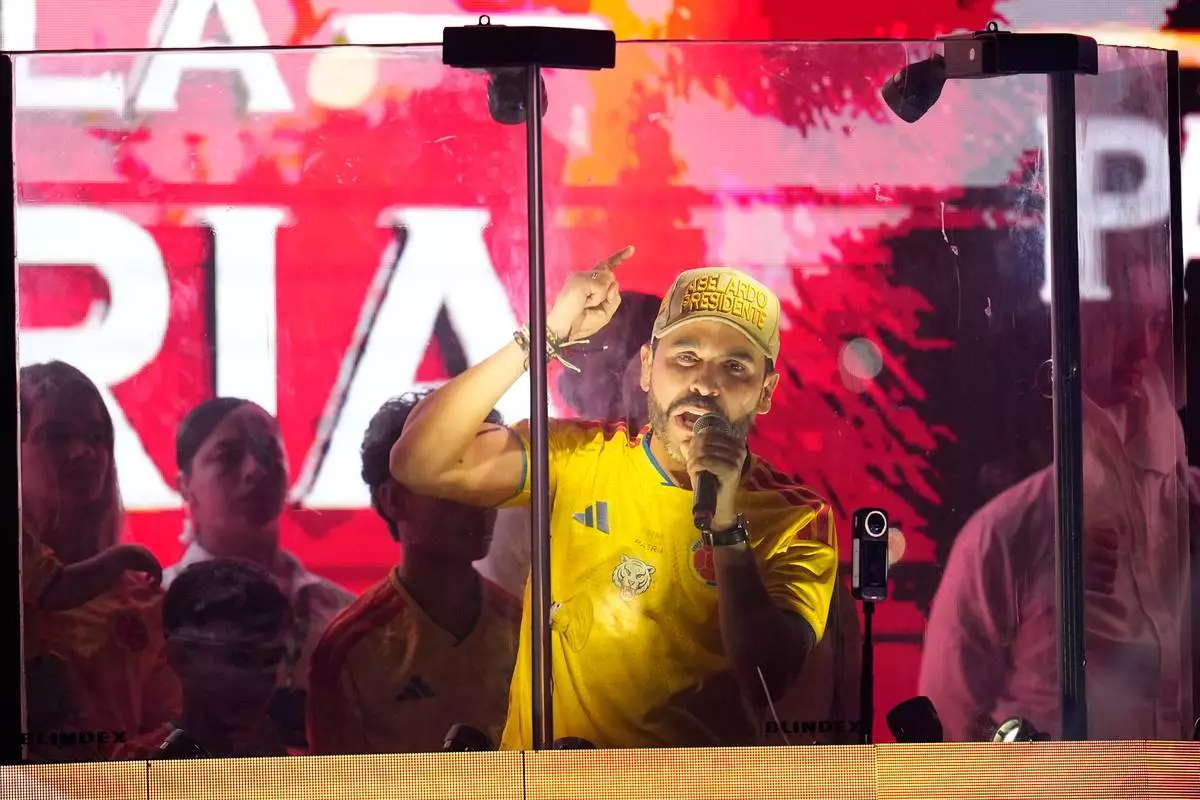
Presidential candidate Abelardo de la Espriella of the Defenders of the Motherland movement addresses supporters from inside a bulletproof booth after leading the first round of the presidential election and advancing to a runoff in Barranquilla, Colombia, Sunday, May 31, 2026. (AP Photo/Fernando Vergara)
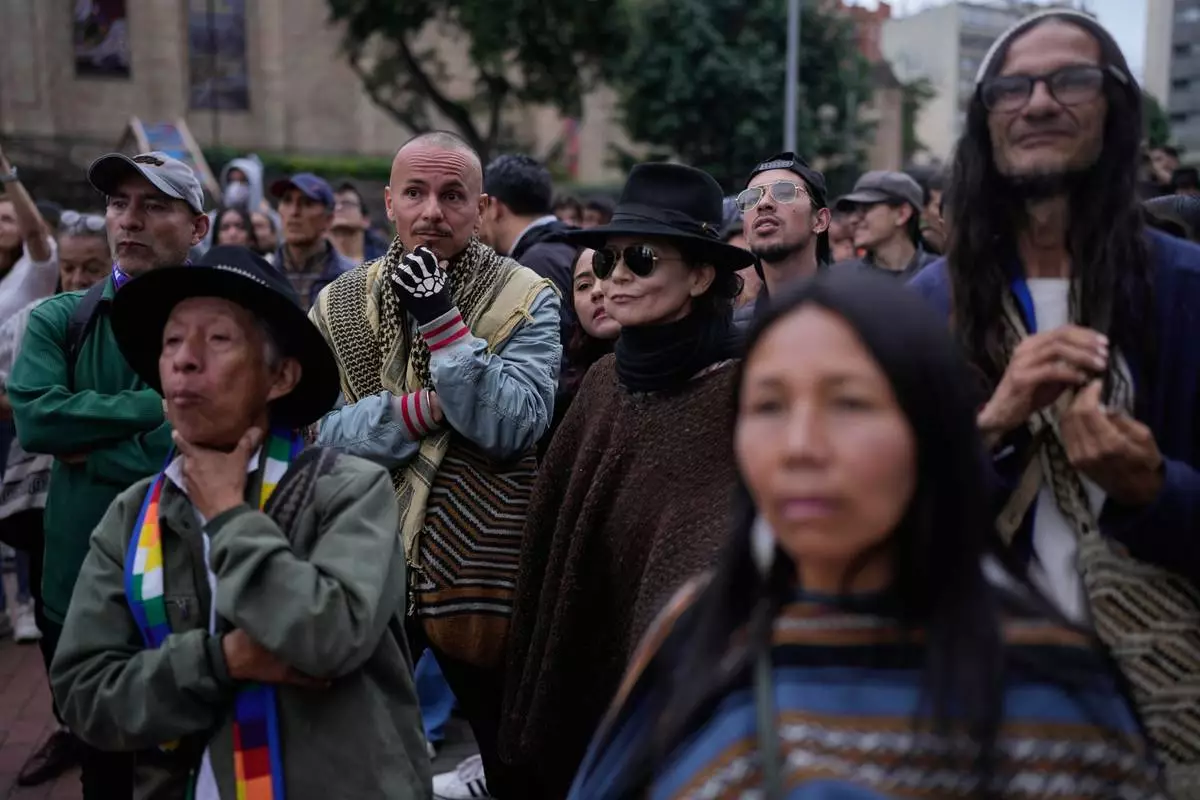
Supporters of presidential candidate Ivan Cepeda of the ruling Historic Pact coalition react as presidential election results are announced in Bogota, Colombia, Sunday, May 31, 2026. (AP Photo/Matias Delacroix)
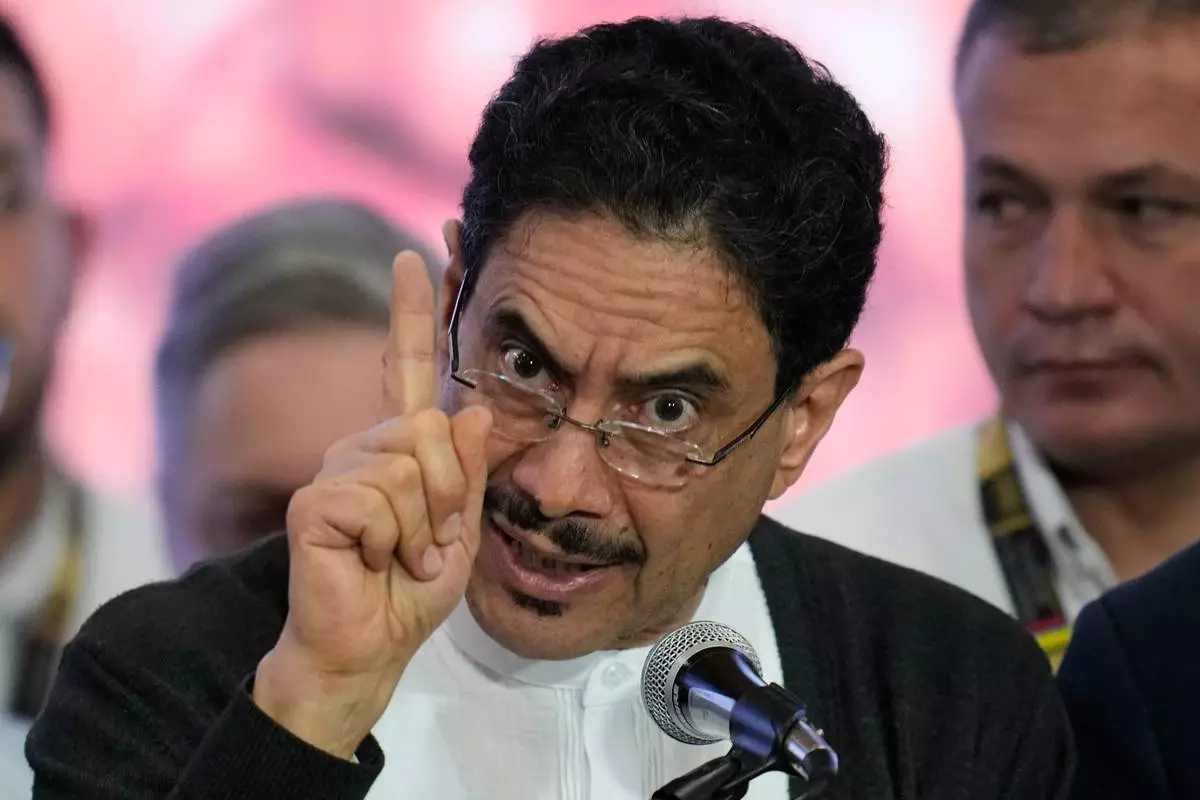
Presidential candidate Ivan Cepeda of the ruling Historic Pact coalition addresses supporters after advancing to a runoff election in second place in Bogota, Colombia, Sunday, May 31, 2026. (AP Photo/Matias Delacroix) CORRECTION: Corrects Paloma Valencia to Ivan Cepeda, and photographer Jose Vargas to Matias Delacroix
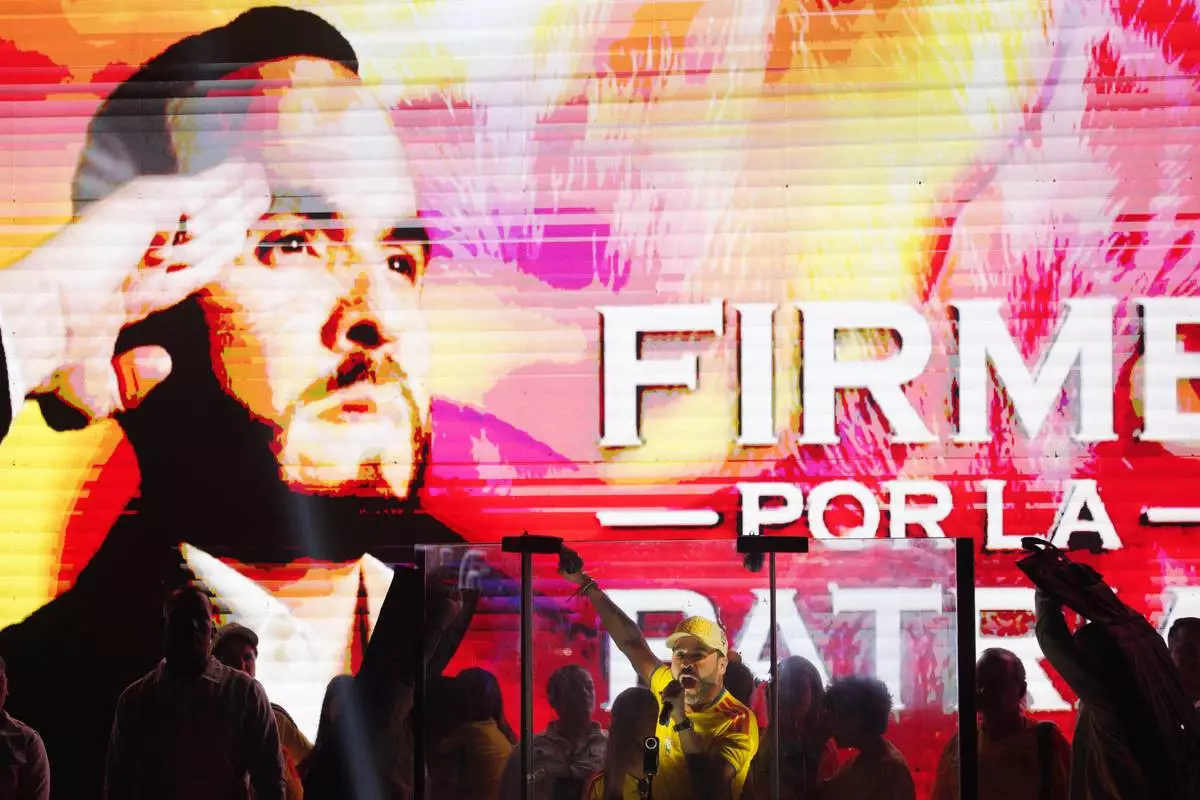
Presidential candidate Abelardo de la Espriella of the Defenders of the Motherland movement addresses supporters from inside a bulletproof booth after leading the first round of the presidential election and advancing to a runoff in Barranquilla, Colombia, Sunday, May 31, 2026. (AP Photo/Ivan Valencia)
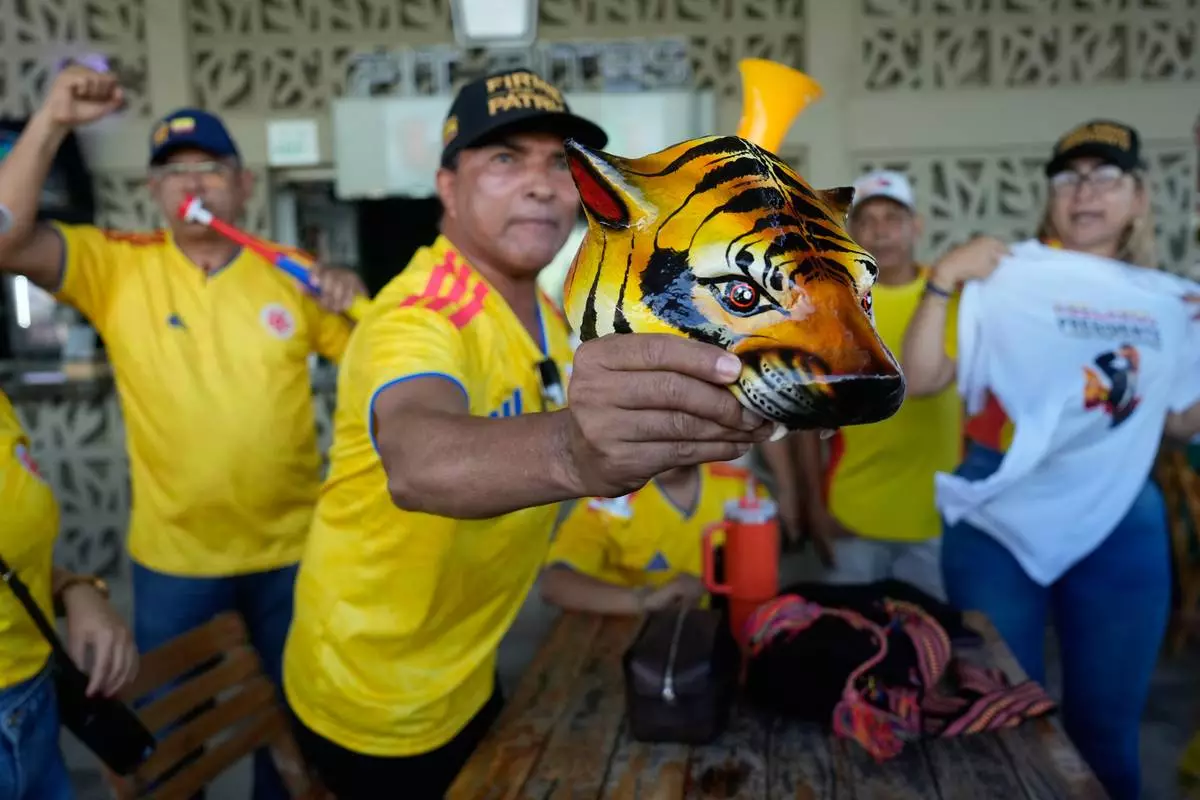
Supporters of presidential candidate Abelardo de la Espriella of the Defenders of the Motherland movement celebrate election results in Barranquilla, Colombia, Sunday, May 31, 2026. (AP Photo/Fernando Vergara)
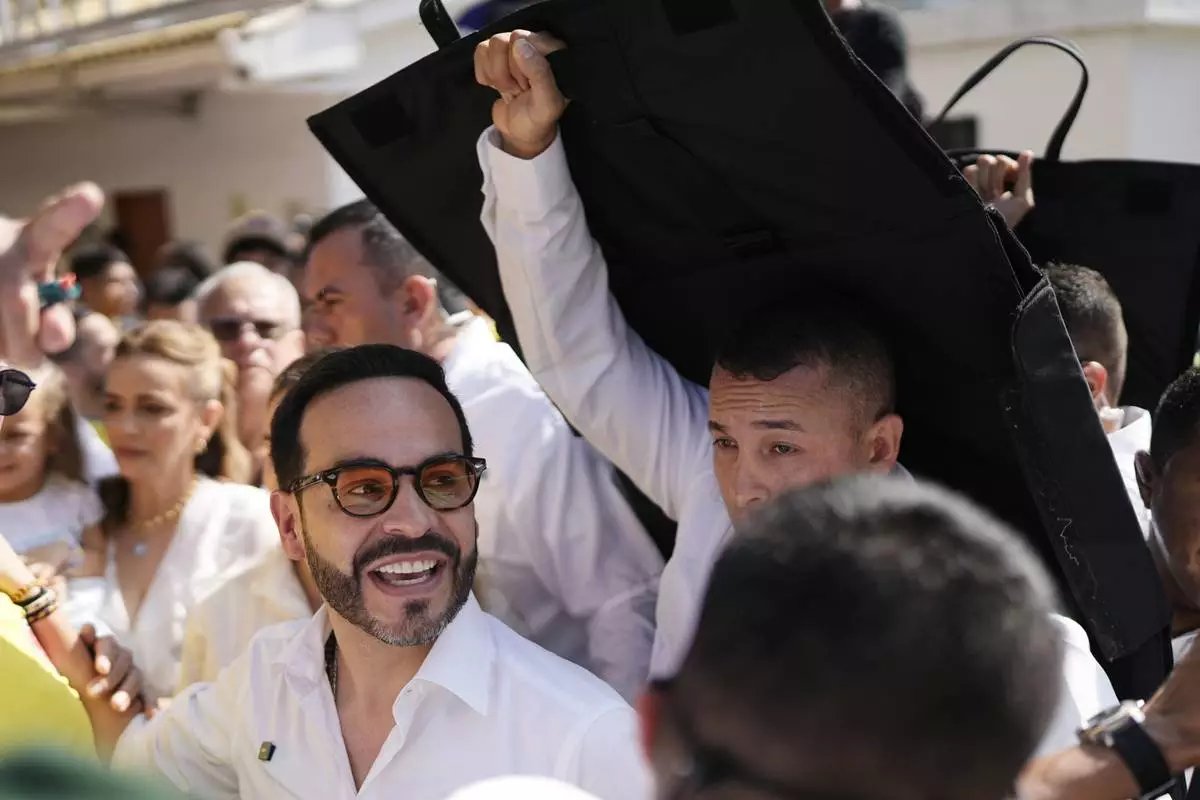
Presidential candidate Abelardo de la Espriella of the Defenders of the Motherland movement depart a polling station after voting during the presidential election in Barranquilla, Colombia, Sunday, May 31, 2026. (AP Photo/Ivan Valencia)