DES MOINES, Iowa (AP) — Iowa Democrats on Tuesday will settle one of the party's last competitive U.S. Senate primaries, choosing between two state lawmakers who each say he is better poised to flip a retiring Republican’s seat.
Either Josh Turek or Zach Wahls will go up against a full-throttled Republican defense of two-term Sen. Joni Ernst’s seat, which the GOP considers pivotal to keeping its Senate majority. It’s one of many competitive races in Iowa attracting national interest, including from the White House. President Donald Trump and Vice President JD Vance have both touched down in the state this year to shore up Republican enthusiasm.
U.S. Rep. Ashley Hinson is seeking the GOP nomination and has the backing of Trump and Ernst. She is running against former state Sen. Jim Carlin.
Democrats feel hopeful that high prices, lost manufacturing jobs, shuttered healthcare facilities and a struggling agricultural economy will help the party dismantle the all-GOP federal delegation and Republican statehouse trifecta. Leading the ticket is State Auditor Rob Sand, the candidate for governor and the lone Democrat currently holding statewide office. Unopposed in his primary and absent a clear Republican opponent, Sand has had a long runway to hone his moderate message, remind voters of his rural upbringing and amass an $18 million campaign fund.
Republicans, meanwhile, must close the door on a five-way primary Tuesday for the nominee to replace outgoing Gov. Kim Reynolds.
As Democrats look to reclaim Senate control, Iowa is one of the last states on the map where candidates are still fighting to be the party's nominee. The GOP Senate campaign arm has committed $29 million to help the party's nominee.
The Democratic Party’s ongoing debate over the party's direction and strategy to win back disaffected voters is playing out in Iowa, albeit with different dynamics than it did in Maine or Texas.
Turek and Wahls are aligned on many Democratic positions, including a public health insurance option, higher minimum wage and more labor bargaining rights. They both talk about corruption in politics benefiting corporate interests and hurting working-class people.
But they campaigned on different visions for how to win statewide in November — and attracted distinct lines of attack from their Republican opponents.
Turek is a relative newcomer to elected office. He played professional wheelchair basketball in Europe, and he competed for the U.S. in four Paralympics, including as recently as 2021. He won his state House seat in 2022.
Wahls rose to national fame in 2011 as a 19-year-old who defended his two moms to lawmakers considering a resolution against same-sex marriage. He addressed the Democratic National Convention the following year. He won his first state Senate term in 2018 and was Senate Democrats’ leader for nearly three years.
Wahls said at the time that his “vision for change” was what led his Senate colleagues to oust him as minority leader. He emphasized in a debate last month that “we desperately need a new vision for small town and rural Iowa” and said his message is resonating with working-class voters frustrated with both parties.
Wahls' opposition to U.S. Sen. Chuck Schumer as party leader has been a defining tenet of his campaign. He has criticized a coastal playbook that doesn’t work in Iowa.
Turek referred to himself as an underdog when he launched last August, but a flood of outside support has boosted him in the final stretch. Democratic political operation VoteVets has spent $10 million to blanket the airwaves, social media and mailboxes in support of Turek. Political organizations affiliated with Schumer and Kirsten Gillibrand, who chairs the Democratic Senate campaign arm, have both recently contributed to Turek's campaign committee.
Responding to Wahls’ criticism of the cash, Turek has said he’s not a “D.C. insider.” He has argued his success in a Trump-won district can translate statewide.
Five Republicans are in the primary to replace Reynolds, who opted out of a third bid. The nominee will face a well-funded Sand.
The candidates are U.S. Rep. Randy Feenstra, state Rep. Eddie Andrews, businessman and former conservative political director Zach Lahn, former state Rep. Brad Sherman and former director of the state Department of Administrative Services Adam Steen.
Trump endorsed Feenstra on Friday, saying on social media that “Randy is MAGA all the way!"
If no candidate earns at least 35% of Republican primary voters, the nominee would be selected at a contested state party convention scheduled for June 13.
Iowa Republicans have not had a competitive primary for governor since former Gov. Terry Branstad won the nomination in 2010. Reynolds became governor in 2017 when Branstad was appointed U.S. ambassador to China.
While Republicans celebrate years of progress under Reynolds, the primary has unearthed sticking points over economic development, tax policy and property rights, as well as the relationship between the state’s water quality, farm conservation practices and rising cancer rates.
Republican Rep. Mariannette Miller-Meeks, endorsed by Trump, again faces a 1st District challenge from businessman David Pautsch, who earned 44% of votes against the incumbent congresswoman in the 2024 primary. Three-time Democratic candidate Christina Bohannan, who came about 800 votes shy of unseating Miller-Meeks in the last election, has the Democratic congressional committee's support but must first fend off her primary opponent, first-time candidate Travis Terrell.
In northeastern Iowa, former state Rep. Joe Mitchell, endorsed by Trump, and state Sen. Charlie McClintock are Republicans seeking Hinson’s open 2nd District seat. Three Democrats want the nomination: state Rep. Lindsay James, former nonprofit leader Clint Twedt-Ball and Kathy Dolter, a former dean of nursing at an Iowa community college.
Republican incumbent Rep. Zach Nunn and Democratic state Sen. Sarah Trone Garriott are both unopposed on the primary ballot in the competitive 3rd Congressional District.
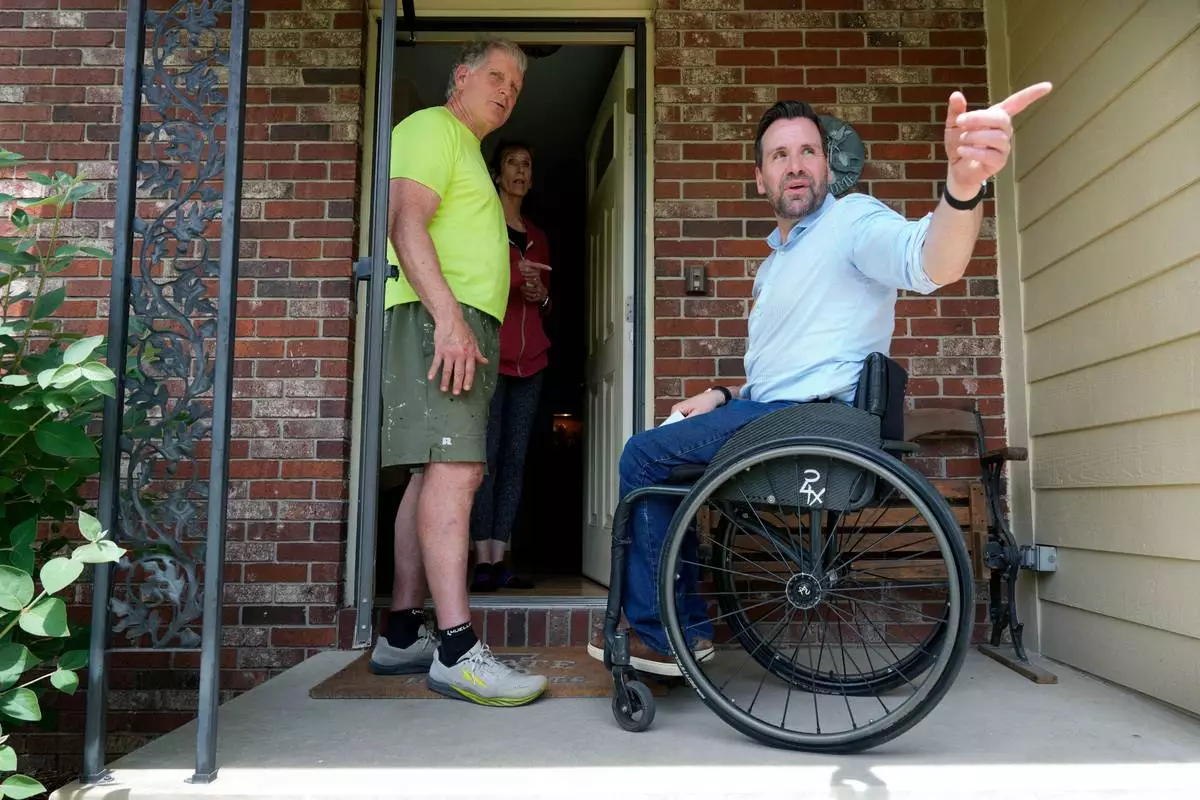
Iowa state Rep. Josh Turek, a Democratic candidate for U.S. Senate, talks with Dave, left, and Lynnae Lathrop while canvassing, Sunday, May 31, 2026, in Waukee, Iowa. (AP Photo/Charlie Neibergall)
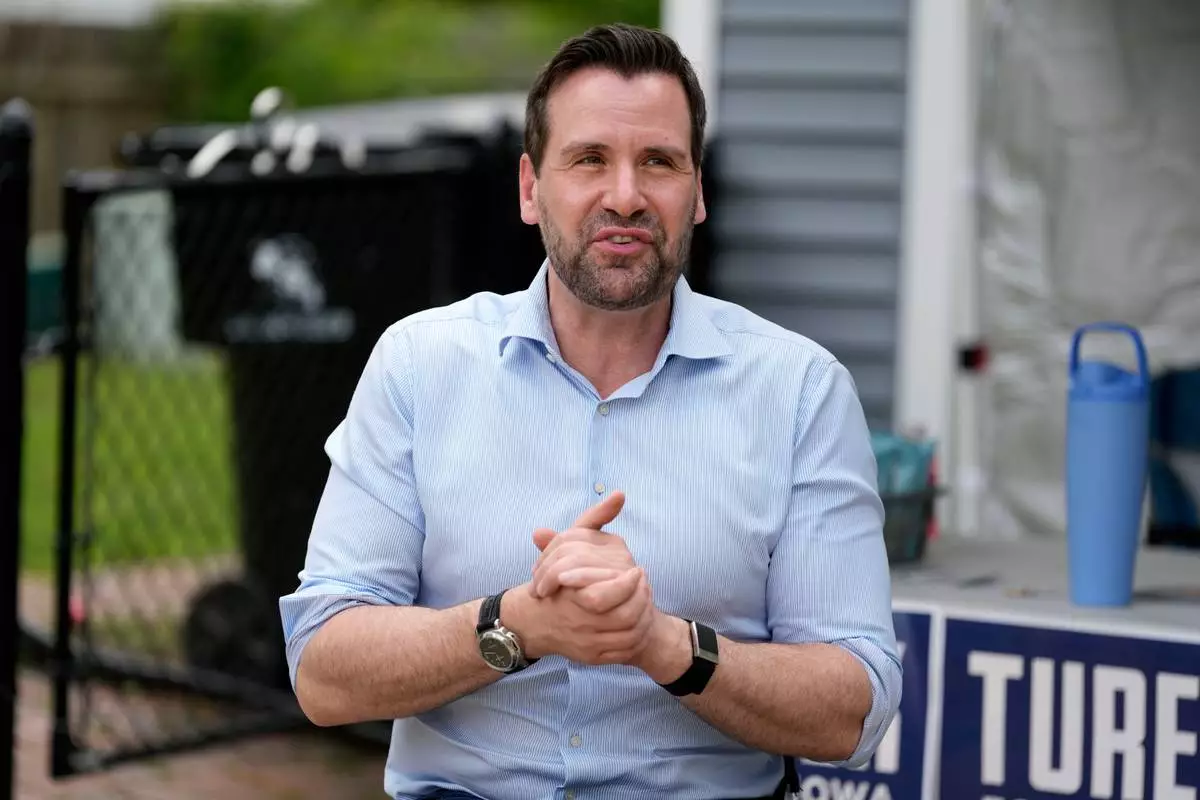
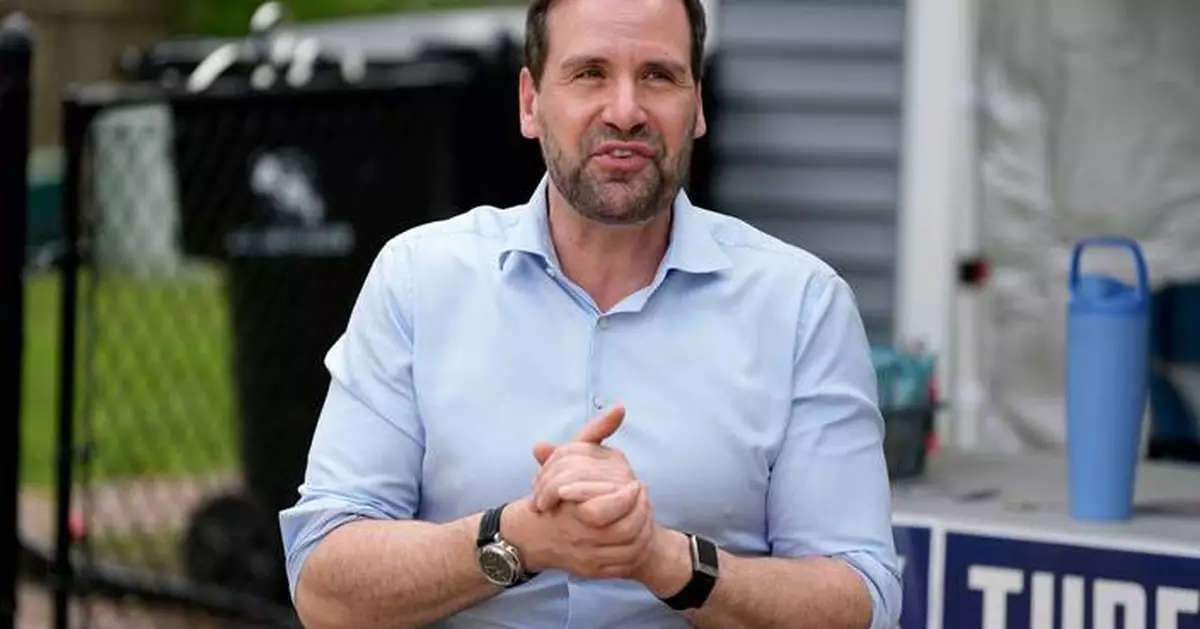
Iowa state Rep. Josh Turek, a Democratic candidate for U.S. Senate, speaks to supporters before a canvassing event, Sunday, May 31, 2026, in Waukee, Iowa. (AP Photo/Charlie Neibergall)