TOKYO (AP) — Asian shares mostly declined Tuesday as renewed fighting threatened the U.S.-Iran ceasefire.
U.S. futures also fell.
Click to Gallery
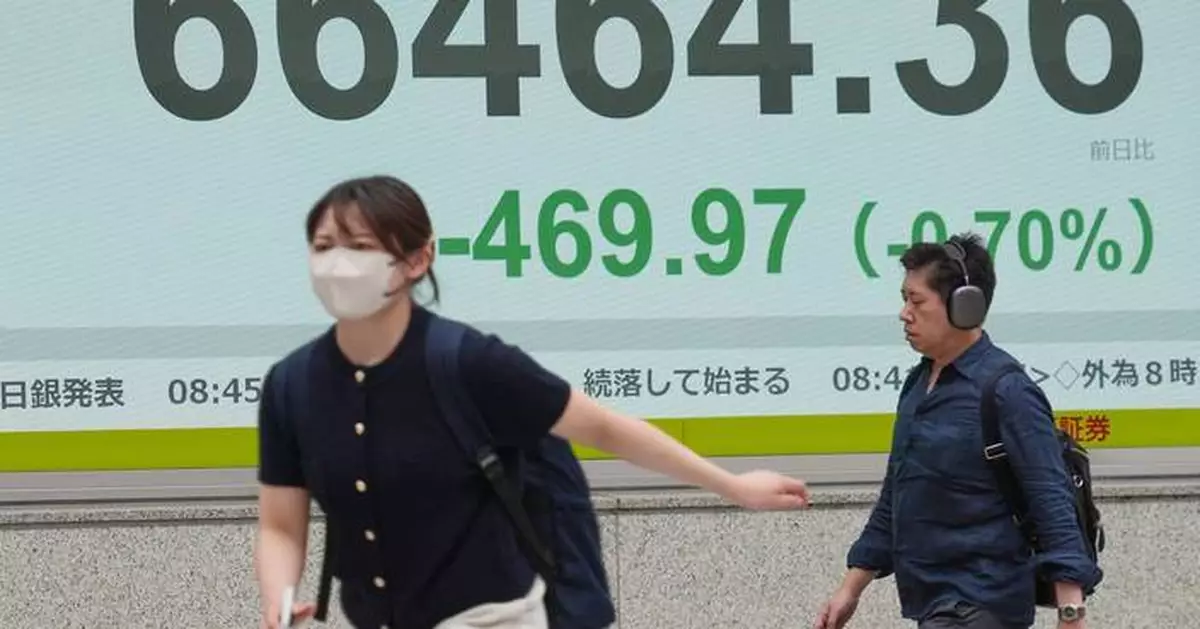
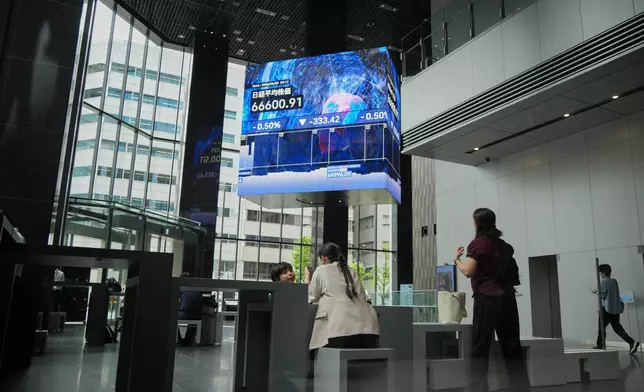
People walk in front of an electronic stock board showing Japan's Nikkei index at a securities firm Tuesday, June 2, 2026, in Tokyo. (AP Photo/Eugene Hoshiko)
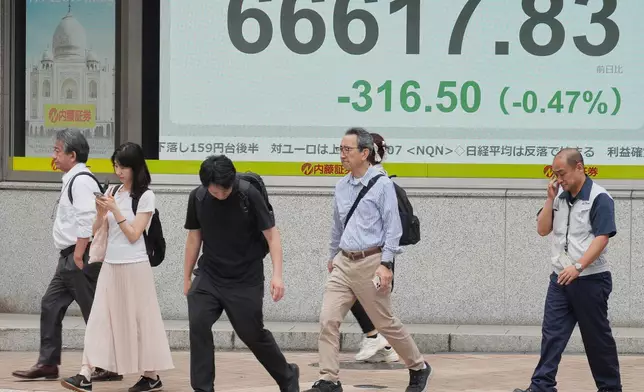
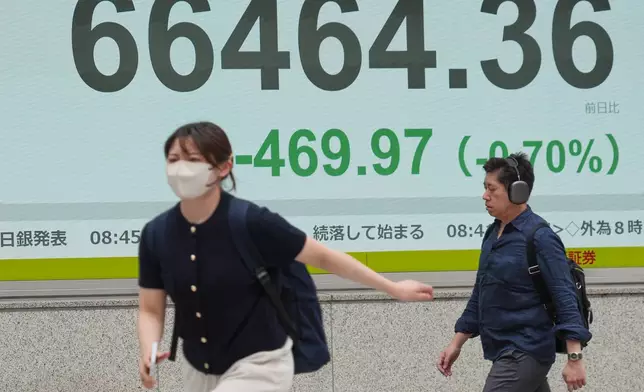
A person looks at an electronic stock board showing Japan's Nikkei index at a securities firm Tuesday, June 2, 2026, in Tokyo. (AP Photo/Eugene Hoshiko)
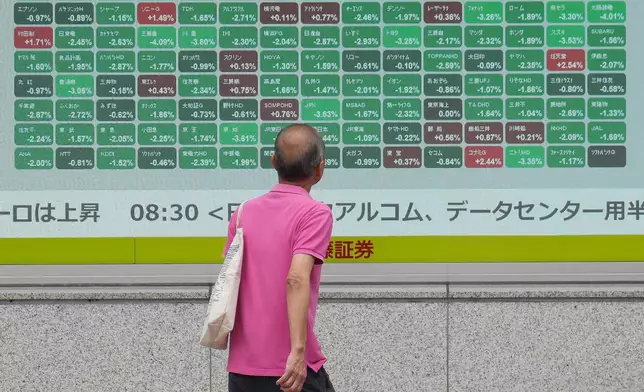
People stop in front of an electronic stock board showing Japan's Nikkei index at a securities firm Tuesday, June 2, 2026, in Tokyo. (AP Photo/Eugene Hoshiko)
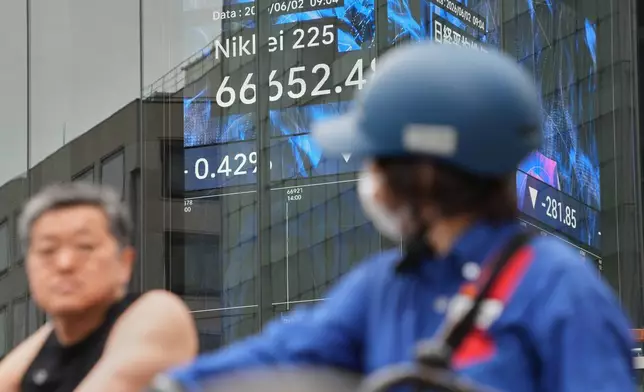
People gather in front of an electronic stock board showing Japan's Nikkei index at a securities firm Tuesday, June 2, 2026, in Tokyo. (AP Photo/Eugene Hoshiko)
People walk in front of an electronic stock board showing Japan's Nikkei index at a securities firm Tuesday, June 2, 2026, in Tokyo. (AP Photo/Eugene Hoshiko)
Japan's benchmark Nikkei 225 slipped 1.6% to 65,833.49 and South Korea's Kospi dipped 1.7% to 8,642.82.
The Hang Seng gained 1.2% to 25,698.75, while the Shanghai Composite slipped less than 0.1% to 4,056.56.
Australia’s S&P/ASX 200 shed 0.4% to 8,692.20.
Monday on Wall Street, U.S. stocks ticked to more records.
The S&P 500 added 0.3% to close at 7,599.96 and the Dow Jones Industrial Average rose 0.1% to 51,078.88. The Nasdaq composite climbed 0.4% to 27,086.81.
In the bond market, the yield for the 10-year Treasury briefly approached 4.52% before regressing to 4.46%, up from 4.45% late Friday.
U.S. companies with big fuel bills were hurt by rising oil prices. United Airlines lost 2.6%, and Alaska Air Group fell 3.3% after the price for a barrel of Brent crude oil climbed in overnight trading.
In Asian trading early Tuesday, benchmark U.S. crude lost 39 cents to $91.77 a barrel. Brent crude, the international standard, slipped 28 cents to $94.70 a barrel. The levels are still well above the roughly $70 level they were at before the war.
Much hinges on whether the United States and Iran will reach an agreement to reopen the Strait of Hormuz, allowing deliveries of oil to resume from the Persian Gulf and easing the upward pressure on inflation.
Japan, for instance, imports almost all its oil, although the effects on prices of gas and other products have been relatively contained by the release of the nation's reserves so far.
“Crude shortages have already forced refiners across Asia and Europe to aggressively reduce runs,” said analyst Stephen Innes. “The result is that the squeeze is no longer confined to crude inventories. It is spreading into the fuels that actually power economies: gasoline, diesel, jet fuel, LPG, and naphtha.”
On Monday, the United States said it bombed Iranian radar and drone sites after Tehran downed an American drone. Iran said it targeted U.S. soldiers in Kuwait with missiles that the U.S. said it shot down.
However, U.S. President Donald Trump said Israel and Hezbollah agreed to dial back their fighting after he spoke with Israeli Prime Minister Benjamin Netanyahu and communicated with the Lebanon-militant group through mediators.
On Wall Street, Nvidia was the strongest force lifting the market and rose 6.2% after CEO Jensen Huang announced several product updates at a conference. What Nvidia does matters immensely for the U.S. stock market because it’s the biggest in terms of overall market value.
In currency trading, the U.S. dollar rose to 159.70 Japanese yen from 159.66 yen. The euro was unchanged at $1.1631.
AP Business Writer Stan Choe contributed.
Yuri Kageyama is on Threads: https://www.threads.com/@yurikageyama
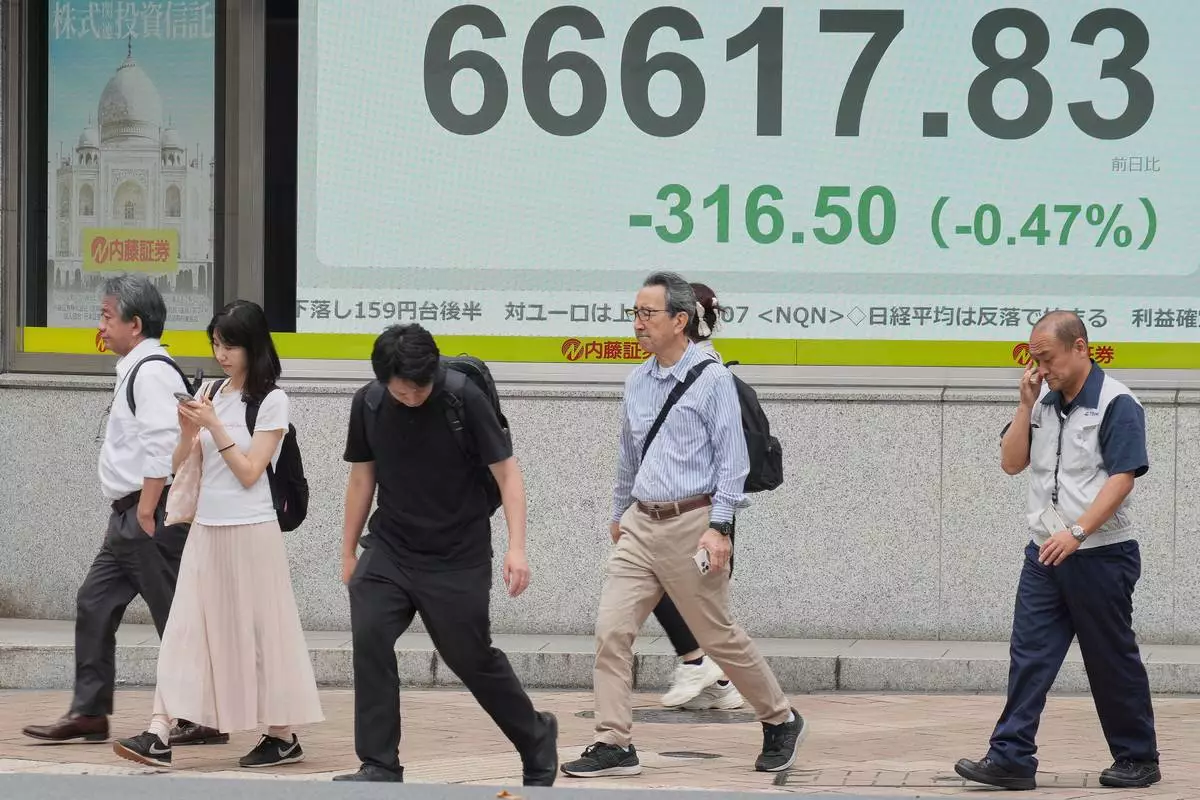
People walk in front of an electronic stock board showing Japan's Nikkei index at a securities firm Tuesday, June 2, 2026, in Tokyo. (AP Photo/Eugene Hoshiko)
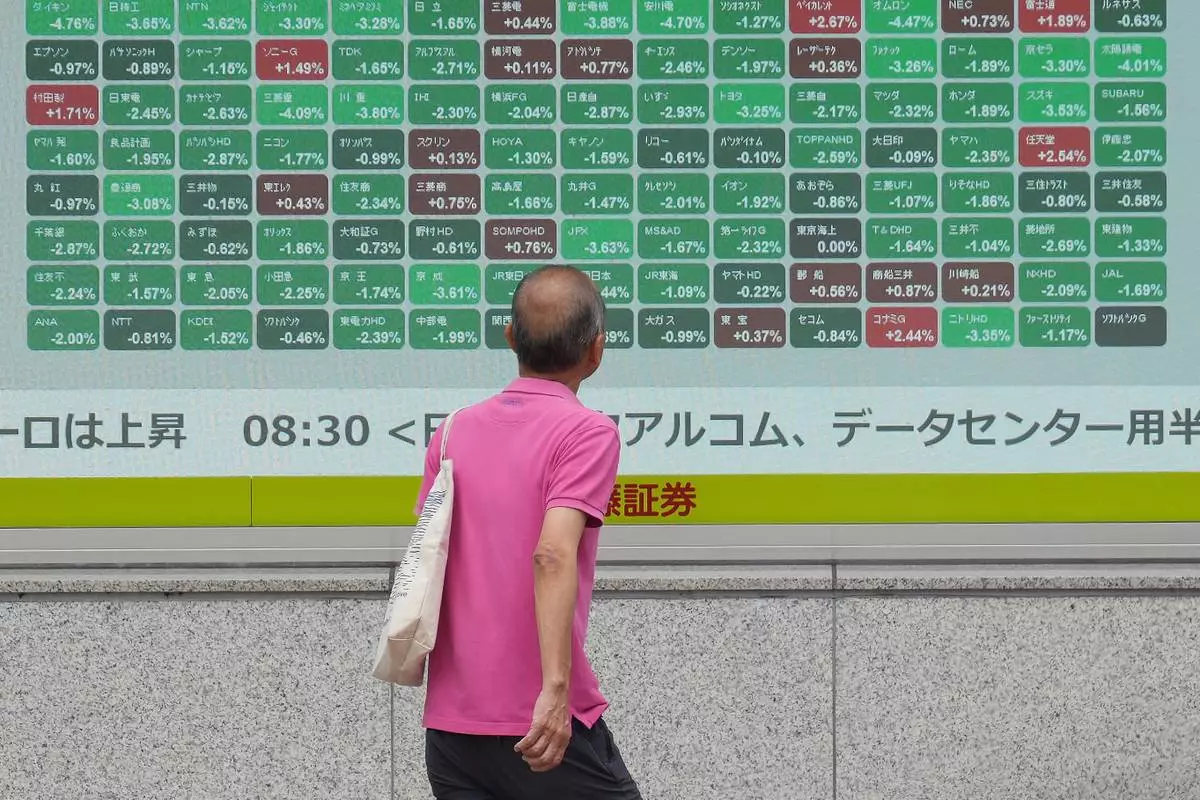
A person looks at an electronic stock board showing Japan's Nikkei index at a securities firm Tuesday, June 2, 2026, in Tokyo. (AP Photo/Eugene Hoshiko)
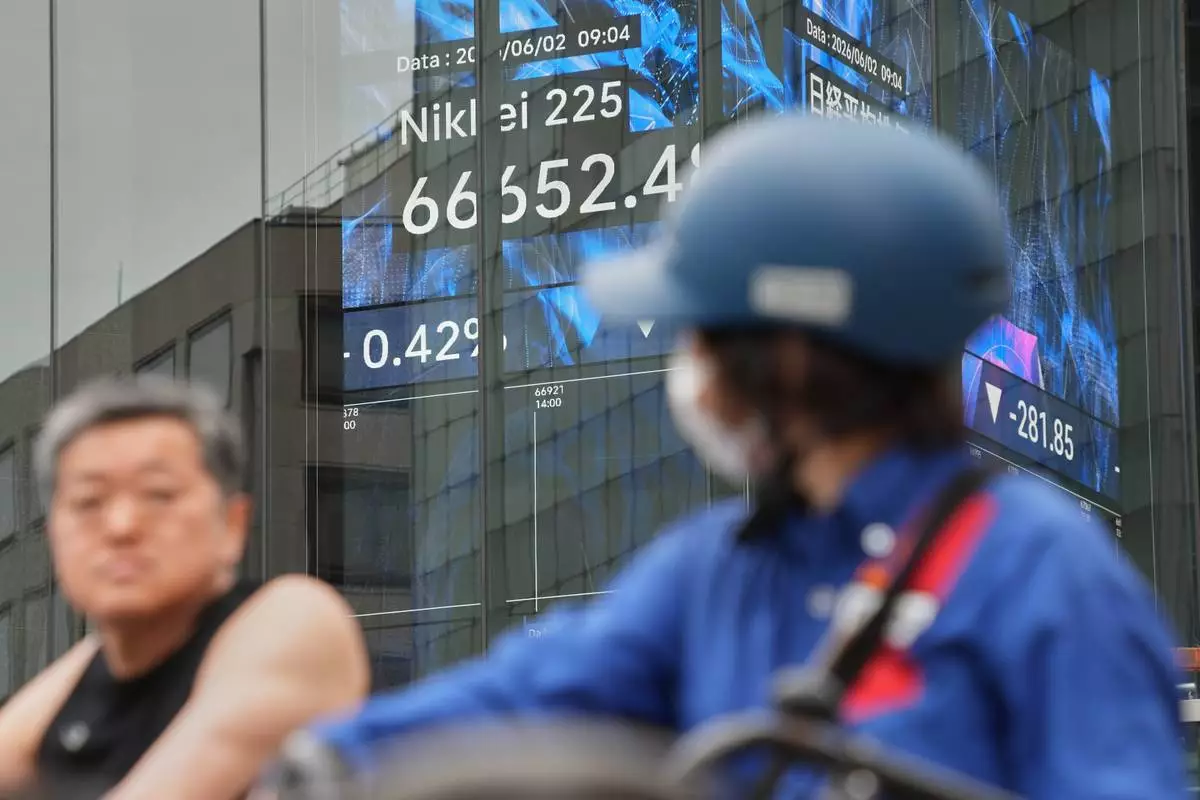
People stop in front of an electronic stock board showing Japan's Nikkei index at a securities firm Tuesday, June 2, 2026, in Tokyo. (AP Photo/Eugene Hoshiko)
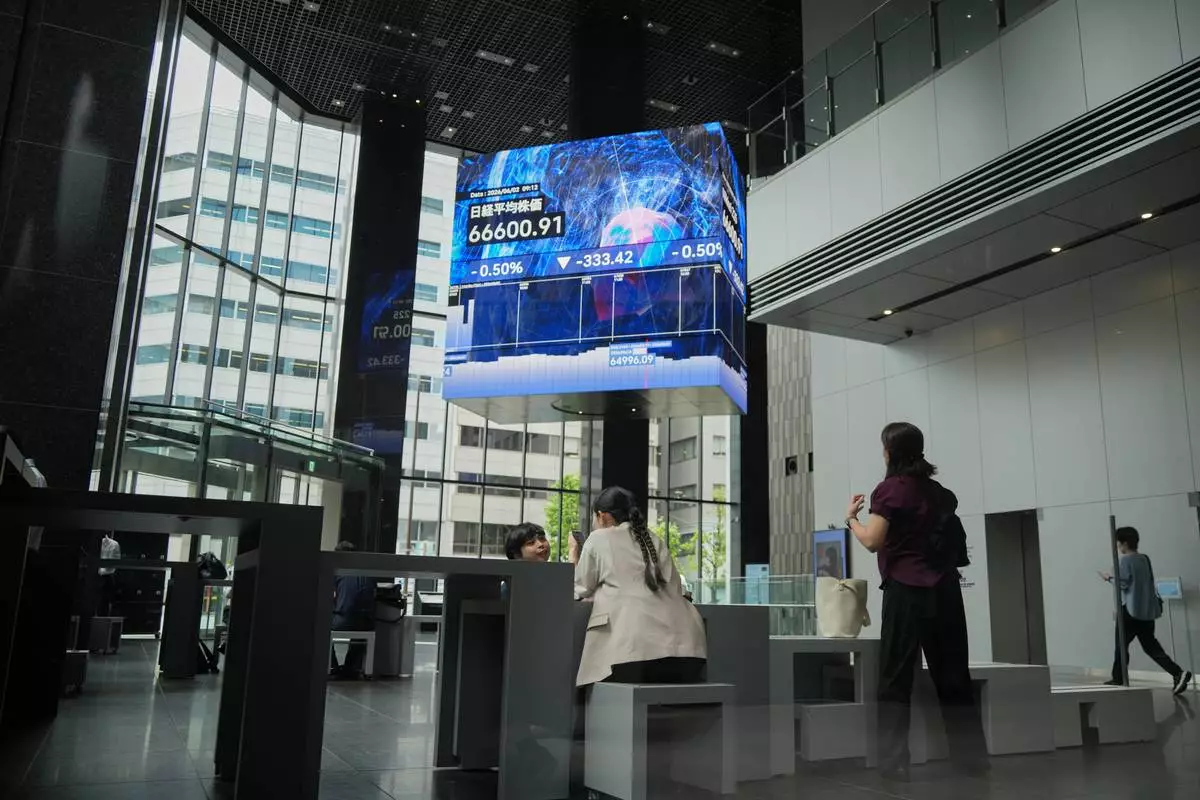
People gather in front of an electronic stock board showing Japan's Nikkei index at a securities firm Tuesday, June 2, 2026, in Tokyo. (AP Photo/Eugene Hoshiko)
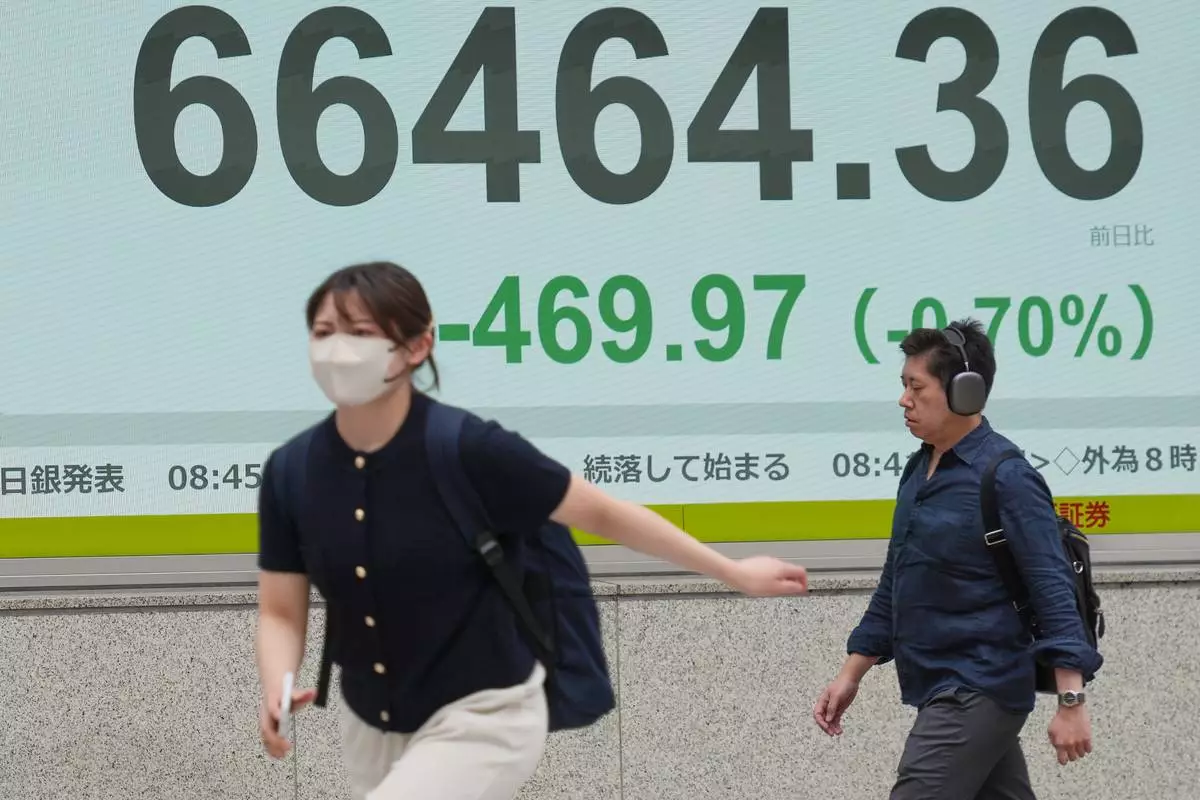
People walk in front of an electronic stock board showing Japan's Nikkei index at a securities firm Tuesday, June 2, 2026, in Tokyo. (AP Photo/Eugene Hoshiko)
WASHINGTON (AP) — For a state that's home to Hollywood, there isn't much star power in California's governor race. It's a somewhat different story in Los Angeles, where a reality television personality is running for mayor as the city prepares to host the Olympics.
More primaries are being held on Tuesday as well. Democrats are banking on a rare chance to regain ground in Iowa, a rural state that has repeatedly eluded them in recent years. Republicans, meanwhile, are grappling with a New Jersey congressman whose unexplained absence could put their already slim majority at risk.
Here are some things to watch as voters in California, Iowa, Montana, New Jersey, New Mexico and South Dakota cast ballots.
Ronald Reagan. Arnold Schwarzenegger. Jerry Brown. Gavin Newsom.
The governor's office in California typically attracts some of the highest-wattage names in politics, but not this year.
Former Vice President Kamala Harris and Sen. Alex Padilla took a pass on the race. And with Newsom barred from seeking a third term, the campaign to succeed him turned into a sprawling, often messy contest.
In the final stretch, much of the attention has focused on Democrats Xavier Becerra, the former congressman and state attorney general who was also health secretary under President Joe Biden, and Tom Steyer, a billionaire known for his climate activism. Republican Steve Hilton is campaigning with President Donald Trump's endorsement.
Under California's primary system, all candidates appear on a single ballot and the top two finishers advance to the November general election, regardless of party. The absence of a front-runner incentivized virtually anyone with political ambition and a modicum of organization to join the race, leaving Democrats worried that their candidates would divide the vote and ultimately be shut out of the fall campaign. But those fears have eased in the primary's closing weeks, with the party now expecting to secure at least one slot on the November ballot.
The results could offer insight about how voters are feeling in a state where Democrats have dominated statewide elections for two decades.
In a city still recovering from the most destructive wildfire in its history, Mayor Karen Bass is in a tough fight for reelection.
The mayor, who is a frequent target of Trump's criticism, was in Ghana as part of a presidential delegation when the blaze began. She has acknowledged mistakes but has centered her campaign around a message of recovery and progress.
Bass is facing a spirited challenge from reality television personality Spencer Pratt, who has blamed Bass for presiding over destruction that claimed his own home. Pratt, who rose to fame on “The Hills,” has shared videos created by artificial intelligence that show him taking on a superhero persona to battle street criminals and Democratic politicians.
The race is officially nonpartisan, but Bass is a Democrat, as is progressive city council member Nithya Raman, who made a last-minute decision to challenge her one-time ally. Pratt is a registered Republican who has received a nod of approval — if not an outright endorsement — from Trump.
Unless a candidate receives a majority of the vote in the primary, the top two will advance to a general election in November.
Los Angeles hasn't elected a Republican mayor since Richard Riordan won his second term in 1997, and the results will be closely watched for signs of dissatisfaction with liberal urban governance. The winner will emerge as a national and global figure as the city prepares to host the Olympics in 2028.
Iowa wasn't always a Republican stronghold.
Before Trump reshaped American politics, this was the state the lifted the political career of Barack Obama and sent Tom Harkin to the Senate for five terms.
The party is particularly excited about Rob Sand, who is running unopposed for the Democratic nomination for governor. A native of Decorah, Iowa, he has the rural roots that have become rare among Democrats. Perhaps most importantly, he's a proven winner in a Republican-leaning state, having been elected twice as auditor.
Republicans head into the primary with five candidates. Trump jumped in last week to endorse Rep. Randy Feenstra.
This is the first open contest for the governor's seat since 2006. Democrats are hoping that a combination of the economic fallout from Trump's tariff policies, rising gas prices stemming from the Iran war and the lack of a Republican incumbent could give them their best opportunity in years. Sand also has a fundraising advantage over the Republicans, including Feenstra.
State Rep. Josh Turek and state Sen. Zach Wahls are competing in the Democratic primary for the U.S. Senate seat being vacated by incumbent Republican Joni Ernst. The race has divided in part along questions of who should lead the party in Washington, with Wahls openly criticizing Senate Democratic leader Chuck Schumer. Republicans have largely coalesced behind U.S. Rep. Ashley Hinson as their candidate for the Senate seat.
In the final frenzied days before an election, voters can sometimes grow tired of hearing from candidates so much. But in New Jersey's 7th congressional district, they're not hearing from one candidate at all.
Republican Rep. Tom Kean Jr. is running unopposed in Tuesday's primary. But he's facing growing scrutiny for an unexplained medical absence that has stretched for three months, causing him to miss more than 100 votes in Congress.
That's not an ideal statistic for any lawmaker, but it's especially problematic for someone running in one of the few genuinely competitive congressional districts. While gerrymandering has yielded most U.S. House seats reliably Democratic or Republican, Kean's district has flipped between the parties in each of the last two midterm elections. Republican Leonard Lance lost to Democrat Tom Malinowski in 2018. Malinowski lost to Kean in 2022.
As they cling to a narrow majority in the House, Republicans can't afford to lose a district like Kean's. Several Democrats vying to take on Kean in the fall have made his absence — and the lack of clarity surrounding it — a central part of their message.
New Jersey was one of the first places that voter pushback to Trump became apparent last year when Democrat Mikie Sherrill won the governor's race by more than 14 percentage points. The turnout in the 7th district on Tuesday could provide clues about whether that Democratic enthusiasm remains in place.
Democrats are hopeful they can mount a serious challenge against Republican Senate candidates in deep-red South Dakota and Montana this fall. But their best hope may not be the Democrats featured on Tuesday’s primary ballot.
Both states feature higher-profile independent candidates, who, because they’re not running to represent a political party, do not have to compete in primary elections.
In Montana, there are five Democrats competing for the party’s Senate nomination. But independent Seth Bodnar, the former University of Montana president, has raised more money than all of them combined. He’s even significantly out-raised Trump-backed Republican candidate Kurt Alme.
In South Dakota, three-term incumbent Republican Mike Rounds is expected to cruise to his party’s nomination on Tuesday. He’ll face Democrat Julian Beaudion, a former highway patrol trooper and small business owner, on the November ballot. But it’s a former Democrat now running as an independent, Brian Bengs, a military veteran, who may be the tougher challenger.
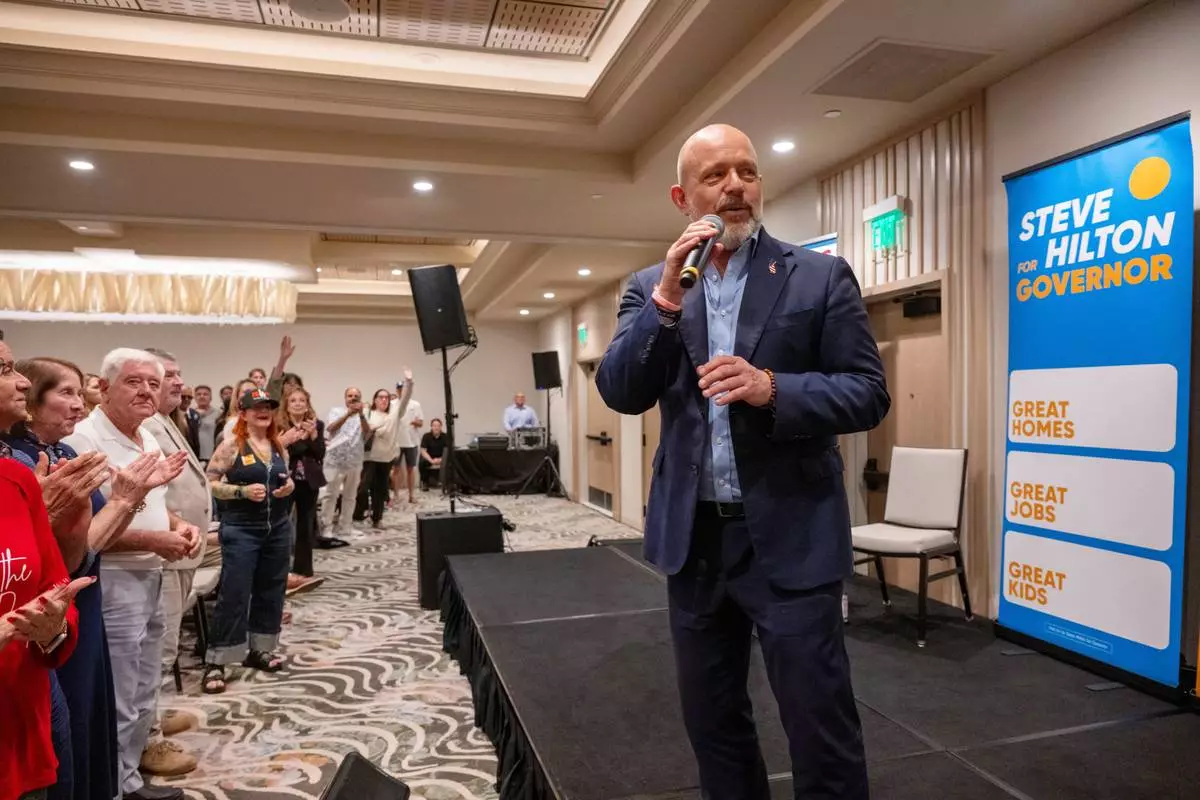
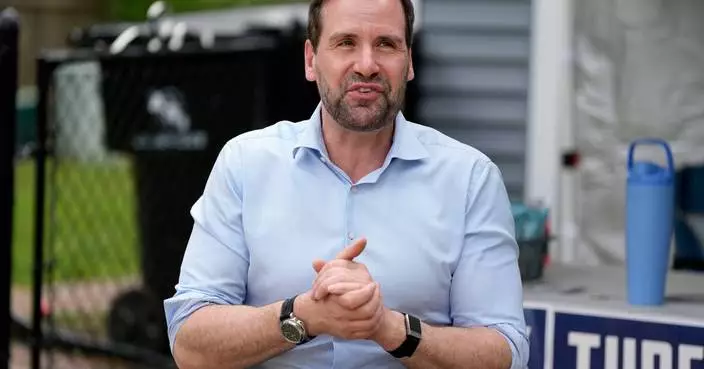
California Republican gubernatorial candidate Steve Hilton speaks during a campaign event on Sunday, May 31, 2026, in Santa Monica, Calif. (AP Photo/Benjamin Hanson)
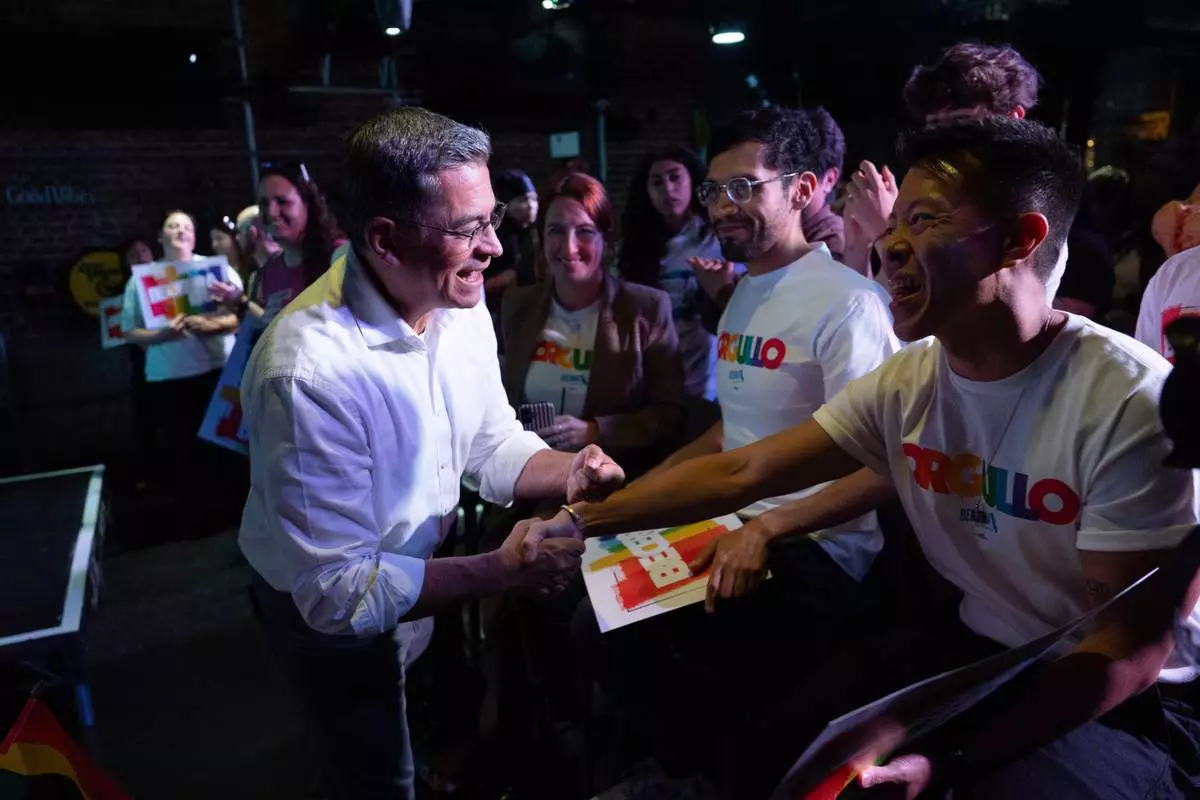
California gubernatorial candidate Xavier Becerra shakes hands with supporters during a campaign event in West Hollywood, Calif., Thursday, May 28, 2026. (AP Photo/Jae C. Hong)