SOUTHAMPTON, England (AP) — Southampton manager Tonda Eckert will keep his job despite helping to orchestrate the Spygate controversy that cost the club a chance of promotion to the Premier League, owner Dragan Šolak said on Tuesday.
Southampton was expelled from the second-tier Championship playoffs last month after admitting to repeatedly spying on opponents' training sessions and also given a four-point deduction for next season.
In its written reasons published on Monday, an arbitration panel laid bare the influence of Eckert in the scandal, saying it was “a contrived and determined plan from top down to gain a competitive advantage” and analysts who carried out the unauthorized filming “felt pressurised to do the observations that Mr. Eckert and the senior coaches wished them to do.”
However, Šolak said in a video message to fans published on Tuesday that the club believes Eckert “is the man to take us forward.”
“As a board, we are fully behind him,” the Serbian owner said, “and together we only have one objective — we want promotion back to (the) Premier League.”
In an interview with the BBC, Šolak said Eckert "deserves a second chance and I would give it to him.”
Southampton qualified for the playoff final — after beating Middlesbrough, one of the clubs it spied on — before getting expelled. That deprived the Saints of the chance of promotion to the top flight and a guaranteed windfall of at least $270 million in future earnings.
In a separate video message published by Southampton after Šolak's, the 33-year-old Eckert said: “I am a young coach, I have made a mistake, and I take full responsibility.”
“I am devastated,” the German coach added, “that after six months of building that relationship (with the Southampton fans) back up, the season has come to an end — come to an end that couldn't have left us in a worse place than we are in right now.”
In what he described as a “bitter irony,” Eckert said: “None of what has happened had any effect on the sporting performance.”
“I hope,” he said, addressing Southampton's fans, “that over time you can understand and forgive.”
AP soccer: https://apnews.com/hub/soccer

FILE - Southampton's coach Tonda Eckert, left, talks to his players during the FA Cup semifinal soccer match between Manchester City and Southampton in Manchester, England, Saturday, April 25, 2026. (AP Photo/Kin Cheung, File)
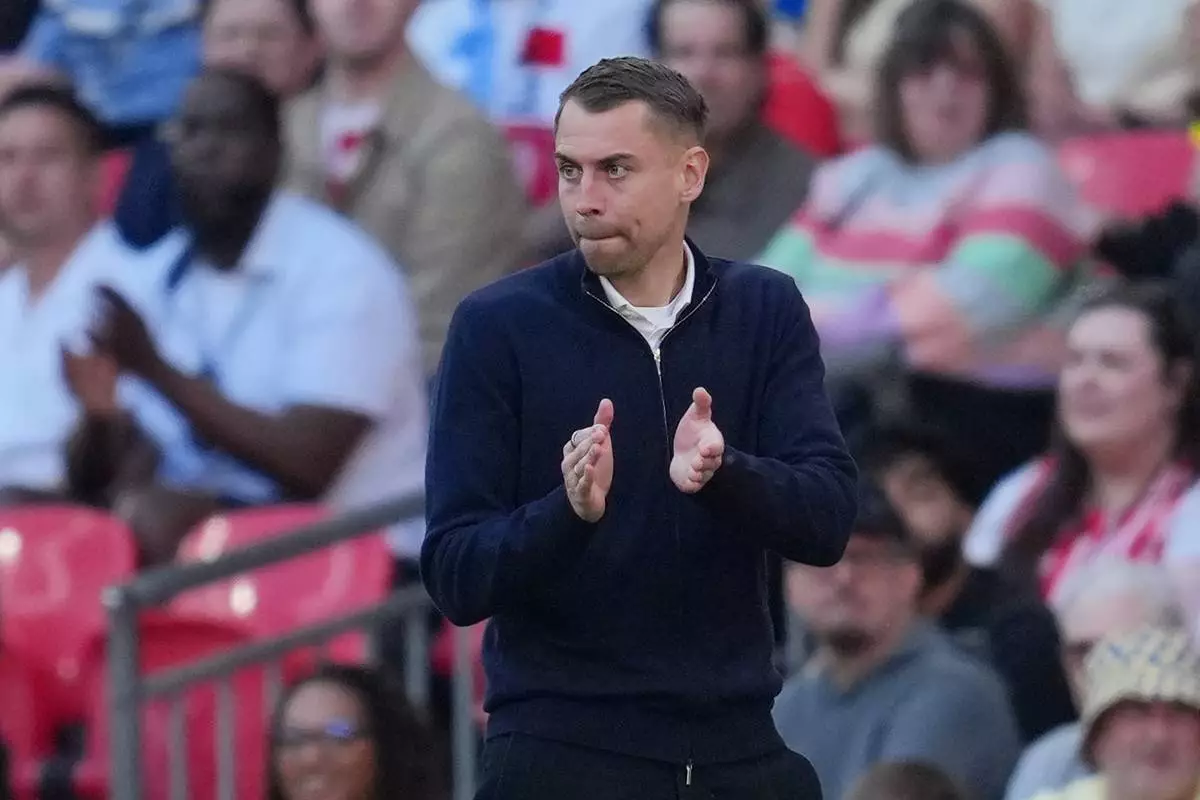
FILE - Southampton's coach Tonda Eckert reacts during the FA Cup semifinal soccer match between Manchester City and Southampton in Manchester, England, Saturday, April 25, 2026. (AP Photo/Kin Cheung, File(
BUNIA, Congo (AP) — At least 2,000 people have died in Congo’s Ebola outbreak, the fastest-growing on record, according to the latest data, as health authorities struggle to get help to remote localities due to rebel conflict, bad roads and work stoppages over payment issues.
Government data published overnight into Tuesday showed the outbreak has recorded a total of 4,381 confirmed cases, including 2,011 deaths. A total of 704 patients are in admission and isolation.
The outbreak was declared on May 15 but health authorities say sequencing showed it began months earlier, in February.
While it took about nine weeks for the outbreak to record the first 1,000 deaths, it’s taken just around three weeks for the figure to double, an evidence that the health crisis is moving faster than efforts to track and manage it.
It's already the second-largest outbreak in history, only behind the 2014-2016 West Africa outbreak that recorded more than 28,000 cases including over 11,000 deaths.
The Ebola outbreak is unlike most previous ones because the rare Bundibugyo virus responsible for it has no approved vaccines or treatments. Clinical trials for those have begun in Ituri province, the epicenter of the outbreak, in eastern Congo.
Aid workers say the outbreak continues to outpace response that’s been expanding across the five eastern provinces affected. Many health workers have gone on strike to protest lack of payment for their work since the outbreak was declared. And WHO has said most new cases are still being recorded outside of contacts being monitored, showing that transmission remains out of the control of health workers.
Ebola can be caused by different types of virus. Although the type responsible for the 2014-2016 outbreak is considered the deadliest, government data shows this Bundibugyo outbreak has killed a higher percentage of people as care and support are not getting to patients quickly enough. Many cases are reporting symptoms late or not at all.
The ongoing outbreak has so far had a case fatality rate of 45.9%, more than the 39.6% rate recorded in the 2014-2016 West Africa outbreak.
“In the absence of an effective vaccine, control (for the outbreak) rests on identifying cases and then nursing them in secure facilities until they recover or sadly perish,” said Paul Hunter, a professor in medicine at the University of East Anglia in the U.K.
In a remote region like this with an ongoing conflict and interrupted communications, routine surveillance can be very difficult and “identifying cases early enough to prevent spread can be impossible,” said Hunter.
The World Health Organization said on Monday that at the onset of the outbreak in one of Congo’s most remote and vulnerable areas, some cases were wrongly attributed to malaria and typhoid, and that early testing was conducted for the more common type of Ebola.
The WHO regional director for Africa, Dr. Mohamed Yakub Janabi, told a news conference that officials are “chasing the virus, the virus is ahead of us.”
The first Ebola virus to be identified was in 1976 near the Ebola River in what is now Congo. The current outbreak is the 17th — and largest — the Central African nation has faced.
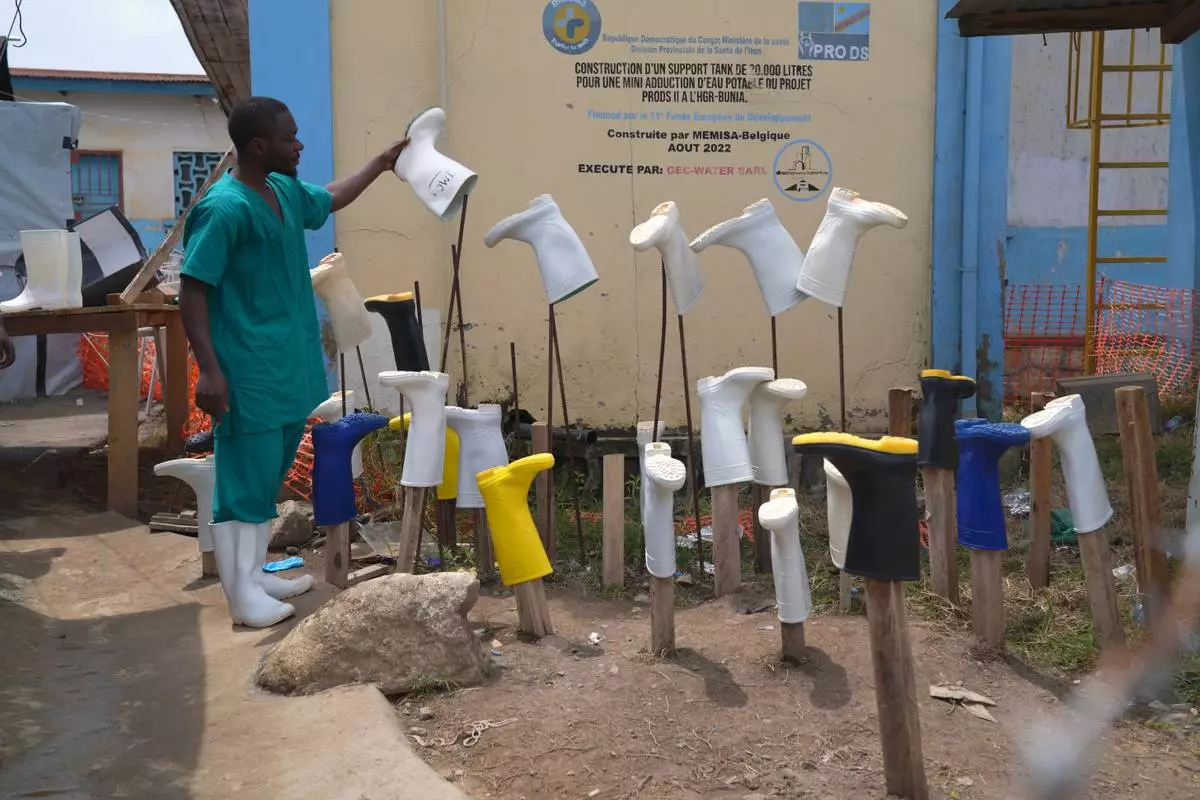
A health worker dries boots that were washed to prevent the spread of the Ebola virus at the treatment centre in Bunia General Hospital in Ituri, eastern Congo, Tuesday, Aug. 11, 2026. (AP Photo/Dieudonne Dirole)
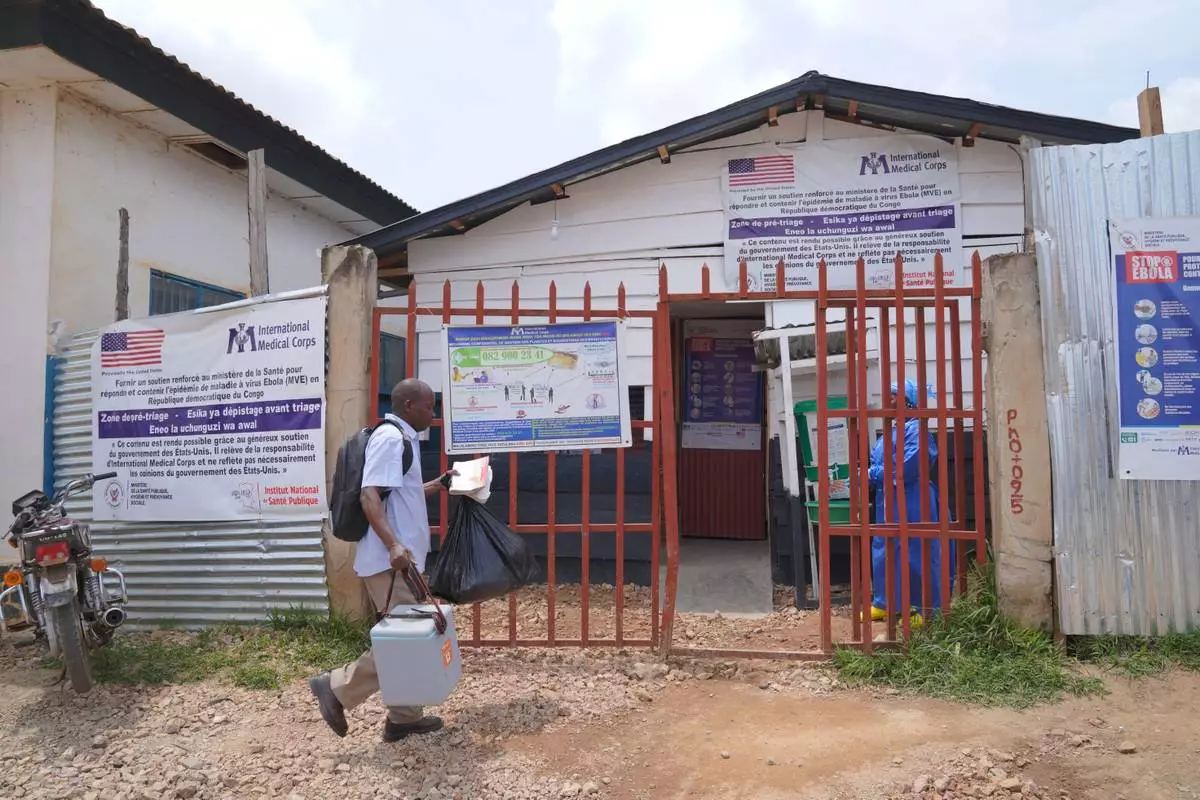
A man arrives at the treatment centre in Bunia General Hospital in Ituri, eastern Congo, Tuesday, Aug. 11, 2026. (AP Photo/Dieudonne Dirole)
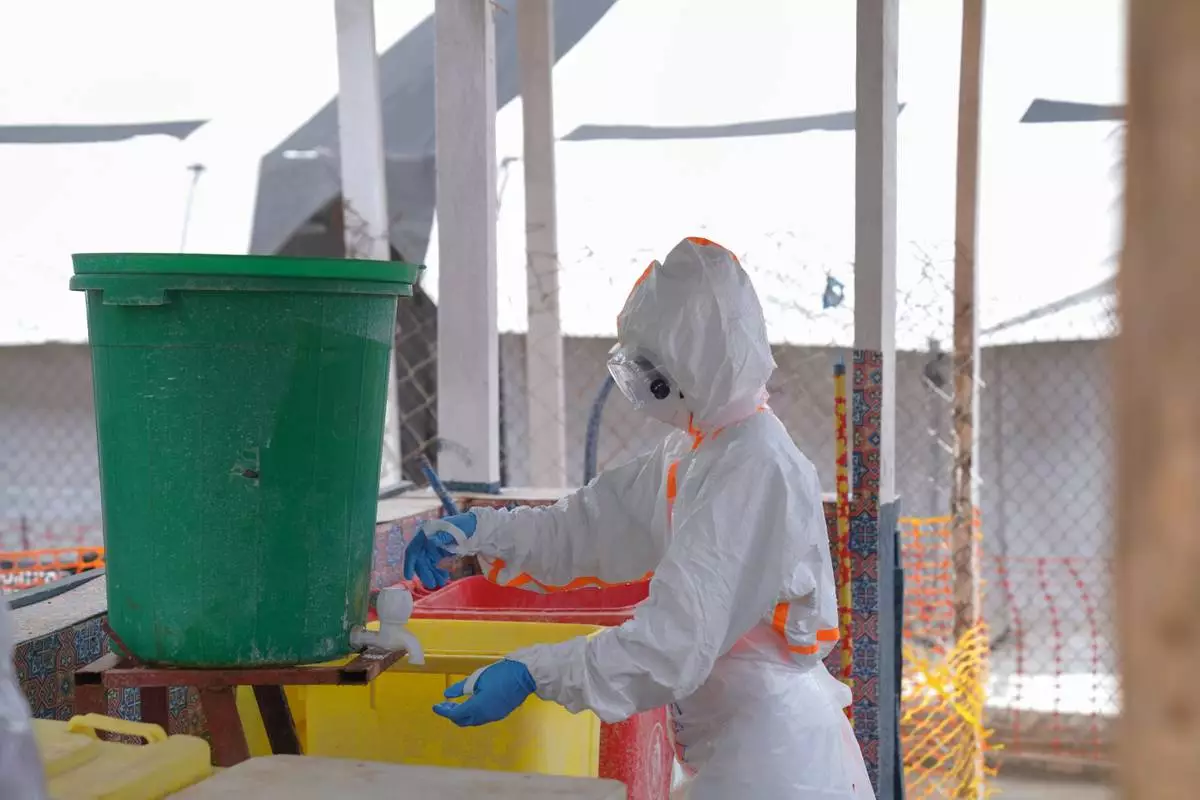
A health worker in protective gear washes her hands at the treatment centre in Bunia General Hospital in Ituri, eastern Congo, Tuesday, Aug. 11, 2026. (AP Photo/Dieudonne Dirole)
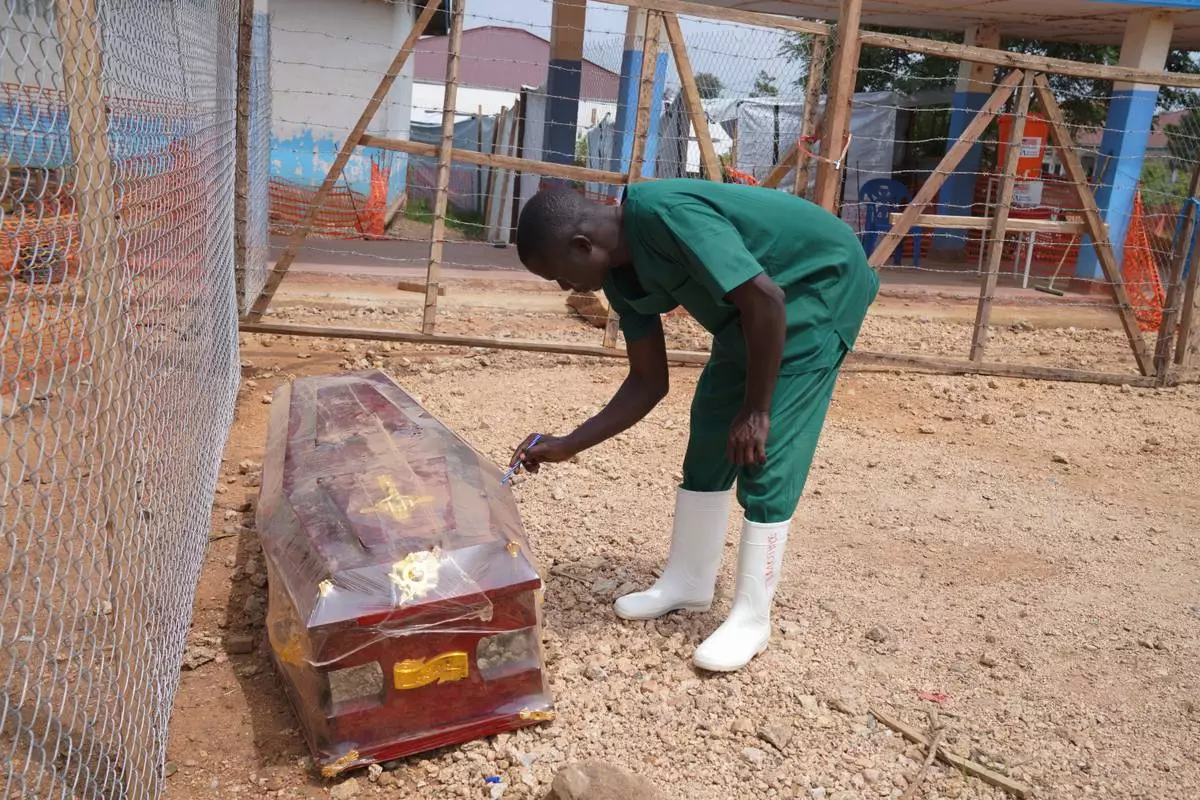
A health worker on the dignified and safe burial team, monitors a casket at the treatment centre in Bunia General Hospital in Ituri, eastern Congo, Tuesday, Aug. 11, 2026. (AP Photo/Dieudonne Dirole)
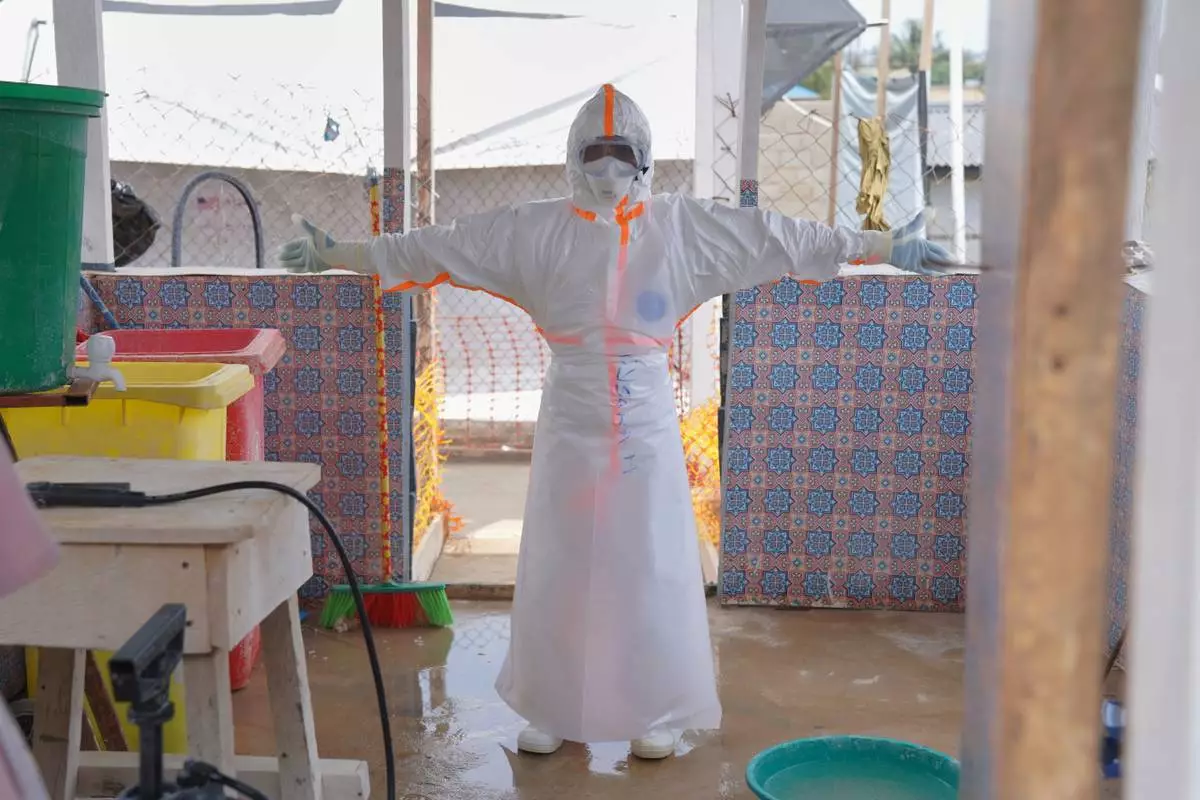
A health worker waits to be sprayed with disinfectant at the treatment centre in Bunia General Hospital in Ituri, eastern Congo, Tuesday, Aug. 11, 2026. (AP Photo/Dieudonne Dirole)
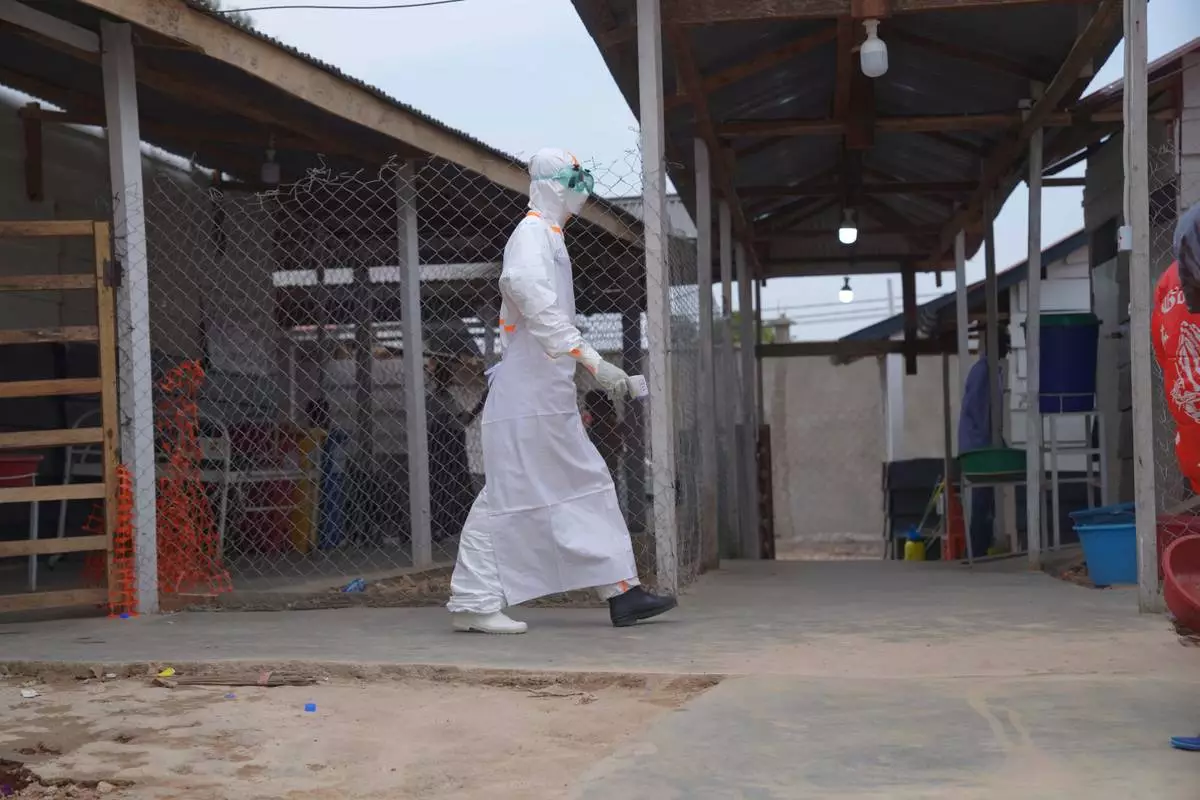
A health worker in protective gear walks at an Ebola treatment centre in Bunia, Congo, Monday, Aug. 10, 2026. (AP Photo/Dieudonne Dirole)
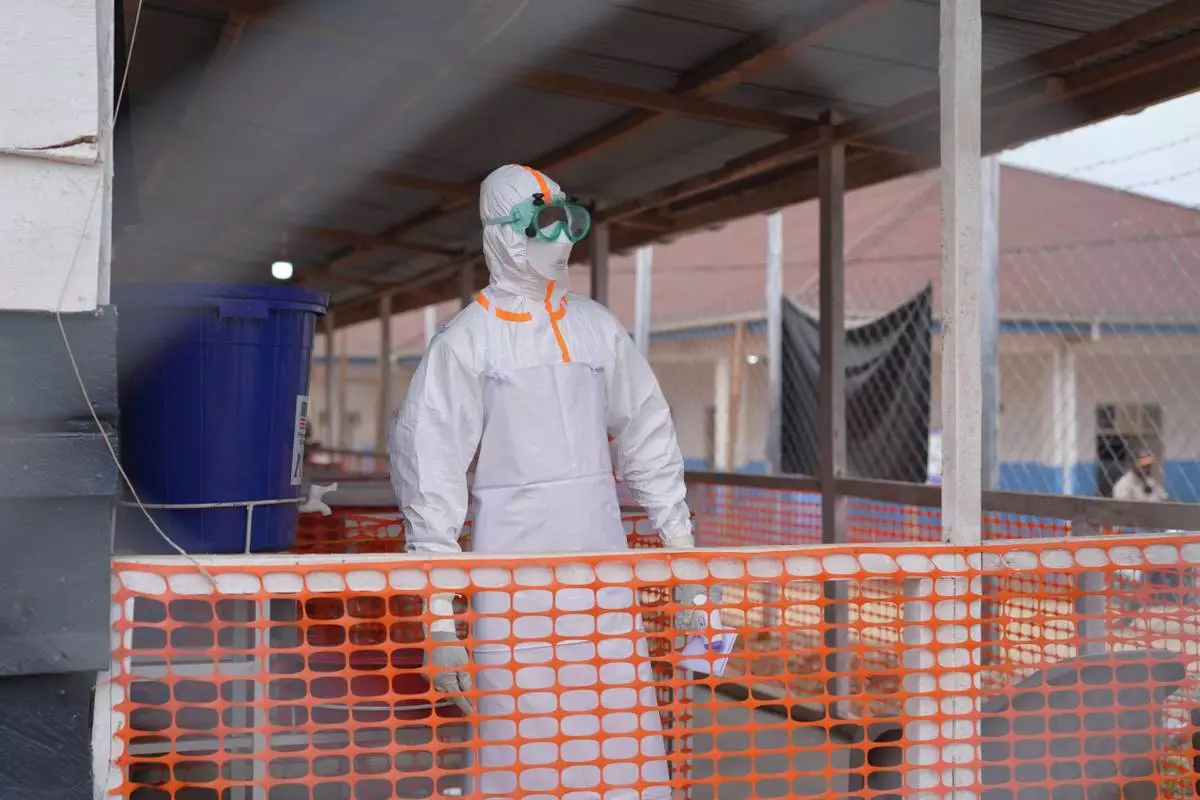
A health worker in protective gear looks on at an Ebola treatment centre in Bunia, Congo, Monday, Aug. 10, 2026. (AP Photo/Dieudonne Dirole)
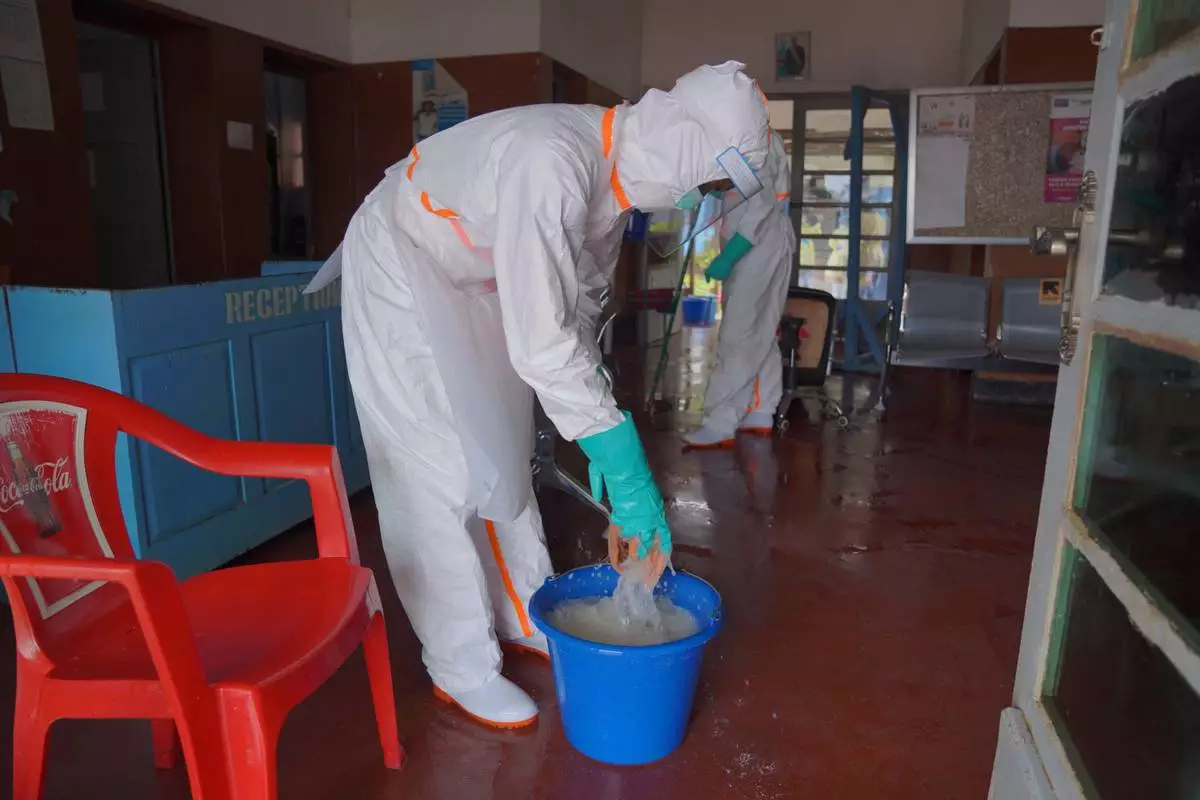
A health worker in protective gear prepares to mop the floor at an ebola treatment centre in Bunia, Congo, Monday, Aug. 10, 2026. (AP Photo/Dieudonne Dirole)
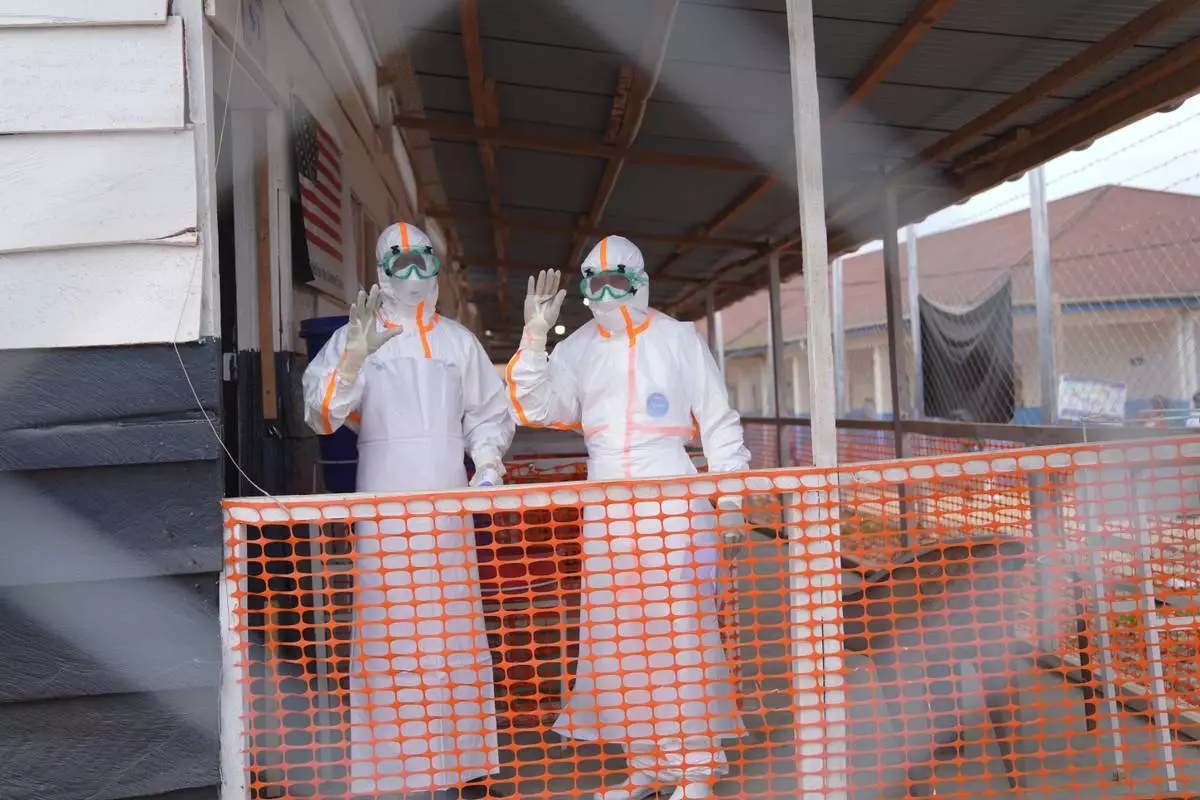
Health workers in protective gear wave inside an Ebola treatment centre in Bunia, Congo, Monday, Aug. 10, 2026. (AP Photo/Dieudonne Dirole)