EDINBURGH, Scotland (AP) — Missy Mazzoli's desire to compose an opera about the opioids epidemic was sparked by the deaths of two cousins.
“One was in 2002 and the other passed away in 2009 and they were both 25,” she said. “One overdosed on OxyContin and the other one overdosed heroin after becoming addicted to heroin via OxyContin.”
Using a carnival merry-go-round as an allegory, “The Galloping Cure” opened Sunday at the Edinburgh International Festival, a haunting portrayal of the drug's destructive power that is among the most impactful of contemporary operas.
Mazzoli and librettist Royce Vavrek created a charismatic charlatan, Lucky Man (baritone Justin Austin), who arrives at the faded community Yourtown in a white double-breasted suit and matching cowboy hat, easing residents' chronic pain by offering free rides on six fiberglass horses to get people hooked.
He starts charging money during the town's yearlong descent — “dynamic pricing,” he calls it — then rents hobbyhorses until people go broke. He demands noses, hair, kneecaps and tongues as payments, body parts he will use to build more carousel horses. By the final notes, wasted bodies resemble a skid row.
“When he offers you the cure, he never tells you the price,” sings Dr. Theresa Hart (mezzo-soprano Daniela Mack), whose endorsement of Lucky Man leads to the death of her daughter Noy (soprano Gabrielle Turgeon).
This was the first of two launches for Mazzoli in a 71-day span. She becomes the first woman composer with a premiere at New York's Metropolitan Opera with “ Lincoln in the Bardo” on Oct. 19, a tight gap comparable to when Giuseppe Verdi’s “Il Trovatore” and “La Traviata” debuted 46 days apart in 1853.
A 45-year-old New Yorker originally from Lansdale, Pennsylvania, Mazzoli met Vavrek in 2009. They have become the Rodgers and Hammerstein of 21st-century American opera, previously creating “Song from the Uproar” (2012), “Breaking the Waves” (2016), “Proving Up” (2018) and “The Listeners” (2022).
“Galloping” runs through Wednesday in Scotland, moves to Sweden’s Norrlands Opera from Sept. 12-23 and the San Francisco Opera in the fall of 2027.
Vavrek, a 43-year-old Canadian who also lives in New York, won a Pulitzer Prize for Du Yun's “Angel’s Bone.” He and Mazzoli had long contemplated an opioids opera but made progress only after commissioning a treatment in 2022 from author Karen Russell.
“It wasn’t until we collaborated with Karen that we found a way in that wasn’t preachy or predictable,” Mazzoli said. “Coming at it via this weird fairy tale allows us to bring in all sorts of compassion and allows us see it in an unexpected way.”
Russell joined Mazzoli and Vavrek for a Zoom meeting to discuss ideas, when they settled on Franz Kafka’s “A Country Doctor” as a starting point.
“There’s sort of this floorless void of existential suffering,” Russell said. “And then there’s also physical agony. Different kinds of pain are represented in that story and it feels like a fever dream to me.”
Russell's two-page treatment initially was called “The Devil's Miracle.” She was influenced by the fairy tales of the Brothers Grimm.
“All of your daughters are going to starve unless you give me your youngest child, right?” she said. “It’s like the devil knows when to appear, and it’s often in the context of extreme desperation.”
A breakthrough came in 2023, when Mazzoli and Vavrek’s earlier work, “Breaking the Waves” was performed at the Opéra Comique in Paris. It was co-produced by the former artistic director of the English National Opera, John Berry, and directed by Tom Morris, who would go on to direct “Galloping.”
Berry arranged for the creative trio to spend time at Hawkwood, a retreat at Stroud in the English Cotswolds, where they developed the thematic structure and Mazzoli wrote an initial melody. Around the same time, Mazzoli was finishing the composition of the second act of “Lincoln,” based on the George Saunders novel.
“I was working on them both concurrently, which I would not recommend to anyone,” Mazzoli said. “But you do what you have to do when these opportunities come up.”
A 2-hour, 15-minute work conducted by Stuart Stratford with one intermission, “Galloping” was composed for four primary characters. One of them, a pain-wracked old woman named Ivona Kowalski (soprano Susan Bullock), sings early on: “Life’s a joke and then you croak.”
Set designer Rebecca Ringst and lighting designer Lucy Carter used 120 vertical LEDs about 7 yards (6.5 meters) long that resembled needles and caused at times a hallucinatory effect. Mazzoli shifts themes to a darker register as addiction takes hold and the music turns to electronica by DJ Blume and Lorna Dune for teenagers’ raves, mixed into the Scottish Opera Orchestra.
There is a chorus of 14, singing sheep and a pair of dogs (hilariously portrayed by Catriona Hewitson and Edward Jowle), whose barks become words that Theresa understands as she becomes strung out.
“I’m really into finding that strange element that only works really for opera and some comic relief,” Vavrek said. “The dogs are funny. They’re silly.”
Lucky Man is similar to Harold Hill in Meredith Willson’s “The Music Man,” Sportin' Life in “The Gershwins' Porgy and Bess” and Dr. Dulcamara in Donizetti’s “L’elisir d’amore (The Elixir of Love).” Morris called him a “grifter/magician/snake-oil salesman.”
“It’s the same kind of charismatic person that will sell you on anything,” Mack said. “From an outsider’s point of view, you can objectively say, `Oh, well, I would never do that.' But actually, would you never do it? You don’t know until you’re in a situation. This is not a piece that passes judgment on any of those things but rather asks a really big question about who’s at fault for these ills in society and what we do moving forward.”
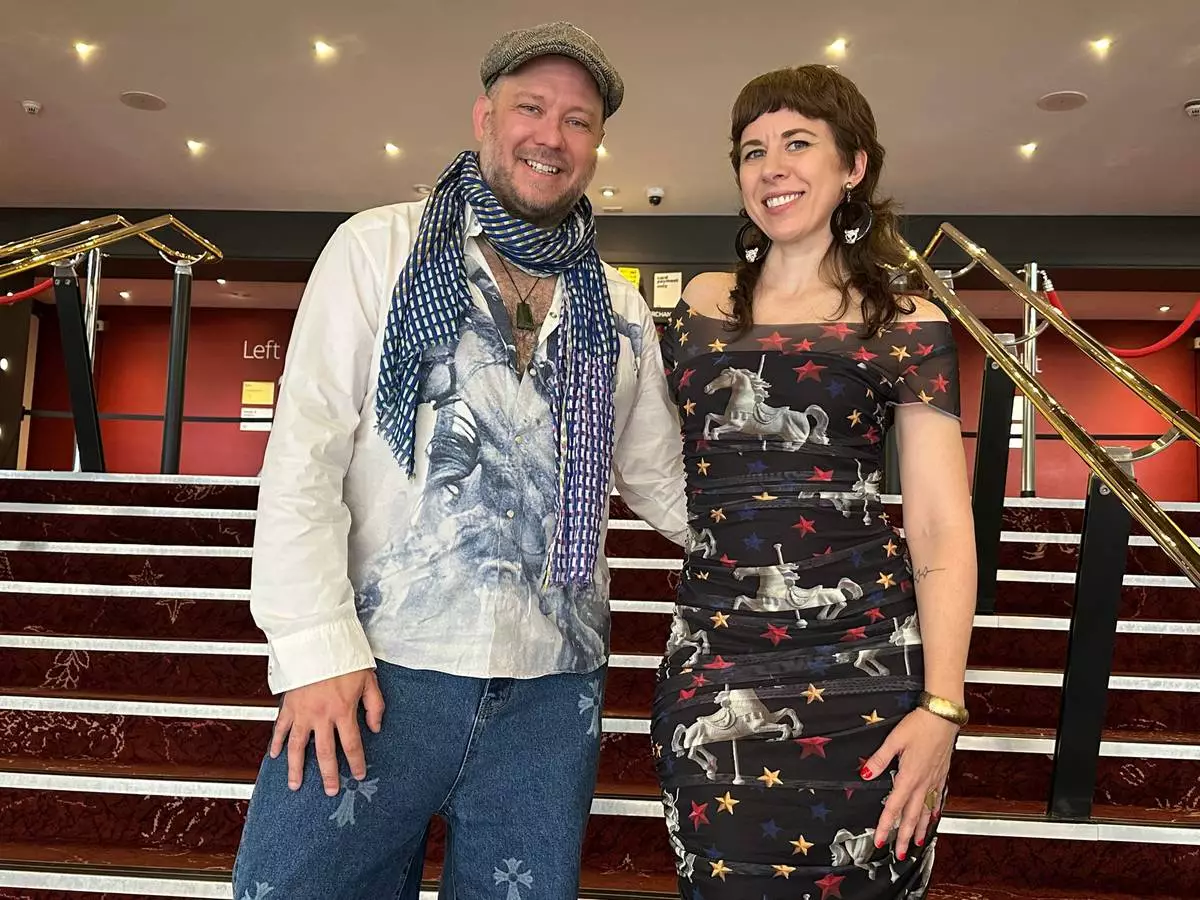
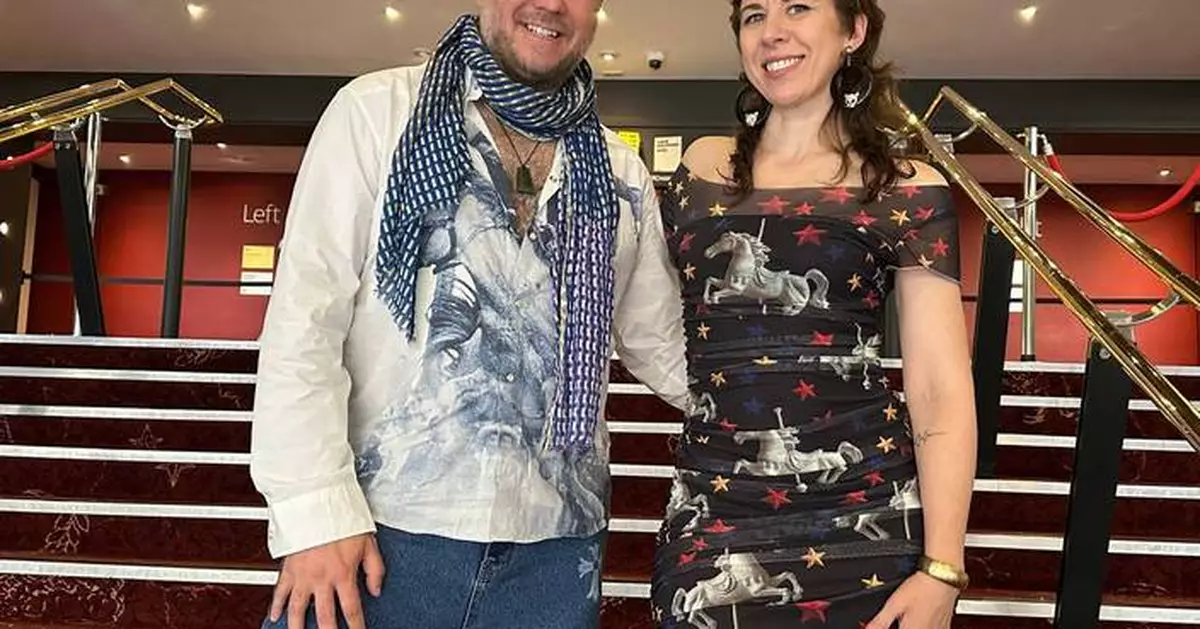
Librettist Royce Vavrek, left, and composer Missy Mazzoli pose at the Festival Theatre in Edinburgh, Scotland, Sunday, Aug. 9, 2026, before the world premiere of their opera “The Galloping Cure” at the Edinburgh International Festival. (AP Photo/Ron Blum)