PALO ALTO, Calif.--(BUSINESS WIRE)--Aug 11, 2026--
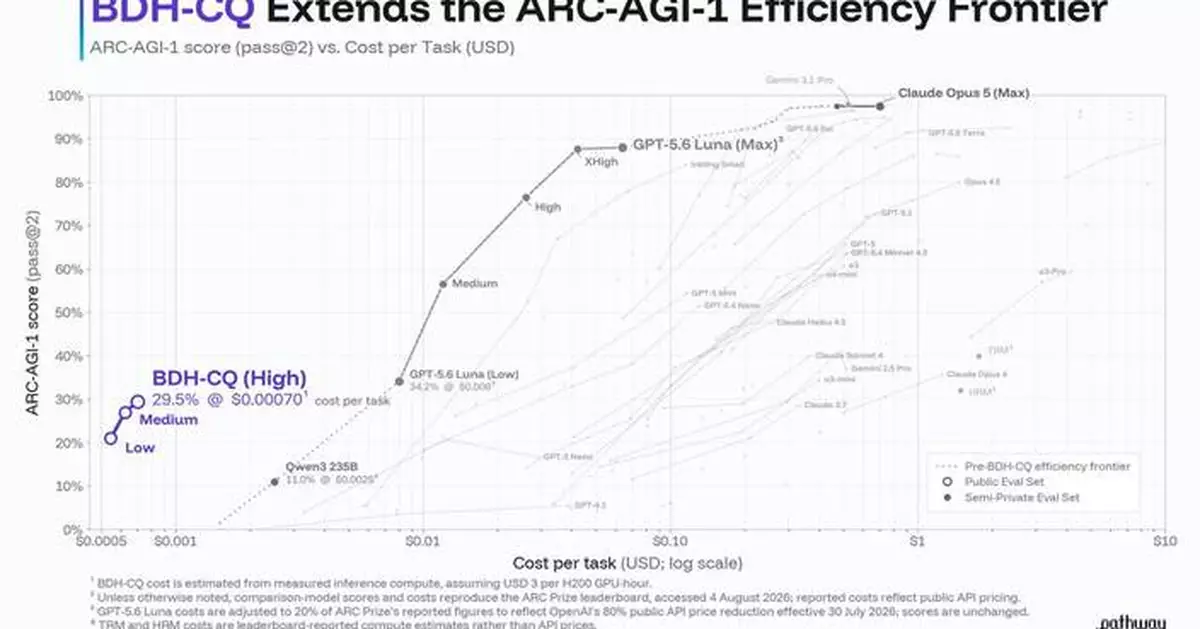
Pathway, an AI lab building a Post-Transformer architecture and models, today published benchmark results for BDH-CQ, a 150-million-parameter reasoning model. BDH-CQ scored 29.5% pass@2 on the public ARC-AGI-1 evaluation set at a computed inference cost of $0.0007 per task. Thanks to a new approach to reasoning, BDH-CQ runs approximately 11 times as cheaply per task as GPT 5.6 Luna (Low), even after accounting for OpenAI’s 80% price cut of 5.6 Luna on July 30th. Luna scores 34.2% against BDH-CQ's 29.5%, a modest accuracy gain at 11 times the cost.
This press release features multimedia. View the full release here: https://www.businesswire.com/news/home/20260811268264/en/
ARC-AGI-1 is a public reasoning benchmark that tests whether a system can infer an underlying rule from a small number of examples and apply it to a new input, a capability often associated with human-like intelligence.
The cost gap comes from a structural difference. Many transformer-based reasoning systems externalize their work as a chain-of-thought, generating extra tokens sequentially and feeding them back into later steps. As the trace grows, so do inference cost and latency, significantly. BDH-CQ instead performs this work in a recurrent latent state, learning from examples and refining a solution without generating an intermediate text trace. It thinks natively rather than using an intermediate-language scratchpad.
“Today’s AI pays a steep token cost for reasoning, but that cost is imposed by architecture, not by any law of intelligence. Currently, every reasoning step consumes context, adds latency, and burns compute. We show that a different architecture changes the game and opens up a whole new space in terms of how much intelligence per dollar. A 150M-parameter model, built on Pathway’s BDH architecture, reasons recurrently in latent space, and sets a new state of the art in cost efficiency on ARC-AGI-1. The bottleneck was never intelligence. It was design,” said Zuzanna Stamirowska, CEO and co-founder of Pathway.
Scores and comparison costs are drawn from the ARC Prize Foundation's public leaderboard, which plots each submitted system's benchmark score against its cost per task, as of July 2026. Pathway's cost is computed from measured hardware time. Comparison costs are those reported to the leaderboard and may reflect API pricing for generalist models.
BDH's ARC-AGI-1 results were evaluated by Łukasz Kaiser, a co-author of the 2017 paper that introduced the Transformer architecture, who said, "I've followed Pathway closely and replicated their ARC-AGI-1 results myself. Pathway shows that model architecture, not just scale, can drive the next leap in AI reasoning."
The results were also reproduced by Richard Zhong, an NYU researcher focused on model evaluation and benchmark robustness and a co-author from Bielik.
Pathway plans to scale the architecture next and extend the approach to more challenging reasoning benchmarks such as mathematical reasoning, ARC-AGI-2, and ARC-AGI-3, and to build a latent reasoning Large Language Model. When its efficiency and state-tracking capabilities extend to those domains, BDH will support a wide range of applications that must reason reliably as information and constraints change, from cybersecurity incident response to real-time industrial operations. Early experiments confirm Transformer-like scaling laws apply during pretraining at scales from 1B to 600B parameters, while preserving the latent reasoning capabilities specific to BDH-CQ.
The full paper and methodology are available at http://pathway.com/research/introducing-bdh-cq/arc-agi-1.
About Pathway
Pathway is an AI lab building Post-Transformer model architecture. Its BDH architecture keeps memory and reasoning inside the model rather than in a growing context window, an approach aimed at systems that can adapt as information changes instead of starting from the same state on every use.
Pathway is led by co-founder and CEO Zuzanna Stamirowska, a complexity scientist, alongside CTO Jan Chorowski, previously a researcher at Google Brain, and CSO Adrian Kosowski, a computer scientist who completed his PhD at 20. The company is backed by investors and advisors including Łukasz Kaiser, a co-author of the paper that introduced the transformer architecture. Pathway is headquartered in Palo Alto, California.
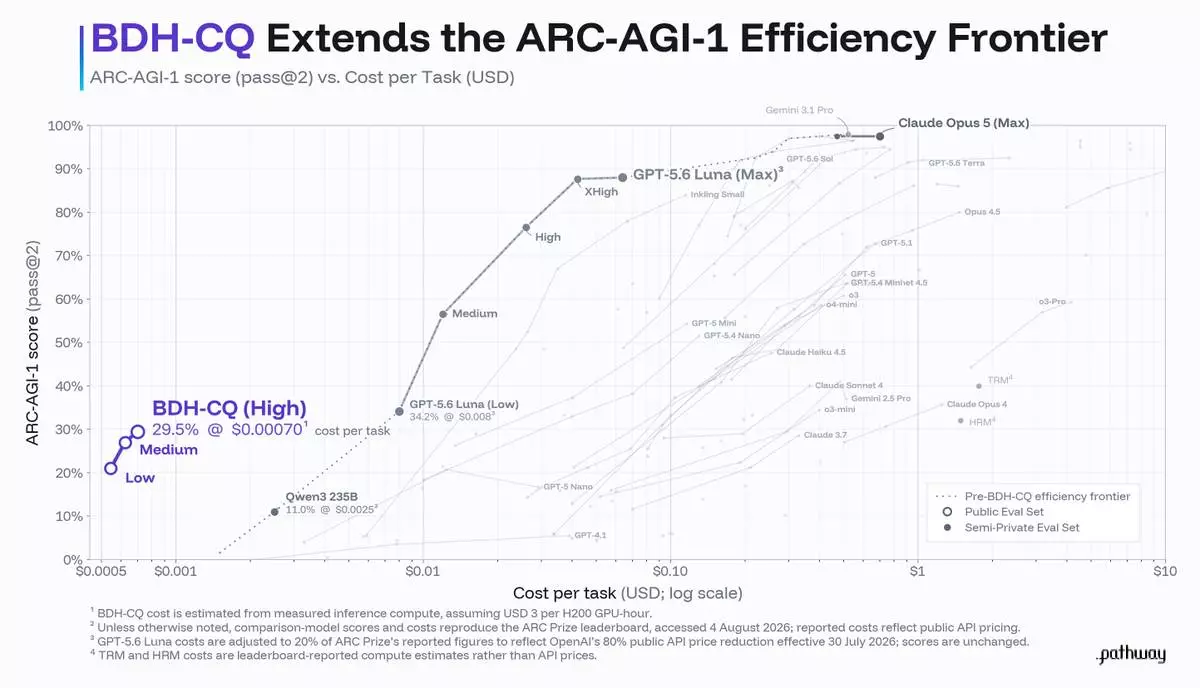
ARC-AGI-1 score versus estimated cost per task alongside official ARC Prize leaderboard results as of July 31, 2026. The reported score surpasses the previously reported cost-accuracy Pareto frontier, setting a new benchmark for ARC-AGI-1 cost efficiency.
Iranian-backed Houthi rebels renewed attacks Tuesday on government-controlled areas in Yemen as the violence threatened to reignite civil war and raised fears over new threats to regional shipping lanes.
Iran's foreign minister, meanwhile, underscored Tehran's stance against reopening the Strait of Hormuz until the U.S. meets its conditions, after U.S. President Donald Trump said he was demanding compensation from Iran “for all of the people that they have killed” in the past.
Here’s a look at the latest developments in the Iran war and the wider Middle East. Full coverage can be found here.
The Houthi rebels attacked the government-held port city of Mokha on the Red Sea and other areas of the country.
Yemen's military said the rebels targeted Mokha and the central province of Marib with missiles and drones but did not provide further details.
The Houthis struck Marib and the eastern province of Hadramout last week, killing dozens of government troops and civilians. They hit Mokha with missiles and drones over the weekend and killed at least seven people, including three troops, according to the Yemeni military.
Mokha is a main port under Yemen’s internationally recognized government and has been renovated to handle shipping to avoid the Houthi-held port of Hodeida.
The strikes were part of an escalation by the Houthis against government forces in Yemen and oil facilities in neighboring Saudi Arabia, which supports the internationally recognized Yemeni government, and the kingdom’s shipping in the Red Sea.
With the Strait of Hormuz effectively shut down by Iran, there has been a renewed focus on the Red Sea and Bab el-Mandeb Strait at Yemen's southern tip, which is an alternate route for Saudi Arabia to ship its oil.
The Houthi attacks could reignite Yemen’s civil war following a 2022 truce, and open a new front in the Middle East war.
Mohammed Abdul-Salam, the Houthis’ chief negotiator and spokesperson, accused Saudi Arabia in a social media post of exploiting the ceasefire to tighten an air and sea blockade it imposed in 2015.
He said the Houthis are open for negotiations but any settlement must include lifting the blockade.
Iranian Foreign Minister Abbas Araghchi told reporters that the country had “astonished the whole world” in the war against the United States and Israel, proving “that it is a tough and invincible power.”
Iran has refused to back down on demands that the U.S. end its blockade of Iranian ports and fulfill other conditions before Tehran will consider reopening the Strait of Hormuz.
Iran effectively closed the strait after Israel and the U.S. attacked the country on Feb. 28. Attacks on the key waterway — through which roughly one-fifth of the world’s traded oil supplies passed before the war — and uncertainty around its future have kept energy prices a major focus of U.S. politics ahead of November’s midterm elections.
Araghchi said on his Telegram channel that in a call with German Foreign Minister Johann Wadephul late Monday, he had “emphasized that making the Strait of Hormuz secure requires an end to the United States’ aggressive actions and unlawful interventions, including the naval blockade and other violations of U.S. obligations.”
Wadephul said on X that he had emphasized “the Strait of Hormuz needs to be opened unconditionally ensuring free and safe navigation for all.”
Trump said in a social media post he was directing his negotiators to include “compensation from Iran, for all of the people that they have killed and gravely wounded with their roadside bombs and many conflicts.” That was after Iran demanded compensation for the devastation caused by U.S. and Israeli bombardment over the past five months.
Trump also claimed Monday in an Oval Office exchange with reporters that the U.S. has “100% control” of the Strait of Hormuz, but that the situation remains complex.
He said the U.S. Navy’s blockade is preventing Iran from selling its oil on the international market, effectively choking the Iranian economy.
“Now, can they make trouble? Yeah, they can make trouble, but they’re broke,” Trump said.
In Syria, a court sentenced former President Bashar Assad along with his younger brother to death for crimes against humanity and war crimes during Syria’s 14-year conflict that left about half a million people dead.
Assad and his brother Maher, who fled to Russia after insurgents marched into Damascus in December 2014, were sentenced in absentia at the Fourth Criminal Court in the Syrian capital.
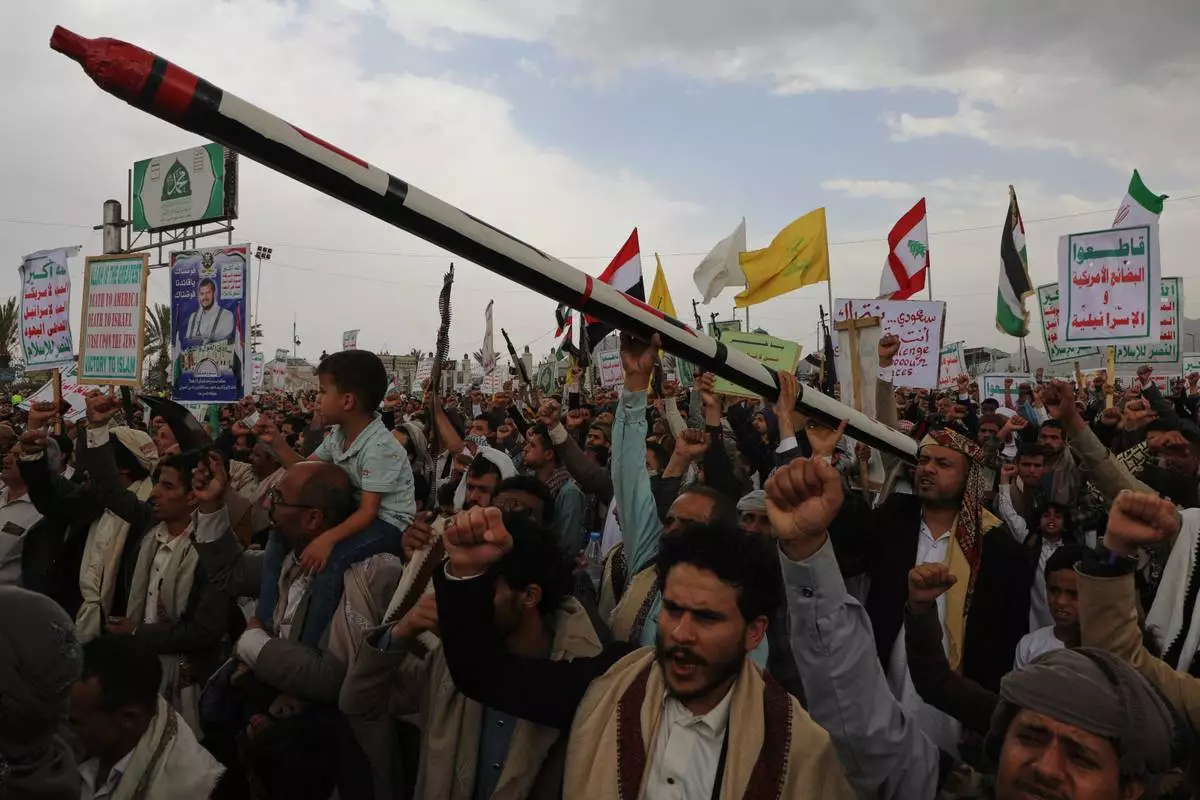
Houthi supporters chant slogans during a rally against the Saudi-led coalition in Sanaa, Yemen, Friday, July 31, 2026. (AP Photo/Osamah Abdulrahman)
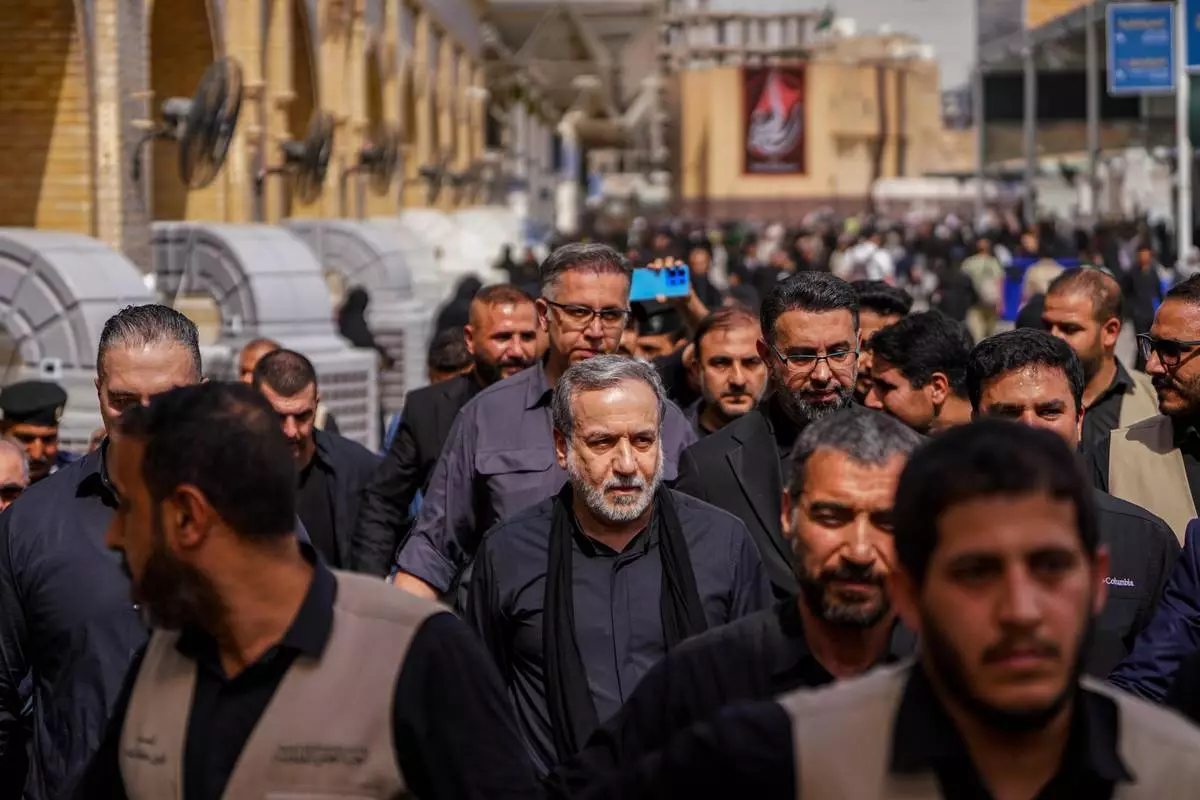
Iran's Foreign Minister Abbas Araghchi, center, is surrounded by security personnel as he walks in Najaf, Iraq, during Arbaeen commemorations, Monday, Aug. 3, 2026. (AP Photo/Anmar Khalil)
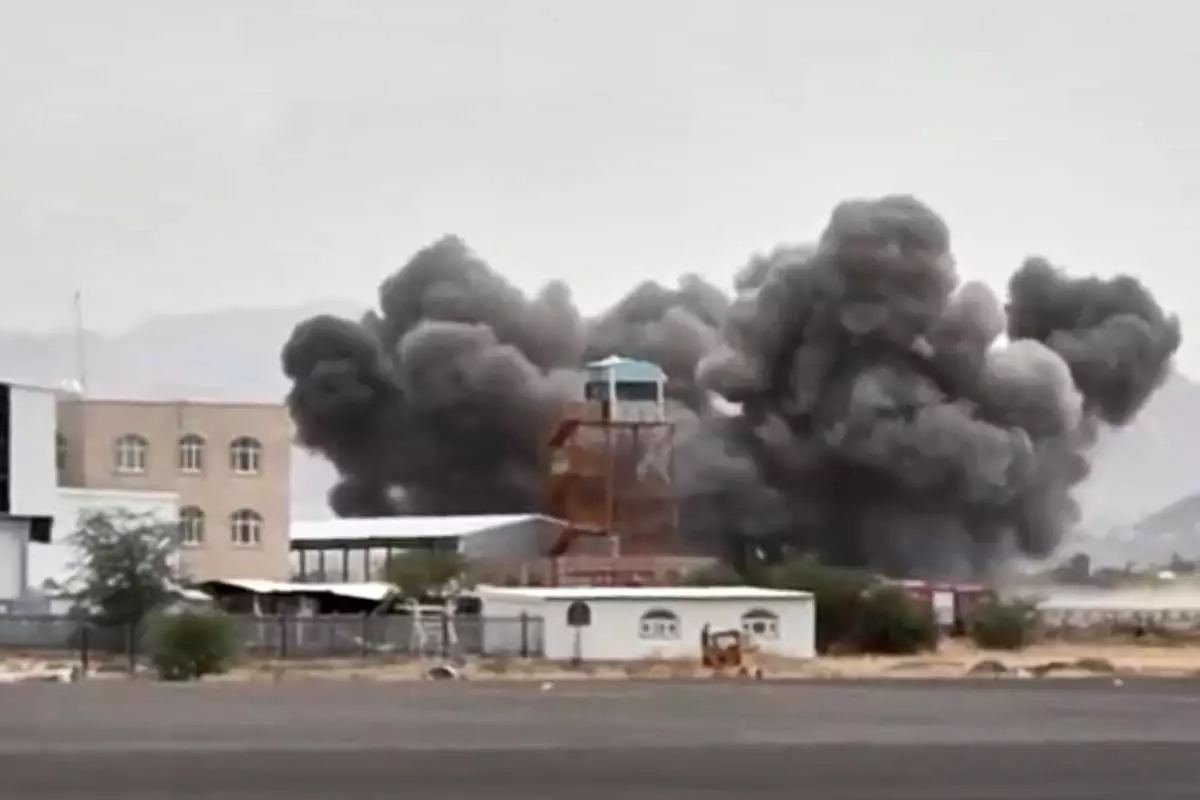
FILE - This image taken from video broadcast by Al-Masirah TV, a Houthi-controlled news channel, shows an explosion at the Sanaa International Airport compound during what the Iranian-backed Houthi rebels in Yemen said were several Saudi airstrikes in Sanaa, Yemen, July 13, 2026. (Al-Masirah TV via AP, File)
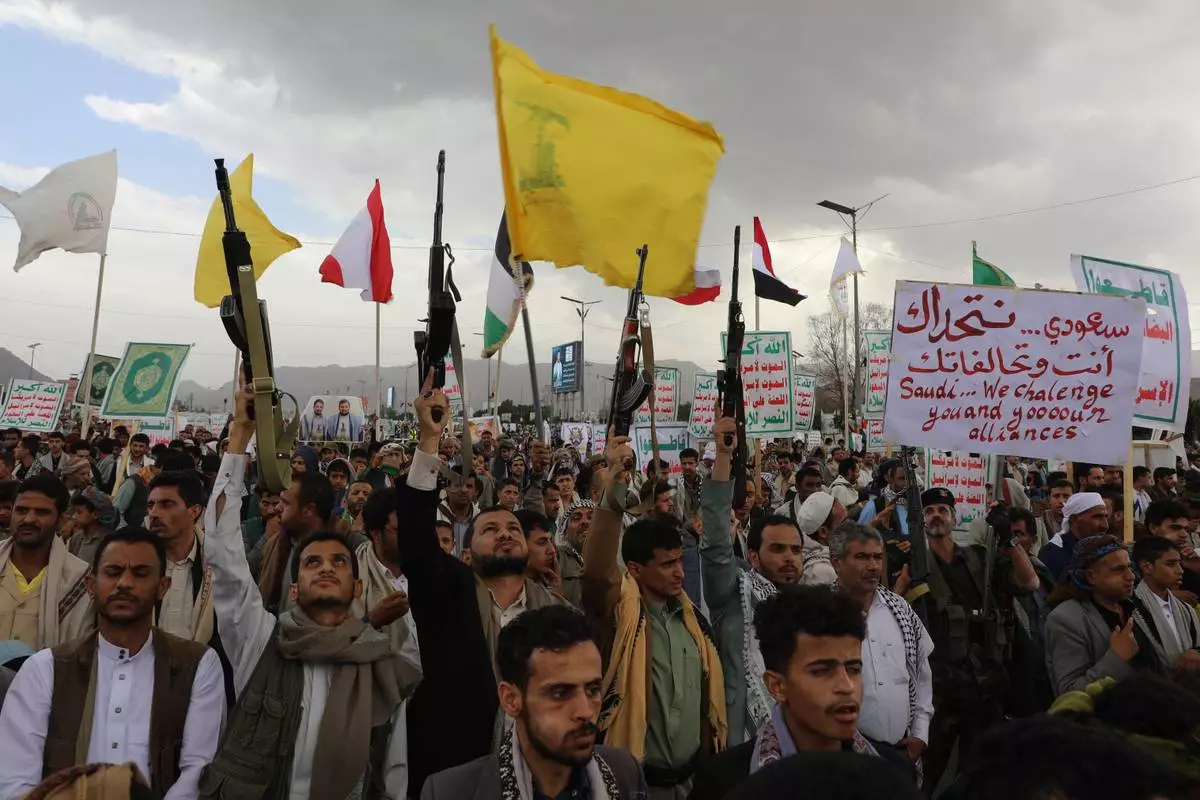
Houthi supporters attend a rally against the Saudi-led coalition in Sanaa, Yemen, Friday, July 31, 2026. (AP Photo/Osamah Abdulrahman)
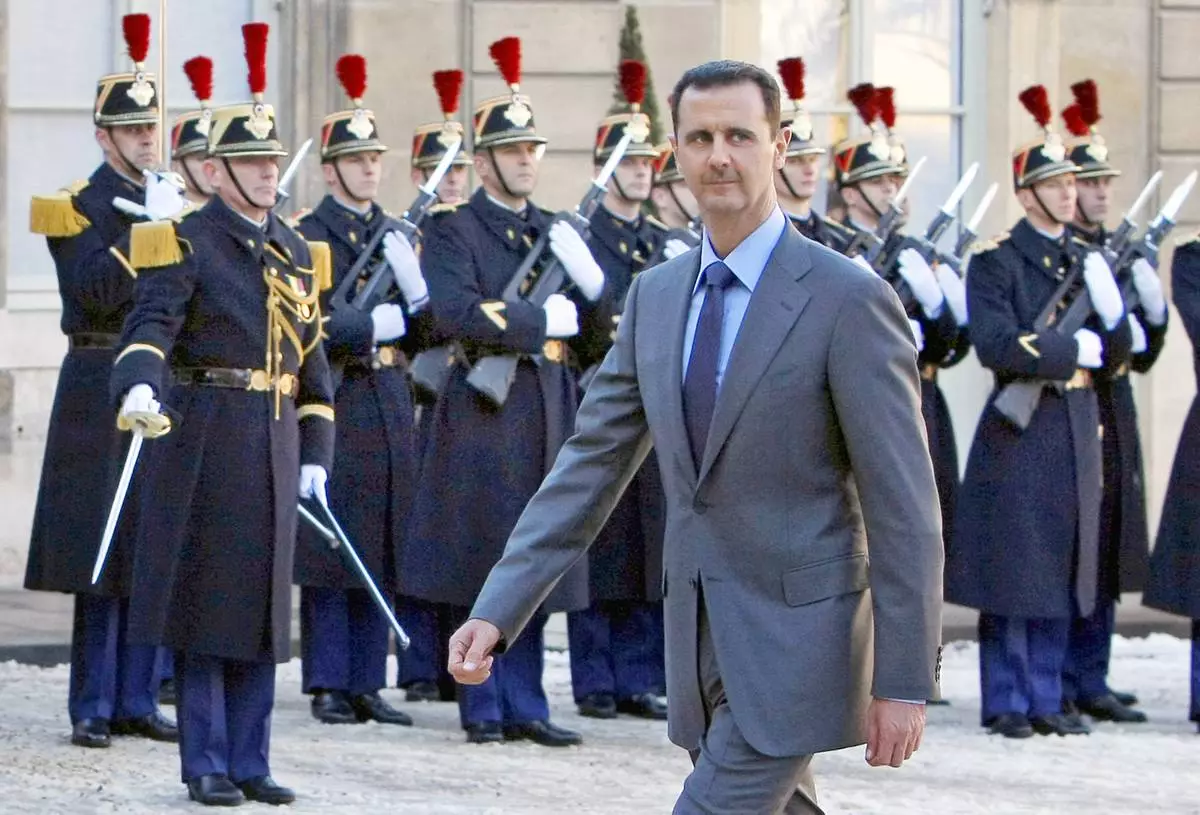
FILE - In this Dec. 9, 2010 file photo, Syria President Bashar al-Assad arrives at the Elysee Palace in Paris for his meeting with French President Nicolas Sarkozy. (AP Photo/Remy de la Mauviniere, File)
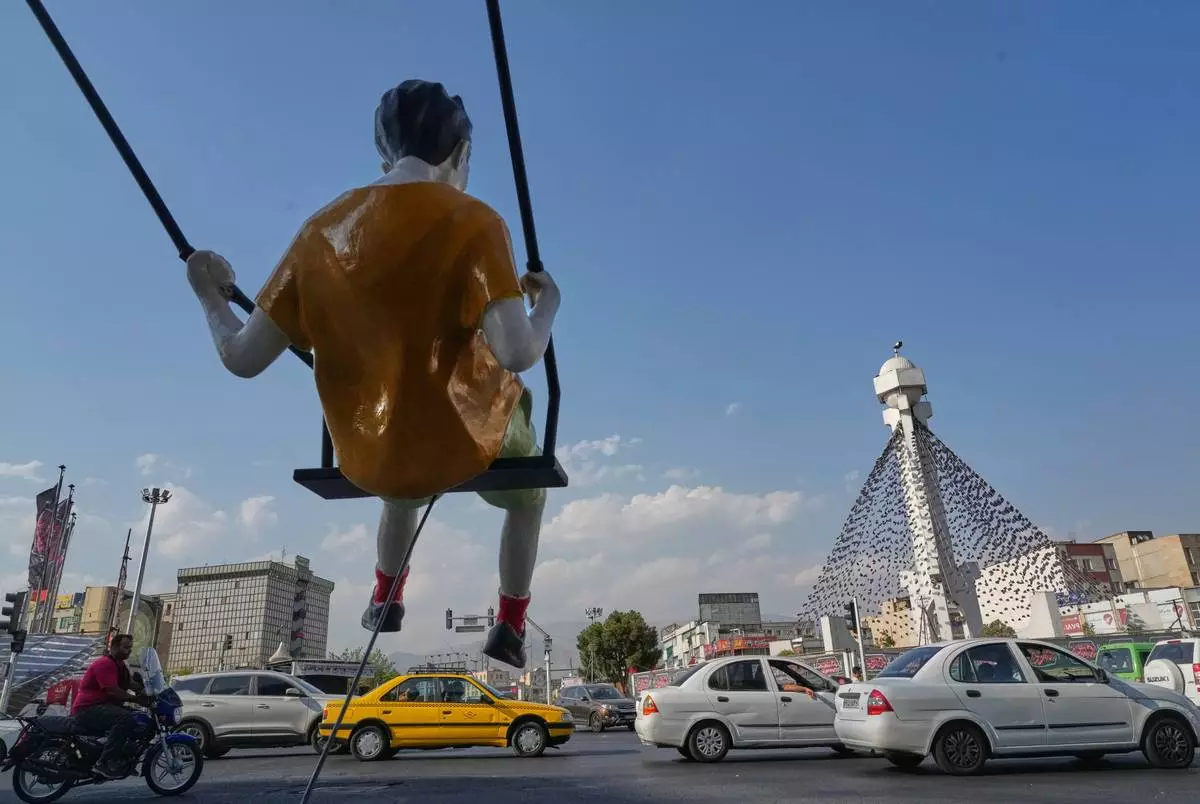
Vehicles drive past a statue of a swinging boy at a square in Tehran, Iran, Monday, Aug. 10, 2026. (AP Photo/Vahid Salemi)