It's possibly the most important job of any Israeli prime minister: maintain good relations with the United States while pushing back on demands seen as undermining Israel's security.
No one has managed the balancing act longer than Prime Minister Benjamin Netanyahu, Israel's longest-serving leader. But with the Iran war at a stalemate, and U.S. President Donald Trump looking to advance peace efforts elsewhere, Netanyahu's task is getting harder less than three months away from Israeli elections.
On Sunday, Netanyahu rejected Trump's latest plan to advance the stalled ceasefire in Gaza, saying Israel will not withdraw from any of the roughly 60% of the territory it controls until Hamas has been completely disarmed — something the militant group controlling the other 40% has long resisted.
Netanyahu risks angering Trump, who he has repeatedly said is the greatest friend Israel has ever had in the White House. But even a hint of compromise with Hamas could be fatal for Netanyahu's reelection in a country deeply traumatized by the Oct. 7, 2023, attack that happened on his watch.
Trump, meanwhile, is under pressure to deliver on his promise of being a global peacemaker as talks with Iran stall and gas prices stay elevated ahead of U.S. congressional elections in November.
The Gaza plan announced by Trump last month grew out of his October ceasefire deal, which ended major Israeli military operations there and brought about the release of all remaining hostages but has otherwise largely stalled.
Under the latest agreement, Hamas would gradually give up its weapons while Israeli forces halt their attacks and begin withdrawing from Gaza. Hamas accepted the deal, even as the group linked the surrender of its heaviest weapons to the creation of a Palestinian state, something Israel's current government and most of its political class adamantly reject.
Netanyahu rejected the plan, saying Israel would not retreat from any of its positions in Gaza until Hamas has been completely disarmed. That would leave other elements of the ceasefire, including the deployment of international forces and any reconstruction of the devastated territory, on hold.
At the same time, the Israeli military seems to have eased off on its strikes on Gaza that have killed over 1,250 people since the ceasefire came into effect, according to Gaza's Health Ministry.
Israeli media reported that the authority for carrying out strikes has been limited to the army's chief of staff, apparently in a quiet gesture toward Trump's ceasefire efforts. The Israeli military did not respond to a request for comment.
“We are focused on actions, not rhetoric or politics," an official with the Board of Peace, the Trump-led entity overseeing the ceasefire, told The Associated Press. "There have been some results on the ground in the last few days," the official added, including “restraint from strikes" and new Israeli military procedures.
“There is constructive cooperation behind the scenes and our conversations continue,” the official said, speaking on condition of anonymity because they were not authorized to talk about the ongoing discussions.
In his election campaign, Netanyahu has boasted of Israel's military achievements in the wars that followed the Oct. 7 attack. Israeli forces have seized territory in Gaza, Lebanon and Syria, and launched two major air wars against Iran and its disputed nuclear program.
But the “total victory” Netanyahu promised in Gaza has yet to materialize. Many Israelis blame him for the security failures that led to the initial attack, as well as previous attempts to contain Hamas that at times included allowing Qatar to deliver suitcases filled with cash to Gaza.
Netanyahu's far-right allies, who will likely be crucial to his ability to form a government after the elections, have welcomed his rejection of the Trump plan.
Trump "wants to see real steps taken toward rehabilitating Gaza, while Netanyahu’s two right-wing partners and the Likud’s faltering election campaign is keeping him from yielding even a millimeter,” wrote Jonathan Lis, the diplomatic correspondent for Israel's Haaretz newspaper.
Ghaith al-Omari, a former Palestinian negotiator who is now a senior fellow at the Washington Institute for Near East Policy, said that even if the White House ignores Netanyahu's rejection of the plan, Trump is still stuck unless he can persuade the Israeli leader to change course.
Hamas is meanwhile winning the “blame game” by appearing to be the more reasonable of the two sides, he said.
Trump was wildly popular in Israel during his first term, when he lent unprecedented support to Israel's claims to territory seized in war, including by moving the U.S. Embassy to Jerusalem.
The trend continued in his second term, as he backed Israel's actions in Gaza and joined it in bombing Iran. The alliance was particularly beneficial to Netanyahu, whose political future remained uncertain. The prime minister relied on Trump to improve his image at home.
But the allies' interests diverged last spring, as Israel pressed for further strikes on Iran and against Hezbollah in Lebanon, while Trump looked to wind down the regional conflict in order to reopen the Strait of Hormuz to ease pressure on the world economy.
Since then, Trump has said that he would “likely” endorse Netanyahu ahead of the Israeli election but has not yet given his full backing. And while a formal endorsement from a U.S. president still carries weight in Israel, the rift between the two leaders suggests it could also complicate Netanyahu's campaign.
“A few months ago, a significant majority of Israelis assumed that when President Trump is making decisions, he’s taking Israeli security interests into account. This is no longer the case,” said Yohanan Plesner, head of the Israel Democracy Institute, a think tank in Jerusalem.
The closeness between Netanyahu and Trump “used to be an asset,” he said, but not anymore.
Netanyahu has a long history of defying U.S. presidents, particularly Democratic ones. During his first term, in the late 1990s, he resisted efforts by President Bill Clinton to resolve the conflict with the Palestinians. He clashed publicly with President Barack Obama over the 2015 nuclear deal with Iran.
But that approach carries greater risks now, as Israel's military campaigns have left it increasingly isolated diplomatically and upended its historic support among Democratic voters in the U.S., leaving Trump as one of Israel's few strong allies.
Netanyahu's dependence on Trump is “tremendous,” Plesner said, and voters will punish him if he is seen as mismanaging the key relationship.
“If Trump will insist on carrying on, I think Netanyahu will have no choice but to tag along rather than take on the president, since he's left Israel with very few diplomatic cards to maneuver.”
Associated Press writers Sam Mednick in Tel Aviv, Israel, and Matthew Lee in Washington contributed.
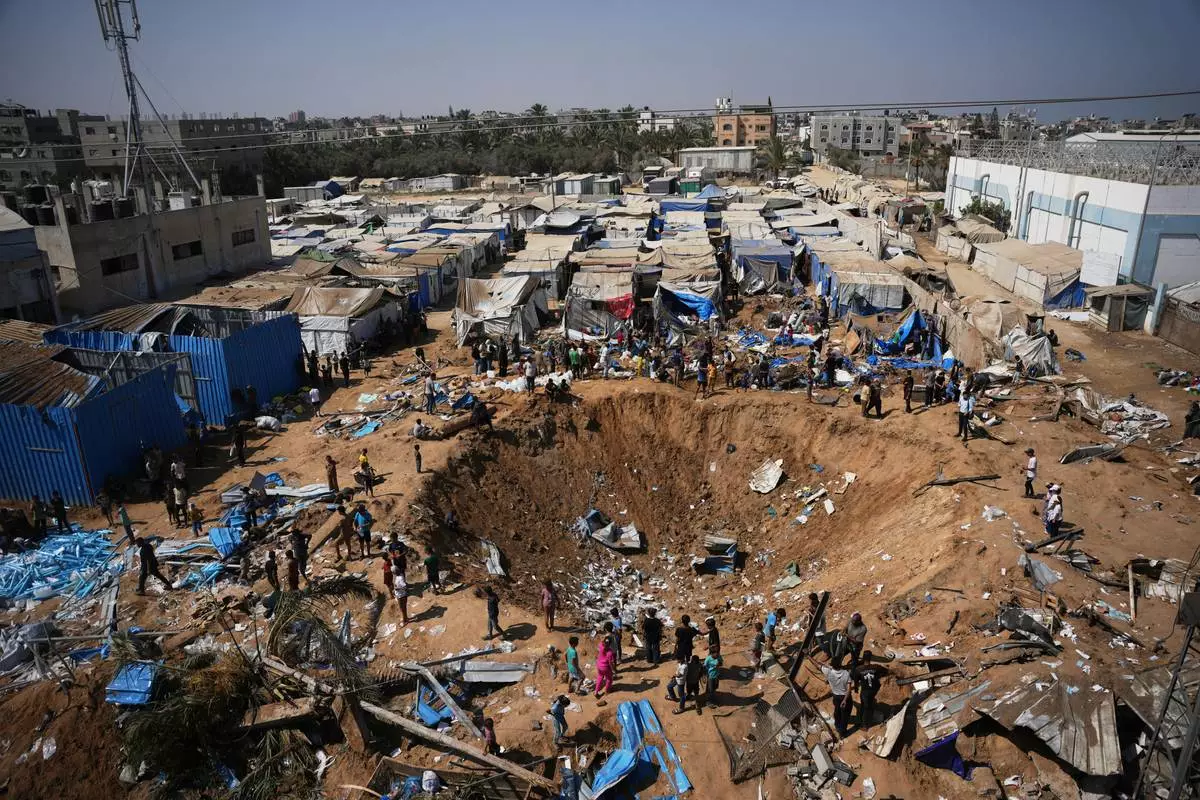
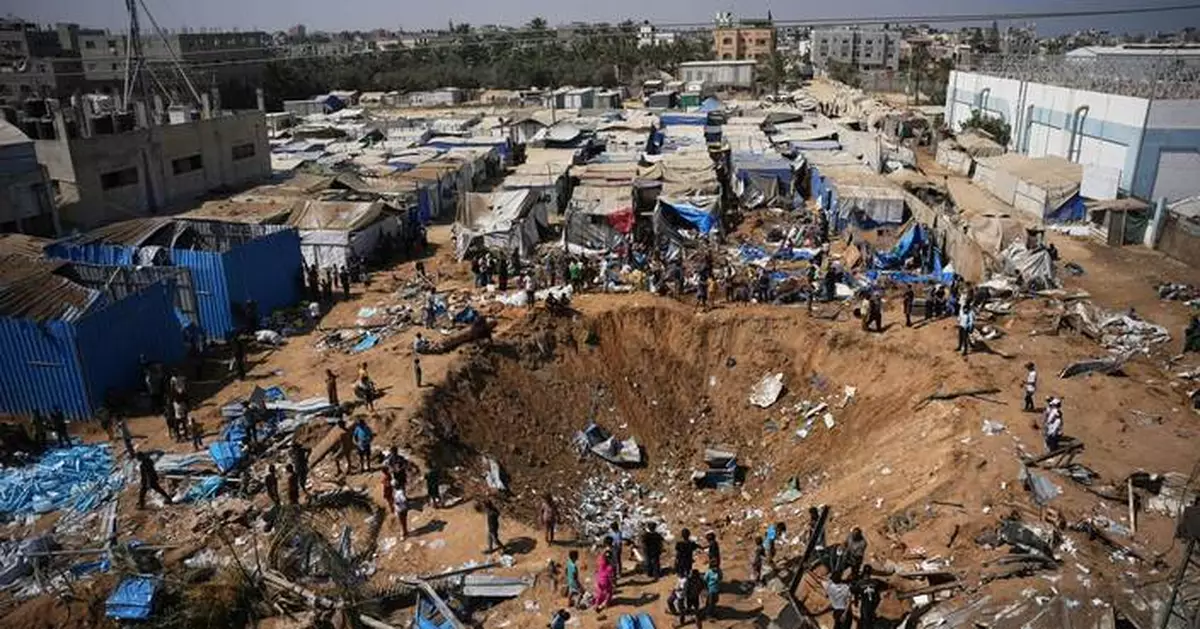
Palestinians inspect the scene of an Israeli airstrike near al-Aqsa Hospital in Deir al-Balah in the central Gaza Strip, Saturday, Aug. 1, 2026. (AP Photo/Abdel Kareem Hana)