NEW YORK (AP) — It happened out of necessity. Academy Award-winner Morgan Freeman was in Clarksdale, Mississippi, 25 years ago when some out-of-towners asked where they could hear blues music. Musicians were abundant; venues were not.
“There was no place where we could guarantee that you could go in and hear it,” he told The Associated Press. “So, we had to establish that.”
Freeman and his business partners, then-Mayor Bill Luckett and Howard Stovall, were inspired to open a juke joint in Clarksdale called Ground Zero Blues Club. Then, much more recently, they created “Morgan Freeman’s Symphonic Blues Experience,” a touring ensemble of blues musicians who marry the beloved Southern genre with classical, symphonic compositions. On Friday, they'll release an album under the same name.
The legendary actor is a producer and narrator on the release, not a performer. That's left up to the professionals: all-star acts like Taj Mahal, Keb’ Mo’, Shemekia Copeland, Tiernii Jackson, the Stax Music Academy Choir, the Chineke! Orchestra out of London, and many more.
“I like the blues. I like music. I cannot claim to be an aficionado. That’s not my place,” says Freeman. “I’m an enthusiast, but that’s a necessity.”
Before the album, the “Morgan Freeman’s Symphonic Blues Experience” traveling performances were born out of a simple idea: How could Freeman and his team bring this music to the world?
“Blues is an important American story birthed in the Mississippi Delta out of hardship but obviously resonates with people and cultures on a global basis, both for how good it sounds, but also the message underneath it,” said Eric Meier, Freeman's partner and co-producer on the project who joined the actor's blues club in 2018. “We conceived of this concept to really take this music to new geographies and new audiences.”
Turning the live performance into an album meant cutting down a nearly two-hour show to around 45 minutes across 12 tracks, while still honoring the format. It includes video vignettes as well as “cinematic narration,” courtesy of Freeman, recorded at the club in Clarksdale.
“We offer a musical story, a 100-year arc from the 1930s to modern day, so the evolution of blues music,” says Meier.
Freeman's idiosyncratic voice opens the record, describing the genre with a real poetry, delivered atop a haunting rendition of Blind Willie Johnson's 1927 gospel blues classic, “Dark Was the Night, Cold Was the Ground.”
“This is music that gave voice to a people, to their pain, their hope and their resilience,” Freeman recites. “Music isn't just melody, you know. It's memory, it's history wrapped in ribbon, the echoes of lives lived and lost, heartache and hope all tangled together. And nowhere is that truer than in the blues.”
The last song on “Morgan Freeman’s Symphonic Blues Experience” sees singer-songwriter Muddy Waters' great-nephew Keith Johnson covering Raphael Saadiq and Ludwig Göransson's “I Lied to You” from the Oscar-winning 2025 film “Sinners.” It brings the 100-year story of blues to its coda, but it also serves as a reminder of the film's ability to bring the genre into mainstream conversation.
That's something Freeman hopes to accomplish, too. He wants to make sure blues is not forgotten.
“It is a responsibility that we’ve taken on. And the hope is that it, like everything else that catches on, takes root, as it were. You know, the blues is actually America’s music,” he says. “So, it’s incumbent upon us to water it, nurture it, keep it alive, keep it going.”
Meier adds that their album project predates “Sinners” — he says director Ryan Coogler told him the film's juke joint was partially inspired by Ground Zero Blues Club; the film is set in Clarksdale after all — but it has been “a wonderful coincidence” that both works have the power to bring the blues to the masses.
And maybe one day, “Morgan Freeman’s Symphonic Blues Experience” will receive the same kind of critical praise given to “Sinners.” The album is eligible for the 2027 Grammy Awards.
“We will be submitting in multiple categories,” says Meier. “You got room on your trophy shelf, Morgan?”
“Yeah, yeah. I want it,” Freeman smiles.
Adding Grammy Award-winner to his Academy Award-winner title? “Sounds pretty good to me.”

FILE - Morgan Freeman appears at the world premiere of "Now You See Me: Now You Don't" in New York on Nov. 10, 2025. (Photo by CJ Rivera/Invision/AP, File)
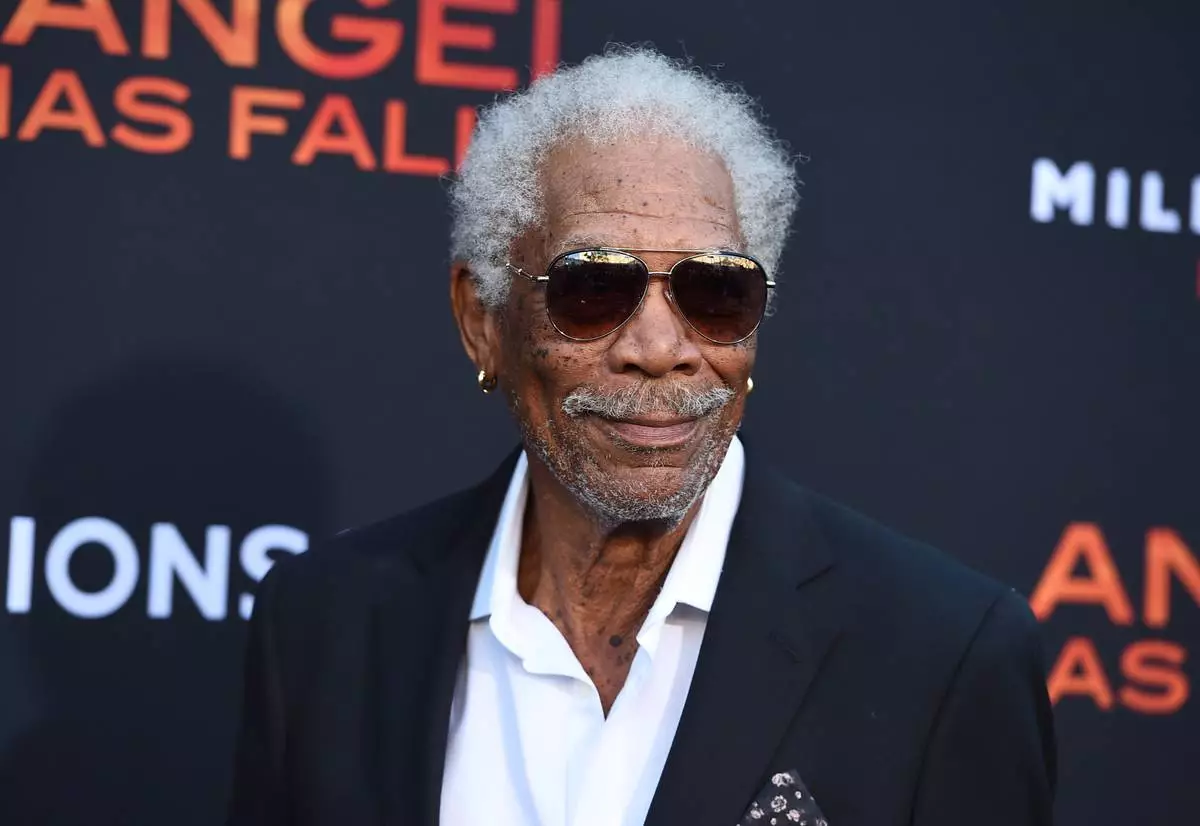
FILE - Morgan Freeman appears at the Los Angeles premiere of "Angel Has Fallen" on Aug. 20, 2019. (Photo by Jordan Strauss/Invision/AP, File)
Iranian-backed Houthi rebels renewed attacks Tuesday on government-controlled areas in Yemen as the violence threatened to reignite civil war and raised fears over new threats to regional shipping lanes.
Iran's foreign minister, meanwhile, underscored Tehran's stance against reopening the Strait of Hormuz until the U.S. meets its conditions, after U.S. President Donald Trump said he was demanding compensation from Iran “for all of the people that they have killed” in the past.
Here’s a look at the latest developments in the Iran war and the wider Middle East. Full coverage can be found here.
The Houthi rebels attacked the government-held port city of Mokha on the Red Sea and other areas of the country.
Yemen's military said the rebels targeted Mokha and the central province of Marib with missiles and drones but did not provide further details.
The Houthis struck Marib and the eastern province of Hadramout last week, killing dozens of government troops and civilians. They hit Mokha with missiles and drones over the weekend and killed at least seven people, including three troops, according to the Yemeni military.
Mokha is a main port under Yemen’s internationally recognized government and has been renovated to handle shipping to avoid the Houthi-held port of Hodeida.
The strikes were part of an escalation by the Houthis against government forces in Yemen and oil facilities in neighboring Saudi Arabia, which supports the internationally recognized Yemeni government, and the kingdom’s shipping in the Red Sea.
With the Strait of Hormuz effectively shut down by Iran, there has been a renewed focus on the Red Sea and Bab el-Mandeb Strait at Yemen's southern tip, which is an alternate route for Saudi Arabia to ship its oil.
The Houthi attacks could reignite Yemen’s civil war following a 2022 truce, and open a new front in the Middle East war.
Mohammed Abdul-Salam, the Houthis’ chief negotiator and spokesperson, accused Saudi Arabia in a social media post of exploiting the ceasefire to tighten an air and sea blockade it imposed in 2015.
He said the Houthis are open for negotiations but any settlement must include lifting the blockade.
Iranian Foreign Minister Abbas Araghchi told reporters that the country had “astonished the whole world” in the war against the United States and Israel, proving “that it is a tough and invincible power.”
Iran has refused to back down on demands that the U.S. end its blockade of Iranian ports and fulfill other conditions before Tehran will consider reopening the Strait of Hormuz.
Iran effectively closed the strait after Israel and the U.S. attacked the country on Feb. 28. Attacks on the key waterway — through which roughly one-fifth of the world’s traded oil supplies passed before the war — and uncertainty around its future have kept energy prices a major focus of U.S. politics ahead of November’s midterm elections.
Araghchi said on his Telegram channel that in a call with German Foreign Minister Johann Wadephul late Monday, he had “emphasized that making the Strait of Hormuz secure requires an end to the United States’ aggressive actions and unlawful interventions, including the naval blockade and other violations of U.S. obligations.”
Wadephul said on X that he had emphasized “the Strait of Hormuz needs to be opened unconditionally ensuring free and safe navigation for all.”
Trump said in a social media post he was directing his negotiators to include “compensation from Iran, for all of the people that they have killed and gravely wounded with their roadside bombs and many conflicts.” That was after Iran demanded compensation for the devastation caused by U.S. and Israeli bombardment over the past five months.
Trump also claimed Monday in an Oval Office exchange with reporters that the U.S. has “100% control” of the Strait of Hormuz, but that the situation remains complex.
He said the U.S. Navy’s blockade is preventing Iran from selling its oil on the international market, effectively choking the Iranian economy.
“Now, can they make trouble? Yeah, they can make trouble, but they’re broke,” Trump said.
In Syria, a court sentenced former President Bashar Assad along with his younger brother to death for crimes against humanity and war crimes during Syria’s 14-year conflict that left about half a million people dead.
Assad and his brother Maher, who fled to Russia after insurgents marched into Damascus in December 2014, were sentenced in absentia at the Fourth Criminal Court in the Syrian capital.
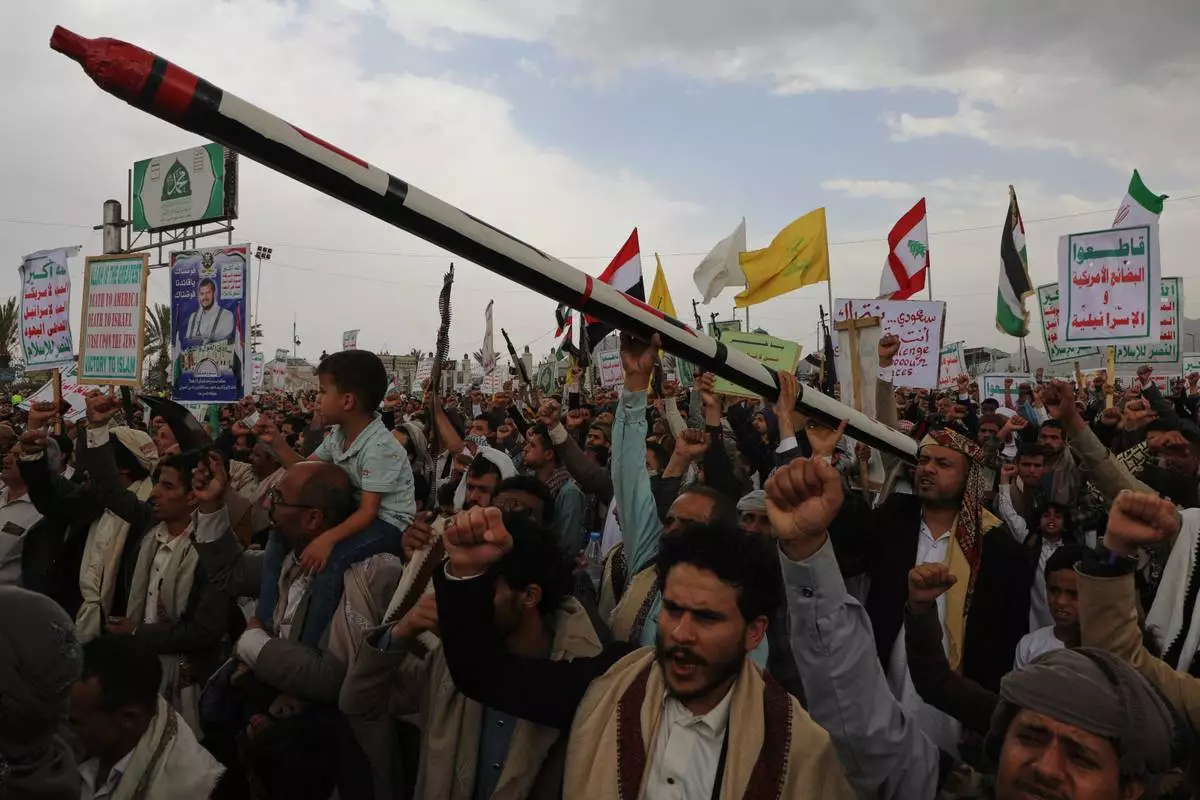
Houthi supporters chant slogans during a rally against the Saudi-led coalition in Sanaa, Yemen, Friday, July 31, 2026. (AP Photo/Osamah Abdulrahman)
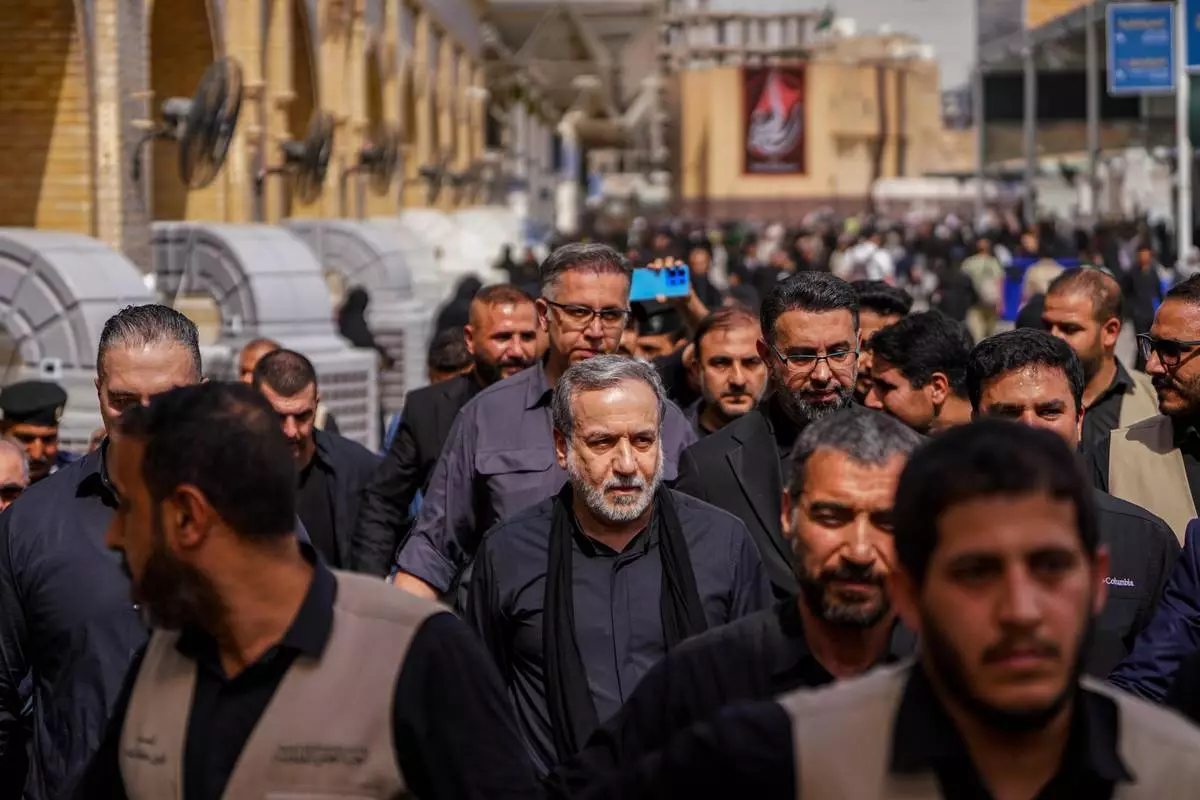
Iran's Foreign Minister Abbas Araghchi, center, is surrounded by security personnel as he walks in Najaf, Iraq, during Arbaeen commemorations, Monday, Aug. 3, 2026. (AP Photo/Anmar Khalil)
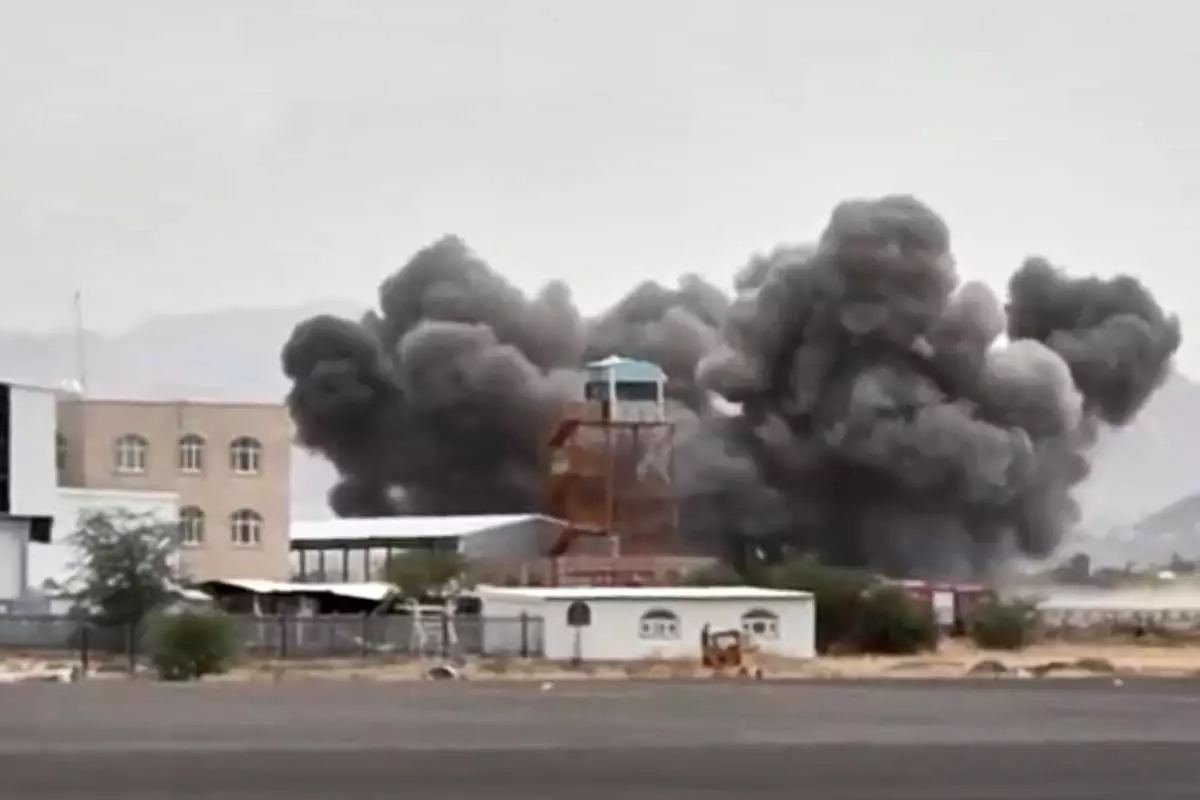
FILE - This image taken from video broadcast by Al-Masirah TV, a Houthi-controlled news channel, shows an explosion at the Sanaa International Airport compound during what the Iranian-backed Houthi rebels in Yemen said were several Saudi airstrikes in Sanaa, Yemen, July 13, 2026. (Al-Masirah TV via AP, File)
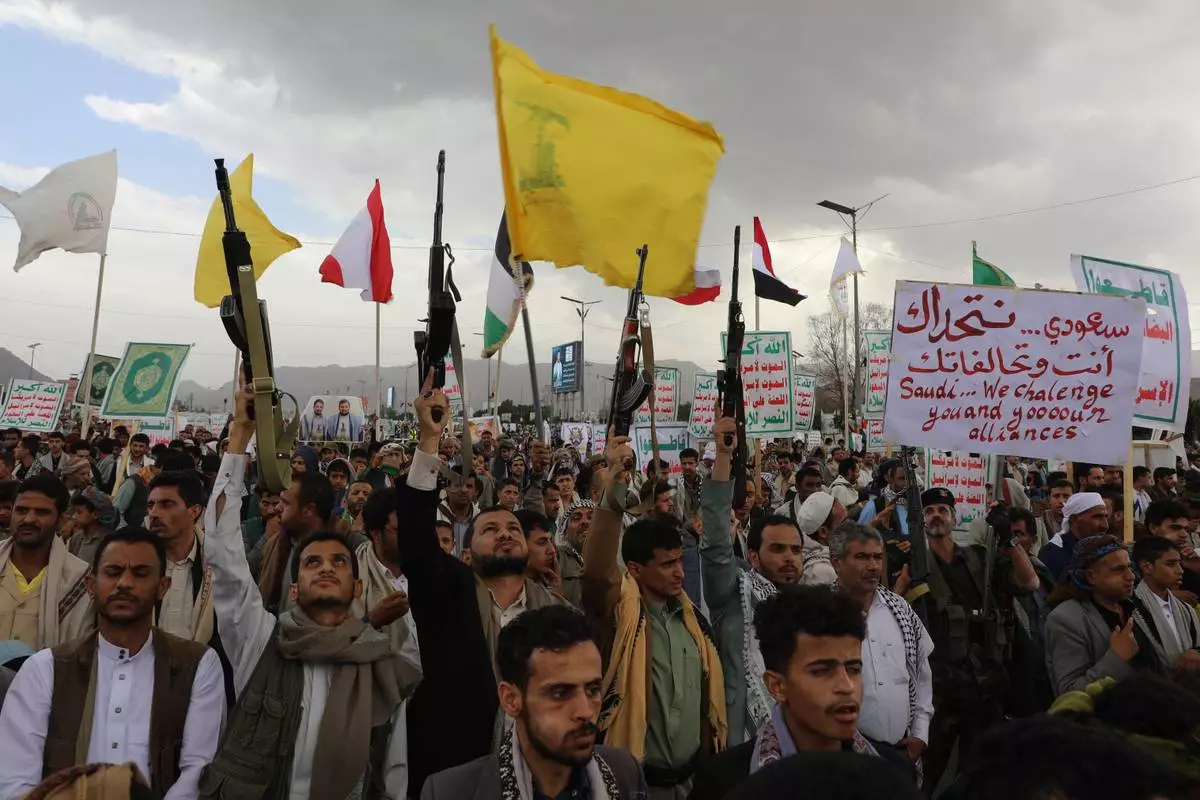
Houthi supporters attend a rally against the Saudi-led coalition in Sanaa, Yemen, Friday, July 31, 2026. (AP Photo/Osamah Abdulrahman)
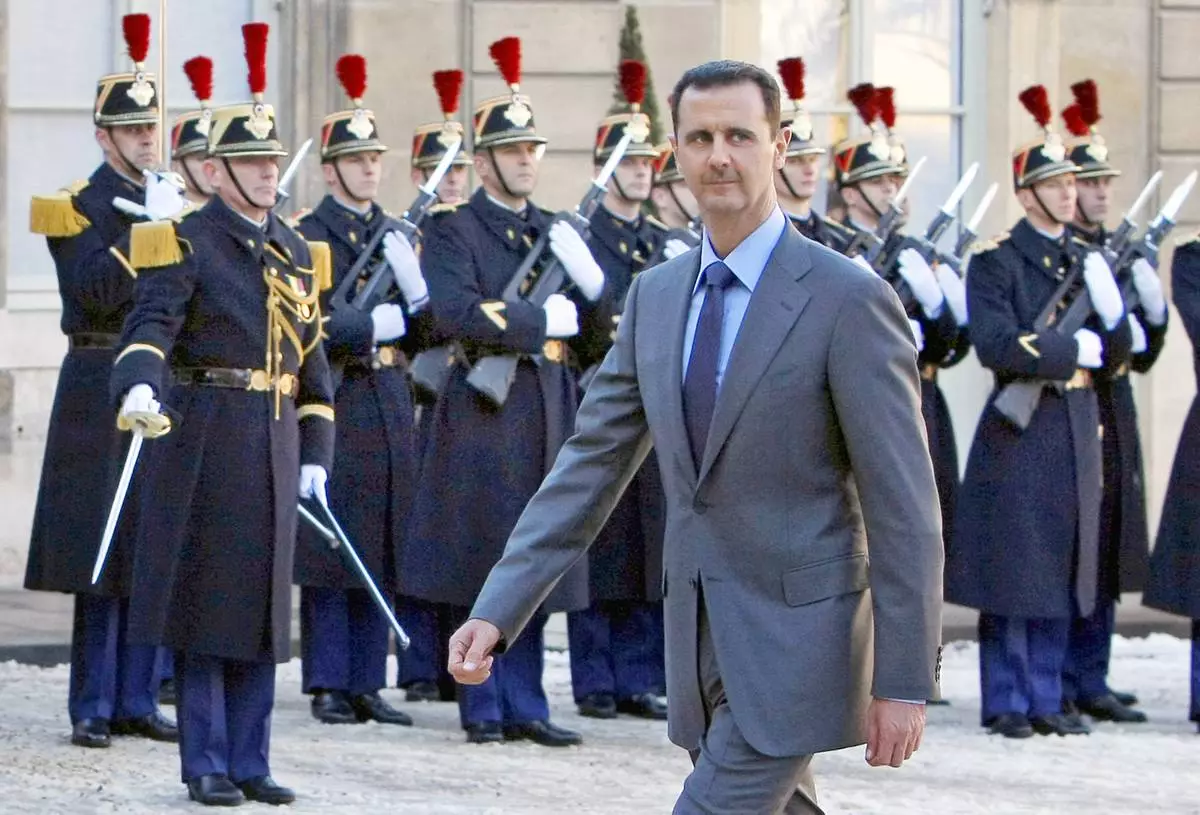
FILE - In this Dec. 9, 2010 file photo, Syria President Bashar al-Assad arrives at the Elysee Palace in Paris for his meeting with French President Nicolas Sarkozy. (AP Photo/Remy de la Mauviniere, File)
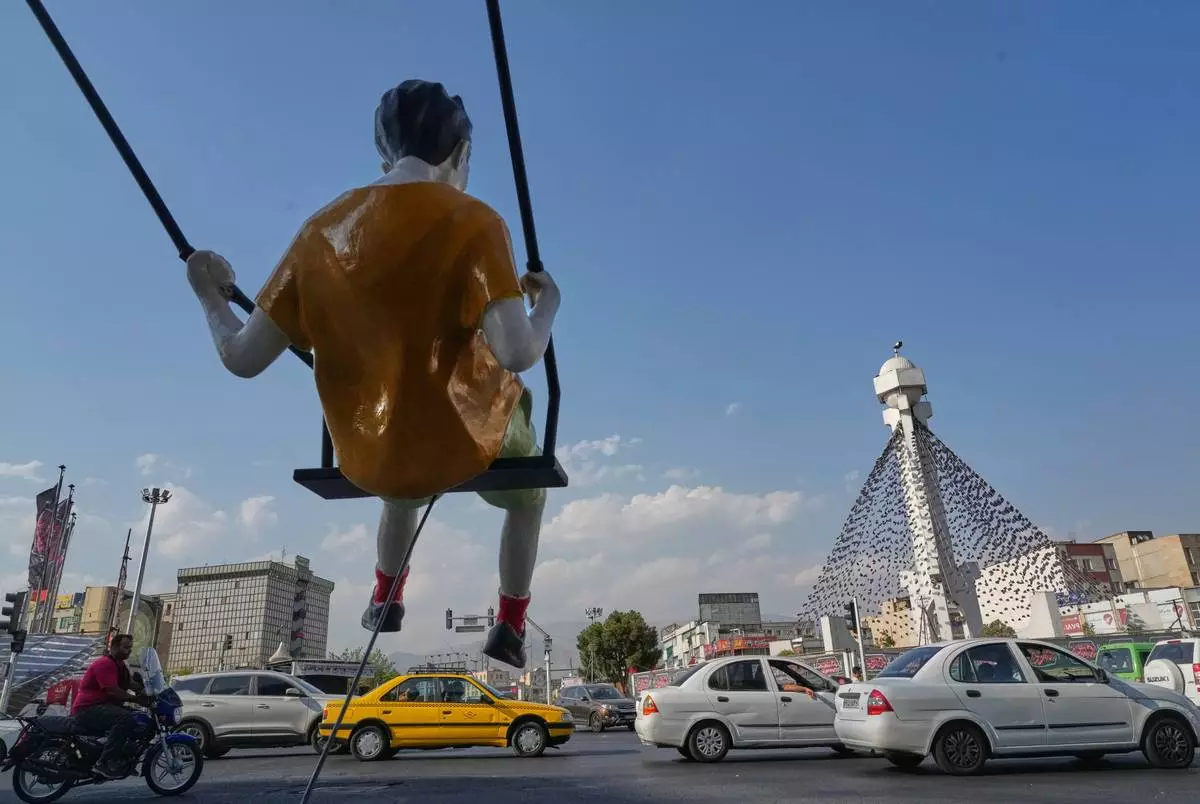
Vehicles drive past a statue of a swinging boy at a square in Tehran, Iran, Monday, Aug. 10, 2026. (AP Photo/Vahid Salemi)