TOKYO (AP) — A bear injured four people in a Japanese residential area on Tuesday in the latest attack in an area of the country where the animals have increasingly encroached on the human population in recent years.
Japan's Environment Ministry said a record 13 people were killed in more than 230 attacks by bears in 2025.
Police and fire department officials rushed to the Sasakino district of Fukushima in northeastern Japan after receiving an emergency call from the Fukushima Steel Works reporting bear attacks on two employees.
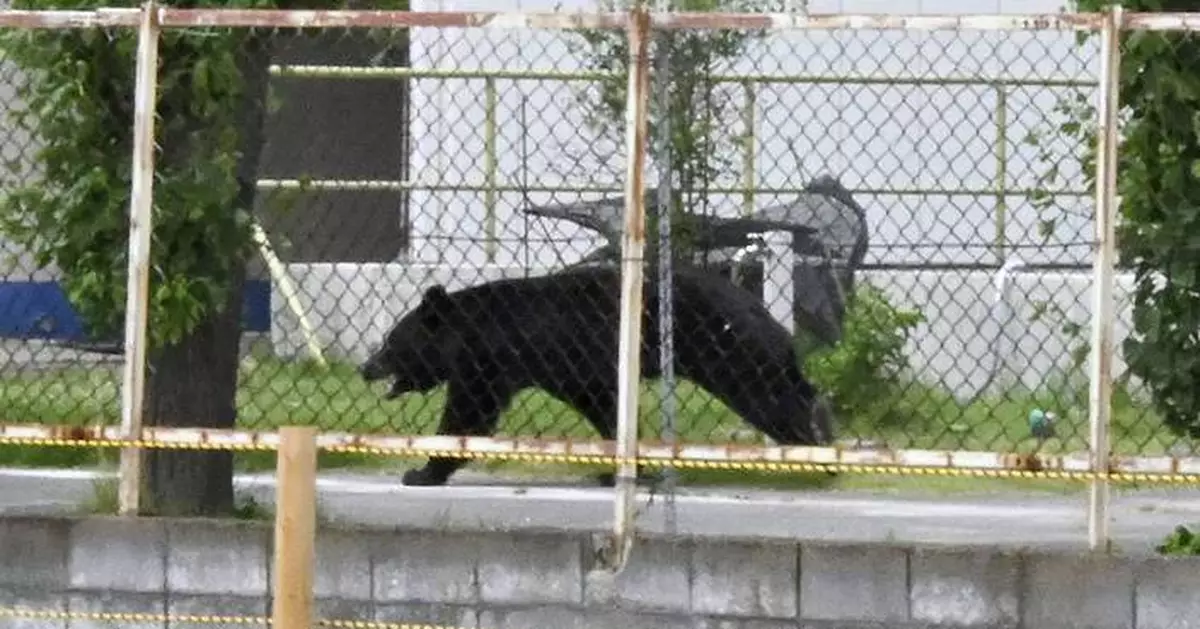
Security camera footage shows a black bear appearing and chasing an employee near the entrance. As the man in his 20s tries to flee, the bear throws him to the ground. It then moves into the compound and injures a second male employee in his 60s.
The bear later injured a third person, a male employee in his 60s at separate company. A woman in her 80s who lives in the neighborhood also was attacked and injured, the Fukushima City Fire Department said.
The three men sustained minor injuries and the woman had moderate injuries but none were considered life-threatening, the fire department said.
The bear had not been caught as of Tuesday afternoon and was believed to be inside the second company compound, which was surrounded by uniformed police carrying long sticks.
Two nearby schools were closed, including Noda Elementary School, which held classes online and put a warning on its website to “avoid non-essential outings and stay safe.”
The bear attack has rekindled last year's nationwide fear that led to Japan's army being dispatched to the northern prefecture of Akita where more than 60 people were attacked by bears, with four killed.
The encroachment by a growing bear population has occurred in a region with a rapidly aging and declining human population that has few people trained to hunt the animals, experts say.
The Japanese government in March estimated the overall bear population at around 57,800. Officials have adopted a road map of bear population management, calling for systematic culling. Under the plan, the number of municipal bear control staff will triple to 2,500 within five years, while the number of bear traps will double.
Bear sightings were reported recently in Tokyo's western suburbs, including the hiking area of Okutama. Park officials have set up additional traps and launched bear alerts on social media.
The government has stepped up a public awareness campaign, urging hikers and mushroom hunters to check notifications about bear sightings and avoid outdoor activity in the early morning and evening when bears are active.
An environment ministry manual advises that anyone encountering a bear should not panic, move slowly and avoid turning around and running. As a last resort, the manual says anyone attacked should turn face down, ball up and cover their neck.
“The point is to save yourself from a fatal wound," according to the manual.
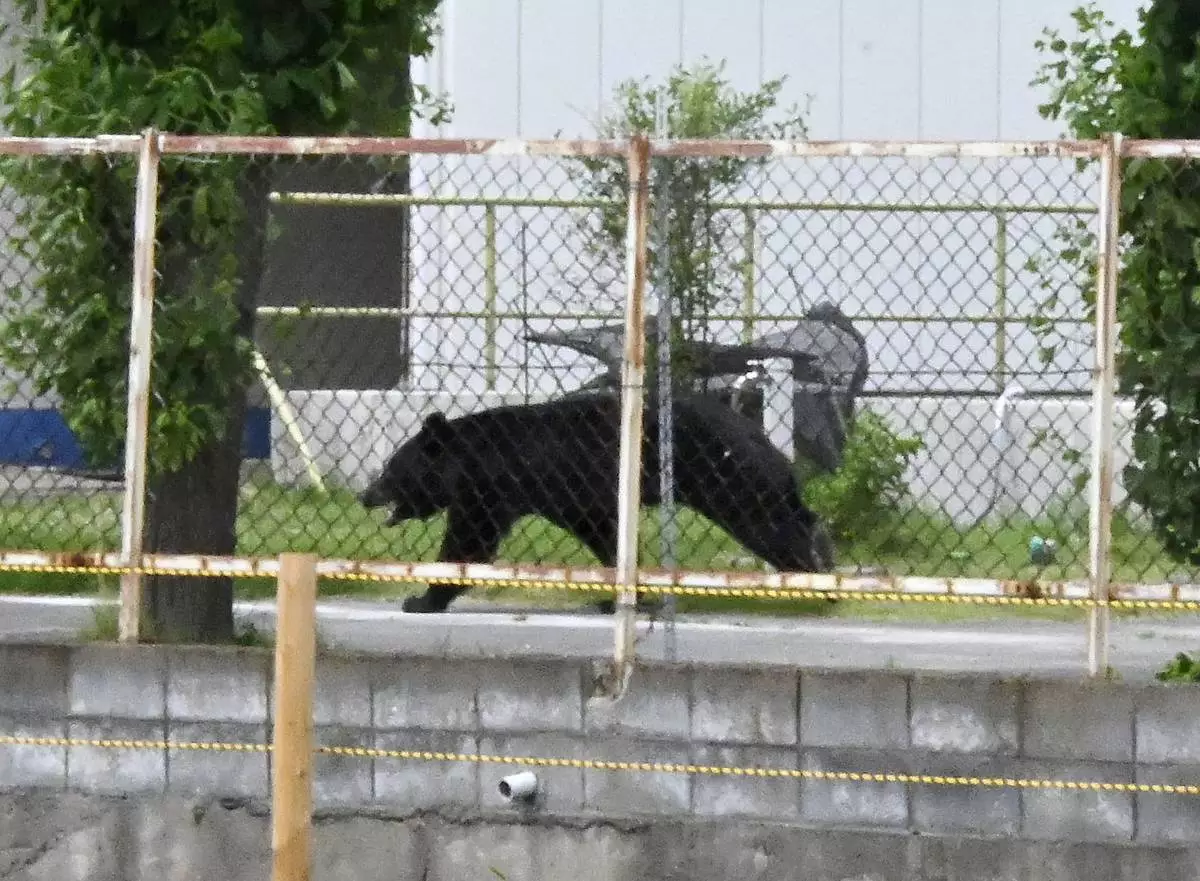
A bear walks on the premises of an office in Fukushima, Japan, Tuesday, June 2, 2026. (Kyodo News via AP)
MINNEAPOLIS (AP) — The Texas Rangers' quest for an AL West title — and a .500 record — will go down to the final day of the regular season.
Danny Jansen homered and drove in two runs, and Jake Burger also went deep in a 6-2 victory over the Minnesota Twins on Saturday.
Texas is 80-81 heading into Sunday's regular-season finale at Minnesota. Houston is also 80-81 going into its final game at the Athletics and holds the tiebreaker over the Rangers because the Astros won their season series.
That means Texas needs a win and a Houston loss Sunday to make the playoffs.
“We're here, and it's a chance, and we're excited for it,” Jansen said after his team's victory but before the Astros routed the A's 13-2. “I've never been a part of a game like this, but it's going to be a lot of fun to go out there and leave it all on the field and control what we can.”
Left-hander MacKenzie Gore (8-11, 4.59) ERA starts for the Rangers on Sunday and right-hander Dean Kremer (4-5, 4.97) for the Twins. The AL West winner will have the lowest winning percentage for a postseason team in a non-shortened season, below the .506 (82-80) for the 2005 San Diego Padres.
“I always say, you worry about tomorrow tomorrow. You have to win today,” Rangers manager Skip Schumaker said. “Tomorrow's pretty important, too.”
Making his first start since Aug. 7, Rangers right-hander Nathan Eovaldi went 4 1/3 innings and allowed a first-inning run. Left-hander Robert Garcia earned the win with 1 2/3 scoreless innings of relief.
Brandon Nimmo had an RBI double and made a diving, backhand catch for the final out of the third inning as he tumbled over in right field to deny Kody Clemens, saving two runs. Nimmo played despite cramping.
Nicky Lopez, who hit a two-out double in the second and scored the Rangers' first run, was removed in the middle of the fourth after injuring his left leg while stepping awkwardly on first base.
The bottom three batters in Texas’ starting lineup went 6 for 11 with four RBIs and four runs.
“Today was a big win. Tomorrow's an even bigger one,” Lopez said. “We didn't want to think about tomorrow until we finished today. I think we did a good job.”
See AP’s full MLB coverage here
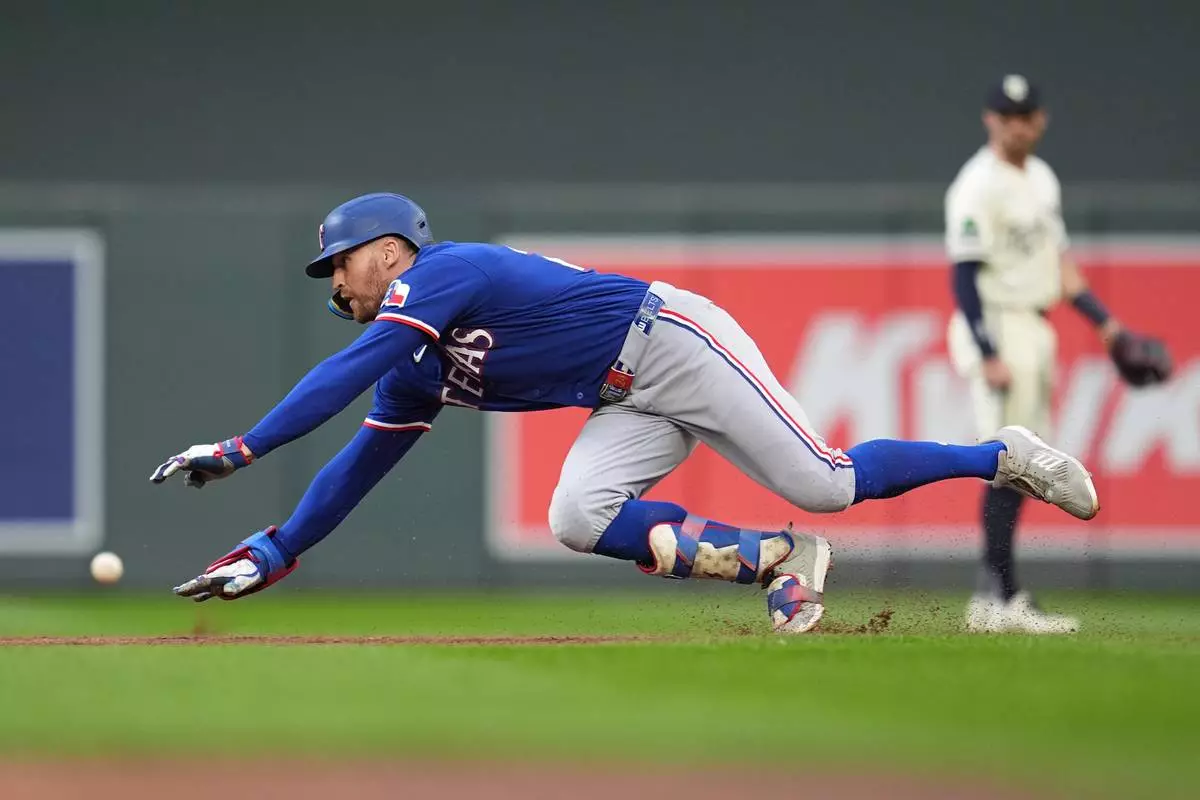
Texas Rangers' Brandon Nimmo dives to reach second base safely for an RBI-double during the second inning of a baseball game against the Minnesota Twins Saturday, Sept. 26, 2026, in Minneapolis. (AP Photo/Abbie Parr)
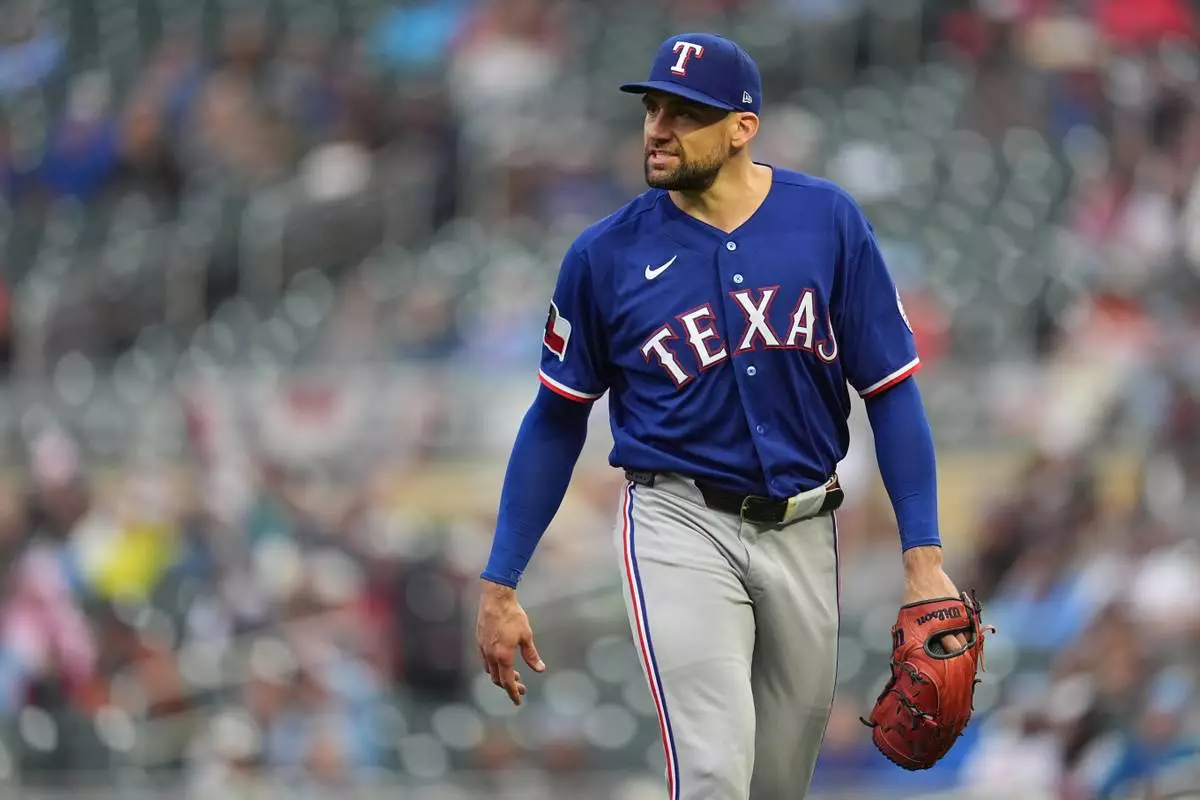
Texas Rangers starting pitcher Nathan Eovaldi reacts after completing the bottom of the second inning of a baseball game against the Minnesota Twins Saturday, Sept. 26, 2026, in Minneapolis. (AP Photo/Abbie Parr)
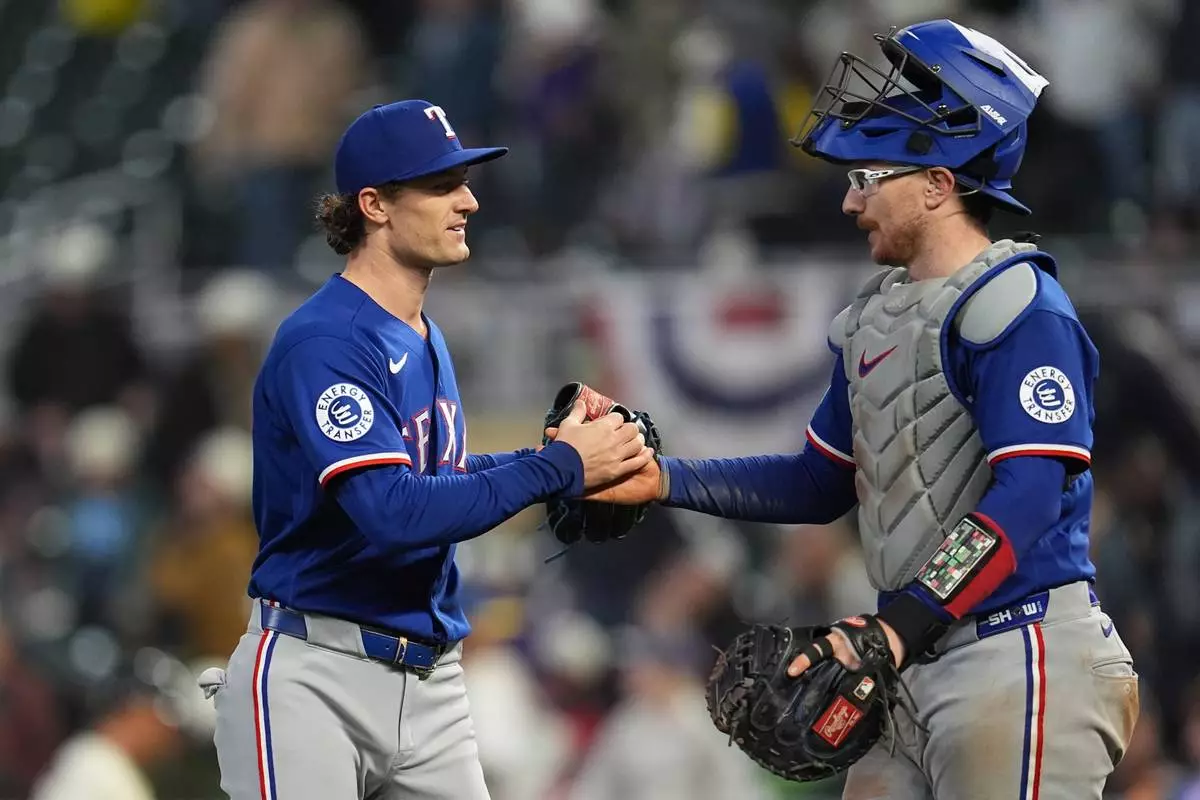
Texas Rangers relief pitcher Jacob Latz, left, and catcher Danny Jansen, right, shake hands after a baseball game against the Minnesota Twins, Saturday, Sept. 26, 2026, in Minneapolis. (AP Photo/Abbie Parr)
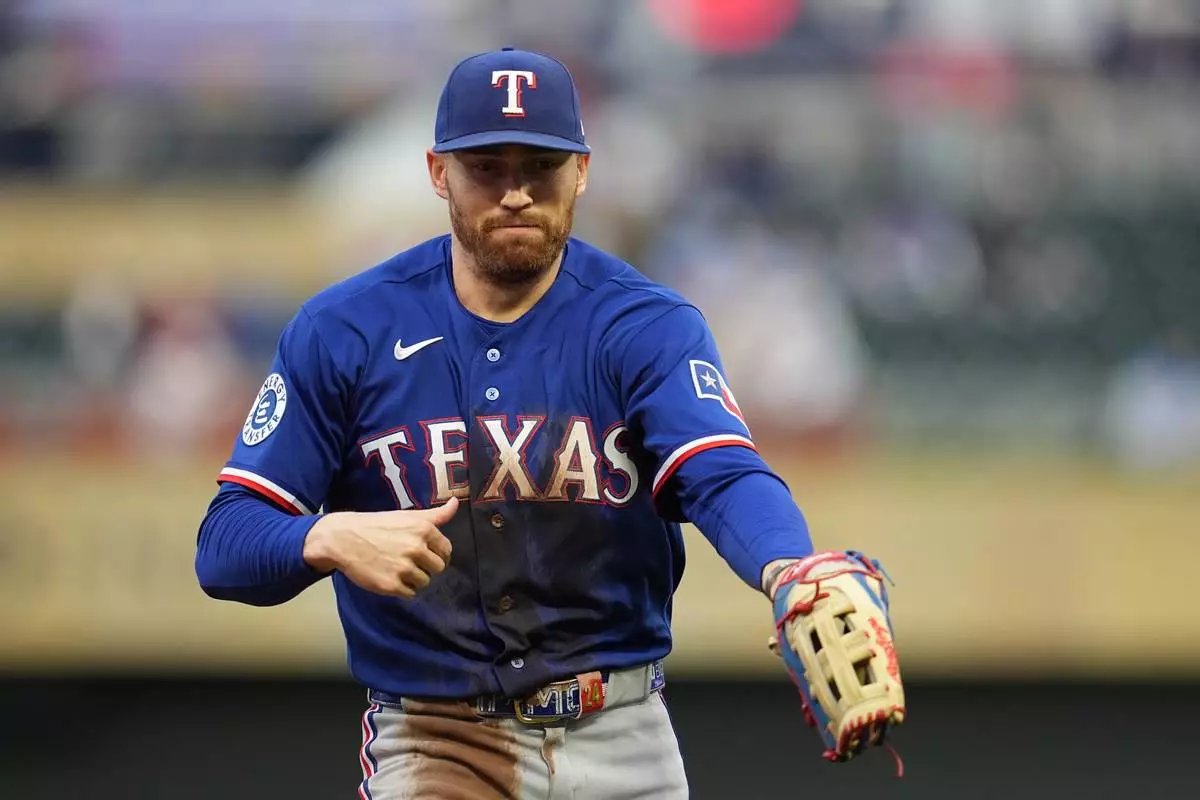
Texas Rangers' Brandon Nimmo walks back to the dugout after the bottom of the second inning of a baseball game against the Minnesota Twins, Saturday, Sept. 26, 2026, in Minneapolis. (AP Photo/Abbie Parr)
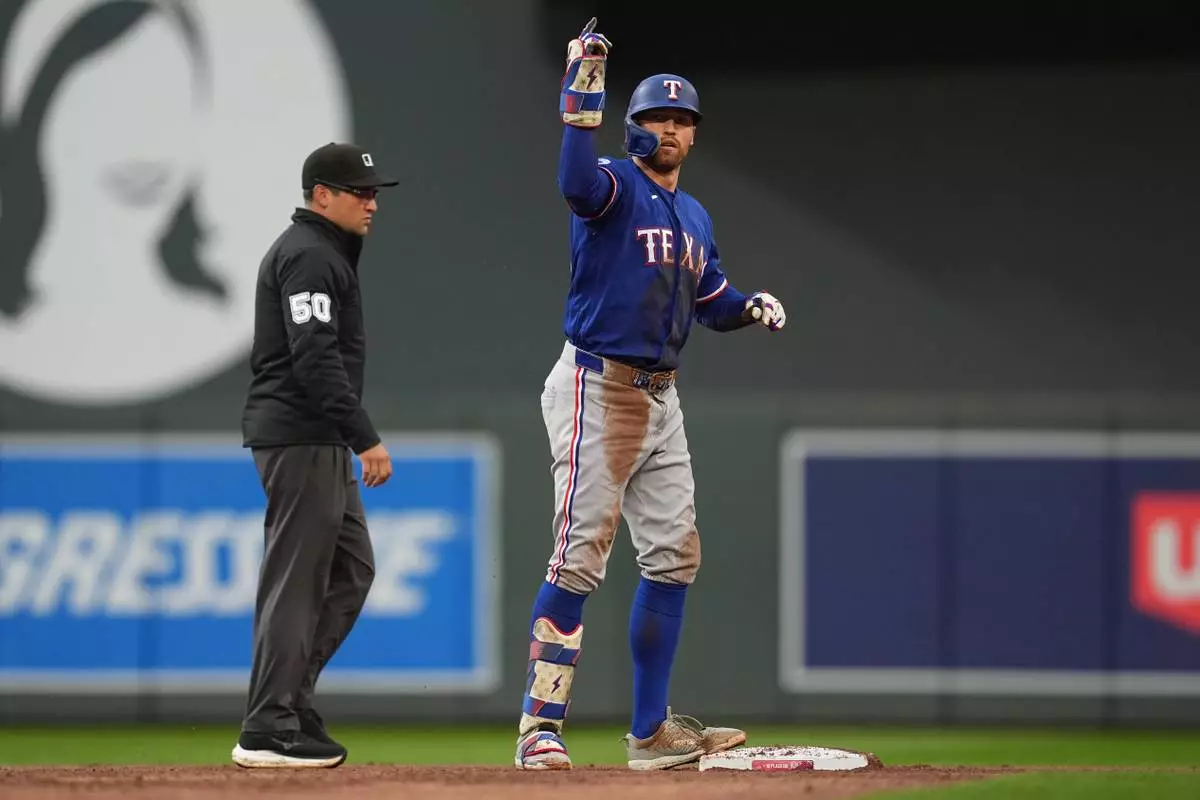
Texas Rangers' Brandon Nimmo celebrates after hitting an RBI-double during the second inning of a baseball game against the Minnesota Twins Saturday, Sept. 26, 2026, in Minneapolis. (AP Photo/Abbie Parr)