McALESTER, Okla. (AP) — Two men were set to be executed in the U.S. on Thursday, including a Texas father who beheaded three young children he was raising in a 2003 killing that rattled a community along the U.S.-Mexico border.
In Oklahoma, James Pravatt was also set to die by lethal injection for the fatal shooting of the estranged husband of a woman with whom he was having an affair. Prosecutors say he carried out the killing with her, and she is currently the state's only woman on death row.
The U.S. is on track to surpass 40 executions for a second consecutive year, a pace driven by Florida as the death penalty comes under renewed attention. Last week, California Gov. Gavin Newsom announced he would commute hundreds of death sentences before leaving office, which experts say would be the largest mass clemency in American history.
Pavatt, 73, was set to be put to death at Oklahoma's state penitentiary in McAlester. John Allen Rubio, 46, was set to be put to death later in Texas at the state prison in Huntsville.
Rubio and his girlfriend Angela Camacho were accused in the killings of 3-year-old Julissa Quesada, 14-month-old John E. Rubio and 2-month-old Mary Jane Rubio in the squalid, windowless apartment they shared in Brownsville, located on Texas' border with Mexico.
Camacho pleaded guilty and is serving a life sentence.
Rubio's first capital murder conviction in the killings was overturned by an appeals court, which ruled that statements by Camacho were wrongly allowed as evidence in his trial. Rubio again pleaded not guilty by reason of insanity for his second trial but he was once again convicted and sentenced to death.
Rubio, according to court records, wasn’t the biological father of the two older children but treated them as if they were his own.
At various points, Rubio claimed the children were possessed and that he was the “chosen one” intended to save the world. Defense experts diagnosed Rubio as suffering from paranoid schizophrenia, a determination rejected by prosecution experts.
Defense experts testified his childhood — filled with violence at home, “toxic” parents, drug use and prostitution — damaged him developmentally.
The apartment building where the children were killed was later demolished and the land was turned into a park and a community garden.
Pavatt was convicted of first-degree murder and conspiracy to commit murder in the 2001 death of Rob Andrew, a 39-year-old advertising executive. Andrew was fatally shot in the garage of the Oklahoma City home he'd previously shared with his wife as he picked up their two young children before Thanksgiving.
Pavatt, who attended the same church as the Andrew family, had been having an affair with Andrew's wife, Brenda Andrew. They were convicted at separate trials and each was sentenced to death.
Weeks earlier before the shooting, Rob Andrew had told police someone was trying to kill him after the brake lines on his car were cut. Brenda Andrew told police after her husband was killed that masked intruders shot her in the arm and fatally shot him.
Pavatt and Brenda Andrew went to Mexico with her two children after the shooting and were arrested three months later while reentering the U.S.
At a clemency hearing last month, Pavatt said he was “not guilty of shooting anyone,” and that he'd fallen in love with Brenda Andrew and believed “everything she told me.”
“It was not until my trial that I began to see the extent to which I had been manipulated by Brenda,” Pavatt told the board. “I can see why the jury believed that we were both involved in Rob’s murder.”
Prosecutors have said that Pavatt and Andrew plotted to kill Rob Andrew, and that no matter who fired the shots, both were equally guilty.
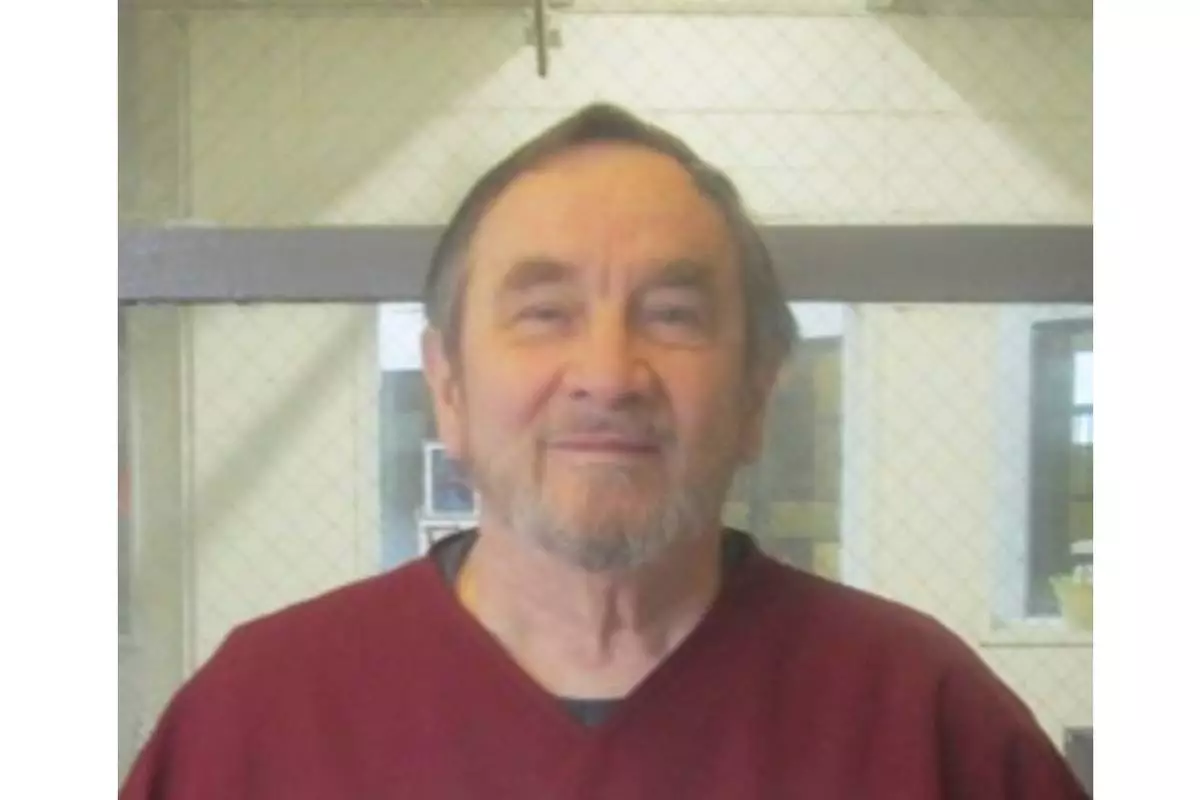
This photo provided by the Oklahoma Department of Corrections shows James Pavatt in Feb. 2023. (Oklahoma Department of Corrections via AP)

This photo provided by the Texas Department of Criminal Justice shows John Allen Rubio on Oct. 31, 2022. (Texas Department of Criminal Justice via AP).
KYIV, Ukraine (AP) — Matvii Yermolenko is 2, but he already knows the words for siren and air defense. This winter, his mother decided to take him out of Kyiv.
“There is sadness, but even stronger is the understanding of what I have to do — leave,” Matvii’s mother, Kateryna Tsvihun, said, adding that they will come back in spring. “I cannot live without Kyiv and Ukraine. I am rooted here, my child is Ukrainian, and my husband is fighting for this.”
Ukrainians are bracing for what many expect to be the hardest winter of the war. Last year, heating disruptions left thousands of people in freezing apartments in Kyiv. Now, officials and analysts say, the badly damaged energy system is increasingly struggling to withstand attacks, putting the country’s resilience to another test. With no end to the war in sight, many people are thinking only about getting through the coming months.
Kyiv is already under strain. Since Aug. 22, not a single day has passed in the capital without an air raid threat, often followed by drone attacks during the day and missiles at night. Some residents have moved to other parts of the country or abroad for the winter. While it's impossible to calculate how many people left the capital, changes in the rental market offer a possible clue.
“In September, we saw that the number of flats available to rent was increasing in Kyiv, whilst it was decreasing in a number of western cities," Liudmyla Kiriukhina, the head of the statistics department at LUN, a Ukrainian real estate platform, said. “This could have indicated that tenants were moving from the capital to the west of the country.”
Exploiting its advantage in jet-powered drones and ballistic missiles, Russia has expanded its targets in the city to include gas stations, data centers, warehouses, big-box stores and bridges that are crucial for civilian transport in a city divided by the Dnipro River. Electricity disruptions have caused problems on the subway, Kyiv’s main transport artery, while water supply issues are increasingly common. Some residents have also criticized local authorities' winter preparations.
But leaving costs money, and many more are staying, stocking up on power banks, water containers and portable gas stoves.
Kateryna Tsvihun, 41, found last winter very difficult. She could not bear the thought of her son going through more power outages, let alone possibly losing heating as well. So she told her husband, a soldier since 2022, that she wanted to spend this winter elsewhere.
She could not find a suitable option in Ukraine, but a Facebook group for mothers who like to travel led her to one in Albania.
“The birth of a child is the ultimate game-changer,” she said. “Before, no matter how scared I was, I stayed in Kyiv and did not even think about leaving.”
Russia recently struck an area near a subway station where she and Matvii often go for walks. “It’s a bit scary to stay,” she said. “But it’s still our home, so we will come back this spring.”
She gave her portable power station, power banks and rechargeable lamps to relatives staying in the capital. For the trip, she bought a large, light-blue suitcase, packing only with practical things and a few of Matvii’s small toys.
“I see it as an opportunity to exhale, because the tiredness and pressure have been piling up over these years of war, the lonely waiting for my husband, and the attacks,” she said.
Ukraine’s Energy Ministry said last week that Russia had continued to attack power generation facilities and substations. “Attacks on the energy sector are not stopping,” it said in a statement.
“The situation in Kyiv is especially difficult right now: People and businesses are facing many hours of electricity and water outages,” President Volodymyr Zelenskyy said. Repeated strikes and constant air raid alerts are making repairs take much longer, he said.
“This winter could be just as hard, or even harder than the last one,” Andrii Tkachov, acting head of the Kyiv City Military Administration, said. “The enemy will keep striking critical infrastructure and trying to disrupt residents’ heating and water supply.”
He said Russia's aim is to create a crisis and humanitarian and social tensions in the capital, Ukraine's most populous city and the seat of its main state institutions.
“The enemy understands that attacks on Kyiv will affect the morale of the entire country. The main goal is to break Kyiv,” Tkachov said. “But, as we say, Kyiv rests on three pillars: air defense, our utility and energy workers, and the self-organization of its residents.”
As of Nov. 1, the number of active rental listings in Kyiv had risen by 87% compared with Aug. 1, according to LUN. In September, the number of flats offered for rent during the month rose in Kyiv but fell in several western cities, including Uzhhorod, Lviv, Chernivtsi and Ivano-Frankivsk. According to LUN, this could point to tenants moving west from the capital, but more time was needed to study the changes.
Kateryna Tymoshenko, 39, brought her two children to an Oct. 17 rally demanding the resignation of Kyiv Mayor Vitalii Klitschko. Civic groups, activists and veterans organized the protest, accusing city authorities of poor winter preparation, a shortage of shelters, corruption and misuse of budget funds. Klitschko has called the criticism and the rally part of a campaign to discredit him.
“His direct call was to leave. … I don’t have the money to leave,” Tymoshenko said in response to the mayor’s call earlier in October.
She considered moving to central or western Ukraine, but high demand has driven up prices, and she could not find affordable housing. Her husband is also at the front, so the winter preparations fell on her shoulders.
“I expect it to be worse than it was, precisely because of the psychological state,” she said. “I hope there will at least be heating and sewage.” Otherwise, she said, even people like her ready for harsh conditions would consider leaving.
Tymoshenko has power banks, and the family has already moved to a first-floor apartment.
“Everything depends on our partners,” she said. “Despite the resilience of our people, I am ready to endure for as long as possible. But we have no money, we have no weapons, we have no Patriots (anti-missile batteries). So we are forced to explain, to beg, to plead.”
“Well, this is the life we have,” she said. “We didn’t choose it.”
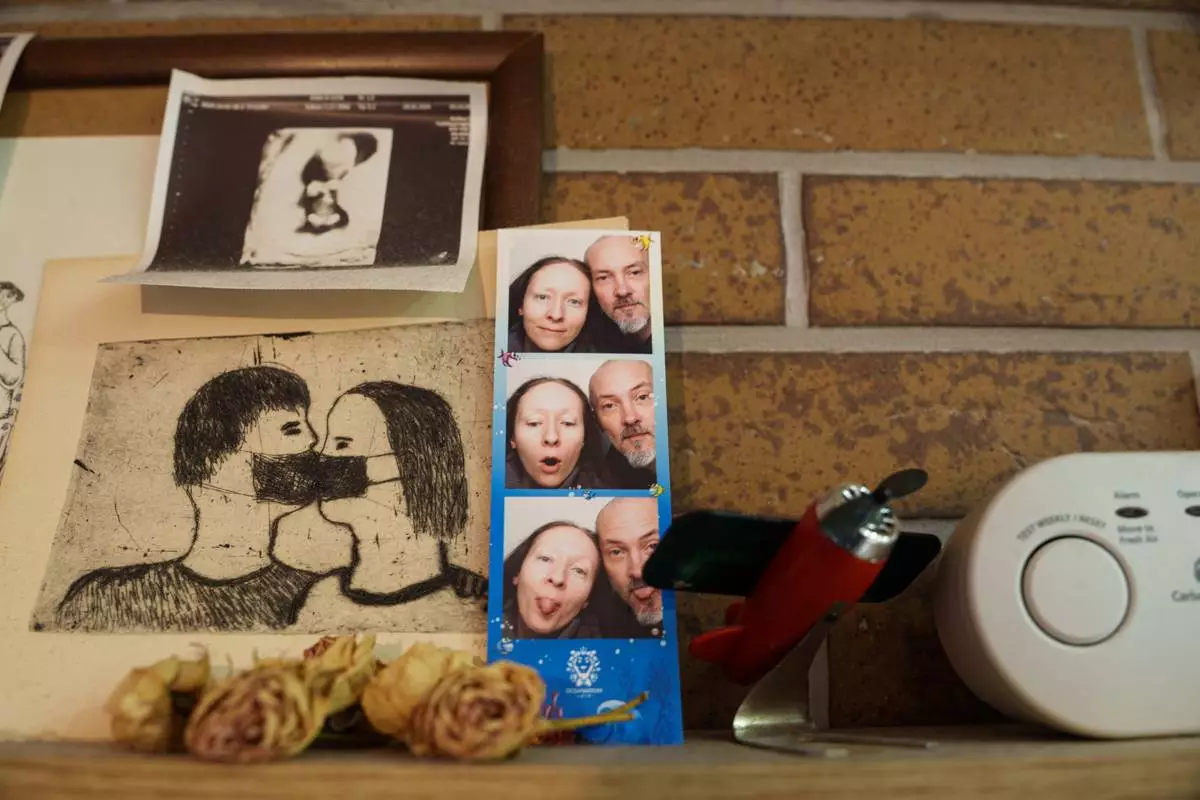
A photo strip of Kateryna Tsvihun, 41, and her husband, Serhii Yermolenko, is displayed on a shelf in their apartment in Kyiv, Ukraine, Oct. 22, 2026. (AP Photo/Evgeniy Maloletka)
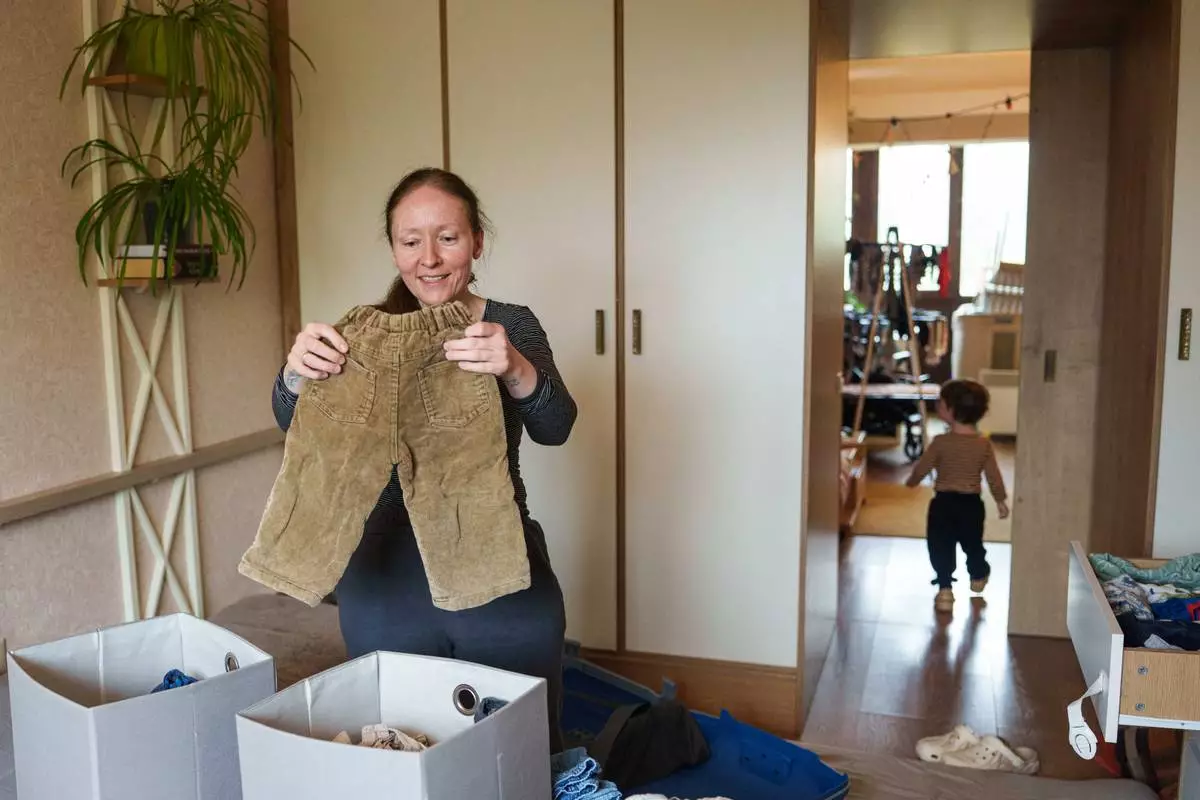
Kateryna Tsvihun, 41, gathers children's clothes in her apartment in Kyiv, Ukraine, Oct. 22, 2026. (AP Photo/Evgeniy Maloletka)
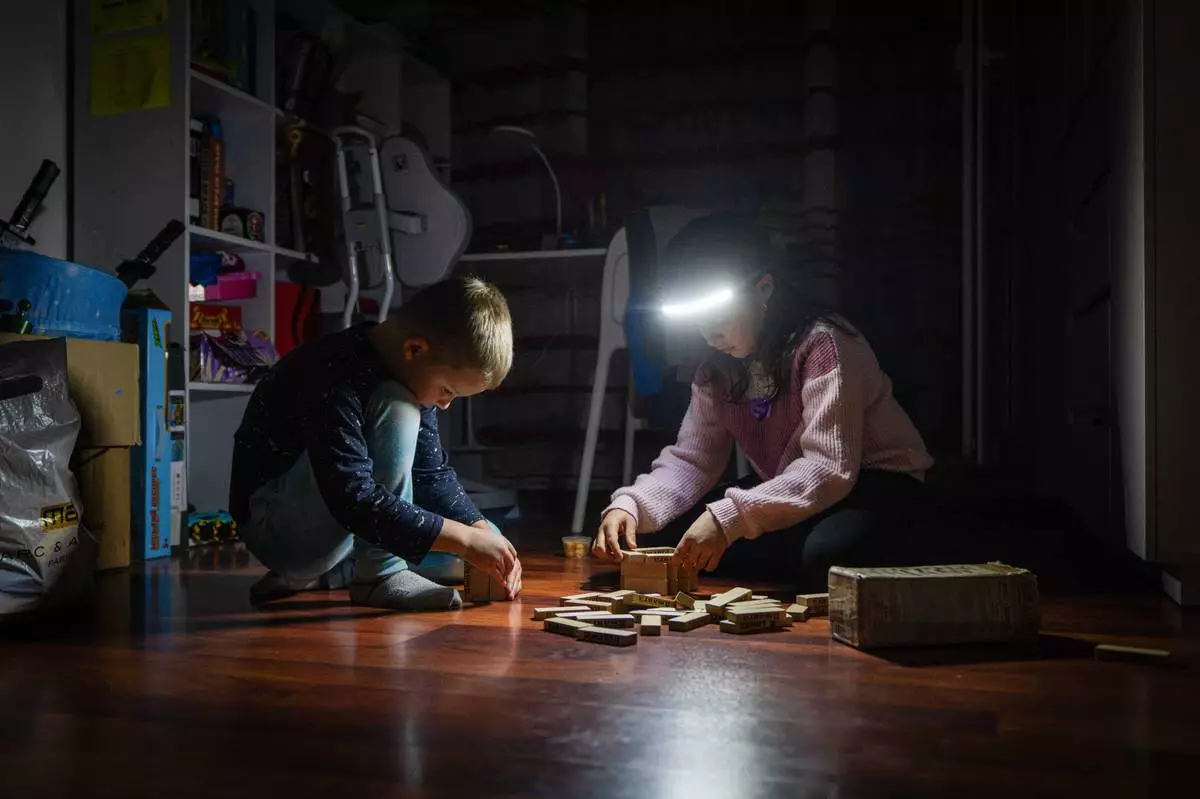
Andrii Tymoshenko, left, and Polina Tymoshenko stack wooden blocks on the floor by the light of Polina's headlamp during a blackout caused by Russian strikes on energy infrastructure in Kyiv, Ukraine, Monday, Nov. 9, 2026. (AP Photo/Dan Bashakov)
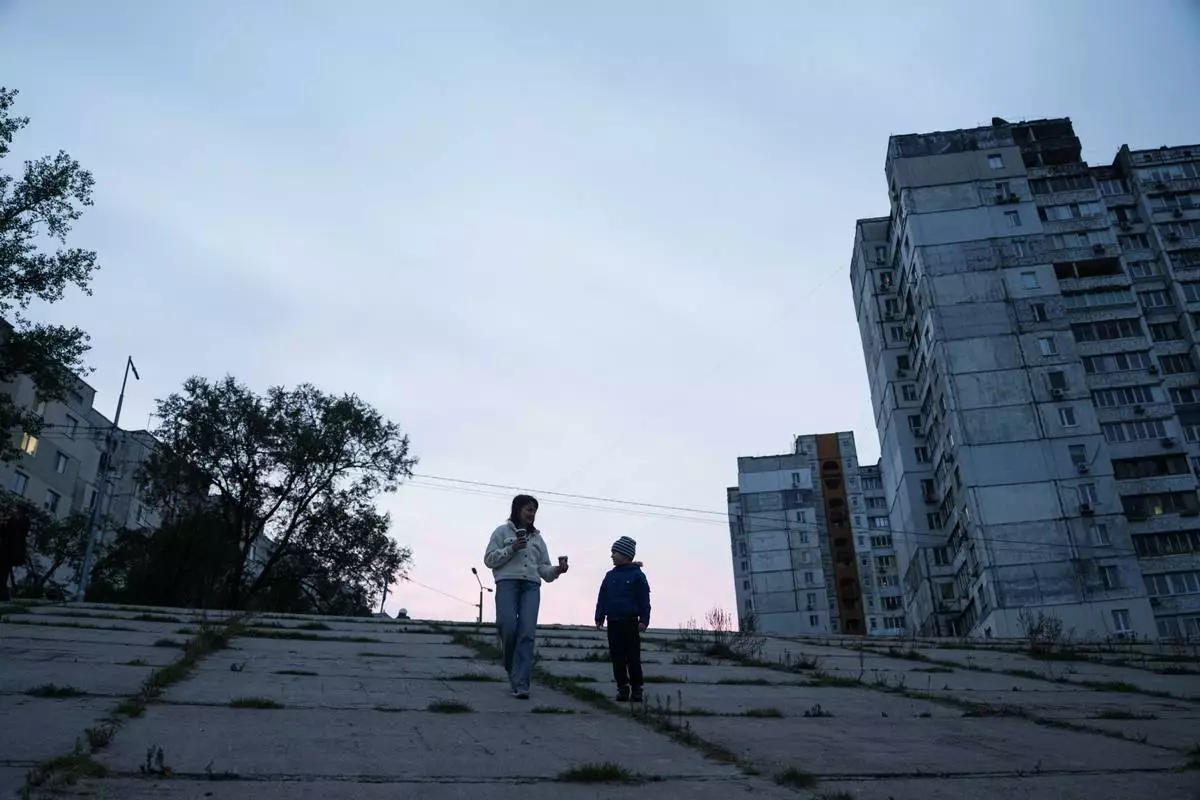
Kateryna Tymoshenko, 39, with her son Andrii walk towards a Dnipro river in Kyiv, Ukraine, Oct. 25, 2026. (AP Photo/Evgeniy Maloletka)
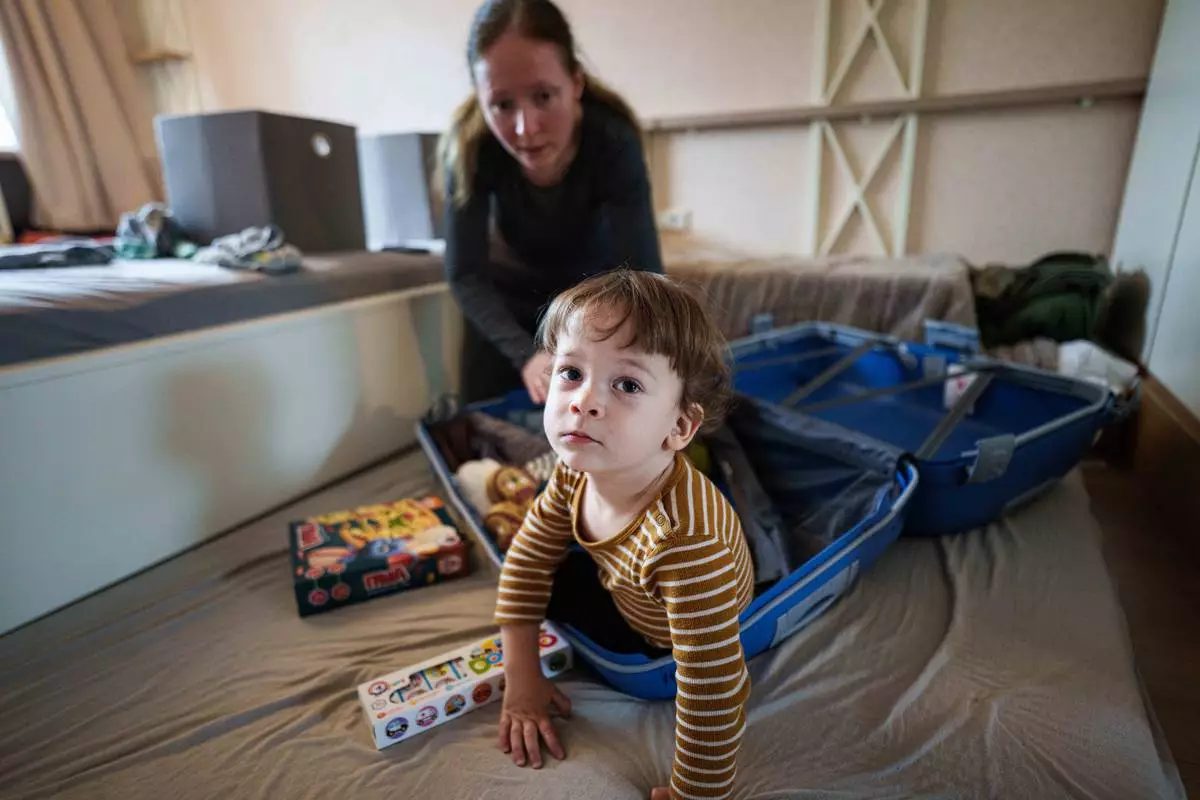
Matvii Yermolenko, 2, sits in an open suitcase as his mother, Kateryna Tsvihun, 41, gathers children's clothes in their apartment in Kyiv, Ukraine, Thursday, Oct. 22, 2026. (AP Photo/Evgeniy Maloletka)