Skip to Content Facebook Feature Image

morph Launches the World’s First Shapeshifting Soft Robotics Cells Platform to Bring Physical AI into Real-World Applications

Business

morph Launches the World’s First Shapeshifting Soft Robotics Cells Platform to Bring Physical AI into Real-World Applications
Business

Business

morph Launches the World’s First Shapeshifting Soft Robotics Cells Platform to Bring Physical AI into Real-World Applications

2026-06-02 18:00 Last Updated At:18:21

LONDON--(BUSINESS WIRE)--Jun 2, 2026--

morph today launches a physically intelligent soft robotics platform that designs and manufactures what it calls “soft robotic cells,” a term coined by the company. Founded by Dr. Jean Nehme, a former reconstructive surgeon who founded and exited surgical AI company Digital Surgery, morph’s soft robotics platform marks a new frontier in physical AI and next-generation robotics by embedding sensing and adaptive control directly into reconfigurable deformable materials, enabling real‑time change in morphology and stiffness. morph is helping define a new category of embodied AI: intelligence built directly into physical products so they can sense, adapt, and respond in real time. Physical AI is not just a software problem — it is a hardware problem as well, and the two must work in tandem. Soft robotic cells can be placed into multiple products to better respond to human movement and interaction, representing a shift from static, hard consumer and enterprise B2B product solutions to adaptive, responsive systems. In practice, this means moving from passive products to products that deliver responsive support and services through the materials themselves.

This press release features multimedia. View the full release here: https://www.businesswire.com/news/home/20260602211043/en/

The company also announced that 8VC, Pharrell Williams, Copper, Harvey Spevak, Chairman of Equinox Group, Qubit Health Capital, Valia Ventures, Blue Lion have invested in morph.

Born from Clinical Experience, Built for Real Life

morph founder Dr. Jean Nehme, a former reconstructive surgeon, understands from operating on the human body the softness of biology and has modelled soft robotic cells on this. Furthermore, Jean also understands how small biomechanical inefficiencies compound over the years, quietly degrading mobility and impacting long-term health.

“We have designed and built a very rigid and static world, but since the beginning nature has shown us softness and dynamism,” said Dr. Jean Nehme, Founder of morph. “With our platform, we can build a new generation of products embedded with soft robotic cells that adapt in real time to support natural movement. We’re designing soft robotic cells to sit at the interface of human robotic interaction across multiple industries.”

Dr. Nehme founded morph with a global team of experts in design, AI, robotics, medicine, and manufacturing, chosen for their expertise in biology and movement. Previously, Dr. Nehme was founder and CEO of Digital Surgery, a pioneer in surgical AI and computer vision, data and analytics, and digital education and training. Medtronic (NYSE: MDT) acquired the company in 2020. Dr. Nehme has been building in AI since 2013, bringing a long-standing background in applying intelligence to high-stakes real-world environments. His track record combines surgeon-led precision with deep expertise in AI, positioning morph to bring soft robotic cells to consumers and industry partners.

Introducing Soft Robotics with Shapeshifting Cells: Designed for the Human Experience

Soft robotics is a class of robotics, built from flexible, deformable soft robotic cells. Unlike traditional rigid robotics built for industrial environments, soft robots are based on soft deformable materials, which means it can enable safer interaction with humans. morph further advances this category with soft robotic cells that shapeshift - modular robotic units made of synthetic materials that process environmental and user information and change their morphology to achieve specific objectives. These cells embed intelligence directly into materials, enabling products to sense, adapt, and respond to the body and the environment in real time. In other words, embodied AI is not just software that advises, it is intelligence built into physical systems that can take action through the product itself. Soft robotic cells can be configured into combinations across multiple product lines and generate data sets that enable richer human-physical world interactions.

morph is developing a pipeline of applications that embed their soft robotic cells, each designed to redefine its category by replacing static materials with adaptive systems. Their first applications will be built to fuel human performance, movement, and longevity. Initial applications will include athletic performance, injury prevention, and mobility support. Over time, the programmable platform will scale across categories, including healthcare, automotive, and industrial safety, positioning morph at the intersection of soft robotics and the rapidly expanding physical AI market, enabling a connected ecosystem of adaptive performance systems to improve human health. morph is partnering with multiple industrial partners at this stage. With morph’s B2B strategy, the goal is to operate as a software, design, and fabrication partner, working with industries and companies to enable them with soft robotics technology.

Inspired by the adaptability of octopuses, morph is accelerating the development of physical AI systems. morph’s modular platform empowers teams to program robotic cell behaviors, simulate real-world conditions, and rapidly iterate soft, deformable components built for direct human interaction. By integrating reinforcement learning with high-fidelity physics-based simulation, morph enables a faster translation from concept to product without sacrificing clinical rigor or safety. The result is a platform designed not only to advance robotics technically, but to make adaptive, responsive products more useful in everyday life.

About morph

morph is building the world’s first soft robotics platform. Driven by a worldwide team of experts in robotics, AI, medicine, design, and manufacturing, morph enables the creation of products that embed robotic cells. Initial product offerings will focus on human performance and longevity. To learn more, please visit www.morph.inc.

morph Launches the World’s First Shapeshifting Soft Robotics Cells Platform to Bring Physical AI into Real-World Applications

morph Launches the World’s First Shapeshifting Soft Robotics Cells Platform to Bring Physical AI into Real-World Applications
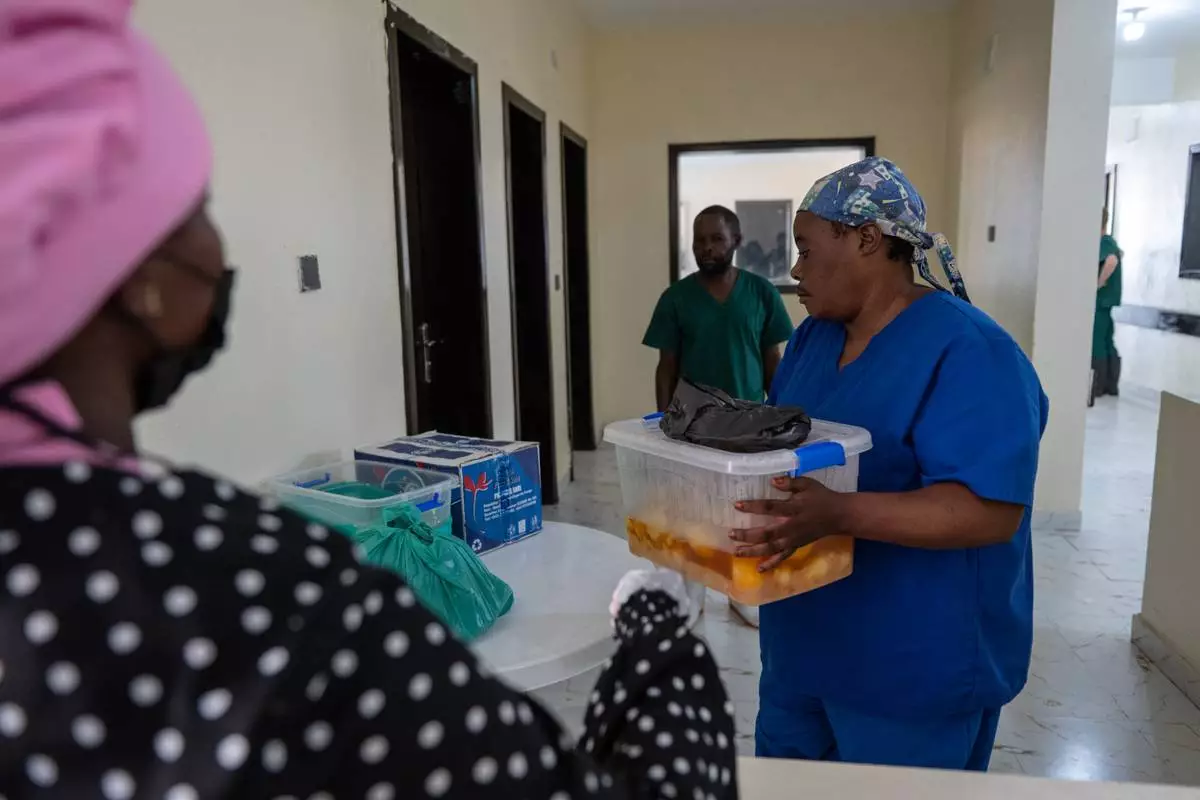
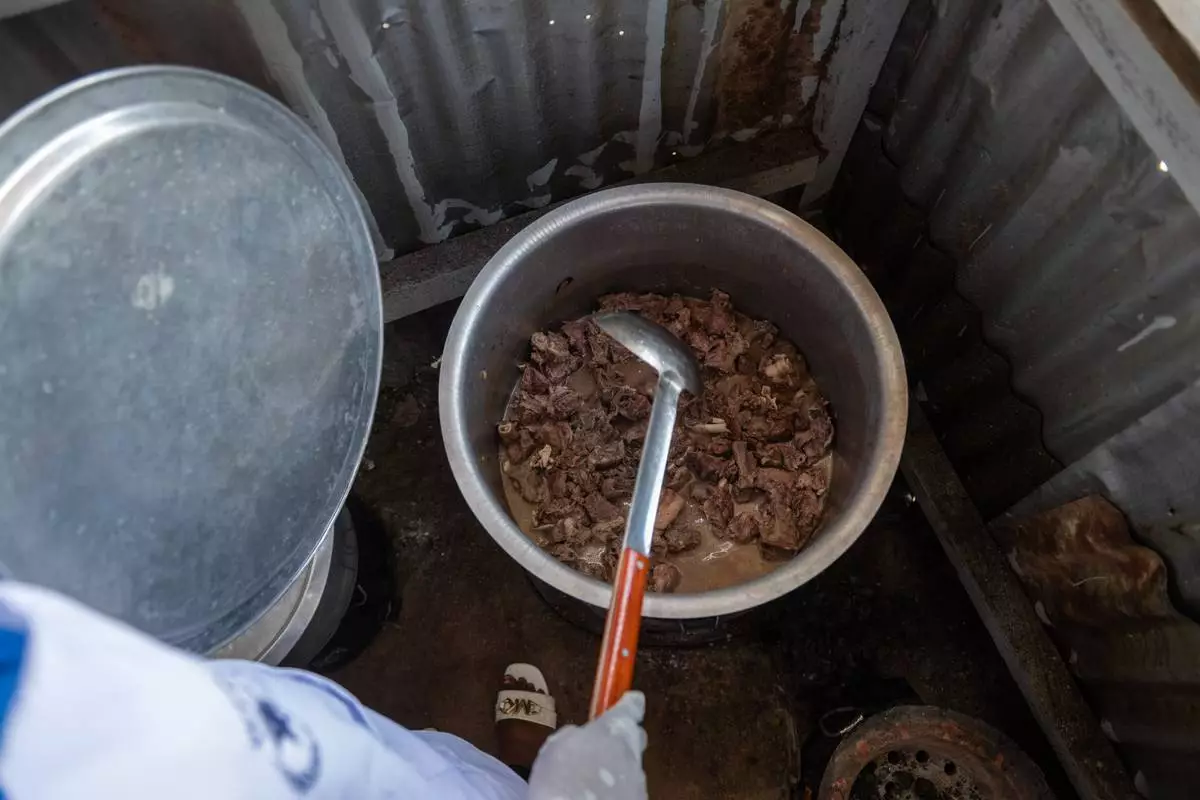
BUNIA, Congo (AP) — Arlette Basekawike, a volunteer for the United Nations food agency in Bunia, the heart of Congo's Ebola outbreak, spends most of her time in a small shed outside a health facility preparing meals for patients and health workers.

Her hair covered by a pink bonnet, she prepares porridge, omelets and bread for breakfast for patients at the Evangelical Medical Center. The lunch and dinner menus might include fresh fish with fufu, a starchy staple made of mashed plantains, finished off by fruit.

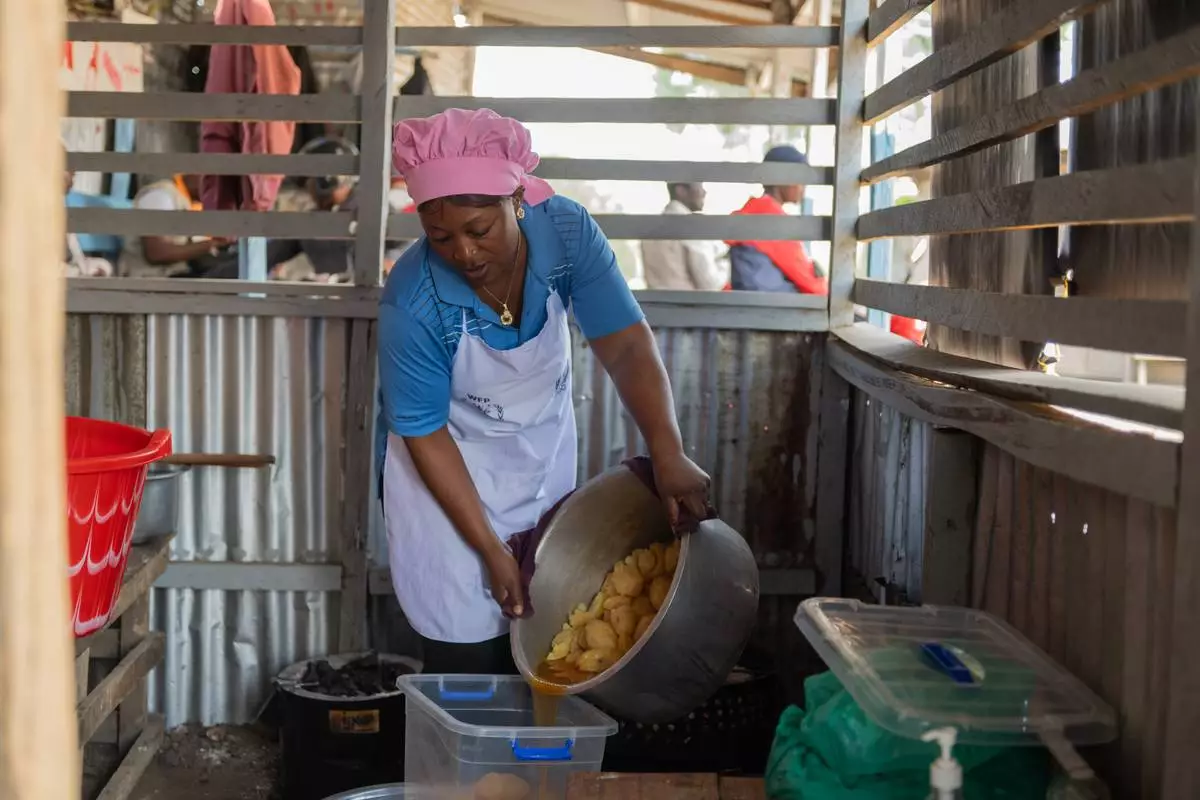
“Even though the patients have this disease, they still feel better when they eat, and the doctors have the energy to treat the sick and give them medication,” Basekawike told The Associated Press on Monday as she prepared vegetables and potatoes with goat meat in a large cooking pot. “I’m here for them like a parent, preparing food so they feel comfortable.”

Her contribution may appear, on the surface, like a simple task, but it has become one of the critical supports for the region as it grapples with the rapidly spreading rare Bundibugyo virus, the species of Ebola confirmed in eastern Congo in May.

As of Tuesday, 321 cases of the Ebola disease and 48 deaths had been confirmed in the Central African nation’s three eastern provinces of Ituri, North and South Kivu, according to the World Health Organization. Neighboring Uganda has had nine cases and one death confirmed, according to the WHO, prompting Uganda to close its border with Congo.

Before the outbreak, the beleaguered region already faced one of the world's most severe food crises due to an ongoing conflict that has displaced millions of people as government forces fight rebels. The spreading virus has added another layer of complexity that the United Nations warns might complicate the efforts to manage the spread of the virus among an already wary population.

“We are in a region where we already have large segments of the population suffering from acute food insecurity linked to either war or displacement,” said Olivier Nkakudulu, who heads the World Food Program in Ituri province. “So there are already needs and Ebola is an additional crisis on top of a crisis.”

The resource-strapped agency, the World Food Program, is facing a critical choice as aid cuts from the U.S. and other major partners have disrupted operations in the vulnerable region. Efforts to contain the disease, which the World Health Organization has deemed a global health emergency, have been hampered by a lack of funds as global partners either withdrew or reduced pledges.

Also, attacks by suspicious residents on health workers and the slow delivery of aid due to the ongoing conflict have made it difficult to slow the spread of the disease.

Despite the challenges, the agency and health workers say they have ensured patients' nutritional demands are met so far.

“Today we need to increase the amount because the number of patients has gone up,” Esther Bao, a nurse and one of the volunteers, said. There are also patients who, because of their health situation, "don't eat just any meal,” she said.

The Bundibugyo virus has no approved vaccine or treatment. However, treatment has targeted symptoms and five people have recovered.

The outbreak continues to spread, from the three health zones affected at the onset to 22 as of this weekend, according to Congo's Ministry of Health.

On Sunday, 120 meals were served through four health facilities, bringing the total to 404 since the food assistance began on May 28, according to Nkakudulu. But the financial situation has not been easy, he said.

“Without more funding, we might not be able to prioritize every suspected case,” Nkakudulu said. "We might have to focus on some and not have food to give to others."

Adetayo reported from Lagos, Nigeria.

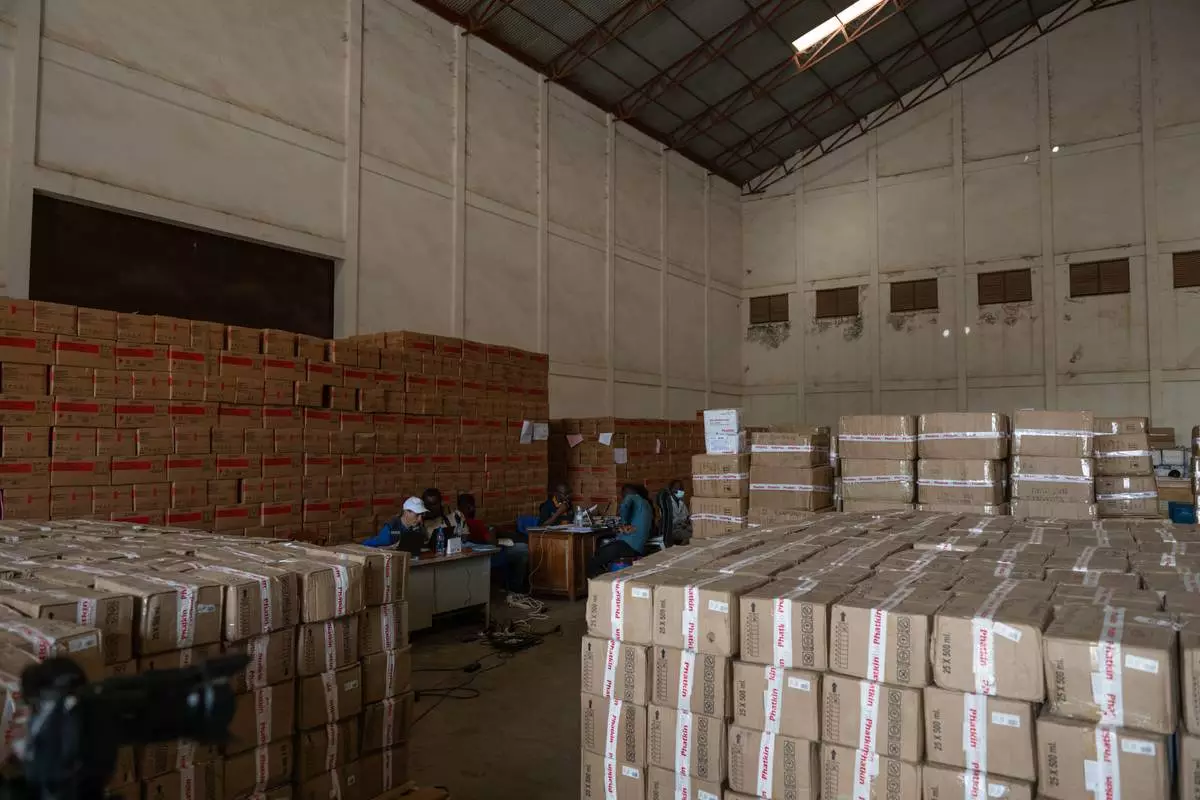
People work at the World Food Programme (WFP) warehouse where supplies for the Ebola response are kept in Bunia, Congo, Monday, June 1, 2026. (AP Photo/Moses Sawasawa)

People work at the World Food Programme (WFP) warehouse where supplies for the Ebola response are kept in Bunia, Congo, Monday, June 1, 2026. (AP Photo/Moses Sawasawa)

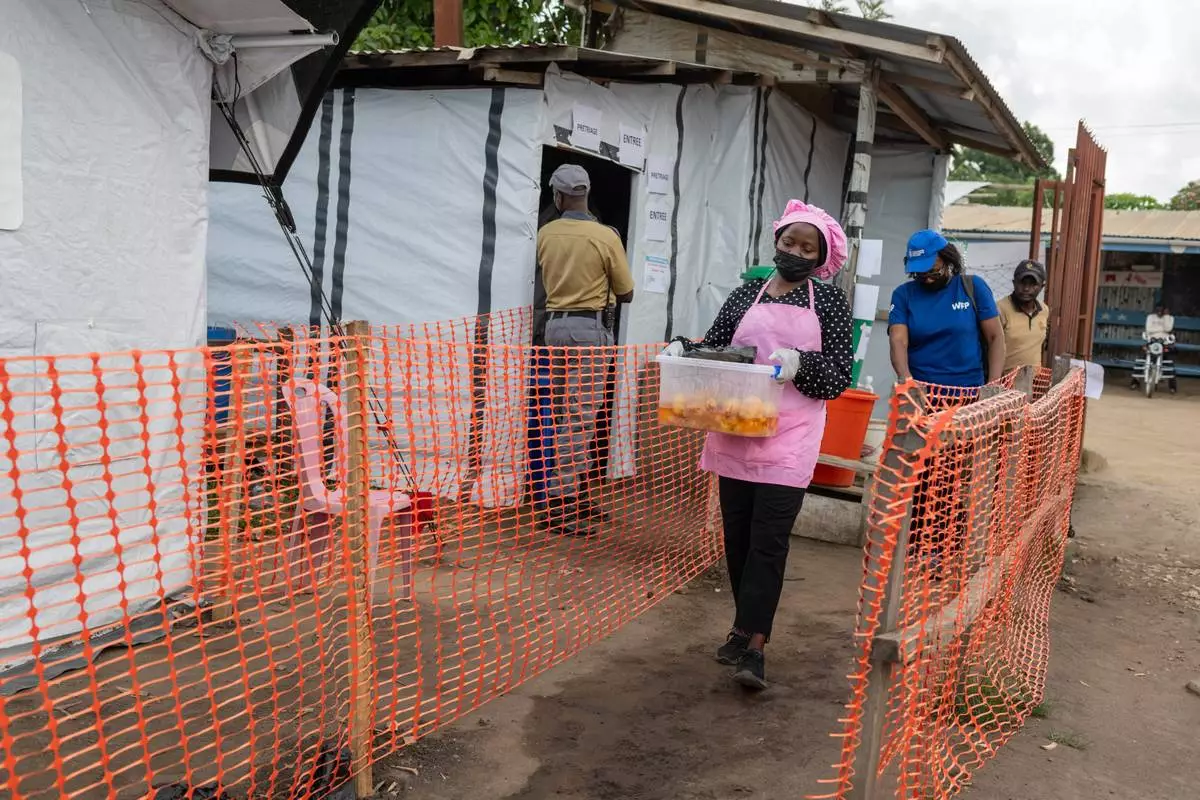
A health worker receives food for medical staff and Ebola patients at the Evangelical Medical Center (CEM) in Bunia, Congo, Monday, June 1, 2026. (AP Photo/Moses Sawasawa)

A health worker receives food for medical staff and Ebola patients at the Evangelical Medical Center (CEM) in Bunia, Congo, Monday, June 1, 2026. (AP Photo/Moses Sawasawa)

Arlette Basekawike prepares meals for Ebola patients at the Evangelical Medical Center (CEM) in Bunia, Congo, Monday, June 1, 2026. (AP Photo/Moses Sawasawa)

Arlette Basekawike prepares meals for Ebola patients at the Evangelical Medical Center (CEM) in Bunia, Congo, Monday, June 1, 2026. (AP Photo/Moses Sawasawa)

Kavugho Hortense, a cook, delivers meals to the medical staff and Ebola patients at the Evangelical Medical Center (CEM) in Bunia, Congo, Monday, June 1, 2026. (AP Photo/Moses Sawasawa)

Kavugho Hortense, a cook, delivers meals to the medical staff and Ebola patients at the Evangelical Medical Center (CEM) in Bunia, Congo, Monday, June 1, 2026. (AP Photo/Moses Sawasawa)

Arlette Basekawike prepares meals for Ebola patients at the Evangelical Medical Center (CEM) in Bunia, Congo, Monday, June 1, 2026. (AP Photo/Moses Sawasawa)

Arlette Basekawike prepares meals for Ebola patients at the Evangelical Medical Center (CEM) in Bunia, Congo, Monday, June 1, 2026. (AP Photo/Moses Sawasawa)

Recommended Articles