Skip to Content Facebook Feature Image

Jetson Home Expanding Across California to Accelerate Residential Heat Pump Adoption

Business

Jetson Home Expanding Across California to Accelerate Residential Heat Pump Adoption
Business

Business

Jetson Home Expanding Across California to Accelerate Residential Heat Pump Adoption

2026-06-02 18:00 Last Updated At:18:21

SACRAMENTO, Calif.--(BUSINESS WIRE)--Jun 2, 2026--

As California aims to install six million heat pumps by 2030, homeowners across the state continue facing rising energy costs, aging gas heating systems, and growing pressure to electrify their homes. Yet despite strong policy momentum and expanding incentive programs, adoption remains slow due to high upfront costs, installation complexity, and limited contractor availability. To help address those barriers, Jetson Home, a home electrification company, is launching operations across California, including Sacramento, Burbank, San Jose, and the Inland Empire.

This press release features multimedia. View the full release here: https://www.businesswire.com/news/home/20260601963324/en/

The expansion follows the company’s recent launch in New York and builds on its established presence in Denver, Colorado Springs, Fort Collins, Vancouver, and Massachusetts. By entering California at scale across multiple regions, Jetson is expanding its more consistent, end-to-end installation model to make it easier for homeowners to purchase, install, and maintain heat pumps.

Unlike traditional contractors, Jetson sells directly to homeowners, much like Tesla sells vehicles. Jetson is able to reduce overall costs by offering a modern online purchase process, streamlined single-day installations by Jetson’s own teams and a more modern product experience built with software and smarts at its core.

“California is one of the most important electrification markets in North America because homeowners are actively looking for alternatives to aging gas systems,” said Stephen Lake, CEO and co-founder of Jetson. “We’re seeing strong demand from homeowners who want to upgrade their home without the cost, hassle and uncertainty of legacy contractors. As we grow, our focus remains on making the switch to electric heating and cooling practical and affordable for more households."

Jetson’s California expansion includes establishing local operational hubs in each region to support installations, customer service, and ongoing system support. As operations ramp up, the company expects to create hundreds of jobs statewide, including licensed HVAC technicians, electricians, warehouse staff, and management roles.

As the company expands operations into Greater Los Angeles, the Bay Area, and the Inland Empire, utility-backed rebate programs will help accelerate residential electrification efforts. Across these markets, homeowners may qualify for thousands of dollars in incentives through programs offered by organizations including SMUD, Roseville Electric, Burbank Water and Power, San Jose Clean Energy, Silicon Valley Clean Energy, and Riverside Public Utilities.

In Sacramento, for example, homeowners may qualify for up to $3,000 through SMUD; customers in the City of Roseville may qualify for up to $2,500 through Roseville Electric for gas-to-electric heat pump upgrades. In Burbank and surrounding Los Angeles-area markets, incentives can reach up to $5,000 for qualifying households, while programs in San Jose and Silicon Valley offer rebates ranging from $1,500 to $3,500, depending on income, municipality and needed upgrades. Jetson will help homeowners identify and navigate available incentives, reducing upfront project costs and simplifying the transition to electric heating and cooling systems.

Jetson’s vertically integrated model addresses the cost and complexity that have historically slowed heat pump adoption. Jetson sells its all-electric smart heat pump system, Jetson Air, directly to homeowners, reducing total project costs by 30–50%. Jetson’s in-house crews manage the entire process, from system design and permitting to single-day installation, rebate coordination, and ongoing service.

The system itself heats and cools an entire home through existing ductwork and includes built-in smart features such as real-time energy monitoring, indoor air quality sensing, performance alerts, and over-the-air updates.

Supported by a more than $60 million funding round, Jetson will continue to expand across North America while accelerating the deployment of its all-electric product portfolio. To date, Jetson has upgraded more than 1,000 homes across North America to all-electric heating and cooling systems, demonstrating continued demand for its vertically integrated electrification model. In 2025, Jetson Air was also named to TIME’s Best Inventions list, reflecting national recognition of the company’s approach to making heat pump technology more accessible and affordable for homeowners.

Homeowners interested in learning more about Jetson Air or getting an instant online quote can visit www.jetsonhome.com.

About Jetson

Jetson is a home energy company accelerating the switch to electric heating and cooling. Its flagship product, Jetson Air, combines ultra-efficient heat pump technology with smart software for real-time energy optimization, air quality monitoring, and long-term reliability. With instant online pricing, one-day professional installation, and built-in rebate support, Jetson makes home electrification faster, simpler, and more affordable. Operating across North America, Jetson is on a mission to help millions of households cut emissions, lower bills, and enjoy cleaner, more comfortable homes. Learn more at jetsonhome.com.

Jetson Air combines high-efficiency heat pump technology with smart home energy features, including real-time monitoring, indoor air quality sensing, and over-the-air updates.

Jetson Air combines high-efficiency heat pump technology with smart home energy features, including real-time monitoring, indoor air quality sensing, and over-the-air updates.
BUNIA, Congo (AP) — Arlette Basekawike, a volunteer for the United Nations food agency in Bunia, the heart of Congo's Ebola outbreak, spends most of her time in a small shed outside a health facility preparing meals for patients and health workers.

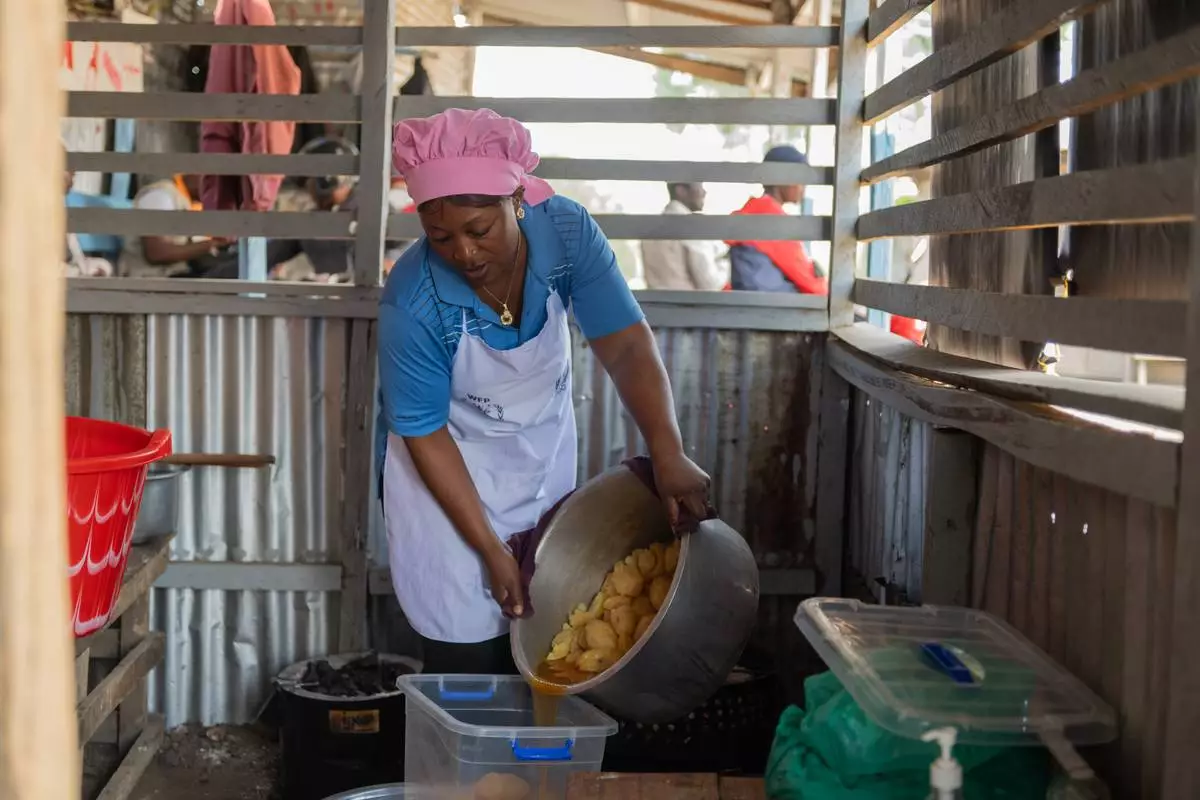
Her hair covered by a pink bonnet, she prepares porridge, omelets and bread for breakfast for patients at the Evangelical Medical Center. The lunch and dinner menus might include fresh fish with fufu, a starchy staple made of mashed plantains, finished off by fruit.

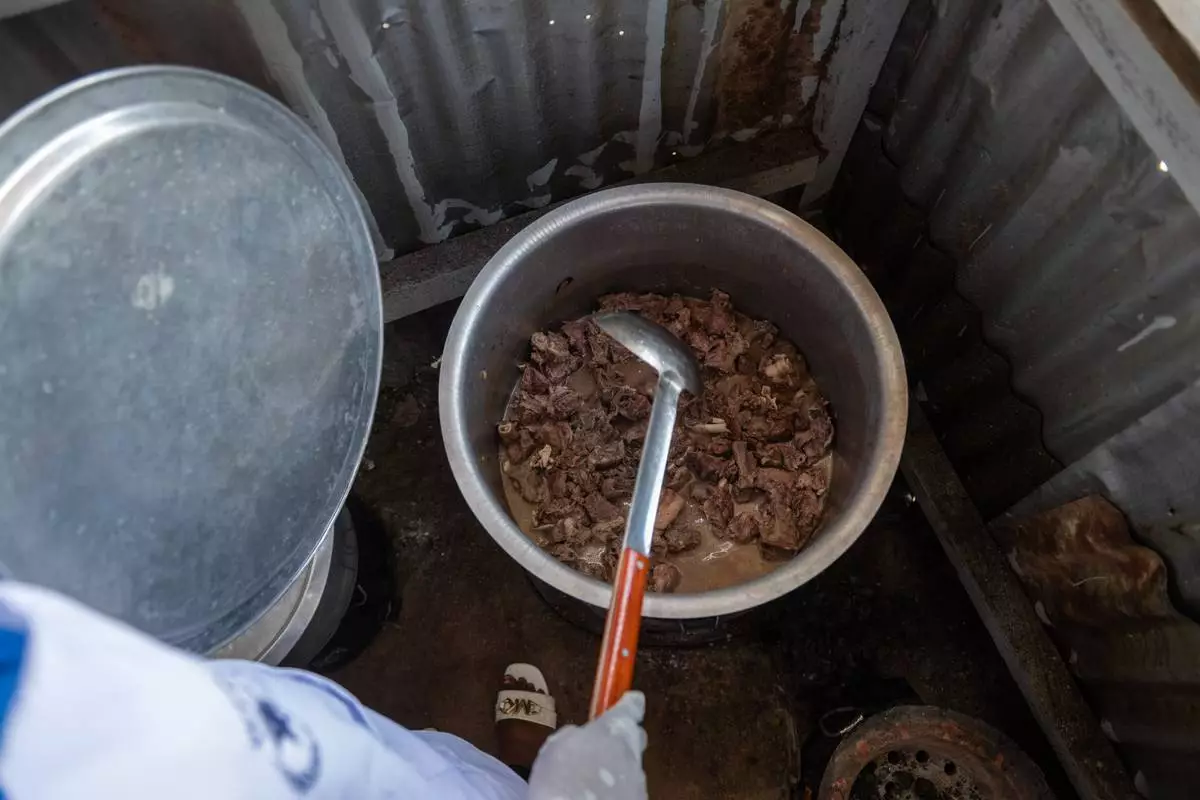
“Even though the patients have this disease, they still feel better when they eat, and the doctors have the energy to treat the sick and give them medication,” Basekawike told The Associated Press on Monday as she prepared vegetables and potatoes with goat meat in a large cooking pot. “I’m here for them like a parent, preparing food so they feel comfortable.”

Her contribution may appear, on the surface, like a simple task, but it has become one of the critical supports for the region as it grapples with the rapidly spreading rare Bundibugyo virus, the species of Ebola confirmed in eastern Congo in May.

As of Tuesday, 321 cases of the Ebola disease and 48 deaths had been confirmed in the Central African nation’s three eastern provinces of Ituri, North and South Kivu, according to the World Health Organization. Neighboring Uganda has had nine cases and one death confirmed, according to the WHO, prompting Uganda to close its border with Congo.

Before the outbreak, the beleaguered region already faced one of the world's most severe food crises due to an ongoing conflict that has displaced millions of people as government forces fight rebels. The spreading virus has added another layer of complexity that the United Nations warns might complicate the efforts to manage the spread of the virus among an already wary population.

“We are in a region where we already have large segments of the population suffering from acute food insecurity linked to either war or displacement,” said Olivier Nkakudulu, who heads the World Food Program in Ituri province. “So there are already needs and Ebola is an additional crisis on top of a crisis.”

The resource-strapped agency, the World Food Program, is facing a critical choice as aid cuts from the U.S. and other major partners have disrupted operations in the vulnerable region. Efforts to contain the disease, which the World Health Organization has deemed a global health emergency, have been hampered by a lack of funds as global partners either withdrew or reduced pledges.

Also, attacks by suspicious residents on health workers and the slow delivery of aid due to the ongoing conflict have made it difficult to slow the spread of the disease.

Despite the challenges, the agency and health workers say they have ensured patients' nutritional demands are met so far.

“Today we need to increase the amount because the number of patients has gone up,” Esther Bao, a nurse and one of the volunteers, said. There are also patients who, because of their health situation, "don't eat just any meal,” she said.

The Bundibugyo virus has no approved vaccine or treatment. However, treatment has targeted symptoms and five people have recovered.

The outbreak continues to spread, from the three health zones affected at the onset to 22 as of this weekend, according to Congo's Ministry of Health.

On Sunday, 120 meals were served through four health facilities, bringing the total to 404 since the food assistance began on May 28, according to Nkakudulu. But the financial situation has not been easy, he said.

“Without more funding, we might not be able to prioritize every suspected case,” Nkakudulu said. "We might have to focus on some and not have food to give to others."

Adetayo reported from Lagos, Nigeria.

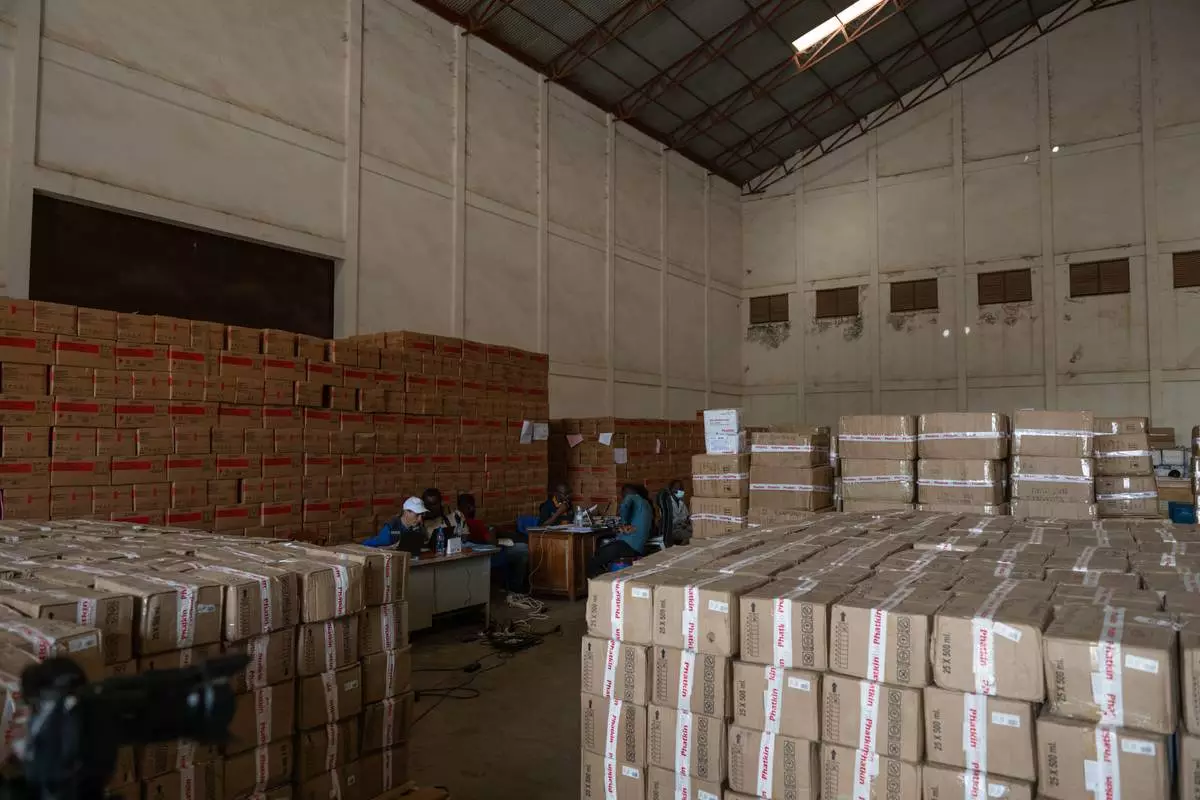
People work at the World Food Programme (WFP) warehouse where supplies for the Ebola response are kept in Bunia, Congo, Monday, June 1, 2026. (AP Photo/Moses Sawasawa)

People work at the World Food Programme (WFP) warehouse where supplies for the Ebola response are kept in Bunia, Congo, Monday, June 1, 2026. (AP Photo/Moses Sawasawa)

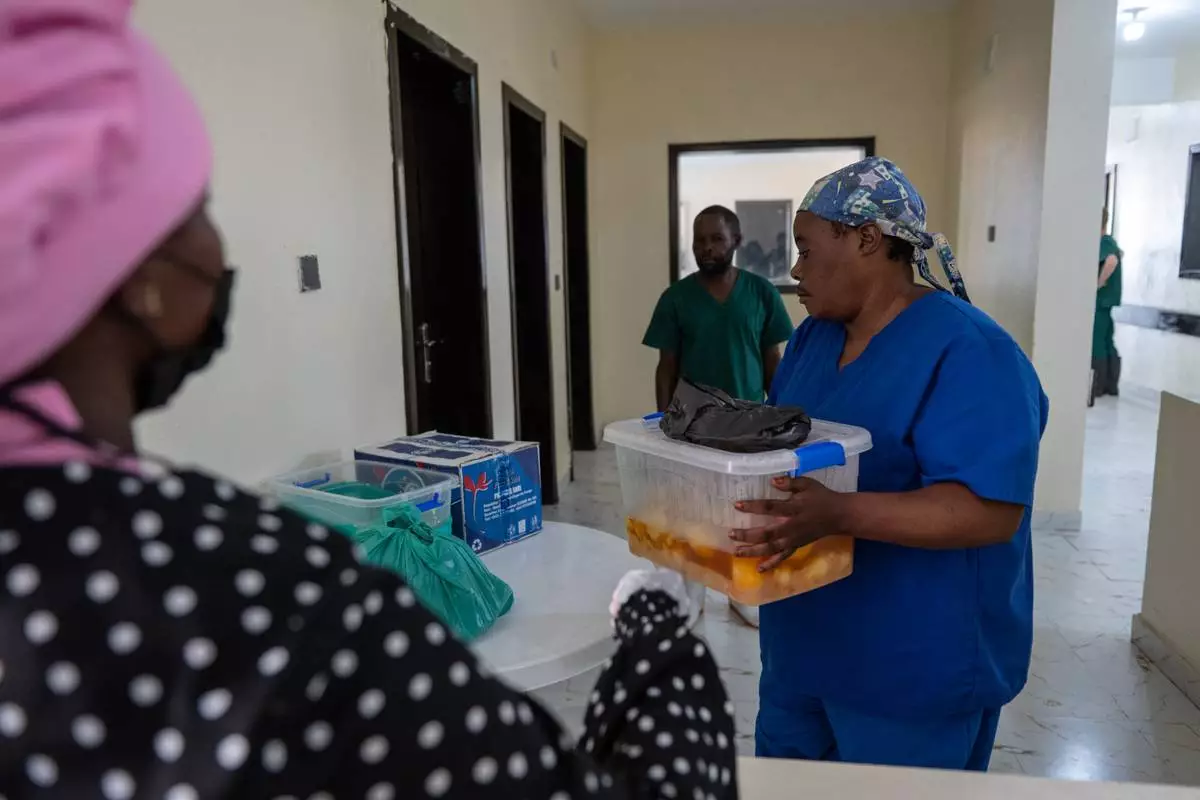
A health worker receives food for medical staff and Ebola patients at the Evangelical Medical Center (CEM) in Bunia, Congo, Monday, June 1, 2026. (AP Photo/Moses Sawasawa)

A health worker receives food for medical staff and Ebola patients at the Evangelical Medical Center (CEM) in Bunia, Congo, Monday, June 1, 2026. (AP Photo/Moses Sawasawa)

Arlette Basekawike prepares meals for Ebola patients at the Evangelical Medical Center (CEM) in Bunia, Congo, Monday, June 1, 2026. (AP Photo/Moses Sawasawa)

Arlette Basekawike prepares meals for Ebola patients at the Evangelical Medical Center (CEM) in Bunia, Congo, Monday, June 1, 2026. (AP Photo/Moses Sawasawa)

Kavugho Hortense, a cook, delivers meals to the medical staff and Ebola patients at the Evangelical Medical Center (CEM) in Bunia, Congo, Monday, June 1, 2026. (AP Photo/Moses Sawasawa)

Kavugho Hortense, a cook, delivers meals to the medical staff and Ebola patients at the Evangelical Medical Center (CEM) in Bunia, Congo, Monday, June 1, 2026. (AP Photo/Moses Sawasawa)

Arlette Basekawike prepares meals for Ebola patients at the Evangelical Medical Center (CEM) in Bunia, Congo, Monday, June 1, 2026. (AP Photo/Moses Sawasawa)

Arlette Basekawike prepares meals for Ebola patients at the Evangelical Medical Center (CEM) in Bunia, Congo, Monday, June 1, 2026. (AP Photo/Moses Sawasawa)

Recommended Articles