RAMALLAH, West Bank (AP) — Ceasefires have been announced, often to great fanfare, in Gaza, Lebanon and Iran. So why is there still so much fighting?
In just the last few weeks, Israeli forces have captured more territory in Gaza and killed two top Hamas militants there, as well as more than a dozen other people. In Lebanon, Israeli troops captured a Crusader fortress over the weekend in their deepest incursion in 26 years, as Hezbollah kept up rocket fire into northern Israel.
Click to Gallery
Israeli soldiers carry the coffin of Staff-Sergeant Michael Tyukin, who was killed in a drone attack in southern Lebanon, during his funeral in Ashkelon, Israel, Monday, June 1, 2026. (AP Photo/Leo Correa)
A man removes debris of a building that was hit Monday in an Israeli airstrike in the southern port city of Tyre, Lebanon, Tuesday, June 2, 2026. (AP Photo/Mohammed Zaatari)
A person walks past the site struck by a rocket fired from Lebanon on Saturday in Kiryat Shmona, northern Israel, Sunday, May 31, 2026. (AP Photo/Ariel Schalit)
Palestinians react to a fire following an Israeli strike on a residential building in the Rimal neighborhood of Gaza City, Friday, May 15, 2026. (AP Photo/Jehad Alshrafi)
A destroyed building that was hit in an Israeli airstrike is seen through a shattered window of the Jabal Amel Hospital, in the southern port city of Tyre, Lebanon, Monday, June 1, 2026. (AP Photo)
The fighting in Lebanon showed no sign of letting up on Tuesday, after U.S. President Donald Trump said both sides had agreed — again — to de-escalate.
The United States and Iran have traded fire, most recently on Tuesday, as they try to reach a more lasting truce. Iran has maintained its chokehold over the Strait of Hormuz, perpetuating a global fuel crisis, while the U.S. has tried to cement its naval blockade on Iranian ports.
None of the warring parties have officially exited the ceasefires, but the term is rapidly losing its meaning.
Trump held up the October ceasefire in Gaza as a major foreign policy accomplishment that could lead to Mideast peace. But while it ended two years of full-scale hostilities and brought about the release of all remaining hostages taken in Hamas' Oct. 7, 2023, attack, no further progress has been made.
Hamas has yet to disarm, and Israeli troops have advanced rather than withdrawn. An international stabilization force has yet to materialize, a new Palestinian administration is still in limbo, and reconstruction of the largely flattened territory has yet to begin.
Hundreds of thousands of Palestinians remain in squalid tent camps, living with the stench of sewage and rodent infestations, and in fear of Israeli strikes.
The U.S. and Israel blame Hamas, saying its refusal to disarm has held up the process. Hamas accuses Israel of repeatedly violating the ceasefire, including through regular strikes that have killed at least 932 Palestinians, including women and children, since it took effect, according to local health officials.
In both Gaza and Lebanon, Israel says it maintains the right to strike in response to perceived threats or attempts by suspected militants to cross sometimes blurry front lines — which are shifting as troops seize more territory.
Israel now controls some 60% of Gaza, compared to around half when the ceasefire was signed, and Prime Minister Benjamin Netanyahu recently said it planned to take 70%. U.S. Secretary of State Marco Rubio told lawmakers Tuesday that Netanyahu's statement doesn't reflect Washington's plan for ending the conflict.
A Lebanon ceasefire reached in April has had little impact on the fighting between Israel and the Iran-backed Hezbollah, particularly in southern Lebanon, where they have continued trading fire as Israel expands its occupation of Lebanese territory.
Over the weekend, Israeli troops raised their flag over Beaufort castle, marking their deepest incursion into southern Lebanon since the end of the 1982-2000 occupation. Hezbollah responded with even deeper rocket attacks into northern Israel.
Israel had continued carrying out strikes after an earlier ceasefire in 2024. Hezbollah had held its fire until the U.S. and Israel attacked Iran on Feb. 28, setting off the wider war. Hezbollah did not officially agree to the April ceasefire but said it would abide by it if Israel ceased its attacks and withdrew from Lebanon.
Israel says it will keep fighting until the threat of rocket and drone attacks on its northern communities has been eliminated, either by its own actions or by the Lebanese government disarming Hezbollah. That has appeared even less likely as the fighting has escalated, despite continuing Israeli-Lebanese negotiations.
Iran has meanwhile demanded a ceasefire in Lebanon as part of any truce with the United States.
A wider ceasefire reached in early April between the U.S., Iran and Israel was intended to end the regional war and reopen the Strait of Hormuz, a critical waterway whose closure caused oil prices to spike, inflicting economic pain far beyond the region.
Iran initially announced the reopening the strait after the ceasefire was reached, but moved to close it again after the U.S. imposed its naval blockade. Trump is demanding that Iran reopen the strait and make major concessions on its disputed nuclear program, while Iran wants a lasting end to the war, a lifting of the blockade and sanctions relief.
The two sides appeared close to a deal last week but did not reach one. Trump has repeatedly threatened to resume the war if Iran doesn't give up its stockpile of highly enriched uranium, while Iranian officials have said they won't discuss nuclear issues until a more durable truce is reached.
The two sides have repeatedly traded fire in the strait, with the U.S. acting to eliminate what it says are threats to commercial shipping or its own forces, and Iran retaliating with missile and drone attacks on Gulf countries hosting American forces.
The U.S. bombed military sites in Iran on Monday and Tuesday after Tehran shot down an American drone over the weekend. Iran said in response it targeted American soldiers in Kuwait and Bahrain with missiles, which the U.S. says it shot down.
In a statement posted on X, U.S. Central Command said it “will continue to protect our forces from Iranian aggression while supporting the ongoing ceasefire.”
Associated Press writer Ben Finley in Washington contributed to this report.

Israeli soldiers carry the coffin of Staff-Sergeant Michael Tyukin, who was killed in a drone attack in southern Lebanon, during his funeral in Ashkelon, Israel, Monday, June 1, 2026. (AP Photo/Leo Correa)

A man removes debris of a building that was hit Monday in an Israeli airstrike in the southern port city of Tyre, Lebanon, Tuesday, June 2, 2026. (AP Photo/Mohammed Zaatari)

A person walks past the site struck by a rocket fired from Lebanon on Saturday in Kiryat Shmona, northern Israel, Sunday, May 31, 2026. (AP Photo/Ariel Schalit)

Palestinians react to a fire following an Israeli strike on a residential building in the Rimal neighborhood of Gaza City, Friday, May 15, 2026. (AP Photo/Jehad Alshrafi)

A destroyed building that was hit in an Israeli airstrike is seen through a shattered window of the Jabal Amel Hospital, in the southern port city of Tyre, Lebanon, Monday, June 1, 2026. (AP Photo)
WASHINGTON (AP) — Controversial U.S. Senate hopefuls Ken Paxton, a Republican from Texas, and Graham Platner, a Democrat from Maine, visited the nation's capital Tuesday to shore up support within their respective parties, with Paxton's itinerary including a White House huddle with President Donald Trump.
The campaign pilgrimage by the two candidates, one from each end of the political spectrum, comes as both men face concerns their respective campaigns could cost their parties winnable races in the November midterms, with control of the Senate at stake for the final two years of Trump's second presidency.
Paxton's planned meeting with Trump comes after he won the president's coveted endorsement ahead of trouncing Sen. John Cornyn in the Texas runoff last month. The schedule was confirmed by a person with knowledge of the president's plans but who was not authorized to discuss them publicly.
Senate Republicans feared that Paxton, the Texas attorney general, would be a weaker candidate against James Talarico, the Democratic nominee, in the fall. Paxton has endured an indictment, an impeachment and public disclosure of marital infidelity.
He also is expected to meet with Senate Majority Leader John Thune, who backed Cornyn. Senate Republicans’ campaign arm excoriated Paxton during the primary campaign, accusing him of “repulsive and disgusting” behavior and quoting his estranged wife saying she filed for divorce “on biblical grounds.”
Platner swung by Democrats’ Senate campaign headquarters on Tuesday to meet with several senators, including the group’s chair, New York Sen. Kirsten Gillibrand. The meeting comes days after the disclosure that he and his wife have had marital difficulties and sought counseling after he reportedly sent sexually explicit text messages to other women.
Senate Democratic Leader Chuck Schumer, who had backed Maine Gov. Janet Mills in the state’s Democratic primary before she suspended her campaign, told reporters Tuesday afternoon that he had met with Platner earlier in the day.
“We’re going to beat Susan Collins and take back the Senate,” Schumer said repeatedly when asked about Platner’s controversies.
As the questions continued, Schumer tried to change the subject.
“Any other subject you’ve got?” Schumer responded to reporters.
Platner and his wife have criticized media coverage of their marriage, framing it as a private matter that should not shape the campaign. Still, the latest personal issues added fuel to some Democrats' skittishness about Platner, who already faced scrutiny over online posts that were dismissive of sexual assault and a tattoo that is recognized as a Nazi symbol. Platner has apologized for the posts and covered up the tattoo.
Paxton has offered no apologies for his baggage. He framed his win over Cornyn as a “Texas-sized message to Washington,” and thanked Trump — who himself has endured repeated personal and political scandals to win two national elections — for his support.
Like Paxton, Platner was not the choice of his party's Senate brass. But Platner effectively became the presumptive nominee after Mills suspended her campaign weeks ago because of fundraising difficulties.
Maine's primary is on June 9, and Platner would face Sen. Susan Collins, a Republican running for a sixth six-year term, in November. Defeating Collins is crucial to Democrats' attempts to regain control of the Senate. Democrats have repeatedly tried to unseat Collins, but she has always survived. In 2020, Collins won reelection even though Democrat Joe Biden carried the state over Trump by nine percentage points.
In Texas, some Republicans fear they will need to divert critical resources to boost Paxton over Talarico, who has become a national fundraising phenomenon.
Although Republicans have dominated Texas for decades, prominent party leaders have said the race could be genuinely competitive this time. Eight years ago, during the midterm election of Trump's first presidency, Texas Sen. Ted Cruz won reelection over another Democratic fundraising juggernaut, Beto O'Rourke, by less than 3 points.
Republicans hold a 53-47 Senate advantage and earlier in the campaign cycle were heavily favored to maintain their majority. But as Trump's popularity fades and primary fights yield nominees, Democrats have become more confident in their prospects.
With control of the Senate on the line, most partisans have generally lined up behind Platner and Paxton, even if begrudgingly, because of their political baggage. Tuesday's fundraising events were the latest evidence. The event for Paxton, with a $1,000 minimum donation required, according to the invitation, is being co-hosted by seven senators, including Cruz. The fundraiser for Platner is being co-hosted by former Biden White House chief of staff Ron Klain.
“My priority is to make sure that Republicans control the majority so we can continue the agenda that we're on,” said Sen. Roger Marshall, R-Kansas, on Tuesday. “Ken Paxton is absolutely necessary as far as keeping that majority. I have faith that the people of Texas will support him, and he'll get across the finish line."
Sen. Martin Heinrich, who had endorsed Platner, said he doesn’t believe Maine voters are focused on Platner’s marriage. Asked if Platner still has a shot in the race, Heinrich said “we’ll have to see” and “I suspect so.”
Democratic Sen. Elizabeth Warren, a progressive, said her top concern is Platner's prospective constituents.
“I want to hear from him about the economy,” she said ahead of their meeting. “And more about what he talks to the people of Maine about.”
That echoes another leading progressive who, like Warren, has endorsed Platner. Sen. Bernie Sanders, a Vermont independent who caucuses with Democrats, said he still supports Platner as part of the left's economic populism.
“Of course,” Sanders told reporters Monday. “Why would I not?”
But not all Democrats are on board, including one who first came to the Senate with an outsider persona. Pennsylvania Sen. John Fetterman, a Democrat who has earned a reputation for speaking and voting against his party, even appeared to relish Platner’s newest controversy, calling him “phustle,” a reference to Platner’s apparent profile uncovered on Kik, a private messaging app.
“So much bizarre and tacky and gross stuff that you lose count. It’s like you need to have a bingo card,” Fetterman said.
The senator stopped short of calling on Platner to drop out, but he echoed some Democrats' private concerns.
“I mean, what’s next?” he said.
Beaumont reported from Des Moines, Iowa, and Barrow reported from Atlanta.
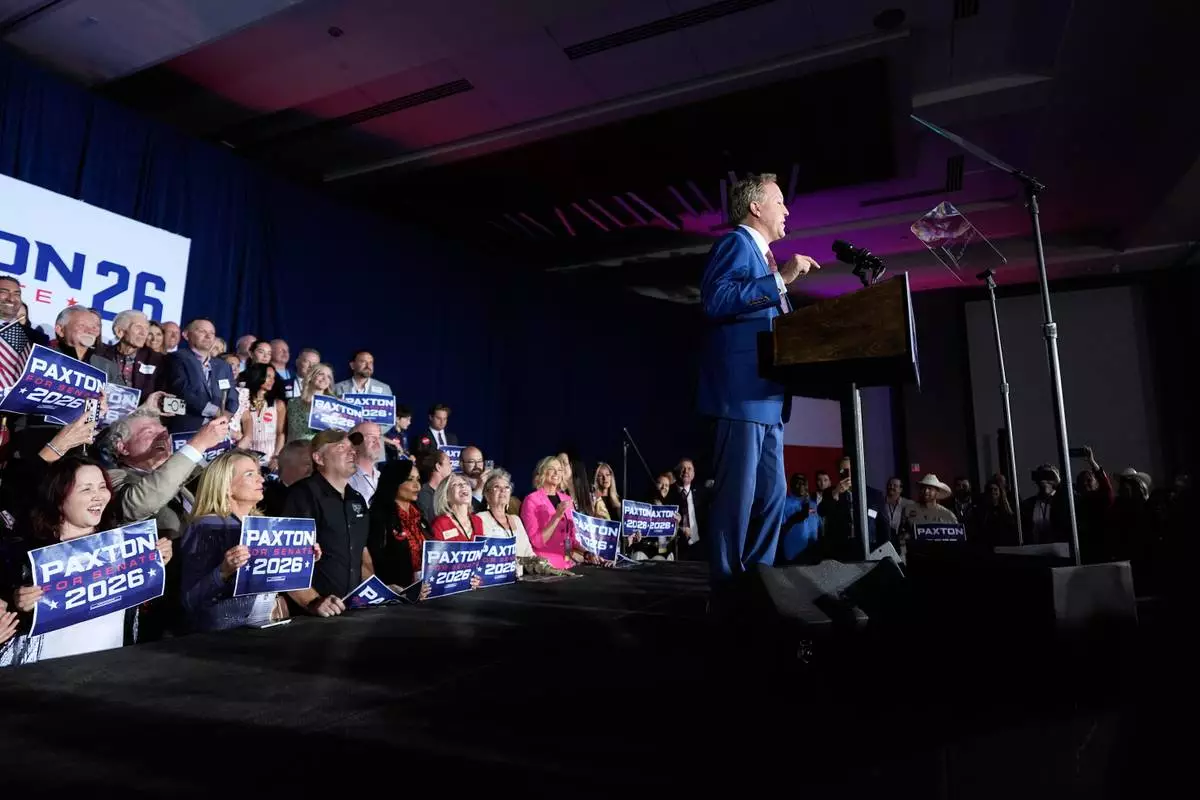
Texas Attorney General Ken Paxton, a Republican candidate for the U.S. Senate, speaks during a primary runoff election night event after winning the Republican party's nomination Tuesday, May 26, 2026, in Plano, Texas. (AP Photo/Tony Gutierrez)
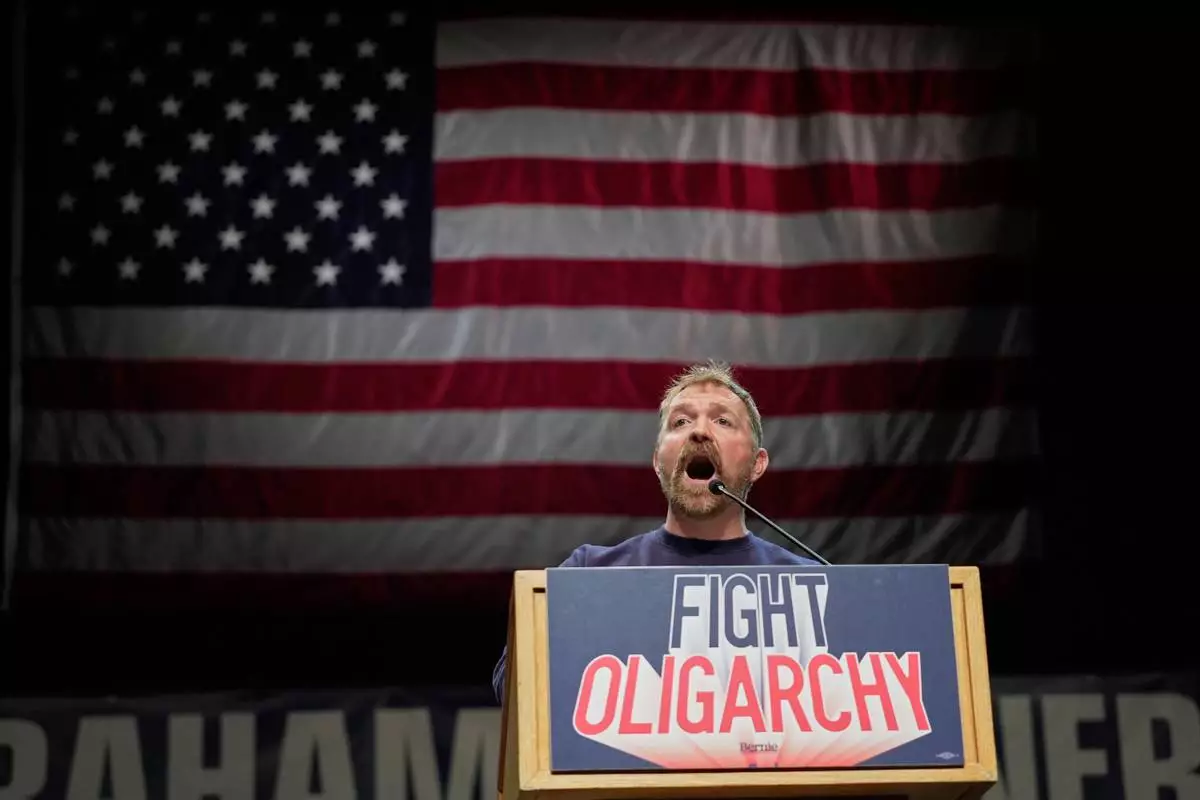
Graham Platner, Democratic candidate for U.S. Senate, speaks at an event hosted by Sen. Bernie Sanders in Orono, Maine, Sunday, May 24, 2026. (AP Photo/Robert F. Bukaty)
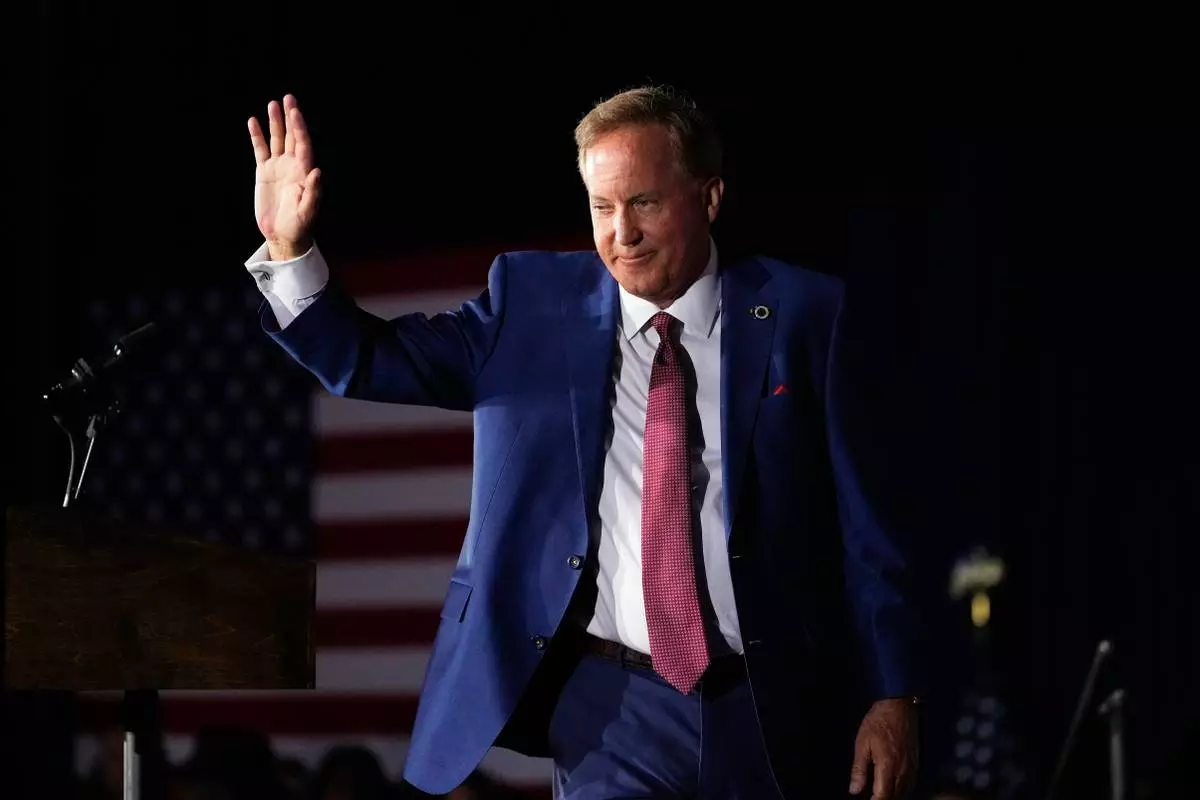
Texas Attorney General Ken Paxton, a Republican candidate for the U.S. Senate, waves as he takes the stage to speak during a primary runoff election night event after winning the Republican party's nomination Tuesday, May 26, 2026, in Plano, Texas. (AP Photo/Tony Gutierrez)
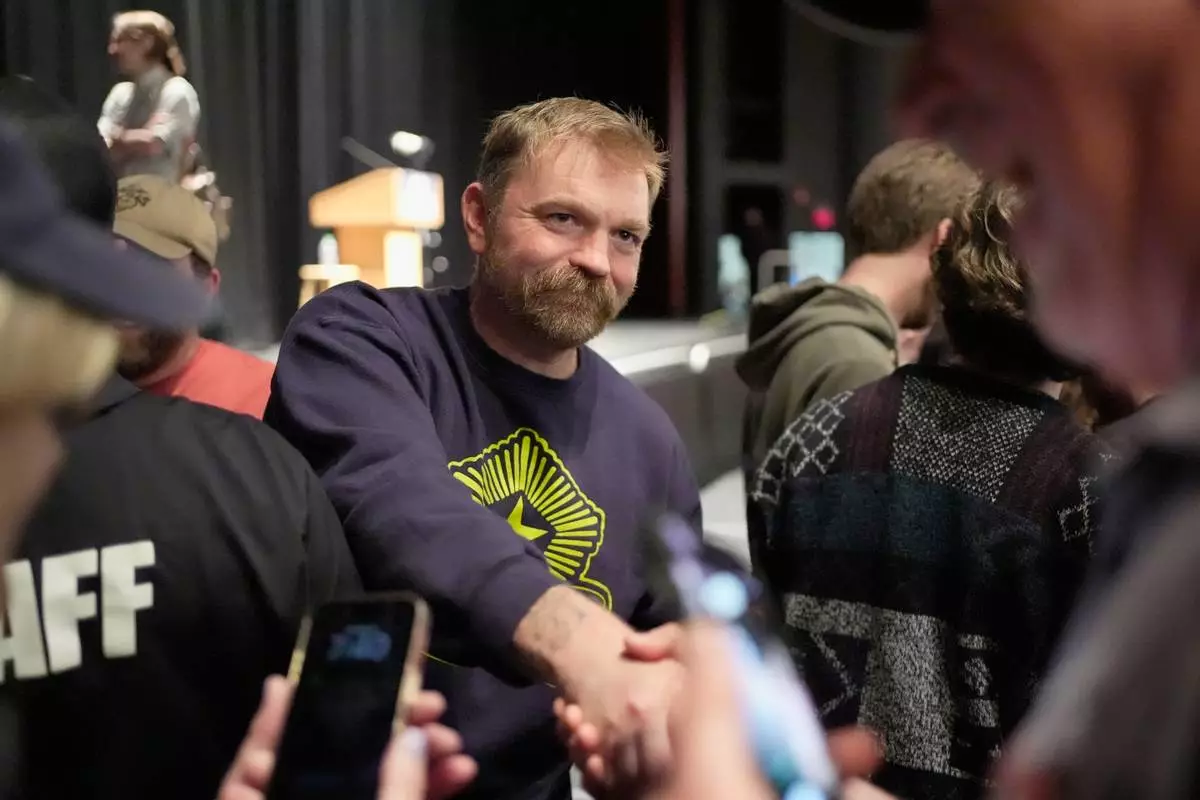
Graham Platner, Democratic candidate for U.S. Senate, greets supporters after speaking at an event hosted by Sen. Bernie Sanders in Orono, Maine, Sunday, May 24, 2026. (AP Photo/Robert F. Bukaty)
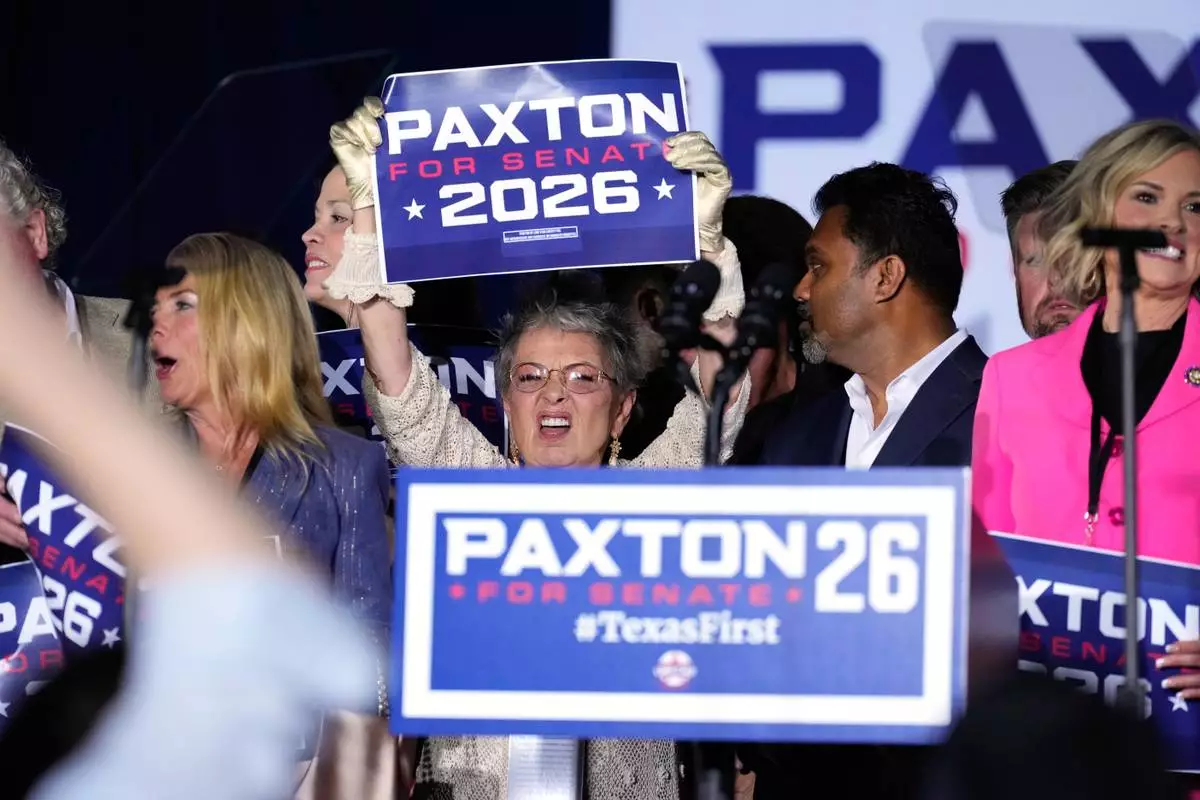
Attendees celebrate after Texas Attorney General Ken Paxton, a Republican candidate for the U.S. Senate, won the Republican party's nomination during a primary runoff election night event Tuesday, May 26, 2026, in Plano, Texas. (AP Photo/Tony Gutierrez)