Russia said on Monday that its forces launched massive strikes on Ukrainian military targets across multiple regions including Kiev, while Ukraine reported that its troops intercepted or shot down some of the incoming Russian missiles and drones.
In its latest report, the Russian Defense Ministry said Russian forces launched massive strikes with long-range, high-precision weapons on Ukrainian military targets, including the military-industrial complex and airfields in Kiev, Zaporizhzhia and the Sumy region. All targets were hit.
On the same day, the General Staff of the Armed Forces of Ukraine claimed that Russia launched 73 missiles and deployed 656 drones in attacks on Kiev and various other areas. Ukrainian troops intercepted or downed some incoming missiles and drones.
Additionally, air raid sirens sounded in Kiev on Tuesday, and the city's air defense systems responded shortly afterward.
In the early hours of the day, air raid sirens were heard across much of Ukraine, including Kiev, where loud explosions followed in quick succession.
The Ukrainian side said 38 locations across the country had been hit, with Kiev being the main target of the Russian strikes. So far, the airstrikes have killed at least 13 people and injured over 100 in the cities of Kiev, Dnipro, and Kharkiv.
Kremlin spokesman Dmitry Peskov said on Tuesday that as the Russian Foreign Ministry had previously warned, Russia's systematic strikes against Ukrainian military infrastructure, Kiev and other cities would continue. He said that if Ukraine continues to delay and refuses to engage in genuine negotiations, the special military operation will continue.

Russia claims striking Ukrainian targets; Ukraine says intercepting missiles, drones
Saudi Arabia has pledged 150 million U.S. dollars in oil derivatives to Yemen, a lifeline aimed at powering hospitals and businesses, easing foreign-currency strain, and stabilizing an economy battered by power outages and import dependence.
The Saudi Development and Reconstruction Program for Yemen posted on May 27 on X that the support is intended to cover the operational needs of diesel and mazut for power stations across various Yemeni governorates.
The program said the support aims to enhance the stability of the electricity system, improve the continuity of basic services, and ease the suffering of Yemenis, thereby strengthening vital services and supporting economic and development activities in Yemen.
With summer temperatures soaring and prolonged power outages threatening civilian life, public hospitals and small businesses, this timely intervention is seen as a critical measure to ease the country's worsening humanitarian and food security challenges.
"We're receiving assistance that complement previous grants from the Kingdom of Saudi Arabia. The assistance this time consists of petroleum materials covering the needs of 27 power plants in the liberated regions. This will address a significant deficit in the electricity sector," said Abdullah Hager, deputy minister of electricity of Yemen.
The Saudi support is also aimed at safeguarding Yemen's food security, as it is expected to help maintain the "cold chain" refrigeration systems essential for preserving perishable food supplies and critical medicines.
Without reliable electricity, these goods can spoil quickly in extreme heat. The resulting losses often force traders to increase prices on remaining stock, further driving up costs for consumers already struggling amid a severe humanitarian crisis.
"Everyone complains about electricity crisis. Electricity is a basic necessity. People are suffering from diseases, some even die. Electricity is a basic necessity, the very core of life. There is no one who does not need electricity. The whole world is progressing with electricity, and we are going backwards," said Taha Al-Sabri, a resident in Aden.
The assistance from Saudi Arabia can also help stabilize the Yemeni rial by reducing the government's reliance on foreign currency reserves to finance fuel imports -- which is particularly important in a country that imports around 90 percent of its food.
Established in 2018, the program operates under a comprehensive development agreement between the governments of Saudi Arabia and Yemen.
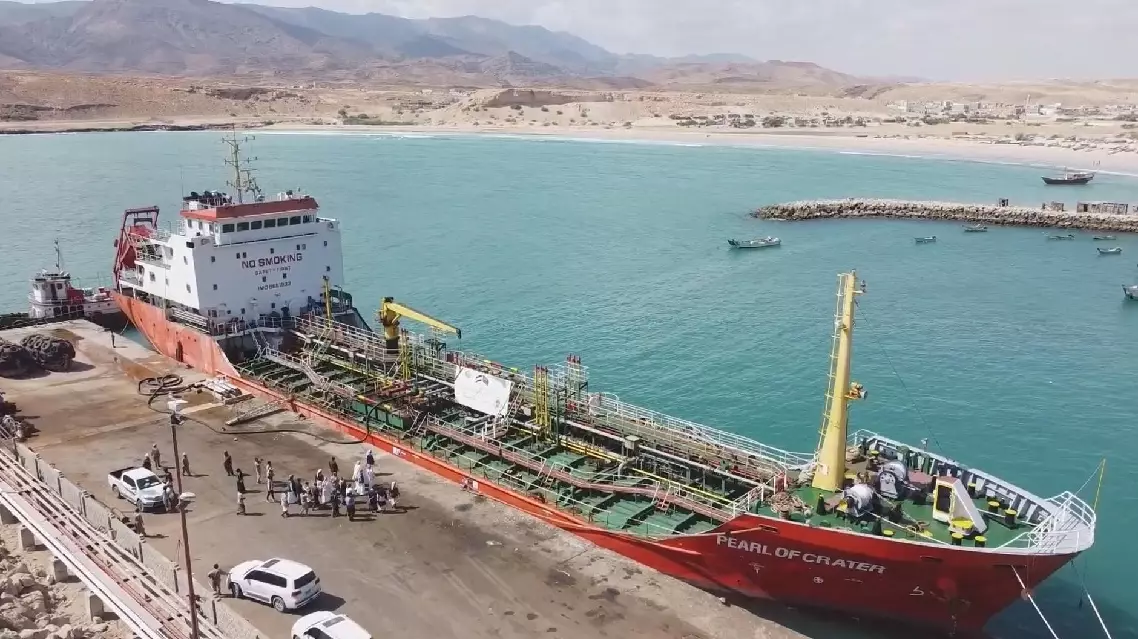
Saudi Arabia pledges 150 mln USD to help Yemen ease power shortage