ORLANDO, Fla.--(BUSINESS WIRE)--Jun 2, 2026--
Xenix Medical today announced FDA 510(k) clearance for the Riva Posterior Fixation System and the successful completion of its alpha launch, marking the system's transition to full commercial availability.
This press release features multimedia. View the full release here: https://www.businesswire.com/news/home/20260602596668/en/
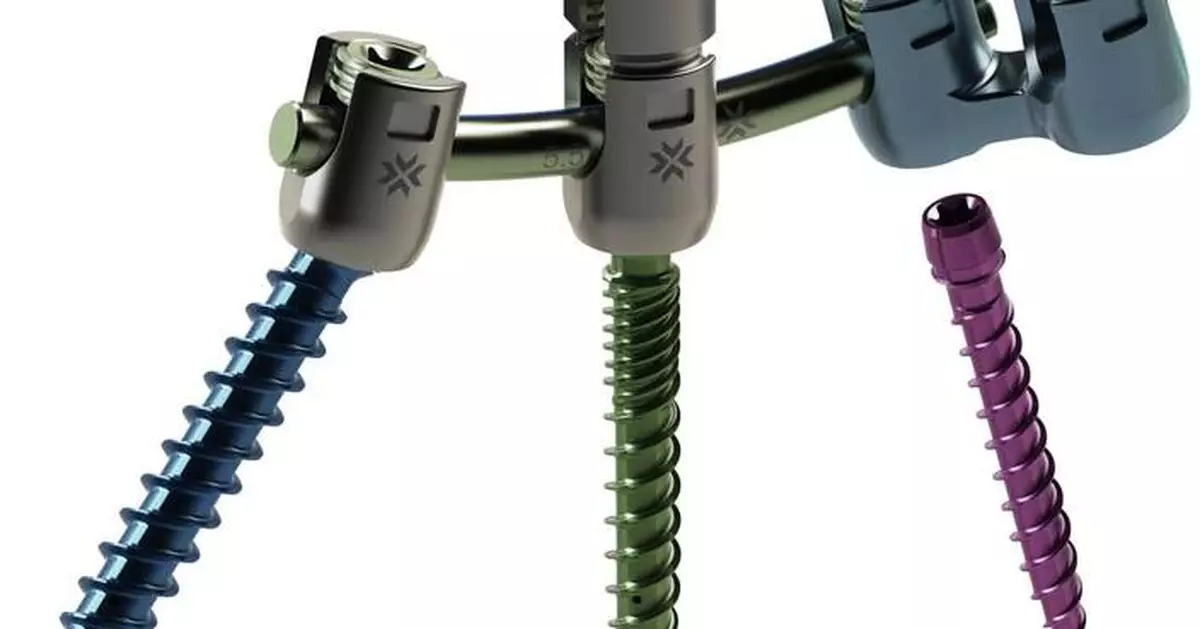
The Riva Posterior Fixation System was designed with versatility and simplicity at its core. Its simplistic modular design allows the surgeon to easily tailor the construct to each patient’s needs, even in the most challenging deformity, revision, or variable-anatomy cases.
A defining feature of the system is its single-step head attachment and removal mechanism, which allows surgeons to attach and detach the tulip head using simple, straightforward instrumentation, streamlining intraoperative workflow. Upon attachment, surgeons receive both tactile and audible feedback confirming secure engagement of the tulip head to the screw shank, providing an added layer of intraoperative assurance. The Riva tulip-to-shank interface has been engineered and tested to deliver strength equivalent to leading pre-assembled pedicle screw systems, giving surgeons the versatility of a modular platform without biomechanical compromise.
The system is supported by a comprehensive portfolio of tulip head and screw shank configurations, enabling surgeons to select the optimal components for challenging anatomical variations or complex constructs. This versatility allows for greater adaptability across a broad range of patient populations and procedures, obviating the need for separate implant systems.
“There are other modular systems on the market, but none give me the freedom to create my ideal construct for each patient like Riva,” commented Andrew Park, MD, Partner at Texas Spine Consultants in Dallas, Texas. “Its wide array of screw heads simply and reliably attaches to a variety of screw shanks, giving me surgical control and operational efficiency that I just can’t get with anything else.”
Key Features of the Riva Posterior Fixation System:
With the alpha launch now complete, Xenix has incorporated early clinical feedback into its full commercial rollout strategy. The company is actively expanding its distribution network and surgeon access across the country.
The company is working to integrate its proprietary NanoACTIV™ surface technology into the Riva system, leveraging NanoACTIV’s advanced surface characteristics. In addition, Xenix Medical is developing an expanded portfolio of sacropelvic fixation and attachment options, which will extend the system's capability to address complex deformity and long-construct cases requiring pelvic anchoring.
Xenix also plans to extend the Riva system to minimally invasive surgery (MIS), enabling surgeons to leverage the system's modular design and versatile implant options through MIS approaches. This extension will broaden the patient population that can benefit from the Riva platform while supporting the continued industry shift toward less invasive surgical techniques.
"Riva’s full commercial launch is a significant milestone, but it is just the next step in our accelerating trajectory," said Ryan Phillips, President of Xenix Medical. "We will be rolling out several additional differentiated technologies and enhancements to our current portfolio over the coming weeks and months. Stay tuned.”
For more information about the Riva Posterior Fixation System or to request a product demonstration, contact Xenix Medical at info@xenixmedical.com
About Xenix Medical
Xenix Medical is a medical device company dedicated to developing innovative spinal fixation solutions that improve surgical outcomes and simplify the operative experience. Guided by the belief that The Science of Innovation drives better patient care, Xenix Medical is committed to advancing the standard of spinal surgery through thoughtful engineering unconstrained by industry norms.
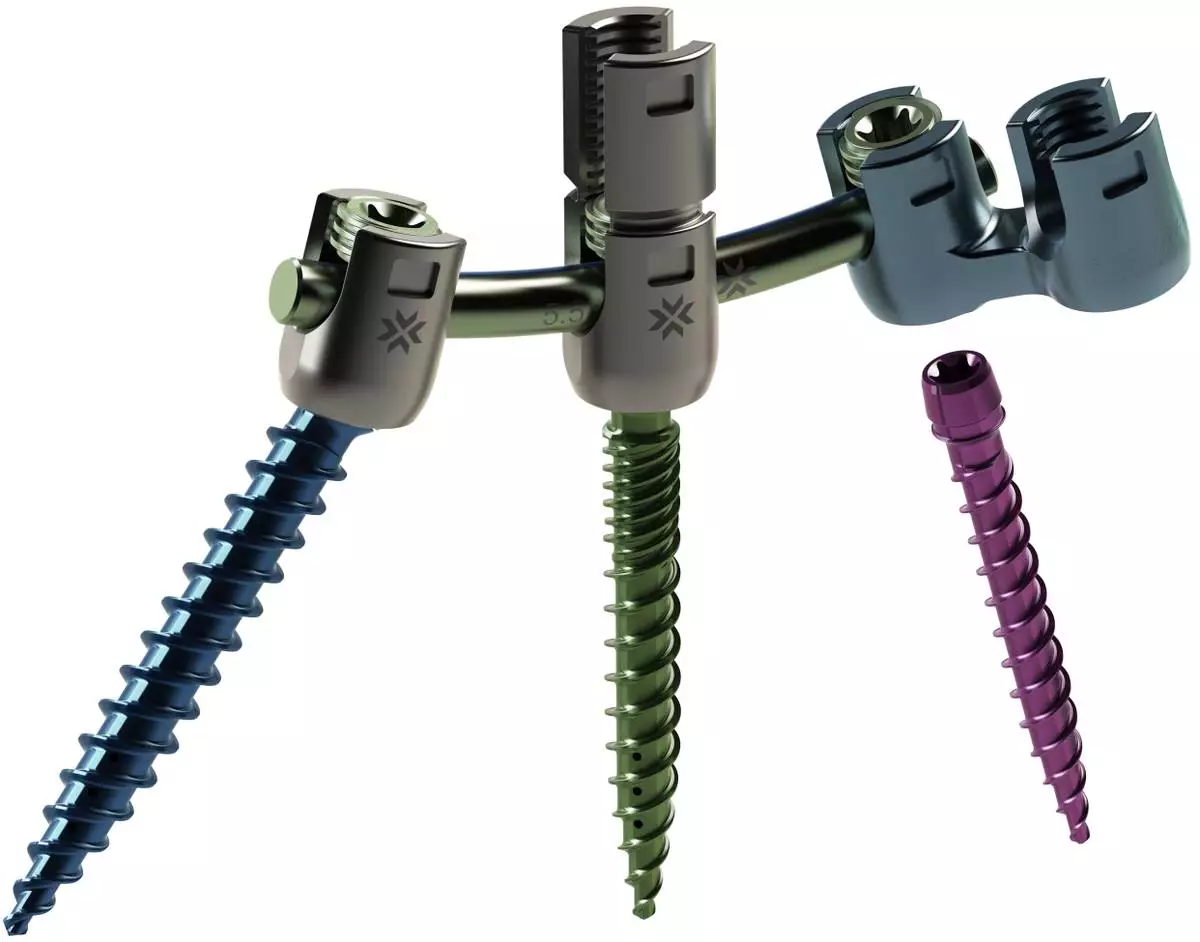
Riva Posterior Fixation System
WASHINGTON (AP) — The Trump administration proposed 25% tariffs on imports from Brazil, charging that the world’s 10th-biggest economy engages in trade practices that are “unreasonable’’ and that “burden or restrict U.S. commerce.’’
Brazil's President Luiz Inácio Lula da Silva said he received the decision “with indignation.” He also blamed the decision by the U.S. administration on his rival in October's elections, Sen. Flávio Bolsonaro, who visited Washington last week. The senator is the son of former President Jair Bolsonaro, once nicknamed “the Trump of the Tropics” by his allies.
The announcement late Monday came after an investigation by the Office of the U.S. Trade Representative, charging Brazil with lax anti-corruption enforcement and unfair tariffs of its own, among other things.
The U.S. has had a goods trade surplus with Brazil for years.
U.S Trade Representative Jamieson Greer said that he and President Donald Trump had “constructive’’ meetings with Lula and other Brazilian officials. But he said that “we continue to have substantial differences in resolving the issues identified in this investigation.’’
Lula on Tuesday cited other reasons for the punishing tariff proposal. For the first time he named an American official as a hurdle to his relations with Trump and once again he threatened to retaliate.
“I spoke to President Trump for three hours, and that Marco Rubio guy, the head of the State Department, he is anti-Latin American,” Lula said. “He is a deadly enemy of Cuba, a deadly enemy of many Latin American countries. I already told Trump that he does not like Brazil.”
The U.S. State Department did not immediately respond a request for comment from The Associated Press on Tuesday.
Brazil’s government said in a statement that its dialogue with American counterparts, which includes “personal involvement of Presidents Lula and Trump,” is being ”sabotaged by merely electoral and family matters” of the Bolsonaros.
It added that it hopes “the recommendations do not become effective tariffs.”
“But we stress we will adopt every measure that is capable of reducing the damage that might be caused to the national economy, to the jobs and the income of Brazilians,” the country's government said.
Last year, Trump had slapped Brazil with a 50% tariff, mainly to protest its prosecution of Jair Bolsonaro for trying to overturn his electoral defeat in 2022. His relationship with Lula seemed to have improved early May, when the Brazilian visited the White House.
But last week, the Trump administration designated two Brazilian gangs as terrorist organizations, after Sen. Bolsonaro's visit. Lula opposes the designation, which analysts say could bolster his political rival.
Greer’s office has scheduled a public hearing July 6 on the proposed tariffs.
Trade lawyer Ryan Majerus, a partner at King & Spalding, noted said that the administration’s plan excludes more than half of U.S. imports from Brazil, including aircraft and key minerals.
The Trump administration invoked Section 301 of the Trade Act of 1974 to launch the investigation into Brazil’s trade practices.
Sen. Bolsonaro travelled to meet officials in Washington last week in the wake of a scandal at home in which he admitted receiving funds from a disgraced banker. Another son, former lawmaker Eduardo Bolsonaro was also present.
“These sons of Bolsonaro can be worse than him. They are actually sell outs of our country, they went there to ask a foreign nation to meddle in Brazilian affairs,” Lula said in a speech to residents of the city of Catalao, south of capital Brasilia. “They are traitors.”
The U.S. Supreme Court ruled in February that Trump overstepped his authority by using a different law – the International Emergency Economic Powers Act (IEEPA) of 1977 – to impose sweeping tariffs on U.S. trading partners, including Brazil.
However, Section 301 tariffs have survived legal challenges, and the administration is likely to use that authority to impose other tariffs and to recoup some of the tax revenue lost when the Supreme Court rejected the IEEPA tariffs.
Brazil’s president said that during a visit to Washington early May, he handed Trump documents showing that the U.S. has a trade surplus with Brazil.
Documents published by the U.S. Trade Representative show that last year, U.S. exports to Brazil rose nearly 11% to $54.4 billion. Brazilian exports to the U.S. fell 5.7% to $39.9 billion, meaning the U.S. had a trade surplus of more than $14 billion.
The trade imbalance for services is more lopsided in favor of the U.S., with services exports in 2024 reaching $29.6 billion, quadruple the Brazilian services exports to the U.S.
“I am not going to cry about it,” Lula said. “If they (the U.S.) don’t want to buy from us, we will sell to someone else.”
China has been Brazil’s biggest trading partner for about a decade.
Mauricio Savarese reported from Sao Paulo.
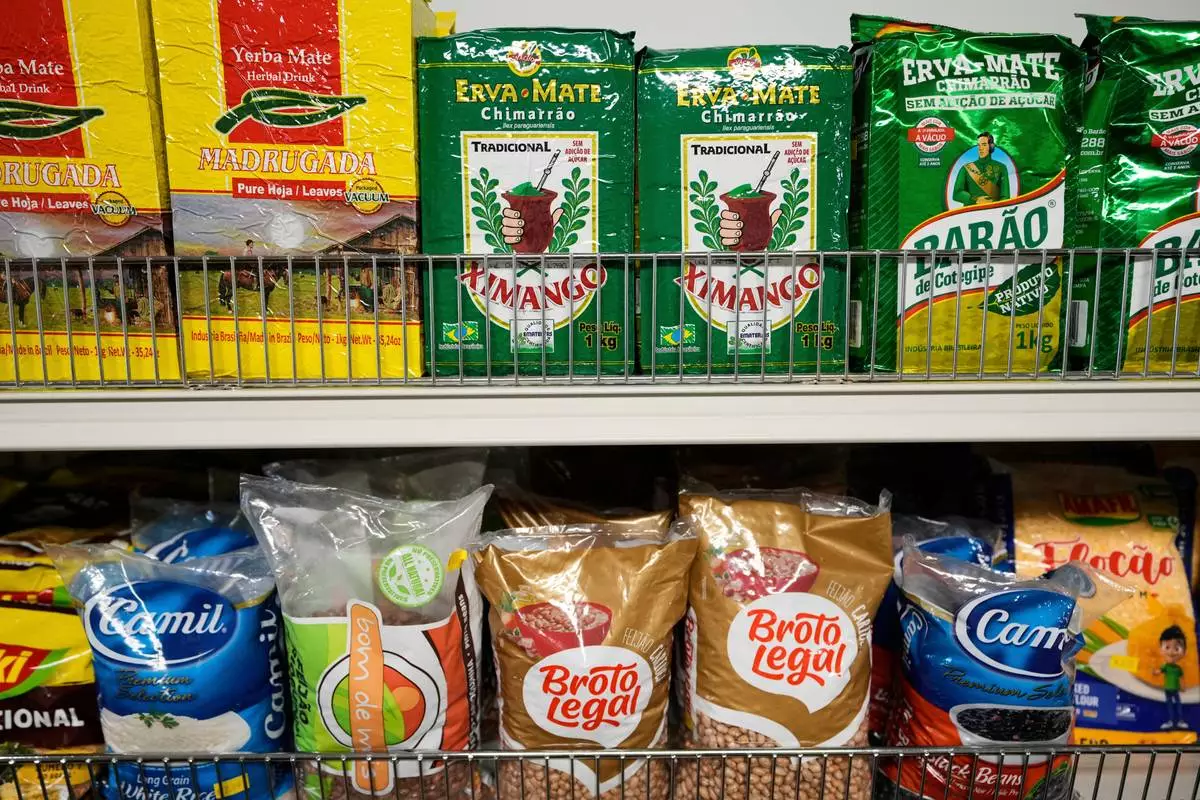
FILE - Goods imported from Brazil are displayed at Amazonia Brasil, a Brazilian goods store, in Newark, N.J., Aug. 7, 2025. (AP Photo/Seth Wenig, File)
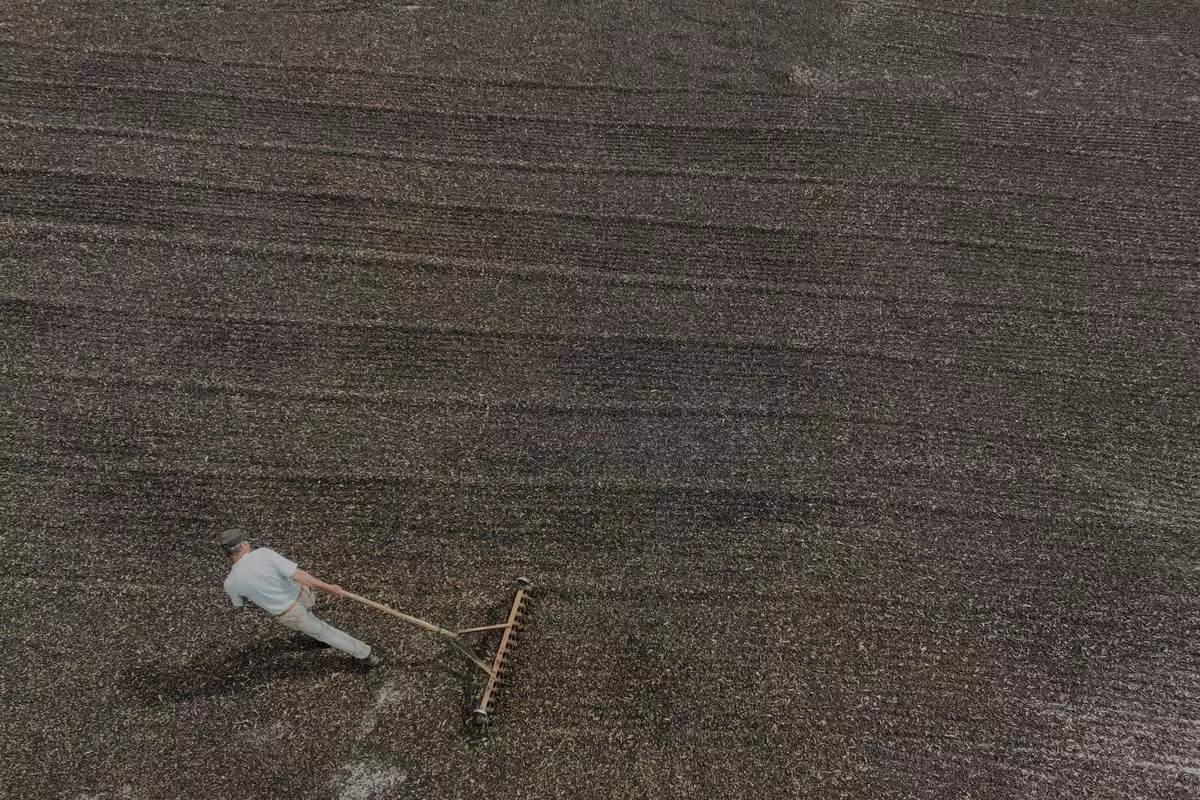
FILE - A farm employee processes coffee berries at Boa Esperanca farm in Braganca Paulista, Brazil, Aug. 4, 2025. (AP Photo/Andre Penner, File)