WASHINGTON (AP) — Senate Republicans will meet Tuesday to discuss next steps after the Justice Department said it would comply with a court order pausing the implementation of a $1.776 billion settlement fund designed to compensate President Donald Trump’s political allies.
GOP senators who revolted against the settlement before leaving for a Memorial Day recess two weeks ago say they want more information from the administration about the future of the fund, which could potentially go to Trump supporters who beat police and attacked the Capitol on Jan. 6, 2021. Meanwhile, Trump is reconsidering whether to move forward with it at all, according to a person familiar with his thinking.
Caught in the middle is legislation that would fund Trump’s immigration enforcement agencies for three years. Republicans abruptly left town without passing it after Democrats said they would offer amendments to scrap or scale back the judgment fund, forcing Republicans to go on the record for or against it and endangering the money for Immigration and Customs Enforcement and Border Patrol.
Returning to Washington on Monday evening, Senate Majority Leader John Thune said he wasn’t sure if the immigration spending bill would move this week.
“To be determined,” he told reporters.
The extraordinary standoff comes after Trump announced the fund with no heads up to lawmakers as part of a settlement to resolve his lawsuit against the IRS over the leak of his tax returns. When word of the settlement broke, the Senate was navigating tricky passage of the immigration legislation with an added $1 billion in White House security costs — including for Trump’s ballroom project.
Furious, Senate Republicans jettisoned the White House security money from the bill and made clear they would not pass the legislation at all unless the White House made major changes to the settlement.
“I do think the best way to handle it is if the administration decides to shut it down themselves,” Thune told reporters Monday, referring to the fund.
He said Republicans will have a better idea of how to proceed after they meet for their weekly conference lunch on Tuesday.
The Justice Department said it would comply with a ruling Friday from U.S. District Judge Leonie Brinkema, who temporarily halted the fund for two weeks. The judge scheduled a June 12 hearing for arguments on whether to extend her order.
The department said in a statement that it strongly disagrees with the ruling but would comply.
Republican senators weren't satisfied. They said Monday evening that they need more detail from the administration on what happens after that deadline before deciding next steps.
“It’s pretty clear that the president has to say very explicitly that there’s not going to be a weaponization fund,” said Senate Judiciary Committee Chairman Chuck Grassley, R-Iowa.
Oklahoma Sen. Jim Lankford said Trump administration officials “need to say what they actually mean.”
“They need to say, we’re setting this whole thing aside,” Lankford said.
Alaska Sen. Lisa Murkowski said that if the settlement is “completely pulled, then I’m satisfied. But I haven’t heard anybody say that.”
Republican Sen. John Kennedy of Louisiana said the administration already has to abide by the court decision, “that’s in the Constitution. I have to know more about their position.”
“Right now, the reconciliation bill looks like a broken arm with the bones sticking out,” Kennedy said. “It won’t move this week, in my opinion, unless we have some resolution on the weaponization account.”
The outrage of the fund came to a head last month at a closed-door meeting between senators and acting Attorney General Todd Blanche that Republican Sen. Ted Cruz of Texas described on a recent episode of his podcast as “one of the roughest meetings I’ve seen in my entire time in the Senate.”
GOP senators had been discussing several ways that they could curb the fund, including limiting who can receive payouts, changing the makeup of the commission in charge of settlement decisions, adding some sort of judicial review for applicants or scrapping the fund altogether.
Amid the backlash, a person familiar with the matter, who insisted on anonymity to discuss the president’s thinking, said Monday that Trump was reconsidering whether to move forward with the fund. But the president has not said publicly what he intends to do.
Also complicating matters is Trump’s campaign-year push to defeat GOP lawmakers whom he sees as disloyal, including some of Thune’s most reliable Republican votes in the narrow 53-47 Senate. Sens. Bill Cassidy of Louisiana and John Cornyn of Texas both lost reelection bids in May after Trump endorsed their primary opponents, and it’s unclear how supportive they’ll be of the president’s agenda going forward.
“I think it’s hard to divorce anything that happens here from what’s happening in the political atmosphere around us,” Thune said before the Senate left town.
Associated Press writers Joey Cappelletti and Eric Tucker contributed to this report.

FILE - Supporters of President Donald Trump try to break through a police barrier at the Capitol in Washington, Jan. 6, 2021. (AP Photo/Julio Cortez, File)

FILE - Rioters storm the West Front of the U.S. Capitol Jan. 6, 2021, in Washington. (AP Photo/John Minchillo, File)
California Democrats persuaded voters to let them redraw the state's congressional map so the party could potentially gain five seats in the U.S. House to counter GOP redistricting in Texas. Tuesday’s primary will be the first indication of whether that will pay off.
The state’s unusual primary system, in which the top two vote-getters advance to the general election regardless of party, means Democrats have a chance of effectively missing out on a pickup in the San Diego suburbs, where Republican Rep. Darrell Issa's district was redrawn to give it a slight Democratic lean.
Issa retired, and a Republican San Diego County supervisor, Jim Desmond, stepped in to run. So did an avalanche of nine Democrats — so many that some fear the Democratic vote will be split among them, leaving Desmond and the only other GOP candidate, Jim O’Neil, as the top vote-getters. Under that scenario, Democrats would be locked out of the November general election.
“After millions of dollars and a nationwide effort to redraw these districts in response to Texas, Democrats being shut out would be a nightmare,” said Ammar Campa-Najjar, a former Obama administration official who is one of the Democrats running.
California has been the bright spot for Democrats in a redistricting war kicked off by President Donald Trump to help his party retain control of the House. After Texas redrew its map to make as many as five more seats winnable for the GOP, California voters allowed Democrats to suspend their state’s own independent redistricting commission and create a new map in retaliation.
But when Virginia Democrats tried to replicate that, they were blocked by their state Supreme Court. Meanwhile the conservative majority on the U.S. Supreme Court gutted a key provision of the Voting Rights Act, letting Republicans eliminate some majority-Black congressional districts in the South.
Campa-Najjar, San Diego City Councilwoman Marni von Wilpert and investor Brandon Riker, who is financing his own campaign, are the most prominent Democrats in the race for the seat vacated by Issa. Many Democrats are optimistic their voters will coalesce around one candidate and set up a competitive election against Desmond in the fall.
The 48th district would not be the only competitive fall race for Democrats.
In the Central Valley, they redrew the seat held by Republican Rep. David Valadao to make it even more Democratic. Valadao is a survivor of several targeted Democratic campaigns and one of two remaining Republican House members who voted to impeach Trump after the Jan. 6, 2021, attack on the U.S. Capitol.
He's expected to make it to the general election, so the primary will determine which Democrat faces him — state Assemblywoman Jasmeet Bains, a moderate backed by the Democratic Congressional Campaign Committee, or Randy Villegas, a political science professor at College of the Sequoias and a school board member who represents the party’s liberal wing.
The schism between establishment Democrats and a younger, insurgent progressive wing is a defining characteristic of many of this year's primaries.
In a safe Democratic district in San Francisco, Scott Wiener, a state lawmaker and former member of the San Francisco Board of Supervisors, is considered likely to make the November race to replace retiring former House Speaker Nancy Pelosi. The suspense is over whether he will face Saikat Charkrabati, a wealthy former technology entrepreneur who supported Rep. Alexandria Ocasio Cortez’s insurgent primary in 2018, or Supervisor Connie Chan, who was endorsed by Pelosi.
In Sacramento, city council member Mai Vang is challenging 81-year-old Rep. Doris Matsui, who succeeded her late husband after his death in 2005.
Rep. Brad Sherman, whose Southern California district stretches from the San Fernando Valley to Malibu, is being challenged by Democrat Jake Levine, a 42-year-old lawyer who argues that it is time to move on from the 15-term congressman.
And in a redrawn district that stretches from Napa Valley into conservative Northern California farming communities, 14-term Democratic Rep. Mike Thompson has drawn a younger challenger, former venture capitalist Eric Jones.
California's congressional primaries also will determine the fate of Republicans targeted in the Democratic redraw.
In Southern California, sitting Republican Reps. Ken Calvert and Young Kim, were drawn into the same conservative district and are battling over their pro-Trump credentials.
In the Sacramento suburbs, Rep. Kevin Kiley, who left the GOP to become an independent and a critic of partisan gerrymandering, hopes to survive in one of the two Democratic-leaning districts where his more conservative district’s voters were scattered.
Meanwhile in the San Francisco suburbs, six Democrats and two Republicans are running for the seat formerly held by Democratic Rep. Eric Swalwell, who resigned and ended his gubernatorial bid amid sexual harassment allegations. The top two vote-getters advance to the November ballot to fill the seat starting in 2027, while a special election will be held June 18 for the remainder of Swalwell's current term.
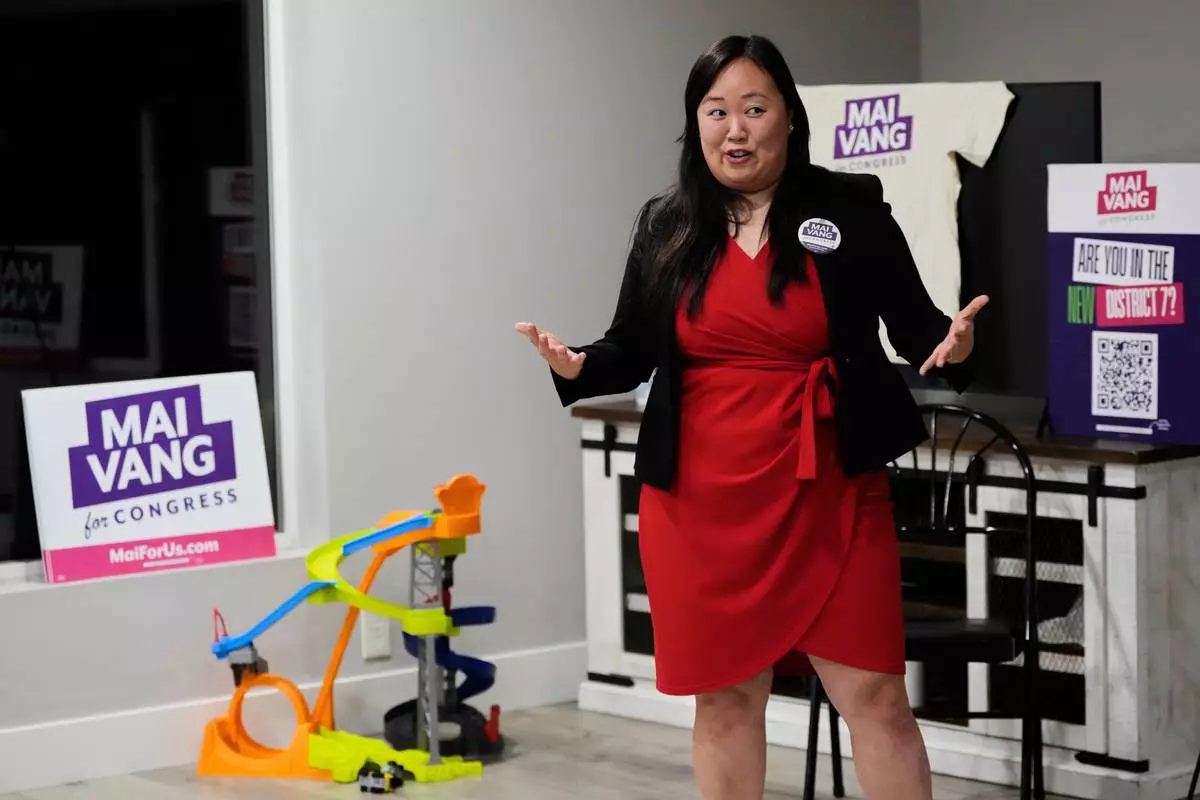
FILE - Mai Vang speaks to people at a campaign fundraiser, Jan. 21, 2026, in Sacramento, Calif. (AP Photo/Godofredo A. Vásquez, File)
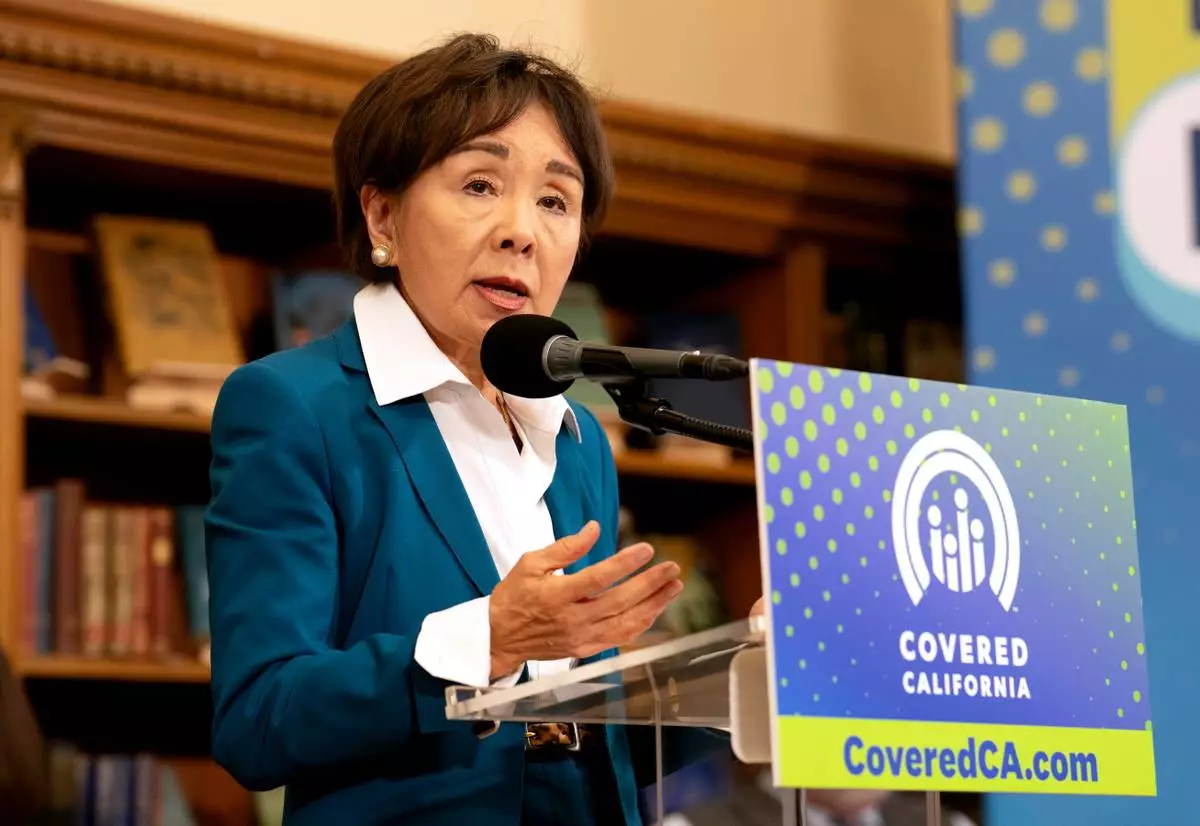
FILE - California Rep. Doris Matsui, D-Sacramento, speaks during a news conference in Sacramento, Calif., Oct. 29, 2024.(AP Photo/Rich Pedroncelli, File)
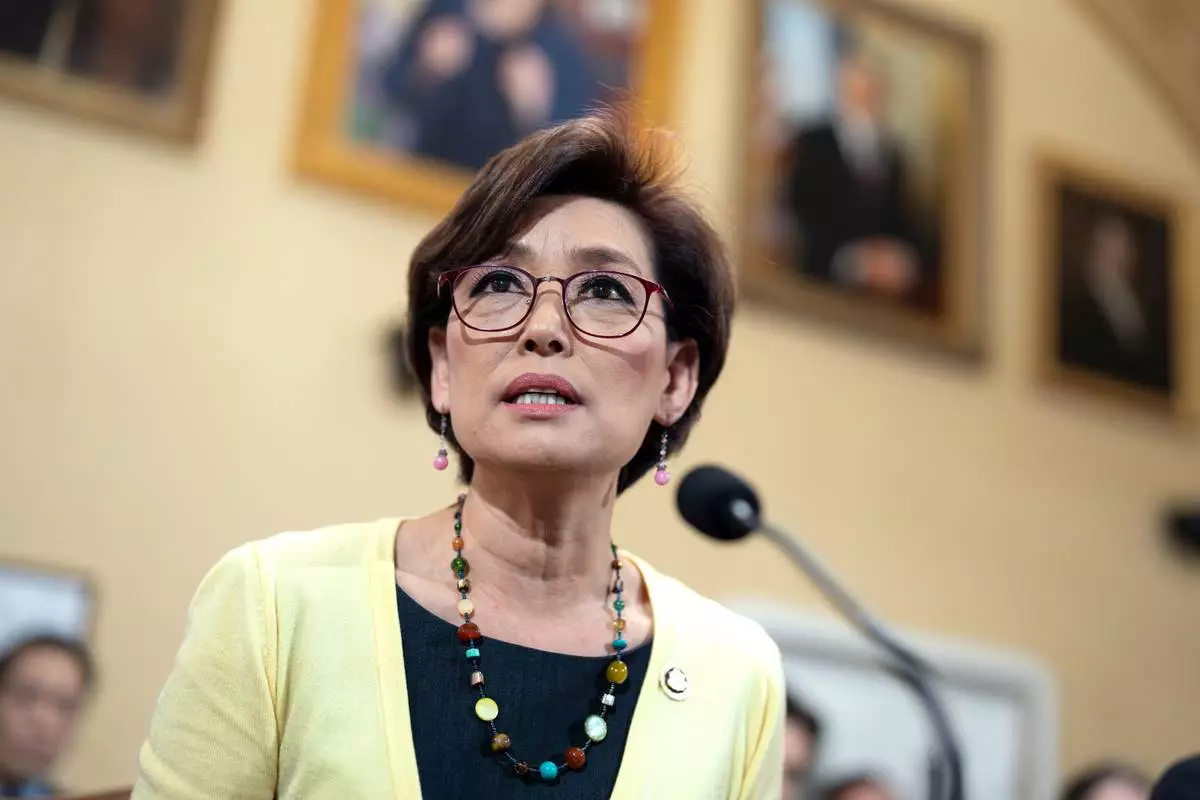
FILE - Rep. Young Kim, R-Calif., speaks at the Capitol in Washington, April 15, 2024. (AP Photo/J. Scott Applewhite, File)
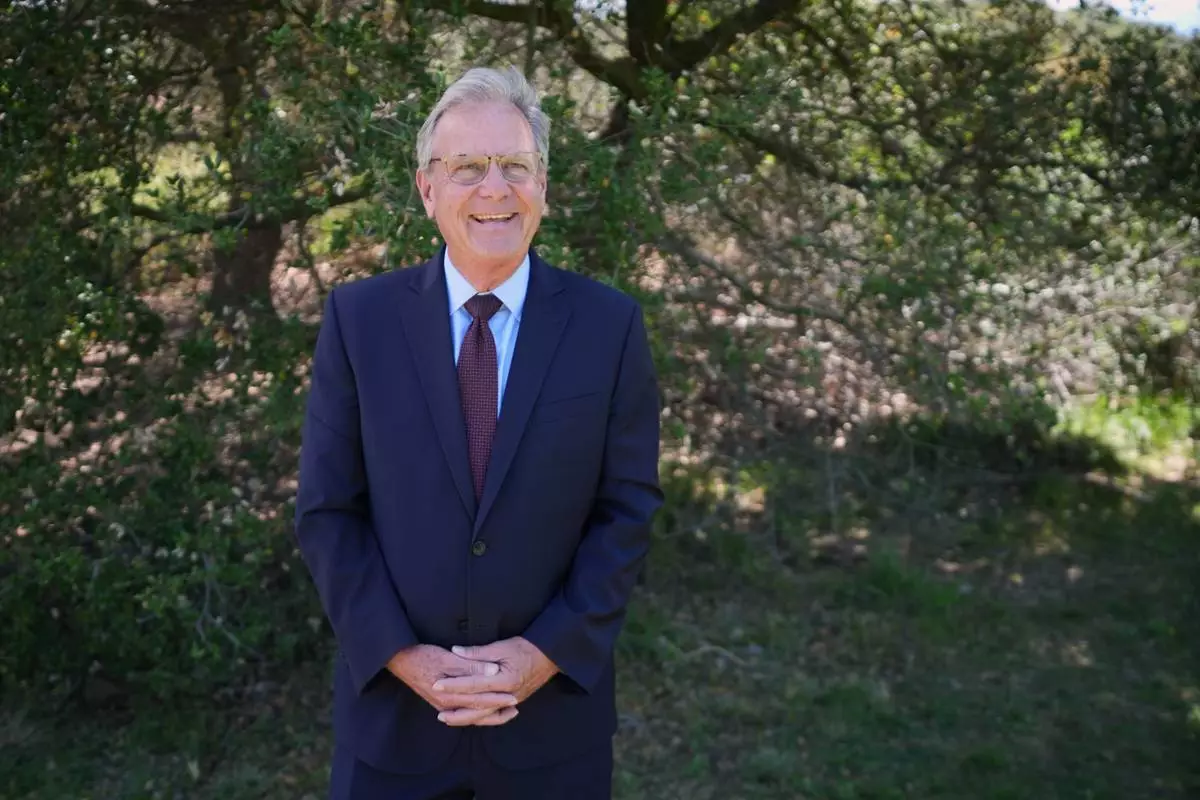
Jim Desmond, a Republican candidate for California's 48th Congressional District, poses for a portrait Friday, May 29, 2026, in Vista, Calif. (AP Photo/Gregory Bull)
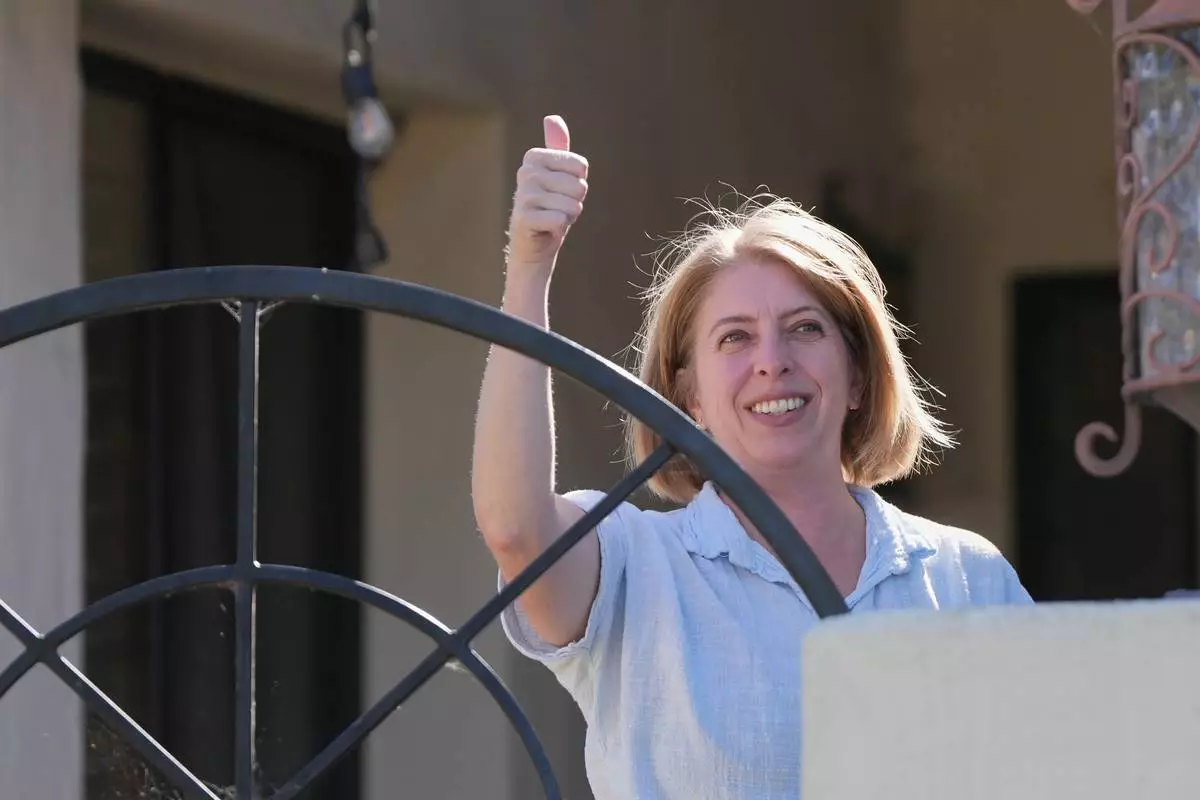
Marni von Wilpert, a Democratic candidate for California's 48th Congressional District, canvasses in a neighborhood Friday, May 29, 2026, in San Marcos, Calif. (AP Photo/Gregory Bull)
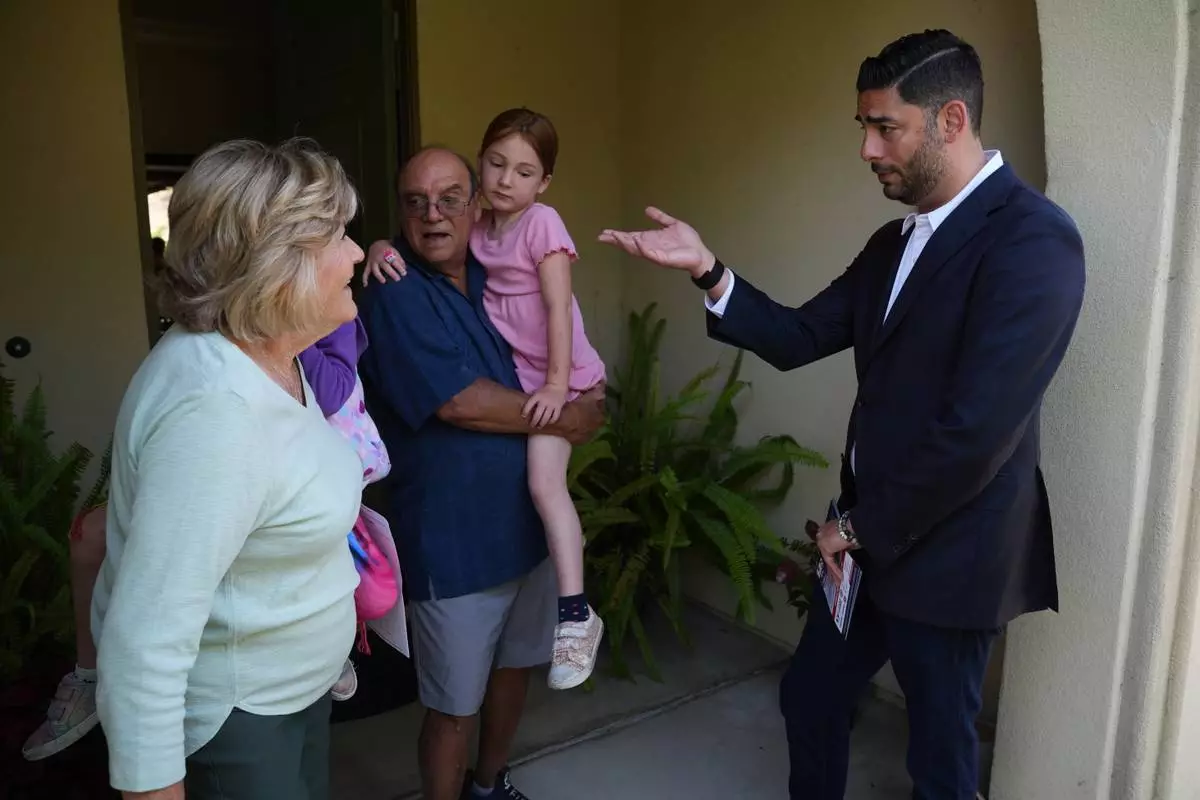
Ammar Campa-Najjar, right, a Democratic candidate for California's 48th Congressional District, speaks with a family as he canvasses in a neighborhood Saturday, May 23, 2026, in San Marcos, Calif. (AP Photo/Gregory Bull)