LAHORE, Pakistan (AP) — Fast bowler Nathan Ellis grabbed a career-best 4-33 on yet another tricky wicket and led Australia to series-leveling 41-run win over Pakistan on Tuesday in the second one-day international.
Pakistan, which won the first game by five wickets on a turning wicket, was bowled out for 190 after Australia had scored 231-9 on a pitch that had plenty of turn for the spinners and variable bounce for the seam bowlers.
Click to Gallery

Pakistan's Shadab Khan bats during the second one-day international cricket match between Pakistan and Australia, in Lahore, Pakistan, Tuesday, June 2, 2026. (AP Photo/K.M. Chaudary)
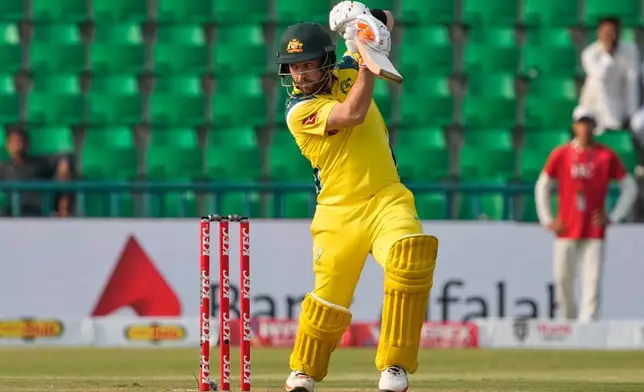
Australia's Josh Inglis bats during the second one-day international cricket match between Pakistan and Australia, in Lahore, Pakistan, Tuesday, June 2, 2026. (AP Photo/K.M. Chaudary)
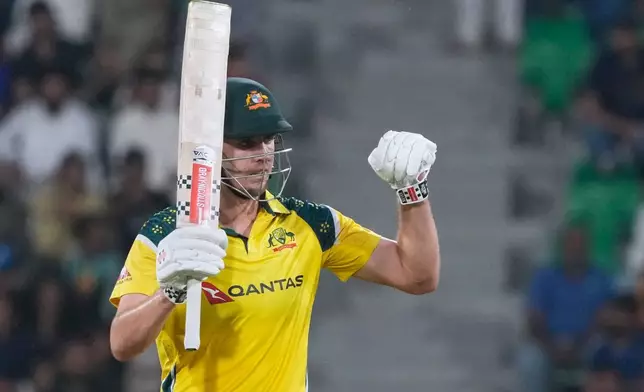
Australia's Cameron Green celebrates after scoring fifty runs during the second one-day international cricket match between Pakistan and Australia, in Lahore, Pakistan, Tuesday, June 2, 2026. (AP Photo/K.M. Chaudary)
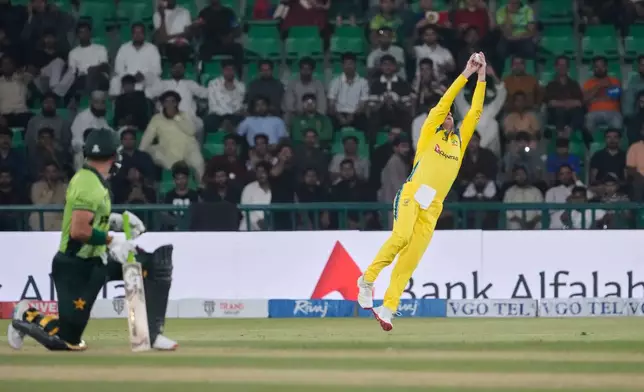
Australia's Adam Zampa, right, jumps to take a catch to dismiss Pakistan's Sahibzada Farhan, left, during the second one-day international cricket match between Pakistan and Australia, in Lahore, Pakistan, Tuesday, June 2, 2026. (AP Photo/K.M. Chaudary)

Australia's Nathan Ellis, left, celebrates after the dismissal of Pakistan's Arafat Minhas, right, during the second one-day international cricket match between Pakistan and Australia, in Lahore, Pakistan, Tuesday, June 2, 2026. (AP Photo/K.M. Chaudary)
“It’s definitely different to the traditional one-day cricket we see around the world at the moment,” Ellis said in reference to Pakistan’s ploy to make rank-turners for the series against an understrength Australia.
“It’s no secret that today it was pretty low and slow … we saw the cutters and the slow balls working a lot today, and the ball started to tail and reverse swing through the 35-to-45-over mark.”
Half-centuries from captain Josh Inglis (51) and Cameron Green (53) were supported by Matthew Renshaw’s run-a-ball 43, while 19-year-old Oliver Peake added 31 off 32 balls after Pakistan captain Shaheen Shah Afridi won the toss and elected to field.
Left-arm spinner Arafat Minhas, who became the first Pakistani bowler to take five wickets in his debut ODI at Rawalpindi last Saturday, returned figures of 2-27.
Leg-spinner Abrar Ahmed had 2-34 while the pace duo of captain Afridi (3-36) and Haris Rauf (2-49) shared five wickets between them.
All-rounder Shadab Khan scored 71 off 104 balls to make amends for his wicketless return of 0-56 and took the Pakistan chase deep before he was the last man dismissed — stumped down the legside by Inglis off leg-spinner Tanveer Sangha.
Ellis struck in his first over when Maaz Sadaqat played the ball back onto his stumps, and then the fast bowler had Babar Azam (16) lbw off a delivery that nipped sharply into Pakistan’s premier batter in the fifth over.
Pakistan’s middle-order struggled to cope with the spin of Matthew Short (3-36) and slumped to 78-6 before Shadab and Arafat Minhas (33) revived the chase with a 59-run partnership.
But Ellis broke the stand when he had Minhas trapped lbw in the 32nd over. Shadab got to his fifth half-century in ODIs and struck two sixes against Green.
The series concludes Thursday at the same venue.
“It was a pretty good total in the end,” Inglis said. “It would have been nice for someone to go on and get a big score, but …. we thought anything over 200, we were right in the game.
“You can always call on Nello (Ellis) on those sort of pitches, his variations are outstanding, and when you’ve got on-pace at 145 and then your slow balls at just over 100k an hour, it’s really tough."
The slowness of the wicket was evident after Alex Carey had dragged Afridi’s first ball of the match back onto his stumps and the Pakistan skipper didn’t hesitate to introduce his two best spinners — Minhas and Abrar — from both ends inside the power play.
Abrar had an early success when he found the leading edge of Short’s bat for a comfortable return catch and Marnus Labuschagne once again failed to bat on turning tracks when he top-edged a sweep against Minhas and fell for 5.
Inglis and Green then shut out expansive shots and shared a 51-run stand off 93 balls. Inglis raised his half-century with a reverse swept boundary against Abrar before he was undone by low bounce and was clean bowled by Minhas.
Green continued to grind out against spinners and together with Renshaw raised a 65-run stand before Green finally ran out of patience soon after scoring his half-century and holed out to long-on to give Abrar his second wicket.
Rauf then rattled Renshaw's stumps with a full-pitched delivery from round the wicket in the 44th over, but Peake ensured Australia had enough runs on board by smashing two sixes and a boundary before he was bowled in the final over.
“We gave away 20-30 extra runs towards the end,” Afridi said. “We lost wickets early on and that built pressure on us … it is a spinning track, not easy to bat on, but the way Nathan Ellis bowled — stump to stump — that brought him success.”
AP cricket: https://apnews.com/hub/cricket

Pakistan's Shadab Khan bats during the second one-day international cricket match between Pakistan and Australia, in Lahore, Pakistan, Tuesday, June 2, 2026. (AP Photo/K.M. Chaudary)
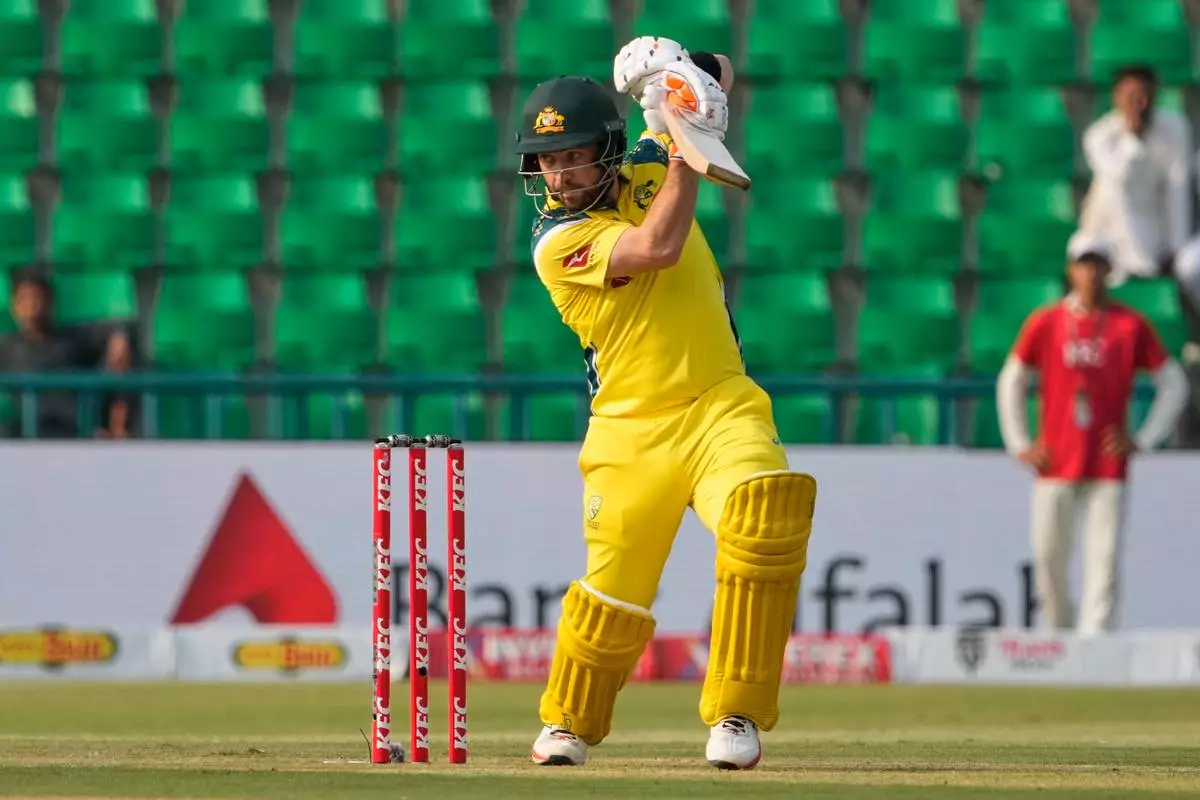
Australia's Josh Inglis bats during the second one-day international cricket match between Pakistan and Australia, in Lahore, Pakistan, Tuesday, June 2, 2026. (AP Photo/K.M. Chaudary)
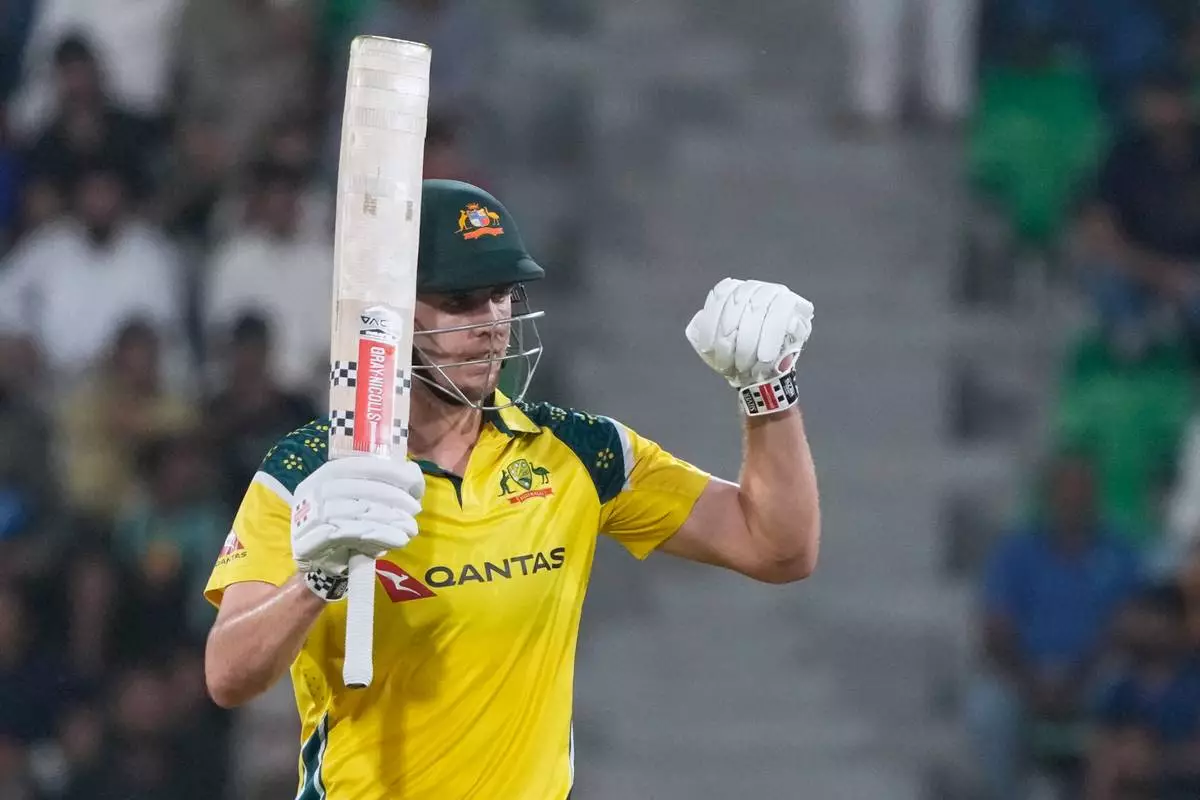
Australia's Cameron Green celebrates after scoring fifty runs during the second one-day international cricket match between Pakistan and Australia, in Lahore, Pakistan, Tuesday, June 2, 2026. (AP Photo/K.M. Chaudary)
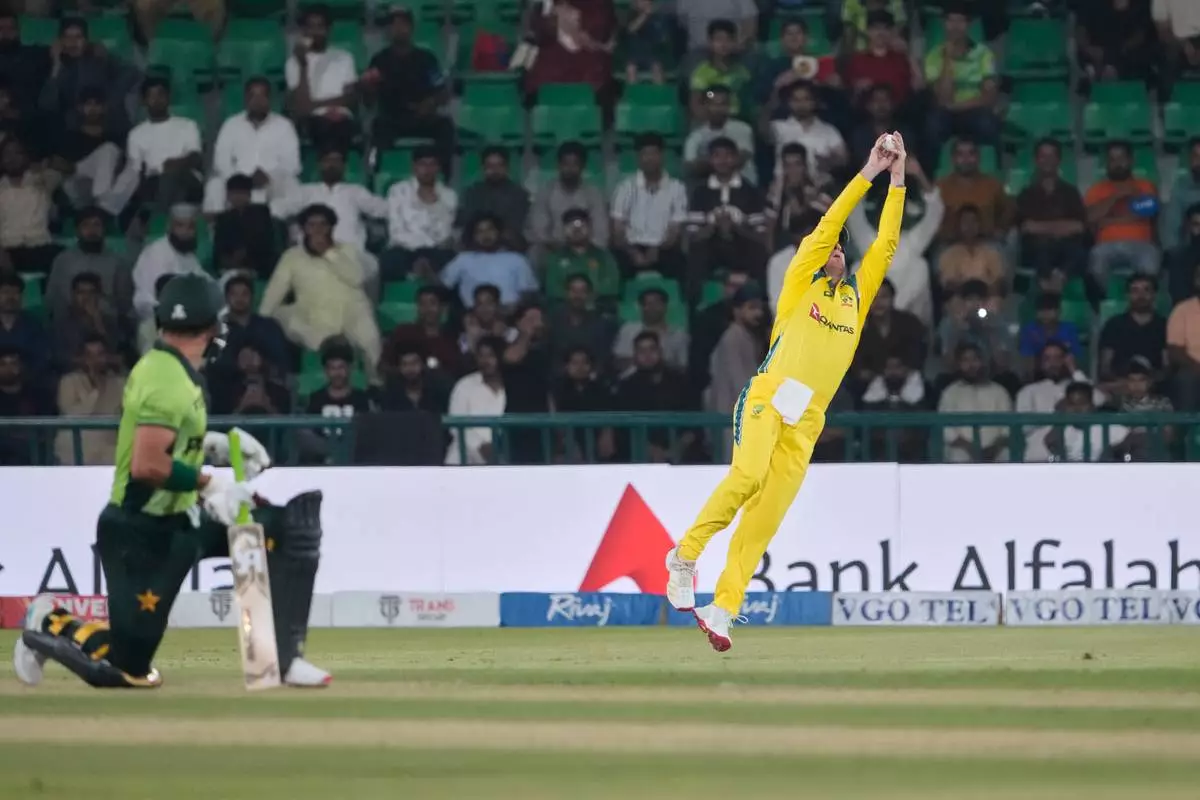
Australia's Adam Zampa, right, jumps to take a catch to dismiss Pakistan's Sahibzada Farhan, left, during the second one-day international cricket match between Pakistan and Australia, in Lahore, Pakistan, Tuesday, June 2, 2026. (AP Photo/K.M. Chaudary)

Australia's Nathan Ellis, left, celebrates after the dismissal of Pakistan's Arafat Minhas, right, during the second one-day international cricket match between Pakistan and Australia, in Lahore, Pakistan, Tuesday, June 2, 2026. (AP Photo/K.M. Chaudary)

NEW DELHI (AP) — Hundreds of supporters of the Cockroach Janata Party, an online joke that drew millions across India, gathered for the first time in the national capital on Saturday, taking the social media movement off screens and into its biggest real-world test yet.
The protest at Jantar Mantar in New Delhi, marks the movement’s first foray into street politics after weeks of dominating social media feeds and news headlines, attracting millions of online followers and widespread support among young Indians.
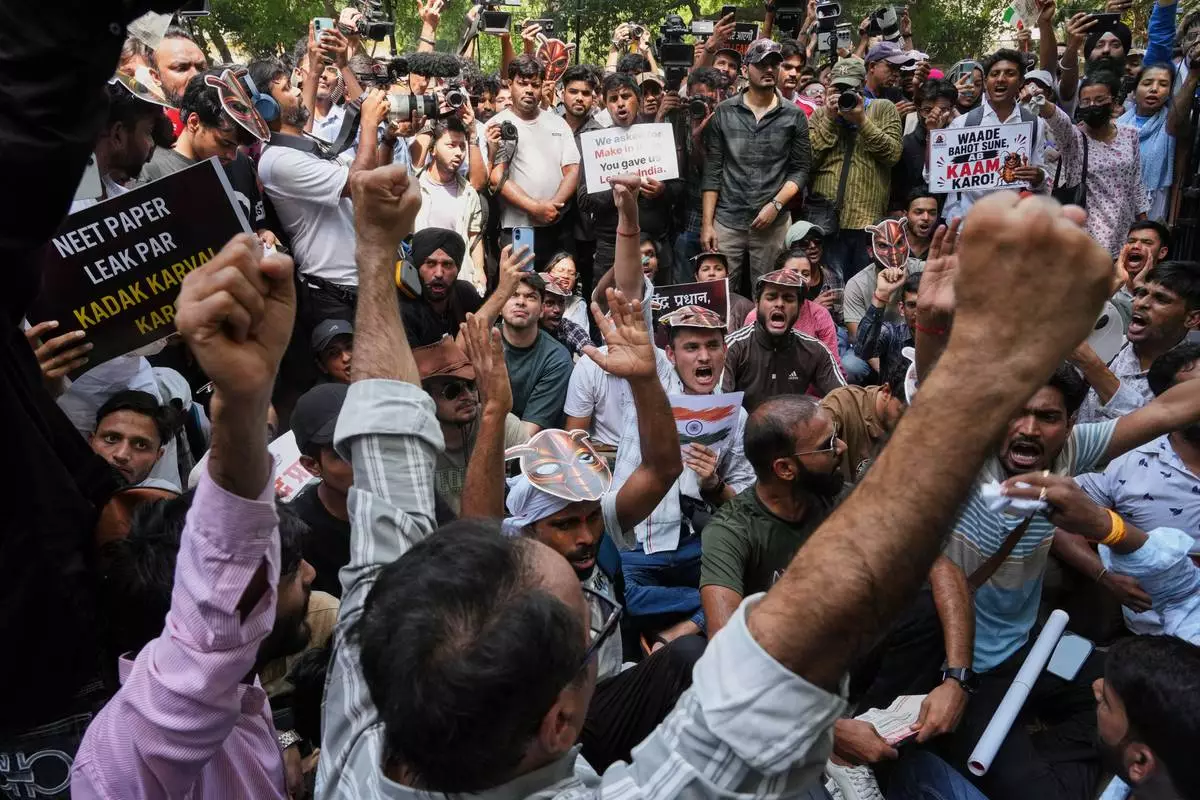
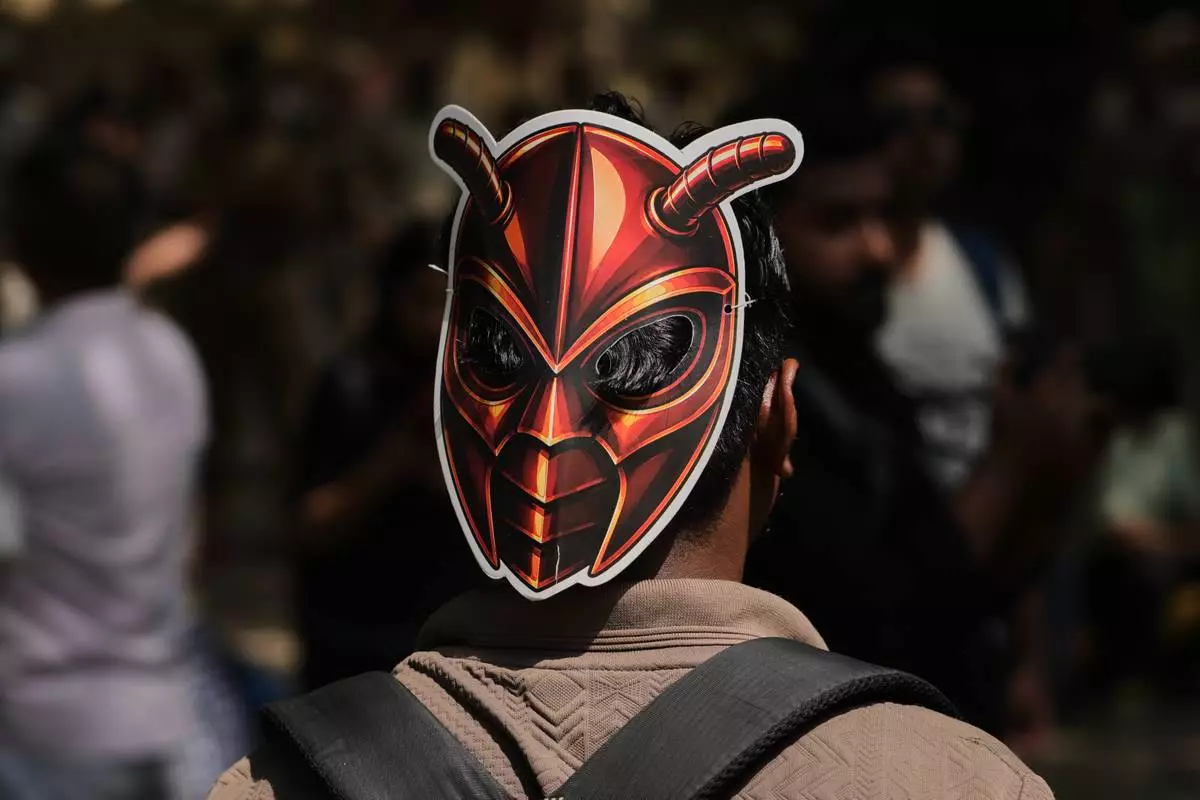
Hundreds of mostly young Indians gathered in the heart of New Delhi’s protest zone near Parliament, some with placards and cockroach masks. How many ultimately would join remained unclear, making the event an early test of whether the movement can channel its online popularity into a broader grassroots support around growing frustration among young Indians over education, jobs and economic prospects.
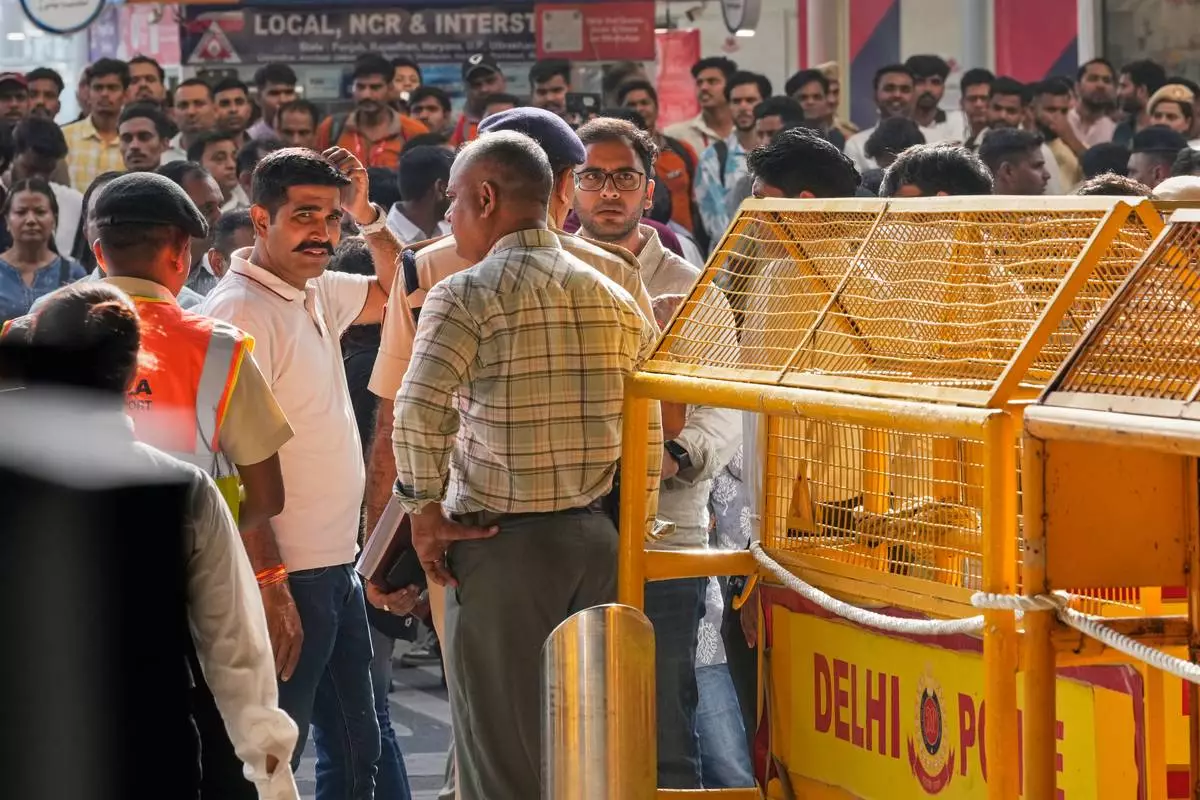
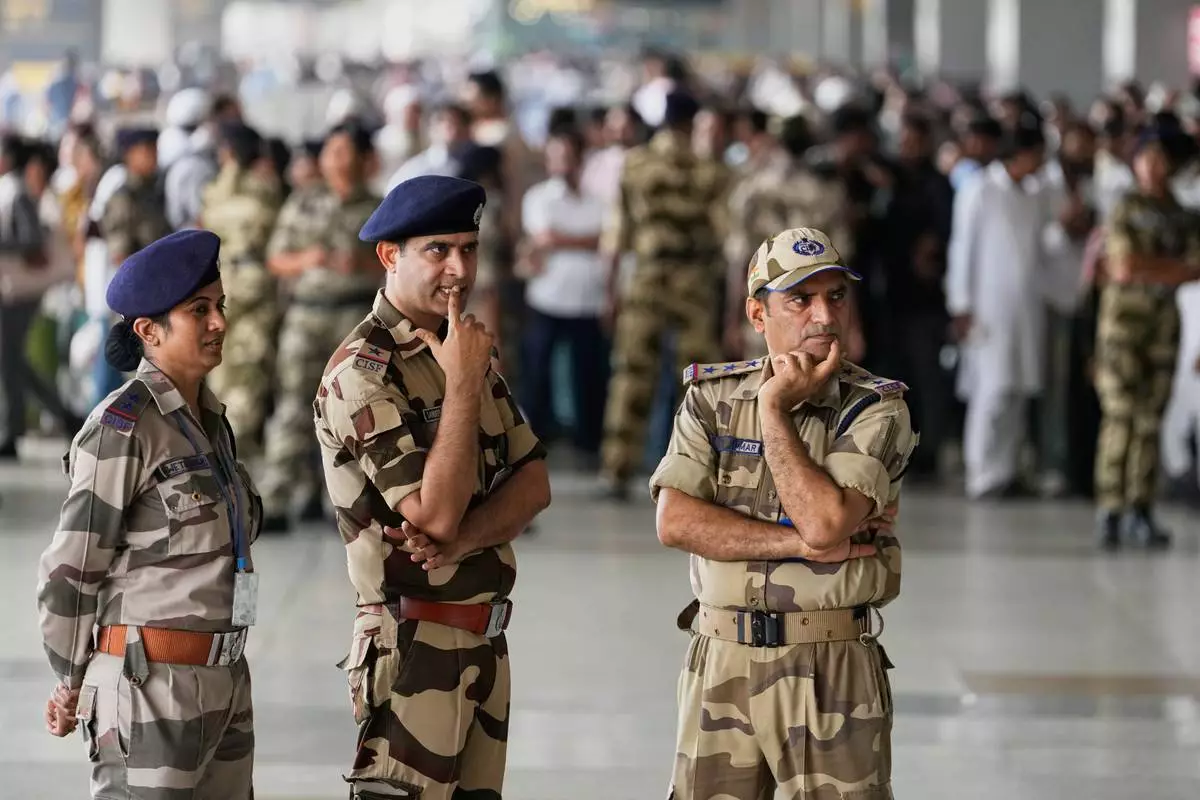
Abhijeet Dipke, founder of the online movement, arrived in the capital from the U.S. on Saturday to participate in the protest. Police laid steel barricades at arrivals at New Delhi's international airport.
Dipke said in a social media post that police granted permission to the Cockroach Janta Party, or CJP, to hold the protest, saying, “Cockroaches gather at Jantar Mantar.”
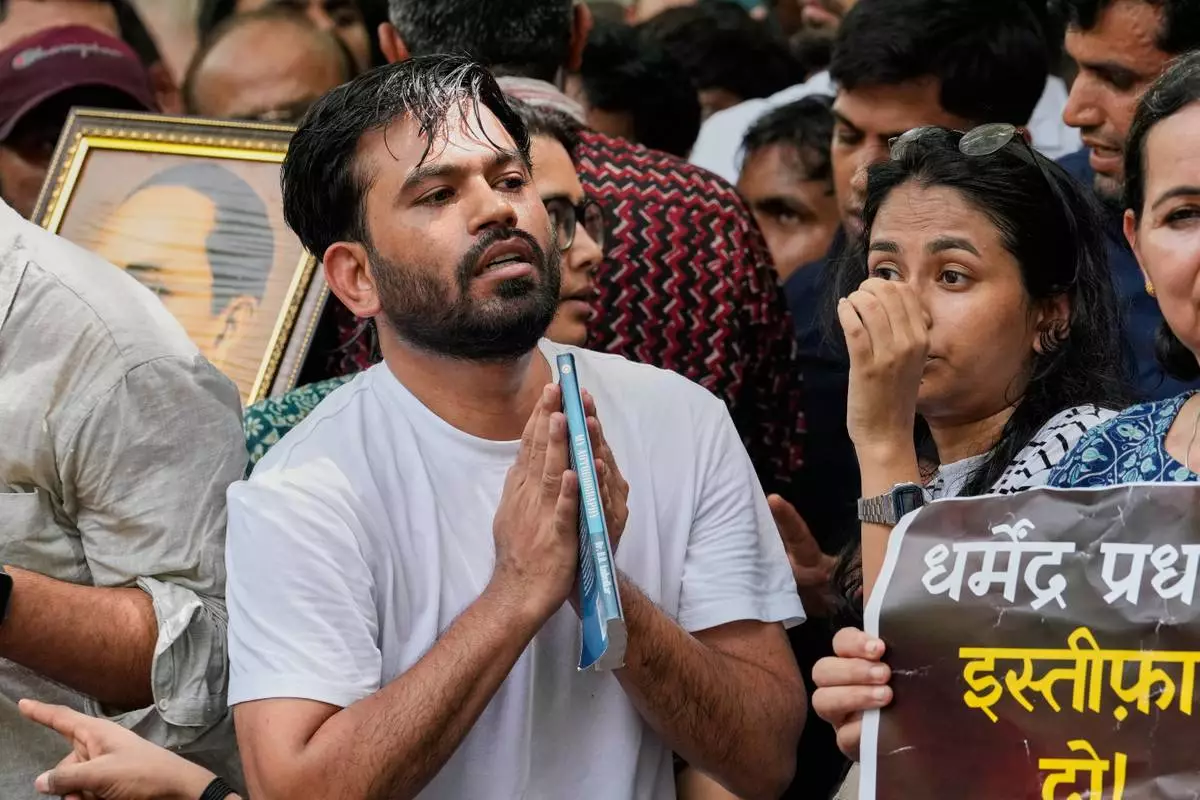
CJP organizers used social media to rally supporters for Saturday’s march, demanding the resignation of Education Minister Dharmendra Pradhan. The demand grew out of an exam irregularity controversy in May that quickly became a broader outlet for frustration over India’s education system and limited job opportunities.
Supporters chanted slogans including, “Cockroaches are coming, Dharmendra Pradhan is going!”
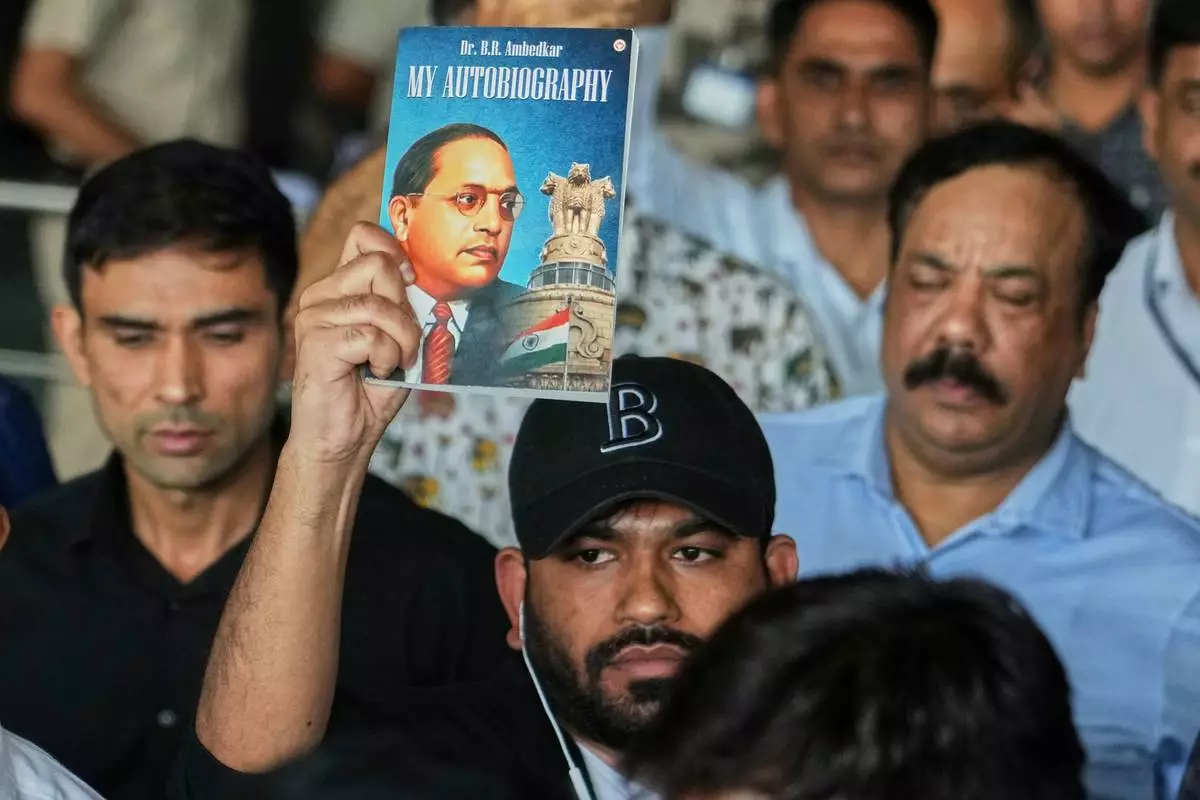
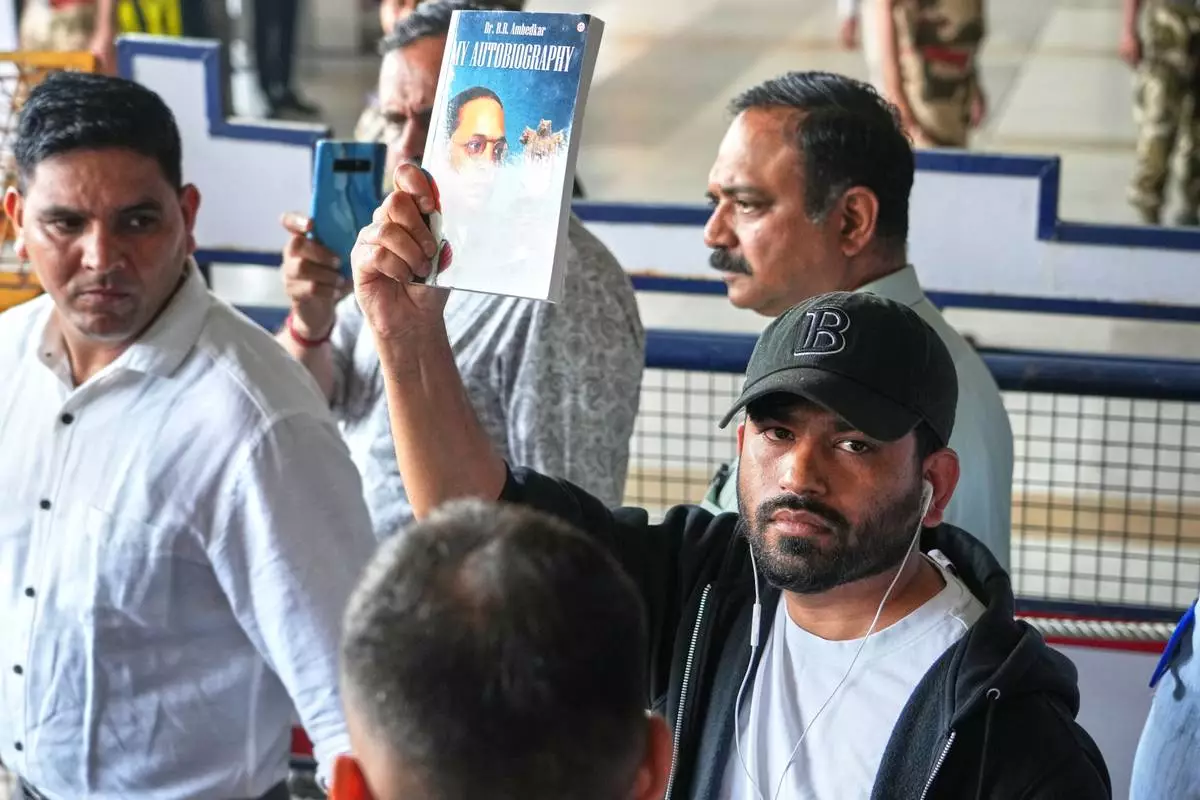
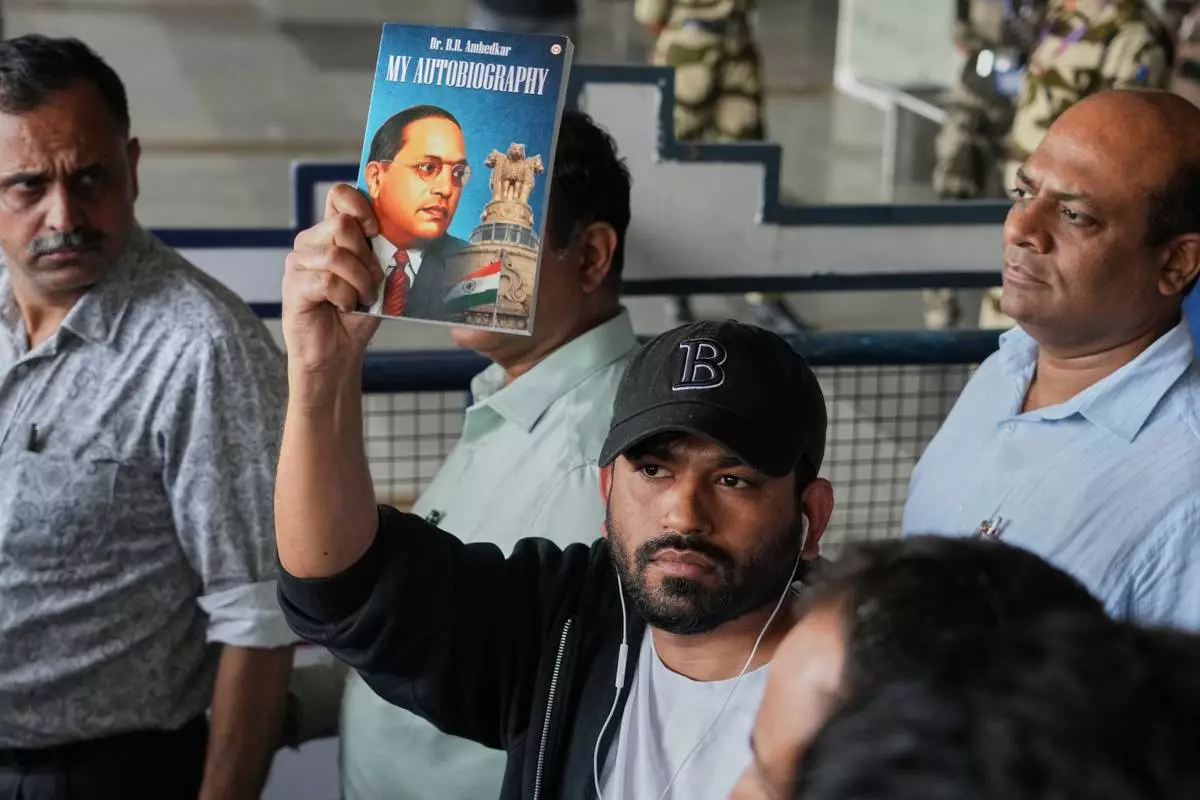
Participants were encouraged to bring India’s national flag and a book, which organizers said symbolized right to education and equal opportunity for all. Organizers also urged demonstrators to remain peaceful and avoid any confrontations with police.
“Time to turn this tiny joke into a revolution,” the official CJP account on X posted Friday.
The CJP emerged only three weeks ago to become an unlikely outlet for discontent among supporters who proudly call themselves “cockroaches.”
India’s Chief Justice Surya Kant likened critics and some unemployed youth to cockroaches during a May hearing, sparking backlash among frustrated young Indians. Dipke, a political communications strategist and Boston University student, used the insult as inspiration for a parody political party. Within a week of launching a website and social media accounts, CJP's Instagram page had amassed more than 15 million followers.
The party has turned the cockroach into a wry badge of endurance and political articulation. Videos and memes lampooning unemployment, corruption and political dysfunction have drawn millions of views online. Parody CJP accounts also have adopted the cockroach as a political symbol and use memes, mock campaign slogans and satirical commentary.
The movement’s tongue-in-cheek messaging blends self-deprecating humor with political criticism. Supporters jokingly describe themselves as unemployed, perpetually online and shut out of meaningful influence. Beneath the humor lies a broader criticism of Prime Minister Narendra Modi's government, as CJP supporters argue that ordinary Indians, particularly young people, have been left with fewer opportunities.
Young people in India make up more than a quarter of the population but face limited job opportunities, rising unemployment and growing disillusionment with traditional politics. Many young voters also are critical of Modi’s ruling Hindu nationalist ruling Bharatiya Janata Party, citing concerns over rising religious polarization, widening inequality and mounting economic pressures.
The movement's skeptics, particularly supporters of Modi’s party, dismiss the phenomenon as little more than a social-media gimmick. They argue the movement’s online popularity may not translate into street mobilization and that its rapid rise is likely fleeting.
The group's rise echoes a similar trend across South Asia of youth movements born out of social media playing a central role in anti-government protests, including uprisings in Sri Lanka and Bangladesh and unrest in Nepal.
The movement still faces significant hurdles. Over the past decade, Indian authorities under Modi have sought to stamp out protests against his government, including demonstrations against a controversial citizenship legislation and yearlong farmers' protests.
Some protest movements also have faced legal action against organizers and activist arrests, which is part of what critics describe as a broader effort by authorities under Modi to suppress dissent.
Associated Press journalist Shonal Ganguly in New Delhi contributed to this report.
Abhijeet Dipke, center, founder of the Cockroach Janta Party gestures as he manages the crowd during a protest demonstration in New Delhi, India, Saturday, June 6, 2026. (AP Photo/Manish Swarup)
Supporters of the Cockroach Janta Party shout slogans against the government during a protest in New Delhi, India, Saturday, June 6, 2026. (AP Photo/Manish Swarup)
A participant wears a cockroach mask as supporters of the Cockroach Janta Party gather for a protest demonstration in New Delhi, India, Saturday, June 6, 2026. (AP Photo/Manish Swarup)
Abhijeet Dipke, center, founder of Cockroach Janta Party shows the autobiography of Bhim Rao Ambedkar as he comes out at Indira Gandhi International airport in New Delhi, India, Saturday, June 6, 2026. (AP Photo/Manish Swarup)
Saurabh Das, center, spokesperson of Cockroach Janta Party waits for the arrival of Abhijeet Dipke, founder of CJP at Indira Gandhi International airport in New Delhi, India, Saturday, June 6, 2026. (AP Photo/Manish Swarup)
Abhijeet Dipke, center, founder of Cockroach Janta Party shows the autobiography of Bhim Rao Ambedkar as he comes out at Indira Gandhi International airport in New Delhi, India, Saturday, June 6, 2026. (AP Photo/Manish Swarup)
Abhijeet Dipke founder of Cockroach Janta Party shows the autobiography of Bhim Rao Ambedkar as he comes out at Indira Gandhi International airport in New Delhi, India, Saturday, June 6, 2026. (AP Photo/Manish Swarup)
Security personnel stand guard before the arrival of Abhijeet Dipke, founder of Cockroach Janta at Indira Gandhi International airport in New Delhi, India, Saturday, June 6, 2026. (AP Photo/Manish Swarup)