The Pinglu Canal, a major project in south China's Guangxi Zhuang Autonomous Region, achieved full water filling and began wet commissioning on Wednesday, laying a solid foundation for its opening to navigation in September.
Stretching some 134 kilometers, the canal starts from Hengzhou City in Guangxi and empties into the Beibu Gulf and is seen as a key initiative on the New International Land-Sea Trade Corridor -- an important trade and logistics passage jointly built by provincial-level regions in western China and the members of the Association of Southeast Asian Nations (ASEAN). It was initiated in August 2022 and is scheduled to start operations by the end of 2026.
Built to Class I inland waterway standards, the canal will be capable of handling 5,000-tonne vessels. Once operational, the canal will facilitate direct shipment of goods from Guangxi, Yunnan, and Guizhou through the Xijiang river system to ports in the Beibu Gulf of Guangxi, rather than routing them through neighboring Guangdong Province. This strategic shift is projected to significantly reduce the shipping distance by approximately 560 kilometers.
The canal has been sectioned for construction and water filling. In March this year, the Nanning section became the first to receive water. In May, the Qingnian Hub became the first among the canal's three shipping hubs to begin wet commissioning.
On Wednesday, the Madao Hub and the Qishi hub began water filling and wet commissioning, marking full water filling of the canal. This phase is expected to last for 30 days at the Madao Hub and about 26 days at the Qishi Hub.
"We are using pipes to fill the canal. By opening valves on the steel pipes, we can channel water from the downstream to the lock chamber. Once the water reaches the required level for testing, we will begin wet commissioning. Currently, this is the most efficient filling method and the most efficient wet commissioning system," said Xu Yunpeng, a designer of the Qishi hub.
The canal project features the construction of waterways, shipping hubs, bridges and supporting facilities, as well as the upgrades of water conservancy facilities.
On April 28, the construction of all 27 bridges crossing the canal were completed; on May 16, the main structures of the three shipping hubs were finished; and on May 28, the main channel excavation of the canal was completed.
Now, overall project progress exceeds 96 percent. Besides wet commissioning, comprehensive tests on equipment and systems are also underway to ensure all parts of the canal meet navigation standards.
"Many key tasks remain to be done after achieving full water filling. We are simultaneously advancing wet commissioning of the lock chamber, underwater riverbed cleaning, smart canal sensor network installation, and supporting projects such as navigation markers and management areas. We plan to spend more than two months on the integrated wet commissioning of the three hubs and conduct full-scale vessel tests in August. All constructors and thousands of machines are working overtime to ensure the Pinglu Canal opens to navigation as scheduled this September," said Pan Jian, chief engineer of the canal project.
Meanwhile, the installation of navigation markers and greening works are in full swing.
"We have entered the peak period for navigation marker installation, as we need to complete all marker installations in June and July. There will be over 700 markers along the canal, including navigational aids and traffic safety signs," said Wang Xianzhang, deputy general manager of Guangxi Pinglu Canal Construction Company.
In addition, native species such as camphor trees and fragrant rosewoods have been planted along the canal to improve both the ecological environment and scenery of the river basin.
"When the greening project is fully completed, it will directly reconnect the forests separated by the canal, ensuring the normal migration and foraging of local species and maintaining the continuity and integrity of the regional ecosystem," said Lu Jiakun, an engineer at the company.
The renovation of water conservancy facilities such as flood embankments along the canal has all been completed, according to the company.
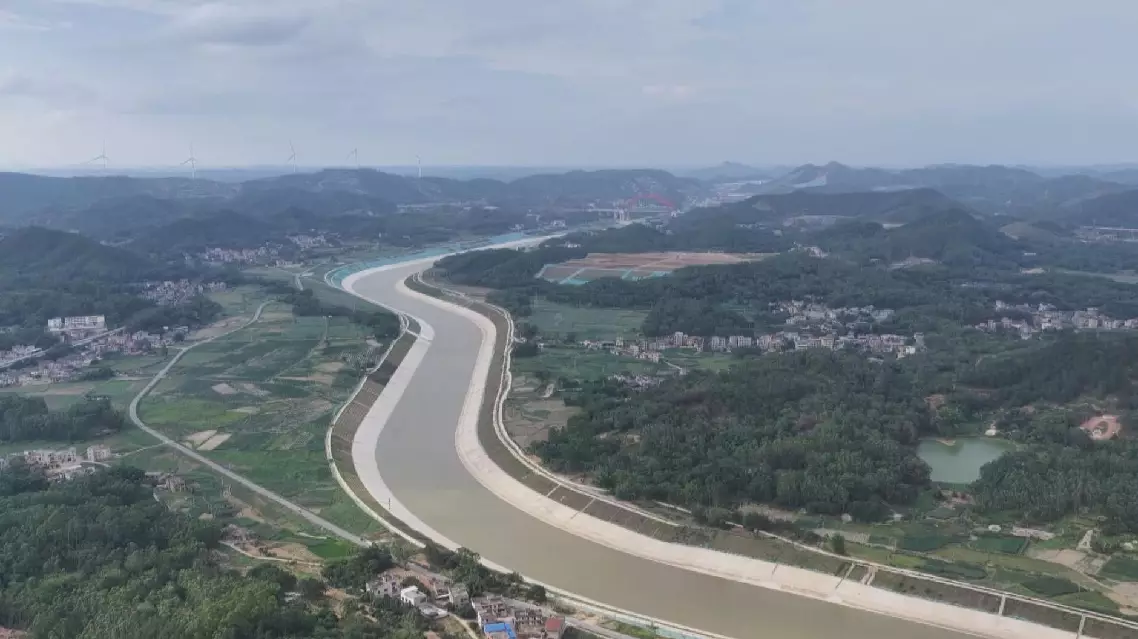
China's Pinglu Canal achieves full water filling
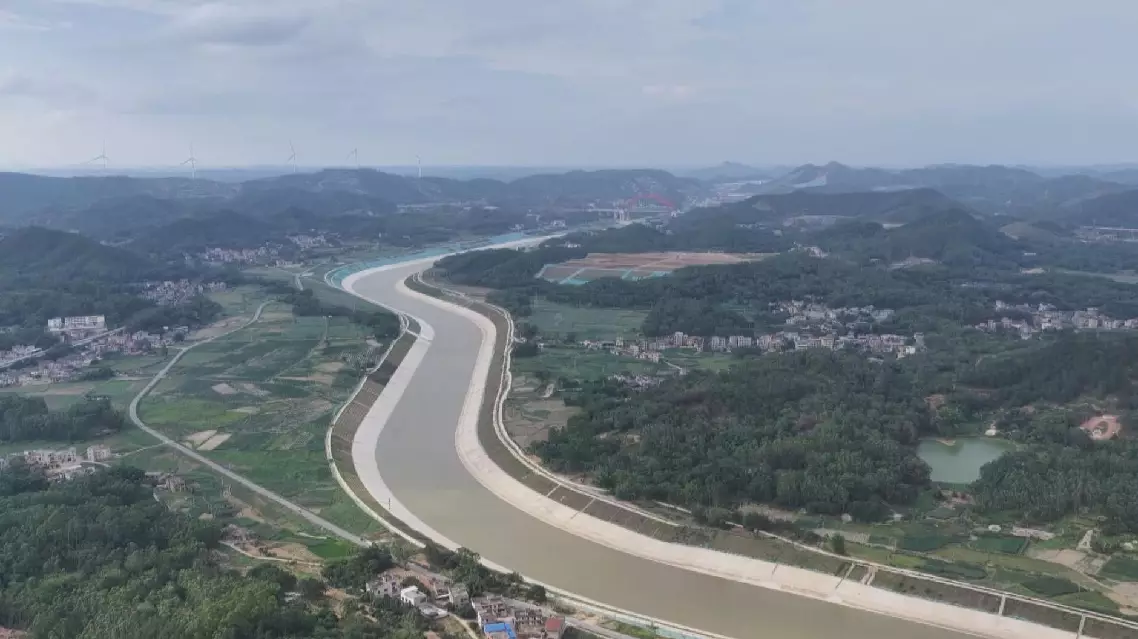
China's Pinglu Canal achieves full water filling