After the Lebanese and Israeli governments announced a conditional ceasefire, the Israeli military carried out rounds of airstrikes in southern Lebanon, as unresolved disagreements between Israel and Hezbollah continued to stall ceasefire efforts.
Lebanon's state-run National News Agency reported on Friday that Israeli airstrikes hit several locations in southern Lebanon, killing at least 13 people and wounding 15 others.
Hezbollah said on the same day that its fighters had attacked Israeli military targets in multiple southern areas and engaged in direct clashes with the Israeli army.
One day earlier, Hezbollah said in another statement that its forces had carried out two waves of explosive drone strikes on gatherings of Israeli troops and military vehicles in the south.
Meanwhile, the Israel Defense Forces (IDF) announced Friday that its troops had killed Abed Harb, the commander of Hezbollah's Engineering Unit, during operations in southern Lebanon last week.
The IDF described Harb as a senior commander within Hezbollah and responsible for multiple attacks against the IDF and vowed to keep taking actions to eliminate threats.
Figures released by the Lebanese Health Ministry on Friday show that since the Lebanon-Israel conflict reignited on March 2, Israeli attacks across Lebanon have killed 3,558 people and wounded 10,870 others.
After the Lebanese government and Israel announced an agreement on a conditional ceasefire, the truce process stalled with the demands of Hezbollah and Israel at odds.
On Wednesday, Lebanon, Israel and the U.S. released a joint statement announcing that the two sides had agreed to a ceasefire, contingent on "a complete cessation of Hezbollah fire and the evacuation of all Hezbollah operatives from the South Litani Sector."
Hezbollah chief Naim Qassem responded the following day, insisting that the ceasefire must apply to all Lebanese territory and that resistance would go on as long as Israeli occupation continued.
He also argued that any agreement making Hezbollah's disarmament a precondition would only serve to weaken Lebanon.
Multiple Israeli media outlets, including the Times of Israel, reported Friday that Prime Minister Benjamin Netanyahu told a security cabinet meeting on Thursday evening that he would not call a vote on the latest iteration of the U.S.-brokered ceasefire with Lebanon until Hezbollah has accepted its terms.
Under Israeli law, a cabinet vote is required before any ceasefire can take effect.
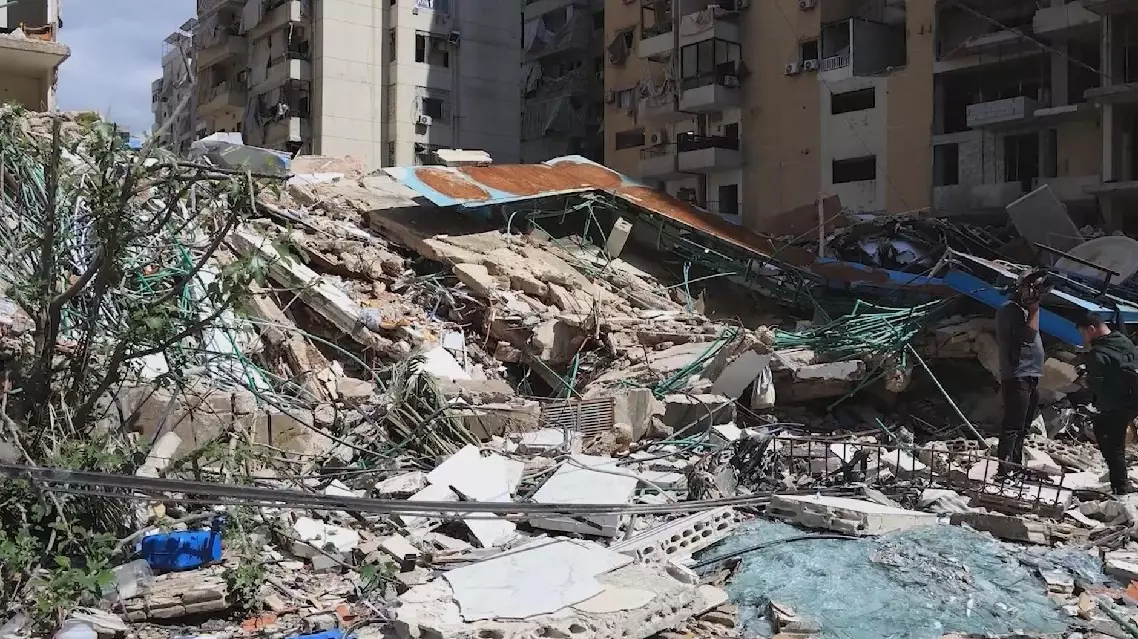
Israeli attacks continue despite conditional ceasefire, peace process stalls