Authorities in Bangkok are turning to China to help solve the Thai capital's air pollution crisis, as they hope to learn from China's experience in improving air quality and deploy advanced monitoring technology to get to the root of the problem.
The smoggy situation has persisted for years with Bangkok and the surrounding northern provinces blanketed in hazardous PM2.5, with the wider health impacts thought to cause thousands of premature deaths annually.
Among those to suffer from the toxic air was 31-year-old Bangkok resident Naruemol Torlum, who was even hospitalized after her condition suddenly deteriorated. Struggling to breathe, she was rushed to emergency care and placed on oxygen.
"My oxygen levels were extremely low because of pollution. I had difficulty breathing. While I was in hospital, I was on oxygen support because I couldn't breathe on my own. I was treated for almost a month," she said.
Her story is becoming increasingly common in Thailand, where PM2.5 pollution remains one of the country's most serious environmental crises. The PM2.5 particles are microscopic but powerful - small enough to penetrate deep into people's lungs and bloodstream, triggering serious health complications.
But despite years of efforts to tackle the problem, the haze keeps returning as pollution levels soar above safe limits, forcing school closures, disrupting daily life, and sending thousands of people to hospitals with related illnesses.
Now, Bangkok authorities are teaming up with Chinese experts in a landmark initiative aimed at tracking pollution with far greater precision, as they hope to follow China's example in rapidly cleaning up the skies.
"Twenty years ago, Beijing had very bad air pollution, right? We could use similar ways to monitoring the air pollution resources in Thailand because we have experience to know how to monitor the data and how to use the data to solve and to get the solution," said Li Sirun, business manager of the Lihe Technology (Hunan) company.
At the heart of the project is a new "super station" equipped with advanced sensors that can analyze not only pollution levels, but also the chemical composition of PM2.5 particles. The technology will help scientists identify whether the emissions are coming from vehicles, factories, or agricultural burning.
Experts say the system could help cut through the haze, giving authorities their clearest picture yet of what's polluting Bangkok's air.
"In terms of experience, we know that China can do it. We've taken some of their technology and experience and adjusted it. In the past, I had to go to the lab for six months to get the data. But a 'super station' can provide the information instantly. That means in the future we'll be able to respond to situations more quickly," said Surat Bualert, head of the Atmospheric Science Research Group at Kasetsart University, the largest university in Thailand.
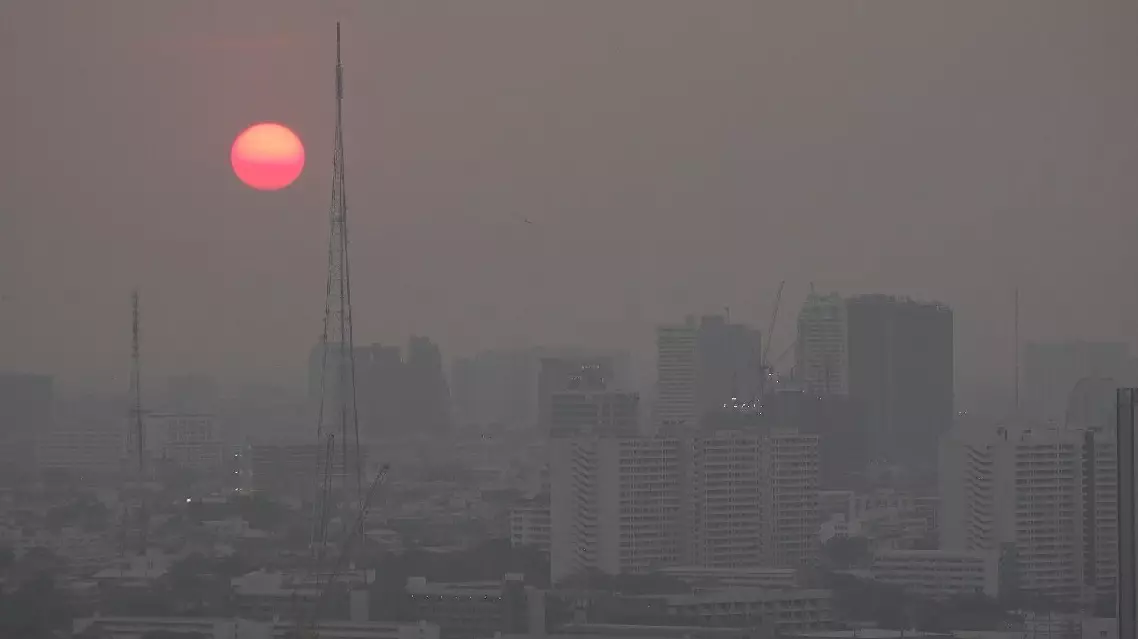
Bangkok works with Chinese experts to address air quality issue