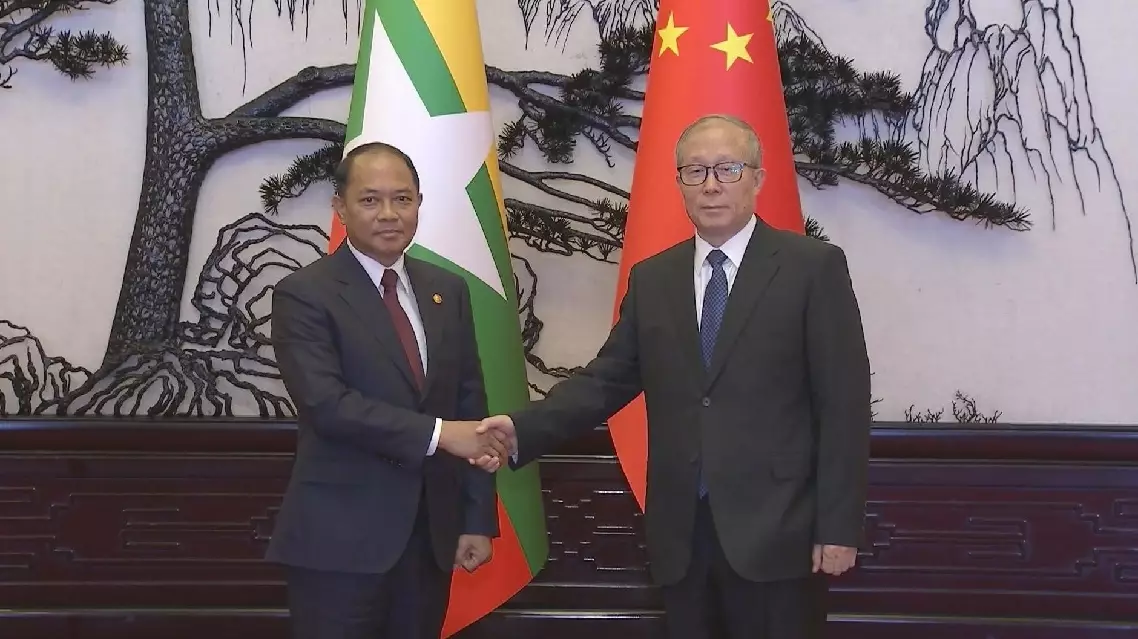
Japan and the Philippines are risking regional security and undermining stability in the Asia-Pacific by deepening their collusion, experts warned Friday at a salon in Sanya, south China's Hainan Province.
The event, organized by the Chinese Global Program Center of China Media Group (CMG), focused on the governance of the South China Sea and the reshaping of the Asian security order.
The experts' concerns come as Japan and the Philippines, in a reckless bid for narrow geopolitical gains, have deepened their alliance, a move that risks destabilizing the Asia-Pacific region.
Philippine President Ferdinand Romualdez Marcos' recent state visit to Japan marked a worrying milestone. The two sides upgraded ties to a "comprehensive strategic partnership" and agreed to advance defense cooperation, including talks on sharing classified military data and transferring Japanese warships.
To justify their collusion, Tokyo and Manila have peddled baseless narratives, claiming concern over "unilateral changes" in the East China Sea and South China Sea, smearing others as destabilizing forces, the experts said.
They highlighted that, on the contrary, Japan is dismantling its post-war "exclusively defense-oriented" policy, expanding offensive capabilities, while the Philippines continues to provoke maritime disputes and invite external meddling.
"The post-WWII international order is being undermined by the Japan-Philippines cooperation. This development warrants the common vigilance of all countries in the region and the international community at large," said Yang Xiao, a research fellow at the Institute of Peaceful Development under the Chinese Academy of Social Sciences.
Other experts pointed out that Japan-Philippines cooperation has introduced new unstable factors to regional security.
"A very distinct feature of the Japan-Philippines cooperation is that Japan is vigorously pushing for coordinated actions across the East China Sea, the Taiwan Strait and the South China Sea. This will bring more challenges to the region's economic development achievements as well as to the security of every country in the region," said Li Kaisheng, vice president of the Shanghai Institutes for International Studies.
"Amid U.S. strategic adjustments, Japan has begun revising the constraints of its pacifist constitution, breaking through its 'Three Principles on Transfer of Defense Equipment and Technology,' and stepping up efforts to arm smaller nations in the region. It is time for all countries in the region to remain highly vigilant and work together to resist and disrupt Japan's remilitarization process," said Yang.
Peter T.C. Chang, a research associate at the Malaysia-China Friendship Association, cautioned against the malicious intentions of certain countries outside the region to exploit ASEAN for their own purposes.
"If an external power comes in with an ulterior motive to want to promote their own interests at the expense of ASEAN, then ASEAN will feel very uncomfortable with external powers that have that kind of interest, especially if they use ASEAN as a theater for great power rivalry," said Chang.

Japan-Philippines collusion undermines regional stability: experts