Skip to Content Facebook Feature Image

China on track to become world's biggest travel economy: WTTC CEO

China

China

China

China on track to become world's biggest travel economy: WTTC CEO

2026-06-05 21:46 Last Updated At:06-07 16:11

China is on track to become the world's largest travel economy, said Gloria Guevara, president and CEO of the World Travel and Tourism Council (WTTC), in a recent interview with the China Global Television Network.

The latest data from the WTTC shows that China's tourism sector is going through positive momentum, particularly marked by significant increase in inbound travel.

Guevara highlighted that China is outpacing the global average growth and leading the Asia Pacific region in the tourism sector.

"Travel and tourism grew four percent in average and China passed the 9.9 percent, which is more than double. The growth is significant. As I say, from our numbers it is the best performer in the world. It is growing at a different capacity. And also, the best performer region is the Asia Pacific, and China is actually helping the Asia Pacific to be the best performer in the world," she said.

The WTTC head applauded China's policy support and other key drivers behind its tourism boom, saying China is even "ahead of the game" in some aspects. "I think some of these policies are aligned with international policies, but some of them are ahead of the game. Let me give you one example -- the payment policies. I travel here with my family last summer. It was so easy to register as an example in Alipay and be able to pay for everything everywhere. I haven't seen that in other market. It's seamless, also, the experience of the trains, the airports, the policies that they have implemented and the use of technology I think is also helping China not only to catch up, but to leaf frog," she said.

Underlining the importance of a public-private collaboration in tourism development, Guevara said her organization predicts China would be in a leading spot in just a few years following the current trajectory.

"The public-private partnership is fundamental for the growth of travel and tourism. While the private sector creates a lot of the jobs and provides investments, that wouldn't be possible without the support from the governments. That's why we are forecasting that if China continues with the policies that they have implemented, and with this growth that we are forecasting in two, three years, China is going to be the biggest in the world," she said.

China on track to become world's biggest travel economy: WTTC CEO

China on track to become world's biggest travel economy: WTTC CEO

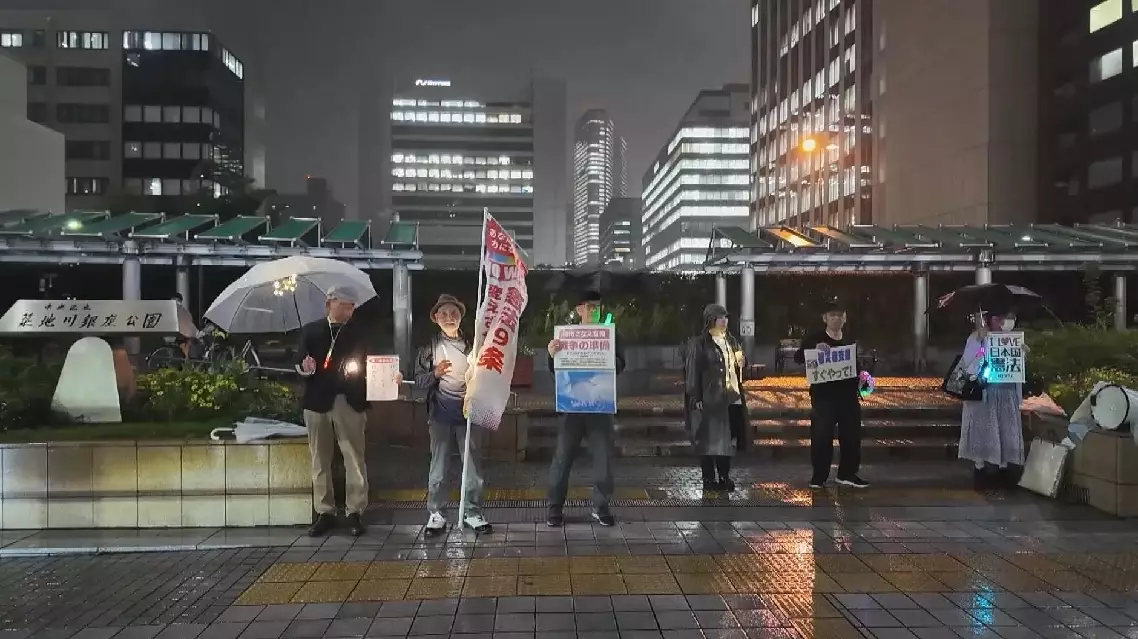
A group of Japanese protesters rallied on Wednesday near Higashi-ginza Station in Tokyo to oppose the Japanese government's attempts to amend the pacifist constitution and its moves to expand military capabilities and revise the Three Non-Nuclear Principles.

The Three Non-Nuclear Principles, not possessing, not producing and not allowing introduction of nuclear weapons into Japanese territory, were first declared in the Diet, Japan's parliament, by then Japanese Prime Minister Eisaku Sato in 1967 and viewed as a national credo.

The national security strategy, one of the three documents approved by the Japanese Cabinet in 2022, states, "The basic policy of adhering to the Three Non-Nuclear Principles will remain unchanged in the future."

The demonstrators expressed concern that Japanese Defense Minister Shinjiro Koizumi had repeatedly made remarks in public regarding the revision of the Three Non-Nuclear Principles.

They voiced strong opposition to Japan's consideration of introducing nuclear submarines and other related moves.

"The Japanese people will absolutely not accept any revision of the Three Non-Nuclear Principles. In various public opinion polls in Japan, an overwhelming majority of people share this view. Shinjiro Koizumi's statements on issues such as nuclear submarines and the government's consideration of revising the Three Non-Nuclear Principles are both vastly at odds with public opinion. We must not let our guard down. We must raise our voices in even stronger opposition," said a rally participant.

"Japan is a country that has suffered nuclear attacks. So, we absolutely cannot allow nuclear weapons into Japan. I believe this is the most fundamental principle. I am absolutely opposed to it," said another protester.

"I don't want Japan to attack other countries. Nor do I want Japan to become a victim or perpetrator of war. So, I still hope we can stop all of this. I hope they won't do this. I hope the Three Non-Nuclear Principles won't be revised," said the third protester.

Seventy-six percent of people in Japan support upholding the country's Three Non-Nuclear Principles, Kyodo News reported in early August, citing a nationwide opinion poll.

Japanese citizens protest against altering Three Non-Nuclear Principles

Japanese citizens protest against altering Three Non-Nuclear Principles

Recommended Articles