A combination of geopolitical tensions, supply chain anxiety and front-loaded holiday demand is driving international shipping costs sharply higher, with freight rates across major trade lanes climbing at an unprecedented pace.
The container shipping index for European routes has surged more than 50 percent since late April, while leading carriers including Maersk and CMA CGM have issued consecutive rate adjustment notices. Space on vessels has become so scarce that shippers are struggling to secure bookings.
Xu Cheng, general manager of an international freight forwarding company in Suzhou City of east China's Jiangsu Province, said the recent price hikes -- spanning European, South American and Southeast Asian routes -- are remarkable for both their speed and magnitude.
The standard rate for a Twenty-foot Equivalent Unit on the Italy-Mediterranean route has hit 5,000 U.S. dollars. It used to be 3,000 to 4,000 dollars per container. European routes have seen the rate on it rise by more than 1,000 U.S. dollars per container, and U.S. routes have also seen it go up by over 1,000 U.S. dollars per container, a 1,000-dollar increase in just one month, Xu noted.
Xu explained that tight vessel capacity is the primary driver behind the price surge. With June and July marking the traditional peak season for ocean freight, slots on nearly every major route are in short supply, with some lanes seeing panic scrambles for available space.
"We are getting a lot of phone calls from clients inquiring about bookings, but there simply no more space available, and we always manage to find some. We now advise clients to book three weeks in advance instead of the usual one week, and some are even giving us their plans for next month at the end of this month," Xu said.
The sustained rise in shipping costs, compounded by global instability, has also pulled this year's peak shipping season forward significantly.
In Yiwu City, east China's Zhejiang Province, overseas buyers can be seen everywhere placing orders to stock up on holiday merchandise for the second half of the year.
At multiple logistics parks near the Yiwu Port, piles of export goods are neatly stacked, and loading crews are working non-stop to pack containers. Despite the relentless climb in ocean freight costs, robust overseas orders continue to secure the good trend of local foreign trade outlook.
"At present, our volume on U.S. and European routes has grown by 30 to 40 percent compared with the same period of last year. There is particularly strong demand for holiday gifts. For July, August and September, the volumes will likely rise another 40 percent over the current levels. So this year's foreign trade situation is quite positive," said Zeng Xibao, deputy director of Zhejiang Jindun Logistics Co., Ltd.
Industry insiders attributed the current round of freight rate increases mainly to geopolitical disruptions in the Middle East pushing up shipping costs, the global trend toward finer division of labor and geopolitical risk hedging driving sustained restocking demand, and the concentrated release of overseas pre-holiday stocking as Europe and the United States begin their second-half-of-the-year consumption season earlier than usual.
The surge in cargo volumes has rapidly tightened the supply-demand balance for vessel space. However, the trajectory of shipping prices for the second half of the year remains uncertain.
"The price increases during the traditionally slack period since this year's Spring Festival were driven more by fuel cost pressures. But what we are seeing now -- rate hikes across all routes -- is actually attributable to the global safety stock replenishment. When the entire global supply chain becomes unstable, inventory serves as kind of insurance for industrial production. So for the second half of the year, if the overall situation escalates further, concerns about supply chain security will rise to another high level, and restocking demand will continue," said Yan Hai, chief analyst on transportation and logistics, Shenwan Hongyuan Securities.
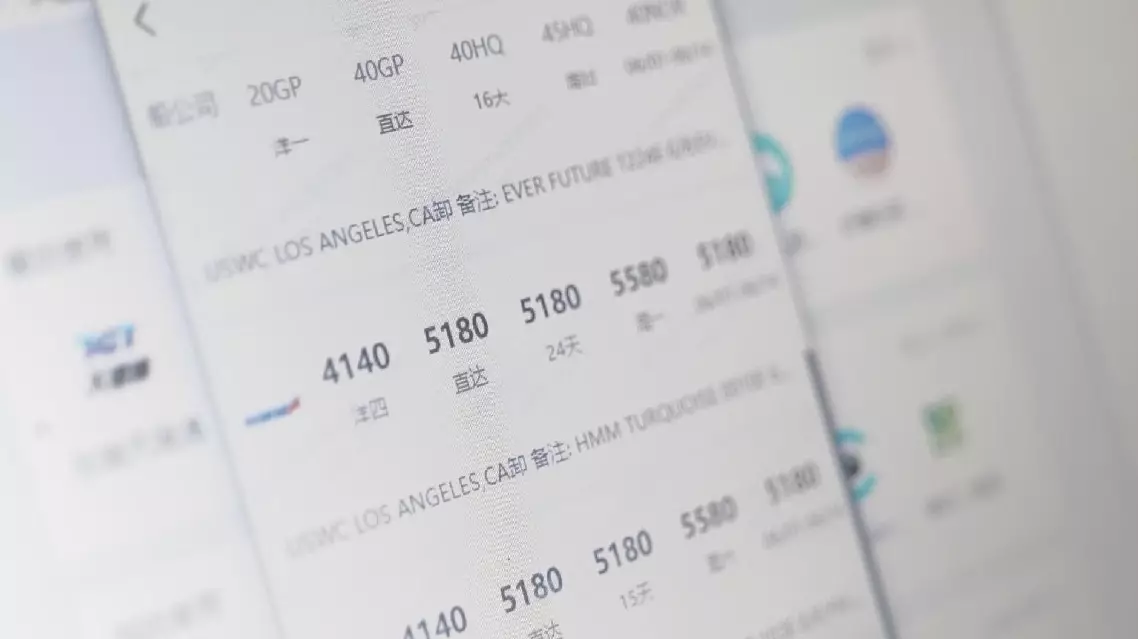
Global shipping costs surge amid tight capacity