The House approved a war powers resolution Wednesday that would halt the U.S. military action against Iran, defying President Donald Trump as a handful of Republicans joined with Democrats to seek to end the three-month-long war. Opposition to the war has only grown as the conflict drags on and as Trump struggles to negotiate a quick resolution.
The resolution from the House does not immediately stop the war. It now goes to the Senate, where four Republican senators last month joined Democrats in advancing a similar measure to curtail the U.S. campaign against Iran. The Senate has yet to take a final vote.
Trump, in an interview released Wednesday, confirmed an earlier report that he criticized Israeli Prime Minister Benjamin Netanyahu as “crazy," and said he's “a little bit perturbed” that Israel’s fighting with Hezbollah in Lebanon is holding back peace talks with Iran.
The Trump administration is sticking with a deal to permanently drop tax claims against Trump, an extraordinary flex of executive power that could help shield the president from further examination of his finances and legal conduct, even as it scraps a $1.8 billion fund to compensate the Republican president's allies amid a fierce political backlash.
Trump's endorsements helped end the political careers of two senators and a congressman deemed insufficiently loyal, but he couldn't lift Rep. Randy Feenstra to victory in Iowa’s Republican primary, setting up a Democratic opportunity to pick up a governorship. See other AP coverage of Tuesday's primary results here.
The Latest:
Israel and Lebanon agreed to renew their fragile ceasefire and create a number of “pilot” security zones inside Lebanon from which Hezbollah militants would be banned.
In a joint statement released after a fourth round of U.S.-mediated talks at the State Department, the two sides said the ceasefire “is contingent on a complete cessation of Hezbollah fire and the evacuation of all Hezbollah operatives” from areas south of the Litani River. It was not immediately clear how the security zones would be established but the agreement calls for the Lebanese army to take full control of those areas.
“These steps will enable progress towards a comprehensive peace and security agreement,” the statement said. “All countries reaffirmed that the future of the relationship between Israel and Lebanon must be decided by the two sovereign governments. They rejected any attempt, by any state or non-state actor, to hold Lebanon’s future hostage.”
The latter is a reference to Iran, which supports Hezbollah and has insisted that Israeli attacks on Lebanon be halted as part of a tentative agreement with the U.S. to end the conflict with Iran. Hezbollah is not part of the Israel-Lebanon talks.
The president’s top military adviser, Gen. Dan Caine, visited the capital of Venezuela on Wednesday, his office said in a press release.
“Gen. Caine participated in bilateral discussions with senior interim government leaders and U.S. Embassy leadership and staff, and visited the Embassy’s Marine Security Augmentation Unit,” the statement said. It also noted that this was Caine’s first official visit to the country.
The visit comes less than two weeks after the head of U.S. military operations in Latin America, Marine Gen. Francis Donovan, also visited Caracas as part of a rapid response exercise involving Marines and military aircraft.
Venezuela’s acting President, Delcy Rodríguez, is currently on an official state trip in India.
The House approved a war powers resolution that would halt the U.S. military action against Iran, defying the president as a handful of Republicans joined with Democrats to end the three-month-long war that has reordered politics at home and abroad.
House Speaker Mike Johnson had tried to prevent an outcome that would show the mounting opposition to the war, abruptly shutting down floor action two weeks ago when the war powers resolution was on the verge of approval. But displeasure has only grown as the conflict drags on and as Trump struggles to negotiate a quick resolution.
The roll call Wednesday was 215-208, and cheers erupted in the House chamber.
“This reckless and costly war of choice needs to end today,” House Democratic Leader Hakeem Jeffries of New York said earlier in the week.
The secretary of state faced a litany of questions over nearly a dozen hours of hearings combined about the Trump administration’s tentacles around the war and bipartisan concern over the status of the Iran war and negotiations.
It was the first time Rubio had to face lawmakers since the U.S. first issued strikes on Iran and he spent large portions of his testimony defending the rationale and execution of the military operation.
Democrats and Republicans, on both sides of Capitol Hill, peppered Rubio about the Trump administration’s decision to extend its pause on sanctions on Russian oil shipments to ease shortages from the Iran war.
“President Trump was right to impose those sanctions last fall, but the waivers provide Moscow with badly needed revenue, and, I think, make little difference to American consumers in the price of gas,” GOP Sen. Jerry Moran of Kansas said during a hearing.
Rubio defended the decision, saying these are short-term waivers and “will not be permanent.”
In April, the Treasury Department extended the so-called general license for Russian oil that had been loaded by March 11. The extensions have underscored how the fallout from the Iran war has boosted Moscow’s ability to profit from its energy exports, which had been restrained since the invasion of Ukraine.
The president directed a reporter to read Trump’s own past words on communism back to him, then scoffed at efforts in New York and other large, blue cities to expand social services.
“I’d be the greatest in the world. Nobody would be as good as me. I’d give away everything. I could be the greatest,” Trump said, commenting on what he’d be like if he were to undertake similar social giveaways.
“I would sell them: You’re going to get free rent. You’re going to get free houses. You’re going to get free food. You’re going to get free everything,” he said. “But, eventually, that ends and it leads to death, destruction and squalor 100% of the time.”
Trump also said of New York’s democratic socialist mayor, Zohran Mamdani, “I would be better than him” at expanding free services, but “I had to sell free enterprise.”
“Free enterprise is tougher to sell,” Trump said.
In his first public comments since his Justice Department said a controversial $1.8 billion anti-weaponization fund would not go forward, the president equivocated.
“I’d have to ask the lawyers,” Trump said when asked directly whether the settlement fund was dead or merely on hold. “I don’t know.”
He spent much of his response to reporters defending the fund, which he called a “beautiful thing.”
His comments came just after Senate Republicans voted to advance an immigration funding bill, which they did only after testimony from acting Attorney General Todd Blanche confirmed the fund was dead.
“We’ve been hitting them pretty hard,” Trump said when asked by reporters on Wednesday if the ceasefire remains in place amid back-and-forth attacks by the two sides. He added, “It’s a different part of the world. You know, I’d say in that part of the world, a ceasefire is when you’re shooting in a more moderate manner.”
Trump also insisted that ongoing negotiations to extend the temporary ceasefire and open new nuclear talks with Tehran continue to progress.
He suggested that it’s possible an agreement could be reached “over the weekend.” Trump, however, has been predicting for weeks that the two sides are on the cusp of reaching a deal.
The president on Wednesday signed an order that was described as an attempt to make it easier to fire or discipline federal workers.
Introducing the order at an Oval Office event, White House staff secretary Will Scharf said existing personnel rules make it difficult to discipline or promote workers in policymaking roles. He said the goal is to make the federal workforce more accountable.
James Sherk of the Domestic Policy Council added that it has been “almost impossible” to fire federal employees even in cases of serious misconduct.
“What this does is basically treat those employees like private sector workers that are being hired on the basis of merit and competence,” Sherk said. “But if they’re messing up, then they can be removed quickly.”
After hastily bringing reporters to the Oval Office, the president signed an executive action that will empower customs officials to more carefully track what importers bring across the U.S.-Mexico border.
His order is meant to improve the tracking of goods imported into the U.S. for tariff purposes. Federal authorities said it would also allow them to improve holding importing firms accountable, who have long used shell companies to avoid taxes.
Asked why it’s important to increase normalization between Israel and Arab countries, Rubio laid out the benefits that it would provide both sides, but provided a sober outlook on the unlikelihood, given the ongoing hostilities in the region.
“We do want to expand the Abraham Accords obviously, but it’s difficult to do at this moment,” Rubio told senators Wednesday afternoon. “But we’re laying the groundwork for it. It’ll be a top priority of this administration.”
His testimony strayed from Trump’s recent comments, including last week, when the president said that signing on to the Abraham Accords “should be mandatory” as part of a U.S.-Iran deal being negotiated right now.
The accords were a series of diplomatic and commercial agreements forged with U.S. influence between Israel and the United Arab Emirates, Bahrain, Sudan and Morocco in 2020, during Trump’s first term.
Shortly before 4 p.m. Wednesday, reporters were suddenly summoned to the Oval Office.
The reason was ostensibly to watch the president sign executive orders. But Trump kicked off the event by talking up the reflecting pool outside the Lincoln Memorial, which he announced earlier would get its final coat of protection today.
“It’ll last for 50 to 100 years before you have to do anything, very strong, powerful substance that we used,” Trump told reporters. At one point, he held up a poster that said: “Our Pool is Bigger than Skyscrapers.”
After that opener, Trump moved to the topic at hand: a customs-related executive order.
Since Trump urged Republicans to redraw U.S. House districts last year, officials in eight states have enacted new districts that could help Republicans win up to 16 additional seats in the November elections.
Democrats suffered setbacks in their counterattacks. But they could gain up to six additional seats from new districts in two states.
The aggressive mid-decade redistricting carries high stakes, because Democrats need to gain just a few seats in the midterms to win control of the House. It remains to be seen whether the redistricting will help Republicans hold on to their slim majority.
The U.S. military is reducing the number of forces it would contribute to NATO during an emergency, a change that’s been expected from the Trump administration as it pushes European allies to shoulder more of the continent’s defense burden.
U.S. European Command on Wednesday publicly announced changes to the NATO Force Model, a contingency plan for European defense in the event of serious security concerns, such as increased Russian aggression. The announcement lacks specifics, but said allies could step up with planes and ships as the U.S. reserves more of its own forces to thwart potential threats in other parts of the world.
U.S. and British officials said the change was already announced in classified meetings to NATO allies in recent weeks.
As the secretary of state entered his fourth and last congressional hearing, a young demonstrator who said she was 18 years old yelled that the foreign policy actions of the Trump administration were being taken “against the will of the American people” before being removed from the Senate hearing room.
She yelled, “Free Palestine,” as the door was closing.
It was the first interruption of the day but part of a series of protests against Rubio and the administration in the past two days, specifically against U.S. support for Israel and the impacts of that on war-torn Gaza.
The independent U.N. human rights investigators urged the Trump administration in a statement Wednesday to immediately halt all threats against Cuba’s sovereignty and revoke sanctions “adopted contrary to international law.”
The experts said efforts to change Cuba’s “constitutional order” through threats and coercion “echo colonial-era practices.”
They said Trump’s declaration of a “Donroe Doctrine” in March, asserting U.S. predominance in the Western hemisphere, has raised “significant alarm.” And they said his statements about the “honor of taking Cuba” reflect “a deeply concerning strategy of coercion” against the country.
The experts on democracy, the negative impact of sanctions and counterterrorism, also pointed to the longstanding U.S. embargo and recent fuel blockade of Cuba.
They called the recent U.S. indictment of former Cuban president Raúl Castro “a misuse of domestic judicial proceedings” and “an instrument of coercive foreign policy,” and the announced deployment of the USS Nimitz to the southern Caribbean another element of “unlawful coercion.”
The secretary of state has finished nearly four hours of testimony before the House Foreign Affairs Committee, where he received praise from Republicans and sparred with Democrats over the Iran war, President Donald Trump’s relationship with NATO and U.S. aid to Africa.
The hearing before lawmakers on Capitol Hill was the third of four in two days for the former Republican senator from Florida. The purpose of each hearing has been to discuss the State Department’s budget. But they’ve often veered into discussions about the Trump administration’s dealings with countries around the world.
Republicans and Democrats have raised concerns about the reported details of a deal between Tehran and Washington. And on Wednesday, Rep. Andy Barr, a Republican from Kentucky, questioned whether the deal was similar to the one former President Barack Obama made in 2015.
Rubio went on to outline the various issues being discussed and how they differ from the previous nuclear deal, which Trump withdrew from in 2018.
“Ultimately, any deal we do will be a good deal, or there won’t be a deal, and it’ll be better than JCPOA,” Rubio said, referring to the Joint Comprehensive Plan of Action.
That agreement, which included Germany, France and Britain, had lifted most U.S. and international economic sanctions against Iran for restrictions on its nuclear program, making it impossible to produce a bomb and establishing rigorous inspections.
Secretary of State Marco Rubio said the Trump administration has no intention of abandoning NATO but won’t back down on demanding significant reforms.
Rubio told lawmakers Wednesday that the president plans to attend the annual NATO leaders’ summit in Turkey next month, at which he will make the U.S. case for changes and again call for allies to increase their defense spending. The summit is to be held in Ankara on July 7-8.
“The president himself will be attending the next NATO, a meeting of heads of state where all of these points will be made clear. We’re still in NATO, but NATO needs significant changes, and the president has made that clear,” Rubio said.
Trump has been particularly irked by some NATO countries, mainly Spain, denying the use of airbases for the war against Iran.
After weeks of discussions, the Senate has officially dropped a $1 billion proposal for White House security and Trump’s ballroom project.
The Senate is set to begin voting on legislation to fund immigration enforcement agencies on Wednesday afternoon, and the bill’s final text, released just hours before the vote, does not include the security funding.
Republicans had already indicated they would drop the security proposal after backlash from within their own caucus and criticism from Democrats.
Rubio made the “for now” statement when Democratic Rep. Sarah McBride of Delaware asked Rubio about Trump’s calls for the U.S. to own the semiautonomous territory of Denmark to better defend the U.S.
Rubio said talks about the use of Greenland for collective defense are “in a good place,” though he declined to publicly discuss the details.
McBride had asked Rubio if he shares Trump’s belief that the U.S. needs to own land within NATO to defend it.
“The president’s view is that it’s a lot easier to defend it when you have control and complete control of it,” Rubio said. “We are obviously having conversations with both Denmark and Greenland. They are ongoing on a monthly basis now. I think we’ll have pretty good news.”
Colombian lawyer Abelardo de la Espriella, who pulled ahead in the first round of Colombia’s presidential race, on Wednesday thanked Trump for endorsing his campaign, saying he predicts stronger bilateral ties if the conservative defeats progressive Iván Cepeda in the presidential runoff.
Writing on the Truth Social platform the previous day, Trump offered his “complete and total endorsement” for de la Espriella, calling him an “intelligent, strong, and tough leader” who will take on a “radical leftist Marxist” in the June 21 runoff election.
“With my head held high and my heart throbbing with patriotic gratitude, I receive your words and your steadfast support,” de la Espriella, known as “El Tigre” or “The Tiger,” wrote on the social platform X. “Thank you, Mr. President!”
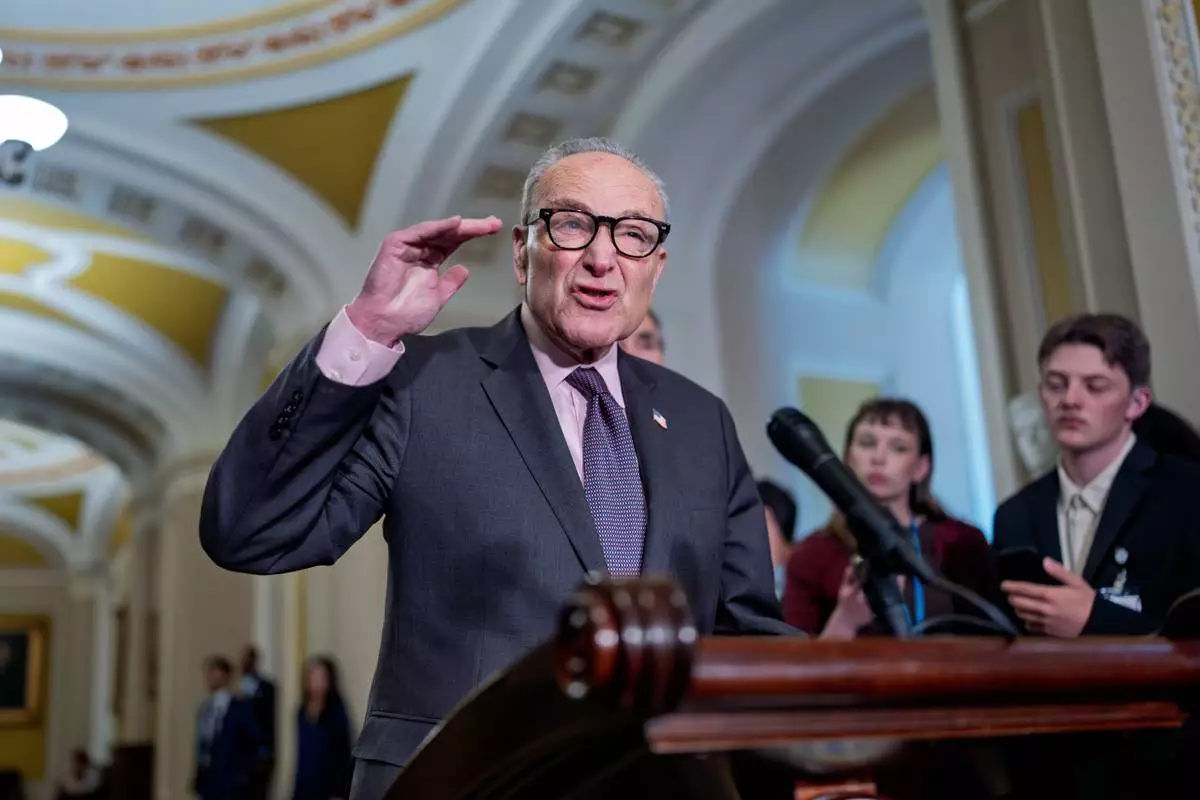
Senate Minority Leader Chuck Schumer, D-N.Y., talks to reporters about Democratic efforts to push back on President Donald Trump's policies, at the Capitol in Washington, Tuesday, June 2, 2026. (AP Photo/J. Scott Applewhite)
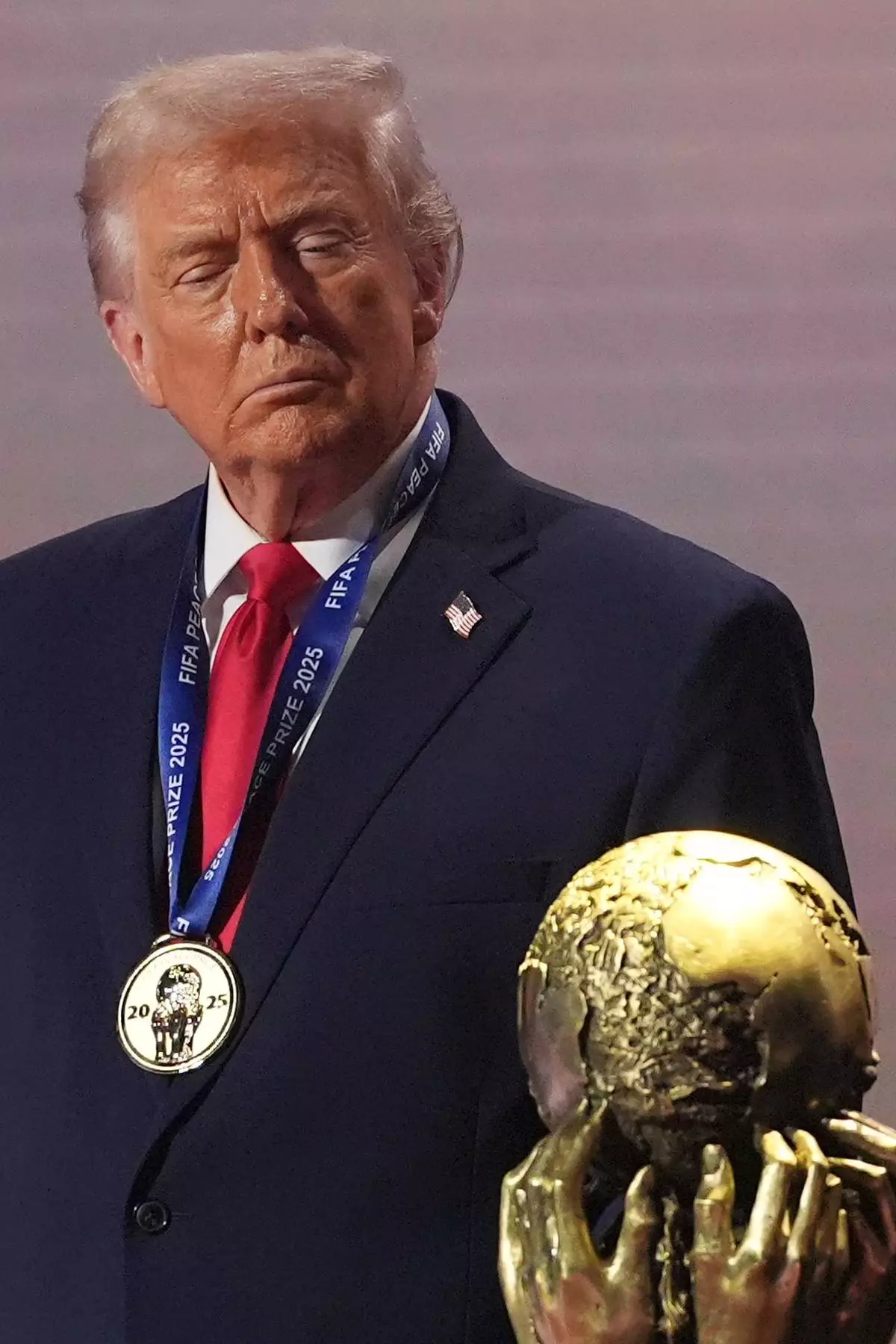
FILE - President Donald Trump stands on stage after receiving the FIFA Peace Prize during the draw for the 2026 soccer World Cup at the Kennedy Center in Washington, Dec. 5, 2025. (AP Photo/Jacquelyn Martin, file)
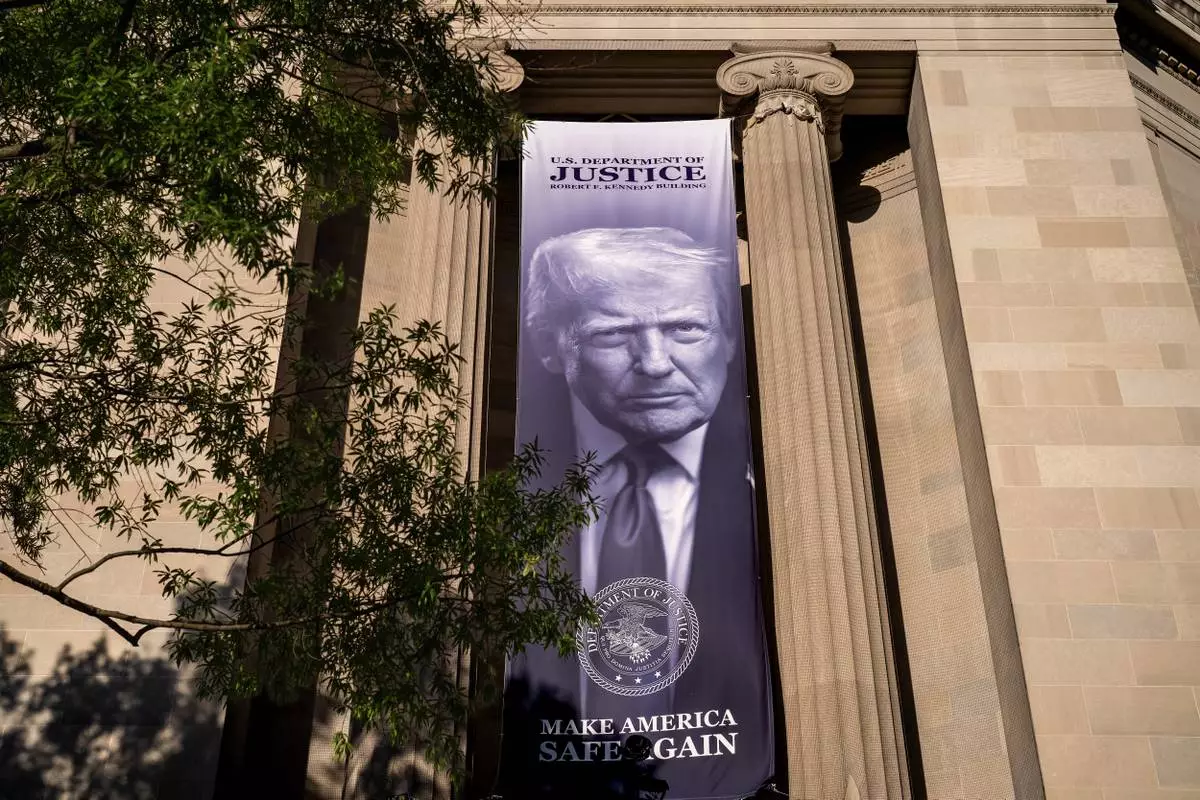
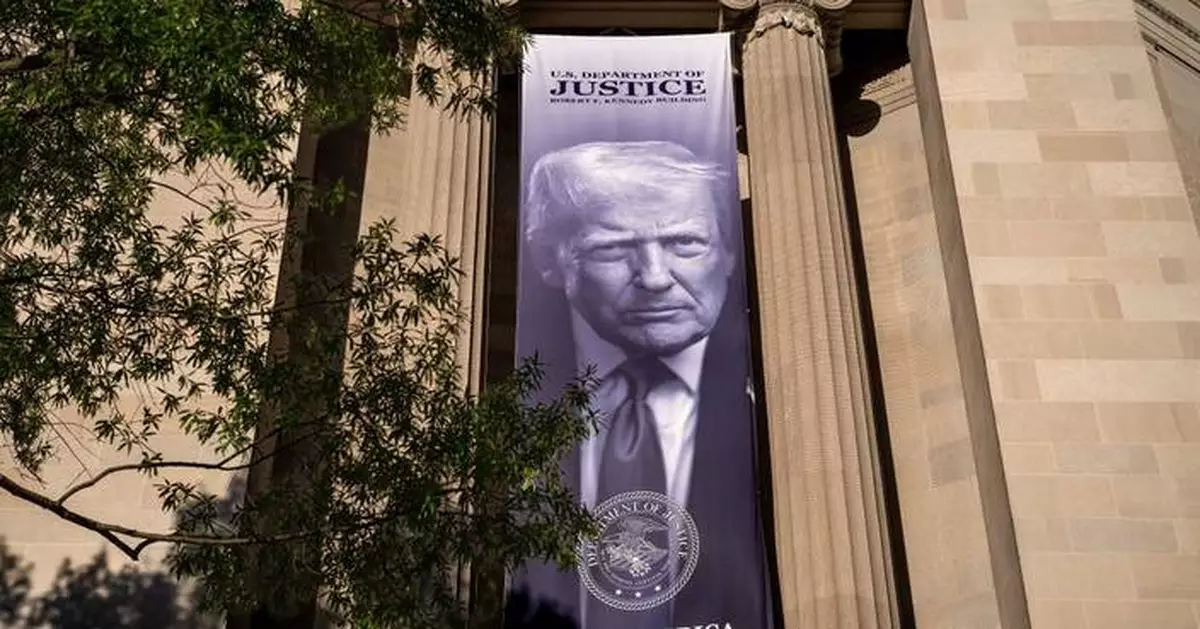
A giant portrait of President Donald Trump looks down from the Justice Department in Washington, Tuesday, June 2, 2026. The Justice Department said it would comply with a court order pausing the implementation of a $1.776 billion settlement fund designed to compensate President Donald Trump's political allies after GOP senators revolted. (AP Photo/J. Scott Applewhite)