WASHINGTON (AP) — The environmental footprint of data centers already rivals some of the world's largest countries, according to a United Nations University report, which also predicts their water and energy use and pollution will double in just four years as use of artificial intelligence grows.
Last year, global data centers used 448 trillion watt-hours of electricity, more than all but 10 countries of the world, said the report issued Wednesday. That electricity use produced about 208 million tons (189 million metric tons) of carbon dioxide, about the same amount as Argentina, and producing that much energy consumed about 1.2 trillion gallons (4.5 trillion liters) of water, according to the report on the environmental consequences of AI's energy use.
By 2030, data centers will account for nearly 3% of the world's projected electricity use, with 935 trillion watt-hours. If data centers were a country, the country would be projected to rank sixth-highest in power use in 2030. That would produce nearly 440 million tons (399 million metric tons) of carbon dioxide, the report said. The study focused on energy use and didn’t examine the massive amount of water used to cool data centers.
“If you look at these numbers, we're seeing scales comparable to nations,” said study co-author Kaveh Madani, a water scientist and director of the United Nations University Institute for Water, Environment and Health in Canada. “The demand is enormous.”
Much of the growth of data centers is being driven by AI. About 20% of data centers’ energy is currently due to AI, but that should grow to 40% by 2030, the report said.
The report is significant because of the credibility and authority of the U.N., not just because of any one set of eye-popping numbers, said Fengqi You, a Cornell University energy engineering professor who directs the college’s AI sustainability issues.
“Its value is that a U.N. institution is putting carbon, water, land, life-cycle impacts and environmental justice into one frame” for an issue that is often shrouded in secrecy and partial disclosures, said You, who was not part of the report.
“The general public should be concerned, but not panicked,” he added.
Jean Su, director of the Energy Justice Program at the Center for Biological Diversity, said the report is important because it is the first U.N., or even global, report “that shines a light on the environmental harms of AI.”
National Artificial Intelligence Association President Caleb Max emphasized how his industry is becoming more efficient and how it benefits the public: “AI is rapidly becoming part of our everyday lives and adding benefits that improve safety, live longer, work more efficiently, enhance food production, and reduce poverty. The evidence is growing daily that the energy return on investment of AI development is transformative for our world and therefore more than worth it.”
Josh Levi, president the Data Center Coalition, said the industry takes its environmental impact seriously.
“We remain committed to working with policymakers, local communities, and industry partners to ensure that as data centers grow, they do so responsibly, transparently, and in ways that reflect the best available practices,” he said in a statement.
Madani, also the winner of the most recent of the Stockholm Water Prize, said the numbers show the environmental cost of AI, which may seem cleaner at first glance than other mechanical devices, such as cars and furnaces, that have visible pollution.
"AI is not just a virtual thing. We’re talking about something that has physics, something that has real impacts. There is infrastructure there. There is energy that is being used,” Madani said. “A lot of hardware is behind all these operations that to us seem very, very clean because we don’t see smoke out of our devices. On our cellphone, there is no visible smoke or out of our computer or something. But somewhere else someone is suffering.”
People can reduce AI’s massive energy appetite by being less polite and more concise in their queries, Madani said. The report found that cutting word use in requests by 30% can reduce energy used by AI by 25%. That would save about the same amount of electricity as what about 700,000 people in Africa use in a year, the report said.
“If you’re too polite, then that extra ‘please’ you put there can make a huge difference,” Madani said. “You’ve got to be very precise and be short.”
A typical ChatGPT-style query is about 200 times more energy-intensive than the type of basic text classification used in an email spam filter, for example. AI-generated images or video require much more energy.
And the more complicated the AI, the more energy it takes to train or learn. The report said GPT-3 used about 1.3 billion watt-hours to train, but the next version used 50 to 70 billion watt-hours.
But it's not training that really feasts on power, said study co-author Miriam Aczel, a United National University environmental policy researcher. About 90% of the power use of AI comes from operational requests, she said. GPT alone accounts for 2.5 billion prompts a day, she said.
Even though tech advocates can argue that their machines are becoming more efficient, there's a common paradox that finds when things get more efficient, they are used more often and total energy use soars even if individual uses are more efficient, Madani said. While some companies tout the use of renewable energy for data centers, Madani said that means the supply of clean electricity is depleted and thus dirtier energy is used elsewhere.
One of the problems in conducting this study is that many companies and places are not transparent about what data centers and AI are consuming or even where and how big they are, Aczel and Madani said.
“We cannot manage what companies do not disclose,” Cornell's You said.
The Associated Press’ climate and environmental coverage receives financial support from multiple private foundations. AP is solely responsible for all content. Find AP’s standards for working with philanthropies, a list of supporters and funded coverage areas at AP.org.

FILE - Amazon Web Services data center is visible at night Aug. 22, 2024, in Boardman, Ore. (AP Photo/Jenny Kane, File)
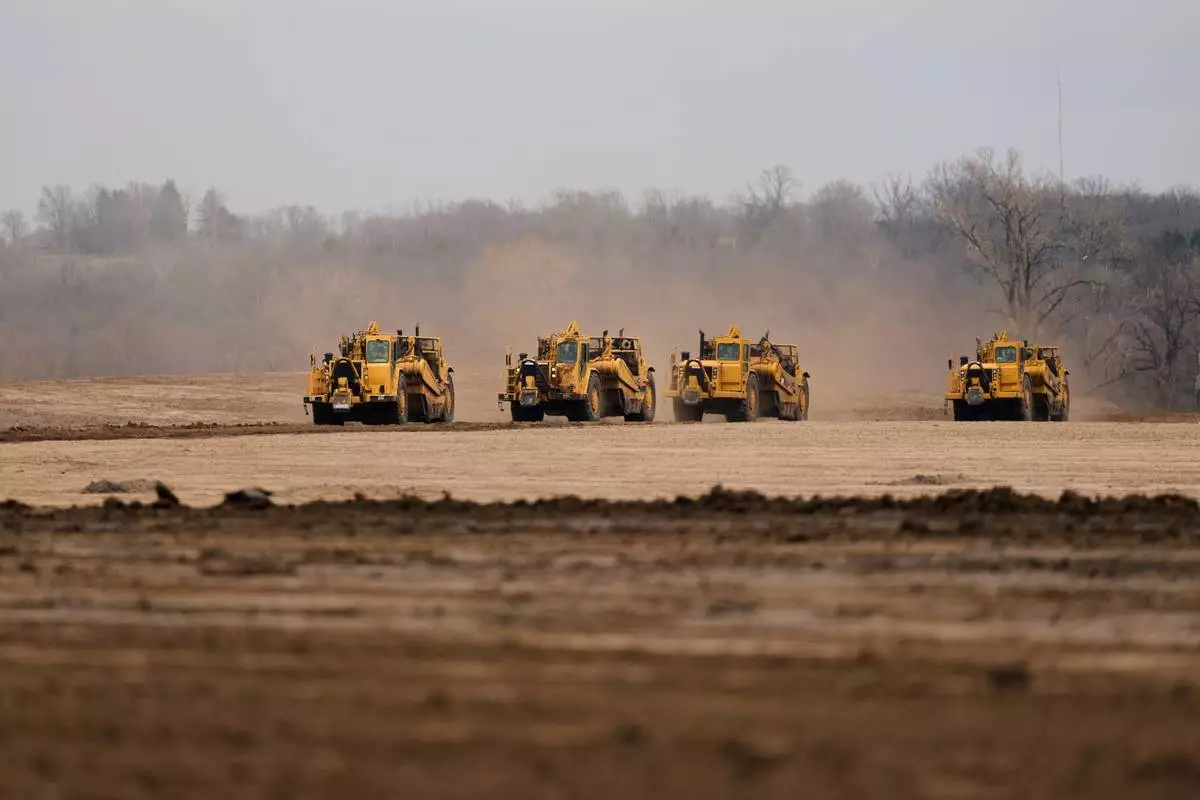
FILE - Earth movers prepare a site for a 2.5 million square foot AI data center March 24, 2026, in Independence, Mo. (AP Photo/Charlie Riedel, File)
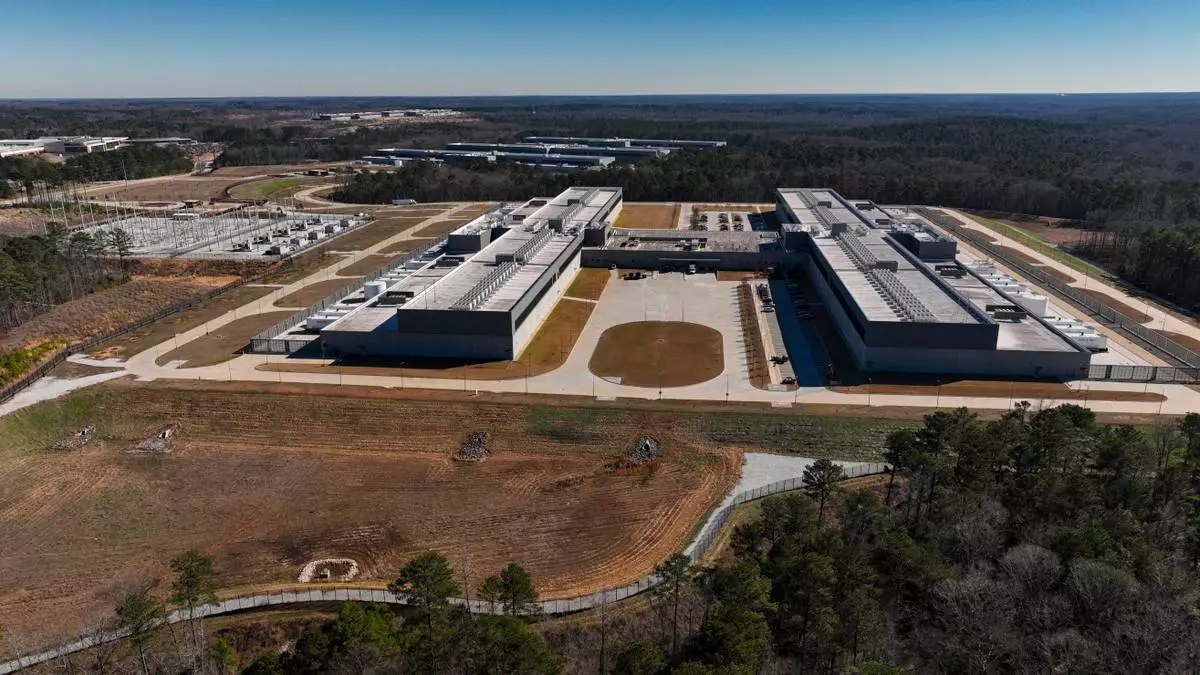
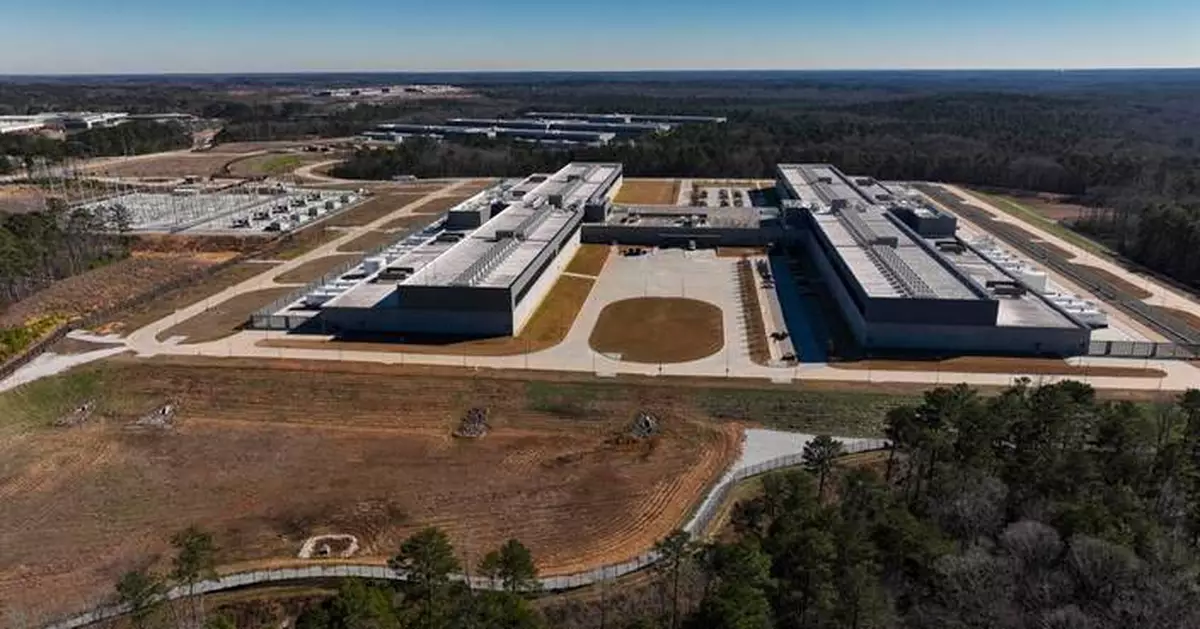
FILE - Meta's Stanton Springs Data Center is visible Jan. 13, 2026, in Newton County, Ga. (AP Photo/Mike Stewart, File)
BRIDGEWATER, N.J. (AP) — Rebecca Bennett, a former Navy helicopter pilot, won the Democratic primary in a battleground New Jersey congressional district to take on Republican Rep. Tom Kean Jr., who has been absent with an unspecified illness for months.
Bennett’s victory over three other Democrats on Tuesday sets up the state’s premier contest in November, when the party hopes it can flip the onetime Republican stronghold that has proven competitive in recent years. The district includes bedroom communities and farm towns as well as President Donald Trump’s Bedminster golf club.
Kean’s absence — his last vote was in early March — has supercharged interest in the seat, which Democrats view as key to winning control of the narrowly divided U.S. House. Voters in the 7th District have ousted two incumbents during midterm elections over the past decade.
Addressing supporters in Bridgewater, Bennett called Kean a “coward.”
“You are failing us, and you do not deserve to represent us in Washington,” she said.
In her speech, Bennett referred to “Tom Kean Jr., wherever you are,” drawing applause from supporters. She criticized Kean over his vote for Trump’s tax legislation and his failure to stand up to the president's threat to cut funding for a rail tunnel between New Jersey and New York.
Trump's package of spending and tax cuts expanded the state and local tax deduction. New Jersey has among the highest property taxes in the nation.
The Democrats are leaning into the rising costs of groceries and gasoline caused by the Iran war and Trump’s sweeping tariffs.
Bennett built her campaign around her experience as a Navy helicopter pilot as well as around affordability, noting that she drives a no-frills sedan and emphasizing her relatability as a working mom.
Araz Shahinian, a 49-year-old systems developer, said he voted for Bennett, noting he’s worried about the state of politics and rising prices. “She had the more centrist views,” he said.
Bennett's victory comes as Kean, who received Trump’s endorsement, remains out of public view. He did not make any appearances ahead of the primary, and he did not face a challenge for the Republican nomination.
Kean issued a statement on Tuesday saying “I will continue putting our constituents first” and “I am optimistic about the road ahead.”
“Right now I am focused on my recovery and under the advice of healthcare professionals. I will transition from virtual work to in person work within a matter of weeks,” Kean said, without explaining his condition.
Nina Ovryn, a Democratic voter and Bennett supporter who attended her victory party, said she was disappointed by Kean's absence.
“It shines a spotlight on the fact that he’s basically absent in the district and now he’s absent in Congress,” she said.
The district was redrawn after the most recent census to become more favorable to Republicans, but it's gone back and forth in recent years. Kean ousted incumbent Democrat Tom Malinowski in 2022, who defeated Republican Rep. Leonard Lance in 2018.
Justin Murphy, an attorney from southern New Jersey, won the state’s Republican nomination for a U.S. Senate seat Tuesday, setting up a fall contest with incumbent Democratic Sen. Cory Booker.
Murphy faces the tall task of becoming the first New Jersey Republican to win a race for Senate in more than five decades — and in a year when control of the chamber is being hotly contested.
Booker was uncontested in Tuesday's Democratic primary and is running for a full third term.
Rep. Jeff Van Drew is seeking a fifth term in southern New Jersey’s 2nd District. He was originally elected as a Democrat but switched to the Republican Party during Trump's first term. Zack Mullock, the mayor of Cape May, New Jersey, won the district's Democratic primary Tuesday.
Dr. Adam Hamawy, a surgeon and Army veteran, won a crowded primary in the heavily Democratic 12th District in central New Jersey, where Rep. Bonnie Watson Coleman is retiring. He'll face attorney Gregg Mele, who was unchallenged in the GOP primary.
Hamawy shot to prominence with endorsements from independent Sen. Bernie Sanders and other progressives. Some of his opponents recently began criticizing him over his connection to Sheikh Omar Abdel-Rahman, a blind Egyptian cleric convicted in 1995 of conspiring to blow up the United Nations and other New York-area landmarks.
Hamawy was a defense witness in the sheikh's trial but wasn’t accused of wrongdoing. He has condemned violence and distanced himself from the sheikh during the campaign. Abdel-Rahman died in federal prison in 2017.
The Republican primary in New Jersey’s 9th Congressional District was too early to call. Rosie Pino led Tiffany Burress by 366 votes out of 12,702 votes counted. It was unclear how many votes were left to count in Passaic County, where Burress led Pino by 25 percentage points.
The winner will take on first-term Democratic Rep. Nellie Pou. Her margin of victory in 2024 was narrower than her long-serving predecessor, Rep. Bill Pascrell, and coincided with Trump winning a county in the district.
This story was first published on June 2, 2026. It was updated on June 3, 2026 to correct that in the Republican primary for the 9th District, Tiffany Burress led Rosie Pino in Passaic County by 25 percentage points, not 45 points, and to correct the spelling of a Bennett supporter’s name to Nina Ovryn, not Orvyn.
Associated Press writer Meg Kinnard in Columbia, South Carolina, contributed to this report.

From left, Rebecca Bennett, Democratic candidate for New Jersey's 7th Congressional District, holds her daughter Rosie, alongside her husband Alex Hydrean and daughter Millie during a primary election night watch party after winning the Democratic nomination Tuesday, June 2, 2026, in Bridgewater, N.J. (AP Photo/Ryan Murphy)

Rebecca Bennett, Democratic candidate for New Jersey's 7th Congressional District, hugs attendees during a primary election night watch party after winning the Democratic nomination Tuesday, June 2, 2026, in Bridgewater, N.J. (AP Photo/Ryan Murphy)
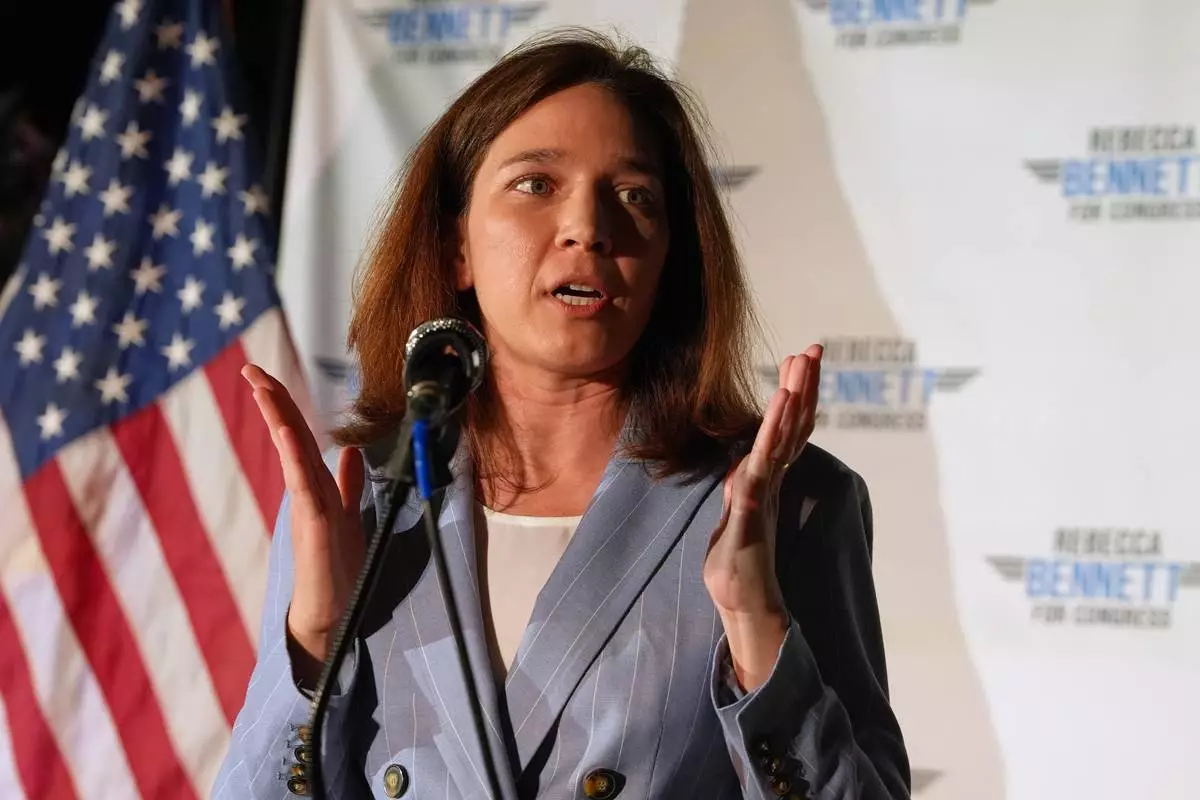
Rebecca Bennett, Democratic candidate for New Jersey's 7th Congressional District, speaks during a primary election night watch party after winning the Democratic nomination Tuesday, June 2, 2026, in Bridgewater, N.J. (AP Photo/Ryan Murphy)
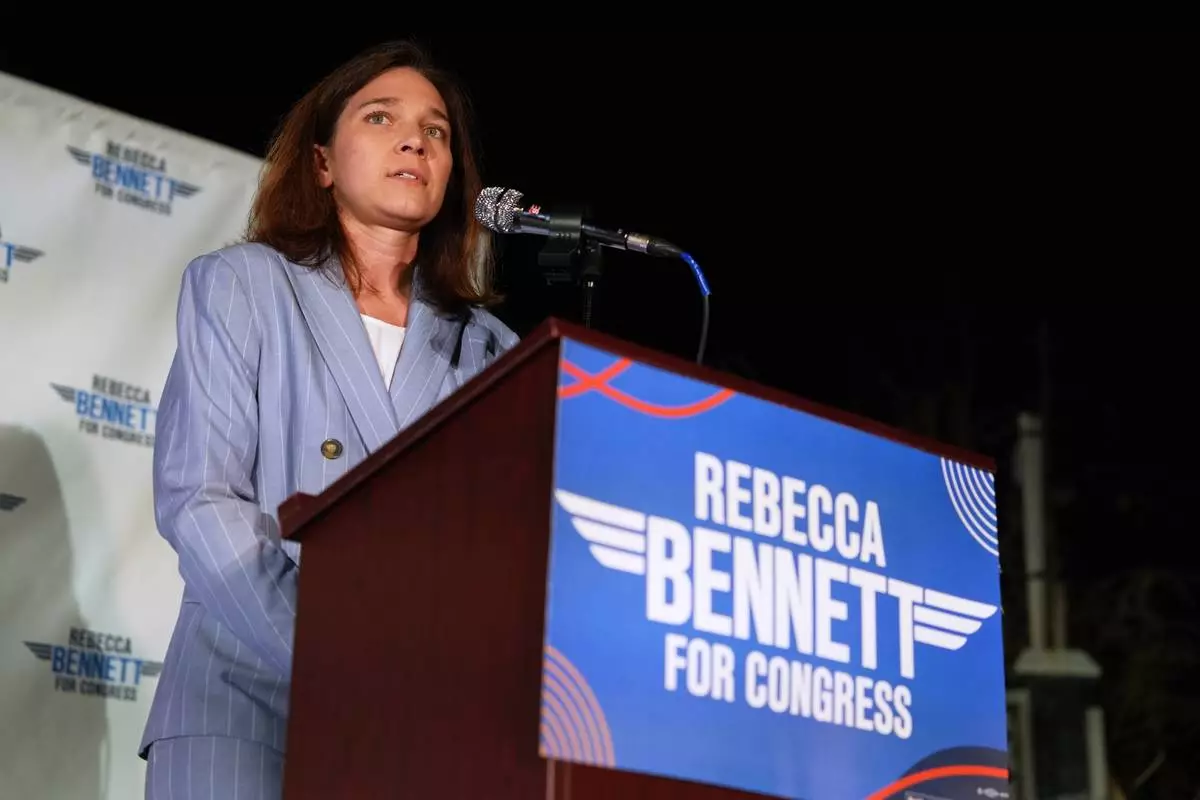
Rebecca Bennett, Democratic candidate for New Jersey's 7th Congressional District, speaks during a primary election night watch party after winning the Democratic nomination Tuesday, June 2, 2026, in Bridgewater, N.J. (AP Photo/Ryan Murphy)
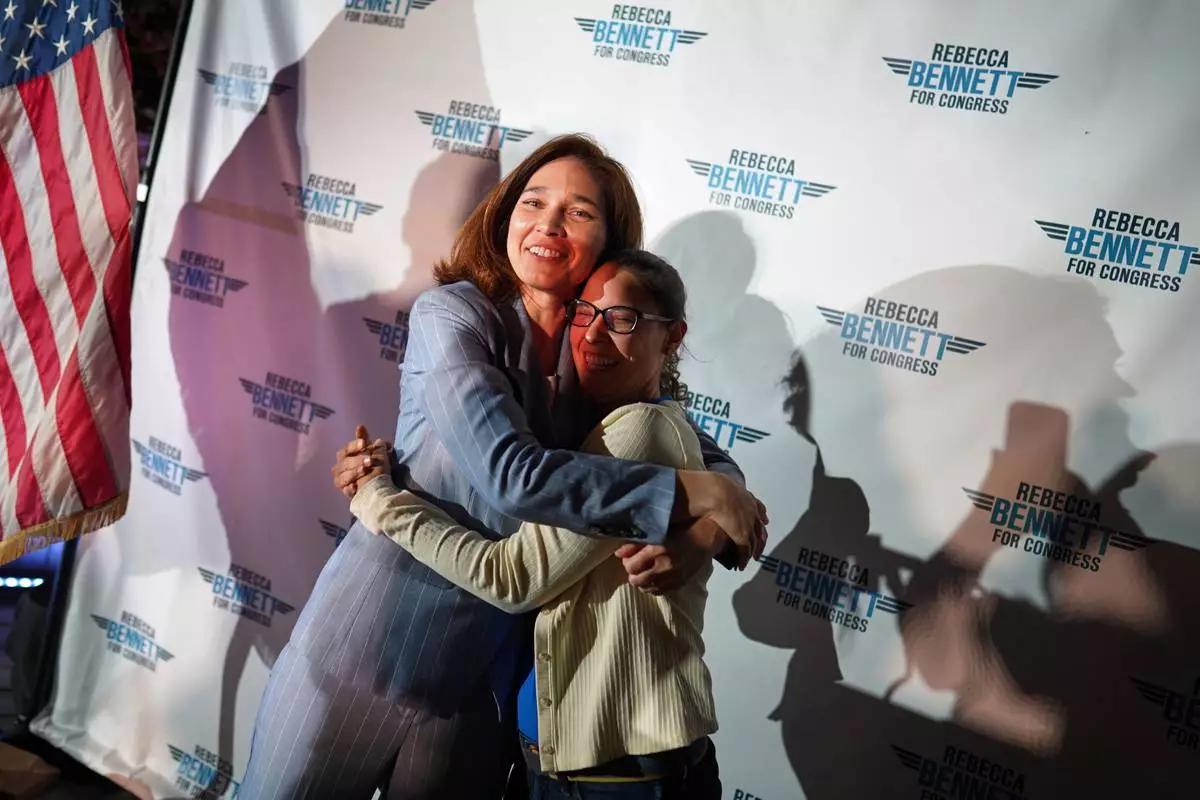
Rebecca Bennett, Democratic candidate for New Jersey's 7th Congressional District, hugs an attendee during a primary election night watch party after winning the Democratic nomination Tuesday, June 2, 2026, in Bridgewater, N.J. (AP Photo/Ryan Murphy)

Supporters hug during a primary election night watch party for Rebecca Bennett, Democratic candidate for New Jersey's 7th Congressional District, Tuesday, June 2, 2026, in Bridgewater, N.J. (AP Photo/Ryan Murphy)

Supporters cheer during a primary election night watch party for Rebecca Bennett, Democratic candidate for New Jersey's 7th Congressional District, Tuesday, June 2, 2026, in Bridgewater, N.J. (AP Photo/Ryan Murphy)
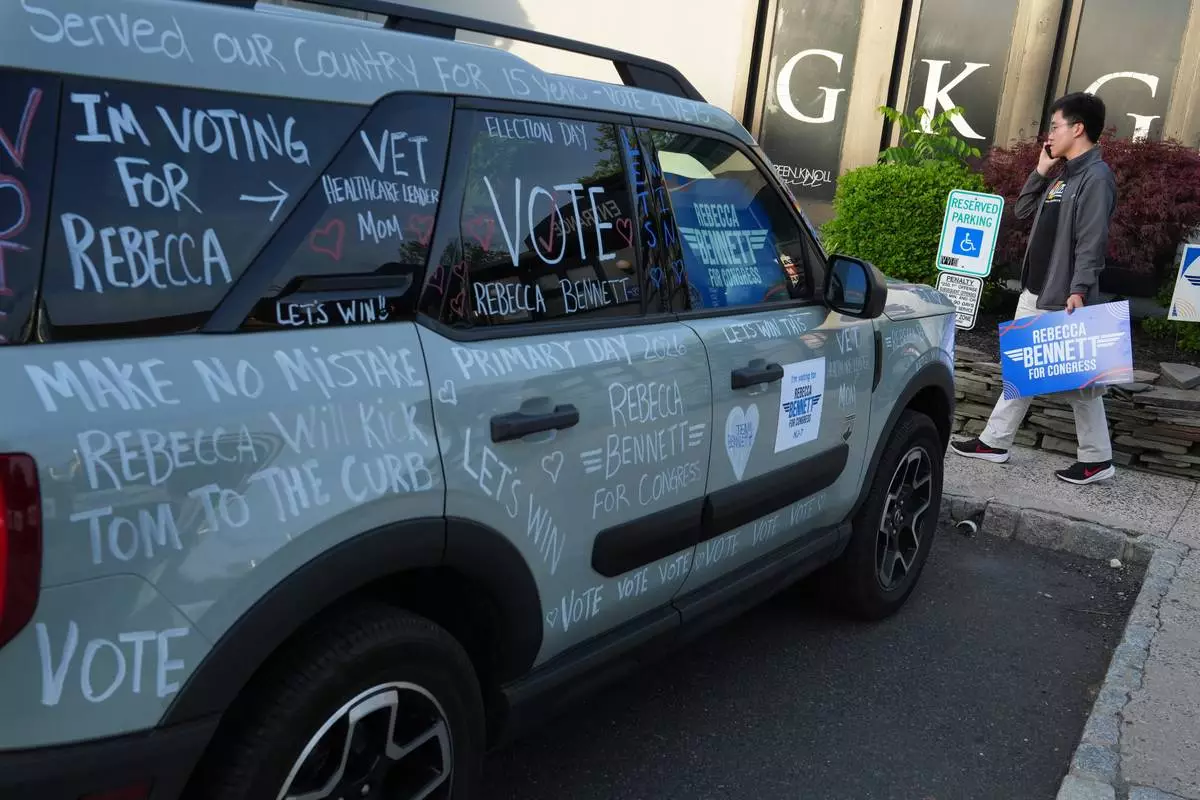
Voting messages are displayed on a car at a primary election night watch party for Rebecca Bennett, Democratic candidate for New Jersey's 7th Congressional District, Tuesday, June 2, 2026, in Bridgewater, N.J. (AP Photo/Ryan Murphy)

A worker sets up the stage during a primary election night watch party for Rebecca Bennett, Democratic candidate for New Jersey's 7th Congressional District, Tuesday, June 2, 2026, in Bridgewater, N.J. (AP Photo/Ryan Murphy)
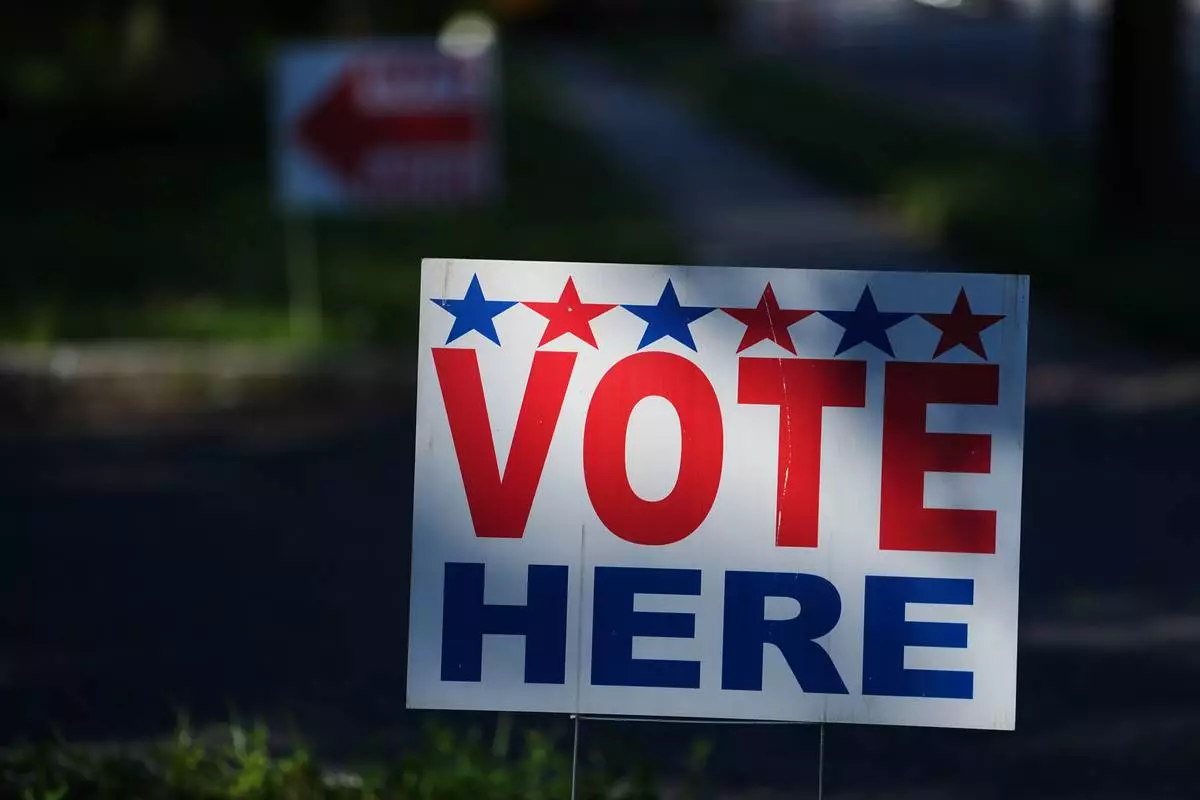
A sign directs voters to a polling place for the New Jersey primary election in Cherry Hill township, N.J., Tuesday, June 2, 2026. (AP Photo/Matt Rourke)
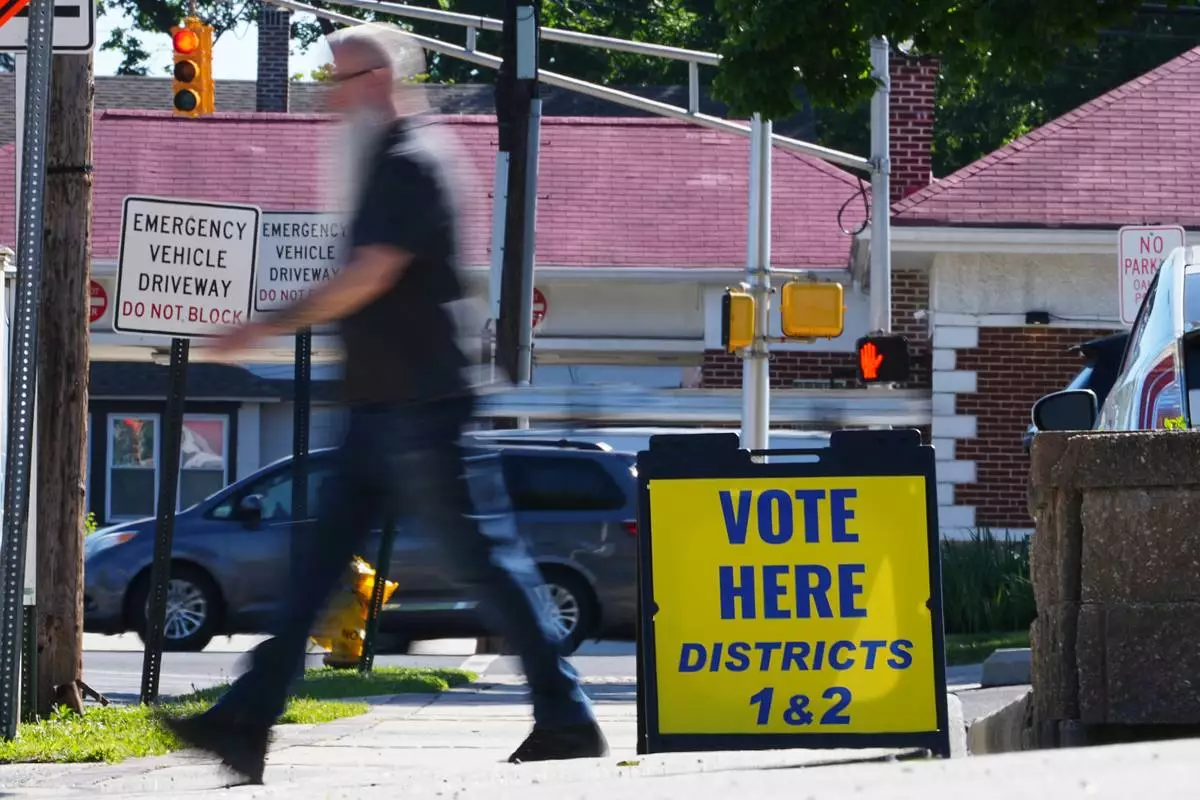
A person walks from a polling place for the New Jersey primary election in Oaklyn, N.J., Tuesday, June 2, 2026. (AP Photo/Matt Rourke)

FILE - This photo combination shows Democrat candidates for New Jersey's 7th Congressional District, from left, Rebecca Bennett, May 30, 2026, in Flemington, N.J., Brian Varela, May 30, 2026, in Sparta, N.J. and Michael Roth, May 31, 2026, in Rahway, N.J. (AP Photo/Stefan Jeremiah)

FILE - In this Jan. 15, 2019, file photo, New Jersey Senate Minority Leader Tom Kean Jr., R-Westfield, addresses reporters in Trenton, N.J. (AP Photo/Julio Cortez, File)