Skip to Content Facebook Feature Image

11 years after one teen's death sparked massive Argentine protests, a new case shakes the nation

News

11 years after one teen's death sparked massive Argentine protests, a new case shakes the nation
News

News

11 years after one teen's death sparked massive Argentine protests, a new case shakes the nation

2026-06-04 06:01 Last Updated At:06:11

BUENOS AIRES, Argentina (AP) — In May 2015, the grisly killing of a pregnant 14-year-old girl named Chiara Páez by her 16-year-old boyfriend triggered massive protests in Argentina that evolved into a generation-defining movement throughout Latin America under the motto of “ Ni Una Menos," or “Not One Woman Less."

Now, 11 years after the first Ni Una Menos protest created a collective consciousness about what would come to be known as femicide — the killing of women and girls because of their gender — the nation is convulsing with anger once again.

More Images
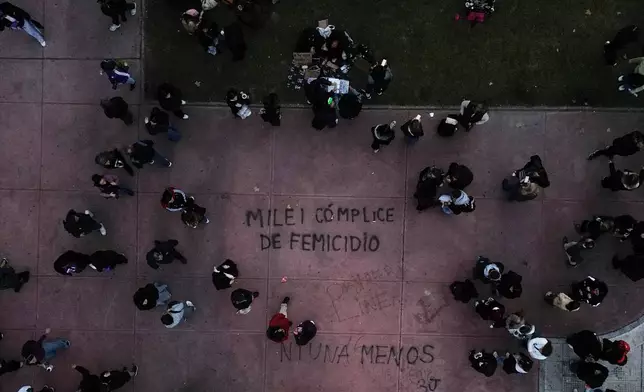
Demontrators walk near a painting reading in Spanish " Milei femicide accomplice" referring to President Javier Milei during a march marking the anniversary of the "Ni Una Menos" (Not One Fewer) women's movement in Buenos Aires, Argentina, Wednesday, June 3, 2026. (AP Photo/Natacha Pisarenko)
Demontrators walk near a painting reading in Spanish " Milei femicide accomplice" referring to President Javier Milei during a march marking the anniversary of the "Ni Una Menos" (Not One Fewer) women's movement in Buenos Aires, Argentina, Wednesday, June 3, 2026. (AP Photo/Natacha Pisarenko)
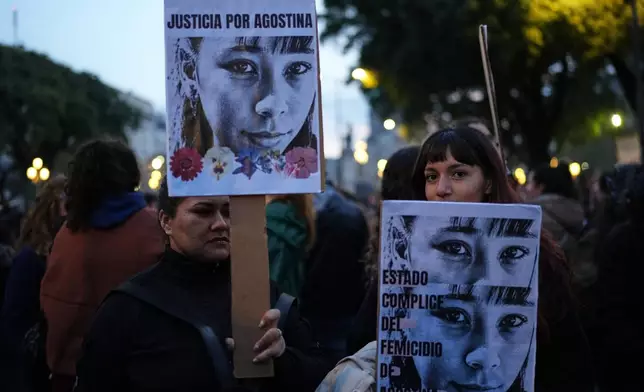
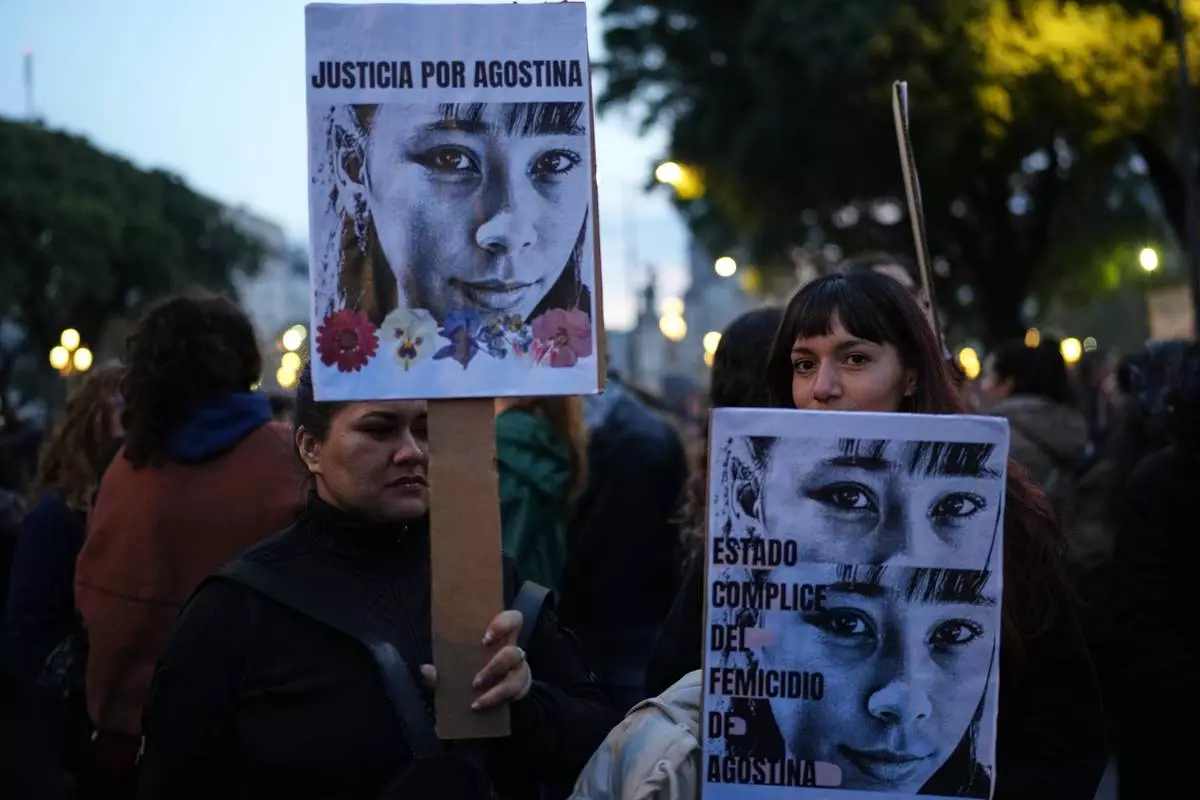
Demonstrators hold photos of 14-year-old Agostina Vega, who was murdered, during a march marking the anniversary of the "Ni Una Menos" (Not One Fewer) women's movement in Buenos Aires, Argentina, Wednesday, June 3, 2026. (AP Photo/Natacha Pisarenko)
Demonstrators hold photos of 14-year-old Agostina Vega, who was murdered, during a march marking the anniversary of the "Ni Una Menos" (Not One Fewer) women's movement in Buenos Aires, Argentina, Wednesday, June 3, 2026. (AP Photo/Natacha Pisarenko)

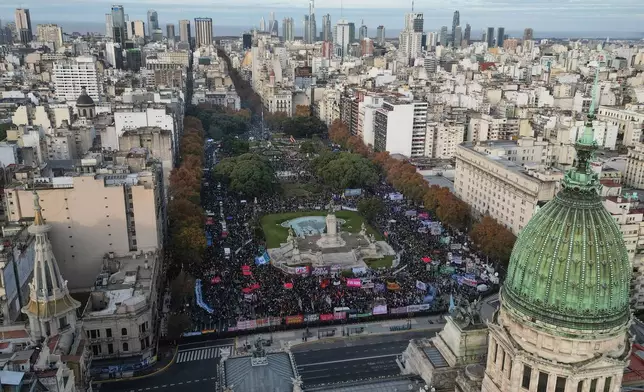
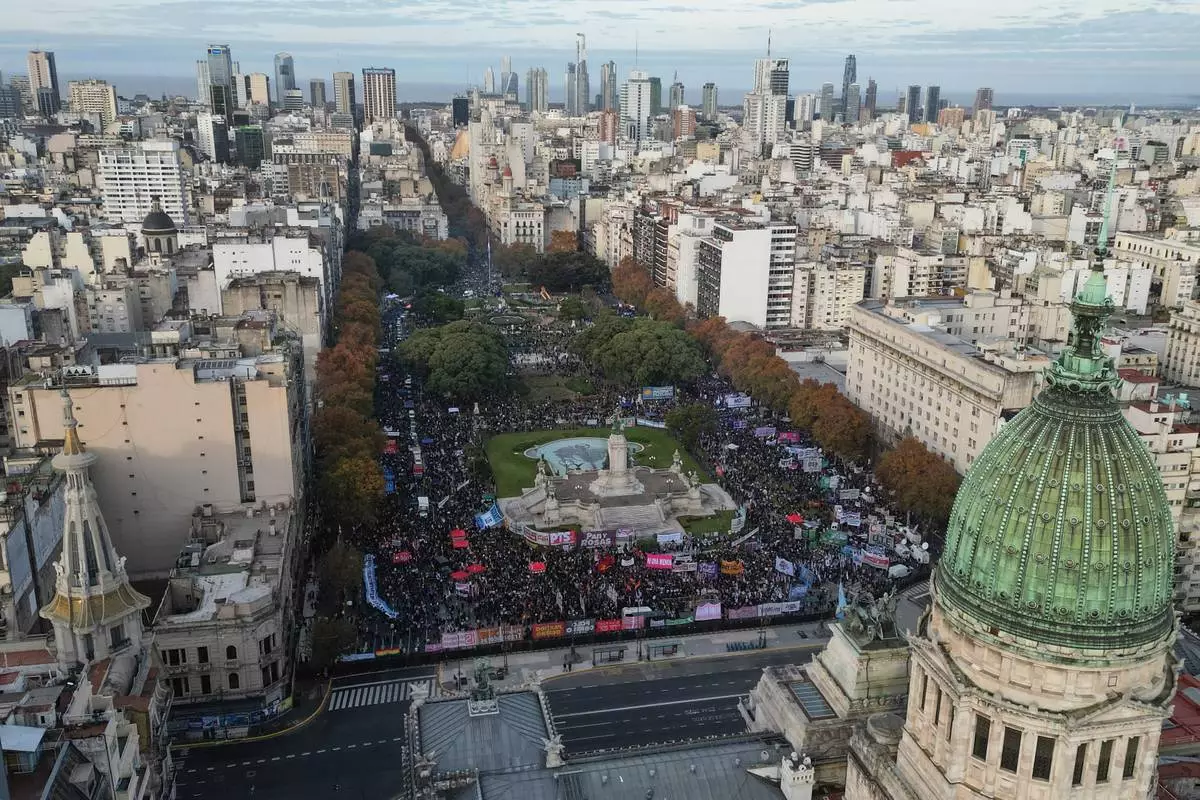
Demonstrators gather outside Congress during a march marking the anniversary of the "Ni Una Menos" (Not One Fewer) women's movement in Buenos Aires, Argentina, Wednesday, June 3, 2026. (AP Photo/Natacha Pisarenko)

Demonstrators gather outside Congress during a march marking the anniversary of the "Ni Una Menos" (Not One Fewer) women's movement in Buenos Aires, Argentina, Wednesday, June 3, 2026. (AP Photo/Natacha Pisarenko)

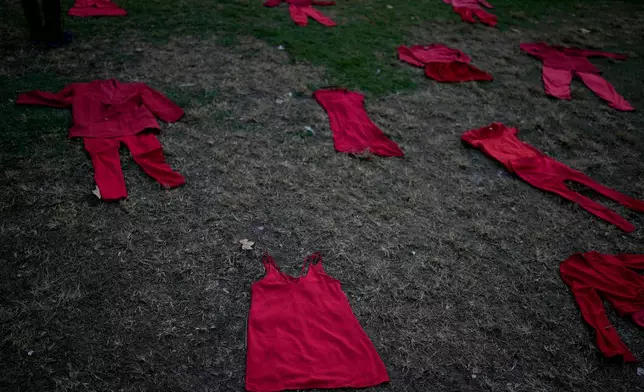
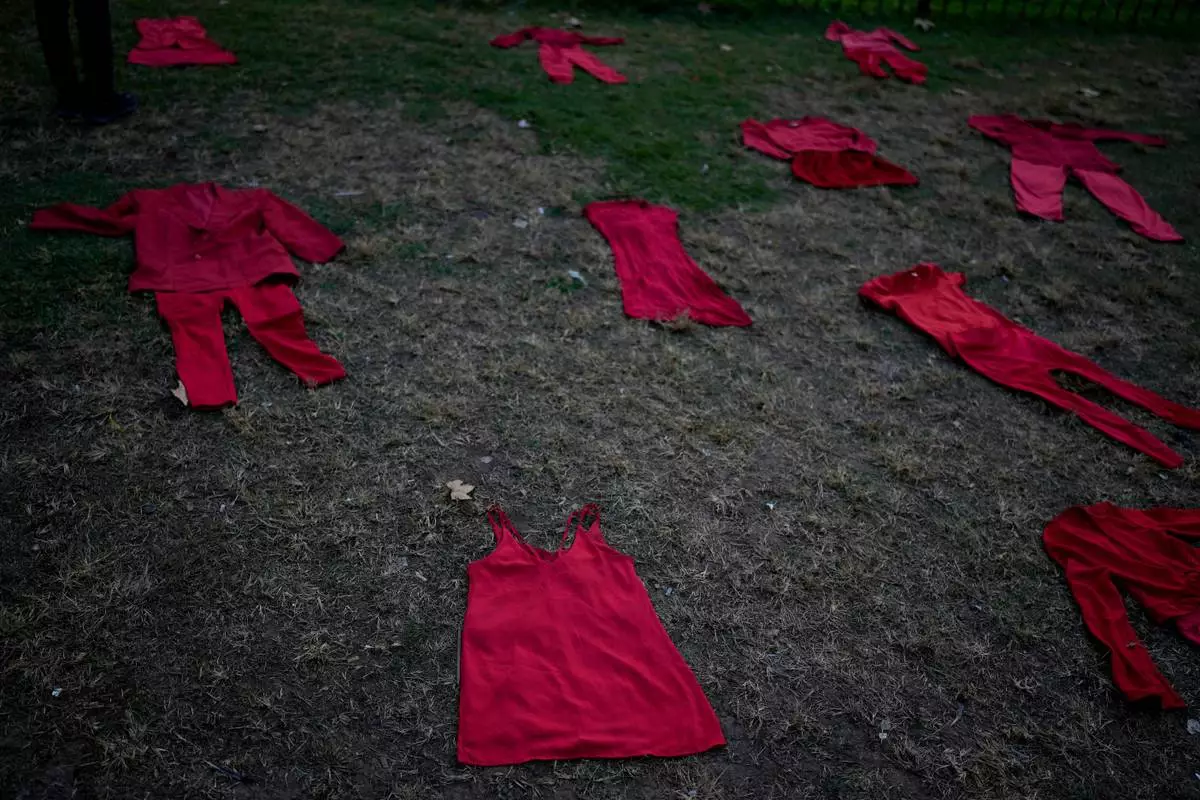
FILE - Outfits representing women who were disappeared or murdered lie on the grass outside Congress during a march marking the ninth anniversary of the "Ni Una Menos" (Not One Fewer) women's movement in Buenos Aires, Argentina, June 3, 2024. (AP Photo/Natacha Pisarenko, File)
FILE - Outfits representing women who were disappeared or murdered lie on the grass outside Congress during a march marking the ninth anniversary of the "Ni Una Menos" (Not One Fewer) women's movement in Buenos Aires, Argentina, June 3, 2024. (AP Photo/Natacha Pisarenko, File)

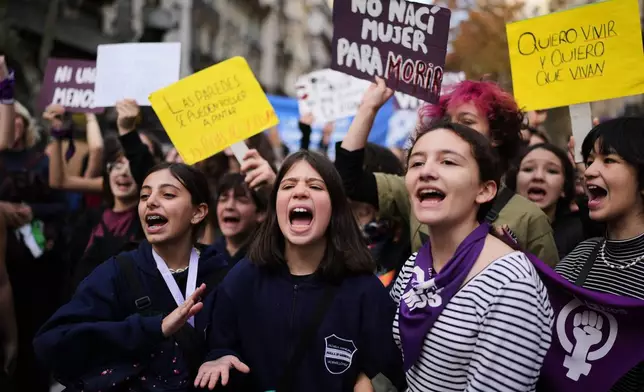
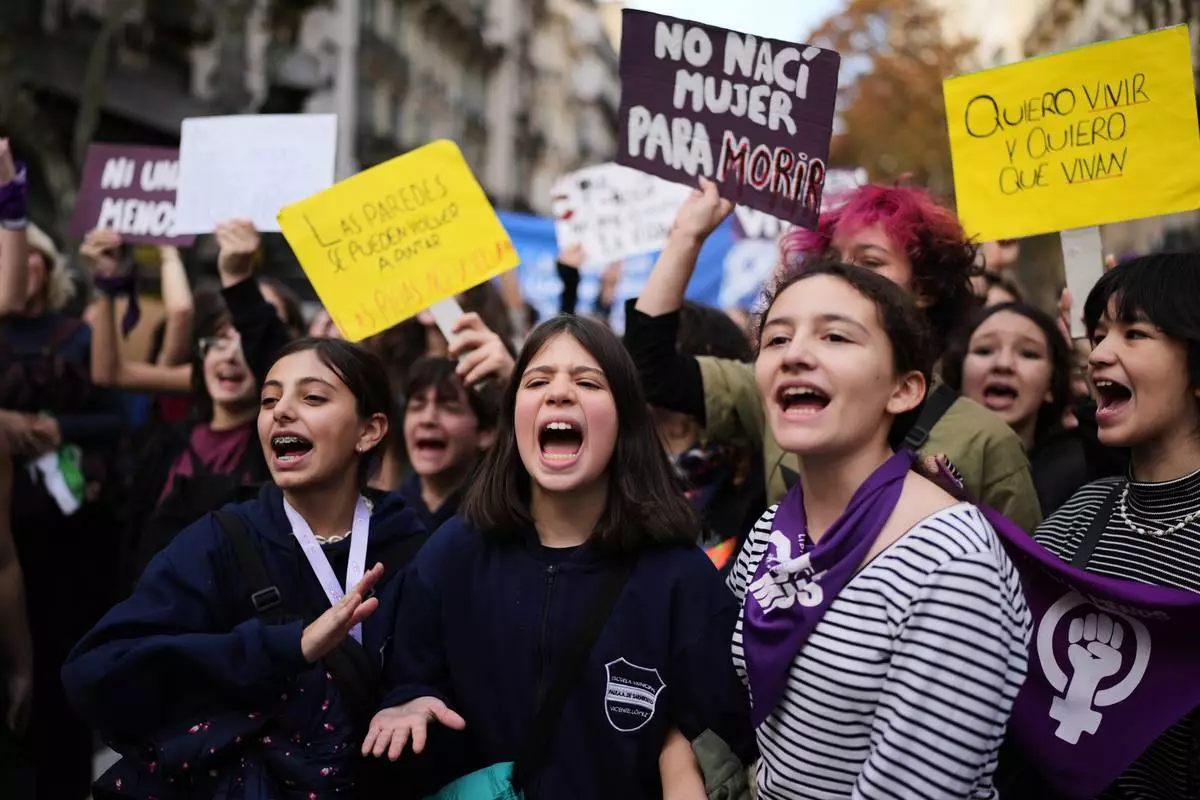
Demonstrators take part in a march marking the anniversary of the "Ni Una Menos" (Not One Fewer) women's movement in Buenos Aires, Argentina, Wednesday, June 3, 2026. (AP Photo/Natacha Pisarenko)
Demonstrators take part in a march marking the anniversary of the "Ni Una Menos" (Not One Fewer) women's movement in Buenos Aires, Argentina, Wednesday, June 3, 2026. (AP Photo/Natacha Pisarenko)

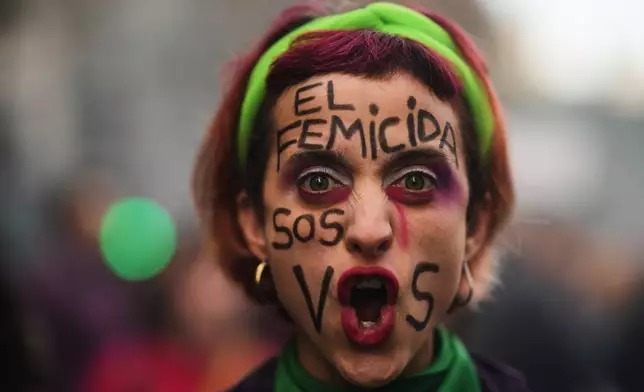
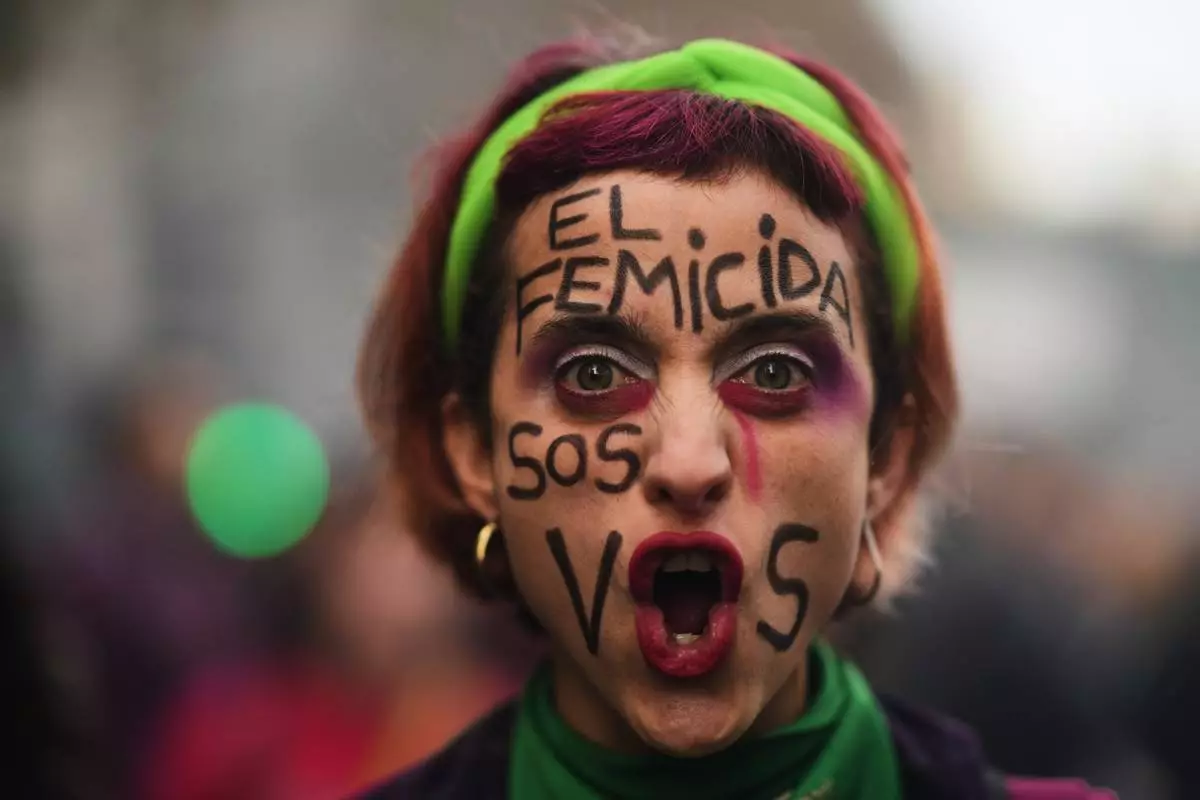
A demonstrator poses for a photo with her face painted in Spanish, "The femicide-committer is you" during a march marking the anniversary of the "Ni Una Menos" (Not One Fewer) women's movement in Buenos Aires, Argentina, Wednesday, June 3, 2026. (AP Photo/Natacha Pisarenko)

A demonstrator poses for a photo with her face painted in Spanish, "The femicide-committer is you" during a march marking the anniversary of the "Ni Una Menos" (Not One Fewer) women's movement in Buenos Aires, Argentina, Wednesday, June 3, 2026. (AP Photo/Natacha Pisarenko)

This time, it's over the killing of 14-year-old Agostina Vega, in the central city of Cordoba. She arrived at a family friend's home the night of May 23, expecting to pick up a gift for her mother. Instead, she was sexually assaulted and hanged, initial autopsy results indicate, her body dismembered with a kitchen knife.

Her remains were found in a drainage ditch Saturday, a week after her disappearance, as vigils in her home province erupted into clashes with police.

The outrage has reverberated across the country, and on Wednesday, thousands of protesters gathered for the annual Ni Una Menos demonstration in downtown Buenos Aires. Many held posters printed with the faces and names of women who've been killed or who disappeared in recent years, including Agostina. Her case brought renewed energy and purpose to the protest, amplifying demands for government action and intensifying criticism of President Javier Milei.

The libertarian ally of U.S. President Donald Trump has called the feminist movement “a ridiculous and unnatural fight," promoted scrapping femicide from the penal code, and defunded programs supporting victims of gender violence as part of his cultural war and cost-cutting campaign.

This year, lawyers at the Center for Legal and Social Studies, a leading Argentine human rights group, have counted 63 legally registered femicides. But they and other advocates say it can be an uphill battle against the government to get that classification. Some have compiled a list of more than 100 names of women killed this year, arguing that many aren’t properly labeled.

Reports of femicide in Argentina fell 12%, to 200 cases last year compared with 2024, according to statistics published by the Supreme Court. Victims' lawyers say the change doesn’t reflect a drop in gender-based violence, but instead a failure to properly classify crimes.

“To stop calling femicides by their name, to deny the existence of gender violence — it's an attempt to rewind the past 20 years,” said Natalia Gherardi, director of the Latin American Team for Justice and Gender, a Buenos Aires-based rights group. "I hope this reaction generated by Agostina’s case, what we show in the streets, will be enough to counter the desire to move backward.”

After Agostina's death, protesters directed anger at local law enforcement, setting tires alight in the streets of Cordoba. Her family filed a missing person’s report the morning after her disappearance, but over 80 hours passed before phones across the province buzzed with a child abduction alert, according to family lawyer Gustavo Vaca.

The day after her death, a taxi driver reported that he'd driven Agostina to the house of the family friend, 33-year-old Claudio Barrelier, which security camera footage confirmed.

Agostina’s family has complained that security forces were consumed by concerns of fan violence during a major soccer game in the city of Cordoba that day. Three days later, police raided the house of Barrelier, an ex-boyfriend of Agostina's mother.

Barrelier is in custody as the main suspect in the case and denies killing Agostina. Investigators say his criminal history shows he had been arrested for abducting a young woman a year ago but was released on bail of $3,500 after 20 days.

When peppered with accusations of foot-dragging, lead prosecutor Raúl Garzón said last week that authorities “are not engaging in any self-criticism.”

Calls grew to characterize Agostina’s killing as a femicide. Security Minister Alejandra Monteoliva has refused to do so.

“A homicide, whatever its nature, is not solely defined by what happens during one hour, two hours, or three hours, where the act itself occurs,” Monteoliva told reporters Monday in her only public comments on the case.

Advocates insist using the term femicide — which carries harsher penalties than other forms of homicide, with a mandatory sentence of life imprisonment in Argentina — is crucial for effective prosecution and victim protection.

“If we don't name the specific form of violence, if we don't recognize it, then we can't understand the problem in all its dimensions, and we can't create policies to prevent and combat it," said Lucila Galkin, director of the gender and diversity program for the Argentina chapter of Amnesty International.

Milei has waged a cultural war against gender-based policies — what he sees as a dangerous consequence of socialism.

After Milei railed against the crime of femicide as “legally making a woman’s life worth more than a man’s” at the Davos summit last year, his justice minister announced plans to strip the category from the legal code.

Nothing came of that, but his government now is working to stiffen penalties for women who falsely report cases of gender-based violence. It is awaiting congressional debate.

In the last two and a half years, Milei has dissolved Argentina’s women’s ministry, shut down its anti-discrimination institute, gutted support programs for victims of gender violence, banned the use of gender-inclusive language in official documents, and defunded training in gender issues for public school students and state employees.

Among the affected programs is Acompañar, which assisted 350,000 women with aid equivalent to six months’ minimum wage before it was defunded. A 24-hour hotline to help victims lost two-thirds of its budget and half its staff last year. A government-sponsored program providing free legal assistance to people experiencing domestic violence or sexual abuse has also been dismantled.

On Wednesday, protesters gathered at Plaza Congreso, opposite the seat of the National Congress, as they have every year since Chiara Páez's death in 2015.

Laura Lenaza, 41, said she hadn’t attended a street protest in almost a decade. But the shock of recent cases moved her to bring her 17-year-old daughter, Milena.

“I’m fighting for myself, for my 11-year-old sister, and for all the women I know," the young woman said, squeezing her mother’s hand.

María Cacharo, 54, said she came with her 18-year-old daughter in honor of her sister, killed by her husband several years ago.

“Whenever resources are reduced, somehow we’re the ones who have to bear the cost,” she said of the impact of Milei’s cost-cutting on women, adding that the way police handled Agostina's case makes her sick.

Carrying “Justice for Agostina” signs, her family led a march in Cordoba on Wednesday to push for accountability in her killing under the banner of the movement that once made Argentina a regional beacon for social and legal action on gender equality.

“I think this femicide, which caused so much pain, so much shock, also mobilized us, reminded us that this is a problem concerning all of society,” Galkin said of Agostina's case.

“We are being forced to have conversations about issues we thought we had agreed on, a topic that we thought had been settled."
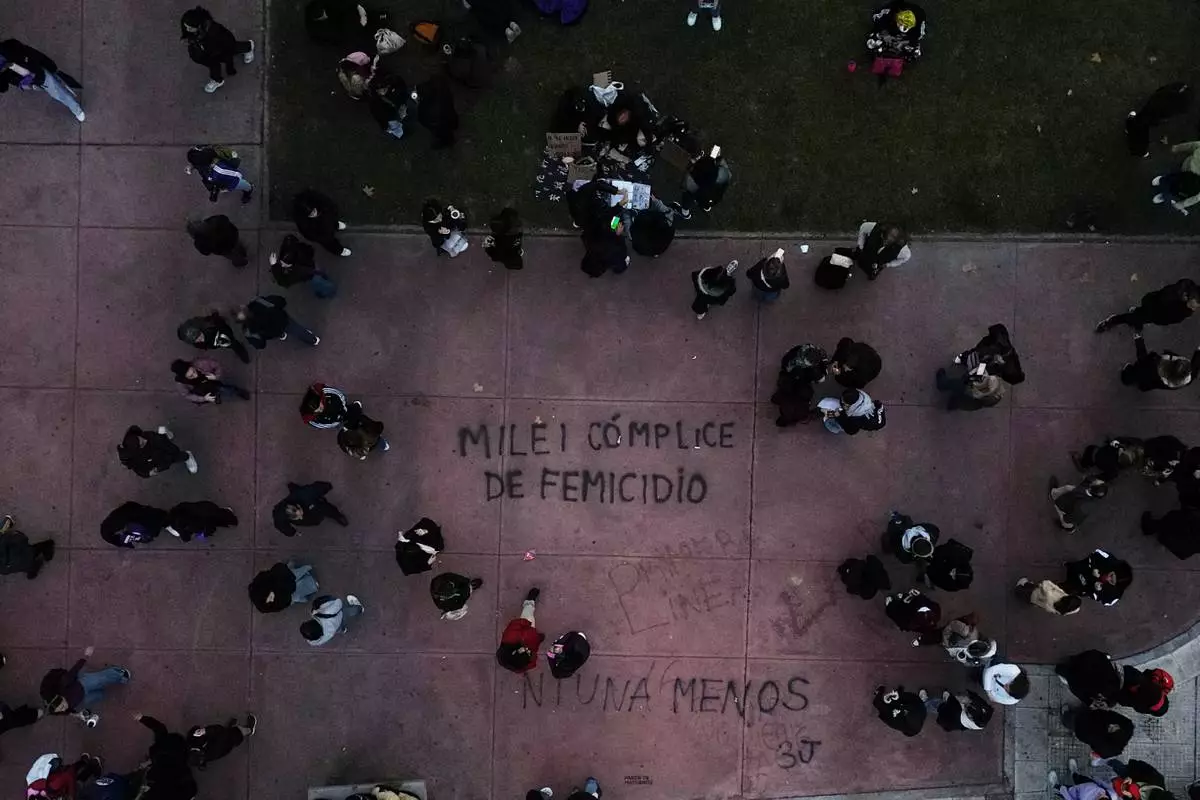
Demontrators walk near a painting reading in Spanish " Milei femicide accomplice" referring to President Javier Milei during a march marking the anniversary of the "Ni Una Menos" (Not One Fewer) women's movement in Buenos Aires, Argentina, Wednesday, June 3, 2026. (AP Photo/Natacha Pisarenko)
Demontrators walk near a painting reading in Spanish " Milei femicide accomplice" referring to President Javier Milei during a march marking the anniversary of the "Ni Una Menos" (Not One Fewer) women's movement in Buenos Aires, Argentina, Wednesday, June 3, 2026. (AP Photo/Natacha Pisarenko)
Demonstrators hold photos of 14-year-old Agostina Vega, who was murdered, during a march marking the anniversary of the "Ni Una Menos" (Not One Fewer) women's movement in Buenos Aires, Argentina, Wednesday, June 3, 2026. (AP Photo/Natacha Pisarenko)
Demonstrators hold photos of 14-year-old Agostina Vega, who was murdered, during a march marking the anniversary of the "Ni Una Menos" (Not One Fewer) women's movement in Buenos Aires, Argentina, Wednesday, June 3, 2026. (AP Photo/Natacha Pisarenko)

Demonstrators gather outside Congress during a march marking the anniversary of the "Ni Una Menos" (Not One Fewer) women's movement in Buenos Aires, Argentina, Wednesday, June 3, 2026. (AP Photo/Natacha Pisarenko)

Demonstrators gather outside Congress during a march marking the anniversary of the "Ni Una Menos" (Not One Fewer) women's movement in Buenos Aires, Argentina, Wednesday, June 3, 2026. (AP Photo/Natacha Pisarenko)

FILE - Outfits representing women who were disappeared or murdered lie on the grass outside Congress during a march marking the ninth anniversary of the "Ni Una Menos" (Not One Fewer) women's movement in Buenos Aires, Argentina, June 3, 2024. (AP Photo/Natacha Pisarenko, File)
FILE - Outfits representing women who were disappeared or murdered lie on the grass outside Congress during a march marking the ninth anniversary of the "Ni Una Menos" (Not One Fewer) women's movement in Buenos Aires, Argentina, June 3, 2024. (AP Photo/Natacha Pisarenko, File)

Demonstrators take part in a march marking the anniversary of the "Ni Una Menos" (Not One Fewer) women's movement in Buenos Aires, Argentina, Wednesday, June 3, 2026. (AP Photo/Natacha Pisarenko)
Demonstrators take part in a march marking the anniversary of the "Ni Una Menos" (Not One Fewer) women's movement in Buenos Aires, Argentina, Wednesday, June 3, 2026. (AP Photo/Natacha Pisarenko)

A demonstrator poses for a photo with her face painted in Spanish, "The femicide-committer is you" during a march marking the anniversary of the "Ni Una Menos" (Not One Fewer) women's movement in Buenos Aires, Argentina, Wednesday, June 3, 2026. (AP Photo/Natacha Pisarenko)
A demonstrator poses for a photo with her face painted in Spanish, "The femicide-committer is you" during a march marking the anniversary of the "Ni Una Menos" (Not One Fewer) women's movement in Buenos Aires, Argentina, Wednesday, June 3, 2026. (AP Photo/Natacha Pisarenko)
PARIS (AP) — After letting another big lead slip with an error-strewn performance at the French Open, top-ranked Aryna Sabalenka felt like getting as far away from the courts as possible.

“Just want to quit tennis right now,” Sabalenka said after wasting a lead of a set and two breaks in a 3-6, 7-5, 6-0 loss to Diana Shnaider in the quarterfinals on Wednesday. “We’ll see in few days. Hopefully I’ll get back on track mentally.”

Sabalenka's wait for a first French Open title continues despite the four-time major winner leading 4-1 in the second set and being two points from victory while serving for the match at 5-4. What followed was a complete collapse as she lost 12 of the last 13 games against a player appearing in her first Grand Slam quarterfinal, looking increasingly frustrated and forlorn in the windy conditions.

Just like her loss to Coco Gauff in last year's final, when she also won the first set before becoming undone with a slew of unforced errors, this one will take some time to get over.

“You know those rooms where you just go in and you smash everything,” Sabalenka said. “Probably I will spend a whole day tomorrow over there destroying stuff. Maybe it will help, maybe not.”

Shnaider next faces Maja Chwalinska, who extended her remarkable Roland Garros run by beating No. 22-seeded Anna Kalinskaya 7-6 (3), 6-3.

In the men’s quarterfinals, 10th-seeded Flavio Cobolli beat No. 4 Felix Auger-Aliassime 4-6, 6-4, 6-4, 6-4 and will face fellow Italian Matteo Arnaldi for a spot in the final.

Arnaldi advanced when Matteo Berrettini, yet another Italian, retired due to a left hip injury with Arnaldi leading 7-5, 5-2.

Berrettini had his hip treated during a medical timeout earlier in the second set.

The strong Italian showing comes despite top-ranked Jannik Sinner getting stunned in the second round.

Second-seeded Alexander Zverev and No. 26 Jakub Mensik will meet in the other semifinal.

Sabalenka stood still and screamed loudly after losing a point to fall 0-30 down in the sixth game of the decider and, although she saved two match points at 0-40 down, she lost when she sent a shot into the net.

“I just think it’s combination of everything,” Sabalenka lamented. “You overthink, then you make easy mistakes, then you miss opportunities.”

Her struggles were reminiscent of the match against Gauff, when she remonstrated loudly, shouting to herself and glaring at her team box.

“I just have to sit back and openly think about what’s going on in my head in those tough moments,” Sabalenka said, recalling that match. “Because I’m quite an experienced player. I have been through so many things, and I overcome so many things.”

Sabalenka had already looked agitated when serving for the first set but still looked in control as she served for the match in the second, holding a 30-15 lead.

“Of course I saw some moments of her frustration,” Shnaider said. “I know Aryna, that she’s a very emotional person."

Shnaider, who was already on her best run at a major, broke Sabelenka before taking complete control.

“Well, honestly I am speechless. Super happy,” Shnaider said. “I feel like I was trying to focus point by point. Not thinking about the score. She is the world No. 1, so I just trying to do my best. I just had to fight for every point.”

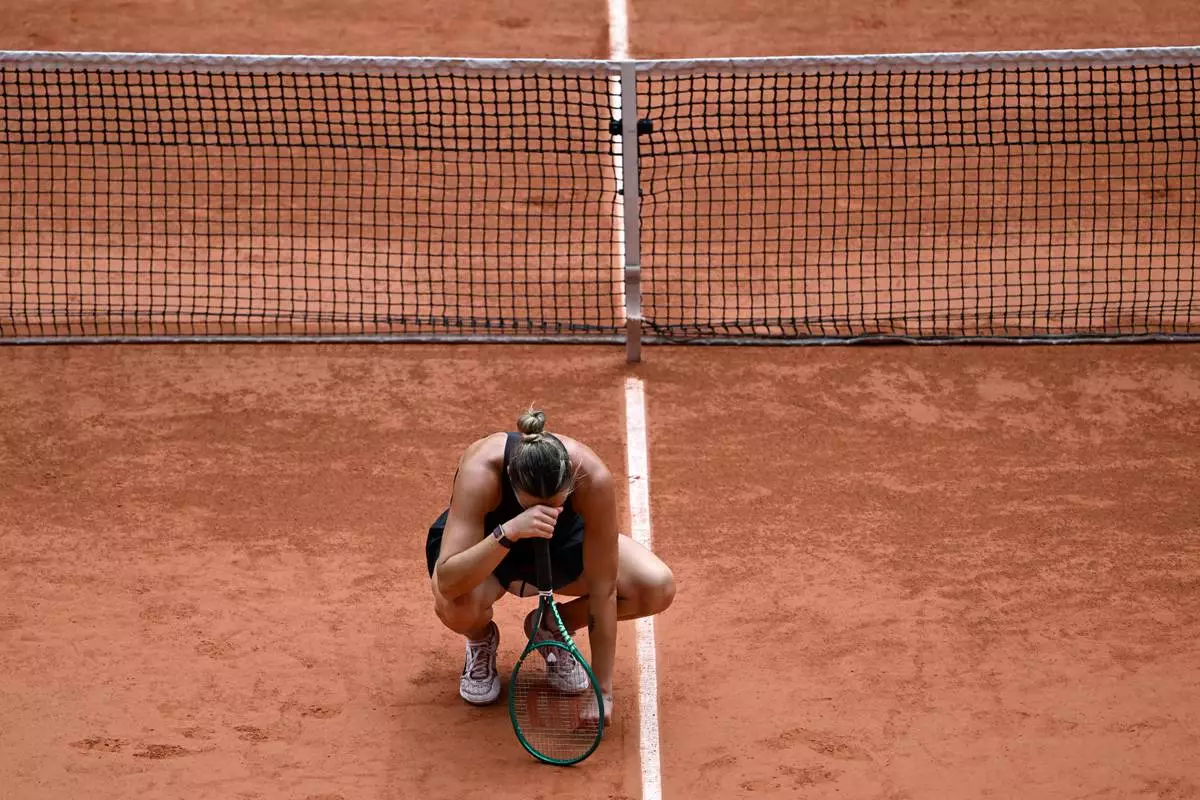
Sabalenka looked increasingly frustrated as the third set wore on, and when she missed a volley at the net in the fourth game of the decider she crouched and rested her head on her racket.

It was another big upset in a tournament where defending champion Gauff (third round) and four-time winner Iga Swiatek (fourth round) already tumbled out.

Sinner, last year's runner-up, served for the match in a second-round defeat, and 24-time major winner Novak Djokovic wasted a two-set lead in a third-round loss.

That opened things up for lesser-known players. According to Opta, this is the first major without a former champion in either the men’s and women’s semifinals since the French Open in 1977.

The unseeded Chwalinska came through three qualifying rounds to become only the second Polish woman to reach the semifinals at Roland Garros, along with Swiatek.

Chwalinska said British player Emma Raducanu’s run to the 2021 U.S. Open title as an 18-year-old qualifier had inspired her.

“It was such an impressive run, you know,” Chwalinska recalled. “Also, she was so young.”

When Kalinskaya’s big forehand from the back of the court went out, the 24-year-old Chwalinska had her biggest win, having never been beyond the second round at any major before this tournament.

Chwalinska’s total prize money heading into Roland Garros was $864,030 and reaching the last four here earns her 750,000 euros (about $872,000).

The roof was open on Court Philippe-Chatrier and there was a lot of wind.

“I don’t know why would they keep the roof open when it was crazy windy,” Sabalenka said. “It was very dirty tennis. I don’t know how people could actually just sit there and watch me play.”

Kalinskaya also struggled.

AP tennis: https://apnews.com/hub/tennis

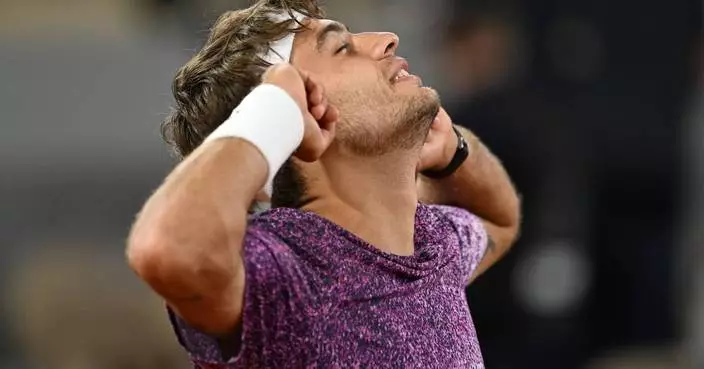
Italy's Flavio Cobolli reacts after winning the quarterfinal tennis match against Canada's Felix Auger-Aliassime at the French Open in Paris, Wednesday, June 3, 2026. (AP Photo/Aurelien Morissard)

Italy's Flavio Cobolli reacts after winning the quarterfinal tennis match against Canada's Felix Auger-Aliassime at the French Open in Paris, Wednesday, June 3, 2026. (AP Photo/Aurelien Morissard)

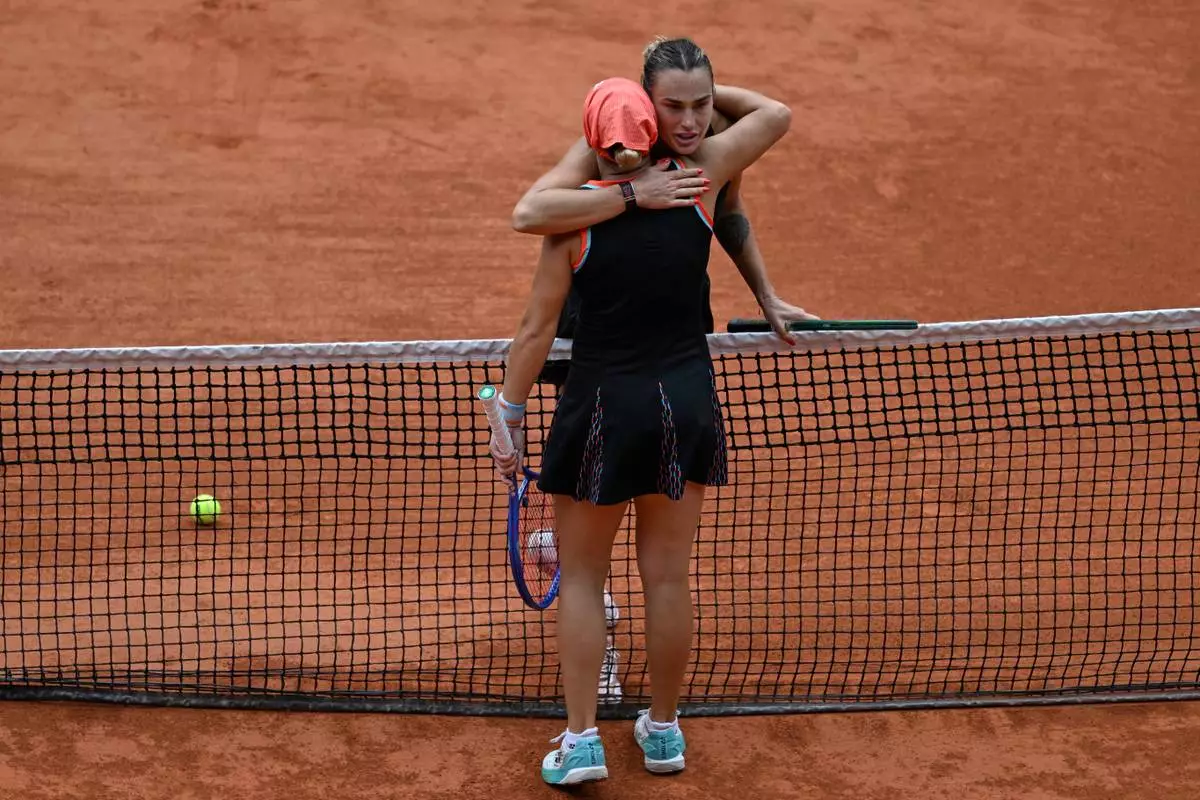
Aryna Sabalenka of Belarus hugs Russia's Diana Shnaider after the quarterfinal tennis match at the French Open in Paris, Wednesday, June 3, 2026. (AP Photo/Emma Da Silva)

Aryna Sabalenka of Belarus hugs Russia's Diana Shnaider after the quarterfinal tennis match at the French Open in Paris, Wednesday, June 3, 2026. (AP Photo/Emma Da Silva)

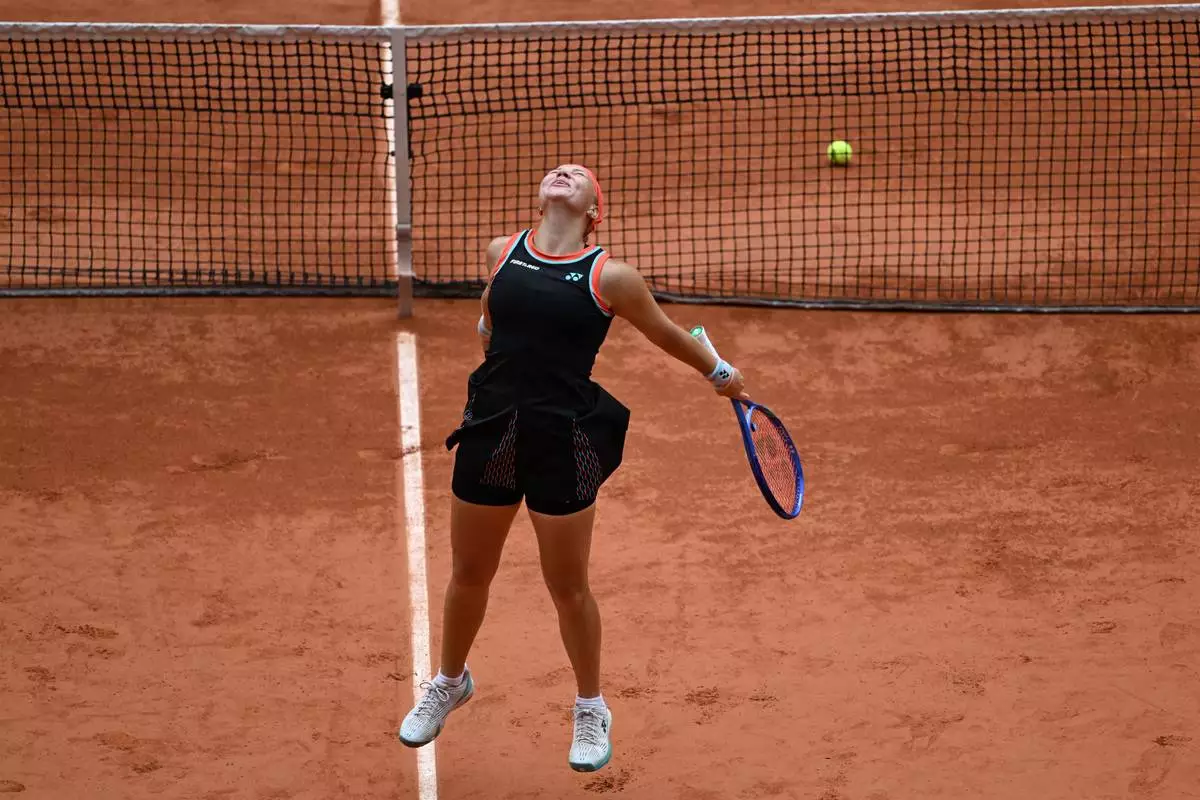
Russia's Diana Shnaider reacts after winning the quarterfinal tennis match against Aryna Sabalenka of Belarus at the French Open in Paris, Wednesday, June 3, 2026. (AP Photo/Emma Da Silva)

Russia's Diana Shnaider reacts after winning the quarterfinal tennis match against Aryna Sabalenka of Belarus at the French Open in Paris, Wednesday, June 3, 2026. (AP Photo/Emma Da Silva)

Aryna Sabalenka of Belarus reacts after losing the quarterfinal tennis match against Russia's Diana Shnaider at the French Open in Paris, Wednesday, June 3, 2026. (AP Photo/Emma Da Silva)

Aryna Sabalenka of Belarus reacts after losing the quarterfinal tennis match against Russia's Diana Shnaider at the French Open in Paris, Wednesday, June 3, 2026. (AP Photo/Emma Da Silva)

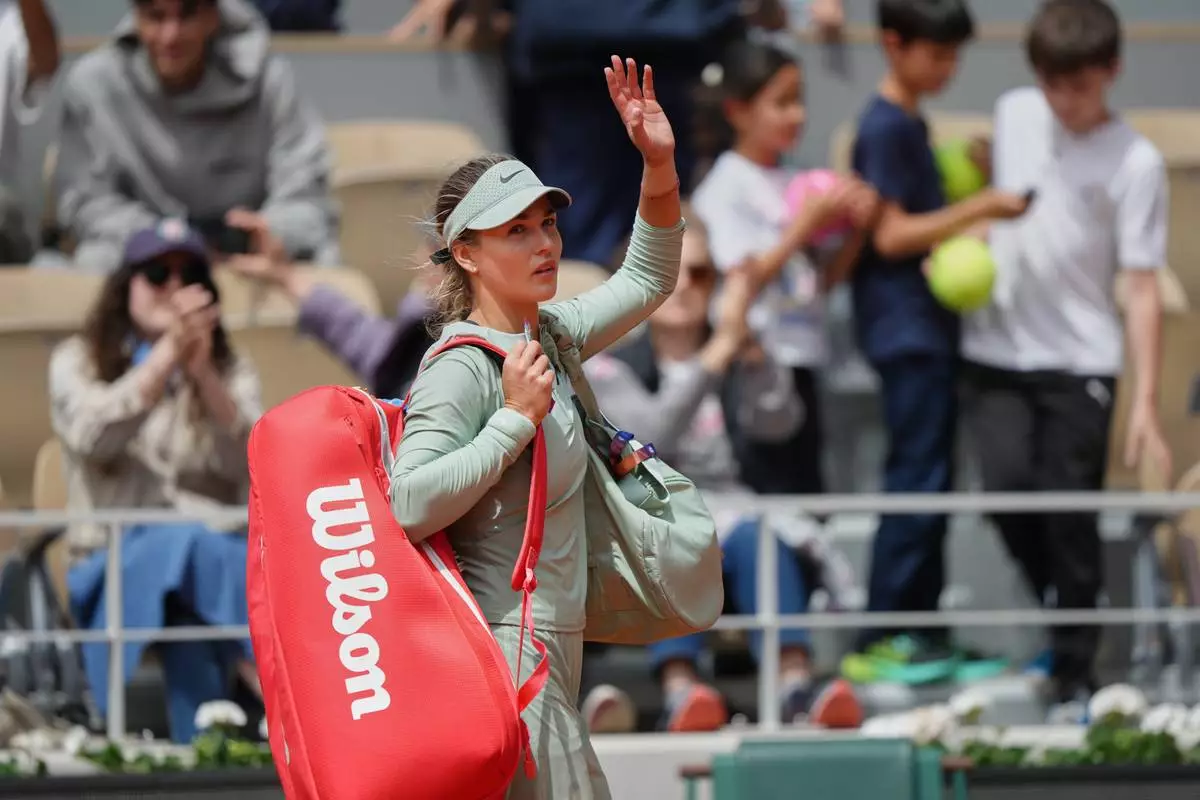
Russia's Anna Kalinskaya walks off the court after the quarterfinal tennis match against Poland's Maja Chwalinska at the French Open in Paris, Wednesday, June 3, 2026. (AP Photo/Aurelien Morissard)

Russia's Anna Kalinskaya walks off the court after the quarterfinal tennis match against Poland's Maja Chwalinska at the French Open in Paris, Wednesday, June 3, 2026. (AP Photo/Aurelien Morissard)

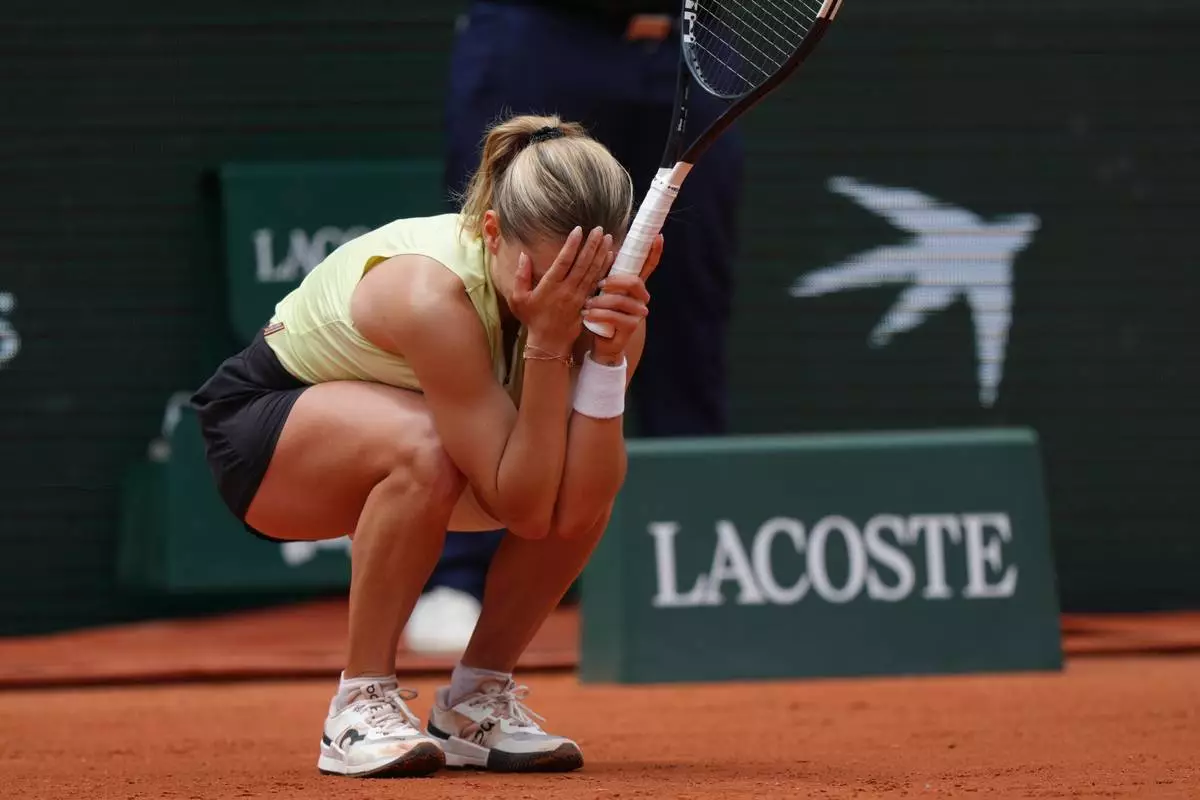
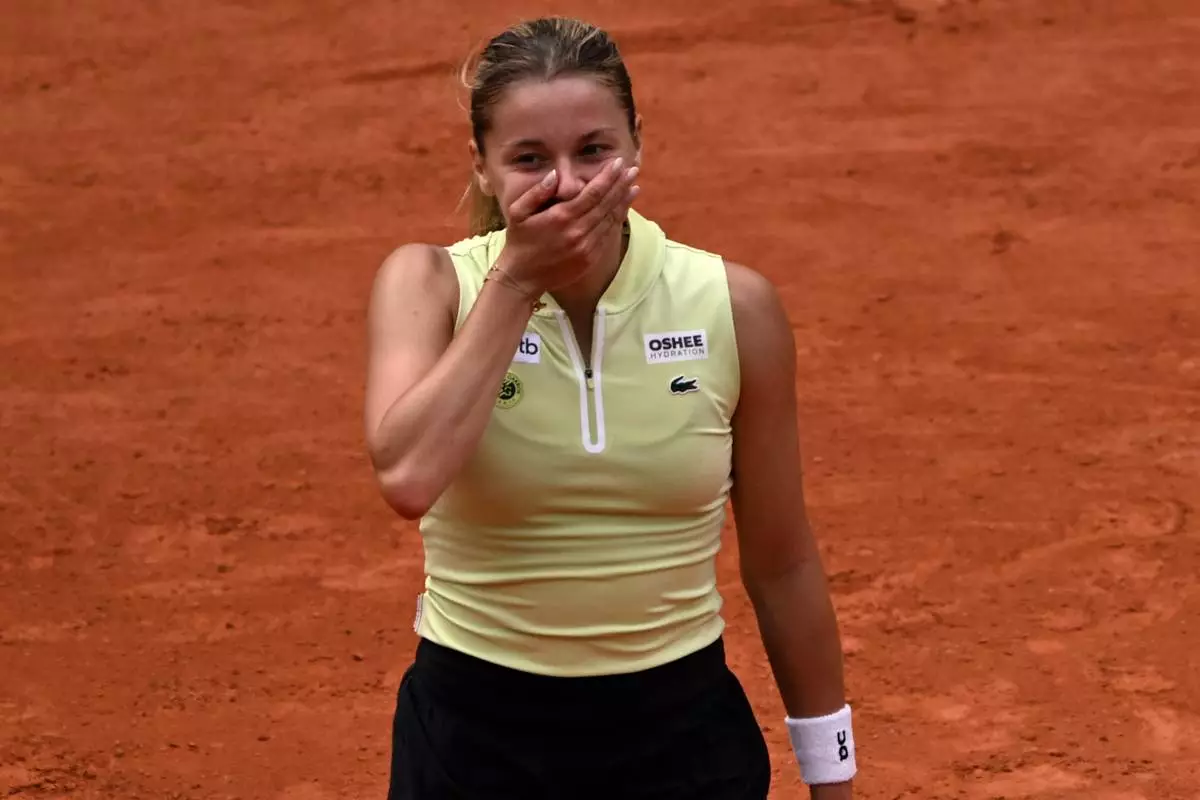
Poland's Maja Chwalinska reacts after winning the quarterfinal tennis match against Russia's Anna Kalinskaya at the French Open in Paris, Wednesday, June 3, 2026. (AP Photo/Aurelien Morissard)

Poland's Maja Chwalinska reacts after winning the quarterfinal tennis match against Russia's Anna Kalinskaya at the French Open in Paris, Wednesday, June 3, 2026. (AP Photo/Aurelien Morissard)

Poland's Maja Chwalinska reacts after winning the quarterfinal tennis match against Russia's Anna Kalinskaya at the French Open in Paris, Wednesday, June 3, 2026. (AP Photo/Emma Da Silva)

Poland's Maja Chwalinska reacts after winning the quarterfinal tennis match against Russia's Anna Kalinskaya at the French Open in Paris, Wednesday, June 3, 2026. (AP Photo/Emma Da Silva)

Recommended Articles