LD reminds employers and employees to take heat stroke preventive measures in times of Heat Stress at Work Warning
As the Heat Stress at Work Warning is now in effect, the Labour Department (LD) reminds employers and employees to take appropriate measures during the effective period of the warning to prevent heat stroke when working in hot weather or hot environments.
The Labour Department (LD), Photo source: reference image
Employees who work outdoors or in non-air-conditioned indoor environments face high levels of heat stress and are at a relatively higher risk of heat stroke. Employers should assess the risk factors of heat stress for employees at work and, based on the identified risk factors, take necessary preventive and control measures, including rescheduling work periods, setting up shading covers, providing ventilation and heat dissipation equipment, and reminding employees to replenish water and rest in a timely manner.
The Heat Stress at Work Warning is formulated by the LD based on the Hong Kong Heat Index. There are three levels of the warning: Amber, Red and Black, which help employers and employees better understand the level of heat stress while working outdoors or indoors without air-conditioning systems.
A spokesman for the LD said that when the department issues the Heat Stress at Work Warning, employers must refer to the criteria and recommendations provided in the "Guidance Notes on Prevention of Heat Stroke at Work" to conduct risk assessments, according to the workloads and other relevant heat stress risk factors, for employees who work outdoors or in non-air-conditioned indoor workplaces. Appropriate rest breaks should be arranged every hour, as far as reasonably practicable, based on various levels of the Heat Stress at Work Warning, to reduce employees' risk of heat stroke.
Employees must also follow instructions to rest on time. Whenever there are any symptoms of heat-related illnesses, such as headache, dizziness, thirst, and nausea, they should rest in a cool and shady place, drink water, and inform employers/supervisors to take appropriate action immediately.
The LD issued the "Guidance Notes on Prevention of Heat Stroke at Work", detailing the various risk factors that should be considered when conducting heat stress risk assessments and recommending corresponding control measures for identified risk factors for employers' and employees' reference. For the Heat Stress at Work Warning and related guidelines, please refer to the department's thematic webpage: www.labour.gov.hk/eng/news/prevention_of_heat_stroke_at_work.htm.
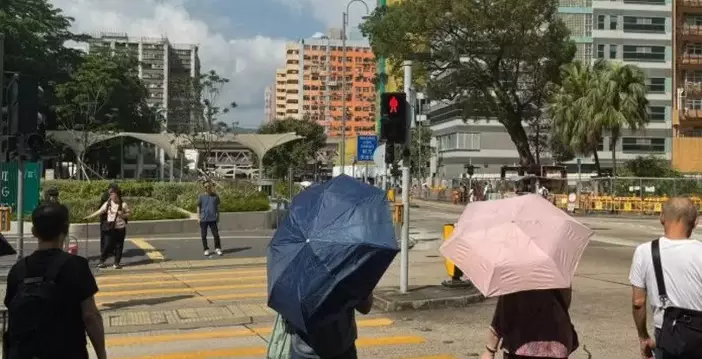
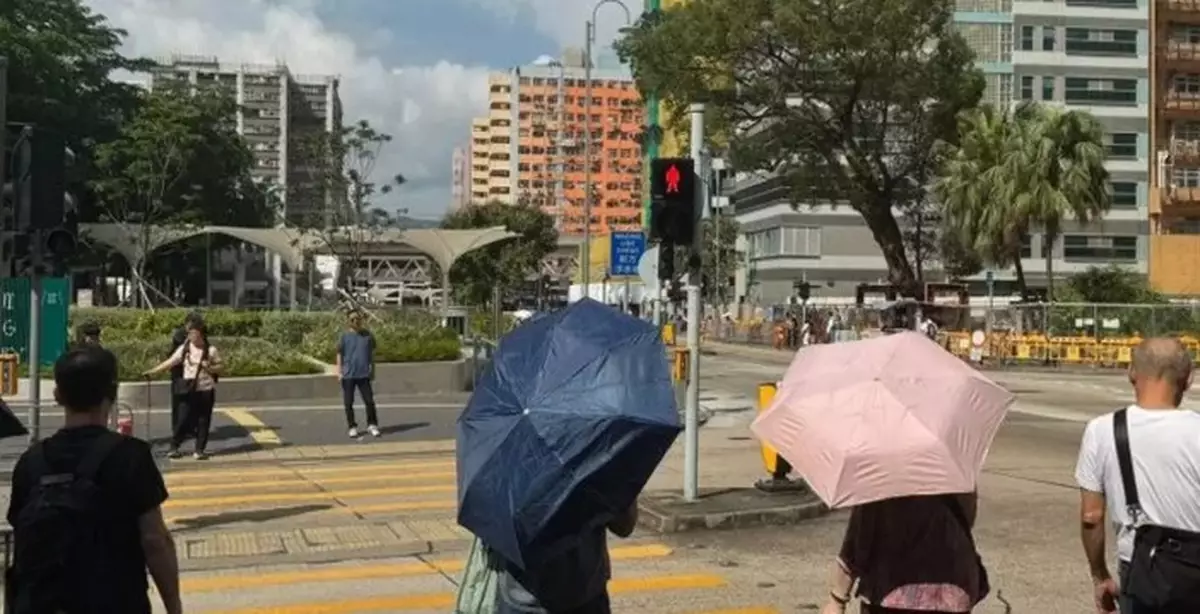
Hot weather in Hong Kong, Photo by Bastille Post
Fish restocking exercise on National Fish Releasing Day 2026 held
To mark the National Fish Releasing Day, the Agriculture, Fisheries and Conservation Department (AFCD) today (June 6) co-organised restocking activities with various local organisations and released juvenile fish in different waters of Hong Kong, with an aim to restore and enhance aquatic resources as well as to deepen public understanding about restocking.
Speaking at the launch ceremony, the Under Secretary for Environment and Ecology, Miss Diane Wong, said that The Government has been actively conducting restocking exercises to enhance marine resources as outlined in the Blueprint for the Sustainable Development of Agriculture and Fisheries. The theme of the restocking activity this year, "Restocking for an Everlasting Ocean", stresses the value of restocking, which is to allow marine resources to thrive and to sustain, and to leave a living and harmonious marine environment for our future generations. The AFCD will organise a number of workshops about restocking for the public and the education sector, to embed the concept of science-based restocking deeply in the community and schools.
Following the launch ceremony, representatives from the AFCD, the Hong Kong Buddhist Association, Ocean Park Hong Kong and the Ocean Park Conservation Foundation Hong Kong released some 62 000 juvenile fish of native species, including black seabream (Acanthopagrus schlegelii), yellowfin seabream (Acanthopagrus latus), red seabream (Pagrus major), and two newly added species this year: short barbeled velvetchin (Hapalogenys nigripinnis) and giant grouper (Epinephelus lanceolatus), in Yan Chau Tong Marine Park and South Lantau Marine Park. The diverse habitats in these two marine parks, such as artificial reefs, coral communities, natural rocky reefs and boulders, provide suitable habitats for the juvenile fish. Existing fisheries management measures also offer effective protection for their growth. The AFCD and its collaborating organisations will conduct regular underwater surveys to record the status of released fish and monitor the status of local fisheries resources as a whole.
The restocking exercise, supported by the Urban Planning and Natural Resources Bureau of Shenzhen Municipality, the Marine Development Bureau of Shenzhen Municipality, the Hong Kong Fishermen Consortium, the Hong Kong Buddhist Association, Ocean Park Hong Kong and the Ocean Park Conservation Foundation Hong Kong, brought together about 150 students, representatives from religious groups, fishermen's associations and green groups, and volunteers from Shenzhen, etc. The AFCD also released a restocking leaflet today to introduce information about the science-based restocking to the public and provide guidelines for organisations interested in conducting restocking. Later this year, the AFCD will jointly organise more workshops with the Urban Planning and Natural Resources Bureau of Shenzhen Municipality and the Marine Development Bureau of Shenzhen Municipality to further enhance understanding about science-based restocking among the public and the education sector.
The AFCD reminds the public to think carefully before participating in animal release activities to avoid affecting the ecological environment or causing unnecessary suffering to animals. Members of the public are encouraged to participate in science-based restocking or other charitable activities as alternatives to improper animal releases.

Source: AI-found images