German manufacturers are finding it increasingly difficult to stock up on intermediate products due to the ongoing conflict in the Middle East, a survey from the Munich-based Ifo Institute said on Tuesday, with data showing the problem is becoming more pronounced as the uncertainty drags on.
The crisis erupted following U.S.-Israeli strikes on Iran in late February, with the spillover effects extending far beyond the region and impacting on global supply chains. Much of the focus has been on the disruption caused to the Strait of Hormuz, a critical waterway through which a considerable share of the world's oil and gas supplies are transported.
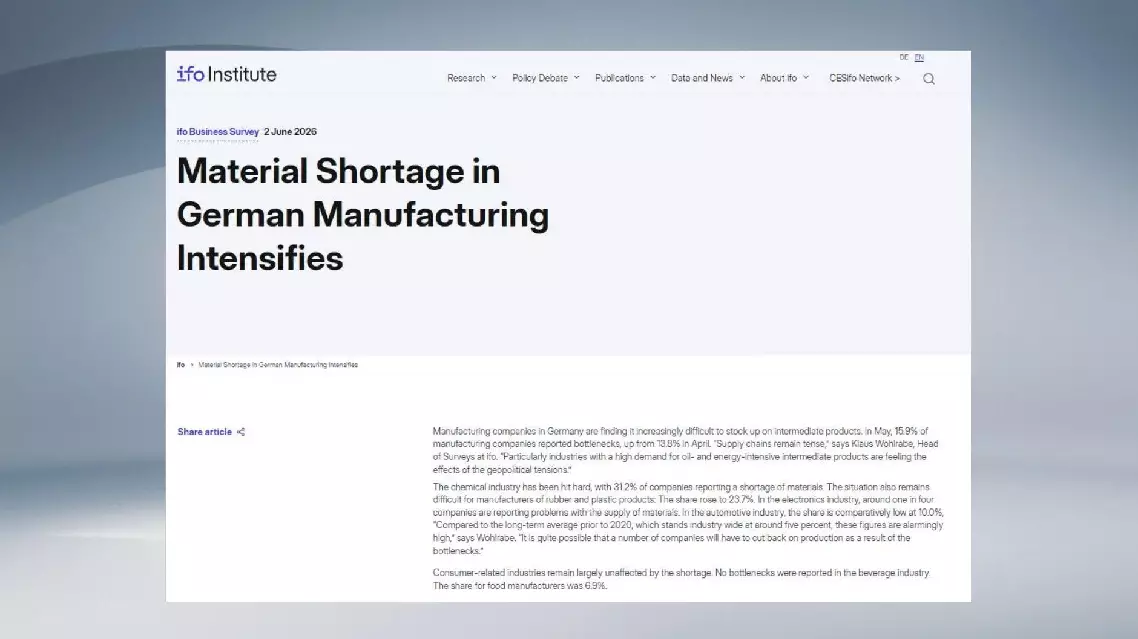
According to the think tank survey, 15.9 percent of German manufacturing companies experienced raw material shortages in May, up from 13.8 percent in April.
Chemical companies were hit hardest, according to the data, with 31.2 percent companies reporting raw material shortages as a result of the conflict.
In the rubber and plastics products industry, approximately 23.7 percent of companies reported problems with the supply of materials, the survey showed.
Analysts say the effects of the Middle East conflict have hit German industries through the impact on energy, trade, and supply chain channels. Many warn that rising energy prices are not only driving up industrial production and logistics costs, but may also gradually spill over into other sectors, including food and building materials.
German manufacturing sector faces material shortage amid Middle East conflict