German airlines are facing mounting financial pressure as energy costs continue to climb, forcing carriers to raise ticket prices, trim route networks, and rethink their operational strategies.
The squeeze on profit margins comes amid a broader economic challenge for Europe's aviation sector, where rising expenses are testing the resilience of even the continent's largest carriers.
Lufthansa said in May that it could spend an additional 1.7 billion euros this year on jet fuel. Many airlines in the country have raised ticket prices and canceled short flights to cut costs.
At Berlin Brandenburg Airport, travelers are already feeling the impact on their wallets. The cost of getting from point A to point B has risen sharply across the board, with airfares seeing some of the most dramatic increases.
"I noticed that in general, the prices on taxi, bus and prices on flights became much more high. The last time I checked the prices to go from here to Rome and it was even one flight like three hundred Euros. Even before they were like 120, 130," said an air traveler at Berlin Brandenburg Airport.
Behind the sticker shock lies a complex web of cost pressures weighing on German carriers.
As one industry expert pointed out that the challenges extend far beyond volatile fuel prices, with domestic operational expenses creating a particularly heavy burden for airlines based in Germany.
"The aviation industry in Germany is picking up very slowly partly due to rising operational cost at home. For example, on top of the aviation tax here, the airlines also have to pay a good amount of construction fee and spend a lot on security checks and labor cost. And the rising fuel prices are definitely adding to their financial strains," said Yvonne Ziegler, a professor from Business Administration, Frankfurt University of Applied Sciences.
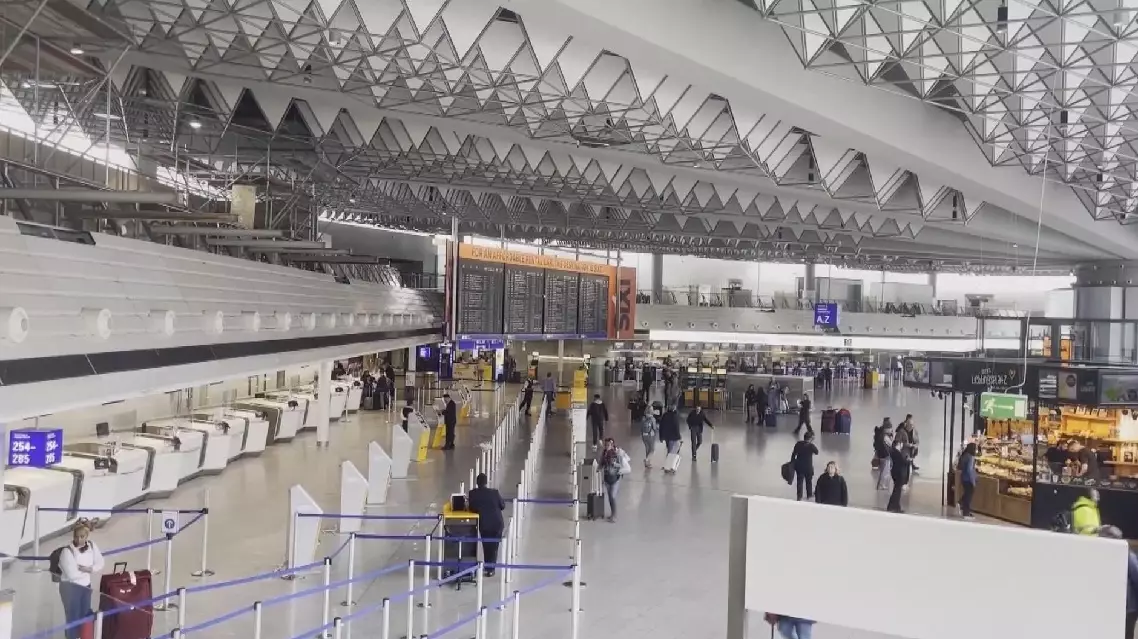
German airlines raise ticket prices, cancel short flights to cut costs