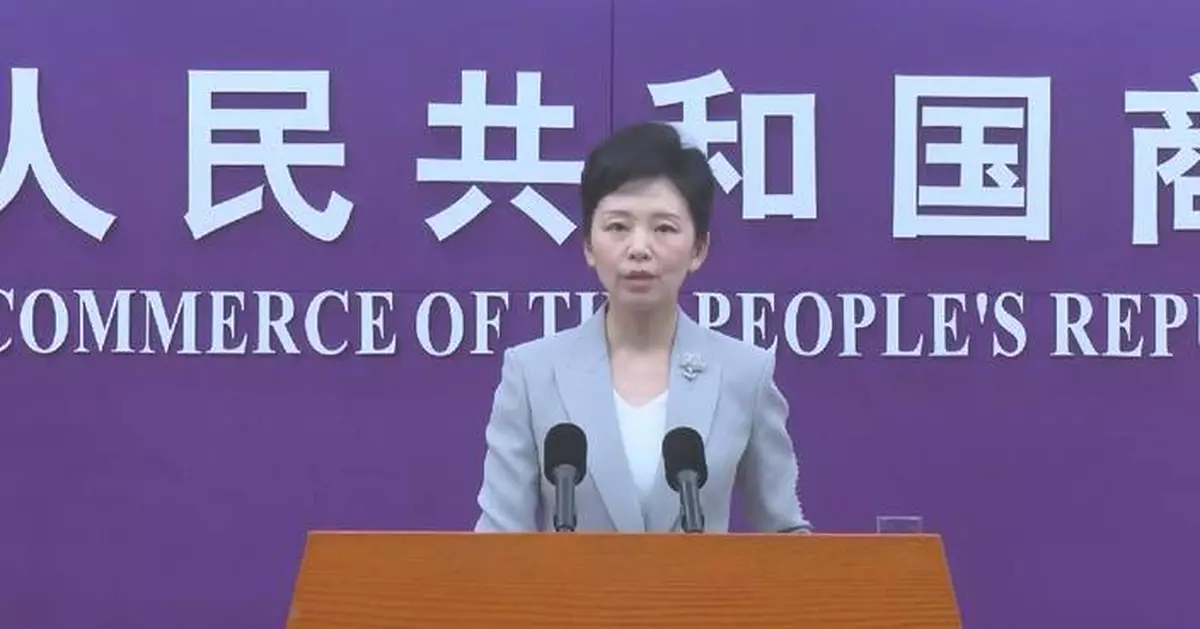
The United States' abuse of export controls has impacted the global semiconductor industry chain, Ministry of Commerce spokeswoman He Yongqian said at a press conference in Beijing on Thursday.
She made the remarks in response to a media query on the U.S. Department of Commerce's move to close the so-called "regulatory loopholes" in the chip industry.
"In recent years, the United States has repeatedly abused export controls under the pretext of national security, which has seriously undermined the legitimate rights and interests of Chinese enterprises, severely disrupted the international economic and trade order, and gravely struck the stability of the global semiconductor industry chain and supply chain," He said.
"China always opposes such moves. We urge the U.S. side to correct its wrongdoings as soon as possible, stop its discriminatory measures against China, and safeguard the stability of global industrial and supply chains," said the spokeswoman.
US abuse of export control impacts global semiconductor industry chain: spokeswoman
US abuse of export control impacts global semiconductor industry chain: spokeswoman
Shortages of supplies and personnel hampering a quick response to an ongoing Ebola outbreak in Central Africa are the biggest public concern, according to a recent online survey conducted by the China Global Television Network (CGTN).
The survey was carried out to assess public worries surrounding the Ebola outbreak in the Democratic Republic of the Congo (DRC) and its neighbor Uganda.
According to the survey findings, 31 percent of respondents identified the lack of supplies and personnel delaying a quick response to Ebola control as their primary worry, ranking it highest among the options presented in the poll.
Meanwhile, anxiety regarding the epidemic worsening and the risk of a broader global crisis were tied at 28 percent each. Furthermore, 13 percent of those surveyed expressed their greatest fear that the virus could become more deadly.
The Ebola virus is highly contagious and causes symptoms including fever, vomiting, diarrhea, generalized pain or malaise, and in severe cases, internal and external bleeding.
The DRC had reported a total of 344 confirmed cases of Ebola, including 60 deaths, and Uganda a total of 15 confirmed cases, including one death, according to the World Health Organization (WHO) on Wednesday.
WHO declared the Ebola outbreak in the DRC a public health emergency of international concern on May 17. The current outbreak is caused by the Bundibugyo strain of the Ebola virus, for which there is currently no approved vaccine or specific treatment.
The DRC has faced repeated Ebola outbreaks since the virus was first identified near the Ebola River in 1976. The latest Ebola outbreak is the 17th in the DRC since 1976.
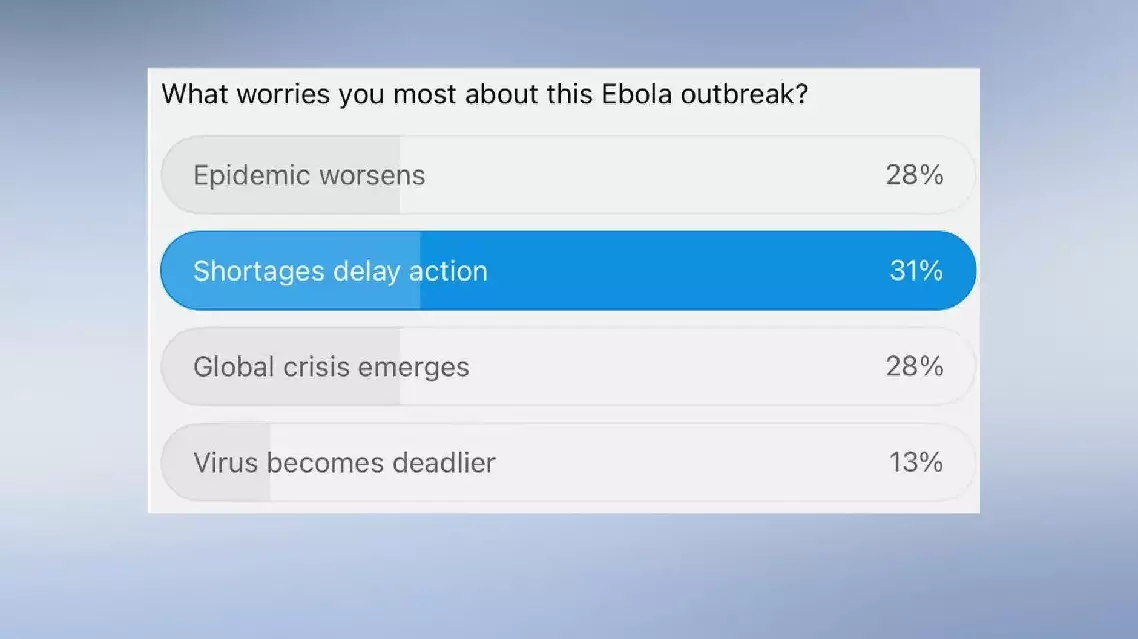
Supply, personnel shortages top public concerns over Ebola response: CGTN poll