Skip to Content Facebook Feature Image

EDO Launches Ad EnGage Optimize — Autonomous, AI-Powered Solution Bringing Outcomes-Driven Campaign Optimization to Convergent TV

Business

EDO Launches Ad EnGage Optimize — Autonomous, AI-Powered Solution Bringing Outcomes-Driven Campaign Optimization to Convergent TV
Business

Business

EDO Launches Ad EnGage Optimize — Autonomous, AI-Powered Solution Bringing Outcomes-Driven Campaign Optimization to Convergent TV

2026-06-04 20:30 Last Updated At:20:40

NEW YORK--(BUSINESS WIRE)--Jun 4, 2026--

EDO, the TV outcomes company, announced the release of Ad EnGage Optimize, the latest addition to its Ad EnGage platform, purpose-built for the Convergent TV era. Fueled by more than a decade of EDO’s investment-grade TV outcomes and ad intelligence data, Ad EnGage Optimize gives brands and agencies the power to autonomously optimize frequency, creative rotation, audience targeting, and media planning in-flight — turning media investments into a continuous, performance-driven feedback loop.

This press release features multimedia. View the full release here: https://www.businesswire.com/news/home/20260604545198/en/

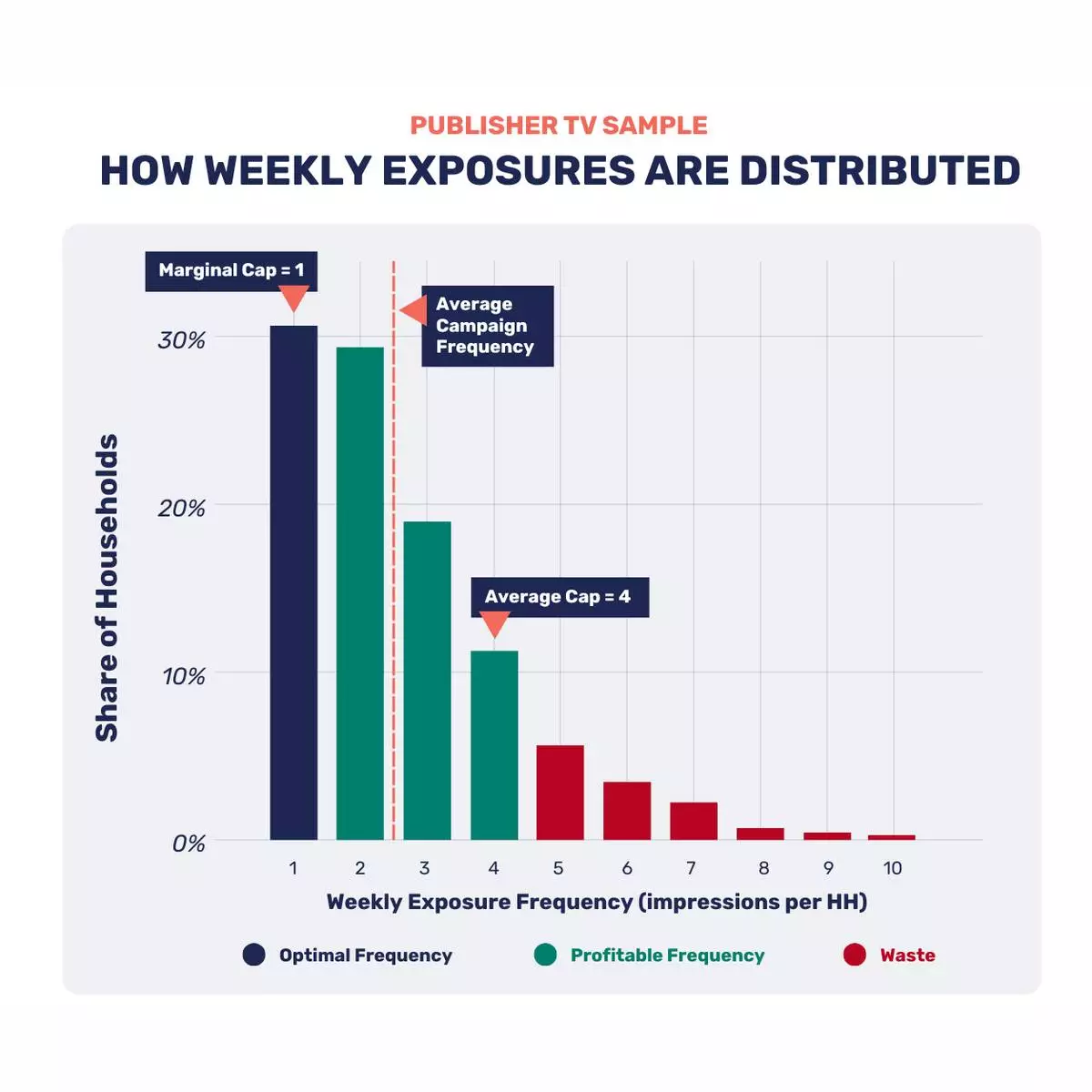
According to the latest TV outcomes research, EDO found that in some Convergent TV campaigns, up to 35%+ of ad impressions can be reinvested in higher-performing inventory through smarter frequency capping alone. Additionally, optimizations in creative rotation across streaming and linear can drive a 20% increase in campaign performance. In a media environment where every dollar is being held accountable to results, this approach goes beyond incremental gains, representing millions of dollars in untapped value sitting inside existing brand advertising campaigns.

“Our industry has been building towards this moment for years. As the battle for third-party audience measurement gives way to a world of first-party audiences and predictive outcomes, consistent and precise measurement on both sides of the equation has never been more important — and optimization has never been more urgent. Modern marketers know that optimization is the top of the value pyramid — the game-changer in convergent TV that has never been fully realized, until now. Ad EnGage Optimize gets us closer to the true ‘Easy Button’ of convergent TV advertising,” said Kevin Krim, President & CEO of EDO. “By taking EDO's unparalleled TV outcomes data — for every ad, everywhere, all at once — we can autonomously analyze any in-market campaign and provide strategic, actionable insights. Modern marketers can finally stop number-crunching and start making the decisions that actually move their business forward. With Ad EnGage Optimize, the decision is the deliverable."

Built on a Decade of Outcomes. Designed for What’s Next.

EDO’s Ad EnGage Optimize runs on the same investment-grade data layer trusted by every major TV network, streamer, agency holdco, and fast-growing roster of top-tier brand advertisers. By connecting every TV airing to the consumer behaviors proven to predict business results, EDO’s TV outcomes have become an indispensable industry indicator of the fair value of media. EDO’s media partners understand this and are leveraging EDO to increasingly scale cross-platform outcomes measurement — the critical first step towards optimizing across their own media properties. Brands and agencies can now apply EDO’s TV outcomes data to an optimization workflow, whether that is identifying the best frequency cap, ensuring efficient media plans, refining the target audience, or adjusting creative rotations.

Ad EnGage Optimize goes further — applying that intelligence across every dimension of a campaign simultaneously: creative, audience, frequency, media placement, and DMA. No longer are optimization scenarios based on single-attribute analyses. EDO now surfaces the optimal performance for every combination of attributes, based on what has worked across categories, brands, products, and media environments. In a world where every advertiser has their own notion of audience, what matters most are results.

At its core, Ad EnGage Optimize performs a simple but essential function: translating EDO’s Convergent TV outcomes insights into actionable decisions and recommendations — autonomously, across every campaign lever, every time. This is especially important in times of economic uncertainty for marketers across brand categories, where every media dollar matters. Each offering of the Ad EnGage Optimize suite is designed to fit seamlessly into any workflow.

Why the Market is Overdue for Ad EnGage Optimize

For years, the data to optimize Convergent TV campaigns has existed. The problem was never insight — it was execution. Translating outcomes data into action across dozens of publishers, hundreds of DMAs, and multiple campaigns simultaneously was simply beyond what any team could do manually at the speed and scale modern advertising demands.

"Every week, client partners were sitting on millions of dollars of incremental campaign value — and they knew it. The frequency was off, the creative was wearing out, and the audience targeting needed adjustment. But acting on all of it, manually, across every campaign and every publisher, was not easy or scalable," said Laura Grover, SVP, Head of Client Solutions, EDO. "Ad EnGage Optimize changes that equation entirely. For the first time, brands and agencies can apply EDO's outcomes data to every optimization lever automatically, in-flight, and at the scale their campaigns actually require.”

Even with the industry’s most precise predictive outcomes data, campaign optimization was still a task too multi-dimensional and time-consuming to execute manually every single time across every campaign, publisher, and audience segment. That's the challenge EDO has built Ad EnGage Optimize to solve. With Vertical AI models working continuously against EDO's outcomes data, brands and agencies can stop managing optimization and start leading strategy.

"The industry has spent years debating which metric should be the currency of TV advertising. That was always the wrong argument. As AI gives brands, publishers, and agencies the ability to build a coordinated strategic brain across the full marketing stack, what matters most are the inputs that can't be fabricated — behavioral ground truth, rigorous methodology, and structural separation from the transactions being measured," said Randall Rothenberg, Co-creator of the new Unified Marketing Intelligence framework, and former President & CEO of the Interactive Advertising Bureau. "While you can orchestrate across a thousand vendors with AI, you cannot fabricate the signal that tells you whether any of it worked. That's what EDO has built, and continues to innovate with Ad Engage Optimize."

Move past media measurement’s table stakes and into the outcomes and optimization layer that Convergent TV has always needed. Download EDO's Frequency Optimization whitepaper and book a demo of Ad EnGage Optimize at edo.com/optimize.

About EDO

EDO is the TV outcomes company. Our industry-leading measurement platform connects convergent TV airings to the ad-driven consumer behaviors most predictive of future sales. EDO empowers the advertising industry to maximize media impact, measure creative performance, and know the fair value of every impression — across linear and streaming for an increasingly programmatic world. By combining immediate engagement signals with world-class decision science and vertical AI, EDO equips industry leaders with syndicated, investment-grade data that aligns media to business results — with detailed competitive, category, and historical insights. Leading brands, agencies, networks, streamers, and studios trust EDO's TV intelligence to know what works.
Automated Frequency Optimization Byline Graphic

Automated Frequency Optimization Byline Graphic
BEIRUT (AP) — The leader of the Iran-backed Hezbollah militant group has rejected the latest ceasefire agreement reached between Israel and the Lebanese government, demanding a complete Israeli withdrawal.

Naim Kassem, in a written statement read on Hezbollah’s Al-Manar TV on Thursday, said the agreement's demand that Hezbollah fighters leave southern Lebanon under fire would mean “surrender, defeat and achieving the enemy’s goals.”

“What we are concerned about is an end to the aggression, ceasefire and Israel’s withdrawal,” Kassem said. “We did not make any commitment to any party to stop resisting as long as there is occupation,” he added.

THIS IS A BREAKING NEWS UPDATE. AP’s earlier story follows below.

BEIRUT (AP) — Israeli strikes killed at least four people in Lebanon, according to local authorities, and a U.N. peacekeeper was killed in the crossfire on Thursday. The latest violence came after another ceasefire agreement was announced in the fighting between Israel and the Iran-backed Hezbollah militant group.

The ongoing fighting in Lebanon, where Israeli forces have seized large swaths of the south, threatens efforts to end the Iran war and reopen the Strait of Hormuz, a key transit point for oil and gas whose closure has jolted the world economy.

Iran has demanded that any lasting truce extend to Lebanon. Israeli Prime Minister Benjamin Netanyahu, who faces elections later this year, wants to press ahead with Israel's offensive until Hezbollah no longer poses a threat. Israeli troops have seized around a fifth of Lebanon since Hezbollah began launching rocket and drone attacks in solidarity with Iran days into the wider war.

U.S. President Donald Trump, who faced a rare rebuke from Congress on Wednesday, has sought to downplay the diplomatic deadlock and the failure of declared ceasefires to end the fighting, telling reporters that in the Middle East, "a ceasefire is when you’re shooting in a more moderate manner.”

A Serbian peacekeeper was killed, and two other peacekeepers were wounded, when a mortar struck their location near Marjayoun, a Christian-majority town that has seen intense fighting, according to the U.N. mission, known as UNIFIL, and Serbia's Defense Ministry.

Neither said whether the mortar fire came from Israel or Hezbollah.

Lebanon’s state-run National News Agency said a drone strike killed a motorcyclist and wounded four people in the village of Maaroub. It said airstrikes on the village of Sohmor in the Bekaa Valley, in eastern Lebanon, killed three people and wounded others. It also reported airstrikes in other areas of the south.

There was no immediate comment from the Israeli military, which has warned people not to go into parts of southern Lebanon where it says it is striking Hezbollah facilities.

Hezbollah resumed its rocket fire days after Israel and the United States launched their surprise attack on Iran on Feb. 28. Before then, Israel had regularly carried out strikes in Lebanon against what it said were militant targets, often killing civilians, despite an earlier truce reached in 2024.

In the southern city of Sidon, many residents reacted to the ceasefire announcement with skepticism, saying previous agreements had failed to stop the violence.

“Every few days a ceasefire is announced, but people keep getting killed,” said Mayada Hijazi.

“It’s all talk and no action,” said Salah Nassab. “We keep going back to our homes and then we get displaced again, back and forth. We’re very tired."

In the latest fighting, Israeli troops have pushed further into southern Lebanon than at any time since the end of Israel's 1982-2000 occupation. It now occupies arouns a fifth of the country.

More than 3,500 people have been killed in Lebanon and over 1.2 million have been displaced. The fighting has killed 27 Israeli soldiers and three civilians.

The latest declared ceasefire came about through U.S. brokered talks held between Israel and Lebanon's government, which accuses Hezbollah of dragging the country into war and had made efforts to disarm it before the latest hostilities.

The ceasefire does not officially include Hezbollah and calls for Lebanon's armed forces to take control of security zones in Lebanon from which the militants would be banned. Hezbollah has said it will only adhere to a ceasefire if Israel halts its attacks and begins withdrawing from the country.

Lebanese President Joseph Aoun on Thursday called the new agreement "the last chance to enter a final and comprehensive ceasefire.” He said Lebanon was ready to implement Wednesday's deal once he receives responses from relevant factions in Lebanon, including Hezbollah. The United States — and Trump himself — would determine how and when the deal is implemented, he told journalists on Thursday.

The agreement states that Hezbollah “is not just an enemy of Israel and an enemy of America, but that it is an enemy of Lebanon" and calls for dismantling it. The government has promised to do so in the past but does not have the capabilities to disarm Hezbollah by force.

The latest agreement did not say when Israel would withdraw from southern Lebanon but said the U.S. would support the Lebanese army as it works to assert control in areas where Hezbollah has long wielded power.

A top Iranian general on Thursday reiterated Tehran's demand for a full ceasefire in Lebanon and called for Israel to pull troops back to where they were when the wider war began. At that time, Israel held five strategic points along the border.

“Supporting the resistance in Lebanon is the duty of all of us, and eliminating Israel from the region is an achievable goal for Muslims,” Esmail Qaani, the head of the Revolutionary Guard’s elite Quds Force, was quoted as saying by the semiofficial Fars and Tasnim news agencies.

As diplomatic efforts have repeatedly faltered, Iran and the U.S. have traded fire in and around the Strait of Hormuz, which remains effectively closed. Before the war, around a fifth of the world's oil and gas, as well as large shipments of fertilizer and other goods, passed through the narrow waterway.

The U.S. has targeted what it says are Iranian threats to commercial shipping and its own forces, while Iran has launched missile and drone attacks on Gulf states hosting U.S. troops.

A strike Wednesday on a commercial airport in Kuwait that is also used by American forces for logistics and refueling killed an Indian national and wounded more than 60 people, including passengers and workers. Iran denied carrying out the strike.

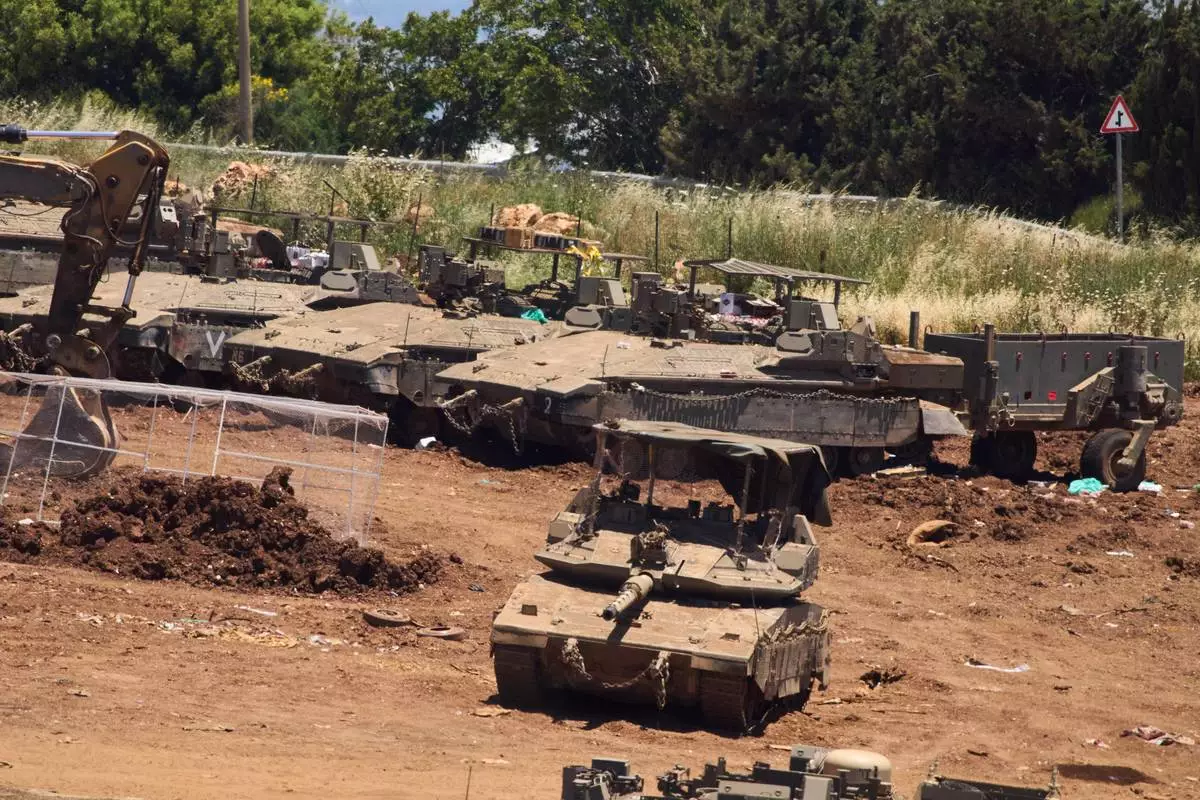
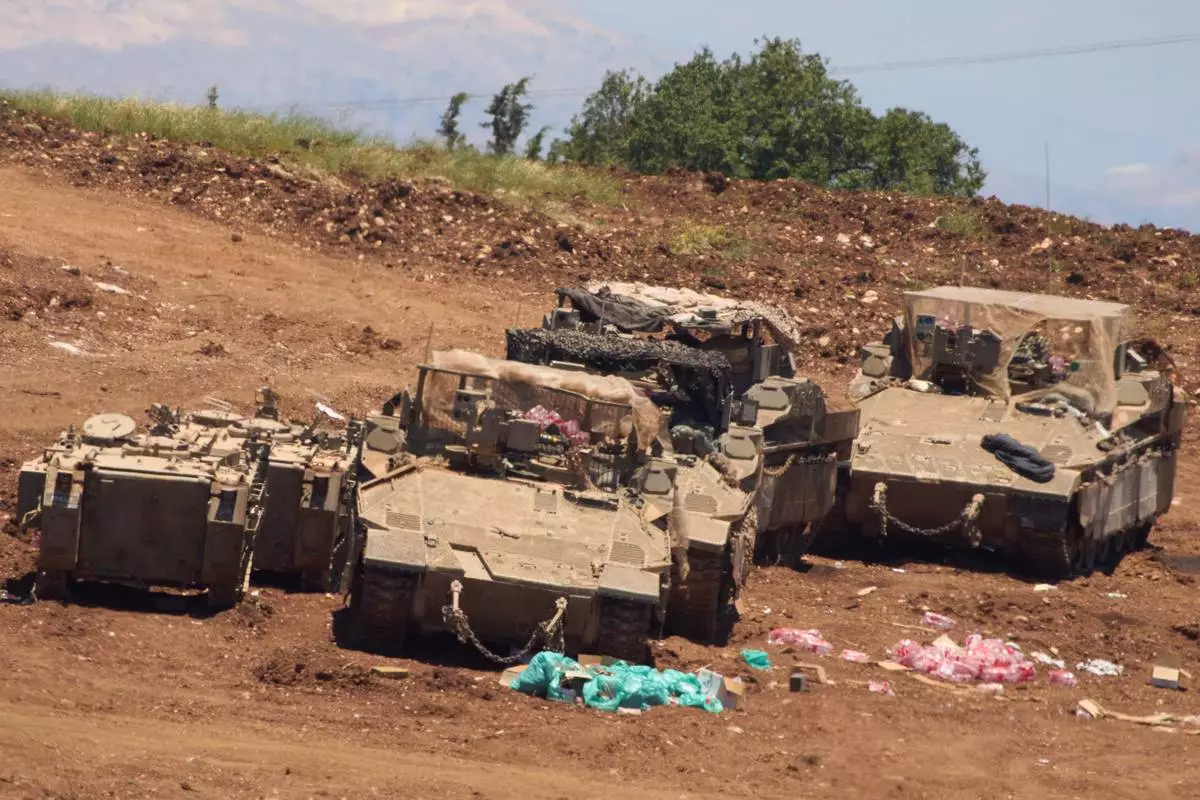
Israeli troops gather on the border with Lebanon in northern Israel, Thursday June 4, 2026. (AP Photo/Ariel Schalit)

Israeli troops gather on the border with Lebanon in northern Israel, Thursday June 4, 2026. (AP Photo/Ariel Schalit)

Israeli troops gather on the border with Lebanon in northern Israel, Thursday June 4, 2026. (AP Photo/Ariel Schalit)

Israeli troops gather on the border with Lebanon in northern Israel, Thursday June 4, 2026. (AP Photo/Ariel Schalit)

Israeli soldiers drive in southern Lebanon as seen from northern Israel, Thursday June 4, 2026. (AP Photo/Ariel Schalit)

Israeli soldiers drive in southern Lebanon as seen from northern Israel, Thursday June 4, 2026. (AP Photo/Ariel Schalit)

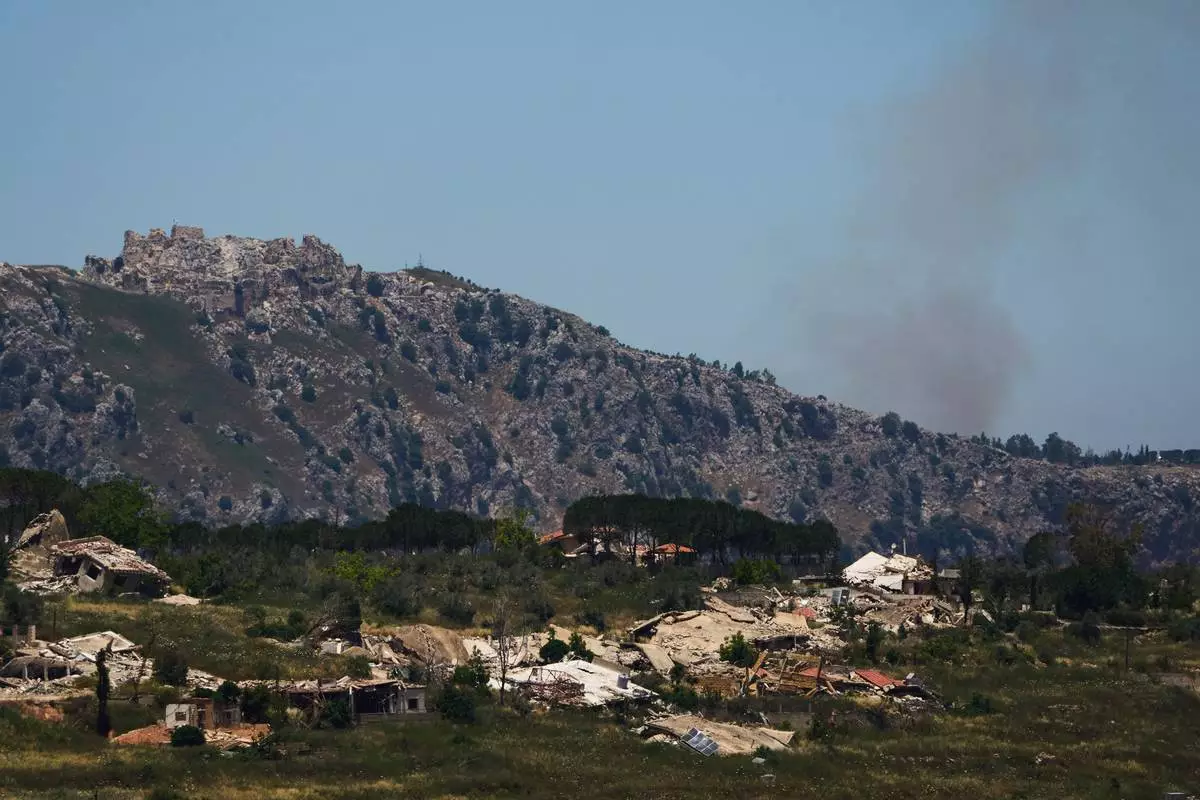
Smoke rises near the Beaufort Castle in southern Lebanon as seen from northern Israel, Thursday June 4, 2026. (AP Photo/Ariel Schalit)

Smoke rises near the Beaufort Castle in southern Lebanon as seen from northern Israel, Thursday June 4, 2026. (AP Photo/Ariel Schalit)

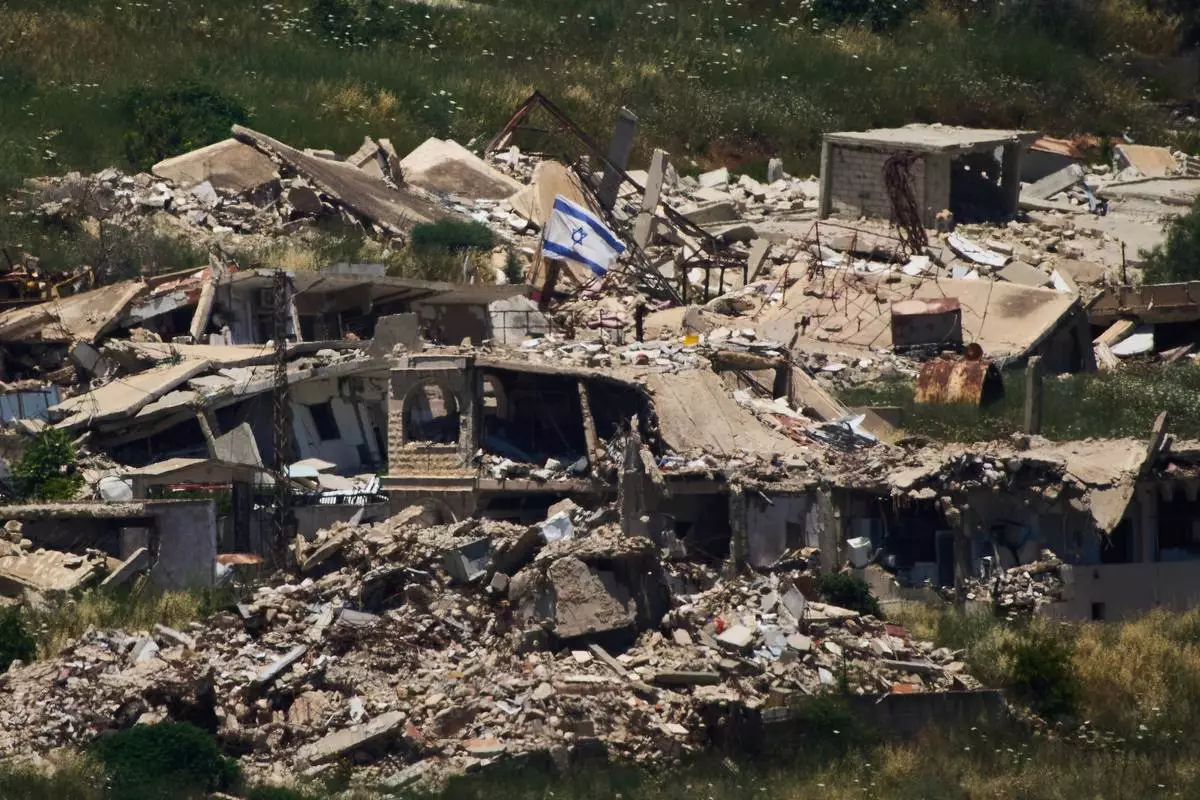
An Israeli flag hangs on a destroyed building in southern Lebanon as seen from northern Israel, Thursday June 4, 2026. (AP Photo/Ariel Schalit)

An Israeli flag hangs on a destroyed building in southern Lebanon as seen from northern Israel, Thursday June 4, 2026. (AP Photo/Ariel Schalit)

Recommended Articles