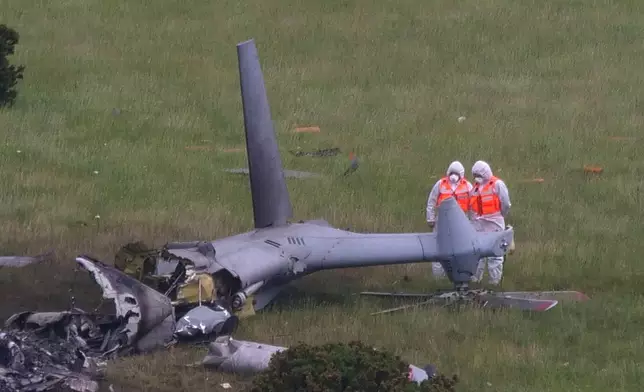
LONDON (AP) — Britain’s Royal Navy said Wednesday that three of its members died in a helicopter crash earlier in southwest England during a training exercise.
The helicopter went down in a field in the county of Devon in England just before 4 a.m.
Click to Gallery
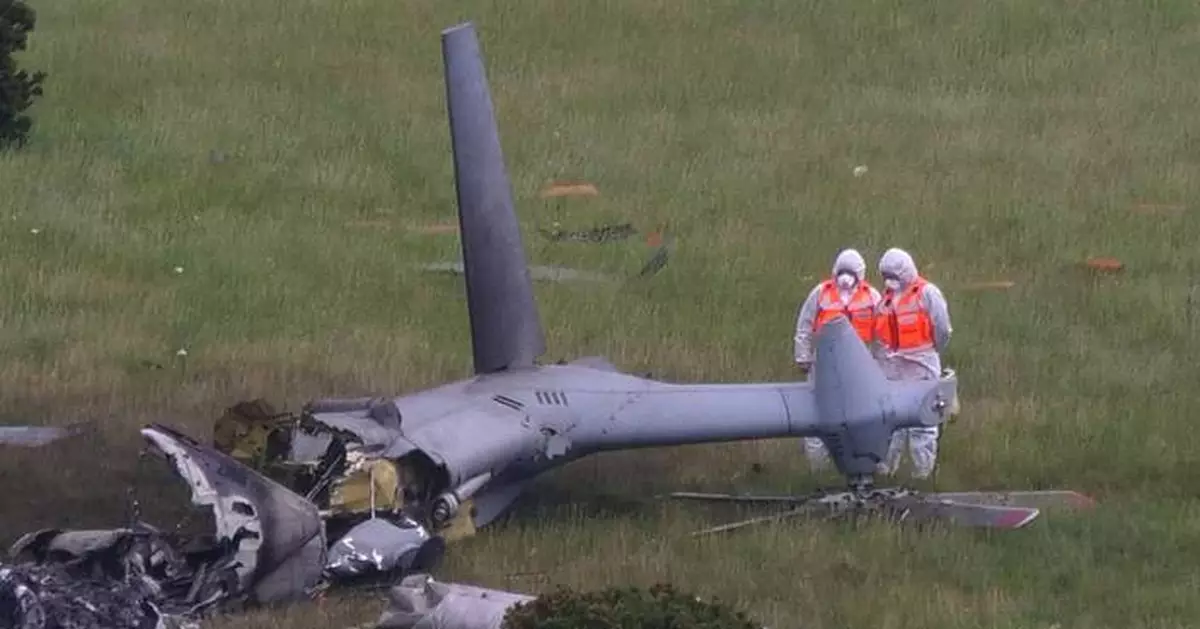
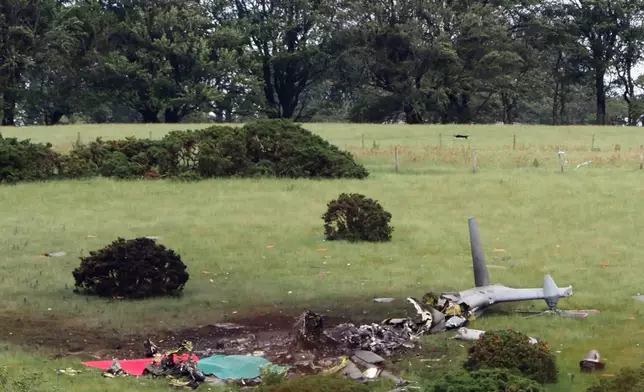
The scene in Sourton Down, near Okehampton in Devon, where a Royal Navy helicopter crashed in a field, England, Wednesday, June 3, 2026. (PA via AP)
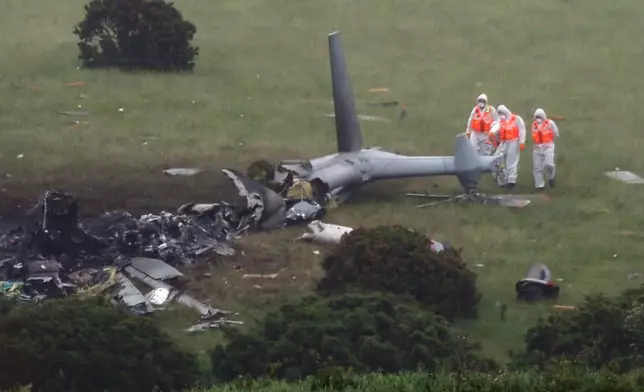
Inspectors at the scene a day after a Royal Navy helicopter crashed in a field, in Sourton Down, near Okehampton in Devon, England, Thursday, June 4, 2026, (PA via AP)
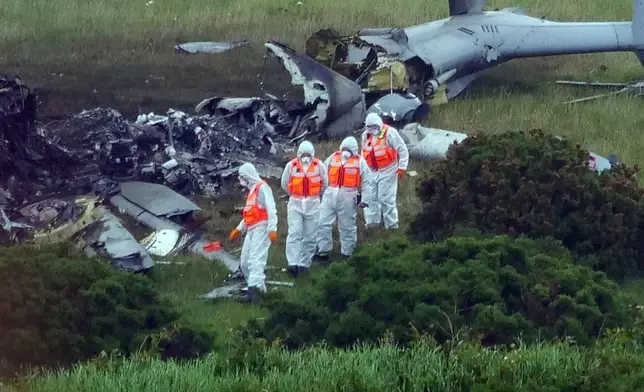
Inspectors at the scene a day after a Royal Navy helicopter crashed in a field, in Sourton Down, near Okehampton in Devon, England, Thursday, June 4, 2026, (PA via AP)
Inspectors at the scene a day after a Royal Navy helicopter crashed in a field, in Sourton Down, near Okehampton in Devon, England, Thursday, June 4, 2026, (PA via AP)
The navy’s head General Gwyn Jenkins, said in a statement that he was “deeply saddened to share the news that three crewmembers onboard a Royal Navy Merlin Mk4 helicopter have died after it crashed in the early hours of this morning near Sourton, Devon.”
He said an investigation is under way and further updates will be provided later. It wasn’t immediately clear what caused the incident.
Merlin helicopters, such as the Merlin Mk4 involved in the incident, usually have a crew of four and can carry up to 24 troops. The Merlin helicopter is primarily used for anti-submarine warfare and is used for search and rescue, cargo transfers and maritime patrol, according to the Royal Navy’s website.
The Ministry of Defence said the families of the service personnel killed have been informed.
British Prime Minister Keir Starmer said the deaths were “utterly tragic."
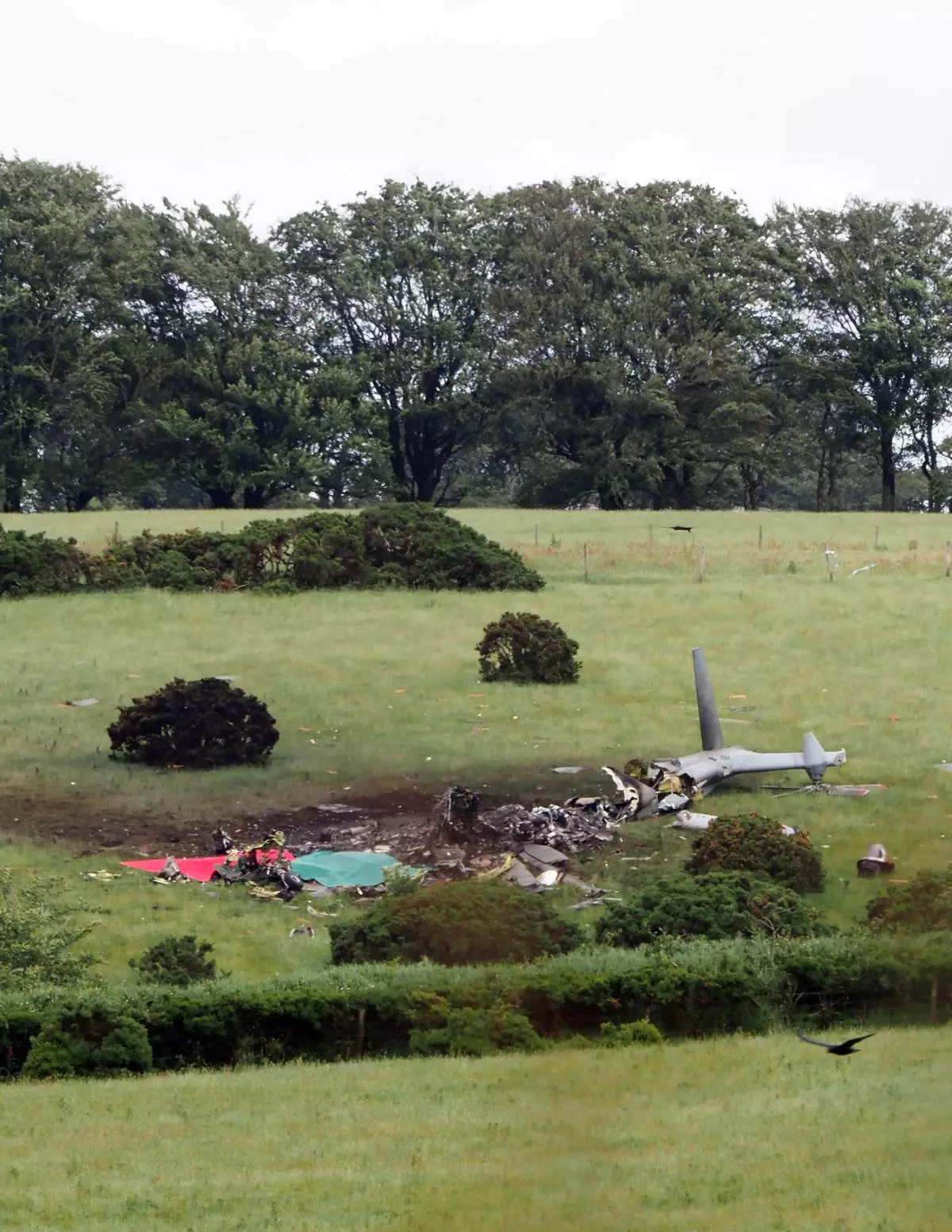
The scene in Sourton Down, near Okehampton in Devon, where a Royal Navy helicopter crashed in a field, England, Wednesday, June 3, 2026. (PA via AP)
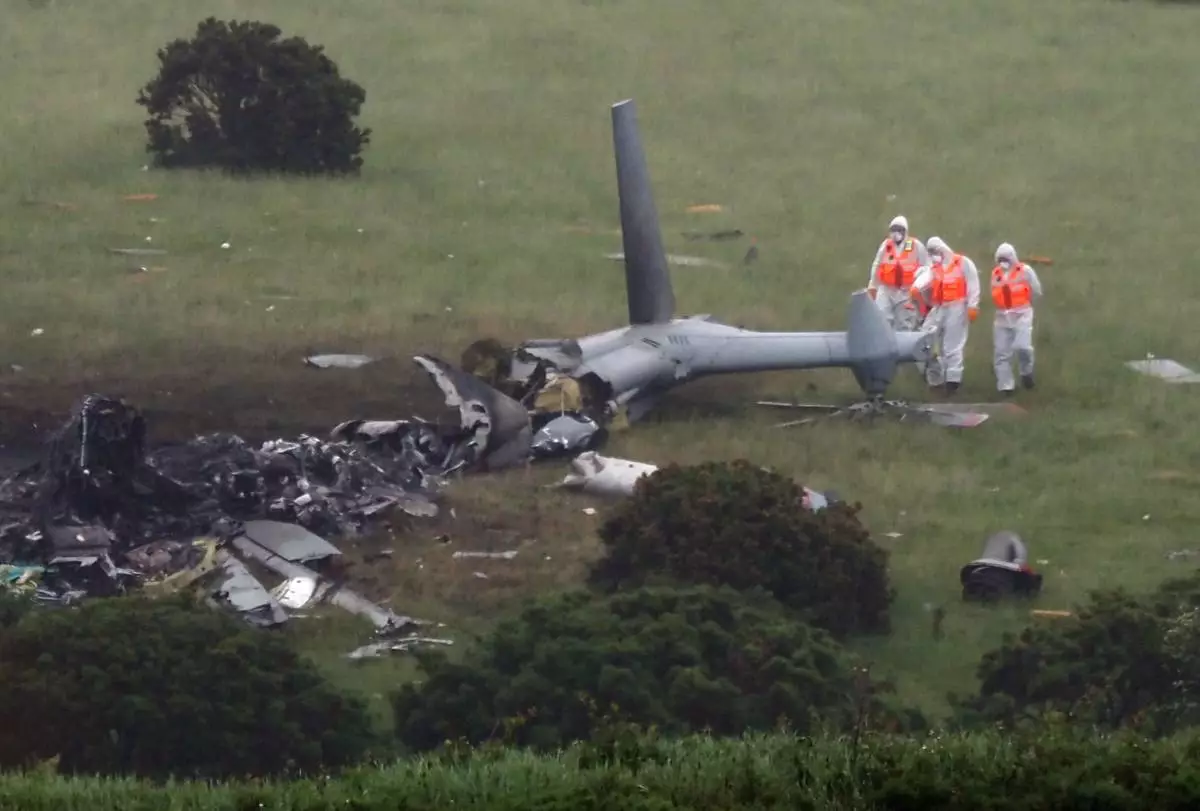
Inspectors at the scene a day after a Royal Navy helicopter crashed in a field, in Sourton Down, near Okehampton in Devon, England, Thursday, June 4, 2026, (PA via AP)
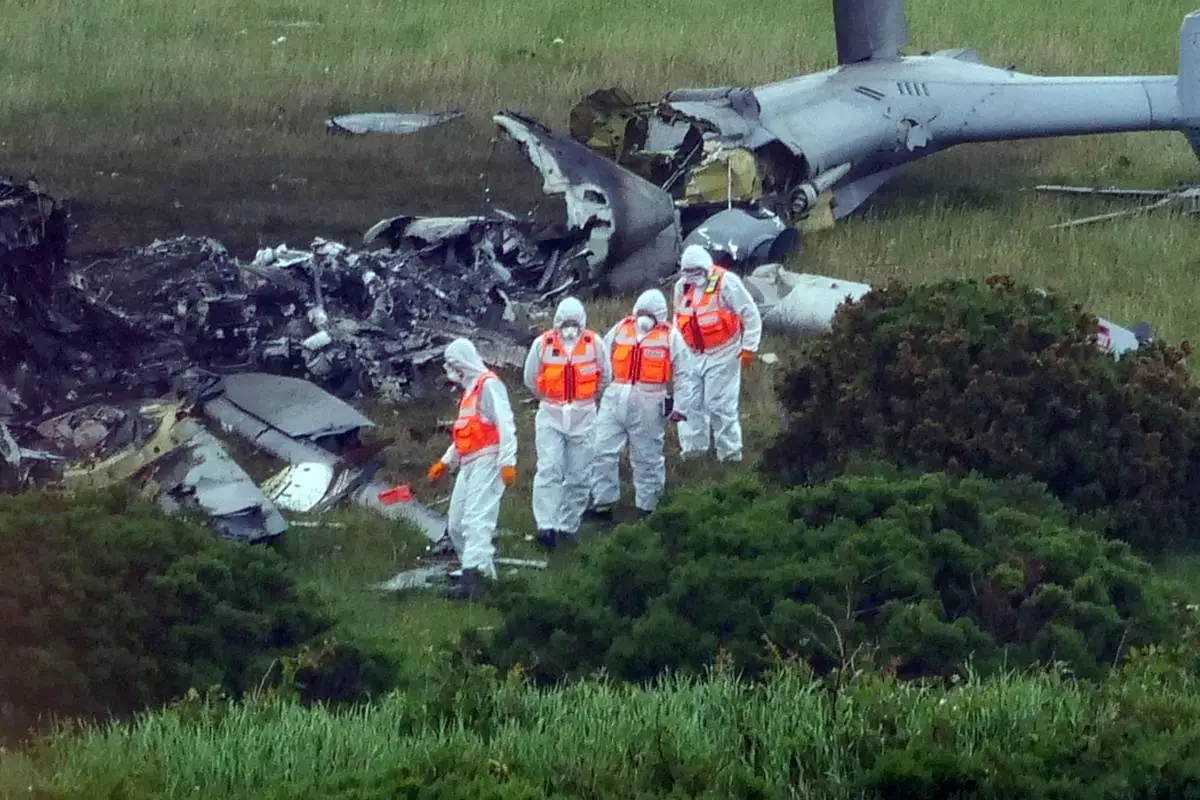
Inspectors at the scene a day after a Royal Navy helicopter crashed in a field, in Sourton Down, near Okehampton in Devon, England, Thursday, June 4, 2026, (PA via AP)
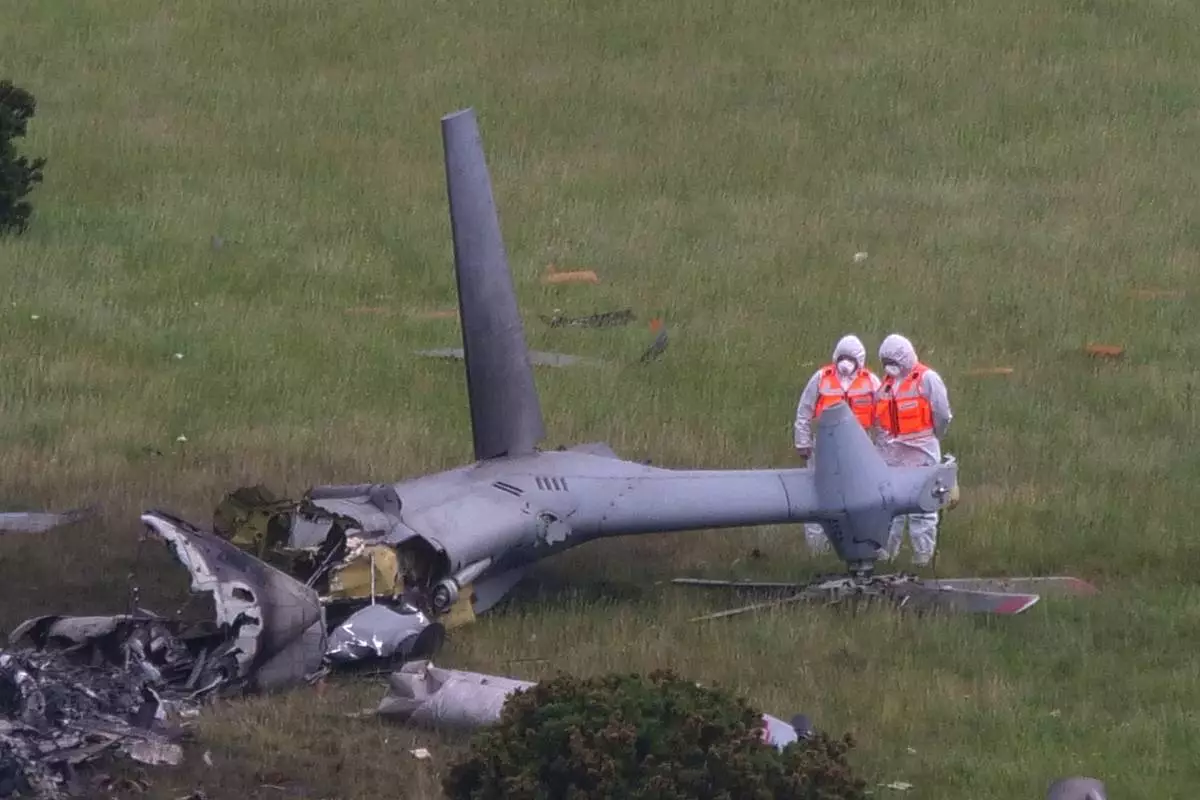
Inspectors at the scene a day after a Royal Navy helicopter crashed in a field, in Sourton Down, near Okehampton in Devon, England, Thursday, June 4, 2026, (PA via AP)
NEW YORK (AP) — It wasn’t the rats. Or the smells. Or the germs.
No, the most unpleasant part of descending into New York City's vast sewer system, according to former urban explorer Steve Duncan, was the cockroaches.
“They’re all over the place, crawling on walls, dropping down on you,” Duncan recalled this week. “They were the worst.”
Duncan, 48, who now lives in Maryland, reflected on his years documenting the muck-filled tunnels running under New York after surveillance videos captured small groups of people mysteriously entering and exiting the sewer system in Brooklyn and Queens in recent days.
Police say they’re still investigating the three incidents but don’t believe there’s any threat to the public. Officials stress that it is both illegal and dangerous to enter the city’s 7,400 miles (12,000 kilometers) of sewer pipes.
Duncan believes the groups were likely explorers like him, traversing the large, 19th century sewer mains that run underneath parts of the city.
These relatively cavernous spaces can exceed 6 feet (1.8 meters) in diameter — tall enough for most people to comfortably walk upright — and can feature handmade bricks and elegant arches, he said.
A number, including one near where one of the groups was spotted, trace the paths of naturally occurring waterways that once sustained New York, before industrialization fouled them and forced city builders to convert them to sewers, Duncan said.
“These old streams, they get put underground as cities grow up around them,” he explained. “It’s amazing how much this old natural environment is part of the city today.”
The videos suggest that some of the groups spent up to three hours underground, a length of time that may seem unimaginable, but Duncan said passes quickly as sewer journeys require navigating slippery, humid environments and flowing water that could be a foot (30 centimeters) or deeper in places.
Duncan credits the groups with picking an optimal time for their excursions.
Heavy rainfall days earlier would have mostly cleared the system, and venturing into the tunnels in the early morning hours would mean waste flow would be noticeably less than during peak daytime hours.
“They did their research,” Duncan said.
But invisible dangers lurk in these pathogen-rich environments, he said, recounting how he'd landed in the hospital with badly infected extremities on two separate occasions, which eventually pushed him to retire.
Seasoned explorers will generally bring gas meters to check for dangerous levels of fumes, including potentially flammable hydrogen sulfide, which is produced by decomposition, Duncan said.
As to the smell of all that effluent, it’s not as overpowering as you’d think, Duncan said.
“If it’s a well-functioning sewer, it’s more like a barnyard, or compost pile smell,” he said. “But when it’s bad, it can smell like death.”
Some residents have worried the mysterious explorers captured on video were up to something nefarious. Many were dressed in waterproof hip waders and equipped with headlamps and what appeared to be shovels and other tools.
“Sewers can serve as entry or exit points to buildings, and we have all seen movies in which criminals escape jail through a sewer,” offered Magued Iskander, an engineering professor at New York University. “There must be a reason beyond mere thrill to enter a dirty place like a sewer.”
Others have noted that police have nabbed underground treasure seekers from time to time.
Three men were charged just last year with burglary and other counts after they went searching for gold, jewelry and other valuables in a Brooklyn sewer. A decade earlier, police caught three others as they emerged from a maintenance hole, including a worker with the city Department of Environmental Protection, which manages the sewer system.
If anything, the viral videos underscore just how vulnerable some of the city’s vital infrastructure is, said David Sarni, a retired New York Police Department detective and professor at the John Jay College of Criminal Justice in Manhattan.
“Is this something that could be exploited by people who look to do harm?” he said. “You have to really take nothing for granted and always think, unfortunately, on that negative side.”
Duncan, who now works in real estate, said neither riches nor malice motivated him and many others of his generation of urban explorers.
On his trips into underground passages in New York, London, Paris and elsewhere during the early 2000s, he rarely found anything of value, save for the odd credit card or tattered wallet.
“These are terrifying places that take a lot of planning and dedication to explore safety,” Duncan said. “You don’t do all of these things for the tiny chance of finding a diamond earring.”
“The real reason is to see something new, or experience the city in a different way,” he continued. “That’s the real lure.”
Associated Press video journalist Joseph Frederick in New York contributed to this story.
Follow Philip Marcelo at https://x.com/philmarcelo
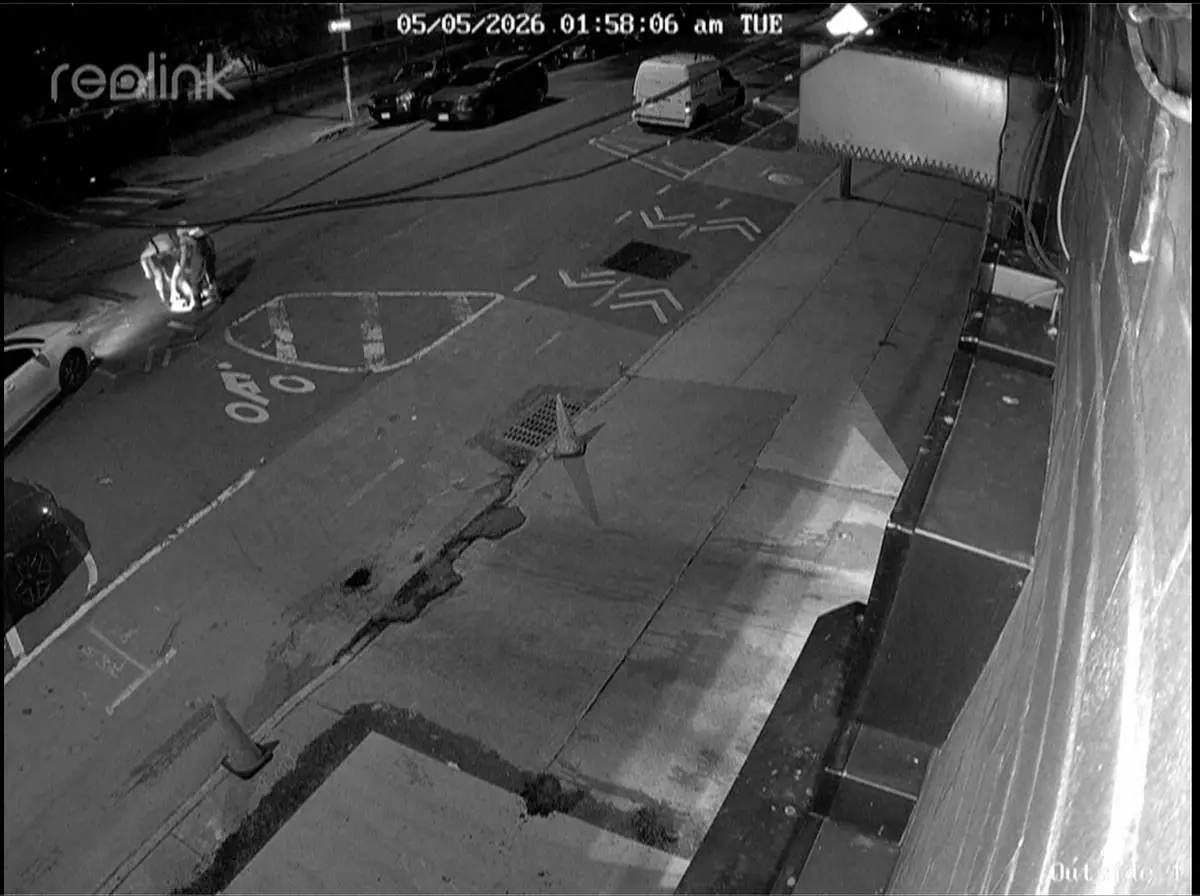
In this image from a surveillance video provided by AKI AUTO CARE, three people descend into a sewer on a street in New York, on May 5, 2026. (AKI AUTO CARE via AP)
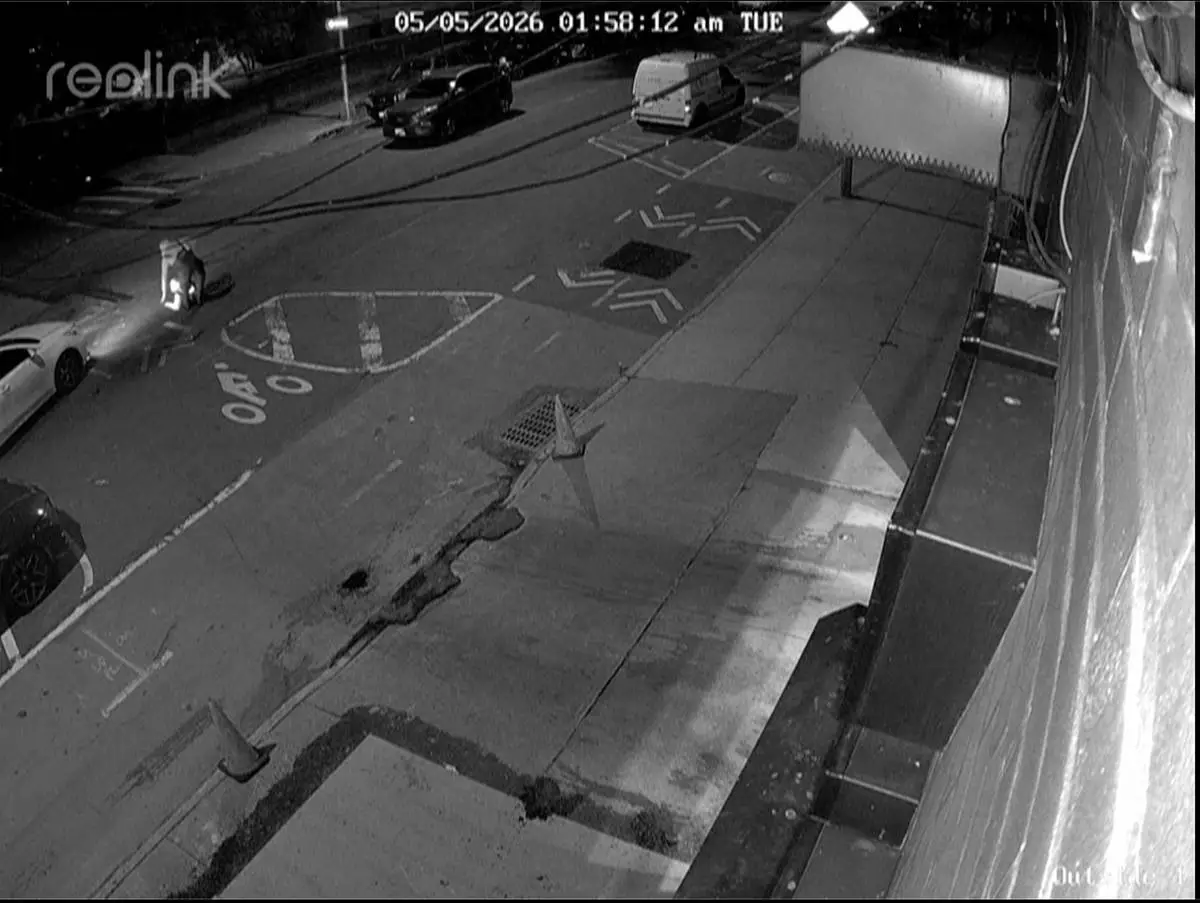
In this image from a surveillance video provided by AKI AUTO CARE, one of three people descends into a sewer on a street in New York, on May 5, 2026. (AKI AUTO CARE via AP)