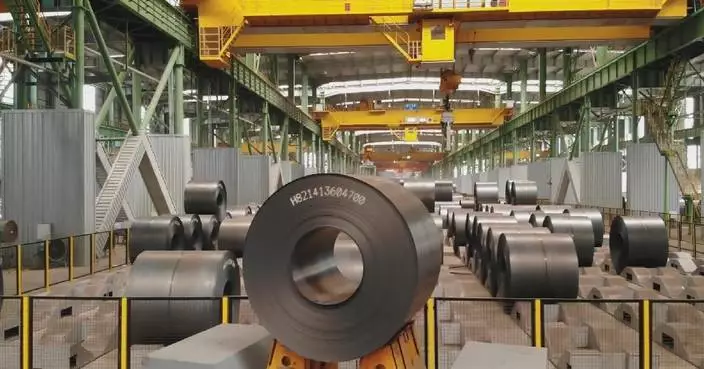
China's pilot free trade zones (FTZs) have continued to optimize their operations to drive institutional innovation this year, steadily enhancing the quality and vitality of the country's economy.
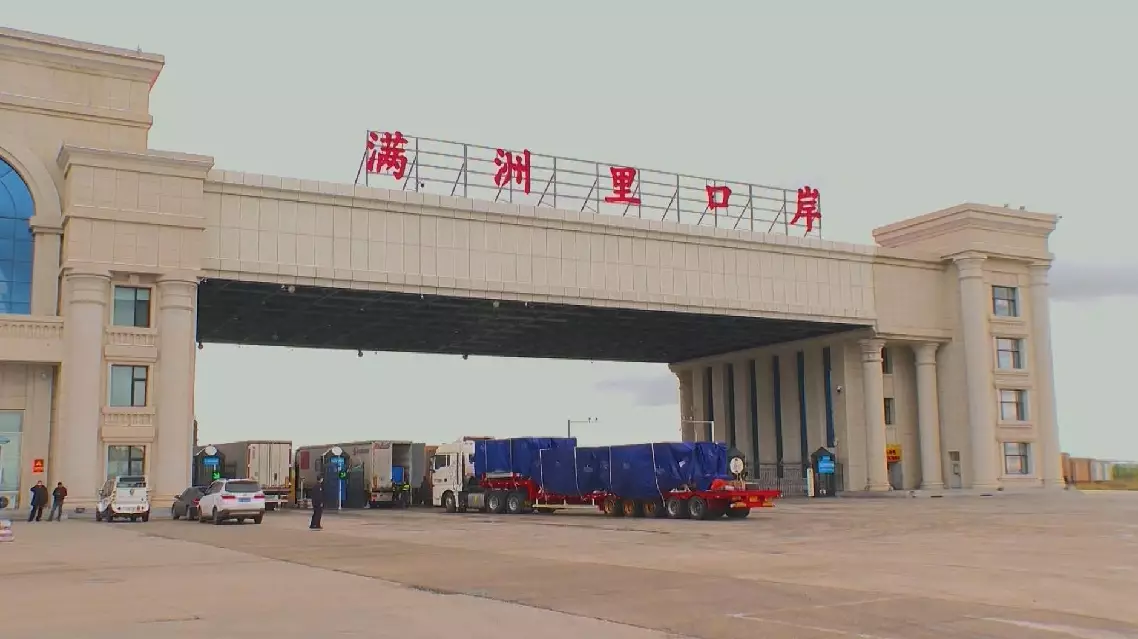
In the Manzhouli sub-zone of the newly established Inner Mongolia FTZ, reform measures aimed at facilitating port customs clearance have been rapidly implemented. By streamlining cumbersome offline approval processes and eliminating redundant checks at multiple checkpoints, the zone has significantly smoothed the flow of goods for import and export.
Officially launched on April 9 as China's 23rd national-level pilot FTZ, the Inner Mongolia Pilot Free Trade Zone covers 119.74 square kilometers across three sub-zones in Hohhot, Manzhouli and Erenhot. As a critical northern border gateway linking Russia, Mongolia and the broader Eurasian market, the Manzhouli sub-zone is tasked with leveraging its unique geographical advantage to deepen cross-border economic and trade cooperation.
"Since the launch of the pilot free trade zone, Manzhouli has seen substantial expansion in its foreign trade scale. From January to April, the total foreign trade import and export volume increased by 43.1 percent year on year," said Qi Zhenhong, deputy head of the cooperation and exchange group at Manzhouli.
The strong performance in Inner Mongolia is part of a broader national trend. Latest data from the Ministry of Commerce shows that in the first four months of 2026, the total utilized foreign investment and total foreign trade import and export volume of China's FTZs nationwide both grew by more than 30 percent year on year, with their shares in the national total rising to 27.4 percent and 22.3 percent respectively, hitting record highs.
To sustain this momentum of high-level opening up, FTZs are also strengthening their capacity to drive regional development. This year, the Beijing and Shanghai pilot FTZs released updated negative lists for cross-border data transfers, which have been replicated and promoted across their respective municipalities.
To date, nine pilot FTZs and the Hainan Free Trade Port have formulated and implemented negative lists for cross-border data transfers, covering 28 sectors including retail and reinsurance. Meanwhile, various FTZs are also accelerating the implementation and effectiveness of expanded opening-up pilots in fields such as biotechnology.
"Looking ahead, the Ministry of Commerce will support pilot FTZs in exploring more institutional opening-up experiments based on their strategic positioning and distinctive advantages, encouraging whole-industry-chain integrated innovation tailored to local conditions, aiming to build diverse open highlands. We will also step up efforts to replicate and promote successful practices, ensuring that the dividends of institutional innovation are released on a broader scale," said Ma Chengfang, deputy director of the Department of Free Trade Zones and Ports at the Ministry of Commerce.
China's pilot FTZs continue to advance high-standard opening up