Skip to Content Facebook Feature Image

EU invests in ocean monitoring as US cuts funding

News

EU invests in ocean monitoring as US cuts funding
News

News

EU invests in ocean monitoring as US cuts funding

2026-06-05 04:02 Last Updated At:04:10

BRUSSELS (AP) — With underwater drones and ocean-focused satellites, the EU is expanding its monitoring network of Earth’s seas as climate change fuels heat waves and stronger storms and the Trump administration plans severe cuts to a similar system in the United States.

With an investment package of 92 million euros ($107 million) called OceanEye announced on Wednesday, the EU will be able to take the helm of global efforts to explore the depths of the planet's vast oceans, said Ursula von der Leyen, president of the European Commission.

Oceans are vital ecosystems covering about 70% of planet Earth, hosting complex webs of life that generate oxygen and absorb greenhouse gases like carbon dioxide. Temperatures have risen in oceans faster due to climate change, super-charging storms and drought, ravaging coral reefs across the world, and endangering species in tandem with overfishing and industrial pollution.

Scientists estimate climate change will increase the strength of heat waves and severe storms across Europe.

Monitoring the ocean can help protect it by showing damage and threats to ecosystems that help inform regulations aimed at preventing species loss.

“This is about using science and good governance to understand our ocean and secure our future,” von der Leyen said.

In May, officials in the U.S. began signaling plans to gut its Ocean Observatories Initiative — a network of more than 900 ocean sensors built at a cost of $386 million that has continuously collected real-time data for more than a decade.

Funded by the National Science Foundation, the observatories have tracked everything from ocean circulation and marine ecosystems to climate change and extreme weather. Its data has been freely available and has informed more than 500 scientific publications. The project was slated to run for another 15 to 20 years.

The EU investment was already in the pipeline when the U.S. cuts were announced.

International efforts are organized through the Global Ocean Observing System. The U.S. collects more than half of this data while Europe does about a quarter, followed by Japan, Australia, India and China.

“Europe needs to do more,” said Pierre-Yves Le Traon, an oceanographer and scientific director of the Mercator Ocean International based in Toulouse, France.

By 2035, the EU hopes to cover 35% of Earth’s maritime monitoring network and become the globe’s leading provider of “ocean intelligence.”

Robotic sensors in underwater and in orbit feed information to organizations like shipping companies, fisheries, emergency services and research institutions like the Mercator Ocean Institute that is building a virtual-reality mockup of Earth’s oceans to be updated in real time called the Digital Twin Ocean.

That data is crucial to understanding and adapting to climate change and to a vast array of industries on land and at sea like aquaculture, shipping especially through icy waters, coastal tourism, agriculture and even navies, Le Traon said.

“Knowledge is essential if we want to manage the ocean," Le Traon said. "We really have to be very active for the monitoring and protecting of the ocean because the ocean matters to everyone: for life at sea, for life on Earth.”

Odran Corcoran, a policy advisor for Oceana, said that only by collecting data out of the depths of the still relatively unknown ocean can lawmakers use data to regulate the management of fisheries, marine protection and restoration projects.

“Europe does not just need more ocean data; it needs data that closes biodiversity and seabed knowledge gaps," Corcoran said.

The EU funds will go toward private incubators for oceanic technology and beefing up existing institutions like the Global Ocean Observing System.

Out of the 27 EU nations, 22 have coasts along the Baltic Sea, the Atlantic Ocean, the Black Sea and the Mediterranean. France boasts the bloc’s largest ocean-focused scientific institutions as well as huge maritime borders with overseas territories from Reunion in the Indian Ocean to Saint Martin in the Caribbean.

This story corrects a previous version that stated Reunion is in the Pacific Ocean. It is in the Indian Ocean.

The Associated Press receives support from the Walton Family Foundation for coverage of water and environmental policy. The AP is solely responsible for all content. For all of AP’s environmental coverage, visit https://apnews.com/hub/climate-and-environment
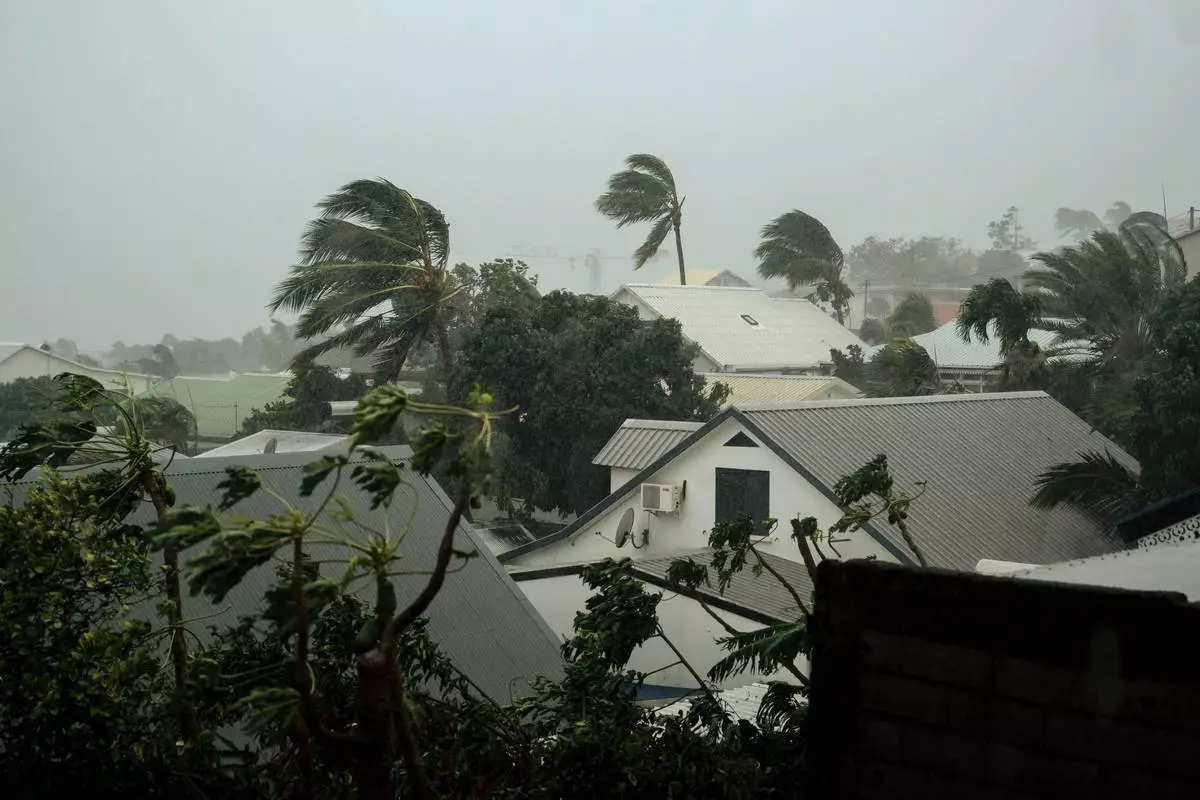
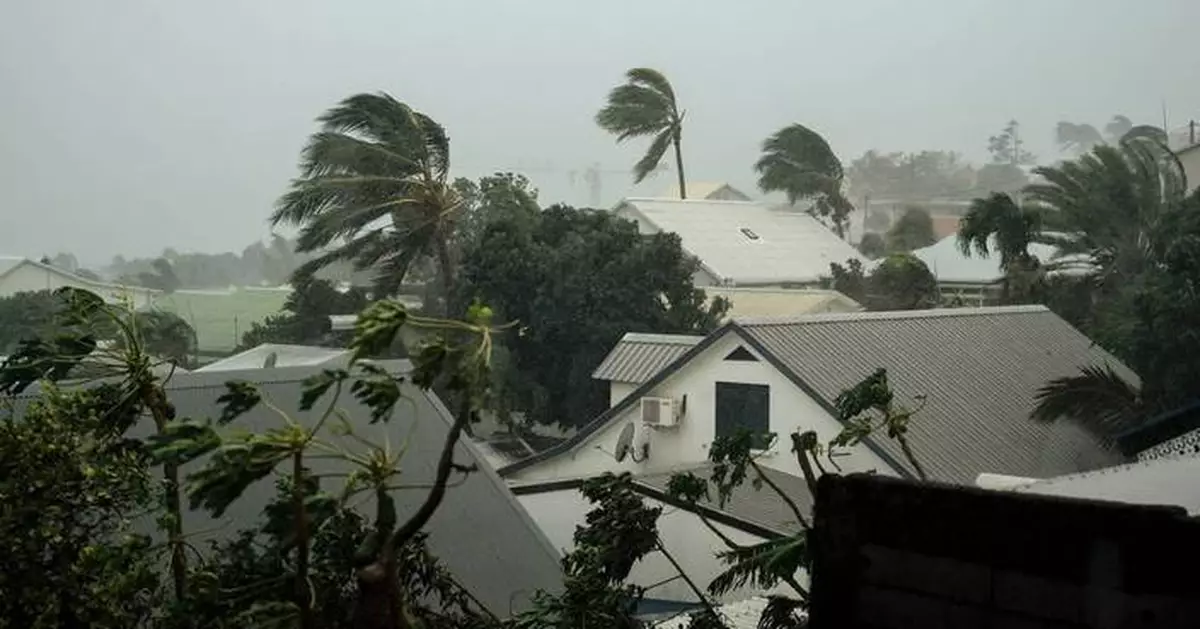
FILE - Strong winds blow in the town of La Plaine Saint-Paul on the French Indian Ocean island of Reunion, Jan. 15, 2024. (AP Photo/Lewis Joly, File)
FILE - Strong winds blow in the town of La Plaine Saint-Paul on the French Indian Ocean island of Reunion, Jan. 15, 2024. (AP Photo/Lewis Joly, File)

German airline Lufthansa said several employees were injured on Thursday after the nose gear of a Boeing jet collapsed while the aircraft was parked at a gate at Frankfurt airport.

Only crew members and ground staff were on board the Boeing 787-9 Dreamliner when the front tip of the plane crashed to the ground ahead of passenger boarding for a scheduled flight to Los Angeles. The flight was later canceled.

“Several employees were injured and are currently receiving medical attention,” Lufthansa said in a statement, adding that it and relevant authorities were investigating.

The plane is about a year old, according to flight-tracking website Flightradar24.

Boeing said it is “aware of the incident” and "supporting our customer.”

Video footage from the scene appeared to show the front wheels of the wide-body aircraft sliding forward and the plane's nose falling several meters (yards) as a ground crew member standing nearby quickly backed away. The doors to the nose gear bay broke off upon impact.

Jeff Guzzetti, a former U.S. federal aviation crash investigator, said it is “very unusual” for a nose landing gear to collapse while an aircraft is at a standstill. He cautioned it is too early to speculate on the cause of the incident, but he said potential factors could include prior damage to the landing gear, a mechanical failure or issues related to maintenance work.

Investigators, he said, will be looking closely at the plane’s maintenance history and system records, and may also review flight data to understand how the aircraft’s landing gear had been operating in previous landings.

“They’re going to look at every square inch of that nose landing gear strut and the mechanisms that operate it,” Guzzetti said.

A 2021 incident at London’s Heathrow Airport also involved the nose landing gear of a Boeing 787. According to a report by the UK’s Air Accidents Investigation Branch, a 787-8 was undergoing maintenance at a gate when its nose landing gear retracted during testing, causing the aircraft’s nose to drop onto the pavement. Investigators found that a locking pin intended to prevent retraction had been inserted into the wrong position, allowing the gear to fold despite safeguards designed to keep it extended.

The 787 Dreamliner, a wide-body twin-aisle aircraft used primarily on long-haul international routes, first entered service in 2011. The version involved in Thursday’s incident can carry up to 296 passengers, depending on configuration.

In recent years, the 787 program had been plagued by production flaws and quality-control issues, with shipments of the large plane temporarily halted on multiple occasions.

Issues with the 787 started in 2020 when small gaps were found between panels of the fuselage that are made of carbon composite material. That prompted inspections that turned up problems with a pressurization bulkhead at the front of the plane.

In May 2021, Boeing halted 787 deliveries while U.S. federal regulators looked over documentation of work that was done on new planes.

In June 2023, Boeing said 787 deliveries were delayed again while it inspected fittings on part of the aircraft’s tail — the horizontal stabilizer — after identifying a “nonconforming condition.” The company said at the time that the issue would affect near-term deliveries but was not considered a safety risk for aircraft already in service.

Yamat, AP's airlines and travel writer, reported from Las Vegas.

A Lufthansa 'Dreamliner' aircraft lies on its nose in front of a terminal at the Frankfurt Airport in Frankfurt, Germany, Thursday, June 4, 2026, after the nose landing gear collapsed. (Mike Seeboth/dpa via AP)

A Lufthansa 'Dreamliner' aircraft lies on its nose in front of a terminal at the Frankfurt Airport in Frankfurt, Germany, Thursday, June 4, 2026, after the nose landing gear collapsed. (Mike Seeboth/dpa via AP)

A Lufthansa "Dreamliner " aircraft lies on its nose in front of a terminal at Frankfurt Airport after the nose landing gear collapsed on Thursday, June 4, 2026 in Frankfurt, Germany, (Mike Seeboth/dpa via AP)

A Lufthansa "Dreamliner " aircraft lies on its nose in front of a terminal at Frankfurt Airport after the nose landing gear collapsed on Thursday, June 4, 2026 in Frankfurt, Germany, (Mike Seeboth/dpa via AP)

Recommended Articles