United Nations World Food Program (WFP) chief Carl Skau warned on Thursday that the Middle East crisis could push some 45 million people into hunger.
The escalation of geopolitical tension in the Middle East since this February has profound implications for global food security.
"Should the crisis continue, and the price of energy remain, or the price of oil remain over 100 dollars a barrel until July, some 45 million people will be pushed into hunger," said Skau.
The reasons for the worsening food insecurity vary from country to country, including rising food and energy prices, long-term underfunding of humanitarian and development assistance, and a sharp increase in the operating costs of humanitarian operations, he said.
"The long-term implications might be even more severe. You have heard reports not least from the FAO speaking about the impact of lack of fertilizer. There is now the planting season in most of east Africa and the raining season is on this way. We are really worried that productivity will go down, and that would have implications six to nine months from here," said Skau.

Middle East crisis could push 45 mln people into hunger: UN official
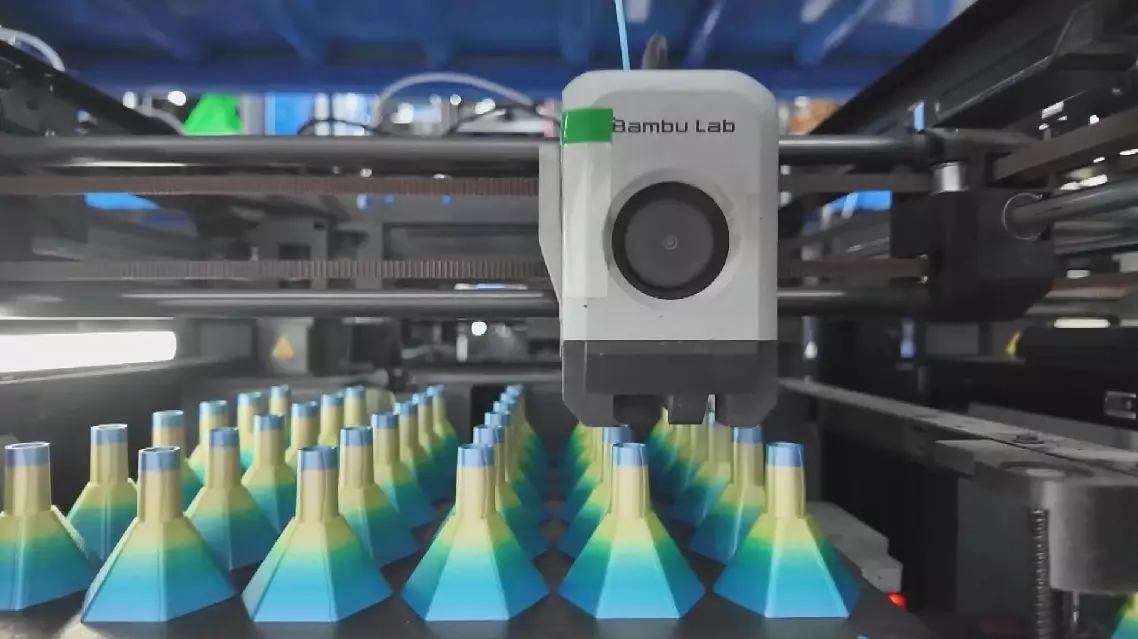
China's 3D printing industry is moving out of laboratories into more widespread industrial production and consumer markets, driven by technological advancements, an expanding field of applications and a growing demand for exports of practically-sized high-tech printers.
As the sector enters a new phase of rapid development, Chinese companies have been developing a new range of world-leading products and China now holds an approximately 90 percent share of the global consumer-grade 3D printing market.
Since the beginning of this year, a more functional series of consumer-grade 3D printers, which are now roughly the size of a microwave oven, have gained strong popularity due to their affordability and ease of use.
These desktop devices, which allow users to print their own unique designs in just a few simple steps, are rapidly gaining traction among overseas hobbyists, small workshop owners, and in educational settings.
At the same time, with remarkable improvements in printing efficiency, material performance, and equipment stability, the number of application scenarios for Chinese-made 3D printers continues to grow.
In the medical field, 3D printing is being used to produce highly customized products such as surgical tools as well as dental restorations, orthopedic implants, and hearing aids, making a considerable difference to patients.
In the aerospace sector, complex internal structures such as heat exchangers and injectors that are often deemed complex to produce through traditional manufacturing methods can now be printed directly as a single piece, resulting in higher efficiency, lighter components, and better performance.
Data from the National Bureau of Statistics of China released in May showed that in the first four months of 2026, China's 3D printer production increased by more than 50 percent year-on-year, while export volumes more than doubled compared to the same period last year.
Industry insiders say that amid other tech advances, the potential scope for 3D printing technology to be adopted is also widening.
"Applications in biomedicine, new energy vehicles, and high-end molds continue to expand. Looking ahead, with sustained breakthroughs in technology, cost reduction, and efficiency gains, the industry's total output is gradually moving toward the 100-billion-yuan mark (over 14.7 billion U.S. dollars)," said Li Fangzheng, head of the Equipment Industry Development Center under the Ministry of Industry and Information Technology.
China's high-tech 3D printers see expanding applications, capture 90 pct of global market share