Bunia Airport, the major airport in Ituri Province in eastern Democratic Republic of the Congo (DRC), resumed operations on Tuesday after a 10-day closure due to the Ebola outbreak, as authorities impose health protocols to allow flights to resume safely.
The airport remained closed for days while health authorities worked to contain the threat posed by Ebola. The number of confirmed Ebola cases in the country has risen to 452, including 82 deaths, according to the latest situation report released by the country's health ministry.
Passengers have now been cleared to travel again, while strict health protocols have been implemented to prevent the virus from spreading beyond the outbreak zone. Both arrivals and departures will be closely monitored, and every traveler thoroughly screened.
Officials said the airport's reopening reflects a delicate balance -- protecting lives while keeping a vital economic lifeline operating.
"We want to drive the Ebola epidemic out of our country. That is why we are determined to break the chain of infection. That is why you see these measures being implemented at our posts by our superiors. We have put measures in place for travelers. We do not want a traveler to turn up at the airport and say they are infected," said Aime Prospuere, head of the National Border Health Program at Bunia Airport.
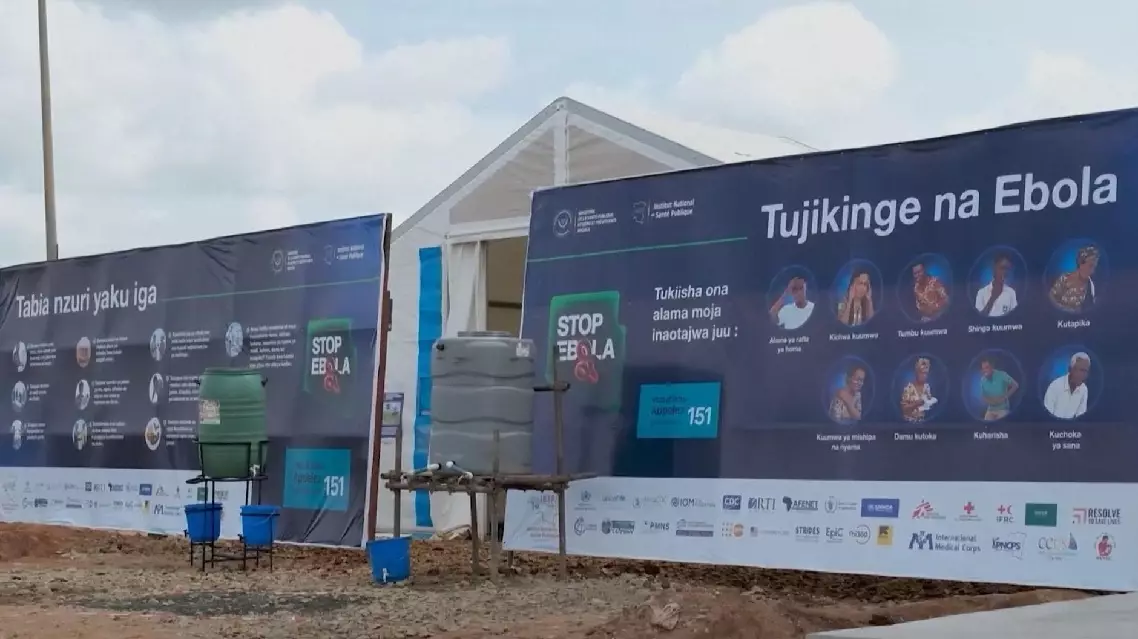
Across the terminals, hand-washing stations are placed at key points, along with posters that remind travelers of the risks of infection.
"Upon arrival, you automatically wash your hands. There are also posters to raise awareness about handwashing. So you see, the work is ongoing and we are with our young engineers and colleagues to strengthen these measures," said Prospuere.
For health officials, keeping the airport open is about sustaining commerce, protecting livelihoods, and maintaining a critical connection for communities that rely heavily on air transport.
Speaking at a public dialogue in Bunia, public health leaders acknowledged that the closure had taken a toll, disrupting business and everyday life across the province.
"In principle, during epidemics, according to the International Health Regulations, airports should not be closed. We should instead strengthen controls, screen travelers, enforce handwashing and temperature checks, and prevent overcrowding in order to reduce the risk of transmission," said Dieudonne Kazadi, Director General of the National Institute of Public Health of the DRC.
Poor roads in Ituri can make travel difficult, making the speed of air transport more attractive, and sometimes the only reliable link to markets beyond the province. For many business owners, the reopening signals a return of opportunities.
"I was very unhappy about the airport closure. We were all unhappy about it. Fortunately, the airport has reopened, and we can continue with our trading activities. We are still afraid, but we are encouraged that health officials are testing travelers before they fly," said Ngubyala, a trader in Bunia.
DR Congo's Bunia Airport reopens after 10-day Ebola closure