The World Cup pitches cover so much ground they'll be hard to ignore. The crews that put them there would prefer if fans didn't notice them at all.
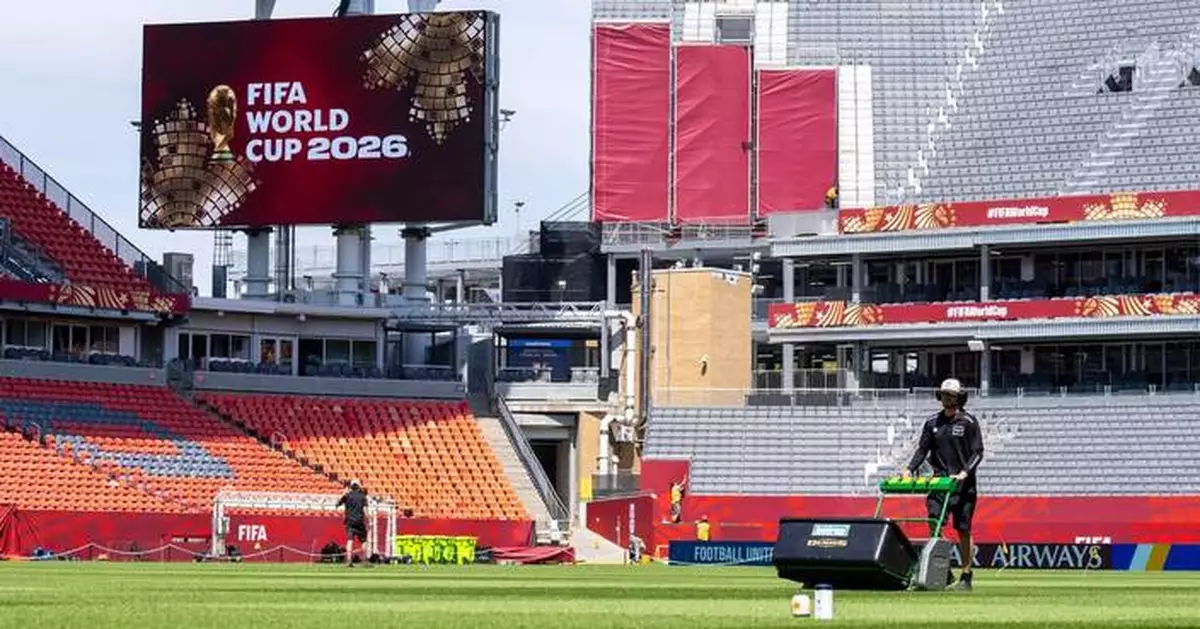
While it took a herculean effort to engineer the right grass for the different stadiums and to make sure it's in pristine condition for the duration of the tournament, the goal is that it never really attracts attention.
After all, there’s nothing worse than uneven patches, divots and worn spots that can affect a player’s footing when the focus should be on the games themselves.
"We want to give credit to the pitch managers who do an amazing job to get these canvases presentable, to be beautiful, but also play perfect, and people see it and admire it. But then they go on and say, 'Oh, what a great goal that was, and what a great header that was,'” said John Sorochan, professor of turfgrass science within the Department of Plant Sciences at the University of Tennessee.
Tennessee and Michigan State have been working for some eight years on the perfect hybrid grass surfaces for the 16 stadiums spread across Canada, Mexico and the United States that will host World Cup games.
FIFA has strict requirements for the pitches, which must all be mostly natural grass and play the same so as to be competitively neutral. This World Cup is especially demanding for grounds crews with an expanded field of 48 teams and 104 total matches.
Eight of the World Cup stadiums — seven in the United States and one in Canada — normally have artificial turf. All of those eight venues, with the exception of Vancouver’s BC Place, are home to NFL teams. Five of them are covered or partially covered or have retractable roofs.
Seattle's Lumen Field, home of the NFL’s Seahawks, was one of the first stadiums to make the switch from artificial turf to grass ahead of the tournament that begins Thursday.
The process involved laying a crate-like drainage and ventilation structure over the existing field, then covering that with more than 10 inches of sand, rolling out locally grown sod, and stitching the whole thing together with artificial fiber reinforcement.
Seattle is set to host six matches. Work to install the grass started in March, and in April the U.S. women’s national team got the first chance to play on it.
U.S. captain Lindsey Heaps gave just the assessment the grass gurus had hoped for.
"I didn’t notice it at all, so that means it was a good thing,” Heaps said.
SoFi Stadium in Los Angeles was among the last to get grass, with the sod from Washington state delivered May 13, 30 days before the stadium’s World Cup opener between the United States and Paraguay.
Not only were the turf experts charged with covering artificial surfaces, but the geographic expanse of this World Cup also meant varied climates. Monterrey, Mexico, is hotter and more humid during the summer, while BC Place is in a cooler, northern region.
As a result, they came up with two different blends. Bermuda grass will be used for the warmer climates, while perennial rye mixed with Kentucky bluegrass was installed in the cooler climates and indoor venues. The grass for both the stadiums and training sites was grown and harvested at 10 turf farms across the three host countries.
AT&T Stadium, renamed Dallas Stadium for the tournament, will host nine matches, more than any other venue.
The home of the Dallas Cowboys had its new sod installed in early May. It was grown in Colorado and shipped in refrigerated trucks to the stadium in Arlington.
There was one notable challenge: the stadium has a retractable roof that doesn’t allow sunlight to reach the field. So engineers hung pink grow lights from the ceiling to keep the grass pristine. The result is sort of Barbicore meets the World Cup.
"They’ve never been hung from the ceiling before, so basically, what’s fantastic out of that is that typically these systems have a set of wheels that they’re wheeled on in and out of the facility, and so these are able to be lifted up, and it means that we’ve just got one less thing on the field," said Ewen Hodge, the World Cup's head of pitch infrastructure.
Sorochan became fascinated with turf management when the United States last held the World Cup in 1994. A student at Michigan State, his job was to help lay the sod and mow the field on game days.
At the end of the tournament, he surveyed the grass from the top of the Pontiac Silverdome.
"We moved it in, it was inside for 30 days, and we didn’t have the grow lights, we didn’t have all the technologies that we have today with the hybrid reinforcement, so those 30 days with no sunlight, it just kind of deteriorated and went down,” Sorochan said. “It held up for those four games they had and practice sessions, but you could definitely see the wear and tear on the field, and I thought, How do we make that better?”
The grass surface and the turf management science that Sorochan and his colleagues perfected for the pitches at this World Cup means different venues can now entertain a wider variety of events.
The grass system can be installed and broken down quickly, so stadiums can host tight schedules of tractor pulls, NFL games and elite soccer matches. But the technology can also be used at the municipal level.
“We can now develop hydroponic systems where we grow grass and recycle water below, and instead of watering from above, and we can use the same water back and forth, and we can have a pitch that’s going to be more sustainable, and really a benefit to the community,” Sorochan said. “So that’s kind of some of the cool stuff coming out of this research that's just starting to explode over the next five, 10 years. It’s gonna be an unintended game changer.”
AP World Cup: https://apnews.com/hub/fifa-world-cup
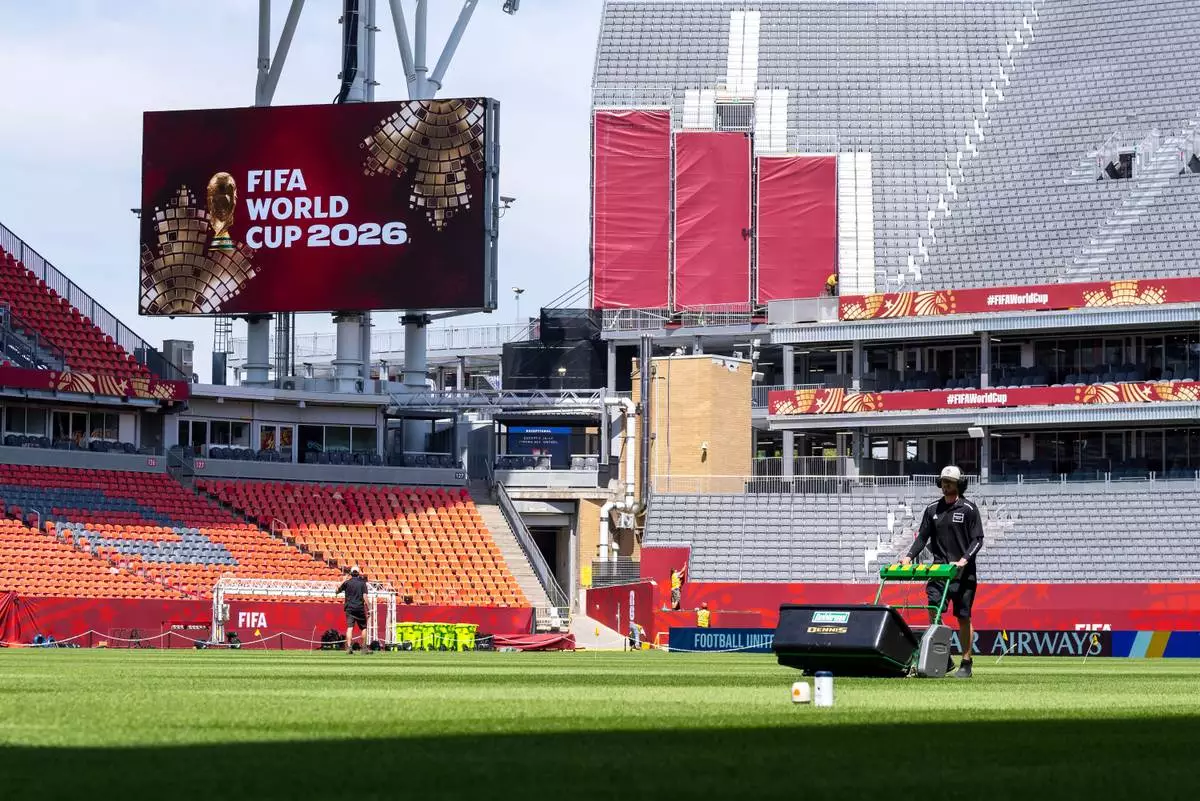
A worker mows the grass at Toronto Stadium, Thursday June 4, 2026, in Toronto, in preparation for World Cup soccer tournament. (Frank Gunn/The Canadian Press via AP)