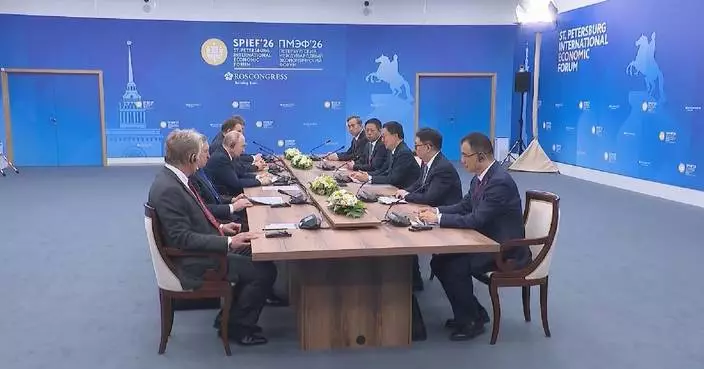
Chinese Vice President Han Zheng on Friday attended a plenary session of the 29th St. Petersburg International Economic Forum in St. Petersburg, Russia, and delivered a speech on implementing the Global Governance Initiative and jointly working for a better future.
In his address, Han noted that momentous changes unseen in a century are accelerating across the world, and global challenges and governance deficits are becoming more prominent. The Global Governance Initiative proposed by Chinese President Xi Jinping has won positive responses and support from nearly 160 other countries and international organizations, he added.
The Group of Friends of Global Governance was established at the United Nations, sending a unified message for safeguarding the purposes and principles of the U.N. Charter, upholding genuine multilateralism and opposing unilateralism, Han said.
Both as major countries and permanent members of the U.N. Security Council, China and Russia shoulder important responsibilities in the transformation of the global governance system, Han said.
He added that China stands ready to cooperate with Russia and all other sides to advance the implementation of the Global Governance Initiative and build an open, inclusive, equitable and just world of win-win cooperation.
At the event, Han put forward a four-point proposal for advancing the Global Governance Initiative -- first, to uphold equal cooperation and advocate a vision of global governance featuring extensive consultation, joint contribution and shared benefits; second, to stay committed to international fairness and justice and preserve the status and authority of the U.N.; third, to boost common development to deliver greater gains for people across the globe; and fourth, to strengthen coordinated actions to deliver more tangible outcomes.
Han said this year is the first year of China's 15th Five-Year Plan period (2026-2030). The plan charts an inspiring blueprint for China's development over the next five years and embodies China's aspiration for win-win cooperation with all other nations across the world.
China is prepared to work alongside all sides to fully implement the Global Governance Initiative, build a global governance system that is more just and equitable, and jointly create a brighter future for humanity, Han said.
Chinese President Xi Jinping proposed the Global Governance Initiative at the "Shanghai Cooperation Organization (SCO) Plus" Meeting in north China's port city of Tianjin on September 1, 2025, calling on countries to work in concert for a more just and equitable global governance system.
During the interactive session following his address, Han also responded to questions regarding China-Russia relations.
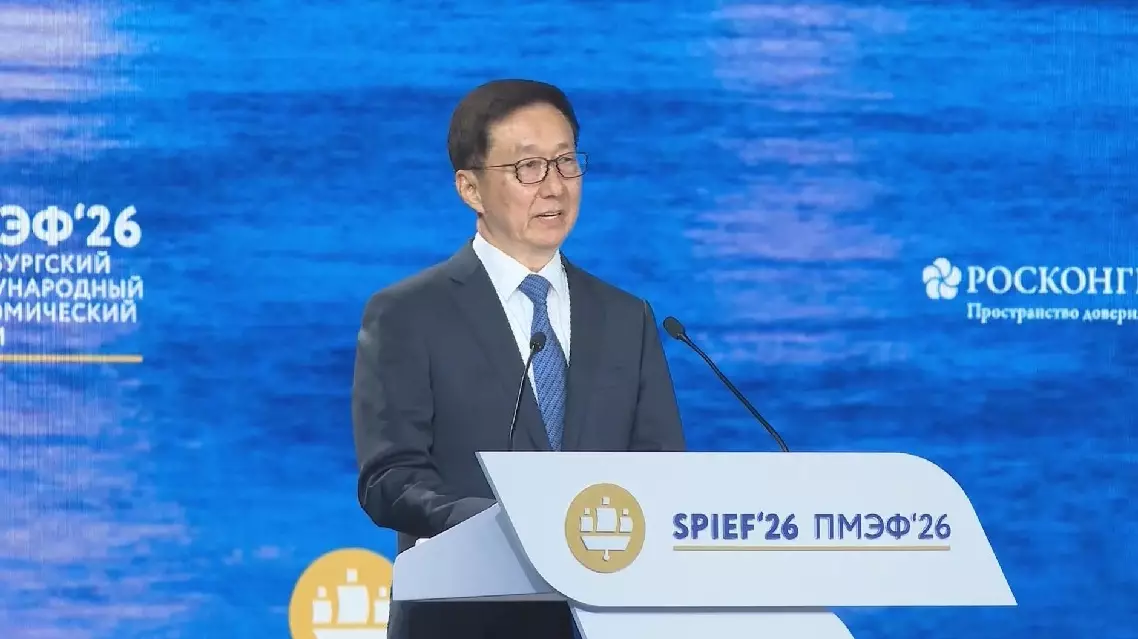
Chinese vice president attends 29th St. Petersburg International Economic Forum
Australia is seeing a surge in the use of rooftop solar and home battery storage, driven by a combination of generous government subsidies and a decline in technology costs.
Marjan, a local resident, is part of a rapidly growing trend in Australia.
When Marjan put solar panels on her Sydney home six years ago, she decided against including a battery storage system.
"They're too expensive. They're not good enough yet," said Marjan.
That changed about six months ago when she heard about government rebates and improvements in the technology.
"Go for it. Just have it done. It's quite a bit of learning, but I think it's very worth it," Marjan said.
According to industry figures, Australia has installed more than 420,000 home battery systems, making it one of the world's fastest-growing household battery markets.
The pace of adoption has been stark. Just a year ago, one in every 500 Australian households had home battery storage systems. Today, that figure has skyrocketed to one in every eight households.
The growth is significant in a country where one-third of the households already generate electricity from rooftop solar panels.
"There's two factors at play, I think. Firstly, a government subsidy scheme. That's a relatively generous government subsidy scheme, trying to drive this. Secondly, I have to pay tribute, I think, to Chinese innovation and investment that has driven down the cost of batteries significantly over the last few years," said David McElrea, chief executive officer of the Smart Energy Council of Australia.
Australia has long relied on coal-fired power generation, giving it one of the highest per-capita emission rates in the developed world.
The solar boom is lowering the country's emissions, without relying on large-scale renewable energy projects.
"A small system on a house requires two people with relatively low skills to install the solar and battery system, and they do it in one day, with no need for planning, no one getting upset in a board or community, no need for upgrades of huge power lines," said Tristan Edis, director of Green Energy Markets.
The impact is becoming increasingly visible. Renewables now account for about half of Australia's electricity generation, driven largely by rooftop solar.
For many consumers, the appeal is about saving money.
"I don't use the grid at all. I use my solar, my battery, the free electricity I get," said Marjan.
"It's now by far and way the cheapest form of energy, which is why people embrace it, and is why it's a model that, I think, we are rolling out in Australia. And I think the rest of the world should look to," said McElrea.
As countries worldwide grapple with the twin challenges of lowering carbon emissions and keeping power bills affordable, analysts say Australia's rooftop-led model offers a proven blueprint for the global energy transition.
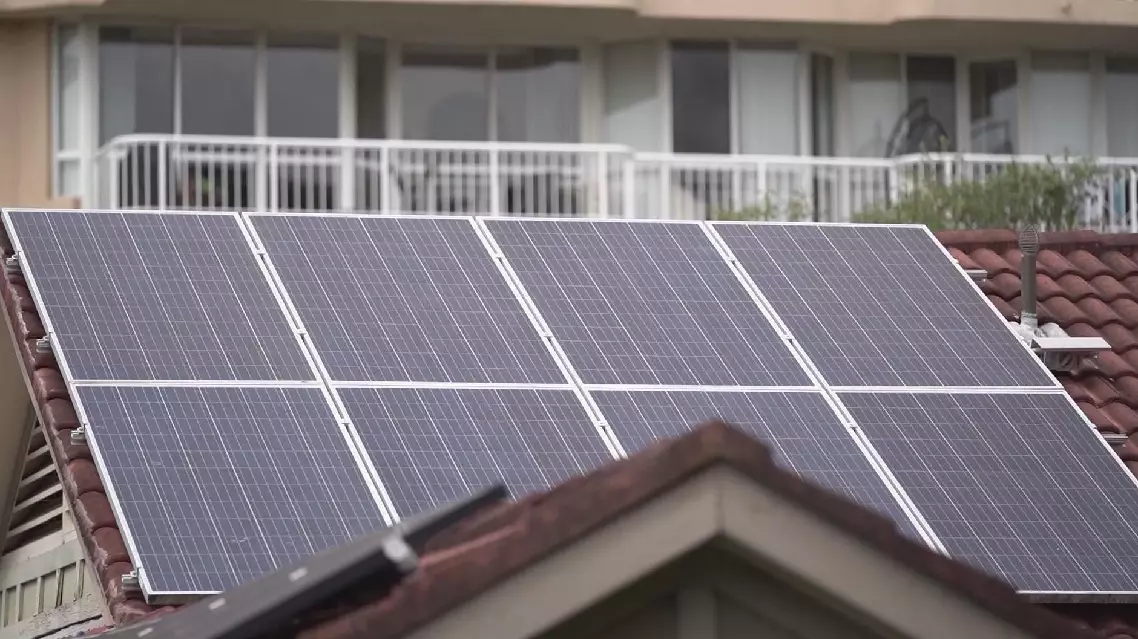
Australia sees surge in use of rooftop solar