Saudi Arabia pulled off one of the biggest upsets in World Cup history by beating mighty Argentina in Qatar four years ago.
That stunning victory against Lionel Messi and the eventual champion turned out to be just the start of its campaign to disrupt soccer. Perhaps no nation has done more to shake up the world’s most popular sport.
Within weeks Cristiano Ronaldo became the first of slew of superstars to swap swap Europe for the Saudi league with the five-time Ballon d'Or winner declaring: “In Europe my work is done. This is a new challenge.”
Karim Benzema was lured away from Real Madrid. Brazilian icon Neymar also made the move to the oil-rich kingdom. While attempts to land Messi and Kylian Mbappe were unsuccessful, Saudi Arabia did secure its biggest win of all: The right to host the 2034 World Cup.
It was all part of the country's attempt to pivot away from its heavy reliance on oil and explore other revenue-generating sectors. Some critics say it is also an attempt at sportswashing, using sports to rebrand its public image in the face of its human rights record and crackdowns on dissent.
Billions of dollars have been spent to secure world championship boxing, Formula One racing and tennis. The Saudi-backed LIV Golf enticed major winners to defect from the PGA. It recently announced it would be pulling funding from that venture, but its commitment to soccer remains strong. A number of its top teams are owned by the country's sovereign wealth fund.
This year's tournament will be a test of how far the Saudi national team has come against the backdrop of such spectacular spending.
“We cannot promise miracles, but we promise you that we will give our all to achieve our goals,” newly appointed coach Georgios Donis said.
An influx of top overseas talent does not necessarily translate to improved performance of homegrown players on the international stage.
There was the disappointingly early elimination from the Asian Cup in 2024 in the round of 16. Saudi Arabia's most memorable contribution to that tournament — a little over 12 months after the landmark win against Argentina -- was Italian coach Roberto Mancini walking off during his team's losing penalty shootout against South Korea. Months later, Mancini was out of a job.
In came Frenchman Herve Renard, who had led the team in Qatar in 2022, and the team promptly secured qualification for this year's tournament. But in April, less than two months before Saudi Arabia kicks off its World Cup campaign, Renard was replaced by Greek coach Donis.
Donis has coached several teams in the Saudi league and has also worked with a number of the players who will be going to the World Cup. Among them is striker Feras Al Buraikan, a back-to-back Asian Champions League winner with Al-Ahli.
His appointment at such short notice appears to have been based on his specific knowledge and experience of Saudi soccer, with the Saudi Football Federation saying he was “expected to support a seamless transition”.
“The advantage for us is that I have spent many years in Saudi Arabia and I know the culture of the country and the players. Therefore, we want to be very competitive and fight hard,” Donis said when announcing his squad last month.
While star signings from overseas have slowed, with big names also departing — including Neymar — the governing body of Saudi soccer has made moves to develop its own players. In May, Matt Crocker was lured away from his role as U.S. Soccer’s sporting director to head up talent development in Saudi Arabia.
Youth investment has doubled over the past three years to $26.7 million, with an expansion of regional training centers all with a view to the 2034 World Cup on home soil.
Before all that is this year’s tournament and the chance to shock the world again.
“I believe all the players have the ability and passion required to commit to our plan, which will enable us step-by-step to build a strong and united team,” Donis said. “I believe in their abilities, so my priority now is for them to believe in their abilities, to be convinced of the plan, and to know what is required of them."
James Robson is at https://x.com/jamesalanrobson
AP soccer: https://apnews.com/hub/soccer
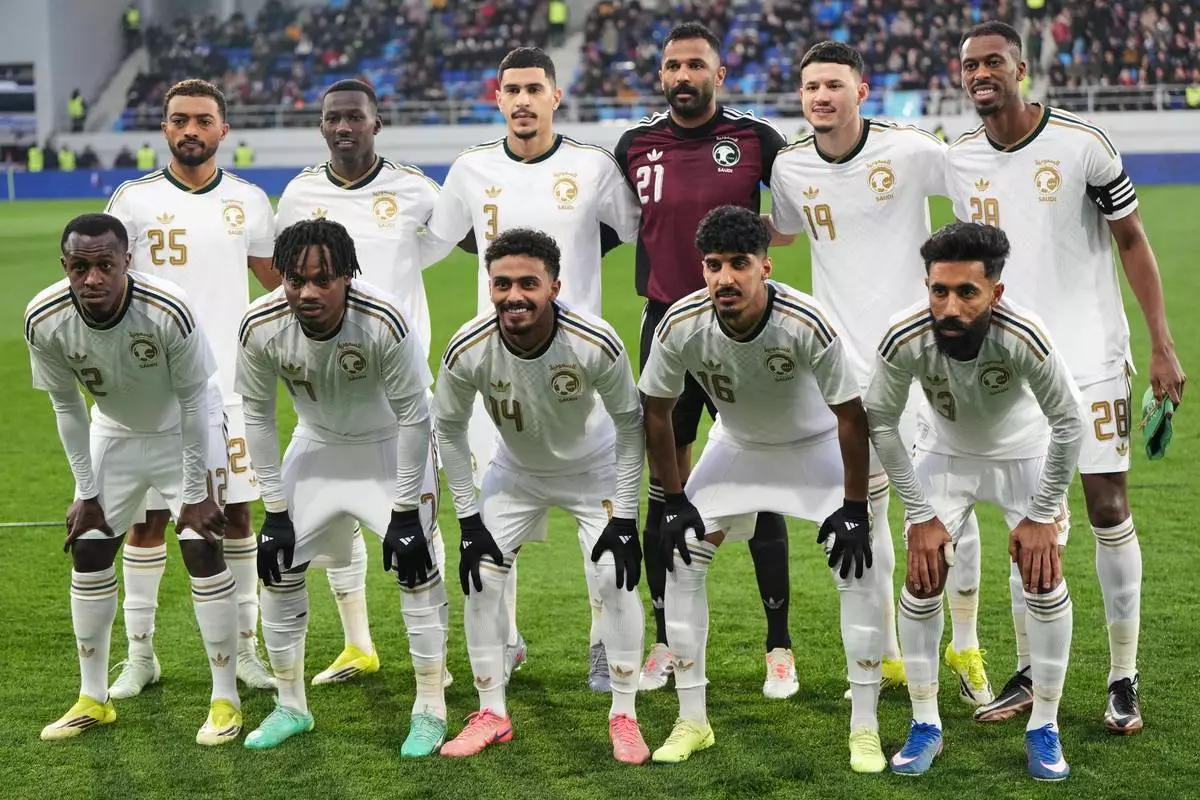
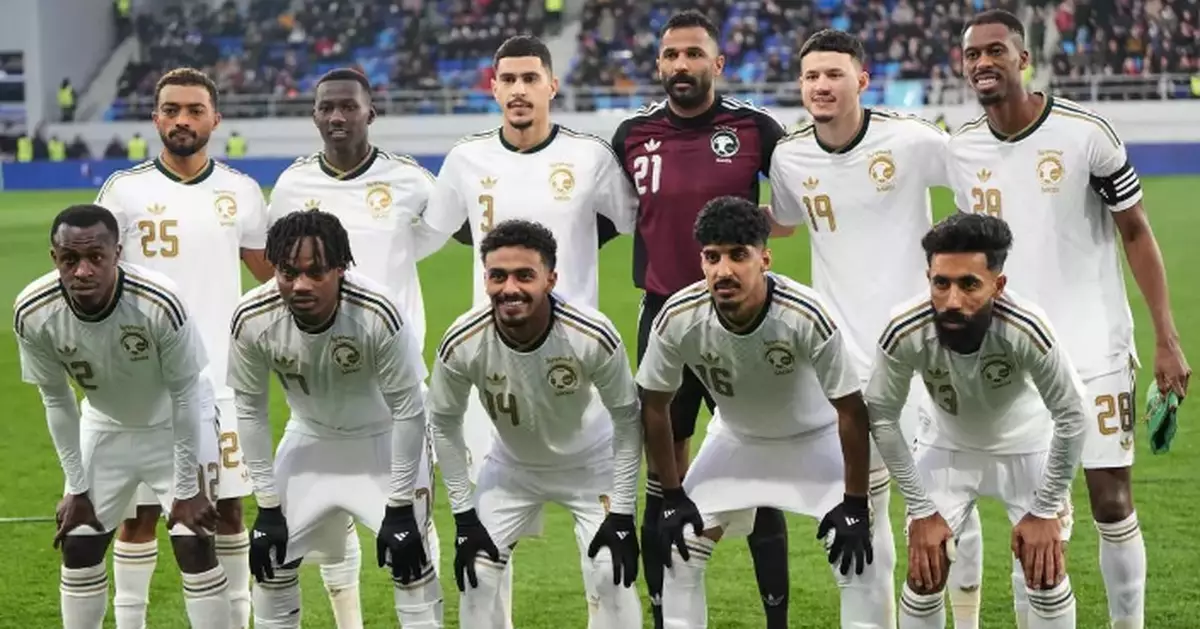
FILE - Saudi Arabia players pose for a team photo before the international friendly soccer match between Serbia and Saudi Arabia in Backa Topola, Serbia, Tuesday, March 31, 2026. (AP Photo/Darko Vojinovic, File)
BERLIN (AP) — A van ramming and stabbing near Berlin’s Pride festival that left one person dead and many others injured is believed to have been an Islamic extremist terror attack, Germany’s interior minister said Sunday.
The suspect in Saturday night’s attack remains at large. Authorities issued a wanted notice and warned people against approaching Abdul Ballout, a German citizen with Lebanese roots, saying that he may be armed and dangerous.
Authorities said he is believed to have injured several people after he drove a van into a crowd at a park near the Pride festival’s closing party. He then allegedly attacked other people with a weapon, suspected to be a machete.
“Everything we see here points to us dealing with an Islamic terror attack,” Interior Minister Alexander Dobrindt said.
Dobrindt put the total number of injured at 29.
German authorities have issued a wanted notice for Ballout, warning the public to avoid “direct contact” with the suspect and saying that he may be armed and dangerous.
Police had said earlier that they had identified a suspect who has ties to Islamic groups in the German capital.
“The suspect is known to police. He is known to us as a member of Islamic circles here in Berlin, and our search for this person is proceeding at full speed,” said police spokesperson Florian Nath, adding that investigators had no information on “his specific motives.”
Police conducted operations in the city as they searched for the suspect. Those included a search at an apartment in Berlin's Schöneberg district in the early hours of Sunday, but police said they found no one there.
Julian Miethig, who had attended the Pride festival nearby, said he wanted to go to an after-party when he heard from a friend that “something bad happened there and there are a lot of fire trucks, a lot of emergency vehicles, ambulances.”
“It’s a dark day for the community,” he said.
According to police, a white van drove into the Tiergarten park around 10 p.m. and hit several people before colliding with a tree. The closing party at the Pride festival, known as Christopher Street Day, was ongoing at the time next to the Brandenburg Gate, a short distance away, following a parade with some 80 trucks that had made its way through downtown Berlin earlier in the day.
Police said a woman was killed. Berlin’s fire service said that three people sustained life-threatening injuries, another eight were seriously injured and five had slight injuries.
The Pride event next to the Brandenburg Gate was called off around 10:15 p.m. and a band’s performance on stage was interrupted. People were urged to go home and to avoid taking the route through the park.
One of the presenters at the Pride party, Ricarda Hofmann, wrote in an Instagram post that she had been there “not just as a moderator, but as part of a community that comes together to be visible. To celebrate love. To stand up for each other.”
She said the attack left her speechless. “What happened today has changed something in me,” she wrote.
Hundreds of thousands of people had come to Berlin to celebrate on Saturday, though it’s unclear how many were still at the festival by late evening. It’s one of Europe’s largest LGBTQ+ celebrations.
The van, with its battered front resting against a tree, could still be seen at the scene Sunday morning.
Chancellor Friedrich Merz described what happened as “an attack on our society.”
“What an abhorrent act in Berlin,” Merz wrote in a post on X. He added that Germany loves freedom, “and we will preserve and defend that.”
In the neighboring Netherlands, Amsterdam is hosting World Pride this week and next alongside its own annual Pride celebrations. Mayor Femke Halsema said authorities and organizers “are closely monitoring the security situation” after the Berlin attack.
She said security is always high for such events and extra measures will be added where necessary, “which visitors will hopefully notice as little as possible. Because we don’t want to be scared and we want to be able to celebrate freedom and being able to be who you are and love who you want to.”
Associated Press reporters Kirsten Grieshaber and Fanny Brodersen in Berlin, and Mike Corder in The Hague, Netherlands, contributed to this report.
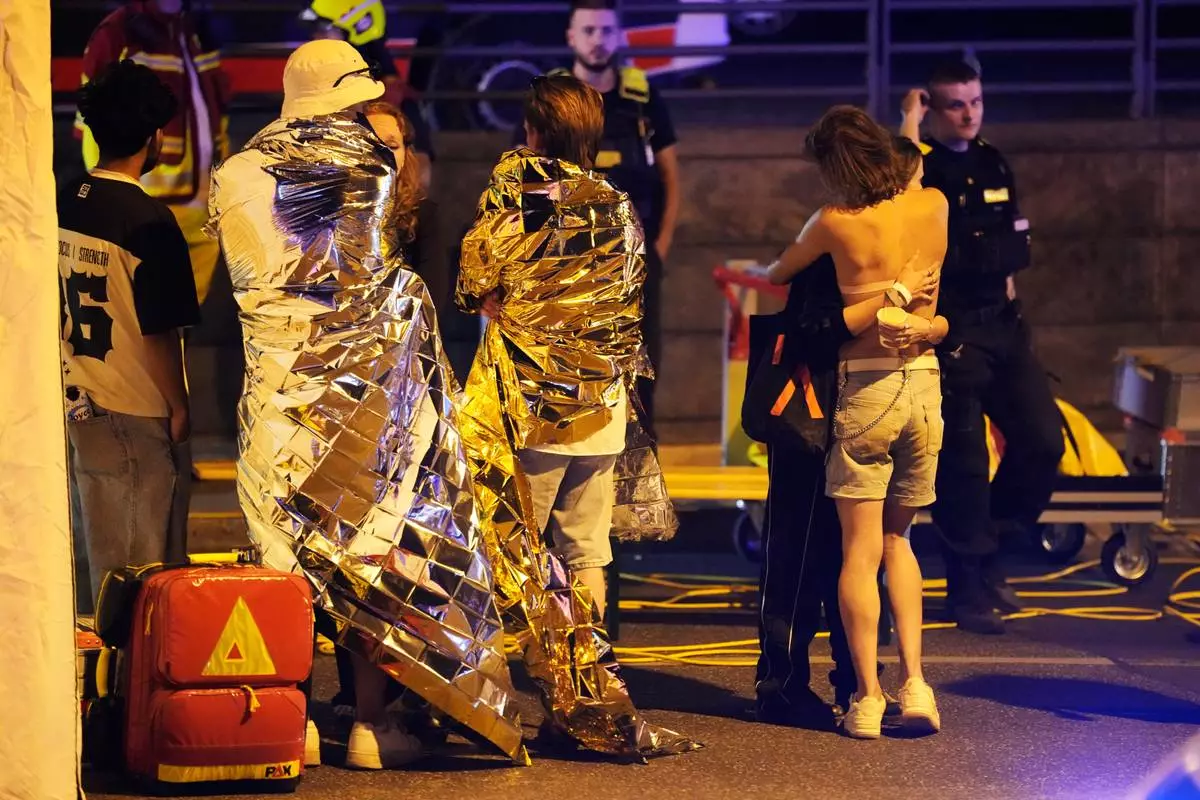
Two people embrace near others wearing thermal blankets as they stand near emergency personnel in Berlin, early Sunday, July 26, 2026, following the cancellation of Christopher Street Day festivities. (AP Photo/Markus Schreiber)
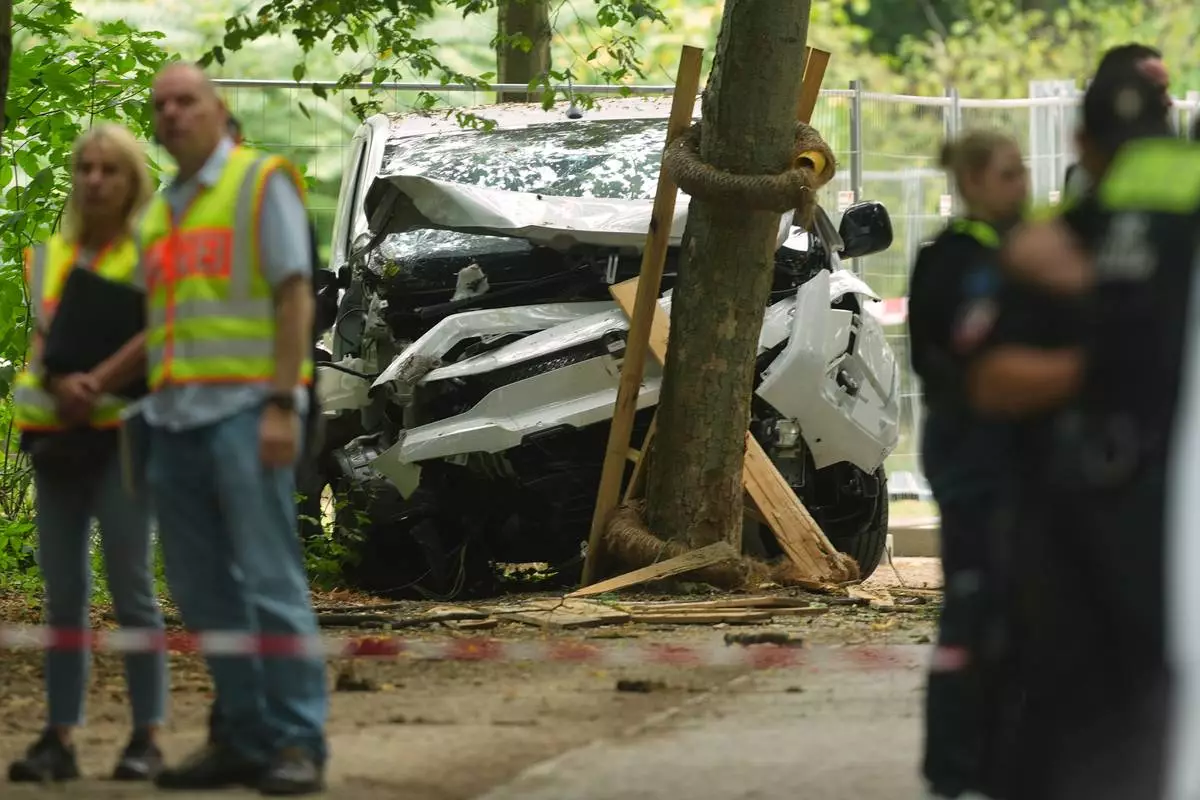
Police officers stand near a vehicle crashed into a tree after driving into a crowd near Berlin's annual Pride event, in Berlin, Germany, Sunday, July 26, 2026. (AP Photo/Markus Schreiber)
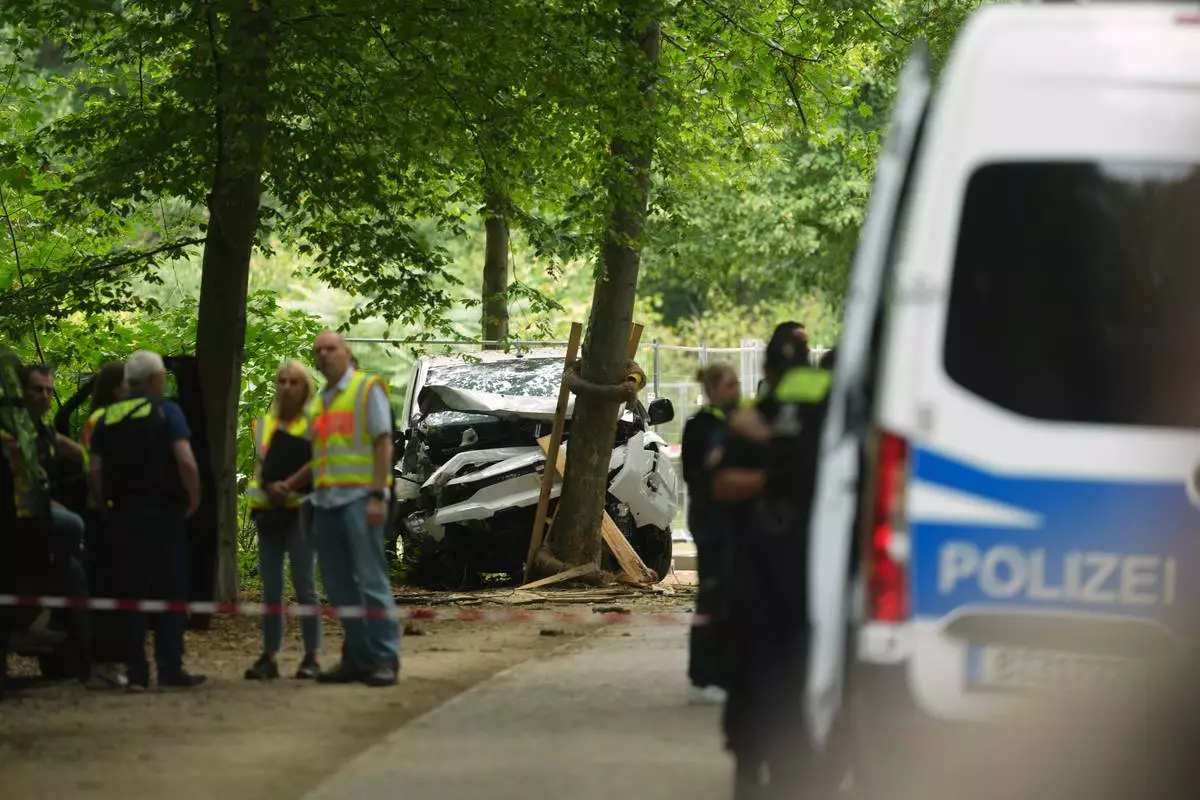
Police officers stand near a vehicle crashed into a tree after driving into a crowd near Berlin's annual Pride event, in Berlin, Germany, Sunday, July 26, 2026. (AP Photo/Markus Schreiber)
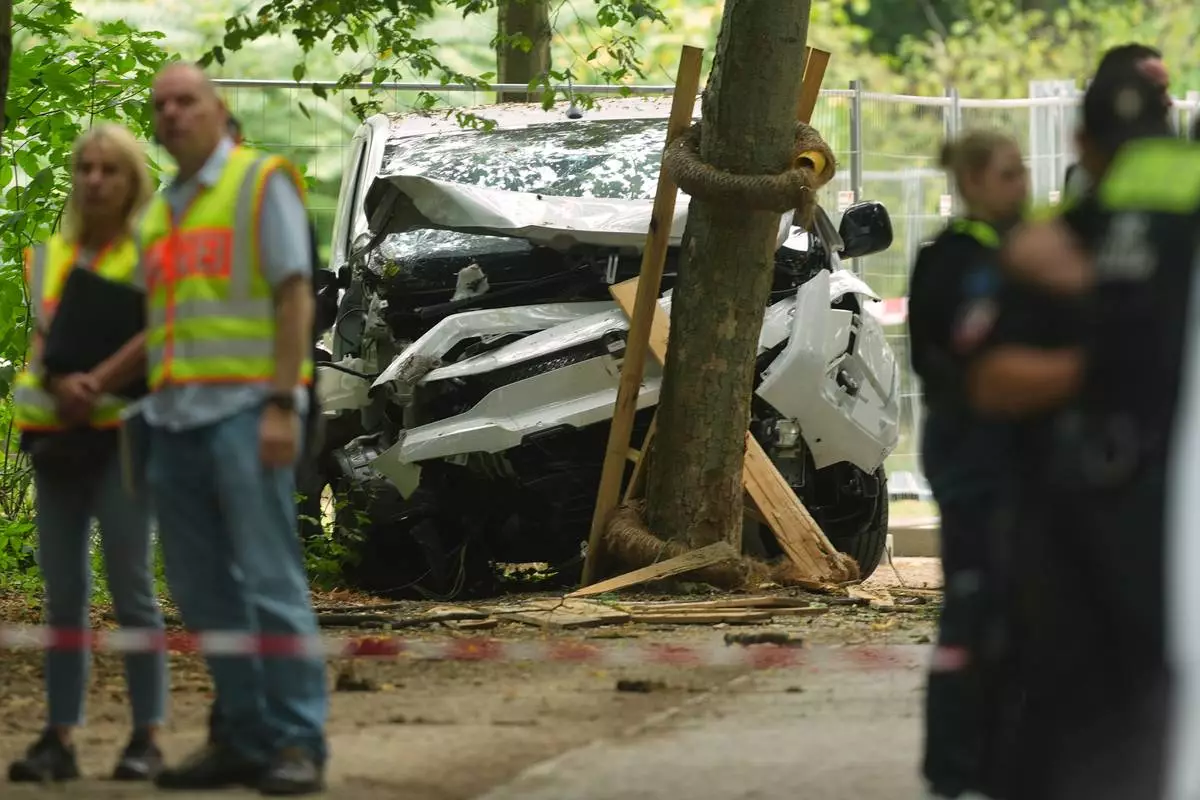
Police officers stand near a vehicle crashed into a tree after driving into a crowd near Berlin's annual Pride event, in Berlin, Germany, Sunday, July 26, 2026. (AP Photo/Markus Schreiber)
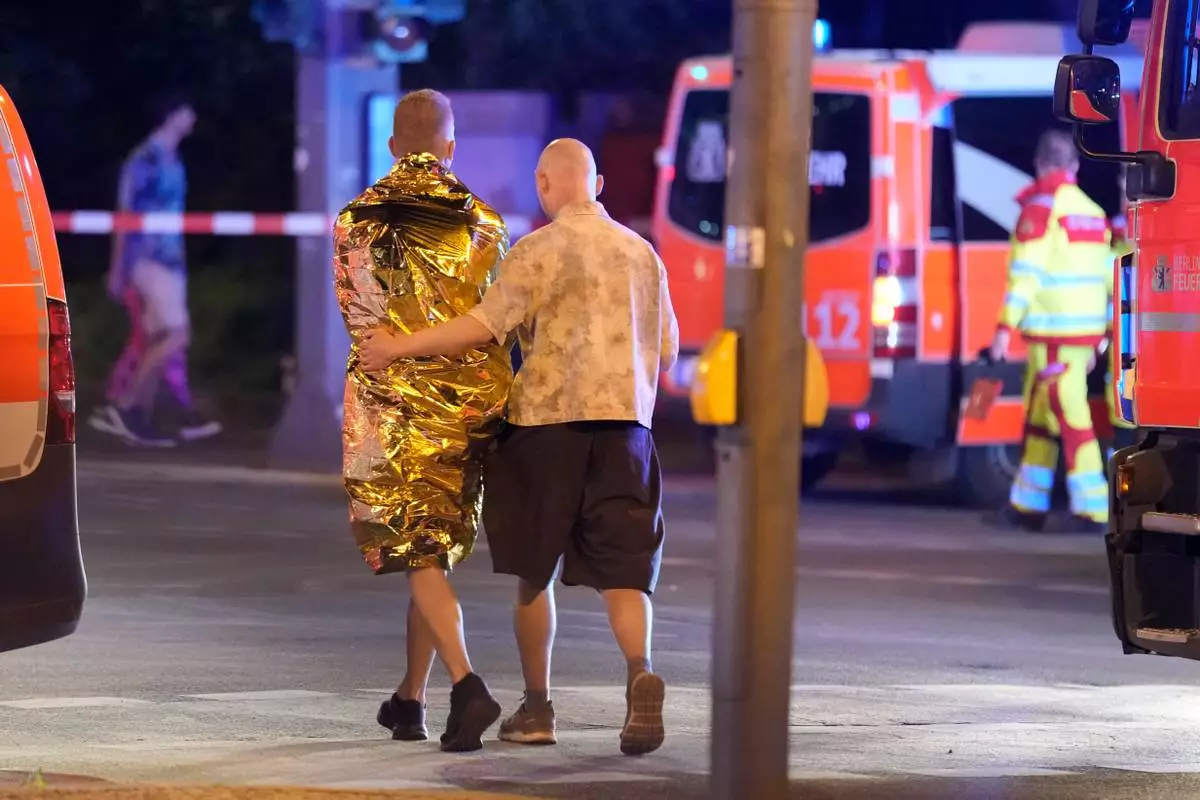
Two people walk together past emergency vehicles in Berlin, early Sunday, July 26, 2026, following the cancellation of Christopher Street Day festivities. (AP Photo/Markus Schreiber)
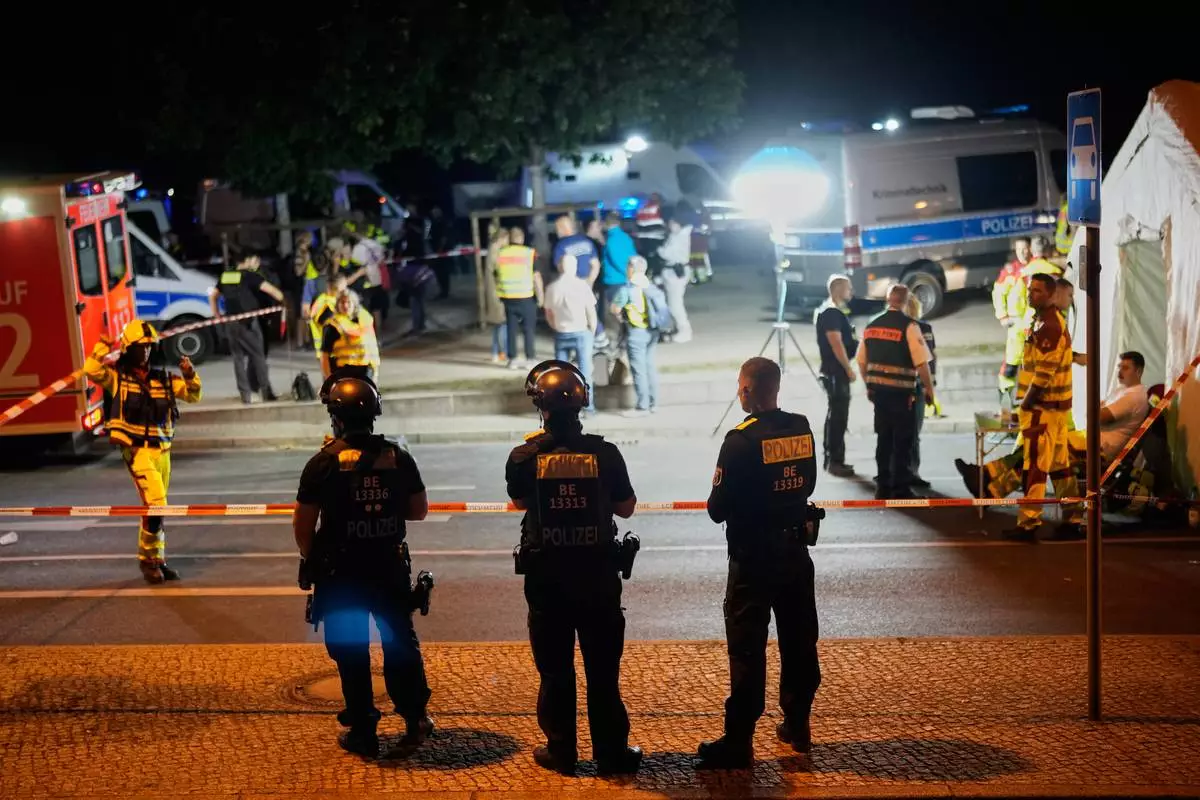
Emergency personnel and police gather in Berlin, early Sunday, July 26, 2026, following the cancellation of Christopher Street Day festivities. (AP Photo/Ebrahim Noroozi)
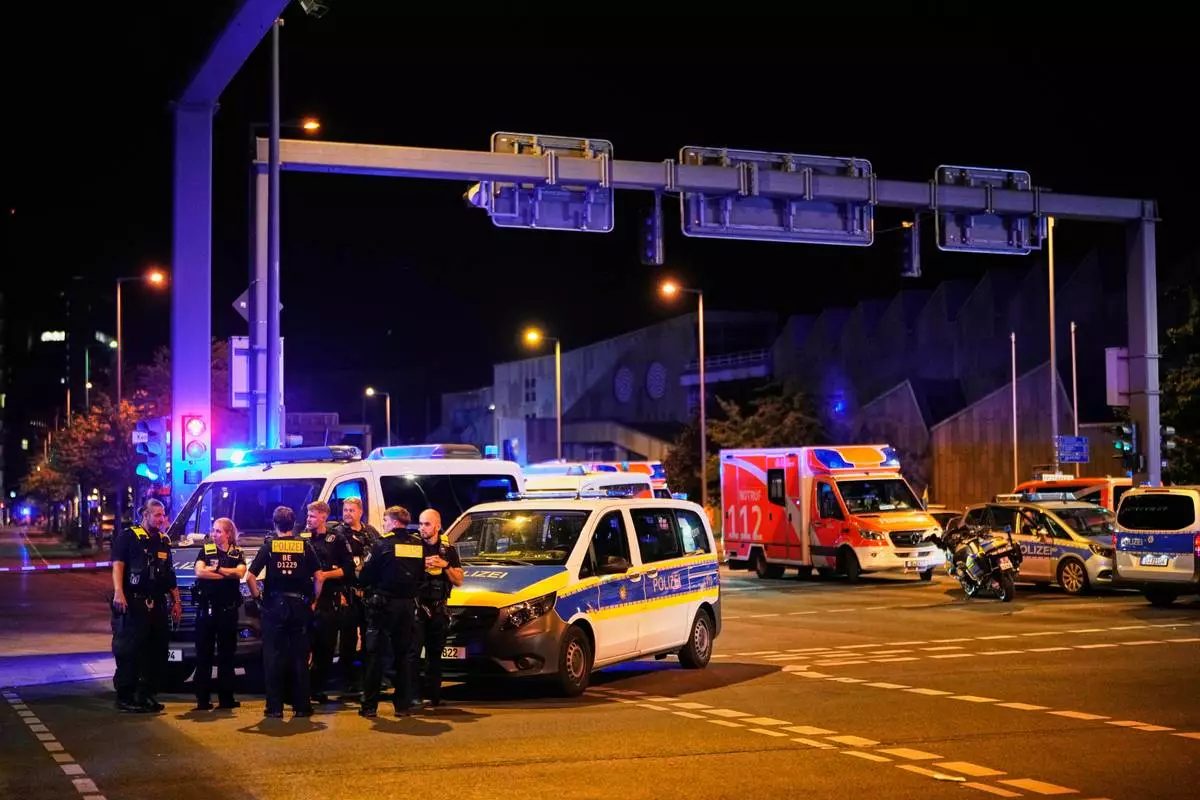
Emergency personnel and police gather in Berlin, early Sunday, July 26, 2026, following the cancellation of Christopher Street Day festivities. (AP Photo/Ebrahim Noroozi)
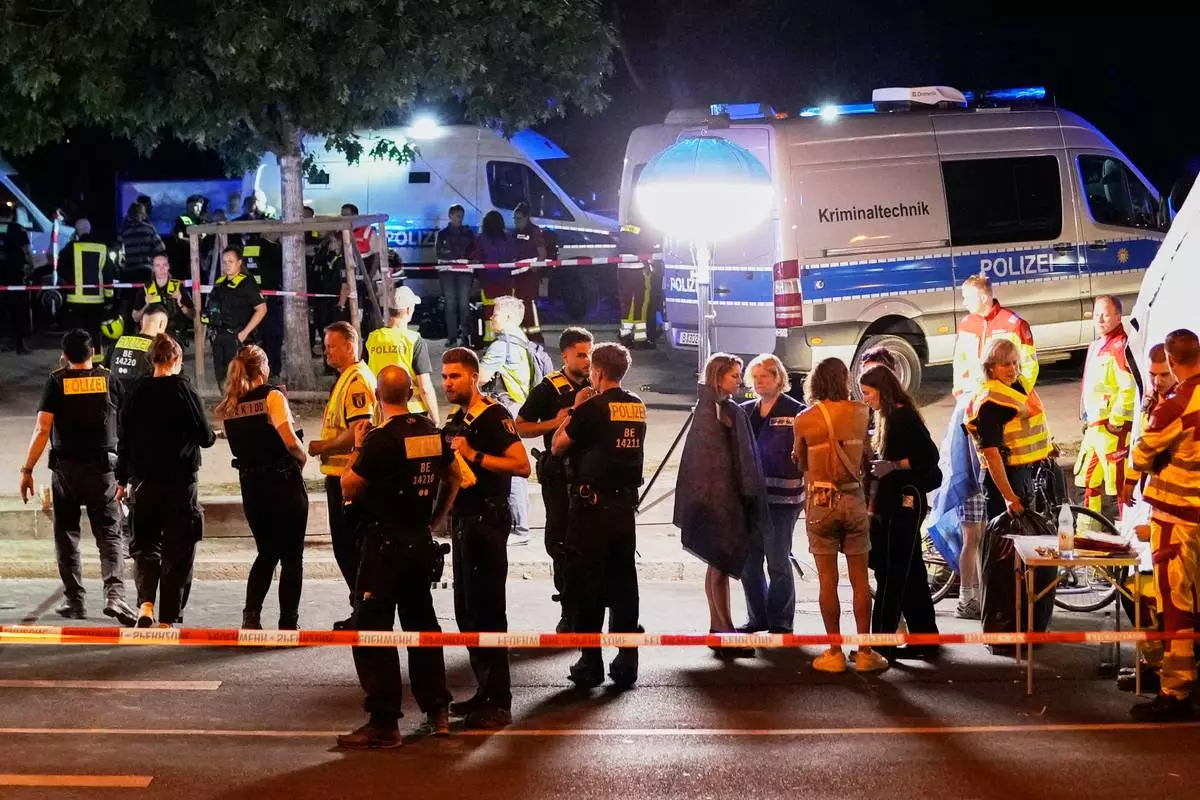
Emergency personnel and police gather in Berlin, early Sunday, July 26, 2026, following the cancellation of Christopher Street Day festivities. (AP Photo/Ebrahim Noroozi)
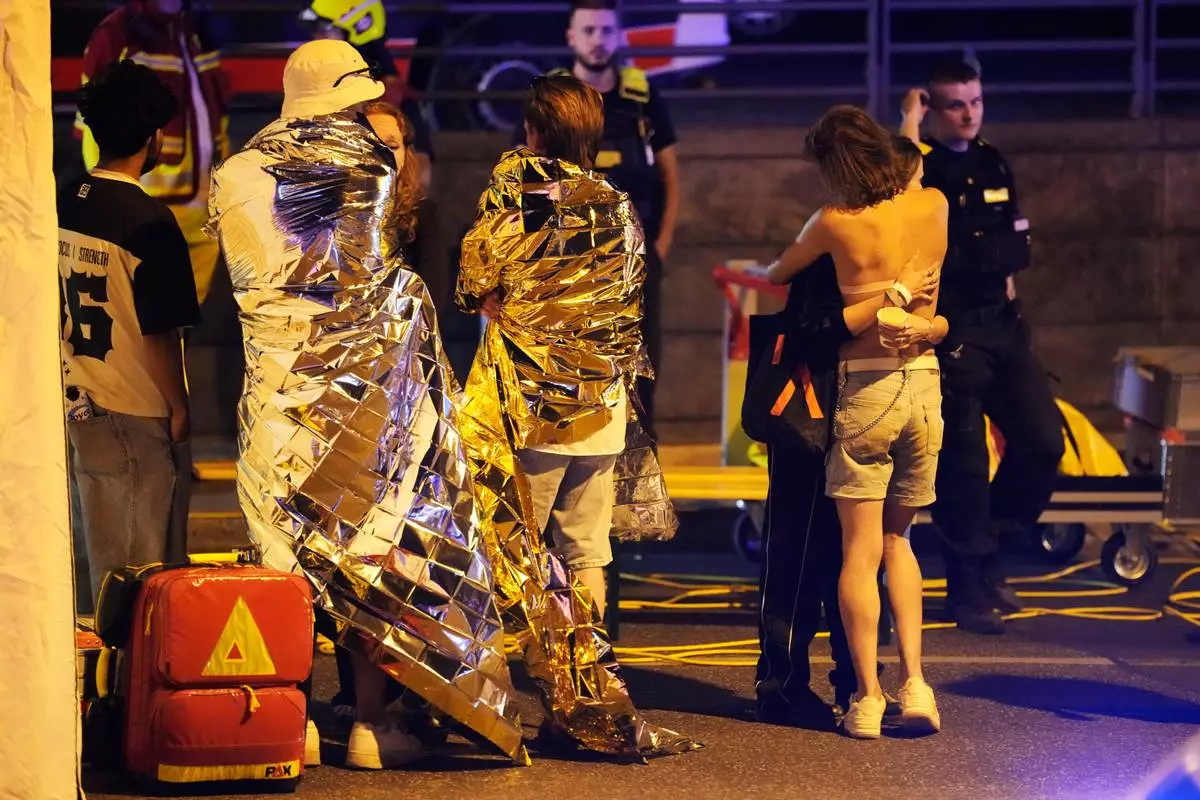
Two people embrace near others wearing thermal blankets as they stand near emergency personnel in Berlin, early Sunday, July 26, 2026, following the cancellation of Christopher Street Day festivities. (AP Photo/Markus Schreiber)