Greece and China are joining archeological forces at a site in western Greece, uncovering an ancient city that lies largely beneath the ground while also building cross-civilizational relationships in the modern world.
Angelokastro in Aetolia-Acarnania is now a quiet field, but archaeologists say it contains the remains of an important ancient city in central Aetolia. First known as Konopi, the city was later renamed Arsinoe.
"Here at Angelokastro, there is a very important ancient city of central Aetolia. The remains of this ancient city are located, and to this day they have never been systematically excavated," said Fotini Saranti, director of the Ephorate of Antiquities of Aetolia-Acarnania and Lefkada.
Now, Angelokastro is becoming the starting point for Greece and China's first joint field project in archaeology. The five-year program brings together the Greek Ministry of Culture, the local Ephorate of Antiquities, and the Chinese School of Classical Studies at Athens.
The focus is around five hectares of land where archaeologists hope to map the city, study its remains, and understand its place in the ancient world.
Archaeologists continue to uncover the history of Angelokastro, where an unassuming field may conceal the streets, buildings and cemeteries of an ancient city. The excavation represents both a scientific endeavor and a practical test of cooperation between Greece and China.
The joint project coincides with Athens' preparation for the Second World Conference of Classics. The project offers the gathering a tangible element, providing not just debate about the ancient world but a real excavation where representatives of two ancient civilizations work side by side.
"We share this common point: China and Greece both have extremely ancient civilizations. And of course each side appreciates that in the other," said Fotini Saranti.
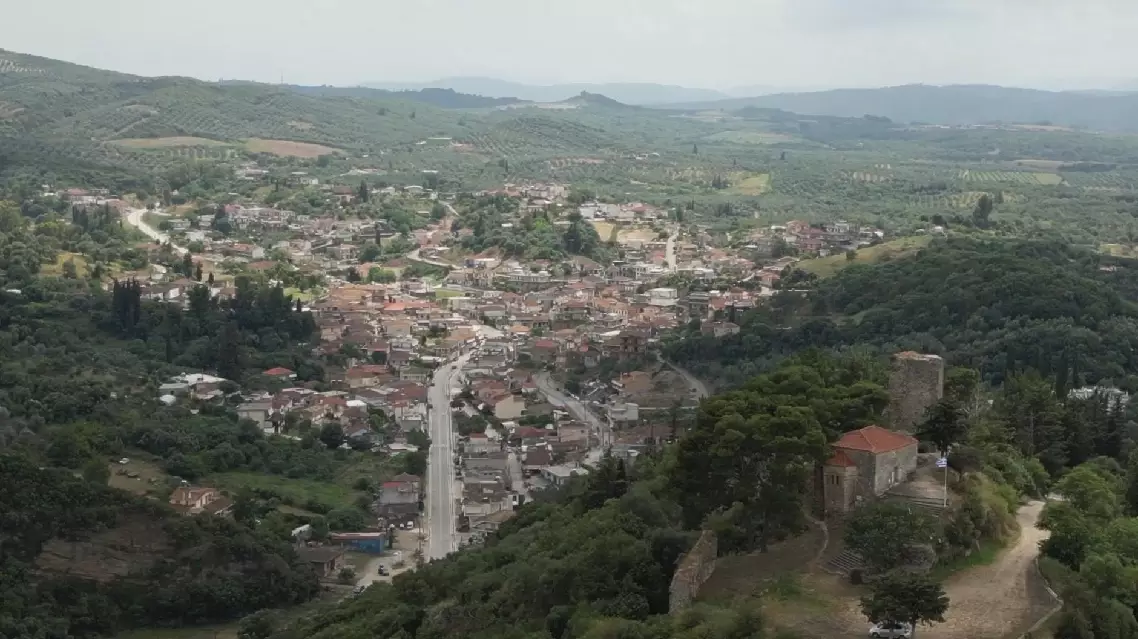
Chinese, Greek archaeologists look to enhance cooperation in uncovering Greek ancient city