Skip to Content Facebook Feature Image

As Ukraine fights off Russia's invasion, some regions see a rise in premature births

News

As Ukraine fights off Russia's invasion, some regions see a rise in premature births
News

News

As Ukraine fights off Russia's invasion, some regions see a rise in premature births

2026-06-08 12:07 Last Updated At:12:58

ZAPORIZHZHIA, Ukraine (AP) — When Marharyta Nekhoroshyva first saw her newborn son, she was gripped by fear. Born after just 26 weeks of pregnancy, he weighed only 940 grams (2 pounds) and wore diapers no larger than the palm of an adult hand.

“The doctors told me that if he survived the first three days, everything would be OK,” she said, tears filling her eyes. “I don’t believe in God, but I was praying.”

More Images
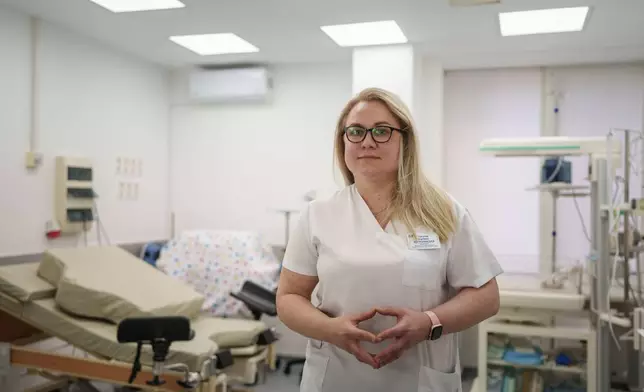
Dr. Nataliia Bohuslavska, head of the neonatal unit, poses for a photo at the regional perinatal center of Zaporizhzhia, Ukraine, Wednesday, May 6, 2026. (AP Photo/Evgeniy Maloletka)
Dr. Nataliia Bohuslavska, head of the neonatal unit, poses for a photo at the regional perinatal center of Zaporizhzhia, Ukraine, Wednesday, May 6, 2026. (AP Photo/Evgeniy Maloletka)
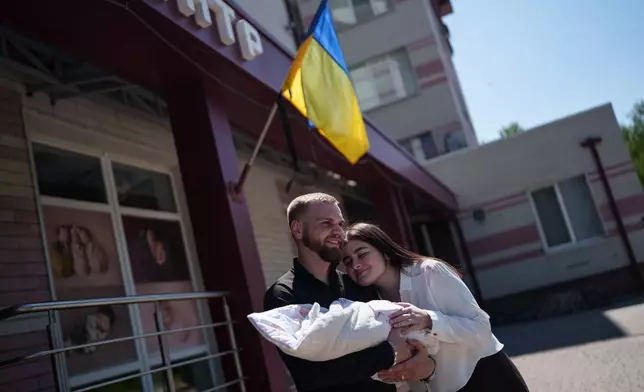
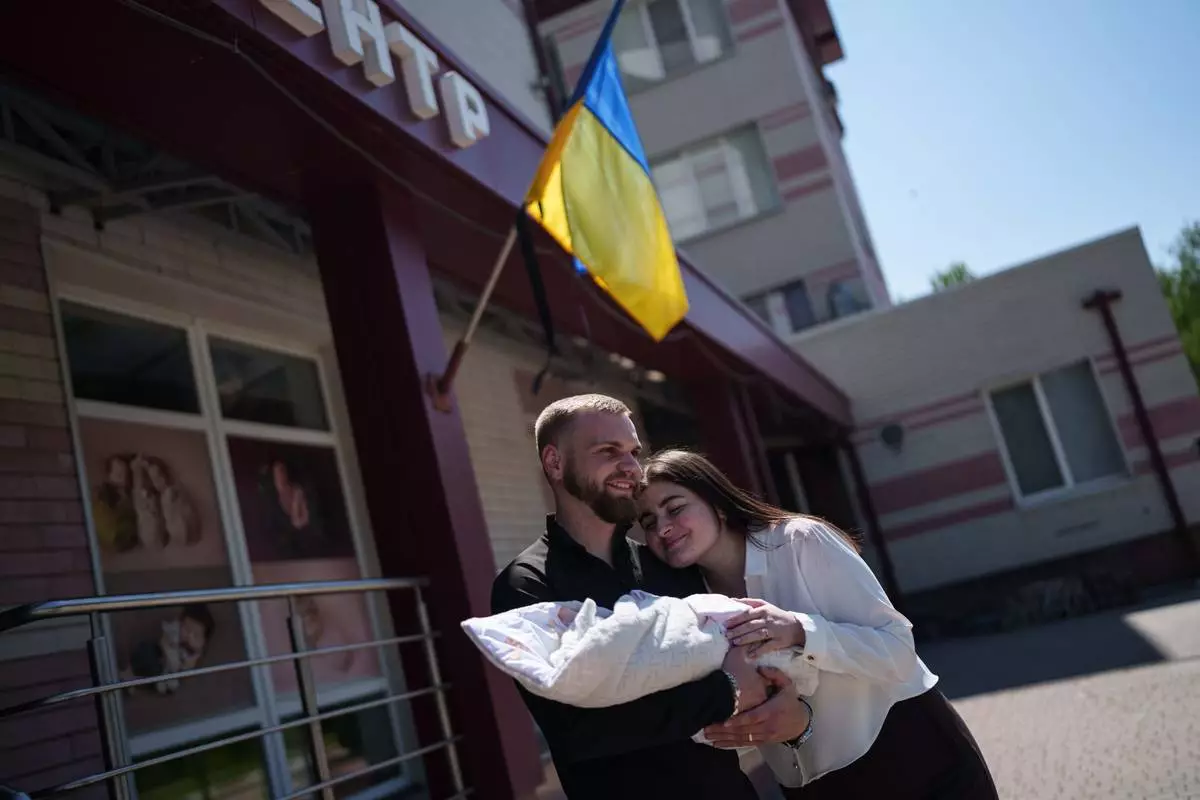
Mariia Skladan, right, her husband Vladyslav and their daughter Elina pose for a photo after mother and baby left the regional perinatal center of Zaporizhzhia, Ukraine, Wednesday, May 6, 2026. (AP Photo/Evgeniy Maloletka)
Mariia Skladan, right, her husband Vladyslav and their daughter Elina pose for a photo after mother and baby left the regional perinatal center of Zaporizhzhia, Ukraine, Wednesday, May 6, 2026. (AP Photo/Evgeniy Maloletka)

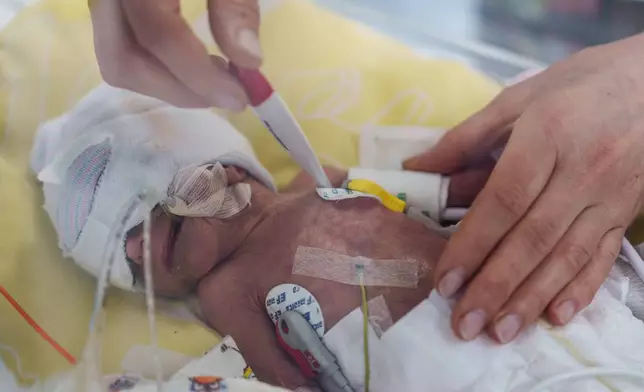
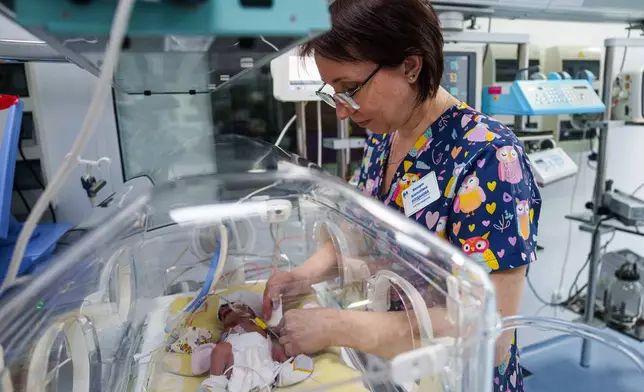
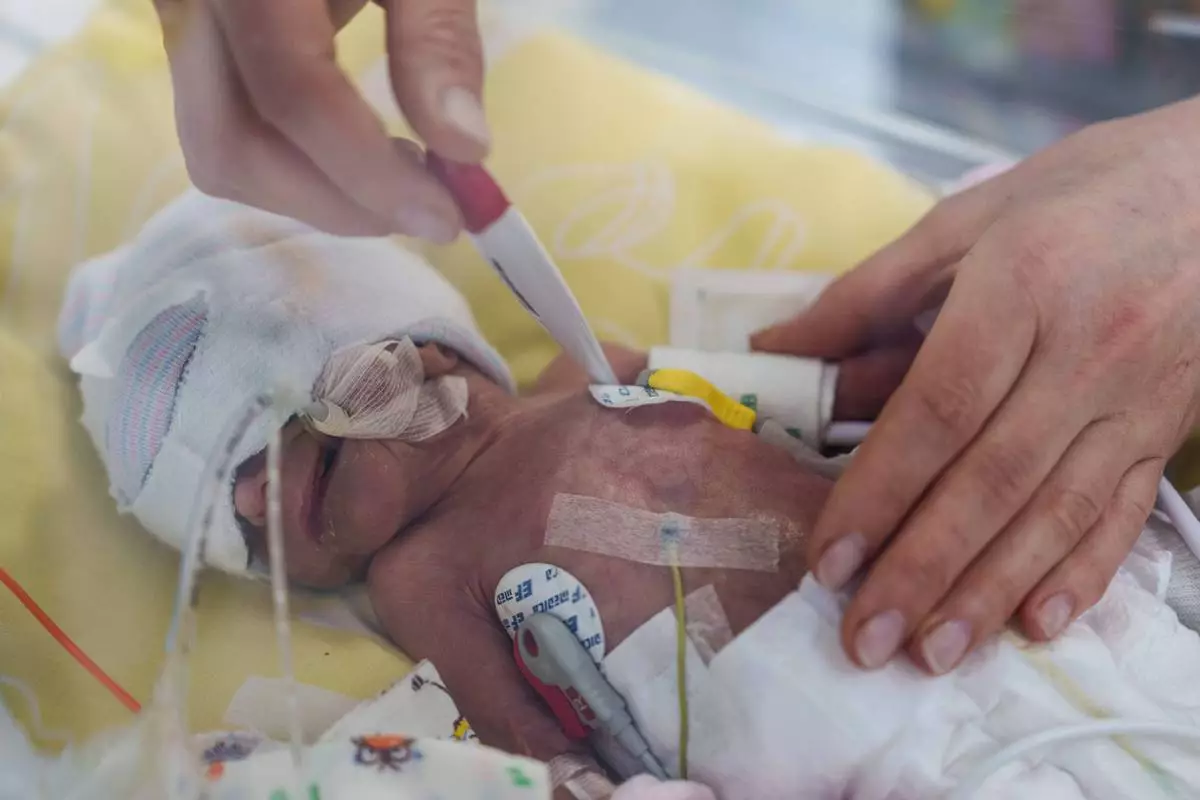
A nurse checks the temperature of a premature baby inside a temperature-controlled incubator at the regional perinatal center of Zaporizhzhia, Ukraine, Wednesday, May 6, 2026. (AP Photo/Evgeniy Maloletka)

A nurse checks the temperature of a premature baby inside a temperature-controlled incubator at the regional perinatal center of Zaporizhzhia, Ukraine, Wednesday, May 6, 2026. (AP Photo/Evgeniy Maloletka)

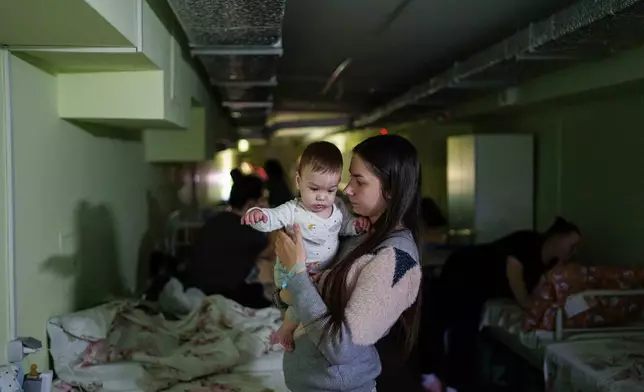
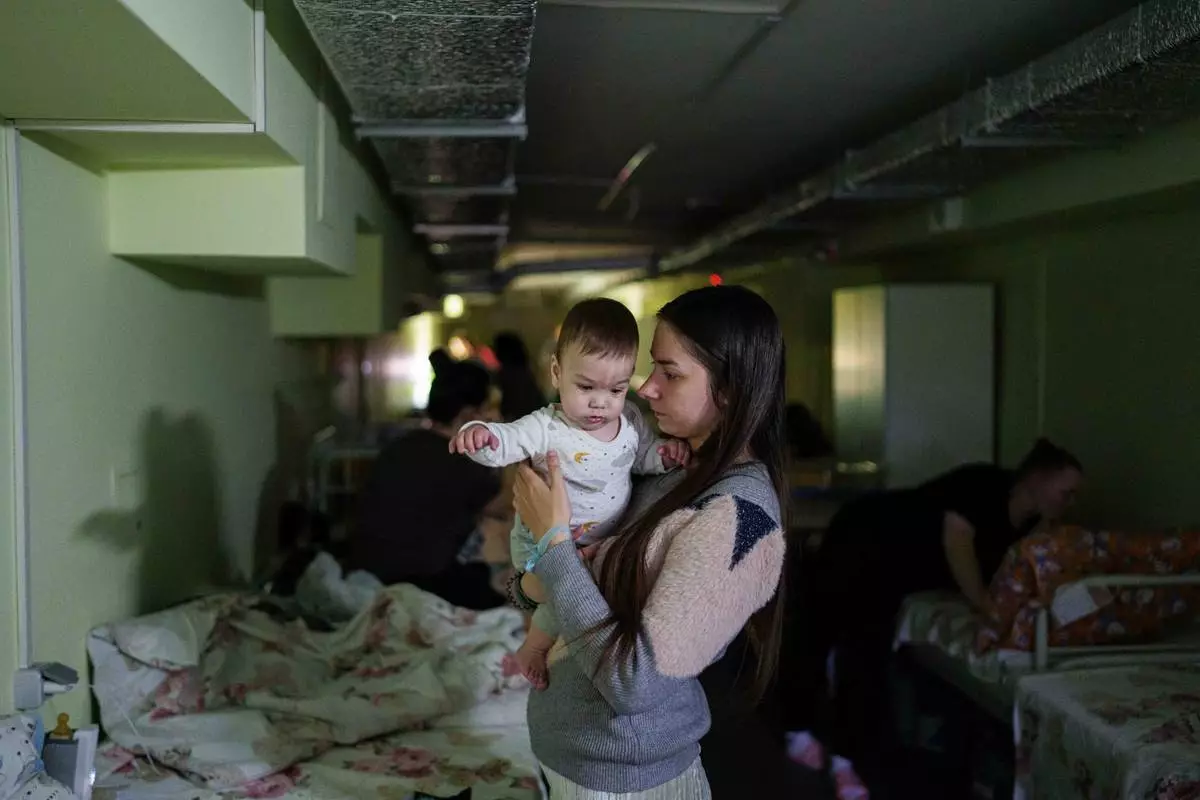
Marharyta Nekhoroshyva holds her son Mark inside a shelter at the children's regional hospital of Zaporizhzhia, Ukraine, on Thursday, May 7, 2026. (AP Photo/Evgeniy Maloletka)
Marharyta Nekhoroshyva holds her son Mark inside a shelter at the children's regional hospital of Zaporizhzhia, Ukraine, on Thursday, May 7, 2026. (AP Photo/Evgeniy Maloletka)

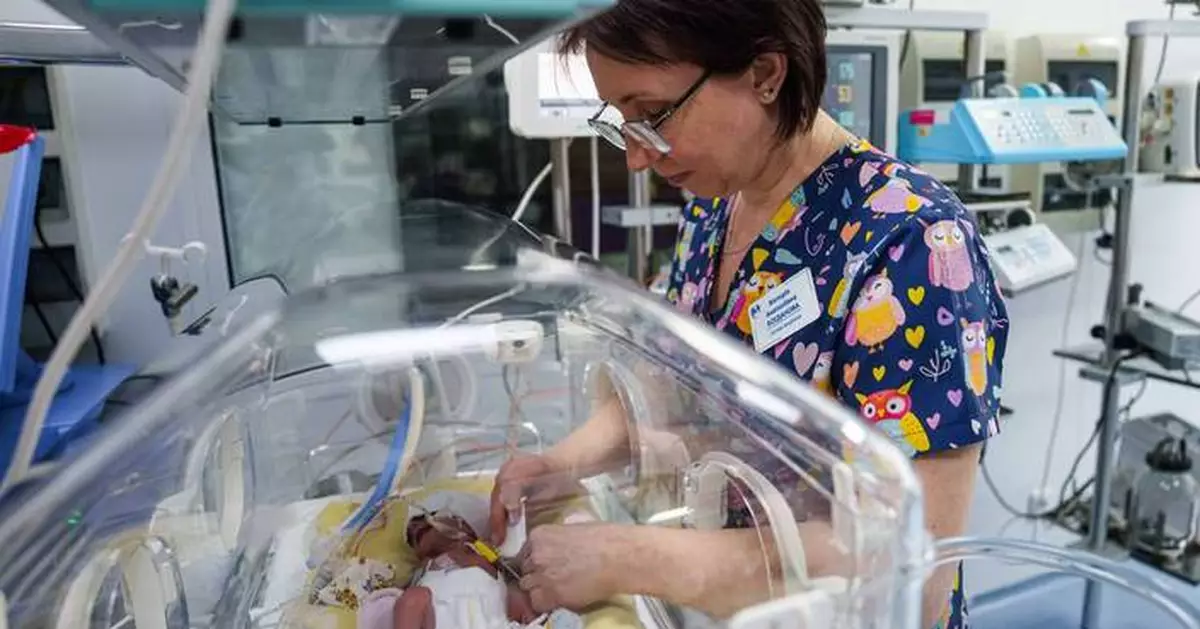
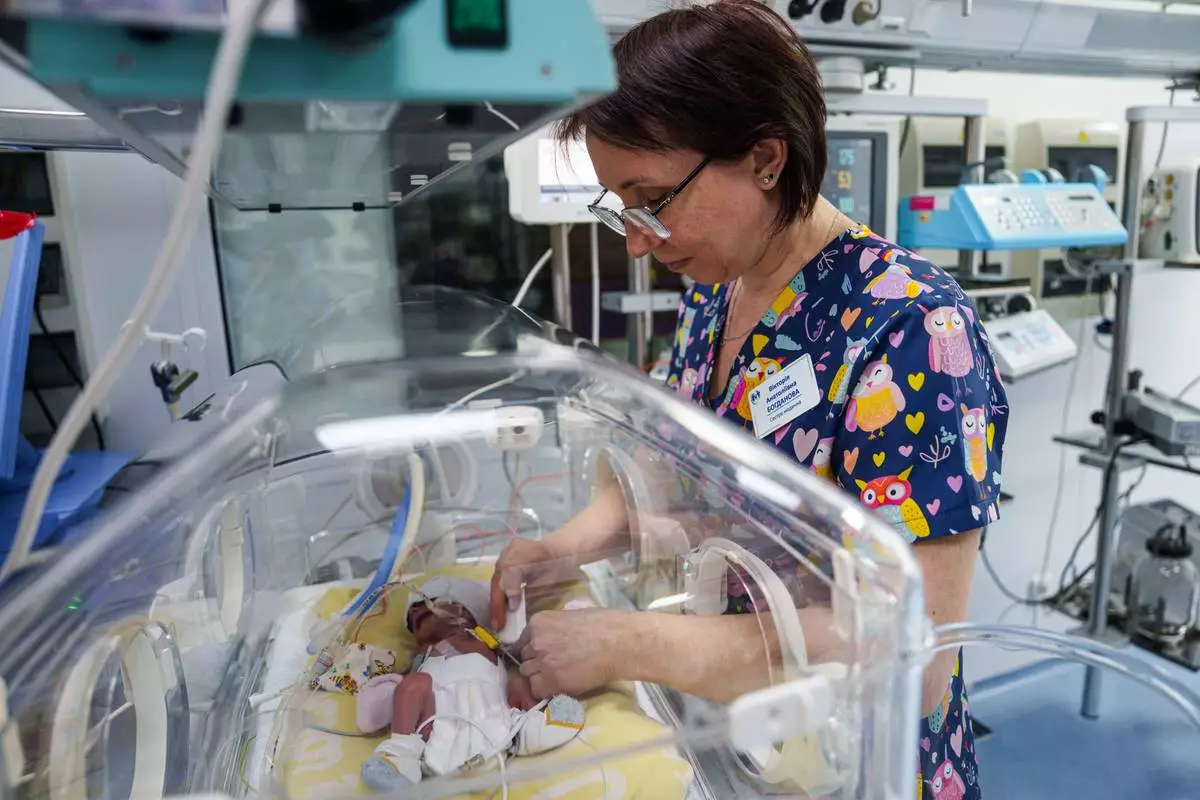
Nurse Victoria Bohdanova changes the diaper of a premature baby inside a temperature-controlled incubator at the regional perinatal center of Zaporizhzhia, Ukraine, Wednesday, May 6, 2026. (AP Photo/Evgeniy Maloletka)

Nurse Victoria Bohdanova changes the diaper of a premature baby inside a temperature-controlled incubator at the regional perinatal center of Zaporizhzhia, Ukraine, Wednesday, May 6, 2026. (AP Photo/Evgeniy Maloletka)

Now 9 months old, Mark is energetic and lively, but he has chronic breathing problems and requires frequent hospital stays.

Nekhoroshyva must navigate her son’s illness while living under the constant threat of attack in the Ukrainian city of Zaporizhzhia, where hospitals board up their windows because blast waves from Russian strikes routinely shatter glass. She is doing it alone while her husband fights in the war.

A rising number of babies are being born prematurely — before 37 weeks of pregnancy — in Ukraine, particularly in regions near the front lines, where some areas have seen rates nearly double since the conflict started with Russia's invasion in 2022.

Experts say the reasons for premature births are complex, but the profound psychological and physical stress the war is inflicting on pregnant mothers is contributing. The delicate work of keeping the fragile newborns alive is made only more difficult by the conflict.

When their babies are at the main children's hospital in Zaporizhzhia, Nekhoroshyva and other mothers descend with their children into the shelter each night. In the narrow, dimly lit hallways, they rock and soothe their infants to sleep.

While fewer women in Ukraine are giving birth overall due to displacement, emigration and other factors during the war, a growing share of births are premature, according to data from the United Nations and recent scientific studies.

In the southern region of Kherson, the preterm birth rate nearly doubled from 5.4% in 2019 to 9.8% in 2025, according to the U.N. In the Zaporizhzhia region, also in the south, it rose from 5.7% in 2019 to 7.6% in 2025. In Poltava, a region in northeastern Ukraine, the rate rose from 7.7% to 9.8% over the same period.

The front line cuts through both the Kherson and Zaporizhzhia regions, which frequently see attacks on residential areas. Poltava is some distance away from the front but is frequently hit by aerial strikes.

The link between maternal stress and premature birth is complex, but a growing body of research suggests that prolonged psychological strain increases the risk of babies being born early, experts say. It may be tied to an increased risk of infection, a known trigger for preterm labor, said Dr. Andrew Weeks, a professor of international maternal healthcare at the University of Liverpool.

“Premature birth is very affected by infection,” he said. “And if you can’t get to a place where you can get appropriate diagnosis and treatment early, then actually the chance of you going into premature labor is higher.”

It’s not just premature births that are rising in Ukraine; emergency cesarean sections and other complications are, too, said Isaac Hurskin, spokesperson for the U.N. Population Fund.

“We’re seeing this real link between acute stress and birthing and pregnancy-related complications,” he said.

Those complications could compound a demographic crisis. Ukraine’s fertility rate has fallen to among the lowest in the world, dropping to roughly one child per woman over the past three years — far below the 2.1 replacement rate, Hurskin said.

Inside an incubator in the intensive care unit at the maternity hospital in the city of Zaporizhzhia lies a baby born at 30 weeks and weighing only 700 grams (1 pound, 9 ounces) — well below the threshold of 2,500 grams (5 pounds, 8 ounces) that the World Health Organization classifies as low birth weight.

Her tiny body is kept alive inside the temperature-controlled incubator. IV lines deliver nutrients and medication, while a ventilator helps her breathe. The incubator is draped with a blanket to protect her fragile, developing eyes from the harsh fluorescent lights of the ward.

Treatment focuses on helping premature babies gain weight and eventually breathe on their own, but complications can be extensive, said Dr. Andrii Lobanov, head of the neonatal intensive care at Zaporizhzhia's children's hospital. Oxygen levels, for instance, must be managed precisely because of the risk of abnormal blood vessel growth in the eyes, leading to blindness in severe cases.

Even after they leave intensive care, children born prematurely often require long-term care — possibly for life — for respiratory, neurological, developmental or immune-related conditions.

That is a burden on cash-strapped countries like Ukraine.

“It is very expensive and of course a country in a war situation has to decide what it’s going to spend on, so hospital services invariably get hit. Both literally and metaphorically,” Weeks said.

Air raid sirens have become part of daily life inside neonatal intensive care units. When they sound, doctors stay beside the babies rather than rushing them to shelters, knowing that moving the fragile newborns could be even more dangerous. The sirens go off too frequently to stop work each time anyway.

Dr. Nataliia Bohuslavska, head of the neonatal unit at the maternity hospital in Zaporizhzhia, began one day last month with air raid alerts warning of incoming missile attacks. By the afternoon, a Russian glide bomb had struck a commercial area of the city, killing at least 12 people.

Care continued all along: Doctors performed two cesarean sections and delivered a baby while also treating a 42-year-old woman who miscarried after witnessing an airstrike.

The next day, a black flag fluttered by the hospital entrance to mourn those killed.

Bohuslavska knows every mother on her ward by first name — their complicated cases, their fears, and their tiny babies fighting for survival. Bohuslavska has worked at the hospital for 26 years and was born there herself.

The war compounds the difficulties experienced by every pregnant woman she cares for, she said.

“She wonders what kind of world her child will be born into, under what conditions the birth will happen, and whether it will be a moment of joy or one gripped by fear with shells exploding nearby,” she said.

Many mothers endure the ordeal alone while their husbands are fighting.

“When a patient calls to say her husband has been killed in the war, the only thing I can tell her is: ‘Come to us. We will take care of you,’” Bohuslavska said.

“We have to support her constantly, so that even in the midst of this terrible loss, she can find the strength to give new life a chance and save her baby.”

For Mariia Skladan, it was finally time to go home.

Her daughter, Elina, was born in January at just 26 weeks, weighing 740 grams (1 pound, 10 ounces). Five months later, after growing to a healthy 3 1/2 kilograms (nearly 8 pounds), doctors said she was strong enough to be discharged.

Skladan has a rare liver disease that doctors warned would make it nearly impossible for her to conceive. Her pregnancy was considered a miracle, Bohuslavska said.

“If there’s a war, what does it mean? Not to live?” Skladan asked. "You want to keep going."

When she and Elina emerged from the maternity hospital, her family was waiting with flowers. Skladan broke down in tears of joy.

But the relief was short-lived.

The very next day, Elina was back in intensive care after contracting a virus overnight.

Associated Press journalist Volodymyr Yurchuk contributed from Kyiv, Ukraine.
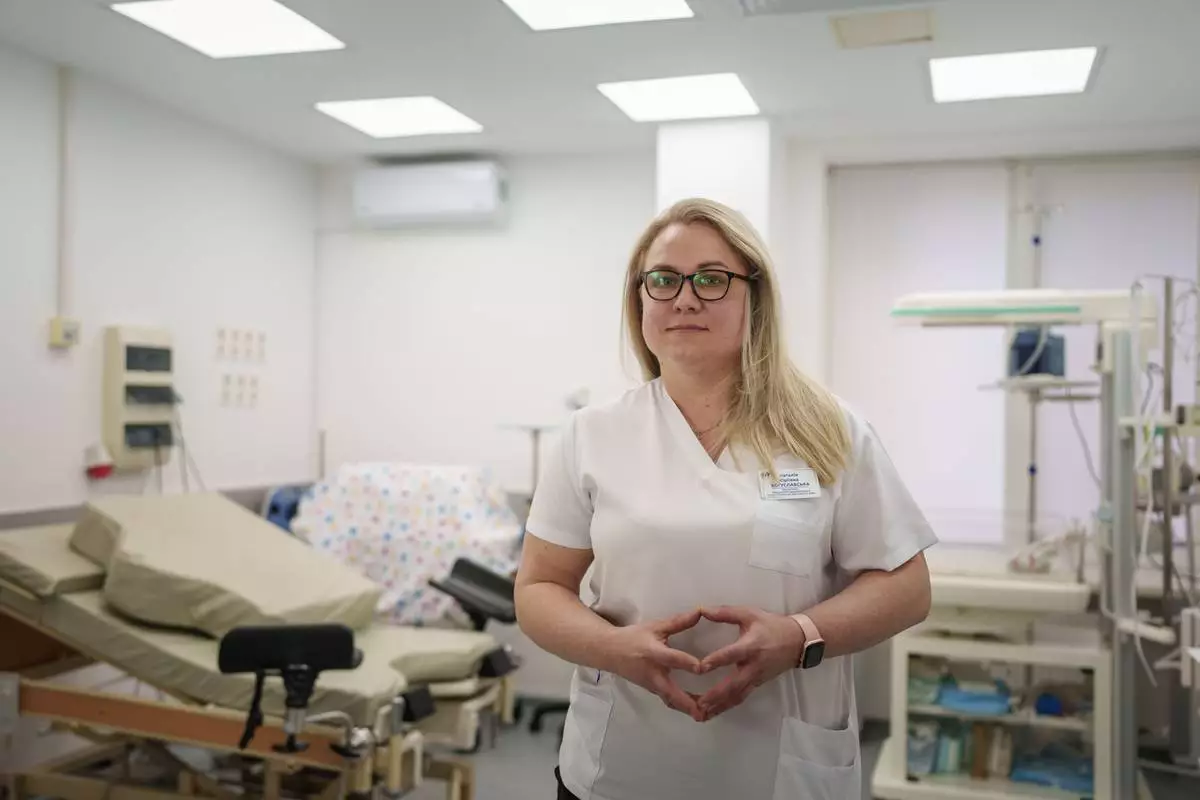
Dr. Nataliia Bohuslavska, head of the neonatal unit, poses for a photo at the regional perinatal center of Zaporizhzhia, Ukraine, Wednesday, May 6, 2026. (AP Photo/Evgeniy Maloletka)
Dr. Nataliia Bohuslavska, head of the neonatal unit, poses for a photo at the regional perinatal center of Zaporizhzhia, Ukraine, Wednesday, May 6, 2026. (AP Photo/Evgeniy Maloletka)
Mariia Skladan, right, her husband Vladyslav and their daughter Elina pose for a photo after mother and baby left the regional perinatal center of Zaporizhzhia, Ukraine, Wednesday, May 6, 2026. (AP Photo/Evgeniy Maloletka)
Mariia Skladan, right, her husband Vladyslav and their daughter Elina pose for a photo after mother and baby left the regional perinatal center of Zaporizhzhia, Ukraine, Wednesday, May 6, 2026. (AP Photo/Evgeniy Maloletka)

A nurse checks the temperature of a premature baby inside a temperature-controlled incubator at the regional perinatal center of Zaporizhzhia, Ukraine, Wednesday, May 6, 2026. (AP Photo/Evgeniy Maloletka)

A nurse checks the temperature of a premature baby inside a temperature-controlled incubator at the regional perinatal center of Zaporizhzhia, Ukraine, Wednesday, May 6, 2026. (AP Photo/Evgeniy Maloletka)

Marharyta Nekhoroshyva holds her son Mark inside a shelter at the children's regional hospital of Zaporizhzhia, Ukraine, on Thursday, May 7, 2026. (AP Photo/Evgeniy Maloletka)
Marharyta Nekhoroshyva holds her son Mark inside a shelter at the children's regional hospital of Zaporizhzhia, Ukraine, on Thursday, May 7, 2026. (AP Photo/Evgeniy Maloletka)

Nurse Victoria Bohdanova changes the diaper of a premature baby inside a temperature-controlled incubator at the regional perinatal center of Zaporizhzhia, Ukraine, Wednesday, May 6, 2026. (AP Photo/Evgeniy Maloletka)

Nurse Victoria Bohdanova changes the diaper of a premature baby inside a temperature-controlled incubator at the regional perinatal center of Zaporizhzhia, Ukraine, Wednesday, May 6, 2026. (AP Photo/Evgeniy Maloletka)

As travelers prepare to set off on summer trips, scorching temperatures lie in wait.

Above-average temperatures could be on the books this summer, according to forecasters, and a developing El Nino event could spell out warmer weather later in the year or next summer. Sizzling temperatures are more than an inconvenience: They can cause heat exhaustion and life-threatening heat stroke.

Travelers can take precautions to have fun with heat preparedness in mind.

“The same way that we prepare for more extreme travel in the cold, we should start to consider those tips to keep us safe in the summer months,” said Dr. Alexander Azan with NYU Langone Health, who co-directs the Project HEATWAVE initiative.

Before taking off, check the air temperatures for both day and night as well as the heat index, which takes humidity into account, Azan said.

If temperatures look scorching, stay flexible. Relocate to cooler regions along the coast or at higher elevations. Plan more strenuous outdoor activities like hiking or long walks during early morning or late evening hours, outside of peak heat windows. A midday movie, museum visit or coffee shop break may be more suitable.

Check whether your lodging will have reliable conditioning and whether the region has had recent power blackouts or brownouts. You can also search for public facilities like cooling centers, and note key phone numbers to report medical emergencies.

In addition to what you're bringing, think about who you're bringing. People with certain medical conditions or medications may be more vulnerable to heat while traveling.

“A lot of the prescription drugs that we take for common conditions like high blood pressure, anxiety, depression, they actually interrupt our body’s ability to thermoregulate,” said Ashley Ward, director of the Heat Policy Innovation Hub at Duke University.

Older adults, those who may be pregnant, young children and infants are also especially susceptible — so adjust plans accordingly. Carrying a baby against your body can transfer additional heat, for example.

Pack a reusable water bottle and bring light-colored, breathable clothing that will keep you cool. Don’t forget sunscreen, sunglasses, a wide-brimmed hat and a cooling towel. A portable fan can be useful too, but avoid using it during particularly high temperatures since it’ll just blow hot air back at you.

If you're planning a road trip, get your vehicle inspected a few weeks before to make sure everything is in good condition, especially the engine cooling system and the car battery. If you'll be driving abroad, ask whether the rental car will have air conditioning.

Pack water and snacks to keep passengers and pets energized during the drive and take breaks to hydrate and stretch — but don't leave young children, pets or older adults alone in the car even for a few minutes.

Keep the car as cool as possible by parking in shaded areas and using a windshield protector. When entering a steamy car, turn on the air conditioning but turn off recirculation to keep stale air from cycling. Roll down the windows a bit, then close them and turn recirculation on once the car starts to chill.

To avoid getting stuck in the heat, don’t drive on less than a quarter tank of gas, said AAA senior automotive manager David Bennett. If you do get stuck and the engine is still running, you can cycle it on and off every few minutes so AC can still cool the car. Don't walk along the side of the road in searing temperatures to search for help: instead, stay in the car or nearby shade and put reflectors or cones in front of the vehicle. Bring an extra charger that plugs into the car so you can call for help if needed.

Travelers should be mindful of how their behavior changes on vacation. Spending long hours outdoors, participating in intense activities or consuming more alcohol than usual can increase heat-related risks.

People often get into trouble when they ignore both environmental conditions and the warning signals their bodies are giving them. “They think they can push through. That is a mistake,” Ward said.

During the day's exploring, employ the buddy system and look out for signs of heat illness like feeling dizzy, experiencing nausea or muscle cramps and sweating with cool and clammy skin. If you or a travel partner start to feel sick, get to a shaded area and take sips of water while loosening tight clothing.

If symptoms worsen to slurred speech, falling unconscious, extreme confusion or feeling hot to the touch, seek help immediately. That could indicate something more serious, like heat stroke.

If extreme heat makes a trip untenable, there are ways to recoup costs. Adding a cancel-for-any-reason benefit to your travel insurance can offer partial reimbursement if things get too hot. There are also services like Sensible Weather and WeatherPromise which reimburse travel and lodging costs for every day a trip is dashed by rain, heavy snowfall or high heat. Customers can add a weather guarantee to their cart at extra cost when booking with these organizations' registered travel and hotel partners.

As temperatures continue to climb, experts say the most important thing vacationers can do is listen to their bodies and remain flexible.

By staying aware, taking steps to cool down and adjusting plans where necessary, travelers can help ensure their trip remains both safe and enjoyable.

The Associated Press Health and Science Department receives support from the Howard Hughes Medical Institute’s Department of Science Education and the Robert Wood Johnson Foundation. The AP’s climate and environmental coverage receives financial support from multiple private foundations. The AP is solely responsible for all content. Find AP’s standards for working with philanthropies, a list of supporters and funded coverage areas at AP.org.

FILE - People enjoy the sun next to the Eiffel Tower in Paris, May 27, 2026. (AP Photo/Thomas Padilla, File)

FILE - People enjoy the sun next to the Eiffel Tower in Paris, May 27, 2026. (AP Photo/Thomas Padilla, File)

FILE - A person uses a fan as they wait in line to purchase Broadway tickets in Times Square, during a heat advisory in New York, May 19, 2026. (AP Photo/Adam Gray, File)

FILE - A person uses a fan as they wait in line to purchase Broadway tickets in Times Square, during a heat advisory in New York, May 19, 2026. (AP Photo/Adam Gray, File)

FILE - Tourists wear hats to protect themselves from the sun as they admire one of the facades of the Sagrada Familia church in Barcelona, Spain, May 28, 2026. (AP Photo/Emilio Morenatti, File)

FILE - Tourists wear hats to protect themselves from the sun as they admire one of the facades of the Sagrada Familia church in Barcelona, Spain, May 28, 2026. (AP Photo/Emilio Morenatti, File)

FILE - Tourists visit the 5th century BC Propylaea on the Acropolis Hill during a hot day in Athens, Greece, May 28, 2026.(AP Photo/Petros Giannakouris, File)

FILE - Tourists visit the 5th century BC Propylaea on the Acropolis Hill during a hot day in Athens, Greece, May 28, 2026.(AP Photo/Petros Giannakouris, File)

FILE - A person uses a mini electric fan as they wait on a subway platform during a heat advisory in New York, May 19, 2026. (AP Photo/Adam Gray, File)

FILE - A person uses a mini electric fan as they wait on a subway platform during a heat advisory in New York, May 19, 2026. (AP Photo/Adam Gray, File)

FILE - A faithful protects from the hot sun before Pope Leo XIV's weekly general audience in St. Peter's Square at The Vatican, May 27, 2026. (AP Photo/Alessandra Tarantino, File)

FILE - A faithful protects from the hot sun before Pope Leo XIV's weekly general audience in St. Peter's Square at The Vatican, May 27, 2026. (AP Photo/Alessandra Tarantino, File)

FILE - A woman cools herself outside the Palace of Westminster in London, May 26, 2026. (AP Photo/Kin Cheung, File)

FILE - A woman cools herself outside the Palace of Westminster in London, May 26, 2026. (AP Photo/Kin Cheung, File)

Recommended Articles