PITTSBURGH--(BUSINESS WIRE)--Jun 8, 2026--
PPG (NYSE:PPG) today announced the appointment of John Smith to vice president, architectural coatings, EMEA, effective July 1, 2026. He will report to Henrik Bergström, senior vice president, global architectural coatings. Smith will succeed Steve Pocock, who has announced his decision to retire effective June 30, 2026.
This press release features multimedia. View the full release here: https://www.businesswire.com/news/home/20260605894947/en/
“With more than 25 years of international leadership experience, John brings a strong track record of driving profitable growth across consumer and B2B organizations,” said Bergström. “His deep commercial expertise, global mindset and passion for developing high-performing teams positions him well to lead our architectural coatings EMEA business into its next phase of growth.”
Most recently, Smith served as executive vice president and general manager at Signify, where he led the global connected lighting business and had responsibility across strategy, innovation, marketing, sales and operations. Prior to this role, he held senior leadership positions at Philips, where he led global and regional businesses across the consumer health, grooming and home care categories.
Pocock joined Sigma Kalon in early 2000, which was later acquired by PPG, as a national accounts controller. He progressed through a number of commercial roles of increasing responsibility before his appointment as general manager, architectural coatings, UK and Ireland, in 2010. Pocock was then appointed general manager, architectural coatings, EMEA north and China, before being named vice president, architectural coatings in 2019. He was then named to his most recent role leading the region’s architectural coatings commercial organization in 2024.
“Throughout his career, Steve has been deeply committed to building strong, high-performing and engaged teams,” said Bergström. “His relentless energy, enthusiasm and determination to win have delivered record levels of growth. He has also developed and mentored countless colleagues, leaving a lasting legacy across the organization. His presence, support and leadership will be greatly missed by all who have had the privilege of working with him.”
PPG: WE PROTECT AND BEAUTIFY THE WORLD®
At PPG (NYSE:PPG), we work every day to develop and deliver the paints, coatings and specialty products that our customers have trusted for more than 140 years. Through dedication and creativity, we solve our customers’ biggest challenges, collaborating closely to find the right path forward. With headquarters in Pittsburgh, we operate and innovate in more than 50 countries and reported net sales of $15.9 billion in 2025. We serve customers in construction, consumer products, industrial and transportation markets and aftermarkets. To learn more, visit www.ppg.com.
The PPG Logo and We protect and beautify the world are registered trademarks of PPG Industries Ohio, Inc.

Steve Pocock has announced his decision to retire effective June 30, 2026.

PPG announced the appointment of John Smith to vice president, architectural coatings, EMEA, effective July 1, 2026.
HAVANA (AP) — A worsening fuel crisis across Cuba is testing the island's famed “almendrones,” the vintage American cars that serve as vital shared taxis and embody the island’s ingenuity and endurance.
These days, many of the iconic gas-guzzling antique cars sit idle, casualties of fuel shortages that have gripped Cuba since January and that Cuban officials blame on a U.S. energy blockade.
Outside his modest concrete-block home on a dirt road in Las Minas, a town of about 2,000 people on the outskirts of Havana, Diriel Valdez is restoring a 1951 Chevrolet Deluxe. The burgundy body is intact and the original engine still works. Finding fuel for it, however, is another matter.
Valdez is among thousands of Cubans waiting for fuel through a government reservation app that, for many, has become a symbol of the shortages it was designed to manage.
“I signed up in February ... I’m still somewhere around number 2,800,” said the 27-year-old who runs an auto body shop from his home.
The reward for the wait would be 20 liters (5.3 gallons) of gasoline — enough fuel, Valdez says, to get him to the beach.
The name almendrón comes from the Spanish word for almond, a reference to the rounded shape of the large American sedans imported before Cuba’s 1959 revolution.
For decades, sanctions, shortages and limited imports forced Cuban mechanics to become masters of improvisation. Engines were swapped, bodies rebuilt and replacement parts sourced from wherever they could be found.
On a recent night in Havana, as another blackout darkened much of the city, taxi driver Leonardo Daniel González steered a friend’s glowing purple 1948 Chevrolet Fleetmaster through the darkness.
“These cars are passed down from generation to generation,” said González, 30. “I had one that belonged to my great-grandfather. It went from him to my grandfather, then to my father, and then to me.”
Cuba is experiencing one of its most severe energy crises in years. The population, already battered by decades of economic crises and shortages, is now navigating daily blackouts that can last up to 20 hours in some parts of the island.
The country produces only about 40% of the fuel it consumes and depends heavily on imports to keep its power plants running and its transportation network moving.
Since January, the Trump administration has tightened sanctions on Cuba as an element of its ongoing pressure campaign against the island’s communist government. Trump also threatened tariffs on countries that sell or transport oil to Cuba, further complicating the island’s efforts to secure fuel supplies. Just a single Russian tanker has delivered oil to the island nation since then.
Standing beside his Chevrolet in Las Minas, Valdez, who runs the auto body shop, said the fuel shortage is also affecting his livelihood. He learned auto-body work from his stepfather and has been repairing classic cars since he was 13.
“People don’t want to do major repairs anymore,” he said. “A lot of them have their cars parked. They don’t have much hope that they’ll be circulating the way they used to.”
As gasoline becomes harder to obtain, many drivers are turning to Cuba’s black market, where fuel can often be found more quickly, though at significantly higher prices that can reach up to $8 per liter ($30 per gallon).
Omar Everleny Pérez, a former economist at the University of Havana’s Center of Cuban Economic Studies, said the country’s transportation system still depends heavily on almendrones because modern vehicles remain out of reach for most Cubans.
“They’ve been vital to the transportation of ordinary Cubans,” he said. “Not only in Havana but throughout the country.”
New vehicles have become available in Cuba in recent years, but at prices far beyond the reach of most state-sector workers, Pérez said. That has helped keep the aging American cars on the road, even as a different future is beginning to emerge on Cuba’s streets.
Electric motorcycles imported from China have become increasingly common. Small electric vehicles are also appearing, aided by a growing network of solar-powered charging stations promoted by the government as part of its push toward renewable energy.
Back in Havana, González is not ready to write off the almendrones. Despite the lack of fuel and a sharp decline in tourism, he can still make a living off the old Chevrolet.
“There are ... several WhatsApp groups for us to find rides and so on,” said González. “But tourism in Cuba is in very bad shape.”
Ariel Fernández in Havana contributed to this report.
Follow AP’s coverage of Latin America and the Caribbean at https://apnews.com/hub/latin-america

FILE - Drivers wait in a long line to enter a gas station in Bacuranao near Havana, Cuba, Jan. 30, 2026. (AP Photo/Ramon Espinosa, File)
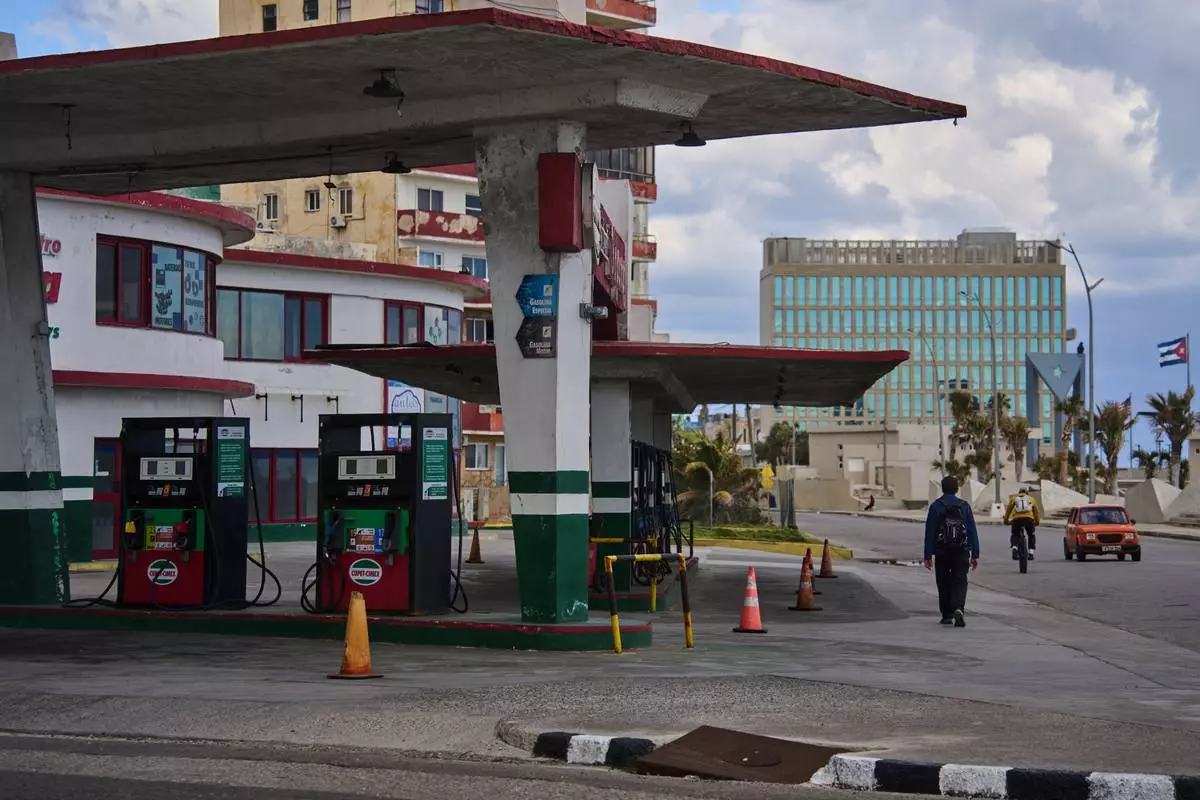
FILE - A man walks past a gas station that has run out of fuel, located near the U.S Embassy, pictured in the background, in Havana, Cuba, Feb. 7, 2026. (AP Photo/Ramon Espinosa, File)
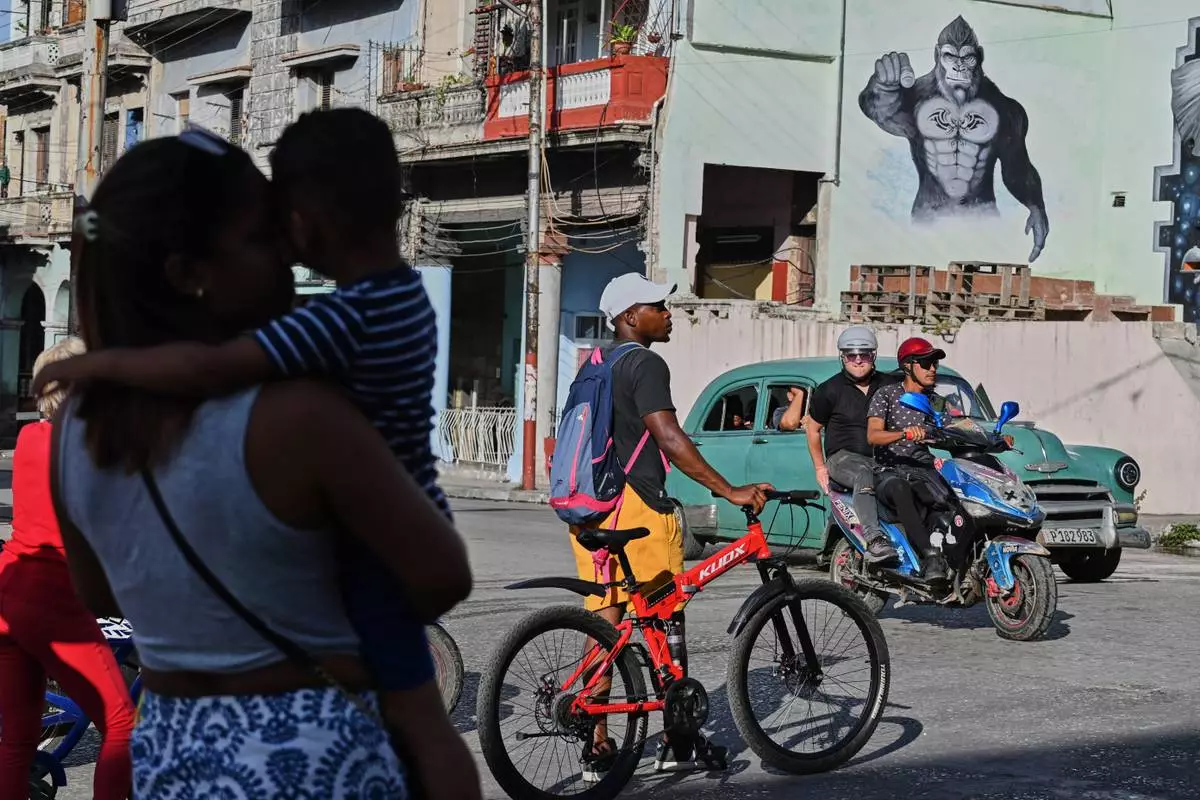
People traverse a street in Havana, Monday, May 25, 2026. (AP Photo/Jorge Luis Banos)
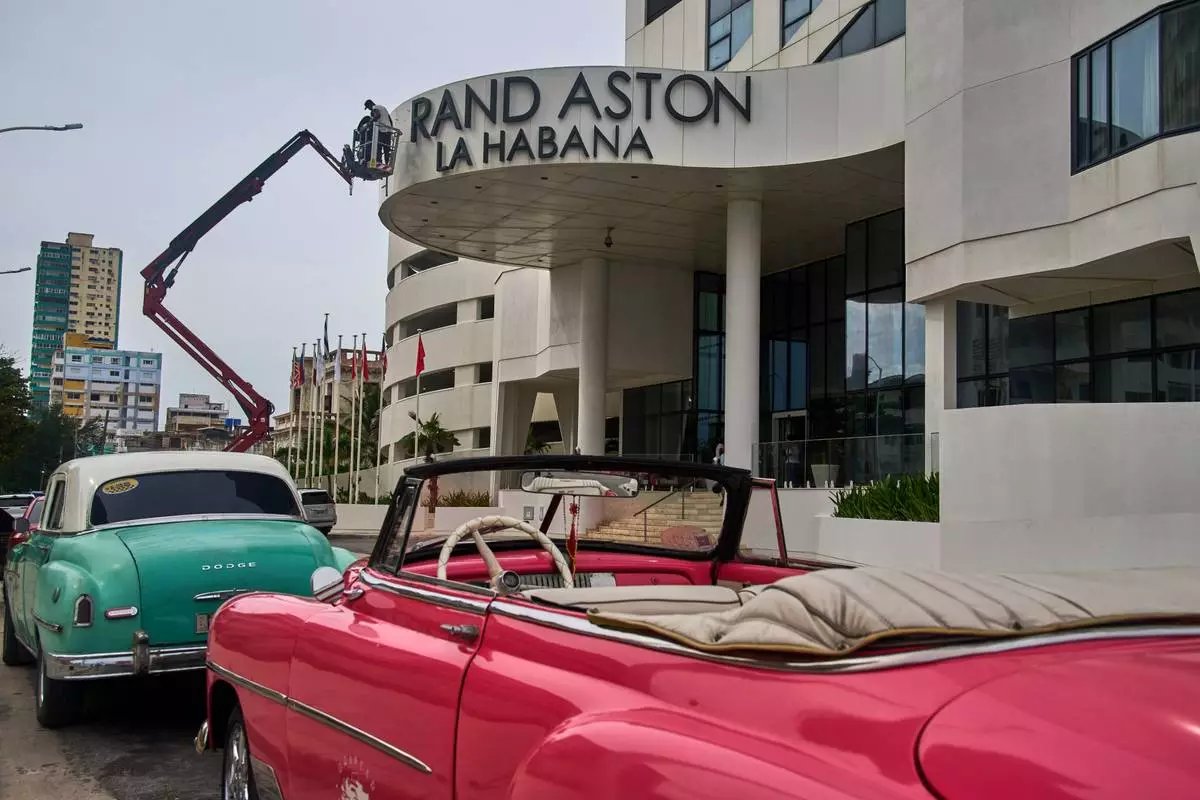
Workers repair the sign at the Grand Aston Hotel in Havana, Wednesday, June 3, 2026. (AP Photo/Ramon Espinosa)