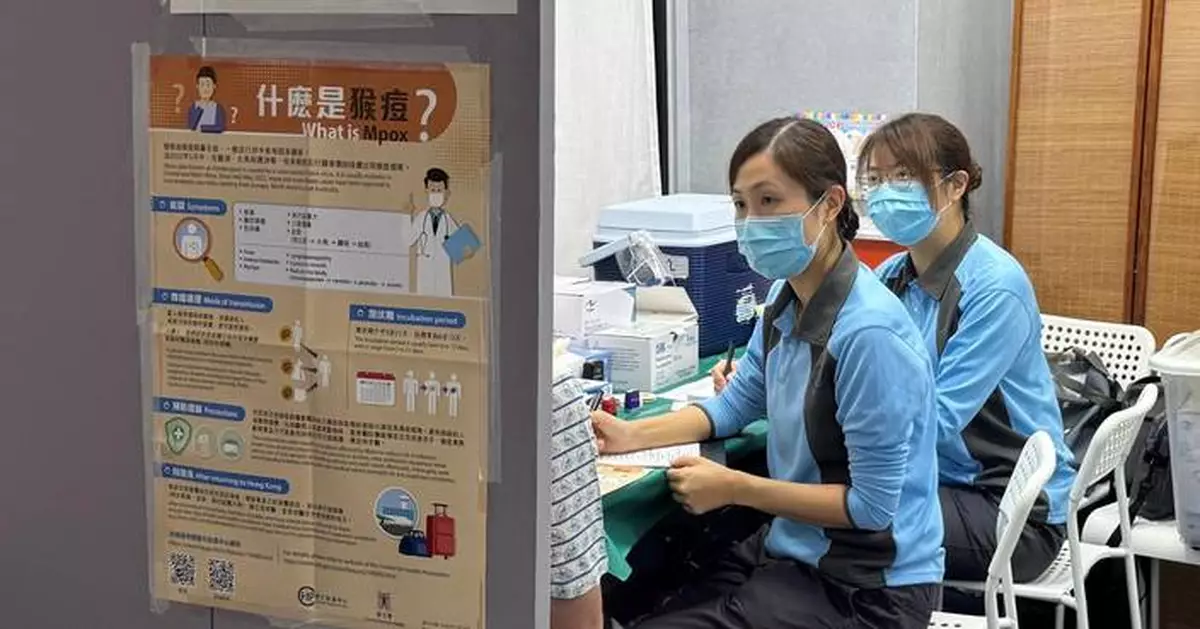
CHP investigates a confirmed Mpox case
The Centre for Health Protection (CHP) of the Department of Health (DH) said today (June 8) that it is investigating a confirmed local Mpox (also known as Monkeypox) case, and urged high-risk target groups to receive Mpox vaccinations. Meanwhile, the public is advised to be vigilant and to avoid close physical contact with persons suspected of contracting Mpox.
Case information
----------------------
The case involves a 43-year-old man, who learned about confirmed Mpox cases at a premises called "Hutong" on Shanghai Street in Mong Kok last month from the CHP's earlier press release. He visited "Hutong" on May 22 and had high-risk contact there. He subsequently developed ulcers on his genital area on June 1. As his symptoms persisted, he sought medical treatment at a male social hygiene service clinic (SocHS) under the DH on June 3, and reported relevant high-risk contact history to the healthcare workers, who then arranged specimen collection from him for testing. His specimen tested positive for monkeypox virus upon laboratory testing by the CHP's Public Health Laboratory Services Branch. The CHP has arranged for him to receive isolation treatment at Princess Margaret Hospital. The patient is currently in stable condition.
According to the information provided by the patient, he had not received any Mpox vaccination. During the incubation period, in addition to visiting "Hutong" on May 22, he also had high-risk contact with some strangers at a hotel in Hong Kong on May 24. The CHP is conducting an epidemiological investigation, and will endeavour to contact individuals who had high-risk contact with him. As the patient had multiple high-risk contacts during the incubation period, the source of infection has yet to be ascertained.
The CHP will notify World Health Organization of this case.
Follow-up on the "Hutong" cases in Mong Kok
---------------------------------------------------------
The CHP continues to follow up on the investigation ofthe cases involving "Hutong", and will endeavour to contact individuals who visited the premises on or after May 1 to provide them with health education and conduct medical surveillance. To date, over 300 individuals who have visited the premises on or after May 1 have been successfully contacted, with one confirmed case identified so far. The CHP has provided them with health education and will continue to conduct medical surveillance.
The CHP again urges anyone who have visited the premises on or after May 1 to call the CHP's designated Mpox telephone hotline (2125 2373), so that the CHP can provide health assessments and advice. The hotline operates daily from 9am to 6pm. As investigations are still ongoing, the premises has been closed temporarily starting from May 26.
Furthermore, the CHP has collaborated with Hong Kong AIDS Foundation to launch an outreach Mpox vaccination activity at the organisation's service centre in Mong Kok since last Saturday (June 6) until next Wednesday (June 17). Eligible high-risk groups (especially men who have sex with men) can make an appointment on the organisation'swebsite.
Since 2022, Hong Kong has recorded a total of 89 Mpox cases (72 local cases and 17 imported cases), including the above-mentioned case. All patients were males. Epidemiological investigations revealed that most cases had high-risk sexual behaviour, including having sex with strangers or having sex without wearing condoms.
Mpox
------
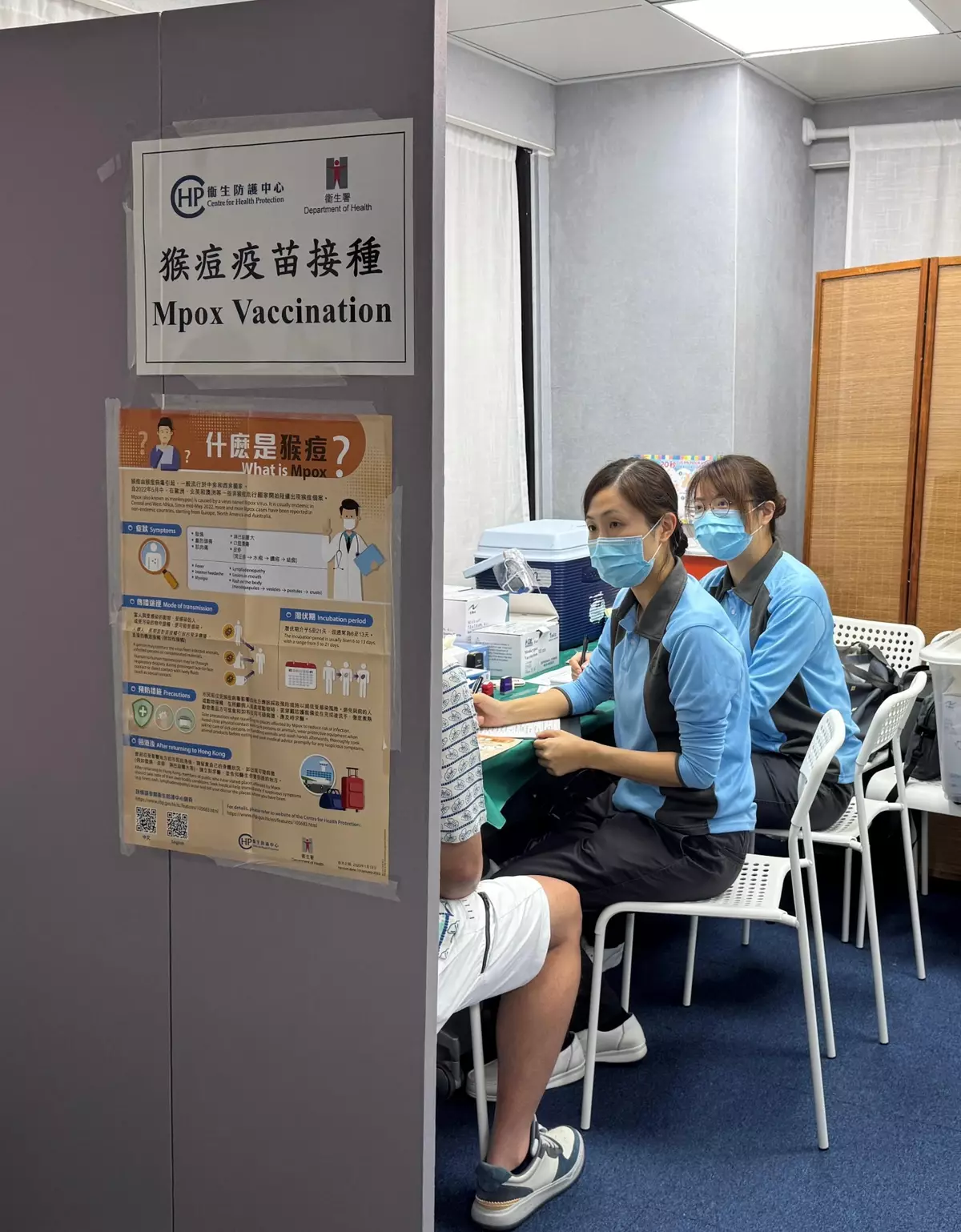
Mpox vaccine can prevent infection and severe disease. The DH provides Mpox vaccination services for highrisk groups. The following high-risk target groups are eligible for Mpox vaccinations on a voluntary basis:
 individuals with high-risk sexual practices, e.g. having multiple sexual partners, sex workers, or having a history of sexually transmitted infection within the past 12 months;
healthcare workersresponsible forcaring forpatients with confirmed Mpox;
laboratory personnel working with zoonotic pox viruses; and
animal care personnel with high risk of exposure in caseof Mpox occurrences in animals in Hong Kong.
individuals with high-risk sexual practices, e.g. having multiple sexual partners, sex workers, or having a history of sexually transmitted infection within the past 12 months;
healthcare workersresponsible forcaring forpatients with confirmed Mpox;
laboratory personnel working with zoonotic pox viruses; and
animal care personnel with high risk of exposure in caseof Mpox occurrences in animals in Hong Kong.
High-risk target groups can receive Mpox walk-in vaccinations at any of the DH's SocHS (namely Chai Wan SocHS, Wan Chai Male SocHS, Wan Chai Female SocHS, Yau Ma Tei Male SocHS, Yau Ma Tei Female SocHS, Yung Fung Shee SocHS, Fanling SocHS and Tuen Mun SocHS) and the DH's Yau Ma Tei Integrated Treatment Centre.
Meanwhile, the DH's Kowloon Bay Integrated Treatment Centre and the Hospital Authority's Special Medical Clinics at Queen Elizabeth Hospital and Princess Margaret Hospital also provide Mpox vaccination services for their clients.
Mpox is not transmitted through respiratory droplets or aerosols in general, and transmission would not occur through social contact. The CHP reminds the public, especially those at higher risks of exposure, to take precautions and avoid close physical contact with persons or animals suspected of infection. They should seek medical attention as soon as possible if they experience relevant symptoms, including rash, fever, chills, swollen lymph nodes, exhaustion, muscle pain, and severe headaches. They should not engage in activities with others that may involve contact with skin rash or body fluids.
For more details, please visit the CHP's page onMpoxandMpox Vaccination Programme.
CHP investigates a confirmed Mpox case Source: HKSAR Government Press Releases
Employers and employees should make work arrangements in times of rainstorm warnings (2)
The Labour Department (LD) today (June 8) reminded employers to make prior work arrangements for employees during and after rainstorm warnings and extreme conditions as early as possible. These arrangements not only can ensure the safety of employees and smooth operation of organisations, but also are conducive to maintaining good labour relations.
Formulate work arrangements
Employers should make prior work arrangements and contingency measures which are reasonable and practical. In drawing up and implementing the relevant arrangements, employers should give prime consideration to employees' safety and the feasibility of employees travelling to and from their workplaces, etc. To avoid unnecessary disputes between employers and employees, employers should ensure that all employees are informed of and agree to the relevant work arrangements in advance. The work arrangements should cover the following areas:
* arrangements in respect of reporting for duty;
* arrangements in respect of early release from work;
* arrangements in respect of work resumption (e.g. the number of hours within which employees should resume duty after the relevant warning signal is cancelled or when extreme conditions come to an end, and when safety and traffic conditions allow);
* arrangements in respect of remote work (if applicable);
*arrangements regarding wages and allowances (e.g. calculation of wages and allowances in respect of reporting for duty); and
* arrangements for staff required to report for duty in times of adverse weather or extreme conditions.
"Employers should conduct an early and realistic assessment of whether there is any need for staff to report for duty at workplaces when rainstorm warning or extreme conditions are in force. In making the assessment, employers should take into account the safety of employees, the business nature, operational needs and urgency of service of their organisations, with due regard to the manpower requirements, staffing establishment and circumstances of individual employees, and keep the number of staff required to report for duty at workplaces to the minimum as far as possible," a spokesman for the LD said.
Work arrangements in times of adverse weather and extreme conditions
If a Red or Black Rainstorm Warning Signal is issued within working hours, employees working indoors should continue to work as usual unless it is dangerous to do so. Supervisors of employees working outdoors or in exposed areas should suspend outdoor duties as soon as practicable. They should arrange for their employees to take shelter temporarily and resume duty only when weather conditions permit. If the Black Rainstorm Warning Signal is still in force at the end of working hours, employees should stay in a safe place until the heavy rain has passed. Employers should also make available to employees a suitable area in the workplace as temporary shelter from wind and rain.
If the Government makes an extreme conditions announcement, except for those required to report for duty at workplaces according to prior agreements made with employers, employees should stay where they are or in safe places, instead of heading for work. Employees already on duty at workplaces could continue to work as usual in a safe manner. If the workplaces are in danger, employers should arrange to release staff from work early where practicable and safe to do so or arrange for them to take temporary shelter in a safe place. If working time ends while extreme conditions are still in force, employers can release employees from workplaces in a safe manner or provide a suitable area as temporary shelter for those still at workplaces.
If it is necessary for employees to report for duty at workplaces under adverse weather or extreme conditions, employers should discuss and agree with them in advance the duty arrangements and contingency measures. If public transport is suspended or only maintains a limited service when the Black Rainstorm Warning Signal or extreme conditions are in force, employers should provide safe transport services for employees travelling to and from workplaces, or grant them an additional travelling allowance.
The spokesman also reminded employers to observe the statutory liabilities and requirements under the Employment Ordinance, Occupational Safety and Health Ordinance, Factories and Industrial Undertakings Ordinance, Employees' Compensation Ordinance and Minimum Wage Ordinance.
Comply with requirements of legislation
"Tropical cyclones and rainstorms are natural calamities. If employees are not required to report for duty, or are released from workplaces early, or are unable to report for duty at workplaces or resume work on time, etc due to adverse weather, extreme conditions or other environmental factors beyond their control, employers should not deduct their wages, good attendance bonus, or allowances, nor require employees to compensate subsequently for the loss of working hours in response to the aforementioned situations, or reduce employees' entitlements to annual leave, statutory holidays or rest days under the Employment Ordinance to compensate for the loss of working hours resulting from the issuance of adverse weather warnings or the extreme conditions announcement," the spokesman said.
Employers have an obligation to provide and maintain a safe working environment for their employees under the Occupational Safety and Health Ordinance and the Factories and Industrial Undertakings Ordinance. If employees are required to work in times of tropical cyclone warnings, rainstorm warnings or extreme conditions, employers should ensure that the risks at work are reduced as far as reasonably practicable. Moreover, under the Employees' Compensation Ordinance, employers are liable to pay compensation for injuries or deaths incurred when employees are travelling by a direct route from their residence to their workplace, or from their workplace back to their residence after work, four hours before or after working hours on a day when Tropical Cyclone Warning Signal No. 8 or higher, a Red or Black Rainstorm Warning Signal or extreme conditions are in force.
The LD's latest revised "Code of Practice in Times of Adverse Weather and 'Extreme Conditions'" sets out the relevant guidelines in a reader-friendly and concise manner, reiterating the three major principles for formulating work arrangements under adverse weather and extreme conditions, including formulating work arrangements in advance, giving prime consideration to employees' safety, and complying with requirements of labour legislation, and incorporating corporate examples for reference. The booklet can be obtained from branch offices of the Labour Relations Division or downloaded from the department's webpage (www.labour.gov.hk/eng/public/wcp/Rainstorm.pdf).

Source: AI-found images