SAN FRANCISCO & GLASGOW, Scotland--(BUSINESS WIRE)--Jun 8, 2026--
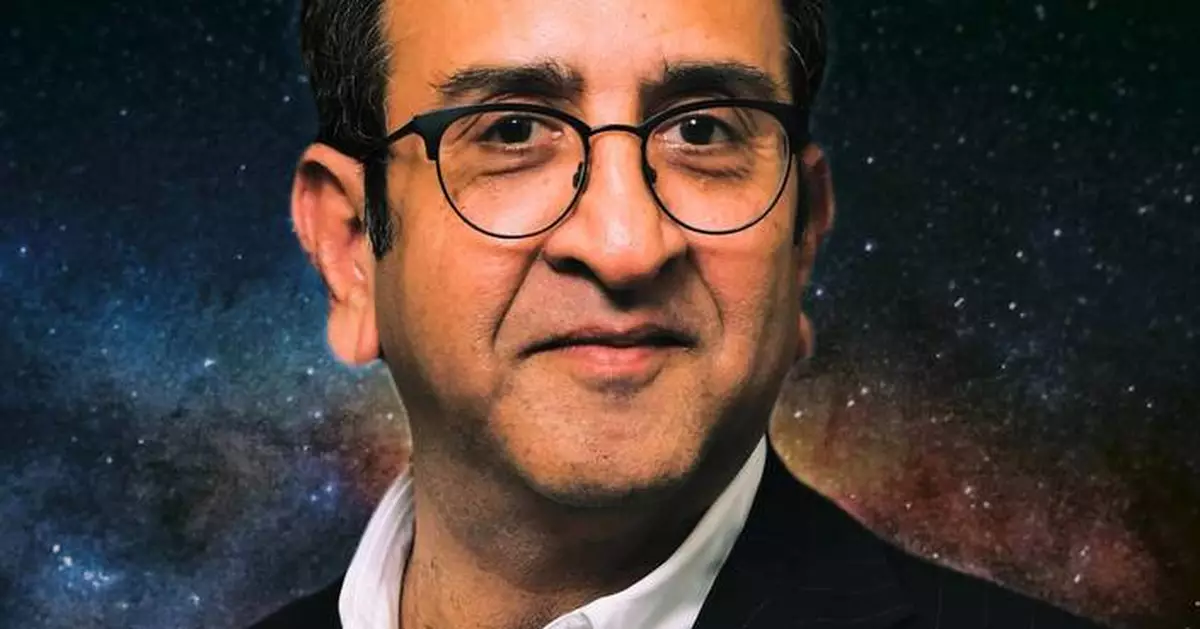
Kodamai, a pioneer in mathematically rigorous agentic AI, today announced the appointment of Pankaj Kedia as Non-Executive Director on its Board of Directors. The appointment brings Kedia’s deep AI and semiconductor expertise to Kodamai at a pivotal moment in the company’s evolution, as enterprises accelerate their adoption of agentic AI while shifting away from centralized cloud toward heterogeneous, distributed compute environments spanning cloud, edge, and device.
This press release features multimedia. View the full release here: https://www.businesswire.com/news/home/20260608486784/en/
Accelerating Agentic AI Across the Distributed Stack
Enterprises are undergoing a fundamental transformation in how AI is deployed. The era of monolithic, centralized cloud AI is giving way to a new reality: intelligence must run everywhere -- in the cloud, at the edge, and on devices. Kodamai was built to solve the orchestration challenge this creates, and Kelvingrove is designed to become the de-facto platform and programming language that makes next-generation, hardware-agnostic AI deployments possible at enterprise scale.
"We are delighted to welcome Pankaj to our board to help guide Kodamai through its next phase of growth,” said Maha Achour, CEO and Founder, Kodamai. “His three decades of experience -- from driving Internet and mobile adoption across laptop PCs, smartphones, IoT, and wearable devices at Intel and Qualcomm to an impressive track record as an investor in leading AI companies -- makes him an extraordinary addition to our team.”
Industry-Leading Semiconductor, AI, and Smart Edge Experience
Kedia is a globally recognized, award-winning thought-leader, early-stage AI investor, CXO advisor, adjunct MBA professor, and keynote speaker. As Founder and Managing Partner of 2468 Ventures, he has directly invested in 160+ startups and 25+ VC funds across silicon, systems, software, and services, with 20+ unicorns in his portfolio and 22 exits over the past 21 quarters.
"We are still in the early phases of the AI revolution, and the most important chapter is just being written. The critical challenge enterprises face today is not access to AI models -- it is the ability to deploy, orchestrate, and run intelligent agents reliably across an increasingly complex and distributed hardware landscape,” said Kedia. “That is precisely the problem Kodamai and the Kelvingrove platform are designed to solve. By building the foundational infrastructure for the agentic AI era, Kelvingrove has the potential to become as essential to enterprise AI as Linux became to the cloud. I am excited to join the Kodamai board and to contribute to what I believe will be one of the defining technology companies of this decade."
Previously, as a tech intrapreneur at Intel and Qualcomm across three decades, Kedia was credited with driving the growth of the Internet with laptop PCs, establishing mobile Internet with smartphones, and capitalizing on cloud expansion with IoT and wearable devices. He is a sought-after Chief AI Officer and CXO advisor to organizations across professional services, healthcare, financial services, and technology, and teaches AI and entrepreneurship at the University of San Diego's Knauss School of Business and the Brink SBDC Innovation Hub. He has been recognized with the Lifetime AI Innovation Award by TiE, included in the CXO Innovators Circle by Bloomberg Tech, and inducted into the Global AI150 Hall of Fame by Constellation Research. He has been a lifelong learner at Stanford, Wharton, University of Michigan, and the Indian Institute of Technology.
For more information on Kodamai, its leadership team, and its Kelvingrove platform, please visit https://www.kodamai.com.
About Kodamai
Kodamai is the world’s most trusted partner for explainable enterprise AI agent deployment. Kodamai’s Kelvingrove platform provides enterprises with a mathematically rigorous foundation – built on Neuro-Symbolic AI, Type Theory, and Category Theory – making it possible to deploy, orchestrate, govern, and scale fleets of intelligent agents across an entire operation, delivering an AI ecosystem this is verifiable, adaptable, and built to scale. Founded by three world-class mathematicians and scientists, Kodamai’s technology is genuinely inimitable: the product of decades of foundational research applied to the defining infostructure challenge of the agentic era. Kodamai is headquartered in Glasgow, UK, with a distributed team of globally renowned mathematicians and seasoned technology leaders across the U.S., UK, and Middle East. For more information, please visit www.kodamai.com.
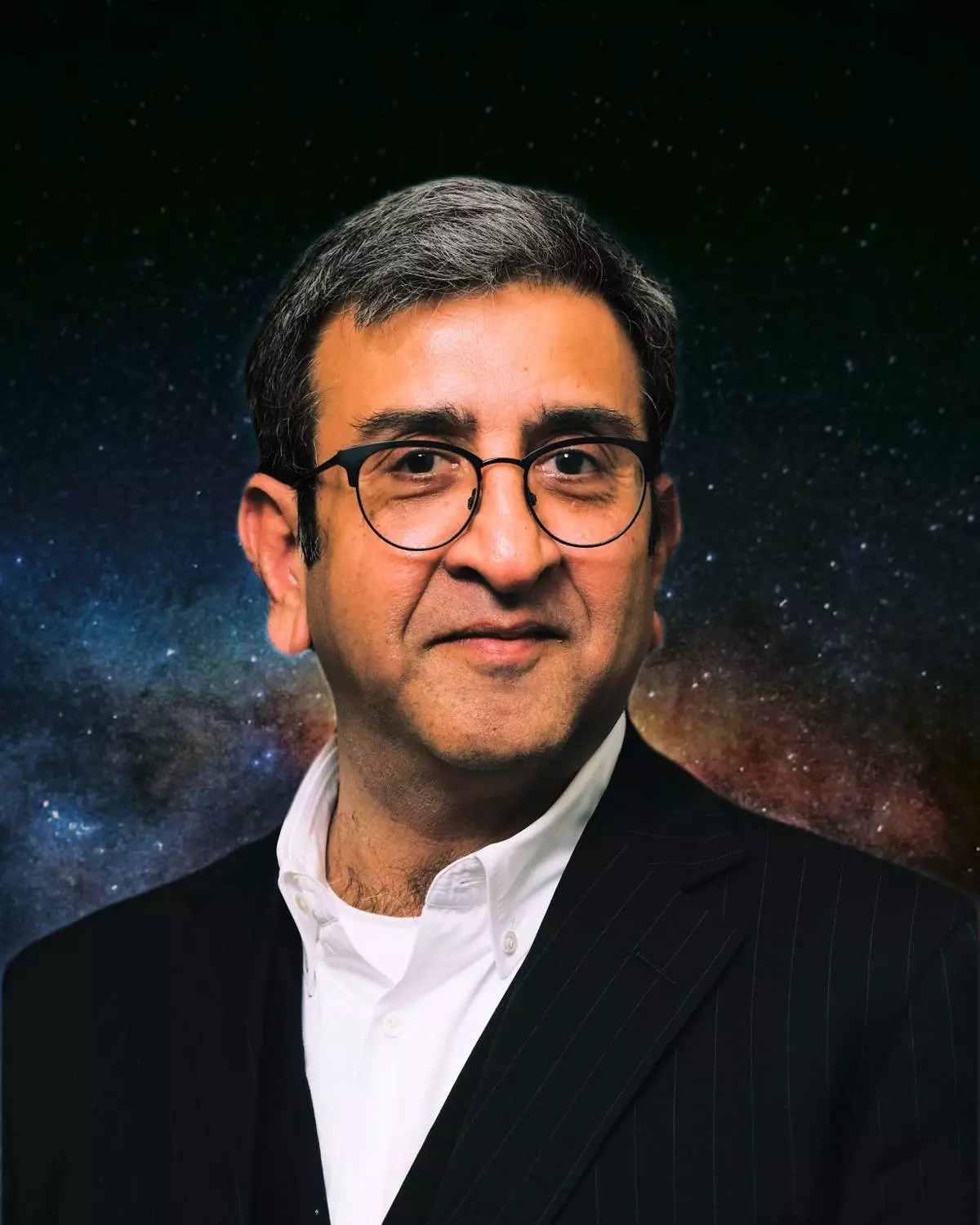
Globally recognized AI thought-leader, investor, and former Intel and Qualcomm executive Pankaj Kedia joins the Kodamai board to help accelerate Kelvingrove as the de-facto orchestration platform for the distributed AI era
A Texas judge granted Texas Tech quarterback Brendan Sorsby a temporary injunction that clears the way for him to play this fall despite being declared ineligible by the NCAA for wagering on college sports, including bets made on his own team while he was at Indiana.
The decision sent shock waves across college sports since bans for gambling are a bedrock rule of the NCAA and in many professional sports.
The NCAA said it strongly disagrees with the ruling and “is deeply concerned about the damaging, far-reaching and broadly destabilizing ramifications of this outcome — which undermines and corrupts the integrity of sports.” There was no immediate word on an appeal, though one is expected.
Sorsby, whose school said he has a gambling problem that he is addressing through treatment, will miss the Red Raiders’ first two games next season under a judge-approved penalty that had been proposed by his attorneys. The NCAA, which usually handles such punishments, was not involved.
The ruling by Judge Ken Curry prevents the NCAA from being able to block the transfer QB's eligibility for what will be his final college season with a team among the favorites to win the Big 12 Conference and return to the College Football Playoff for a second consecutive season.
Big 12 Commissioner Brett Yormark said the ramifications of the ruling “could have broad impacts across college athletics, creating great concern amongst our membership.” He called a meeting this week of his league's athletic directors and executive board, and been in touch with NCAA President Charlie Baker ahead of the expected appeal.
Texas Tech opens the season on Sept. 5 at home against Abilene Christian. The Red Raiders then play Oregon State before their Big 12 opener at home on Sept. 18 against Houston.
“I’m very grateful for the endless support I have received throughout this entire process,” Sorsby posted on social media. “I am also grateful for the chance to rejoin my teammates. This opportunity comes with the responsibility to remain focused on my personal growth, the ability to learn from this experience, and to be able to use my situation to help others going forward.”
Curry held a two-hour hearing last week in the 99th District Court in Lubbock County, where Texas Tech is located. In his decision, he wrote that he agreed Sorsby would suffer “a probable, imminent and irreparable injury” if he cannot practice or play for the Red Raiders.
The injunction comes with conditions that Sorsby must continue counseling for his gambling and to participate in peer support through Gamblers Anonymous or a similar group. He also must continue treatment to address “the underlying anxiety that served as the primary driver of (his) gambling behavior.”
Texas Tech athletic director Kirby Hocutt said a comprehensive support structure, including clinical care, monitoring and compliance checks, will remain fully in place for Sorsby during his time at the school.
“As we have said before, we do not believe that the circumstances of Brendan’s case warranted permanent ineligibility,” Hocutt said. “As he returns to our football program, we remain committed to supporting Brendan’s recovery and ensuring his compliance with the court’s order.”
Kansas State athletic director Gene Taylor told Yahoo Sports he was disappointed by the ruling.
“It is absolutely devastating for him to be able to play when every other sport, no matter the level, deems an athlete ineligible or they are punished severely for betting on their team,” he told the outlet.
“I think there needs to be serious conversations about not playing Texas Tech in any sports,” Georgia athletic director Josh Brooks, a member of the NCAA Football Oversight Committee, told Yahoo Sports. “If a state court wants to dictate eligibility rules, they can play themselves. ... We’ve officially reached the point of no return.”
NCAA attorney Taylor Askew had said during the hearing that allowing Sorsby to play another college season would provide “reputable harm” to the governing body.
“Saying the NCAA is now the first league in America that allows you, without punishment, to bet on its own contests, that’s a reputable harm to the NCAA,” Askew told the court. “This would be the first league in America that does that. ... We should not say for the first time serial gambling is OK.”
Court records show that Sorsby has acknowledged making thousands of impermissible bets totaling at least $90,000 during his time at Indiana, Cincinnati and Texas Tech. That included 40 bets on Indiana while he was a freshman there in 2022, though none on any of the games he played in with the Hoosiers.
While some guidelines for penalties related to gambling have changed in recent years, NCAA rules still call for a permanent loss of eligibility for any player who wagered on his own team.
Sorsby was at Indiana for two seasons before the past two at Cincinnati.
The Texas native transferred in January to Texas Tech for a reported multimillion-dollar deal. The Red Raiders brought him in to be the starting quarterback when trying to defend their first Big 12 title and return to the CFP.
According to court filings, on March 11 the NCAA received a tip about Sorsby’s gambling activity from an online gambling book, which had been informed by law enforcement. Texas Tech was notified April 14 that an investigation was underway by the NCAA.
Jeffrey Kessler, the attorney who negotiated the $2.8 billion House settlement against the NCAA and now represents Sorsby, told the court that the 22-year-old quarterback has a diagnosed addiction and anxiety-driven compulsion. Sorsby recently completed a monthlong stay in a residential treatment program in Arizona that he entered after the start of the NCAA’s investigation.
According to a clinician who treated Sorsby, Kessler said, not allowing the quarterback to play would hurt his mental health and hamper his recovery.
The NCAA in its statement Monday said it is “committed to supporting student-athlete mental health but must continue to aggressively defend against actions that defraud college athletics and threaten competitive integrity, such as betting on one’s own sport.”
The injunction came in Sorsby’s lawsuit filed May 18 against the NCAA seeking the restoration of his eligibility. That case was initially assigned to District Judge Phillip Hays, a Lubbock native and Texas Tech graduate who later recused himself. Curry is a retired judge from Tarrant County, nearly 300 miles away.
Since the filing of that lawsuit, the NCAA has twice denied Texas Tech’s petition to restore the quarterback’s eligibility.
When the school on May 26 revealed the first denial and its intent to appeal, university president Lawrence Schovanec wrote in a letter to the Texas Tech community that the school felt “the NCAA’s ruling should be reversed or modified.”
That comment illustrates the difficult landscape for the NCAA, which has lost multiple court cases challenging rules that were put in place by the very schools that make up its membership. Many focus on eligibility, with athletes contending they should be allowed to play and continue to earn money that was made available under the House ruling.
The NCAA is on the verge of approving a new eligibility model following meetings among stakeholders and even President Donald Trump. The NCAA continues to also seek limited antitrust protections from Congress in hopes of eliminating or at least smoothing the state-by-state rulings that have thrown the industry into chaos.
“There is no better example of why targeted intervention from Congress is necessary,” Baker said on social media after the ruling. “When you have schools and deep-pocketed supporters willing to look the other way on the glaring integrity threat of betting on your own team — and judges whose rulings effectively strip away our ability to stop them — only Congress can equip the NCAA to apply this common sense rule to everyone fairly and consistently. The Protect College Sports Act would empower the NCAA to enforce rules including the gambling restrictions — it’s needed now more than ever.”
AP college football: https://apnews.com/hub/ap-top-25-college-football-poll and https://apnews.com/hub/college-football
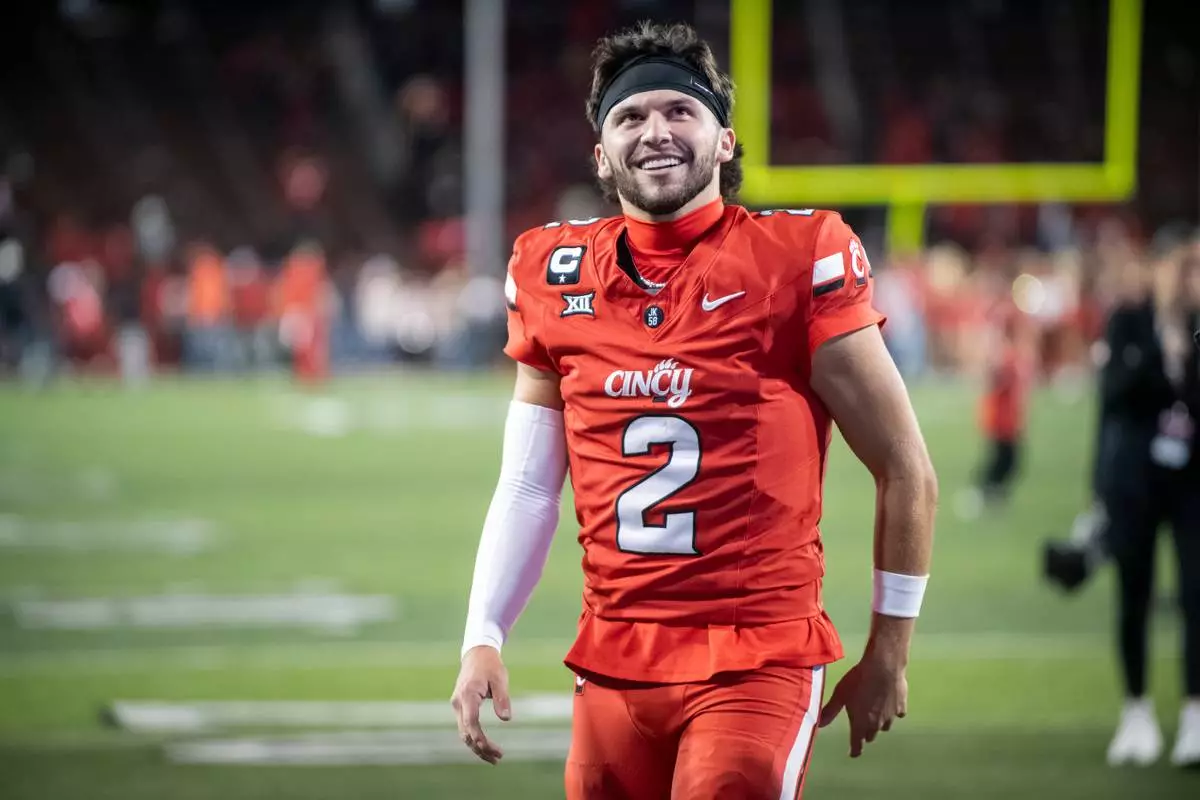
FILE - Cincinnati quarterback Brendan Sorsby (2) walks off the field after a NCAA college football game against Baylor, Oct. 25, 2025, in Cincinnati. (AP Photo/Tanner Pearson, file)
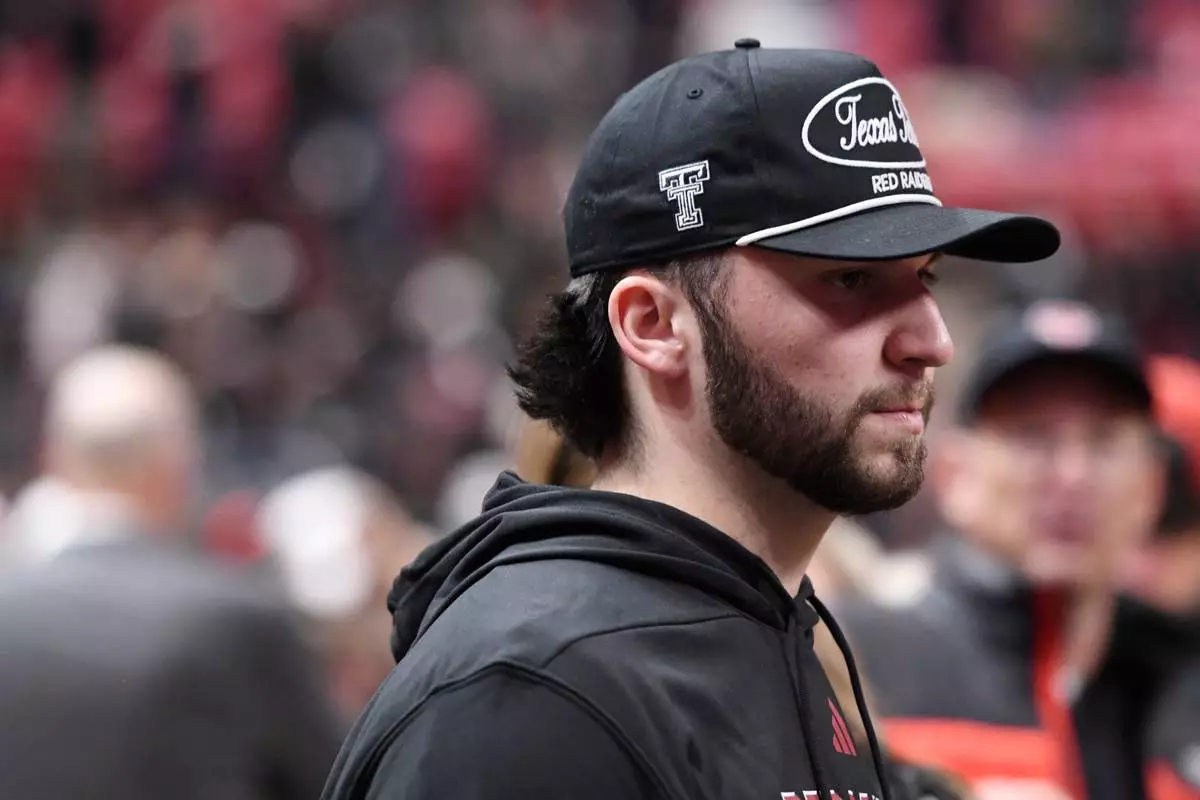
FILE - Quarterback Brendan Sorsby attends an NCAA college basketball game between Texas Tech and Houston, Jan. 24, 2026, in Lubbock, Texas. (AP Photo/Annie Rice, file)