WASHINGTON (AP) — The State Department will offer a “premium” expedited service for foreigners seeking business or tourist visas to come to the United States that will set applicants back $750 — on top of the initial fee of $185.
In a notice to be published in the Federal Register this week, the department will unveil a pilot program that will allow visa applicants to pay the $750 to schedule an appointment for an interview within 10 days of the payment at select U.S. embassies and consulates.
The pilot program will run from July 1 to Dec. 31, according to internal documents obtained by The Associated Press and a State Department official, who spoke on condition of anonymity because the program has not yet been announced.
The move is a potential effort to ease conditions caused by the Trump administration's push to make entering the United States more difficult. The administration has cracked down on most forms of migration for foreigners — demanding that bonds of up to $15,000 be paid for visa processing in some, mainly African, countries and requiring years of personal history, including social media accounts, to be vetted.
The new requirements have caused delays in visa processing around the world, prompting complaints.
Wait times for visa interviews for citizens of countries that are not part of the Visa Waiver Program can be several months if not longer. But paying the fee for the “optional premium add-on service” does not guarantee that a visa will be issued.
The embassies and consulates at which the expedited service will be available are to be announced before the program takes effect on July 1. The pilot program will run through the end of the year but could be extended depending on demand.

Secretary of State Marco Rubio speaks during a House Committee on Foreign Affairs hearing, Wednesday, June 3, 2026, on Capitol Hill, in Washington. (AP Photo/Mariam Zuhaib)
CUPERTINO, Calif. (AP) — Apple on Monday unveiled new artificial intelligence advances including upgrades to its Siri assistant, emphasizing a focus on privacy and day-to-day use as the iPhone maker tries to catch up to rivals when it comes to AI.
Siri AI, which was introduced at the start of Apple's annual World Wide Developers Conference, has been highly anticipated by users and developers. While Siri was launched in 2011, it fell behind other voice assistants and was derided even by Apple fans.
It is the last WWDC featuring CEO Tim Cook before he turns his post over to John Ternus in September. Cook received an extended standing ovation and told the audience he is “deeply grateful to have been on this journey with you” and said “the energy around Apple platforms has never been stronger.”
The conference, which drew developers from some 65 countries to Apple’s Silicon Valley headquarters, focuses on software, in contrast to the fall unveiling of the latest iPhones.
Apple has sought to distinguish itself from its peers by stressing a privacy-centered approach and integrating AI across its devices and apps. There was no mention of AI superintelligence or companion chatbots. Rather, Apple sought to demonstrate how its AI tools can make life easier.
Apple software chief Craig Federighi took some swipes at AI companies — without naming them — that seem to be “pursuing AI for the sake of AI” without clear regard for the people it is supposed to serve. At Apple, he said, “we believe that truly helpful AI should be centered around you and your needs,” which means integrating AI into the products people use every day, with a focus on privacy.
The conference unveiled updates to Apple Intelligence, which was first announced in 2024. It now uses Google’s Gemini AI model to help power its features and processes users' requests and interactions on their own device and privately on the cloud, making them inaccessible to anyone else.
At the center of it is the new Siri, which Apple said is now a “much more capable assistant” that can help users find what they need and get things done across various Apple devices. For instance, it can create a menu and gather recipes from the web or from your own text messages for a World Cup viewing party and invite friends from a group chat. Siri mode on your camera, meanwhile, can tell you what you are looking at and give you relevant information, such as the nutritional details of a plate of food.
Siri's visual intelligence also works with images on your screen. For example, it can tell you whether a backpack you are thinking of getting will work as a carry-on for a flight or whether a pair of bulky hiking boots will fit inside it.
Apple also announced improvements to its popular AI photo editing tools, including spatial reframing that lets you adjust how a photo is framed after it was taken — as if you had moved the camera to a better position while you were snapping the picture.
A standalone Siri AI app will launch later this year, though Apple said it will not initially be available in Europe and it won't be available in China while the company works out regulatory issues.
Cook announced his retirement in April, ending a 15-year run that saw the company’s market value soar by more than $4 trillion during an iPhone-fueled era of prosperity. Ternus has been with Apple for the past quarter century, including the past five years overseeing the engineering underlying the iPhone, iPad and Mac — a role that made him a prime candidate to succeed Cook.
Ternus did not take the main stage during Monday’s event.
The transition to a new CEO comes at a pivotal time for Apple. Artificial intelligence has unleashed the most upheaval within the industry since Jobs unveiled the first iPhone in 2007. Apple has gotten off to a rough start in AI after stumbling in its efforts to deliver new features built on the technology, as promised nearly two years ago.
Cook called his time at Apple “the honor of a lifetime.”
“I truly believe the best is still ahead.”
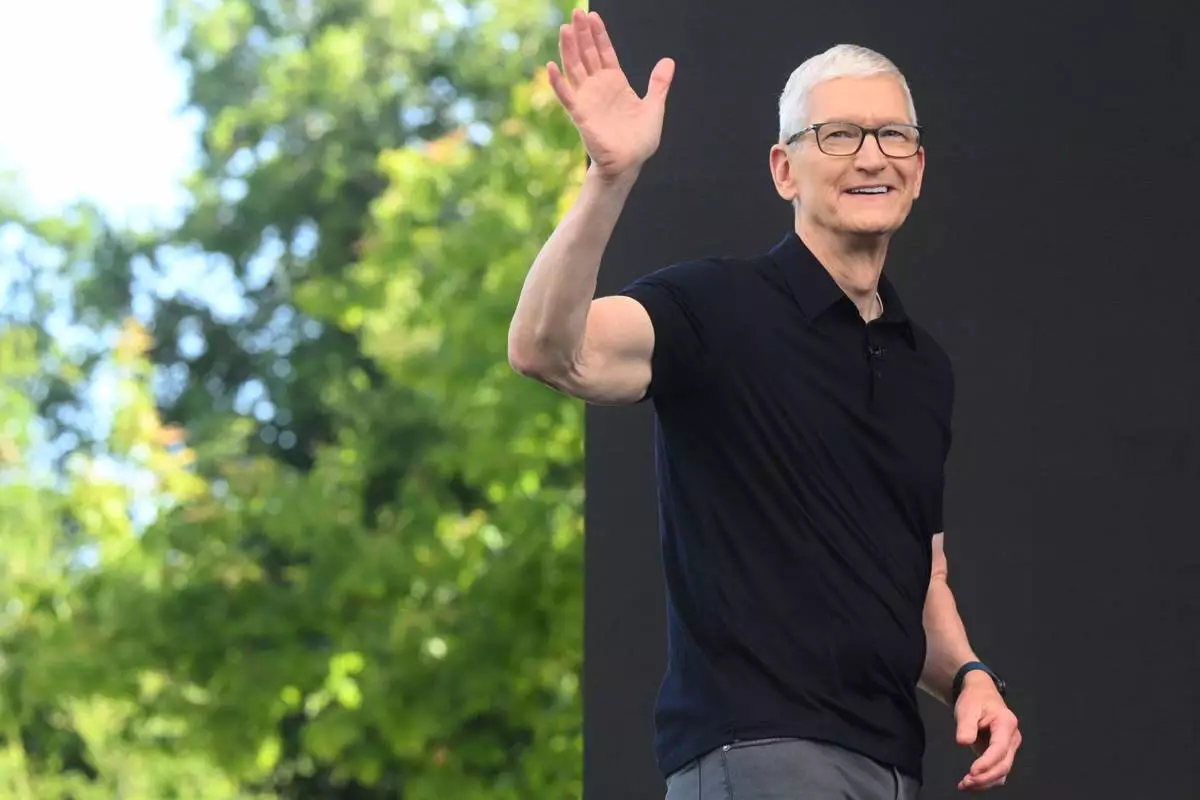
CEO Tim Cook waves during the annual World Wide Developers Conference at Apple's headquarters in Cupertino, Calif., Monday, June 8, 2026. (AP Photo/Noah Berger)
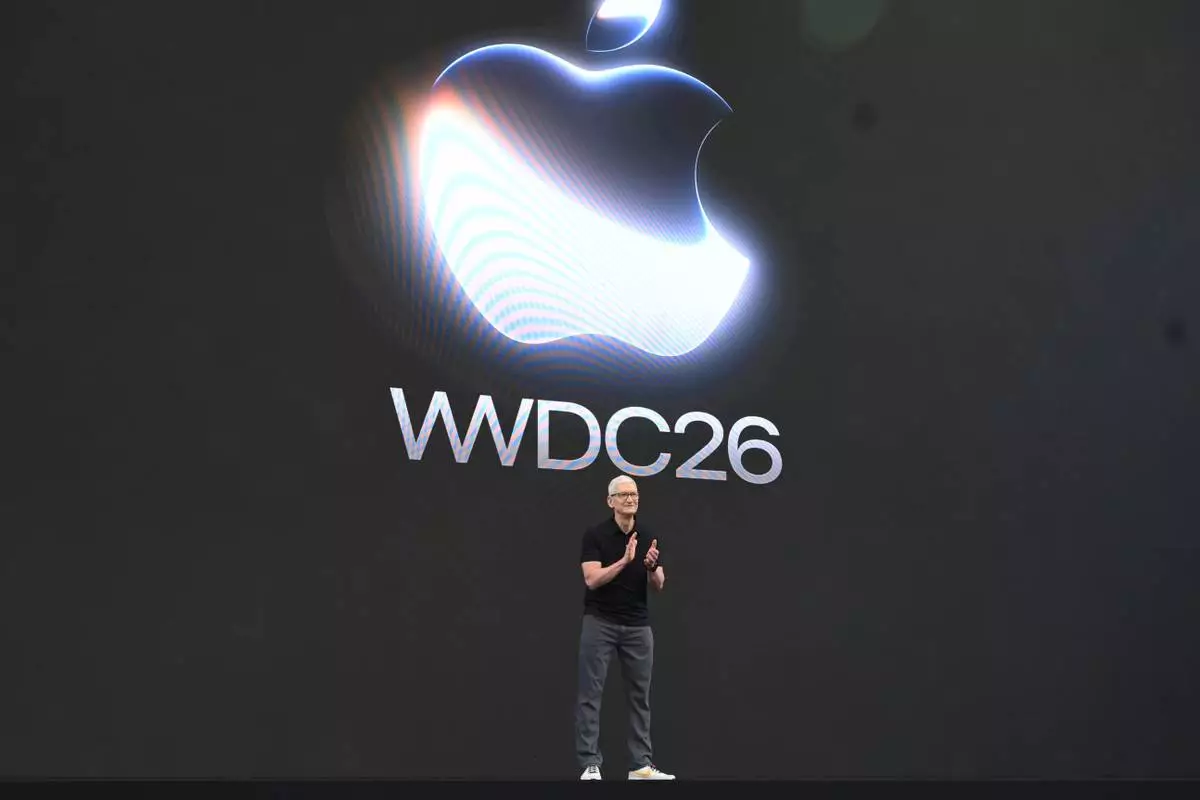
CEO Tim Cook stands on stage at the annual World Wide Developers Conference at Apple's headquarters in Cupertino, Calif., Monday, June 8, 2026. (AP Photo/Noah Berger)
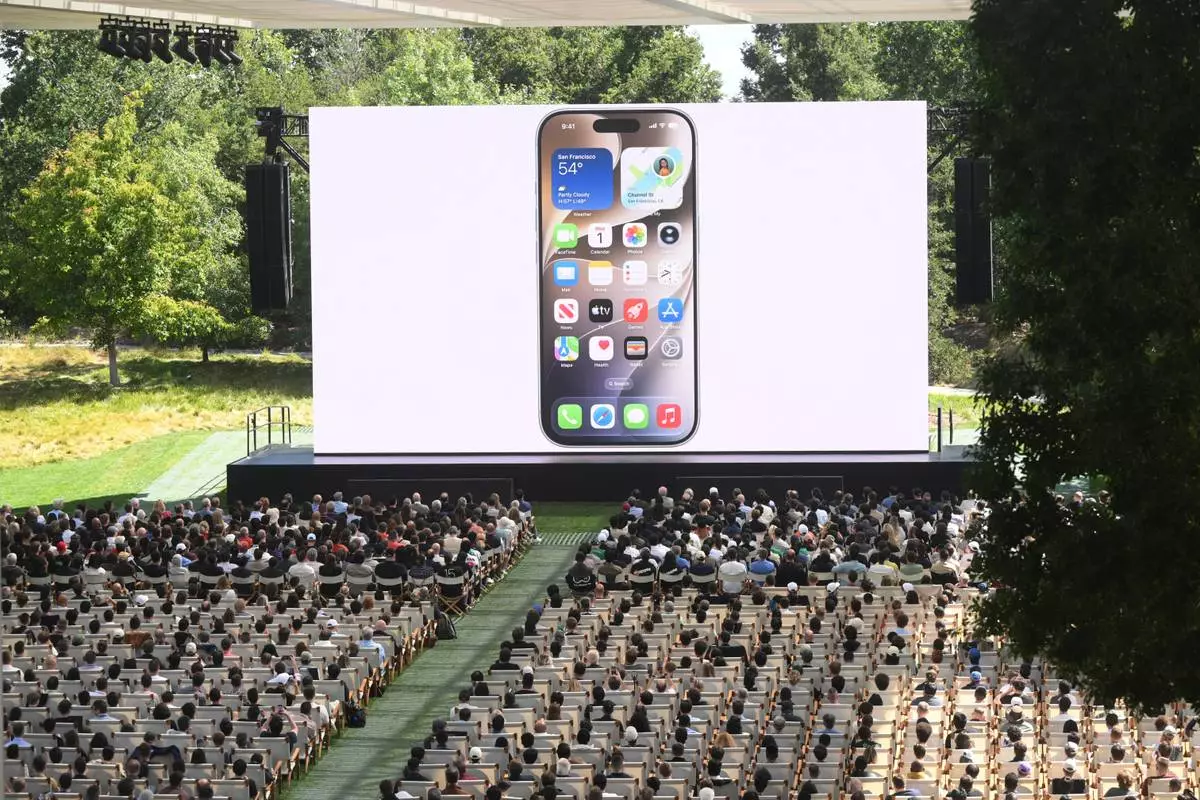
People attend the annual World Wide Developers Conference at Apple's headquarters in Cupertino, Calif., Monday, June 8, 2026. (AP Photo/Noah Berger)
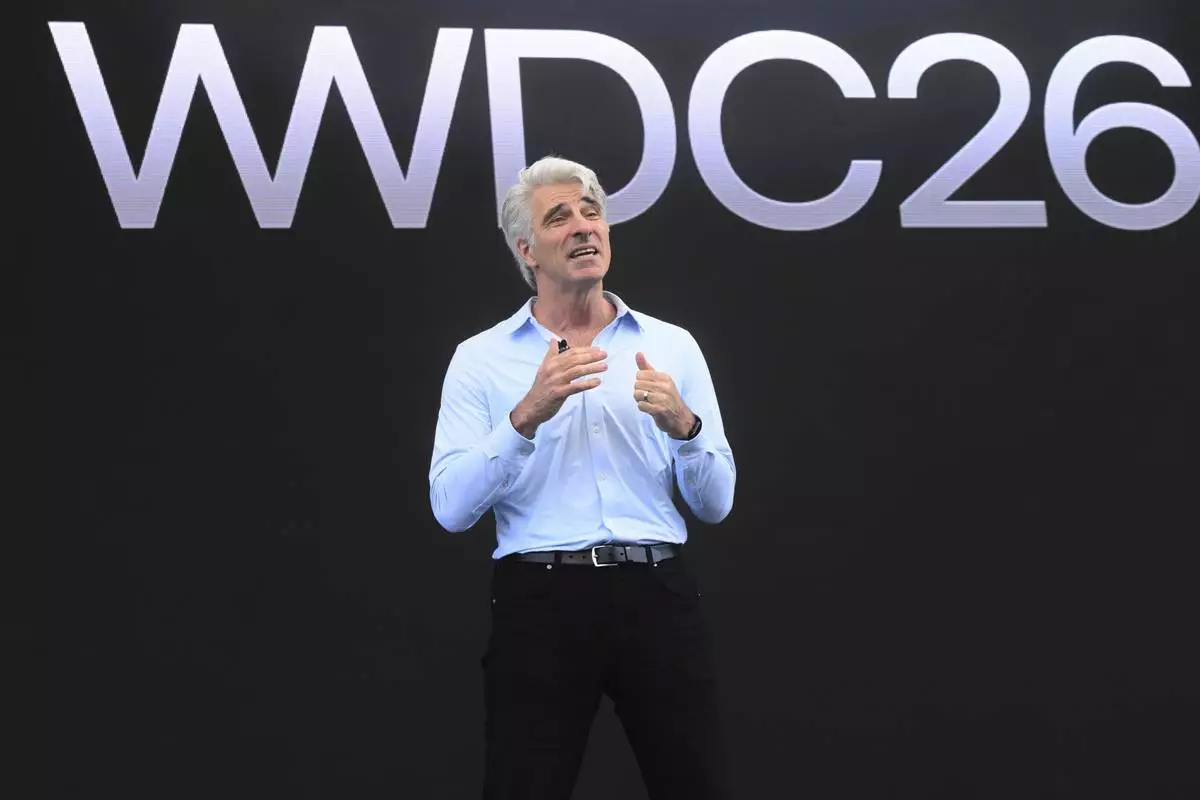
Craig Federighi, Apple's senior vice president of software engineering, speaks during the annual World Wide Developers Conference at Apple's headquarters in Cupertino, Calif., Monday, June 8, 2026. (AP Photo/Noah Berger)
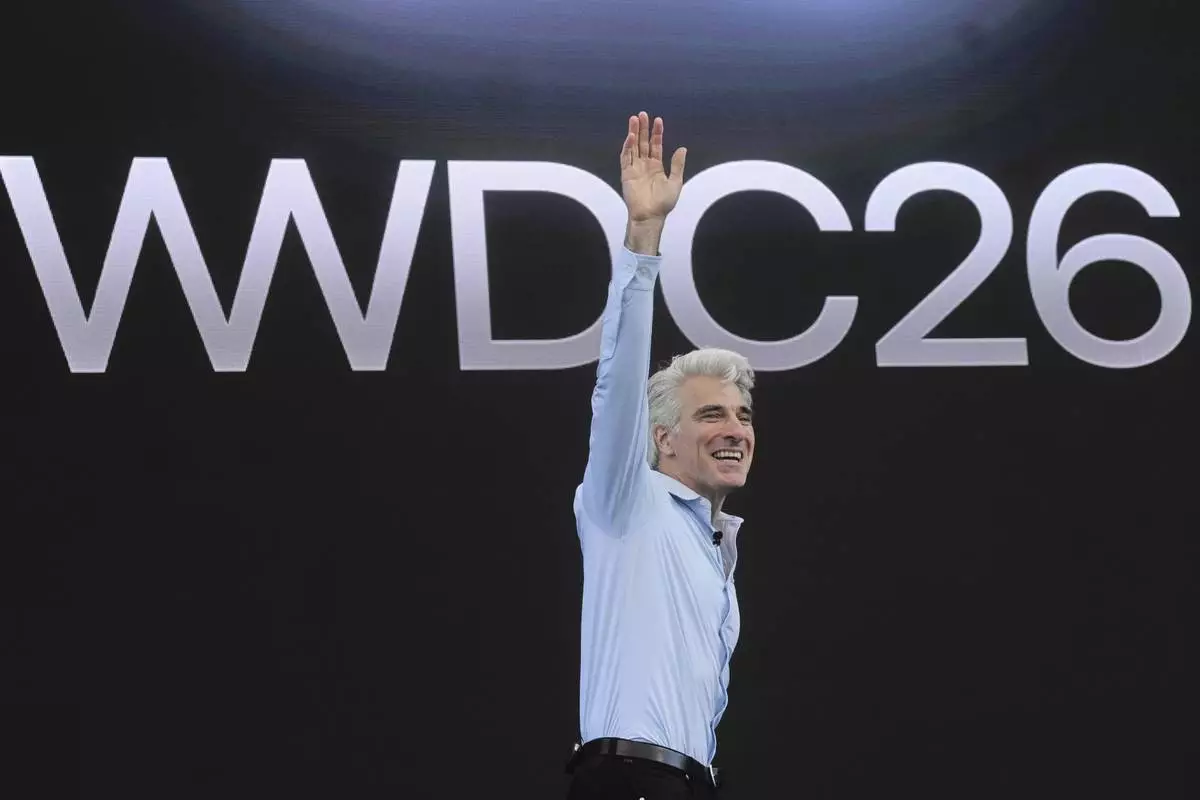
Craig Federighi, Apple's senior vice president of software engineering, waves during the annual World Wide Developers Conference at Apple's headquarters in Cupertino, Calif., Monday, June 8, 2026. (AP Photo/Noah Berger)
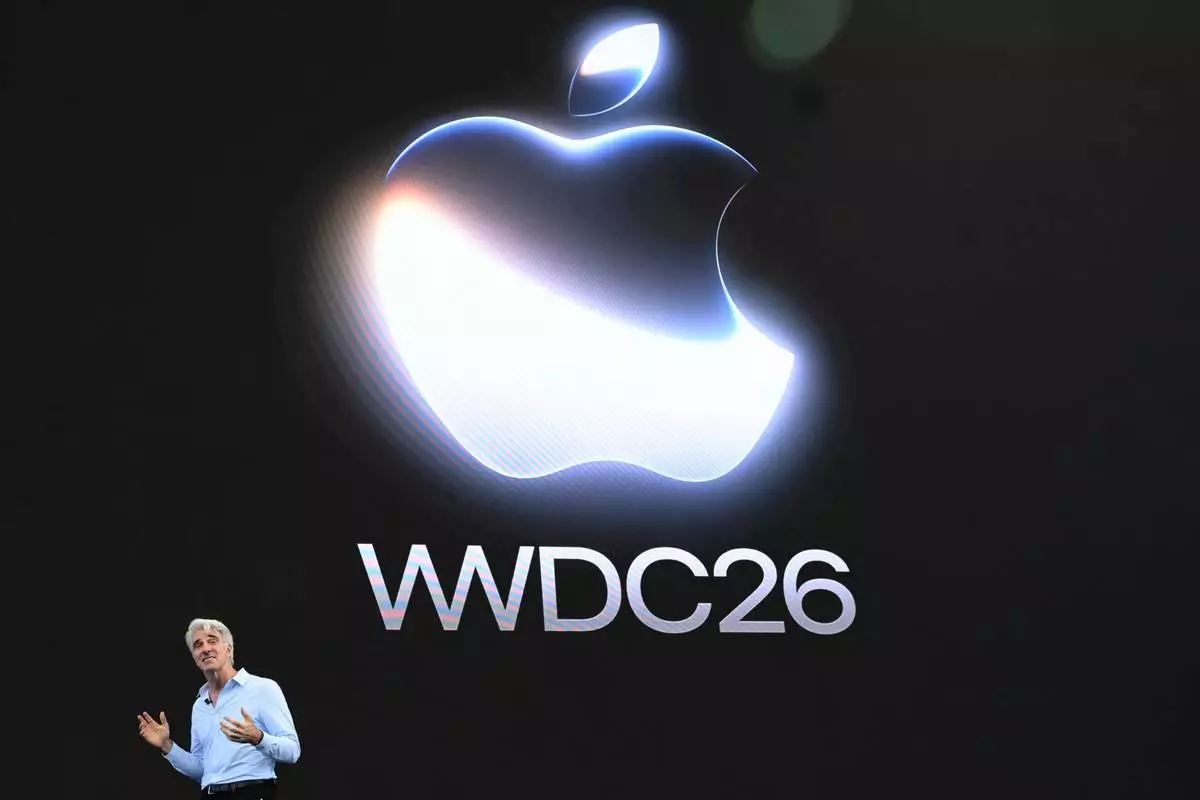
Craig Federighi, Apple's senior vice president of software engineering, speaks during the annual World Wide Developers Conference at Apple's headquarters in Cupertino, Calif., Monday, June 8, 2026. (AP Photo/Noah Berger)
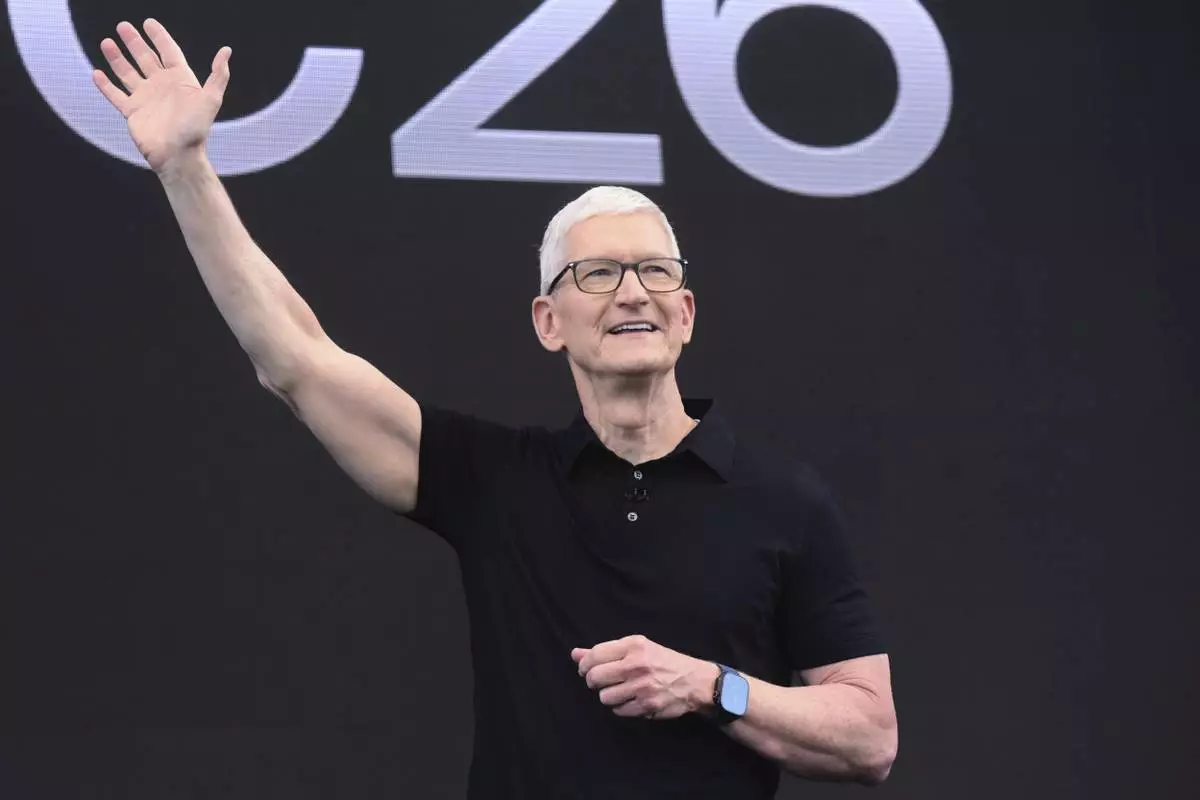
CEO Tim Cook waves during the annual World Wide Developers Conference at Apple's headquarters in Cupertino, Calif., Monday, June 8, 2026. (AP Photo/Noah Berger)