CUPERTINO, Calif.--(BUSINESS WIRE)--Jun 8, 2026--
Apple® today introduced new intelligence capabilities, expanded productivity features in Xcode ®, and platform improvements that make apps faster, more adaptive, and easier to build.
This press release features multimedia. View the full release here: https://www.businesswire.com/news/home/20260608093428/en/
“Developers are at the heart of the Apple ecosystem, and our goal is to provide them with the best possible tools and technologies to build the future,” said Susan Prescott, Apple’s vice president of Worldwide Developer Relations. “With new intelligence frameworks and agentic coding in Xcode 27, developers have the tools they need to focus on what they do best: bringing their incredible ideas to life.”
Intelligence Frameworks
With the latest enhancements to Apple Intelligence™ and the introduction of Siri® AI, developers can make their apps’ content and capabilities more discoverable and accessible across the system. Updates to the App Intents framework enable developers to connect their apps to Siri AI capabilities like personal context understanding, app actions, and onscreen awareness to help their users get more done.
New intelligence frameworks allow developers to build AI features into their apps more easily and flexibly, tapping into powerful models from Apple and others. Building on the Foundation Models framework introduced last year, developers gain new options to integrate AI into their apps. The framework now serves as a single native Swift® API that supports more powerful on-device models with image input, support for server models, and the ability to build custom skills.
Using this API, developers can tap into the next generation of Apple Foundation Models, which were custom-built in collaboration with Google and its Gemini models to deliver integrated experiences across Apple platforms. To ensure developing with large language models is as accessible as possible for those just getting started with AI, developers enrolled in the App Store® Small Business Program with fewer than 2 million total first-time App Store downloads can access the next generation of Apple Foundation Models running on Private Cloud Compute at no cloud API cost. Developers can also easily leverage models of their choice, like Claude and Gemini, or those from any other provider that implements the new language model protocol. To help developers create adaptive AI experiences more easily and flexibly, the framework also introduces capabilities like Dynamic Profiles, enabling developers to update how models interact with their apps on the fly.
For developers who want to bring their own custom models into their app, Core AI is a brand-new framework designed to be the best way to run models on device. Core AI provides an architecture optimized for the unified memory and Neural Engine of Apple silicon, allowing developers to deploy full-scale LLMs locally.
Xcode 27 and Agentic Coding
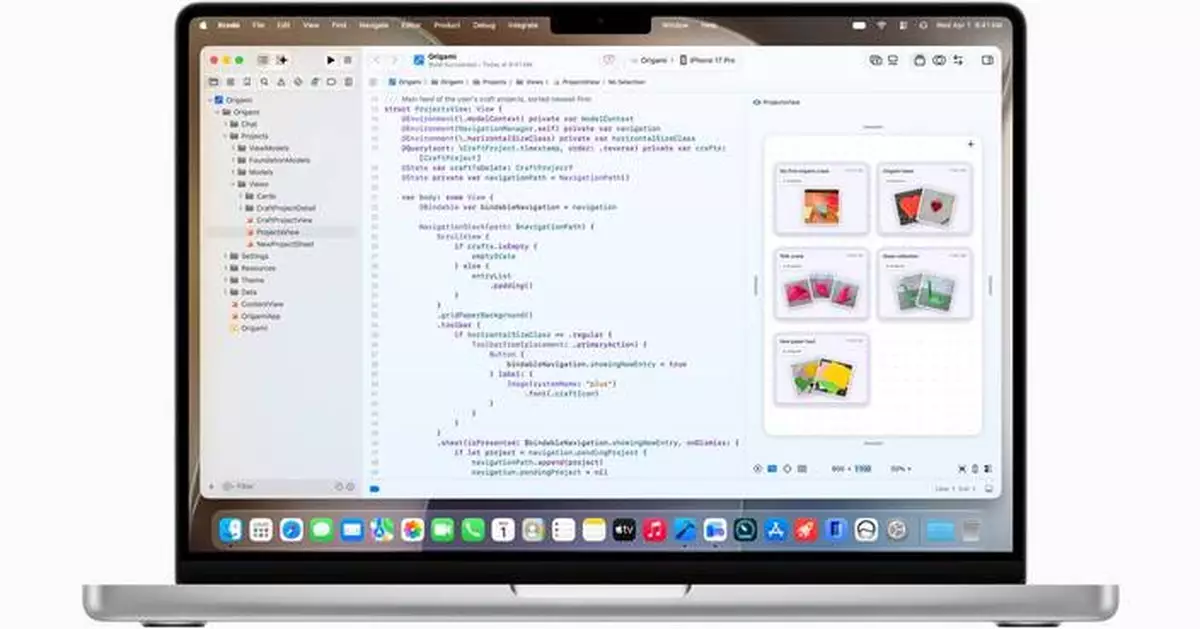
Xcode is the best place to build for Apple platforms, and the best place to code with agents. Xcode 27 takes the next big step in agentic coding. This year’s release brings the full power of today’s best models and agents from Anthropic, Google, and OpenAI directly into a developer’s workflow. Conversations with coding agents feature interactive planning, multiturn Q&A, and a canvas that can render Markdown and display code changes and previews right alongside.
Xcode 27 also gives coding agents the tools to validate their own work, so they can run autonomously for longer, such as writing and running tests, trying ideas in isolation with Playgrounds, checking visual changes with previews, and interacting with the simulator in the new Device Hub.
With plug-ins, developers can extend Xcode with custom skills, bring in the tools they use every day through the Model Context Protocol, and connect any agent compatible with the Agent Client Protocol. GitHub and Figma are the first to offer seamless installation between their tools and Xcode.
In addition to coding intelligence, Xcode 27 delivers improvements across the board. The application is now Apple silicon only, 30 percent smaller, and delivers faster performance and a simpler setup process. It’s also more personalizable than ever, with a fully customizable toolbar and a new theme system that spans colors across the entire editor.
Xcode Cloud® is now up to 2x faster, with new support for apps that use Metal® and for visionOS® builds, all powered by Apple silicon.
Refined Design and UI Frameworks
Liquid Glass provides a unified visual design that makes apps more expressive and instantly familiar across Apple platforms. This year, the design continues to evolve, with improvements to legibility, customizability, and consistency. A new transparency slider in Settings allows users to personalize their visual experience by adjusting the appearance to their preference, while the design also seamlessly adapts to a variety of accessibility settings users may choose.
SwiftUI® is designed to handle the complexities of layout, animation, and platform integration so developers can focus on what makes their app unique. This year, SwiftUI makes apps more responsive without requiring developers to change their code through more efficient state initialization and faster layout rendering. Developers can now write less custom code using new reorderable containers, and the new Spatial Preview framework allows 3D models from Mac® apps to be viewed spatially when streamed to Apple Vision Pro®.
Swift unifies full-stack development, providing the speed, expressiveness, and memory safety developers need to build everything from full-featured mobile apps and embedded firmware to platforms beyond the Apple ecosystem. It prioritizes usability and an intuitive syntax, allowing developers to easily iterate on their ideas while the compiler catches mistakes along the way. Building on this foundation, Swift 6.4 is designed to make everyday tasks feel effortless. It streamlines the daily developer experience by introducing targeted warning suppression, simplified availability attributes like “anyAppleOS,” and improved compiler diagnostics.
Tools and Resources for Games
For game and spatial developers, new tools and resources will make it easier to bring high-quality titles to Apple platforms and deliver seamless experiences to players.
Availability
Apple revolutionized personal technology with the introduction of the Macintosh in 1984. Today, Apple leads the world in innovation with iPhone, iPad, Mac, AirPods, Apple Watch, and Apple Vision Pro. Apple’s six software platforms — iOS, iPadOS, macOS, watchOS, visionOS, and tvOS — provide seamless experiences across all Apple devices and empower people with breakthrough services including the App Store, Apple Music, Apple Pay, iCloud, and Apple TV. Apple’s more than 150,000 employees are dedicated to making the best products on earth and to leaving the world better than we found it.
NOTE TO EDITORS: For additional information visit Apple Newsroom ( www.apple.com/newsroom ), or email Apple’s Media Helpline at media.help@apple.com.
© 2026 Apple Inc. All rights reserved. Apple, the Apple logo, Xcode, Apple Intelligence, Siri, Swift, App Store, Xcode Cloud, Metal, visionOS, SwiftUI, Mac, Apple Vision Pro, iOS, iPadOS, macOS, tvOS, visionOS, StoreKit, Reality Composer Pro, Mac Virtual Display, and watchOS are trademarks of Apple. iOS is a trademark or registered trademark of Cisco in the U.S. and other countries and is used under license. Other company and product names may be trademarks of their respective owners.
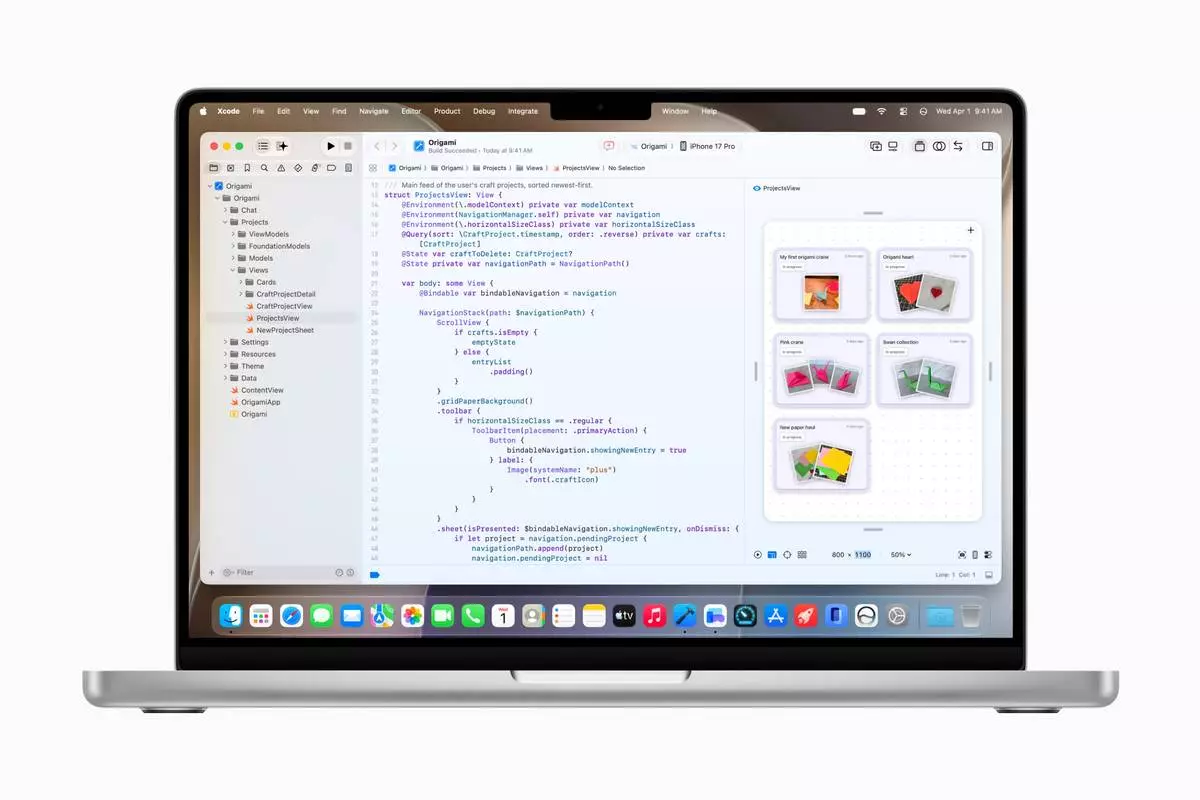
Xcode 27 takes the next big step in agentic coding, bringing the full power of today’s best models and agents directly into a developer’s workflow.