Any future diplomatic negotiations concerning the Russia-Ukraine conflict must take a full account of the security interests of Europe, particularly those of Eastern European member states, and the relevant countries "should be heard," Kaja Kallas, the European Union (EU) High Representative for Foreign Affairs and Security Policy, said on Monday.
In response to concerns that Eastern European countries may be sidelined in upcoming diplomatic efforts, Kallas told the press that EU foreign ministers had recently convened to discuss the issue, stressing that the importance of involving "the countries that know Russia better than anybody" in shaping Europe's policy towards Russia and future peace arrangements.
Following a meeting among the leaders of Ukraine, France, Germany and the U.K. in London on Sunday, Stefan Kornelius, spokesman for German Chancellor Friedrich Merz, said that Europe is prepared to play a greater role in negotiations aimed at resolving the conflict and is maintaining close coordination with the United States.
Divergent perspectives exist within the EU regarding the approach to negotiations and the timing for substantive contacts. While countries like France and Germany advocate an accelerated political resolution, Baltic states and several Central and Eastern European countries argue that conditions for serious negotiations with Russia are not yet suitable.
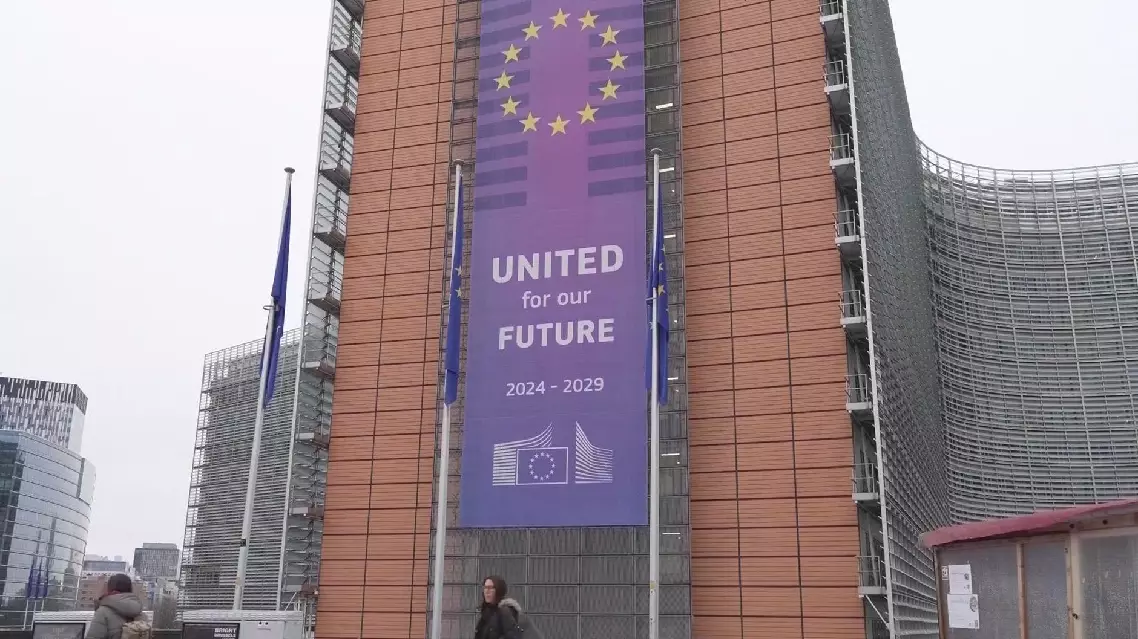
EU urges inclusion of Eastern European States in Russia-Ukraine talks
Multiple French cities have announced curfews which will start since Monday evening after incidents of looting and violence during weekend protests, French media reported.
In Paris, a curfew will be imposed from 23:00 Monday (2100 GMT) to 06:00 Tuesday (0400 GMT) around the Place de la Republique and in streets surrounding the Les Halles area, French television channel BFM TV reported, citing local authorities.
In Lyon, local authorities have decided to impose a curfew from 21:00 Monday (1900 GMT) to 06:00 Tuesday (0400 GMT) in part of the Presqu'ile de Lyon, an area in the city center, BFM TV reported.
The prefect of Nord department in northern France has imposed a curfew in parts of Lille, Wattignies, Douai and Denain from 20:00 (1800 GMT) to 06:00 (0400 GMT) for the next two days starting Monday, BFM TV reported, citing Matignon, the French prime minister's office. The decision was made with the agreement of all the mayors concerned.
In Nice, a city in southeastern France, Mayor Eric Ciotti announced on social media platform X that a curfew for minors would take effect at 21:00 Monday (1900 GMT).
French Prime Minister Sebastien Lecornu said at a news conference on Monday that partial curfews would be introduced in some areas since Monday evening.
Around 550,000 people took part in protests across France on Saturday. A total of 2,397 people were arrested during the protests marred by violence, according to figures released by the French Interior Ministry on Sunday. A total of 997 police officers and gendarmes were injured, seven of them seriously.
Multiple French cities announce curfew after violent weekend protests: report