BOSTON--(BUSINESS WIRE)--Jun 9, 2026--
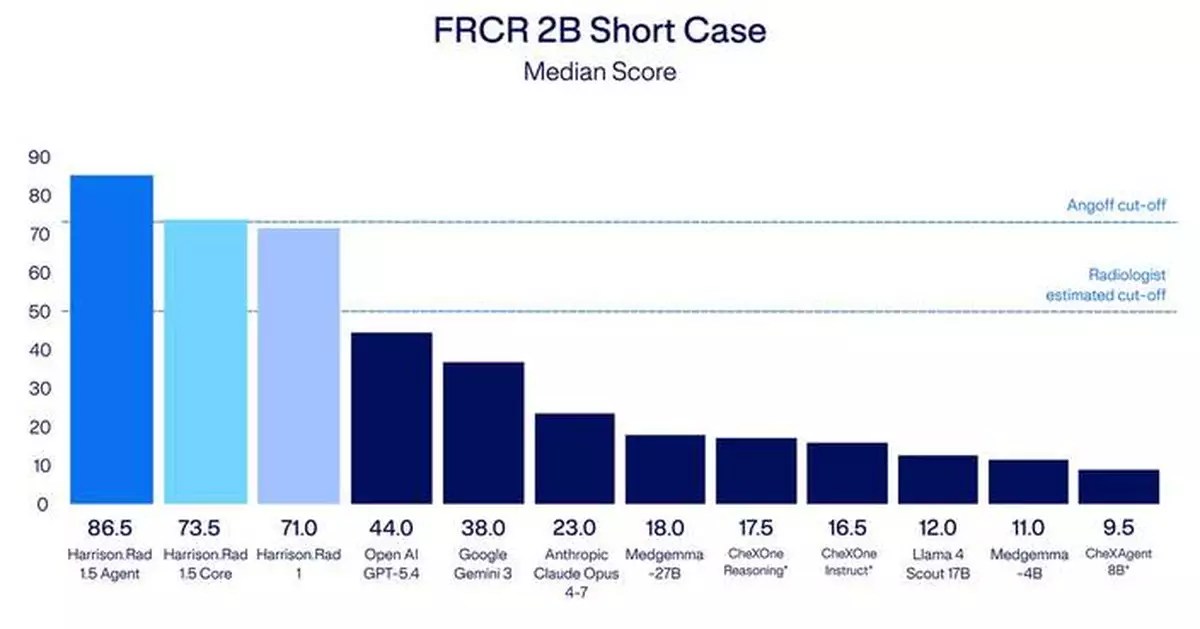
Global radiology leader Harrison.ai today launched Harrison.Rad 1.5, a radiology foundation model that can reason over images and clinical context, including priors, to produce a high-quality draft report for review by a radiologist. Available immediately for research at chat.harrison.ai and API access on request, Harrison.Rad 1.5 is the only AI model to pass the FRCR 2B Short Case exam, the standard used to certify UK radiologists, while every radiology-specific and frontier model evaluated falls short.
This press release features multimedia. View the full release here: https://www.businesswire.com/news/home/20260608874835/en/
Harrison.Rad 1.5 advances the program Harrison.ai began with Harrison.Rad 1 in 2024, which established the company as a leader in domain-specific foundation models for radiology. The new release widens that lead: stronger reasoning across complex, multi-finding studies, sharper anatomical localisation, broader coverage across body parts, and, most significantly, the ability to read a current study against a prior and describe what has changed in natural radiologist prose rather than a checklist of flagged findings.
That draft-reporting capability is the center of gravity for the release. Rather than detecting findings in isolation, Harrison.Rad 1.5 can interpret a study in light of the clinical question being asked and the patient's history, then it can draft a report intended to give the radiologist something precise to work from.
"You can't skip steps in radiology AI. Before an AI model can help generate a report, it has to be excellent at detection, and that’s what we’ve been tirelessly working on over the past 8 years. Our regulatory-approved detection products for chest X-rays, Brain CTs and Chest CTs are being used every day, impacting more than a million patients per month. Harrison.Rad 1.5 is the next step towards bringing meaningful innovation forward that will impact the future practice of radiology," said Dr. Aengus Tran, CEO and co-founder of Harrison.ai. "Reporting is where radiologists spend their time. The future is where our Harrison.Rad foundation model drafts a high-quality report for the radiologist to review and sign off, without replacing their judgement."
To measure that progress, Harrison.ai evaluated Harrison.Rad 1.5 and other frontier models on an exam human radiologists take, using externally sourced data not seen during training. On the FRCR 2B Short Case, the standard the Royal College of Radiologists adopted in 2025 in place of the now-retired Rapids format, Harrison.Rad 1.5 Agent achieved a median score of 86.5, above the mean cut-off of 73.2 needed to pass. No other evaluated models passed this exam.
On the older FRCR 2B Rapids exam, where Harrison.Rad 1 already led the field, Harrison.Rad 1.5 Core passed 24.3% of full exam sheets, a 2.4x improvement from Harrison.Rad 1.
"General purpose models like Anthropic’s Opus and OpenAI’s GPT-5 cannot pass an exam that qualifies a radiologist to practice. Harrison.Rad 1.5 can," said Dr. Jarrel Seah, Neuroradiologist and Chief Medical and AI Officer at Harrison.ai. "It was trained on 6 million diagnostic studies and 18 million clinically crafted conversations. The gains show up most clearly on the hardest cases: studies with priors, post-procedural work, and findings outside the classical reporting ontology. Eighteen months on from Harrison.Rad 1, the gap between our purpose-built model and the world's leading general-purpose models hasn't closed, it's widened. Clinical radiology demands a level of specificity that only comes from purpose-built training."
The improvements rest on larger training data and better methodologies. Harrison.Rad 1.5 was trained on approximately 6 million diagnostic imaging studies, a 33% increase over Harrison.Rad 1, using new techniques designed for precision and differentiation, and an architecture that lets the model adapt how it interprets an image to the clinical question being asked. All of it ran on a new NVIDIA B200 GPU cluster.
"There are three things I'm most proud of in this release: data quality, clinical alignment, and a fundamental change in how the model interprets images," said Suneeta Mall, Head of AI Engineering at Harrison.ai. "We invested heavily in the signal the model learns from: cleaner data, clinically crafted hard negatives that force the model to distinguish between visually similar images, and preserving native aspect ratios so the model sees images the way a radiologist does. Training at this scale on the B200 cluster gave us the headroom to be far more ambitious with our methods."
Harrison.Rad 1.5 is intended for research, benchmarking, and evaluation purposes only. Harrison.ai is actively pursuing regulatory clearance, approval, or certification for products built on these foundational models in major markets including the US and EU countries.
About Harrison.ai
Harrison.ai is a global healthcare technology company that enhances clinician capacity and patient care through AI automation. Clinician-led and patient-first, our suite of solutions supports earlier, more accurate diagnoses and seamlessly integrates into clinical workflows. Harrison.ai solutions are available in 40+ countries and to half of all Australian radiologists. They are clinically deployed at 1,000+ customer sites globally, including 55+ NHS Trusts and all public emergency departments in Hong Kong. Harrison.ai’s solutions currently impact over a million patients per month.
For more information, visit Harrison.ai.
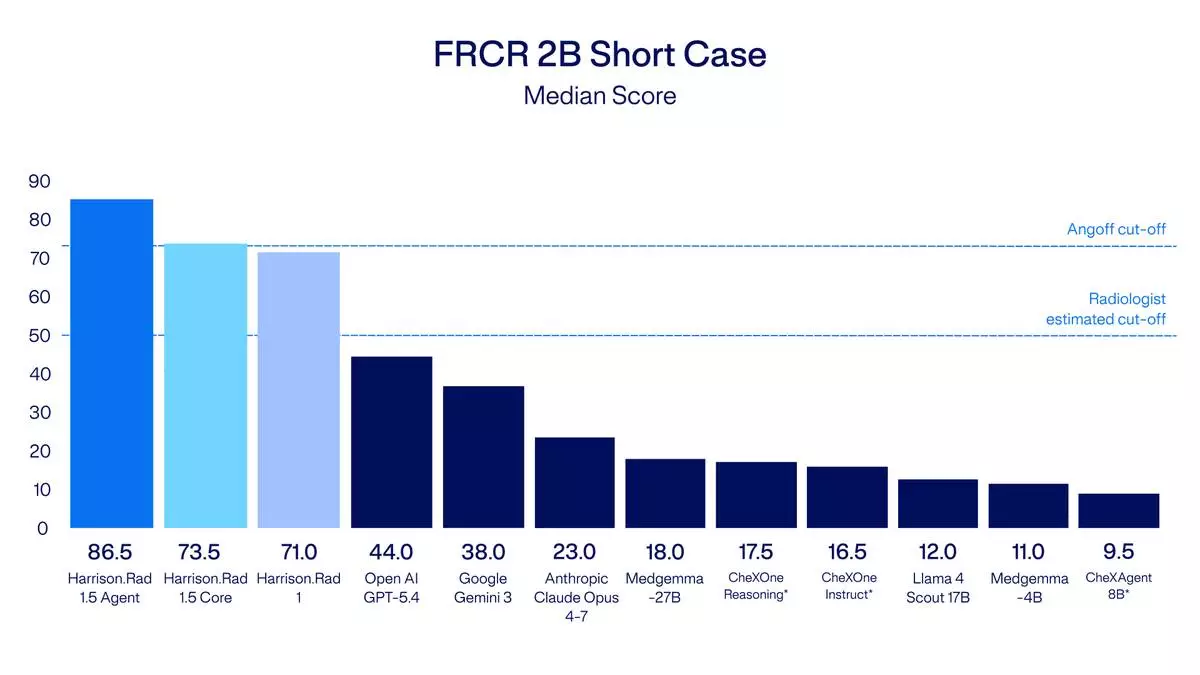
Graph showing AI models’ performance on the FRCR exam
Cornell University suspended parties at fraternity houses until next year and is giving state police a role in investigating reports of sexual assault on campus in the school’s latest response to outrage over its handling of a gang rape allegation.
The measures announced Tuesday by Cornell President Michael Kotlikoff include a suspension of all parties and social events at Interfraternity Council houses through the end of the 2026-27 academic year and a new “zero tolerance” policy that would immediately suspend chapters for violations.
“These measures will provide time for a thorough review of fraternity life at Cornell to determine whether and how it can safely continue,” Kotlikoff wrote in a letter to the campus community.
Cornell has more than 20 active Interfraternity Council fraternities. The council did not immediately respond to an email request for comment. It’s unclear whether the restrictions extend to off-campus parties.
It’s not the first time Cornell has cracked down on fraternity parties. The university temporarily suspended them in 2022 after reports of a sexual assault and students being drugged at fraternity-affiliated housing.
Cornell also tightened fraternity safety rules in 2019 after freshman Antonio Tsialas was found dead in a gorge following an alleged hazing incident. A year earlier, a fraternity was placed on probation over a contest in which members competed to have sex with women they considered overweight.
The university president said the school would begin conversations with students and faculty experts about “the development of safe social alternatives” to Greek life party culture and invest money to get those initiatives off the ground.
Kotlikoff also committed to adding a case manager to the school’s Office of Civil Rights to help those who report sexual misconduct on the Cornell campus navigate the process, and to working with New York State Police to allow its criminal investigators — who are independent of Cornell — to investigate allegations.
Crimes reported on Cornell’s campus are generally investigated by campus police, a department that has full law enforcement powers but is controlled by the university.
The campus police force operates independently from municipal police in Ithaca, New York, where the university is located. Its officers investigated the 2024 gang rape allegations and presented their initial findings to the Tompkins County district attorney, who declined to prosecute within weeks of the woman making her first report to police.
New York’s governor removed the district attorney from the case this month after a public outcry over the lack of charges.
The investigation is now being led by New York Attorney General Letitia James, while Cornell has hired former Deputy U.S. Attorney General Sally Yates to conduct an independent review of the university’s response.
A state police spokesperson declined to comment.
In a lawsuit filed in September, the woman alleged that she was drugged and sexually assaulted by multiple fraternity members after attending a party at the Chi Phi house in October 2024.
She said she was pressured to use drugs and that other men entered the room while she was incapacitated. She also alleges that Snapchat messages describing her as sexually available to anyone at the house circulated among fraternity members without her knowledge.
Cornell closed the fraternity chapter and disciplined several students following an internal investigation, but no criminal charges have been filed. The seven men accused in the woman’s lawsuit have all denied her allegations, either saying that the sexual activity was consensual or that they weren’t involved.
Andrew Miltenberg, a lawyer for one of the men accused in the woman’s lawsuit, criticized the restrictions announced Tuesday as a sweeping response to problems that extend beyond fraternities, arguing that universities promote Greek social life but distance themselves from it when controversies arise.
“Greek life has become the convenient target,” he said in an emailed statement. He warned that parties could simply move off campus, where there would be less oversight. “Changing the address doesn’t change the behavior.”
Kotlikoff’s announcement came a day before Cornell’s Faculty Senate was to take up a proposed resolution expressing no confidence in the administration’s ability to effectively address sexual assault on campus.
Paul Ortiz, a Cornell labor history professor who is the lead sponsor of the resolution, said Tuesday that he welcomed the new measures but regretted that it took student protests, media coverage and the suffering of people like Jane Doe to prompt action.
“That the administration is only acting the day before they might be held accountable in the faculty senate is deeply troubling,” Ortiz said in an email to The Associated Press, adding that he believes the no-confidence resolution is “more important than ever.”
“The key point to understand is that scores of students, staff, faculty and alumni have approached the sponsors of the resolution to emphasize to us that the Jane Doe case is but the tip of the iceberg,” he continued. “Students and alumni have shared experiences of being raped at Cornell.”
“These women testify that they were frightened to report assaults because they felt that Cornell has at times treated rape as more of a ‘PR problem’ than a heinous crime,” Ortiz said.
In his Tuesday letter, Kotlikoff acknowledged that sexual violence extends beyond fraternities, saying Cornell must also confront a campus culture of excessive drinking and drug use and expand education about students’ responsibility to intervene when others are at risk.
Cornell also plans to add victim advocates and expand sexual violence prevention programs, he said, calling the actions “first steps toward systemic change on our campus.”
“We will take all necessary steps to address the conditions that led to Jane Doe’s experiences, and those of other survivors,” he said.
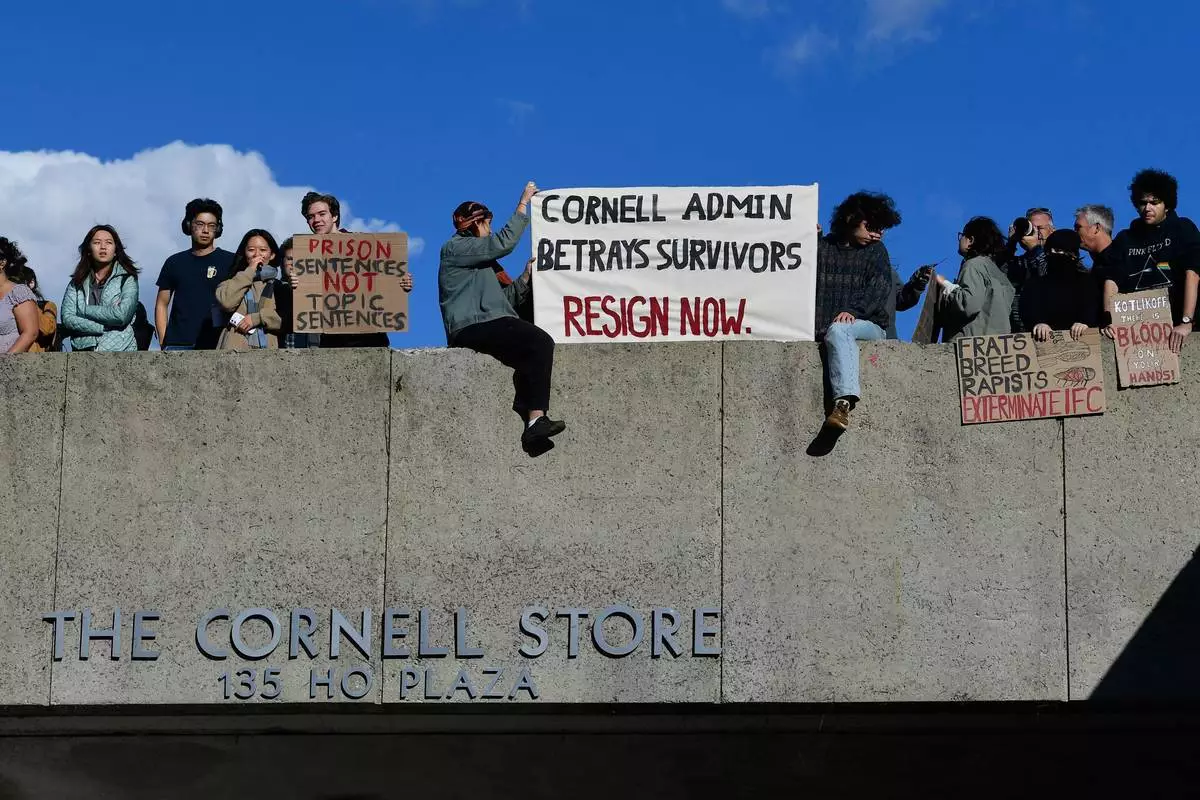
Attendees hold signs during a protest against Cornell University's handling of the 2024 fraternity-house gang rape allegations at the university Monday, Oct. 5, 2026, in Ithaca, N.Y. (AP Photo/Adrian Kraus)
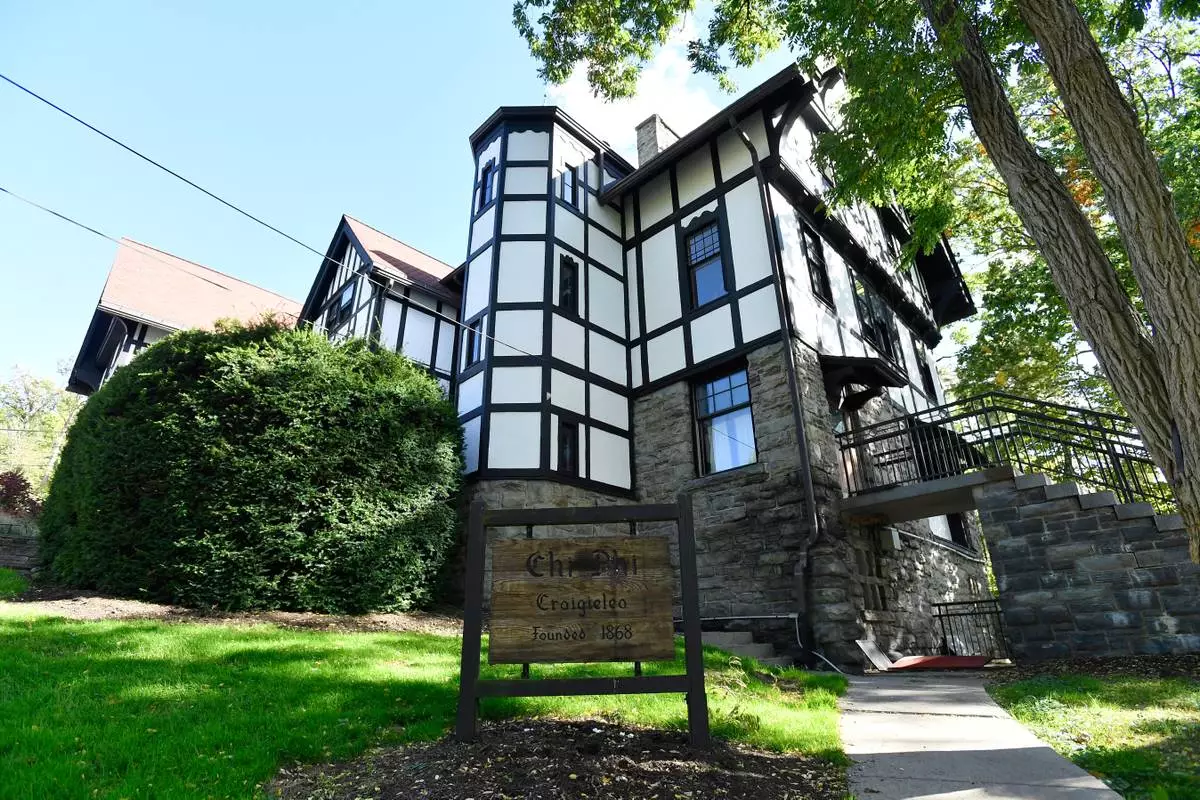
The Chi Phi fraternity house is seen at Cornell University, Monday, Oct. 5, 2026, in Ithaca, N.Y. (AP Photo/Adrian Kraus)
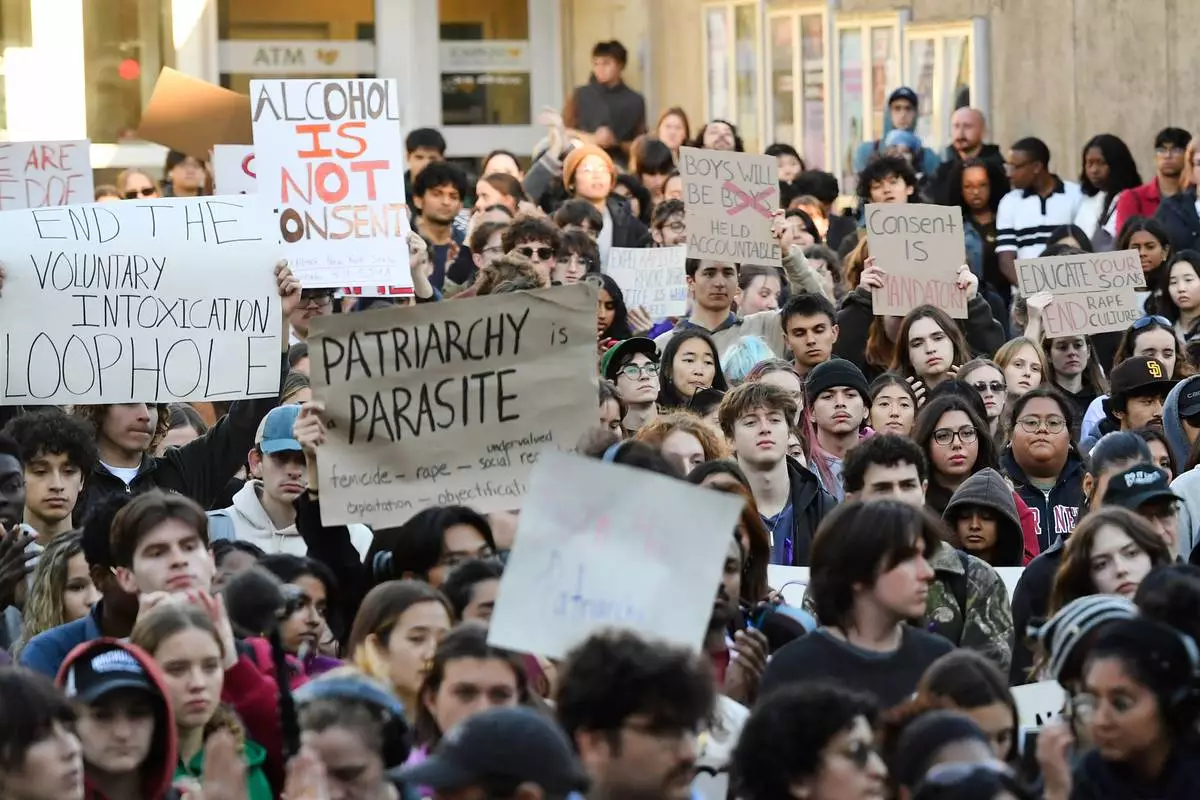
Demonstrators attend a protest against Cornell University's handling of the 2024 fraternity-house gang rape allegations at the campus, Monday, Oct. 5, 2026, in Ithaca, N.Y. (AP Photo/Adrian Kraus)
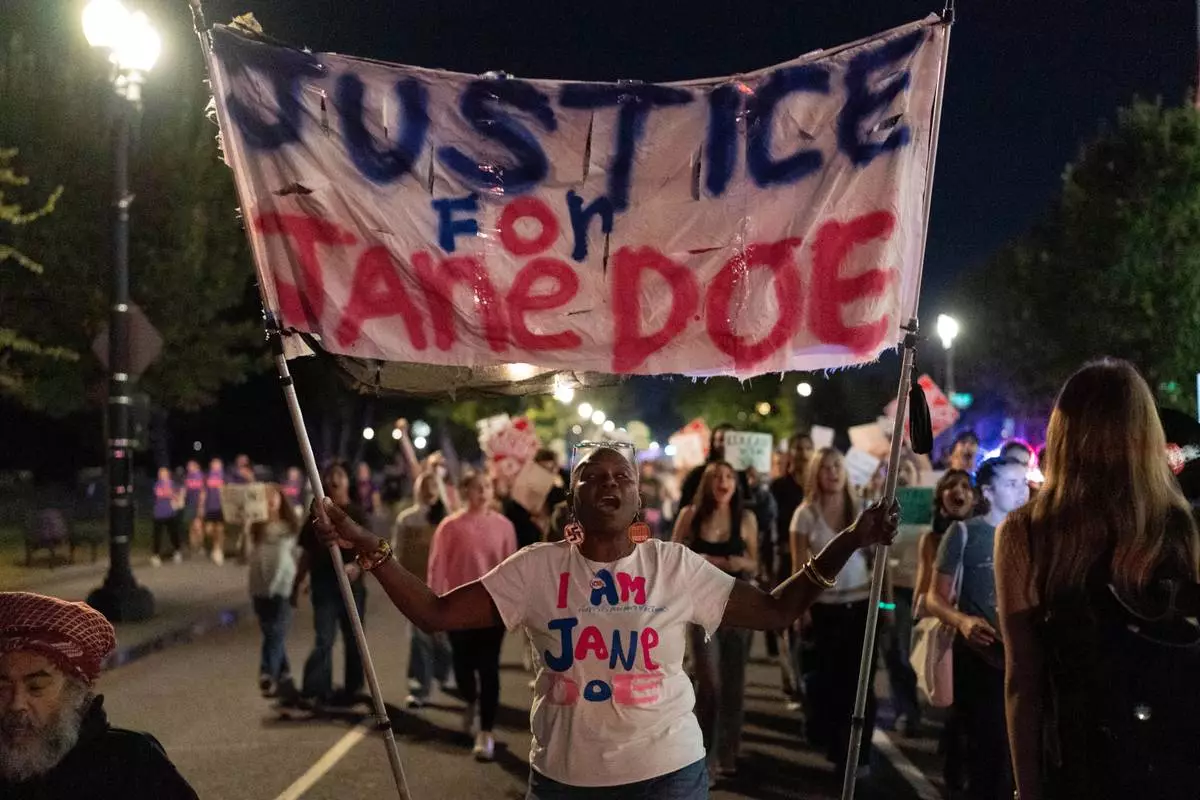
Demonstrators march from the Washington Monument to the White House during a "Stop Sexual Violence" protest in Washington, Thursday, Oct. 8, 2026. (AP Photo/Jose Luis Magana)