Skip to Content Facebook Feature Image

Insider tour of the Sagrada Familia reveals 5 divine enigmas and hidden treasures

News

Insider tour of the Sagrada Familia reveals 5 divine enigmas and hidden treasures
News

News

Insider tour of the Sagrada Familia reveals 5 divine enigmas and hidden treasures

2026-06-10 18:37 Last Updated At:18:40

BARCELONA, Spain (AP) — The Sagrada Familia basilica features sandcastle-like spires, stone carved to look like lush flora, a kaleidoscopic interior and a trove of treasures, some hiding in plain sight. Even regular worshippers at Barcelona’s world-famous landmark find themselves dumbstruck with wonder.

Josep Turull, the Catalan rector of the Sagrada Familia and the priest in charge of its parish activities, recently granted The Associated Press a private tour to show off his favorite gems ahead of Pope Leo XIV's highly anticipated Mass on Wednesday night.

More Images
A small square-shaped labyrinth is photographed at the Passion Façade at the basilica's Sagrada Família in Barcelona, Spain, Spain, May 15, 2026. (AP Photo/Emilio Morenatti)
A small square-shaped labyrinth is photographed at the Passion Façade at the basilica's Sagrada Família in Barcelona, Spain, Spain, May 15, 2026. (AP Photo/Emilio Morenatti)

A changing room where Pope Leo XIV will vest before presiding over Mass is seen at the Sagrada Familia in Barcelona, Spain, May 15, 2026. (AP Photo/Emilio Morenatti)
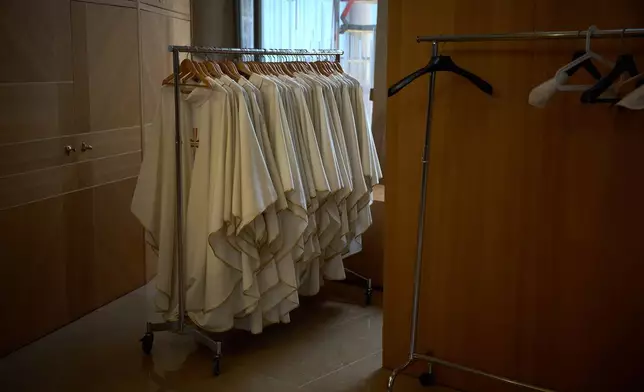
A changing room where Pope Leo XIV will vest before presiding over Mass is seen at the Sagrada Familia in Barcelona, Spain, May 15, 2026. (AP Photo/Emilio Morenatti)

Josep Maria Turull, rector of the Basilica of the Sagrada Familia, holds a cross-shaped relic beside cabinets containing some of the basilica's most precious relics and liturgical vestments in Barcelona, May 15, 2026. (AP Photo/Emilio Morenatti)
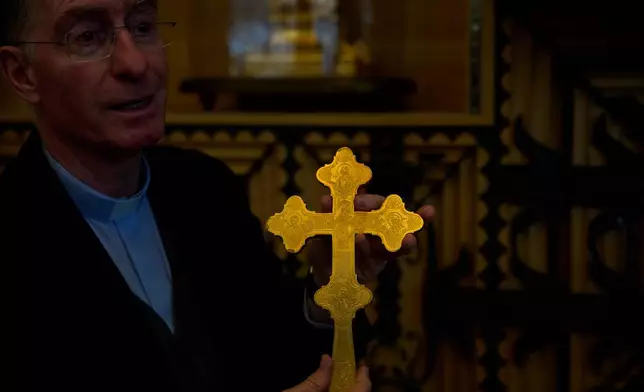
Josep Maria Turull, rector of the Basilica of the Sagrada Familia, holds a cross-shaped relic beside cabinets containing some of the basilica's most precious relics and liturgical vestments in Barcelona, May 15, 2026. (AP Photo/Emilio Morenatti)

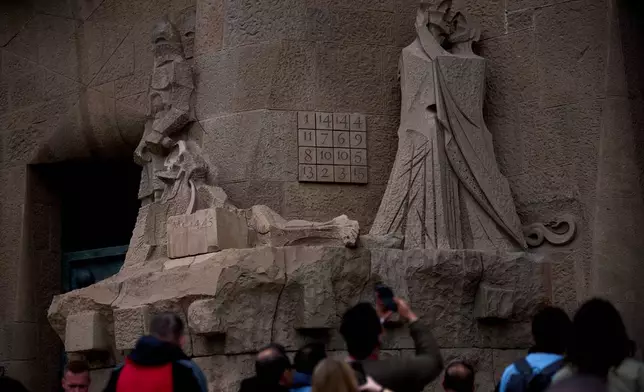
A detail of the Passion Façade shows the basilica's famous magic square at the Sagrada Família in Barcelona, Spain, May 15, 2026. Unlike a sudoku, every row, column and diagonal adds up to 33, symbolizing the age of Christ at his death.(AP Photo/Emilio Morenatti)
A detail of the Passion Façade shows the basilica's famous magic square at the Sagrada Família in Barcelona, Spain, May 15, 2026. Unlike a sudoku, every row, column and diagonal adds up to 33, symbolizing the age of Christ at his death.(AP Photo/Emilio Morenatti)

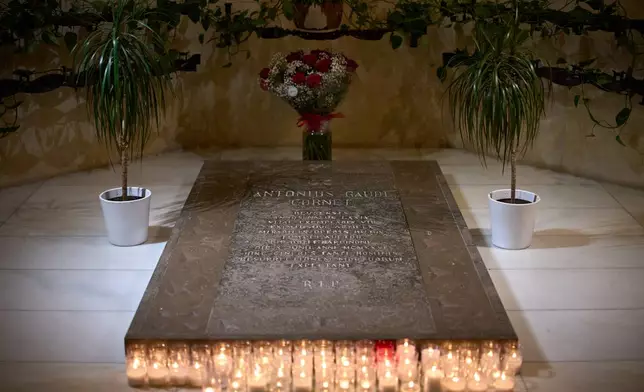
Antoni Gaudí's tomb is photographed inside crypt of Gaudí beneath the Sagrada Família as crowds of visitors fill the basilica above in Barcelona, Spain, May 15, 2026. (AP Photo/Emilio Morenatti)
Antoni Gaudí's tomb is photographed inside crypt of Gaudí beneath the Sagrada Família as crowds of visitors fill the basilica above in Barcelona, Spain, May 15, 2026. (AP Photo/Emilio Morenatti)

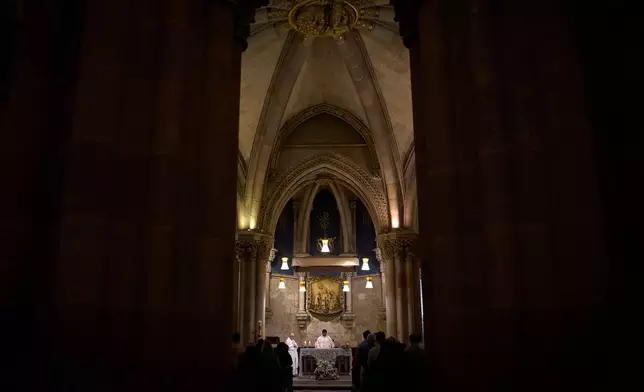
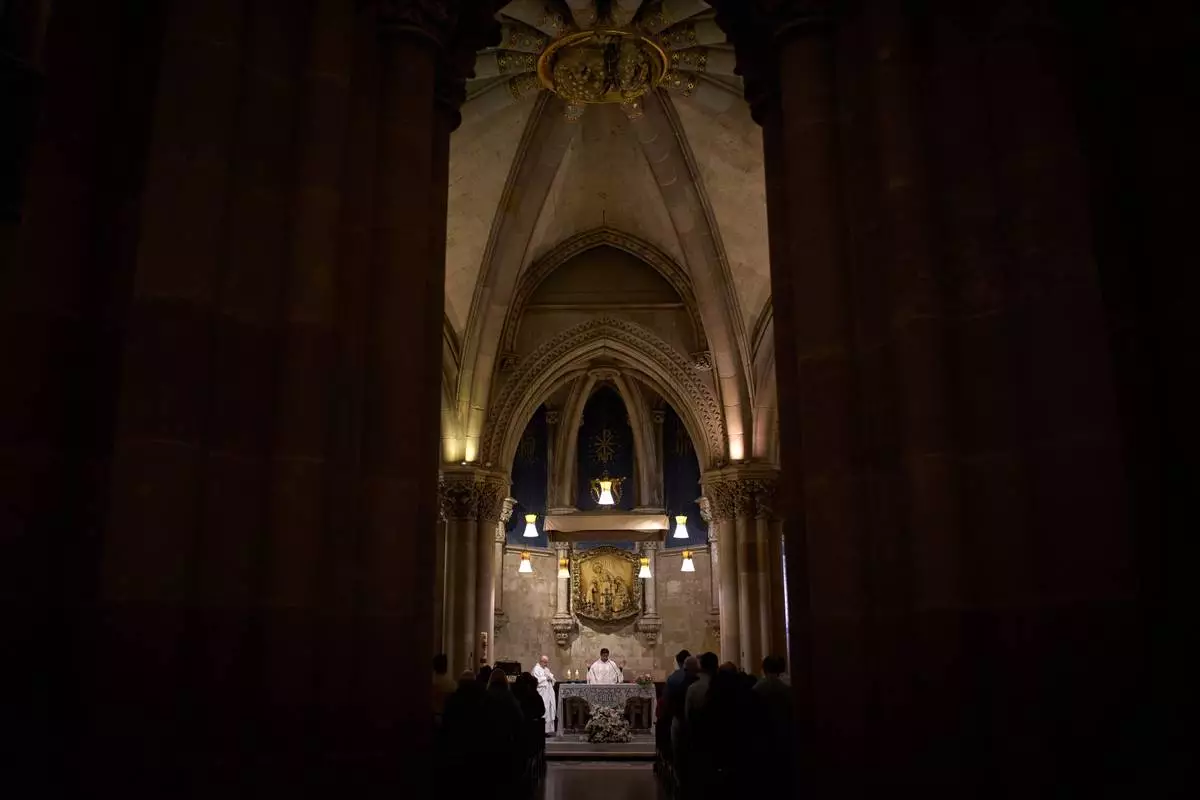
A priest celebrates Mass in the crypt of Antoni Gaudí beneath the Sagrada Familia while crowds of visitors fill the basilica above in Barcelona, Spain, May 15, 2026. (AP Photo/Emilio Morenatti)

A priest celebrates Mass in the crypt of Antoni Gaudí beneath the Sagrada Familia while crowds of visitors fill the basilica above in Barcelona, Spain, May 15, 2026. (AP Photo/Emilio Morenatti)

“We say that one of the elements of the Sagrada Familia Basilica is that you never exhaust it,” Turull said. “I have spent the last eight years as its rector, and each day I discover something new.”

Each morning, Turull approaches the basilica's elaborately decorated façades. They are packed with an abundance of religious scenes and symbols, some easy to interpret for anyone with a basic understanding of Christianity, while others are mysterious and even shocking to see in a church.

The westward-looking Façade of the Passion is stark, its figures tormented, their bodies strained in angular poses. That was how architect Antoni Gaudí wanted it — “harsh and cruel, as if made of bones,” to show the pain and torment of Christ’s final days.

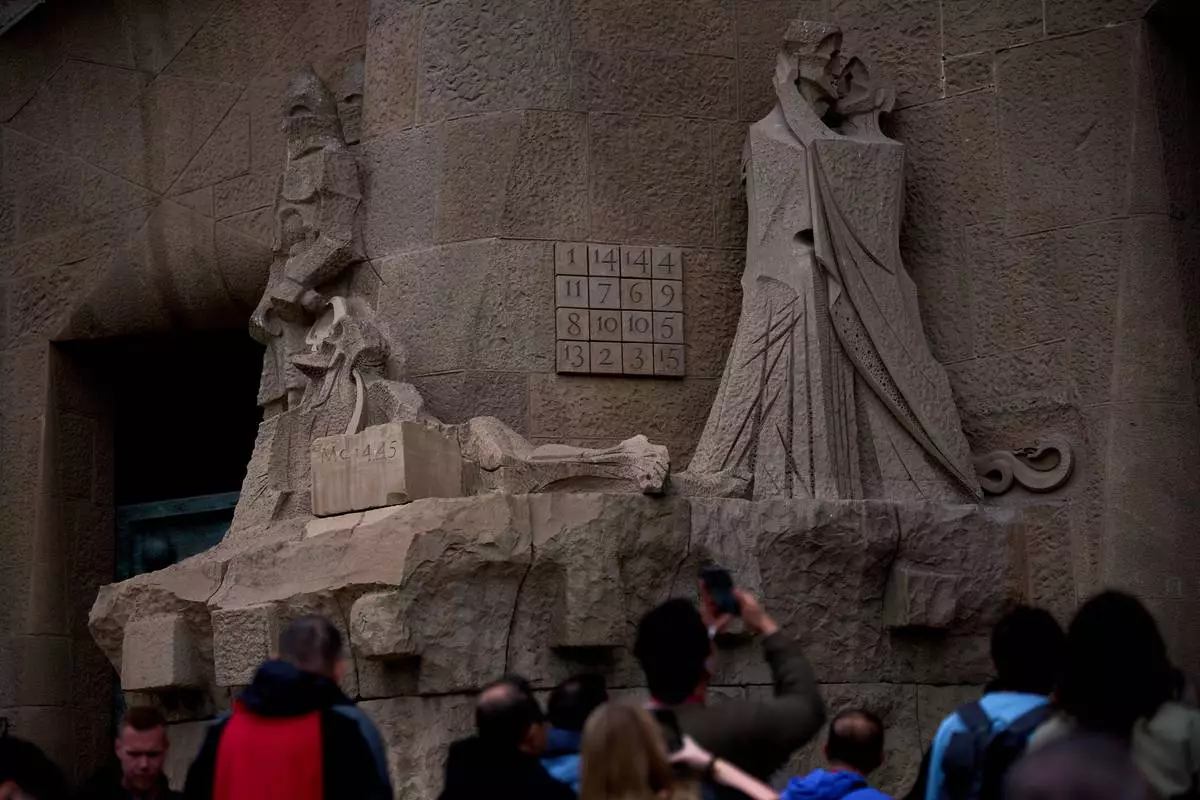
Decades after Gaudí's own death, sculptor Josep Subirachs tempered the façade's misery with some playful elements. There's Gaudí himself, above the central door, staring across at Jesus carrying his cross to Calvary. And what's that suduko-like numbered grid next to Judas kissing Jesus before his betrayal?

The “magic square” symbolizes the inevitability of Christ's death; adding the numbers in any direction always produces 33, Jesus's age at his crucifixion.

Another puzzle awaits the patient eye that drifts across to the scene of Peter denying Christ: a small, square-shaped labyrinth. Turull said that it alludes to the need to keep faith in God when we feel lost.

After celebrating Mass, Leo will step outside to offer a blessing for the Tower of Jesus Christ that made the Sagrada Familia the world’s tallest church when it was raised in October.

The basilica's heights are bursting with nature, from the rooster who crowed while Peter denied Christ to reptiles doing the job of gargoyles, and piles of fruit that crown its spires.

There are also flesh-and-blood beasts; a family of peregrine falcons nest in the tower dedicated to St. James, keeping away pigeons and, more importantly, their excrement.

Gaudí's masterpiece was chosen as one of the ideal spots to reintroduce the species, as it was one of the last locations in town where these birds nested before disappearing during the 1970s. The falcons have been breeding successfully at the basilica for over two decades.

Turull said that these lightning-fast birds of prey “recover the cycle of natural life.”

For the millions of annual visitors who admire the colored light filtering through the basilica's stained-glass windows, jostle for position to snap selfies and huddle around tour guides, it is easy to overlook what Turull calls its “spiritual heart." That requires going through a modest side entrance and descending a staircase.

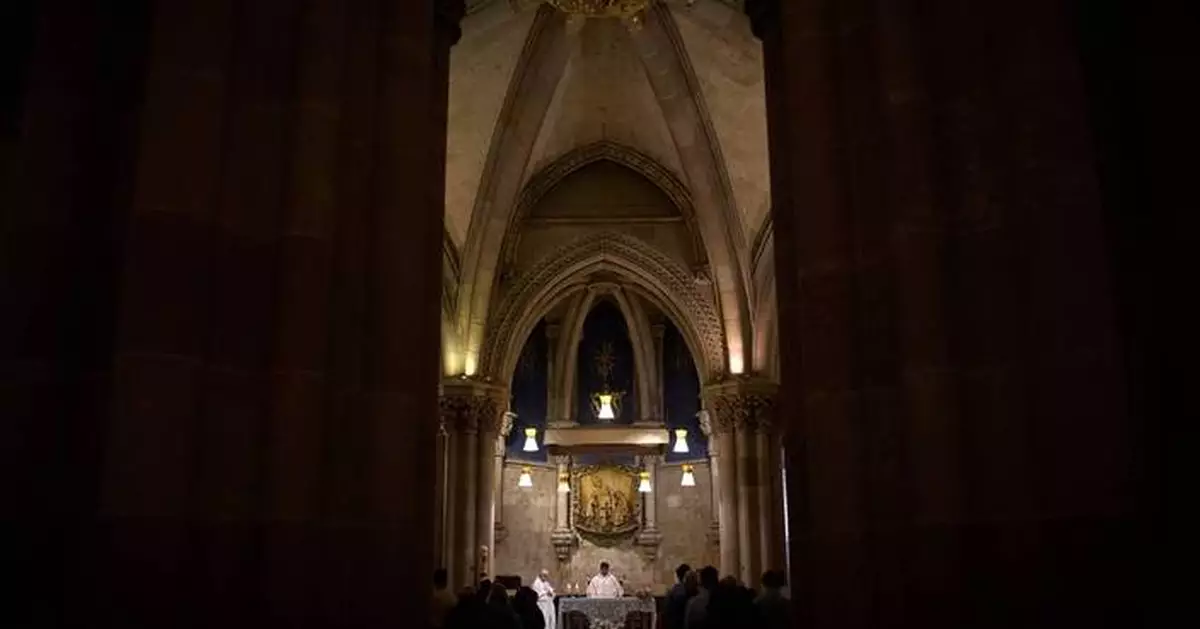
Underground is a much smaller, more intimate chapel, where dozens of worshippers silently attend Mass and faith manages to keep sightseeing at bay.

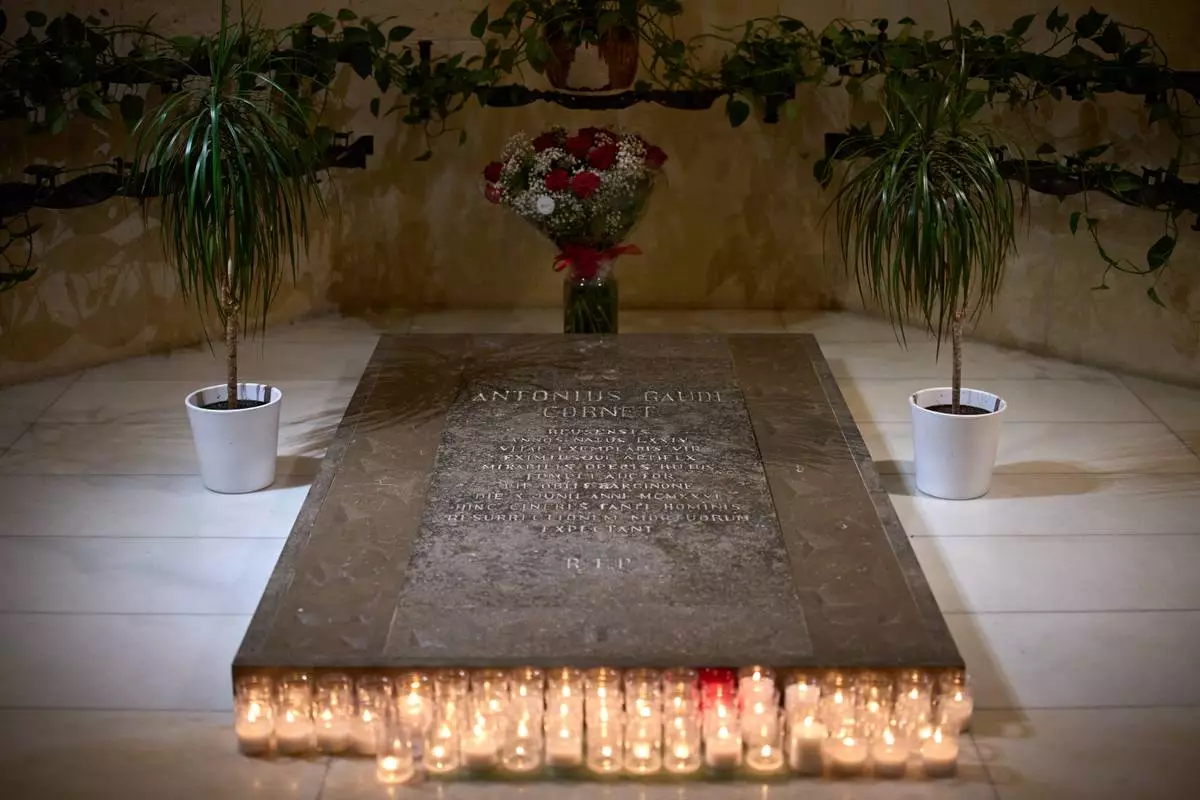
Fittingly, it is here where Gaudí, a fervent Catholic, rests in a discreet tomb set inside a nook. He died exactly 100 years ago after being hit by a streetcar.

“People come to ask for his intercession,” Turull said, gesturing to the tomb interred in the floor. “That’s why there are so many candles. Because people place their trust in him. Many people have received favors for having prayed at the tomb of Gaudí.”

The Vatican is in the midst of a decades-long process that could eventually make Gaudí a saint. After Pope Francis named Gaudí “venerable” in 2025, the Vatican must now confirm a miracle attributed to his intercession for him to be beatified, then a second miracle for him to be canonized.

The basilica has proposed that the pope pray at Gaudí’s tomb during his visit, but whether he does remains to be seen.

Before ascending, Turull pauses at an enormous seashell — a real one, not made of stone — that serves as a basin for holy water. He said that Gaudí had the seashell from the Philippines set in wrought iron and fixed to the column.

“Gaudí always takes nature as an example,” Turull said, referencing the way the natural world inspired his designs and decorations.

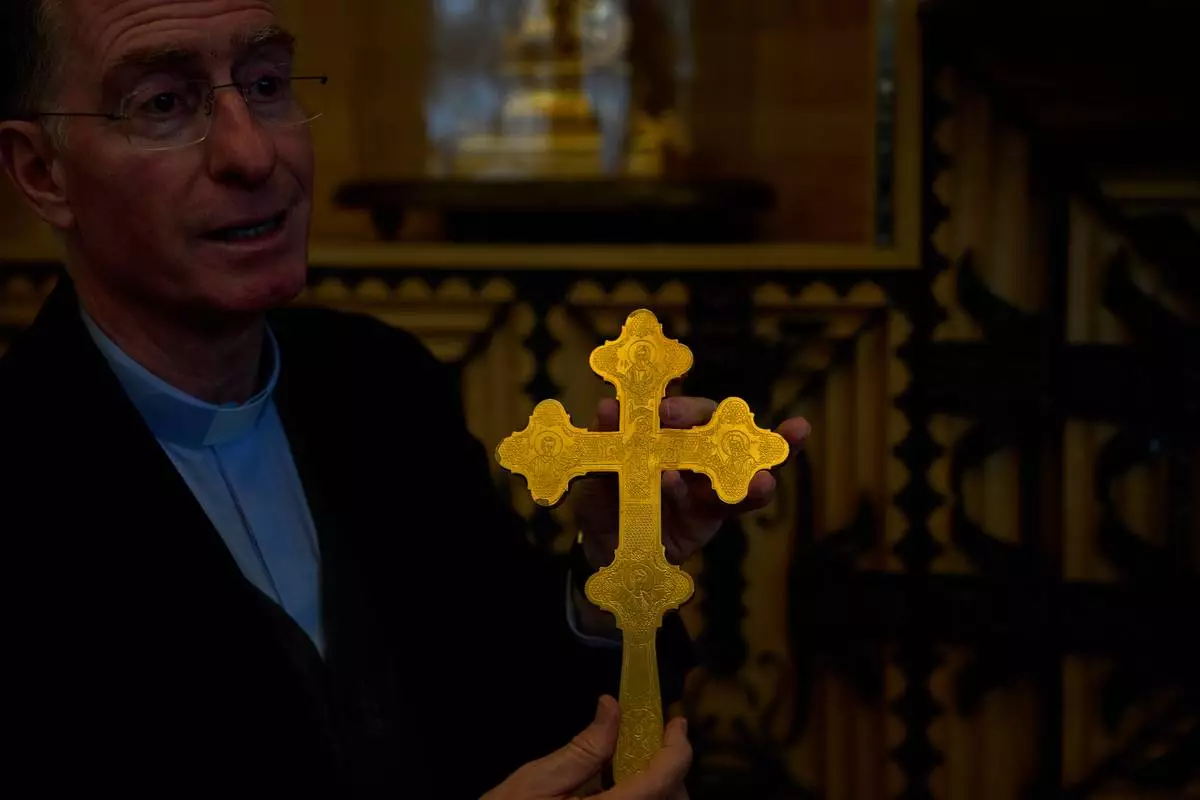
Up a twisting staircase, a private room bathed in sunlight houses two freestanding oak cabinets laced with intricate ironwork. Designed by Gaudí, they hold the basilica’s most precious relics and most important clerical clothing. Among them is Pope Benedict XVI's chasuble — a cloak that clergy wear when celebrating Mass — from when he consecrated the Sagrada Familia in 2010.

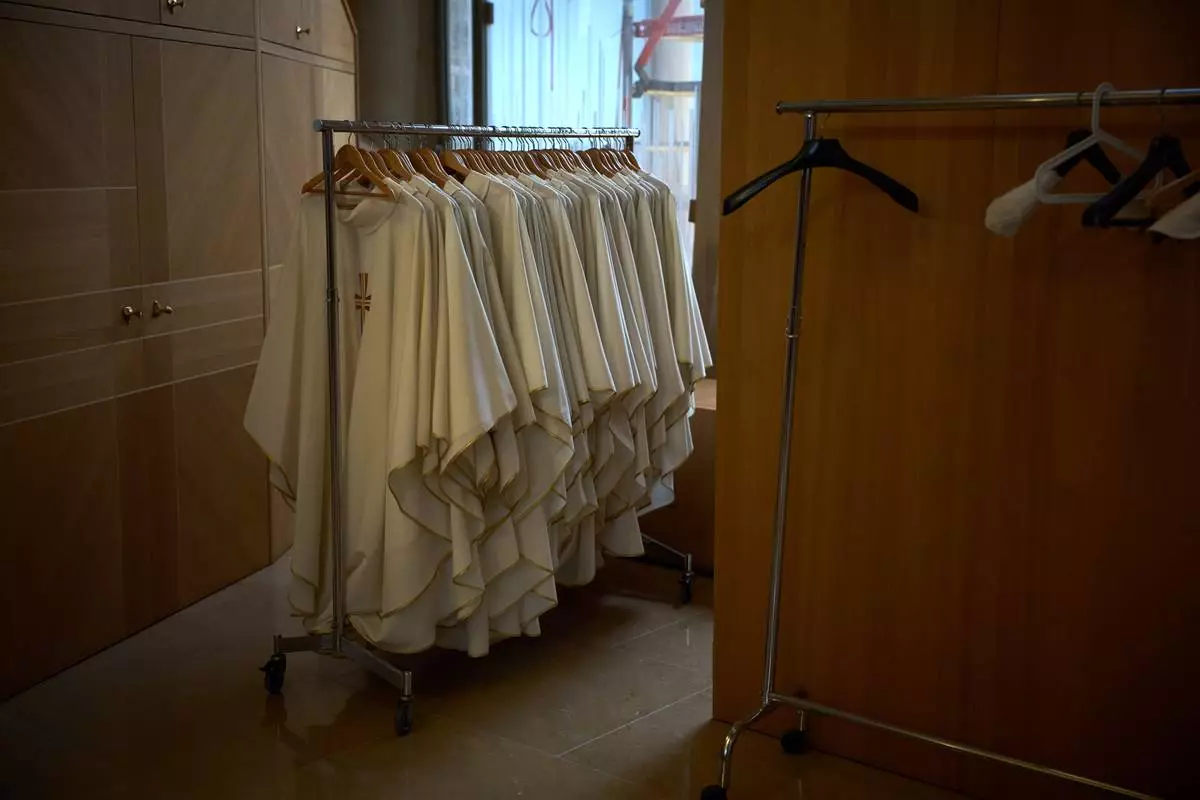
This is where Pope Leo will change into a chasuble that is being sewn at a workshop just for this occasion.

Turull said the vestment will feature details symbolizing the day’s importance and a design related to the basilica's recently raised Cross of Jesus Christ. But he won't say anything more for now; some things need to stay secret.

AP videojournalist Hernán Muñoz contributed to this report.
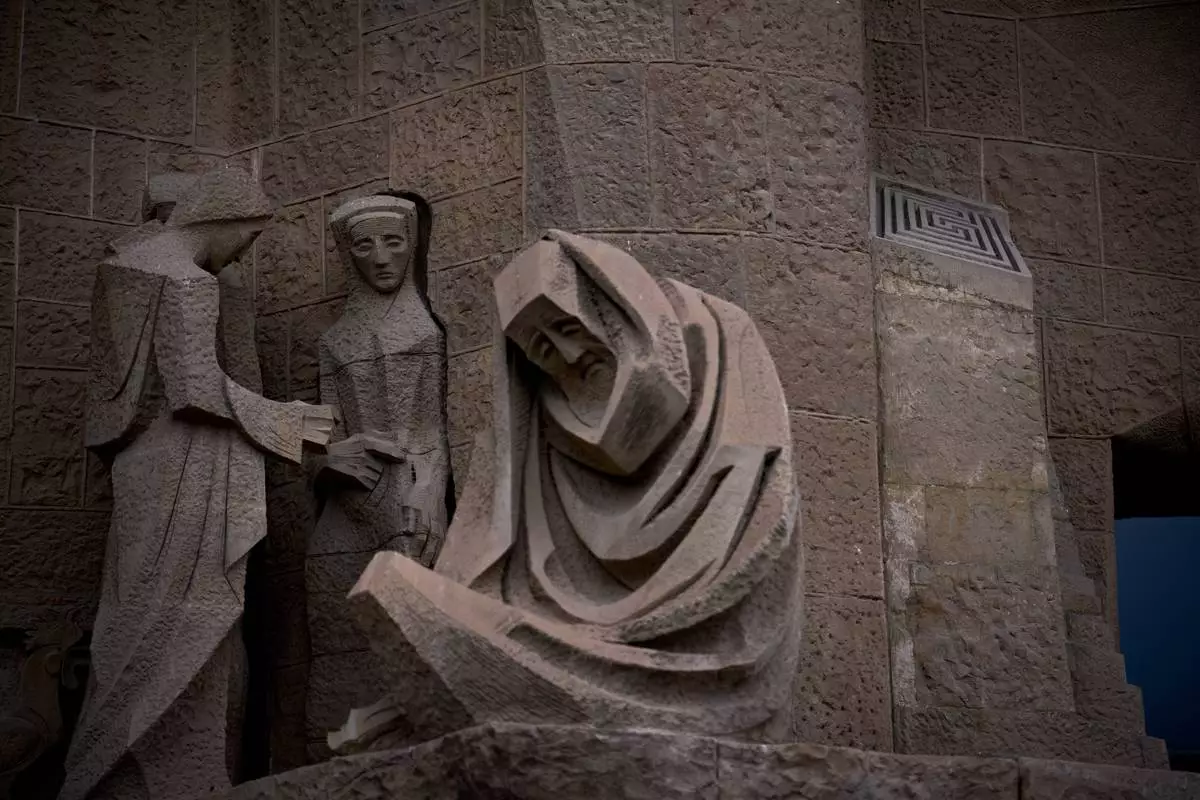
A small square-shaped labyrinth is photographed at the Passion Façade at the basilica's Sagrada Família in Barcelona, Spain, Spain, May 15, 2026. (AP Photo/Emilio Morenatti)
A small square-shaped labyrinth is photographed at the Passion Façade at the basilica's Sagrada Família in Barcelona, Spain, Spain, May 15, 2026. (AP Photo/Emilio Morenatti)

A changing room where Pope Leo XIV will vest before presiding over Mass is seen at the Sagrada Familia in Barcelona, Spain, May 15, 2026. (AP Photo/Emilio Morenatti)
A changing room where Pope Leo XIV will vest before presiding over Mass is seen at the Sagrada Familia in Barcelona, Spain, May 15, 2026. (AP Photo/Emilio Morenatti)

Josep Maria Turull, rector of the Basilica of the Sagrada Familia, holds a cross-shaped relic beside cabinets containing some of the basilica's most precious relics and liturgical vestments in Barcelona, May 15, 2026. (AP Photo/Emilio Morenatti)
Josep Maria Turull, rector of the Basilica of the Sagrada Familia, holds a cross-shaped relic beside cabinets containing some of the basilica's most precious relics and liturgical vestments in Barcelona, May 15, 2026. (AP Photo/Emilio Morenatti)

A detail of the Passion Façade shows the basilica's famous magic square at the Sagrada Família in Barcelona, Spain, May 15, 2026. Unlike a sudoku, every row, column and diagonal adds up to 33, symbolizing the age of Christ at his death.(AP Photo/Emilio Morenatti)
A detail of the Passion Façade shows the basilica's famous magic square at the Sagrada Família in Barcelona, Spain, May 15, 2026. Unlike a sudoku, every row, column and diagonal adds up to 33, symbolizing the age of Christ at his death.(AP Photo/Emilio Morenatti)

Antoni Gaudí's tomb is photographed inside crypt of Gaudí beneath the Sagrada Família as crowds of visitors fill the basilica above in Barcelona, Spain, May 15, 2026. (AP Photo/Emilio Morenatti)
Antoni Gaudí's tomb is photographed inside crypt of Gaudí beneath the Sagrada Família as crowds of visitors fill the basilica above in Barcelona, Spain, May 15, 2026. (AP Photo/Emilio Morenatti)

A priest celebrates Mass in the crypt of Antoni Gaudí beneath the Sagrada Familia while crowds of visitors fill the basilica above in Barcelona, Spain, May 15, 2026. (AP Photo/Emilio Morenatti)
A priest celebrates Mass in the crypt of Antoni Gaudí beneath the Sagrada Familia while crowds of visitors fill the basilica above in Barcelona, Spain, May 15, 2026. (AP Photo/Emilio Morenatti)
DUBAI, United Arab Emirates (AP) — The United States launched airstrikes early Wednesday against Iran after blaming Tehran for the crash of an American attack helicopter, and Iran fired back at countries in the region — another escalation that threatened to derail efforts to end the war.

Bahrain, Kuwait and Jordan — all of which host U.S. troops — came under Iranian fire. It was the second time this week that back-and-forth strikes have tested the ceasefire after Iran and Israel targeted each other on Monday, and it again raised the question of how much pressure the deal can take before it cracks.

While U.S. President Donald Trump has insisted that negotiations with Iran to end the war are making progress, he has repeatedly vacillated between expressing such optimism and warning that he was ready to return to all-out war. Iran, meanwhile, has proved resilient despite having faced weeks of heavy bombing, betting that its ability to effectively close the Strait of Hormuz — a crucial passageway for the world’s oil and natural gas — gives it a strong bargaining chip.

Both countries seem to be looking for a way to end the conflict — if they can manage to sell it as a win at home. But Israeli Prime Minister Benjamin Netanyahu appears intent on pursuing much more difficult goals: the collapse of Iran’s theocratic government, the elimination of its nuclear program, and the destruction of the Iranian-allied Hezbollah militant group in Lebanon. That will make compromise much harder.

Since the U.S. and Israel started the war with attacks on Iran on Feb. 28, the conflict has shaken the global economy, driven up energy prices around the world, and made many basics, including food, more expensive. Brent crude oil, the international standard, was at more than $91 a barrel on Wednesday, up more than 25% since the start of the war.

In the latest strikes, U.S. fighter jets targeted “air defense, ground control stations, and surveillance radar sites,” the military’s Central Command said. Iran acknowledged strikes around Bandar Abbas and Qeshm Island, but gave no details on the damage.

“The operation was a proportional response to recent attacks on U.S. forces and international commercial ships transiting regional waters,” Central Command said.

Iran’s top diplomat vowed that there would be a response, and Tehran later claimed attacks in Kuwait, Bahrain and Jordan.

Jordan said it shot down five incoming missiles, which Iran said targeted the Muwaffaq Salti Air Base. The base has hosted American F-35 fighter jets and other aircraft.

Jordan’s state-run Petra news agency carried a military statement saying there were no injuries and that explosives experts examined the debris from the interceptions.

Bahrain and Kuwait said they intercepted incoming fire, without elaborating.

Iranian Foreign Minister Abbas Araghchi condemned the American attacks as a violation of Iranian sovereignty in calls with his counterparts from Turkey and Saudi Arabia “and emphasized the inherent right of self-defense, including reciprocal action,” according to a post on his office's Telegram channel.

Foreign Ministry spokesperson Esmail Baghaei said in televised comments Wednesday that in light of the new attacks, Iran would review its stance on negotiations to end the war.

The exchanges of fire came a day after a U.S. Army attack helicopter crashed near the Strait of Hormuz after colliding with an Iranian drone, according to a U.S. official, who spoke on condition of anonymity to discuss an ongoing investigation. It wasn’t clear whether the collision was intentional.

A drone boat rescued both of the helicopter’s aviators, and Trump said they were uninjured.

Guards aboard a cargo ship off the coast of Yemen in the Gulf of Aden exchanged fire with gunmen in a small boat and repelled their attack, the British military’s United Kingdom Maritime Trade Operations center said.

No group immediately claimed responsibility. Yemen’s Iran-backed Houthi rebels have said they will resume their attacks against Israel-affiliated ships in the Red Sea. Somali pirates have also become more active in the region.

The UKMTO later reported a fire in the engine room of a tanker in the Gulf of Oman, near the Strait of Hormuz, saying one person had been hurt and two others aboard were missing. It wasn’t immediately clear what caused the fire.

Before he accused Iran of downing the U.S. helicopter, Trump expressed renewed optimism over negotiations with Iran, but didn’t say why there was reason for hope.

While Trump, wary of high gas prices and upcoming congressional elections in November, seems to be looking for a quick win, he is also making demands that will be tough for Iran to swallow.

The U.S. wants to see Iran give up its stockpile of highly enriched uranium. While Iran insists its nuclear program is peaceful, that uranium is a short, technical step from weapons-grade levels.

Iran is refusing to give up the uranium and demanding relief from sanctions. It also wants the release of frozen assets even before a final agreement is in place, something rejected by Trump.

It's not clear how those differences can be bridged — and Trump has repeatedly threatened to walk away from the talks. On his Truth Social platform overnight he seemed to be warning again that he was ready to return to all-out war, posting a clip from the American TV series “The West Wing” with actor Martin Sheen as president bellowing: “We don’t come back with a proportional response, we come back with total disaster!”

Meanwhile, Iran has continued to insist that any deal to end the war must also end fighting between its ally Hezbollah and Israel. Instead, Israel has intensified its military campaign against the militant group.

Israel's military said on Wednesday it launched multiple strikes in southern Lebanon over the past day, targeting Hezbollah infrastructure.

Associated Press writers David Rising in Bangkok; Michelle L. Price in New York; Will Weissert in Washington; Bassem Mroue in Beirut; and Munir Ahmed in Islamabad contributed to this report.

People take shelter as air raid sirens warn of incoming Iranian missiles in Ramat Gan, Israel, Monday, June 8, 2026. (AP Photo/Oded Balilty)

People take shelter as air raid sirens warn of incoming Iranian missiles in Ramat Gan, Israel, Monday, June 8, 2026. (AP Photo/Oded Balilty)

A projectile streaks through the sky over central Israel during an Iranian missile attack, Sunday, June 7, 2026. (AP Photo/Ohad Zwigenberg)

A projectile streaks through the sky over central Israel during an Iranian missile attack, Sunday, June 7, 2026. (AP Photo/Ohad Zwigenberg)

A cleric checks his cell phone on stage in front of a screen displaying portraits of the late Iranian revolutionary founder Ayatollah Khomeini, left, late Supreme Leader Ayatollah Ali Khamenei, center, and Supreme Leader Ayatollah Mojtaba Khamenei, during a pro-government gathering in Tehran, Iran, Sunday, June 7, 2026. (AP Photo/Vahid Salemi)

A cleric checks his cell phone on stage in front of a screen displaying portraits of the late Iranian revolutionary founder Ayatollah Khomeini, left, late Supreme Leader Ayatollah Ali Khamenei, center, and Supreme Leader Ayatollah Mojtaba Khamenei, during a pro-government gathering in Tehran, Iran, Sunday, June 7, 2026. (AP Photo/Vahid Salemi)

A woman walks past a mural depicting a U.S. aircraft carrier under missile attack in downtown Tehran, Iran, Monday, June 8, 2026. (AP Photo/Vahid Salemi)

A woman walks past a mural depicting a U.S. aircraft carrier under missile attack in downtown Tehran, Iran, Monday, June 8, 2026. (AP Photo/Vahid Salemi)

Recommended Articles